
LEóN (Spain)
Welcome to our 4th edition of big cities while walking the Camino Frances. We have already visited the following cities in previous posts:
- Pamplona – if you have read this post, you will remember that this is the beautiful city from where we started our Camino Frances in March 2017. You can read about our first big city on the Camino here.
- Logroño – this was the city with the MANY tapas bars and where we saw the first Catholic processions for Easter weekend (can I use this in one sentence)? You can read about Logroño here.
- Burgos – Burgos Cathedral was such a beautiful sight. This was also the city where I stayed for 2 nights to give some healing time to my Camino aches and pains, while Berto continued on the Camino. You can read about Burgos here.
To walk from Burgos to León, we had to cover 181.8km in 7 days. Once again, let’s have a look at some postcards of each day between these two cities:
Day 10: Hontanas (31.8km)
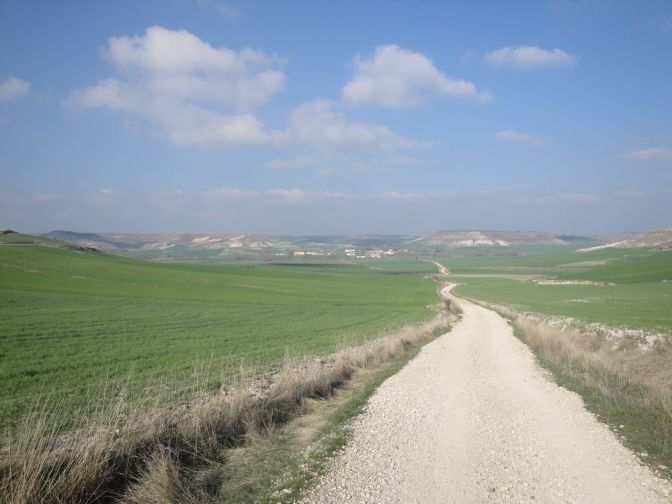
Long dirt roads on the Meseta (the large and expansive flat plains on the Camino Frances)
(You can read about the hiking of Day 10 here)
Day 11: Fromista (34.6km)
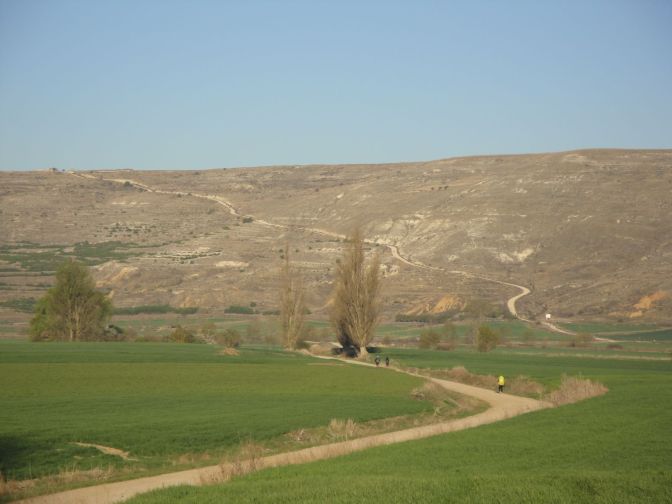
Still on the Meseta – but this time a long uphill needs to be conquered
(You can read about the hiking of Day 11 here)
Day 12: Carrion de Los Condes (20.5km)

Walking past the Hermitage of Our Lady of the River
(You can read about the hiking of Day 12 here)
Day 13: Terradillos (26.8km)
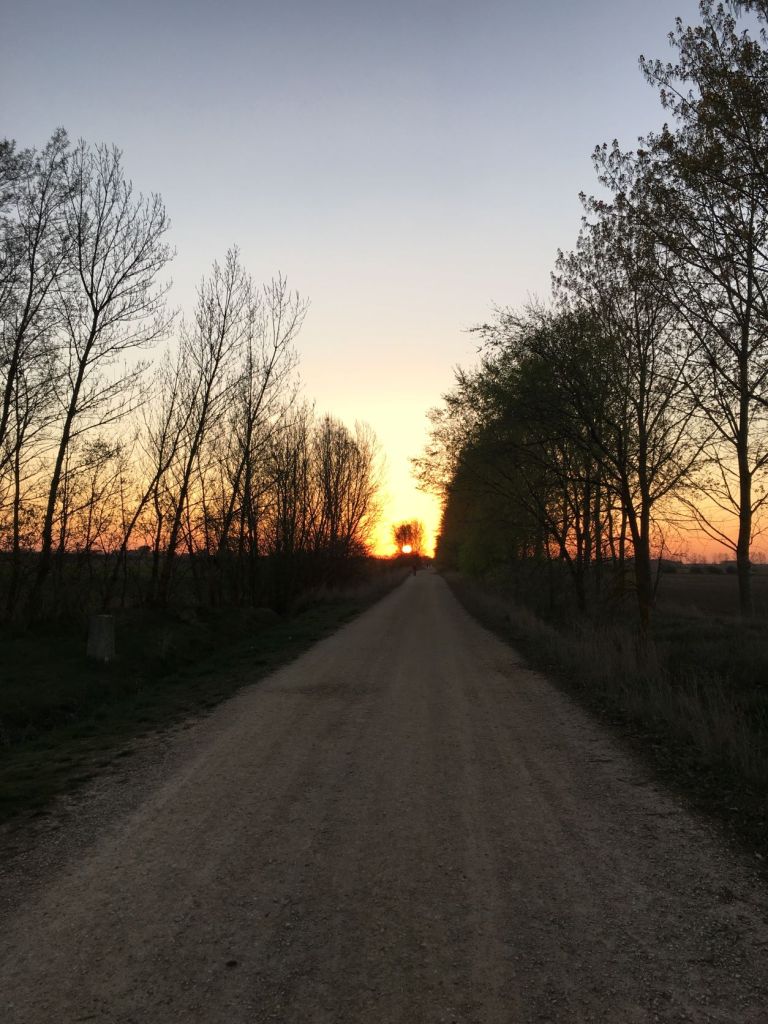
Just one of many beautiful sunrises on the Camino Frances
(You can read about the hiking of Day 13 here)
Day 14: Bercianos del Real Camino (23.1km)

Romanesque foundations outside Sahagun – the halfway mark of the Camino Frances (if you started walking in St Jean Pied-de-Port in France)
(You can read about the hiking of Day 14 here)
Day 15: Mansilla de Las Mulas(26.4km)
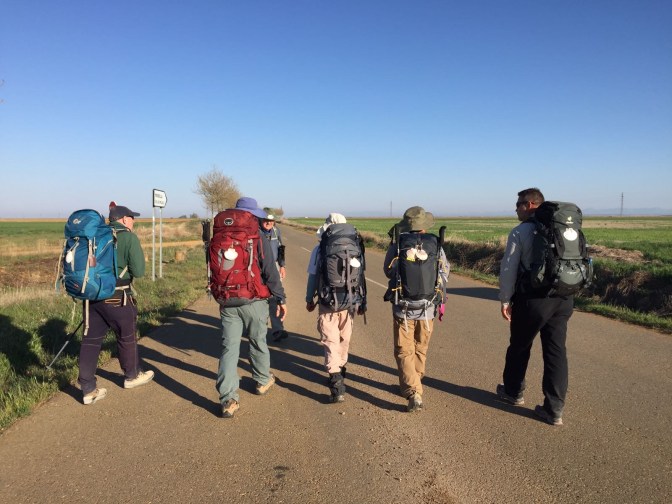
Pilgrims from all over the world: USA, Ireland, Korea/USA and South Africa
(You can read about the hiking of Day 15 here)
Day 16: León (18.6km)
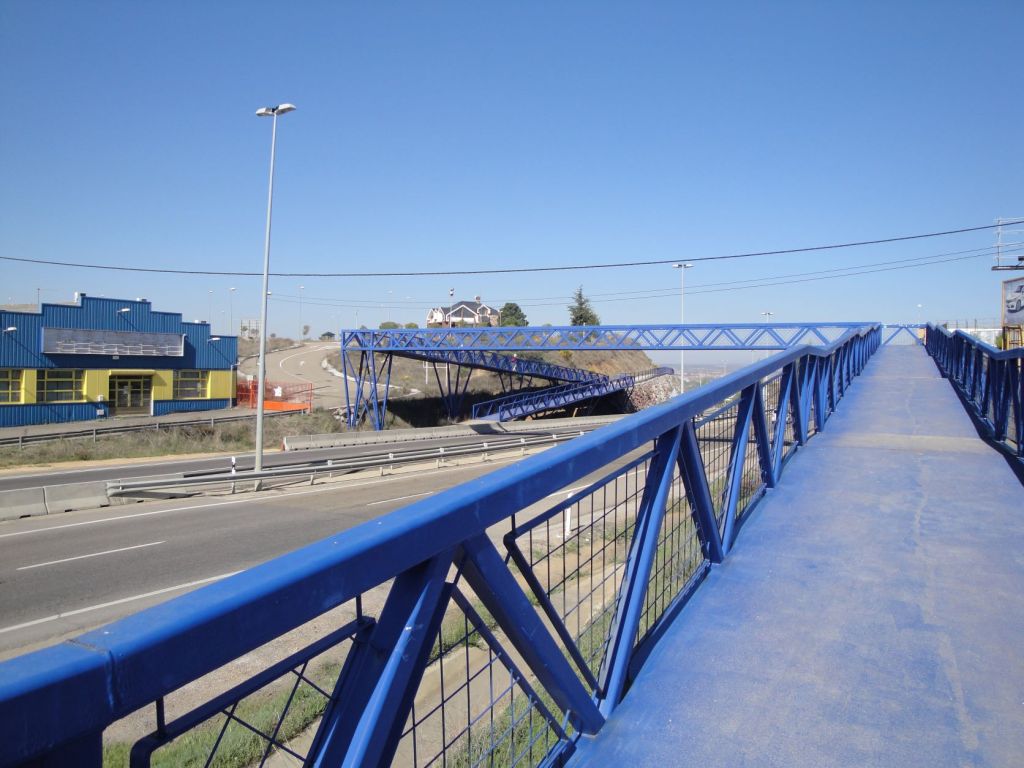
The well-known blue pedestrian bridge on the outskirts of León
(You can read about the hiking of Day 16 here)
León:
León is the capital of the Province of León and well-known for the Gothic 13th century Catedral de León. The city hosts numerous festivals throughout the year (noteworthy is the Easter processions) and it’s therefore a popular destination for both domestic and international tourism.
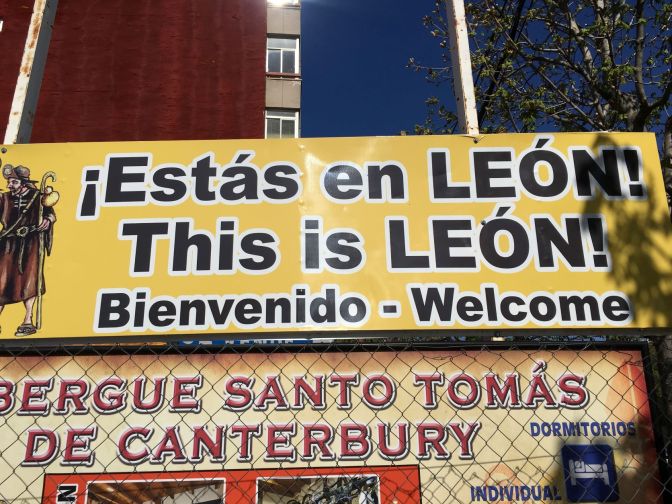
A welcoming sign for Camino pilgrims
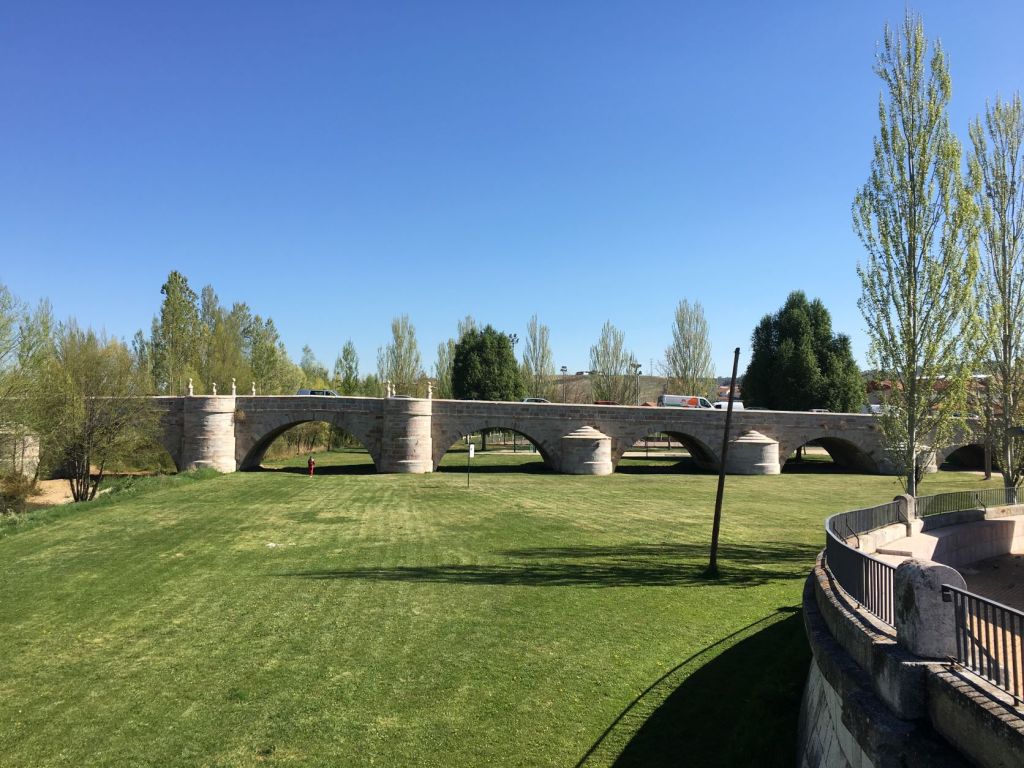
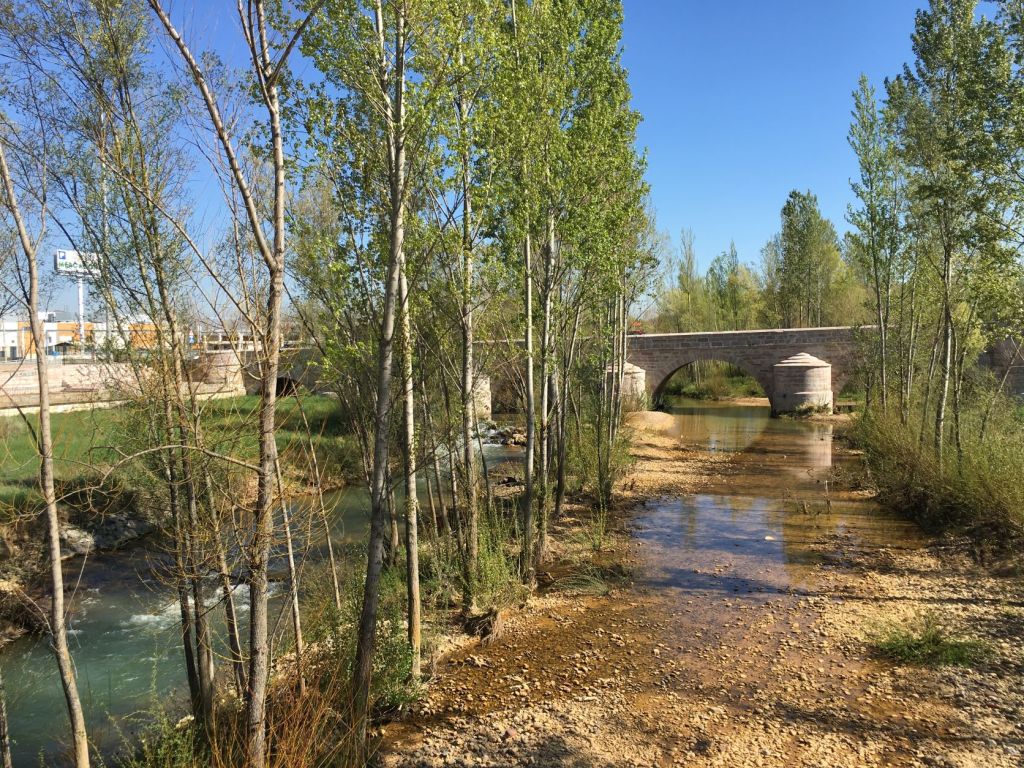
León started off as a military campsite in the year 29 AC and in the year 910 it became the capital of the Kingdom of León. It felt a bit strange to suddenly walk over a pedestrian walkway after days that we walked on dirt roads and between farm fields. As we walked into León, we recognised it as the big city that it’s today.
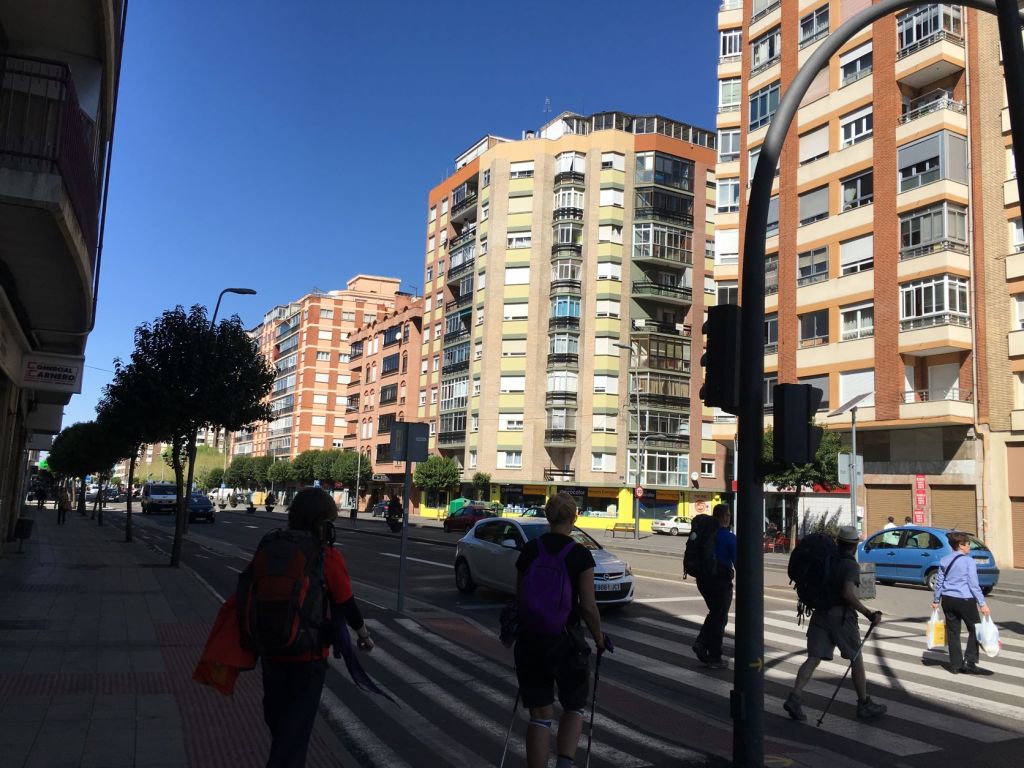
Pilgrims crossing a pedestrian walkway

Getting closer to the historic centre of León
Our accommodation for the night was at the Benedictine Monastery of Santa Maria de Carbajal. It was the only albergue we slept in on the Camino that had designated areas for women, men and married couples… it’s also called the ‘Nun’s hostel’, so you really shouldn’t be surprised by the sleeping arrangements.
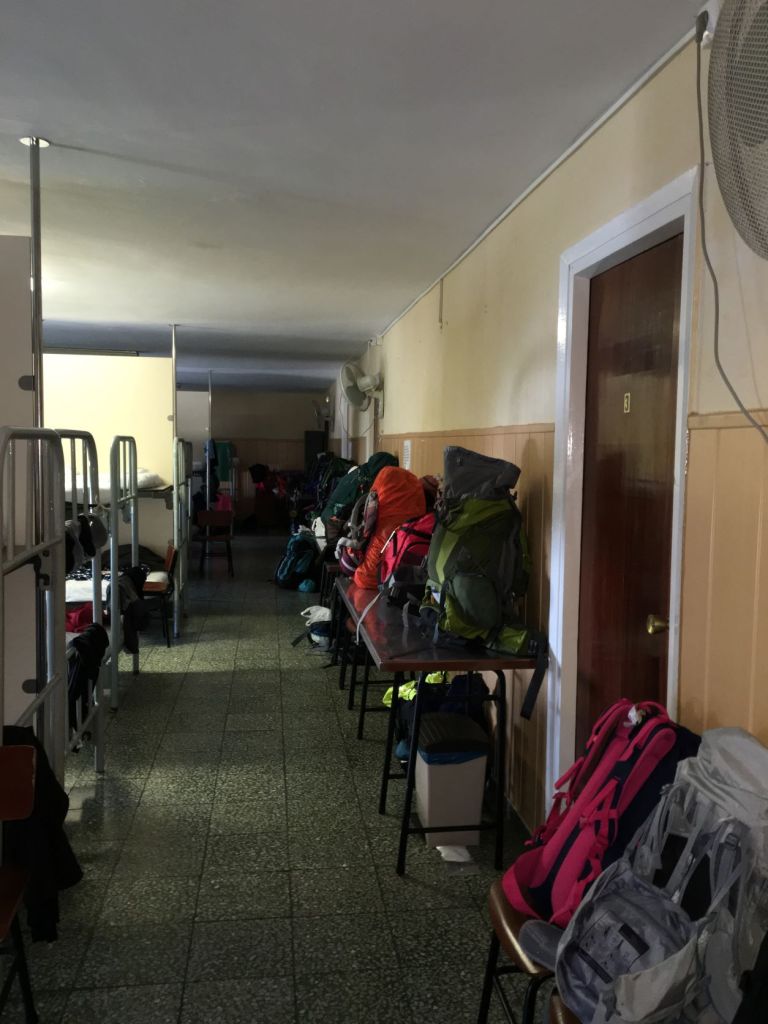
Pilgrims’ backpacks stacked along the wall
We did not waste too much time in the albergue, because we really wanted to explore this city. It was filled with locals, tourists and pilgrims and there was a real holiday vibe, probably because it was the beginning of Easter weekend. We gathered a few pilgrim friends together and walked out to see more of León.

Gloria and Javier (Spain) joined us. Monica (Sweden) took the photo. How do you recognise a pilgrim? They’re all wearing flip-flops!
Our first stop had to be the León Cathedral. It was built from 1205 – 1301 and contains one of the most extensive and best-preserved collections of medieval stained glass in Europe. The Cathedral was closed for the afternoon due to preparations for Easter weekend and we had to be satisfied with just viewing it from the outside.
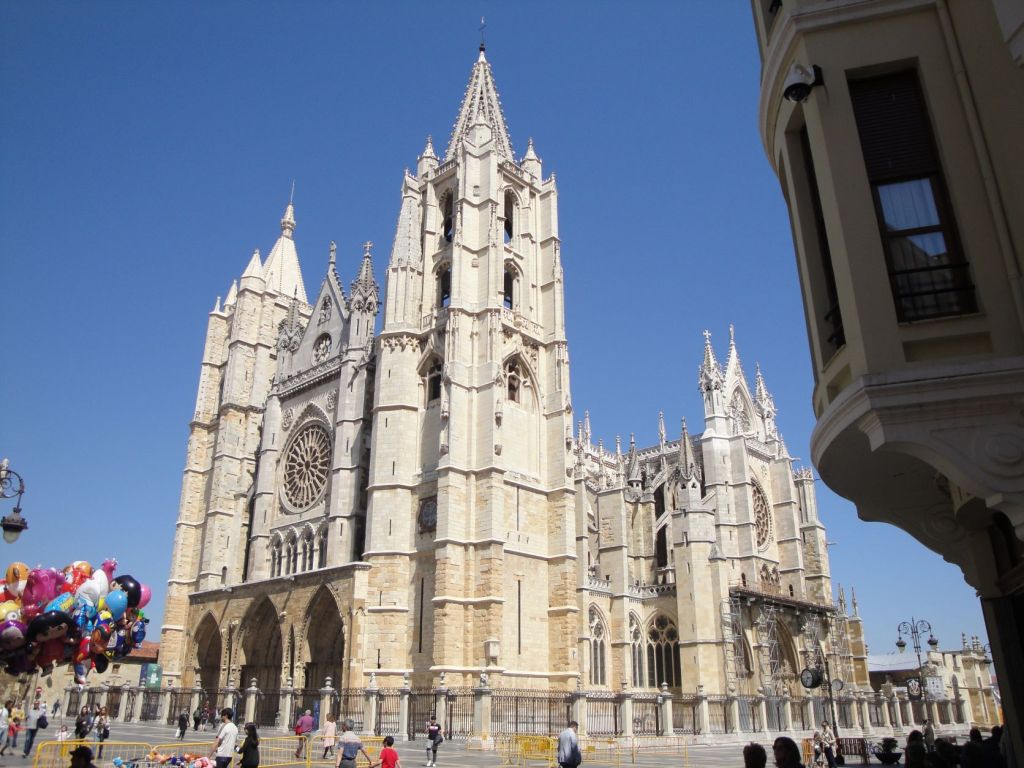
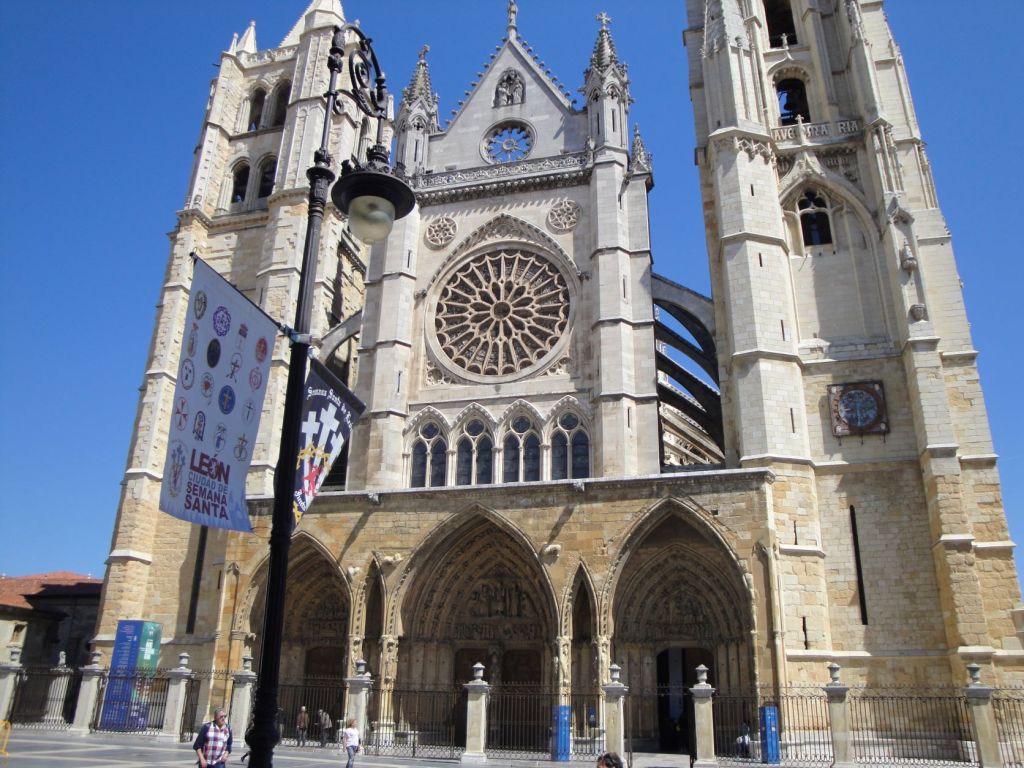
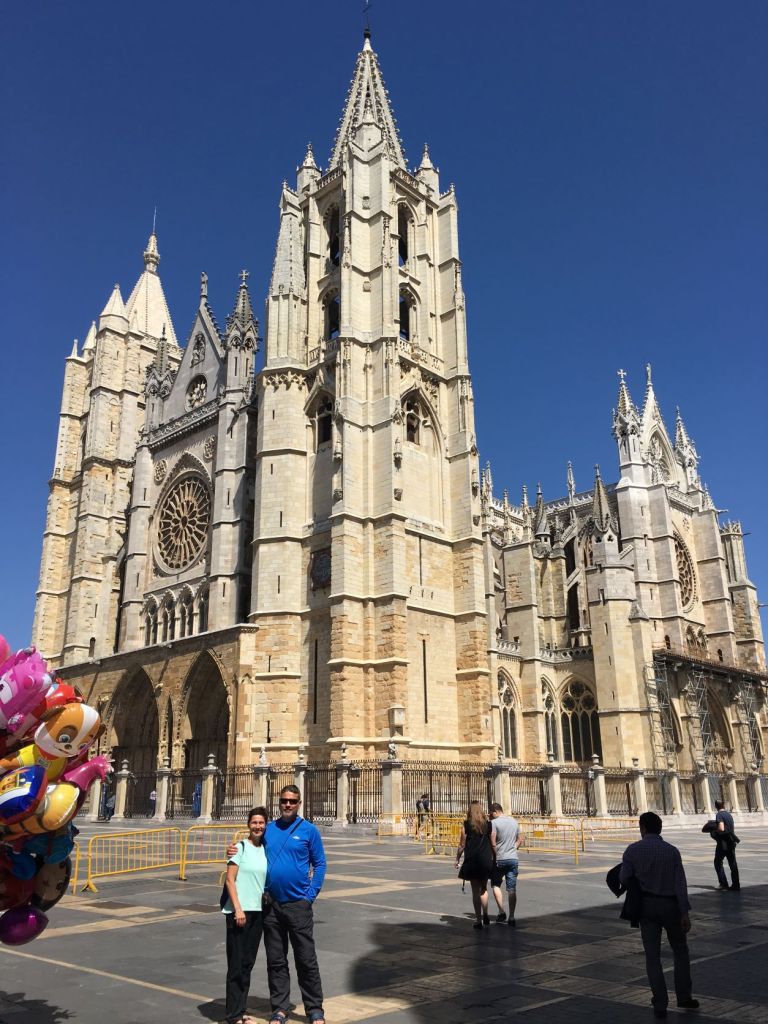
In front of the Cathedral
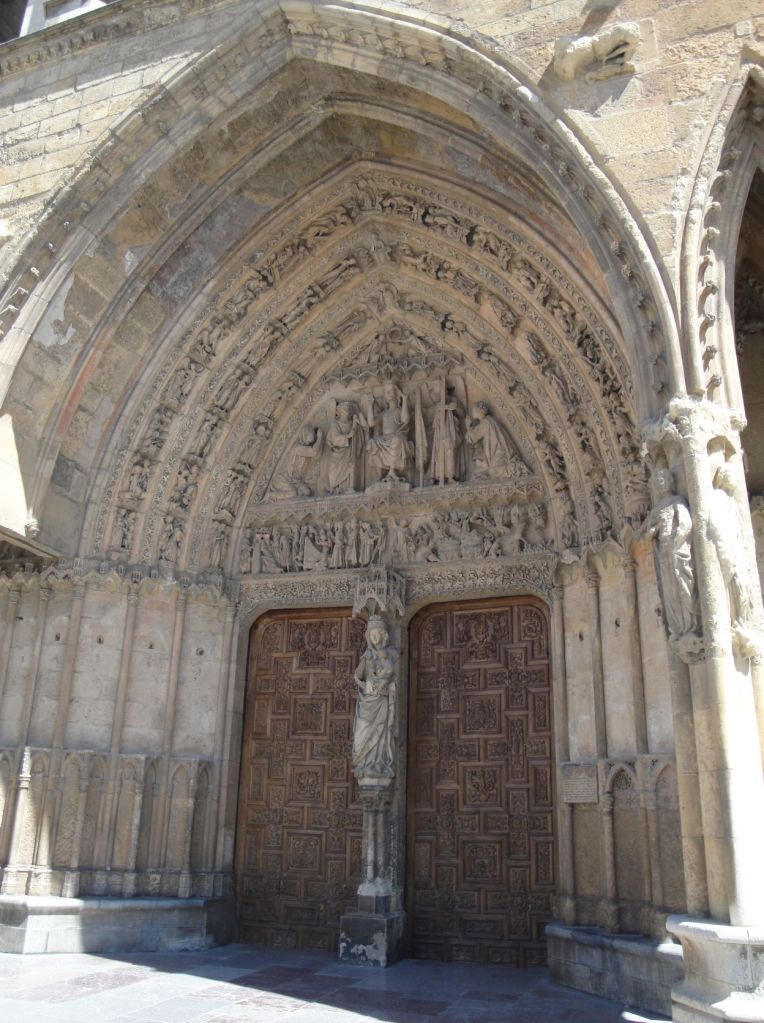
The front door of the Cathedral
After walking for 16 days and 401.4km later, we arrived in León. It is indeed a beautiful city, especially the old town with it’s breathtaking architecture and Roman Walls that was built in the 1st century BC.
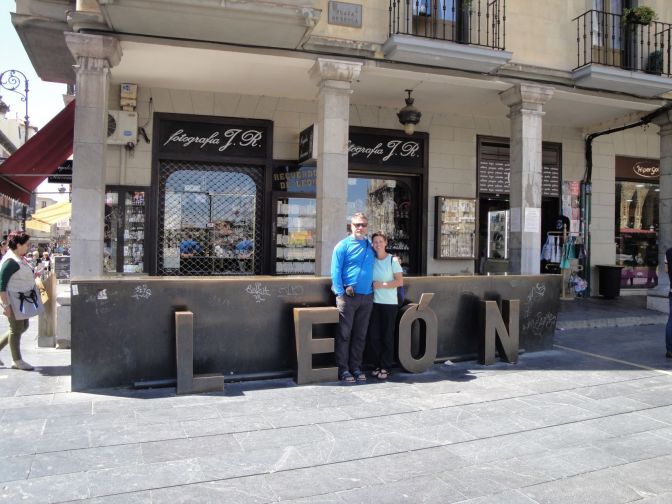
We are indeed in León
León’s Plaza Mayor is a graceful space, surrounded by colonnade arches, multi-coloured buildings and charming balconies. Most of these buildings date from 1672 – 1677. Everywhere in the Plaza was yellow barricades and steel pavilions for the Easter processions that would take place during the weekend.
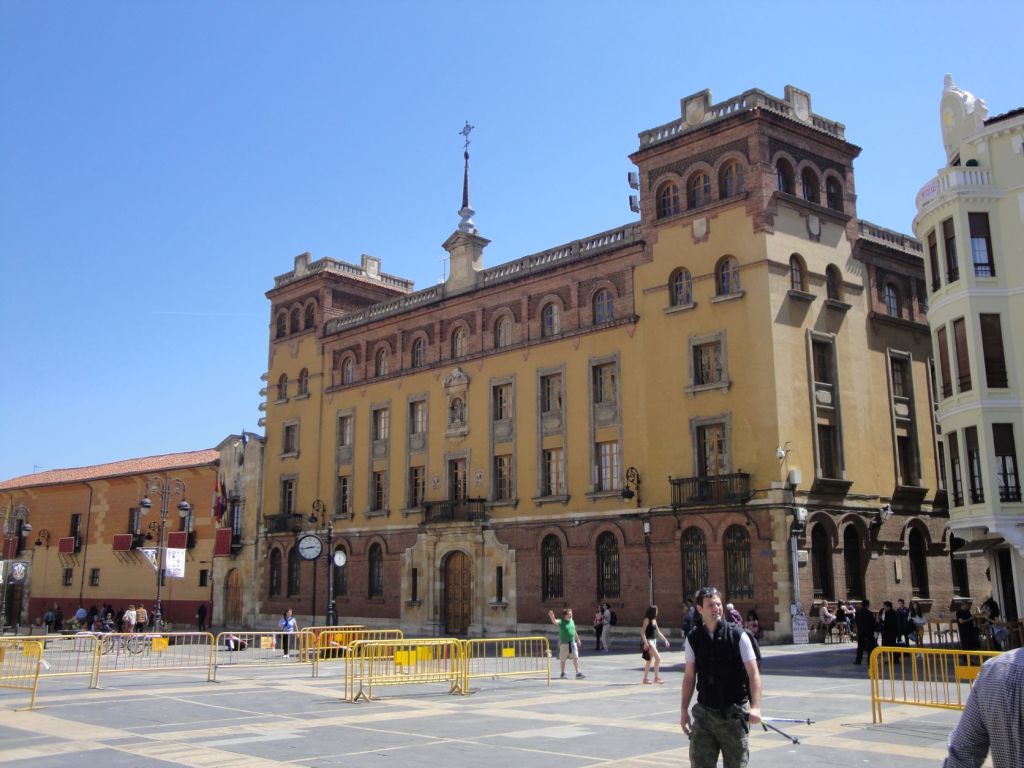

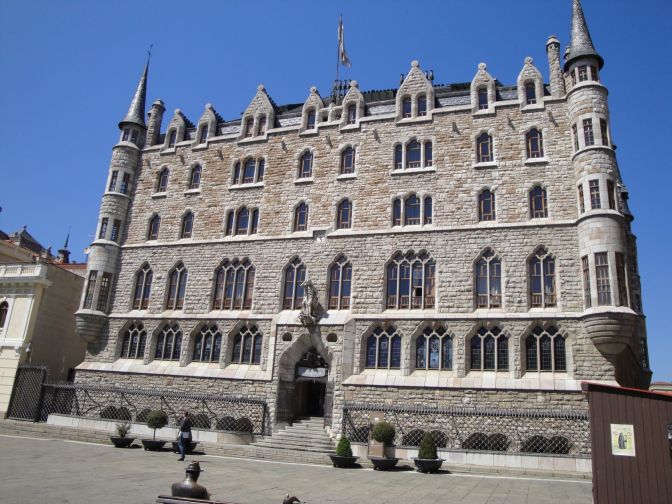
Casa Botines (designed by one of Spain’s most famous architects – Antoni Gaudi)

The man himself – a life-size figure of Guadi sitting on a bench
On our walks through the old town, we noticed a large model of a city plan of the city of León structured on the ground. And as it was spring, it was also surrounded by pretty flowers.
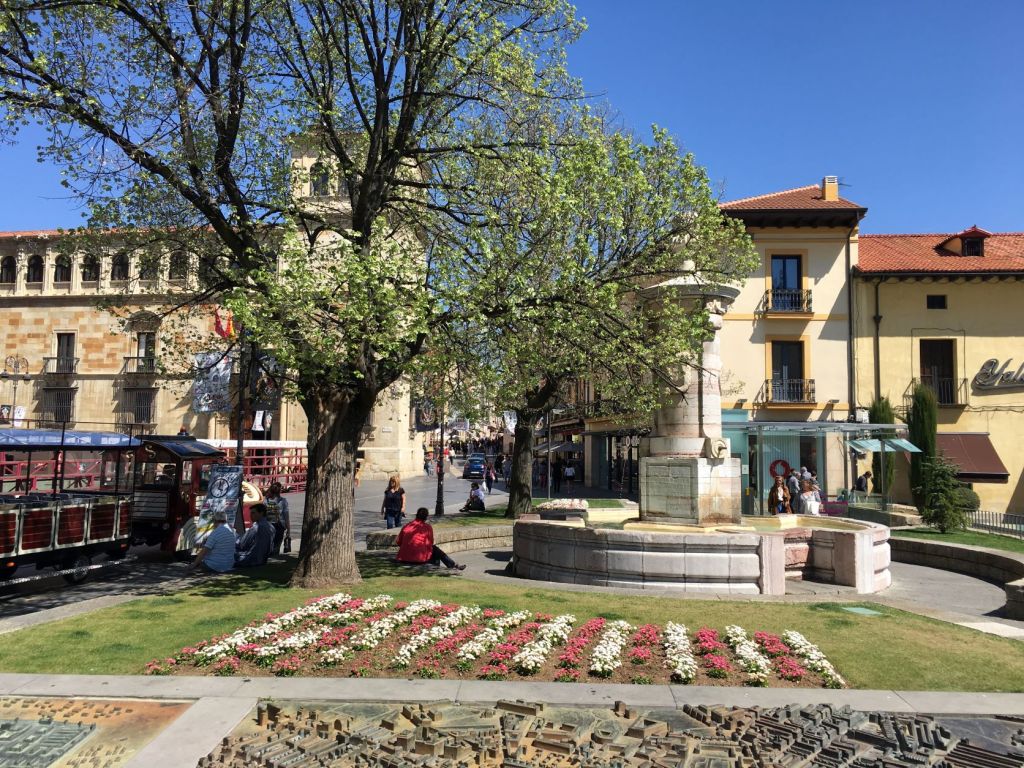
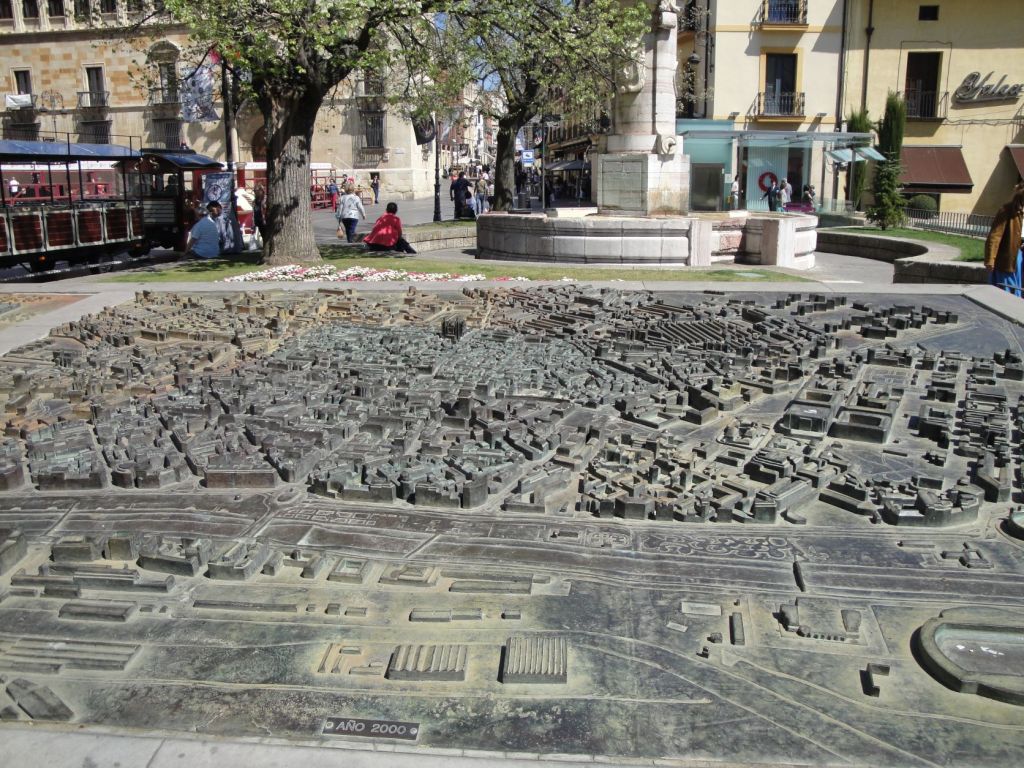
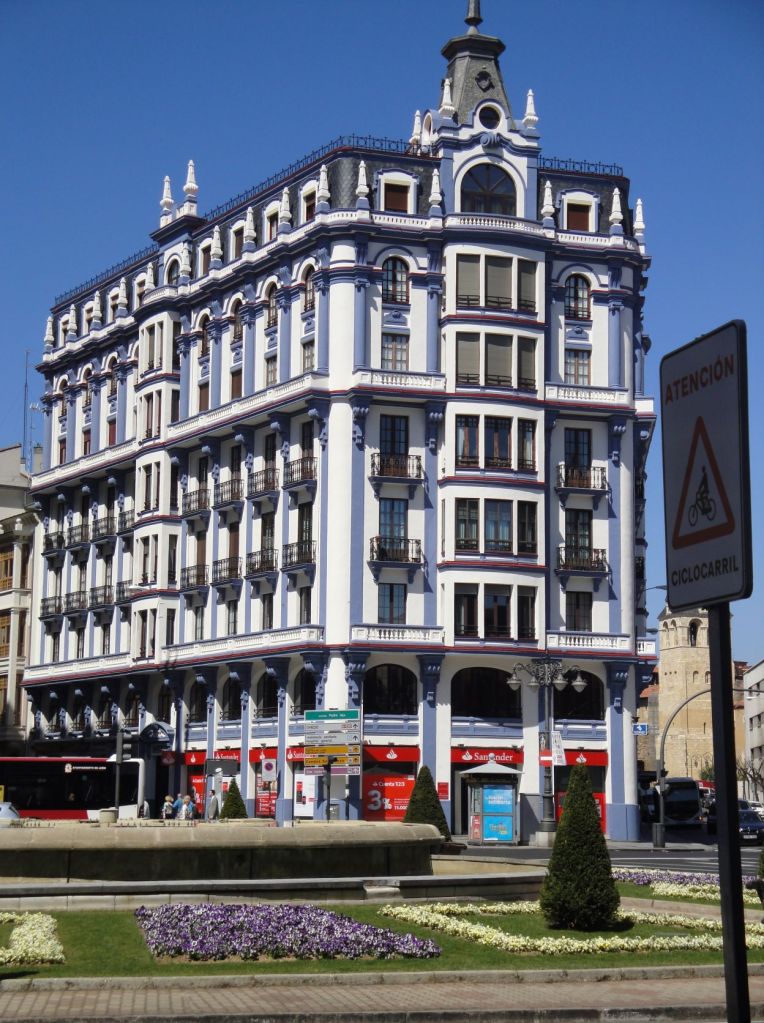
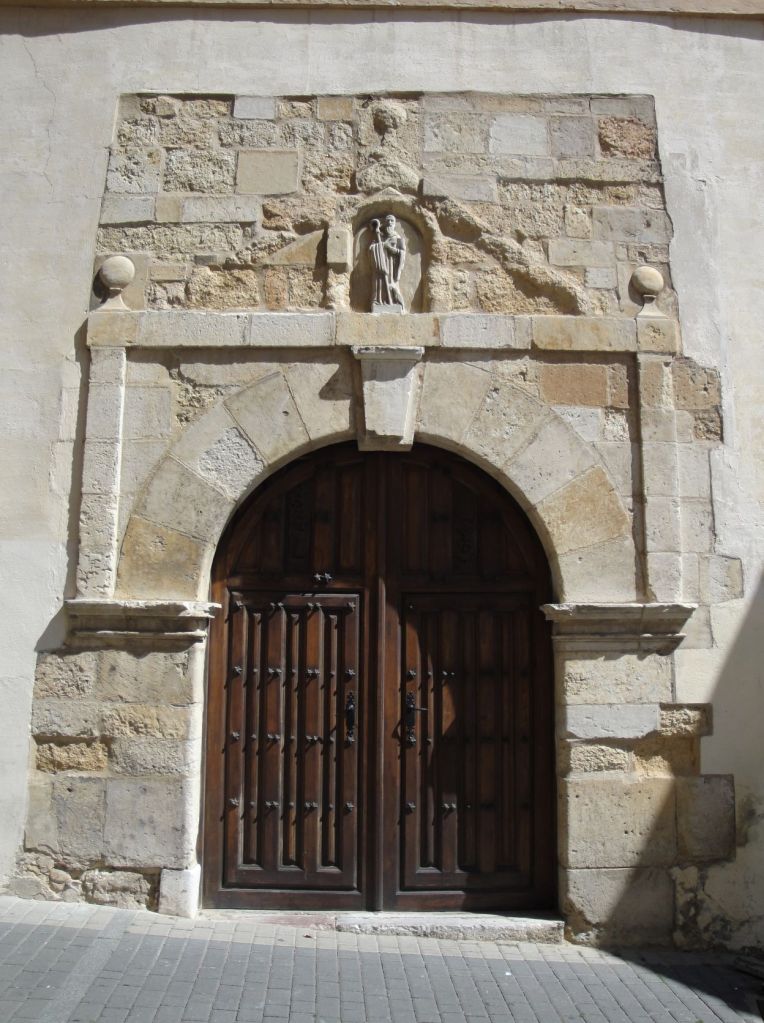
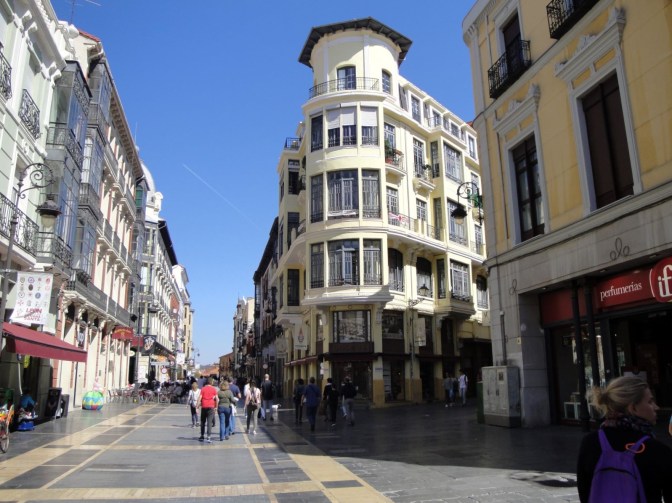
Another beautiful building close to Plaza Mayor
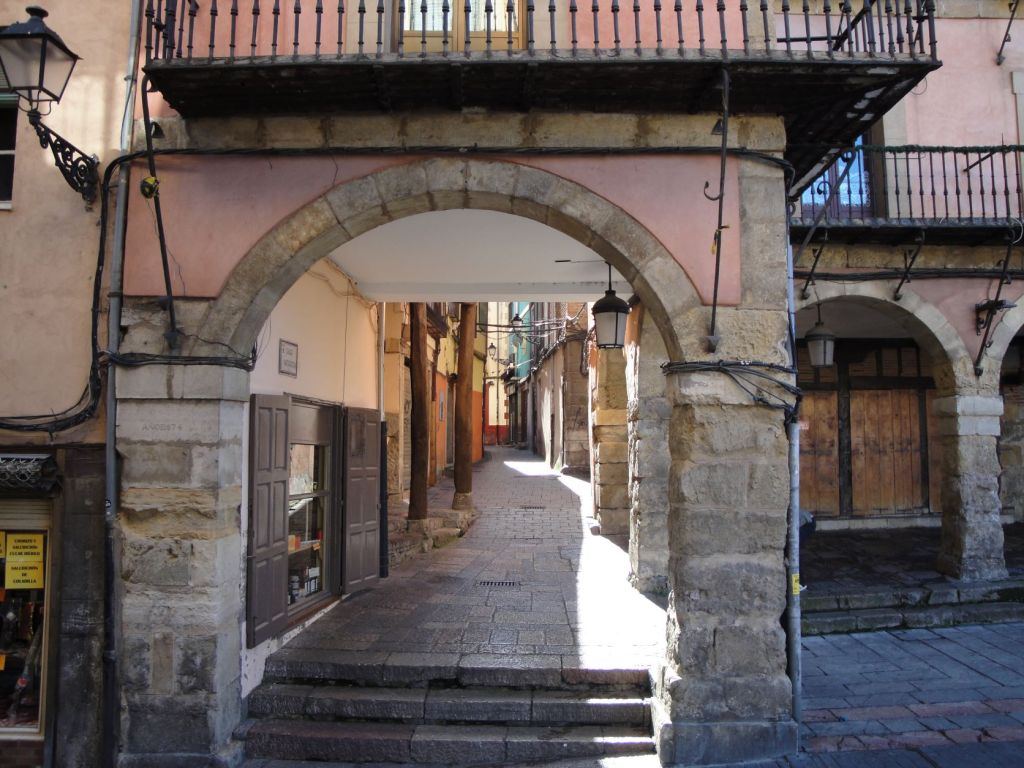
One of many colonnade arches in the Plaza Mayor
And we can’t show you a city and not talk about the food! Without a doubt, Castilla- León is best known for its roast suckling pig and lamb. But you will also never be too far away from the tradition of receiving free tapas with each drink – young and old (and pilgrims) take full advantage of this!

Food display in a shop’s window
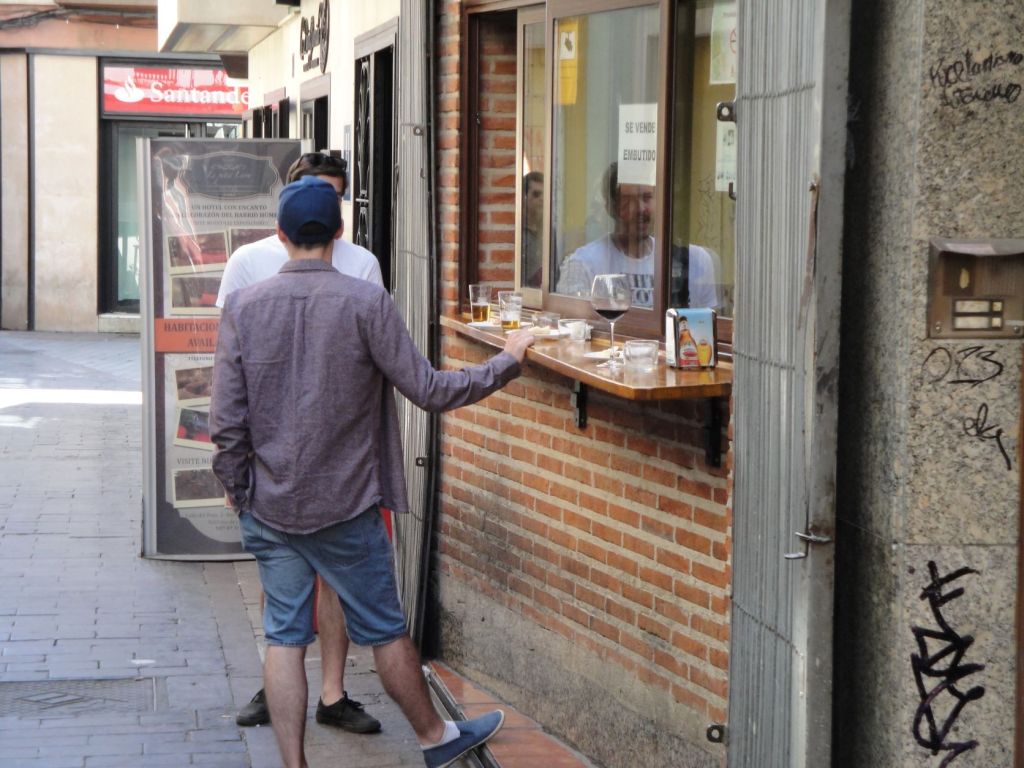
Enjoying a drink (and free tapas) in the street
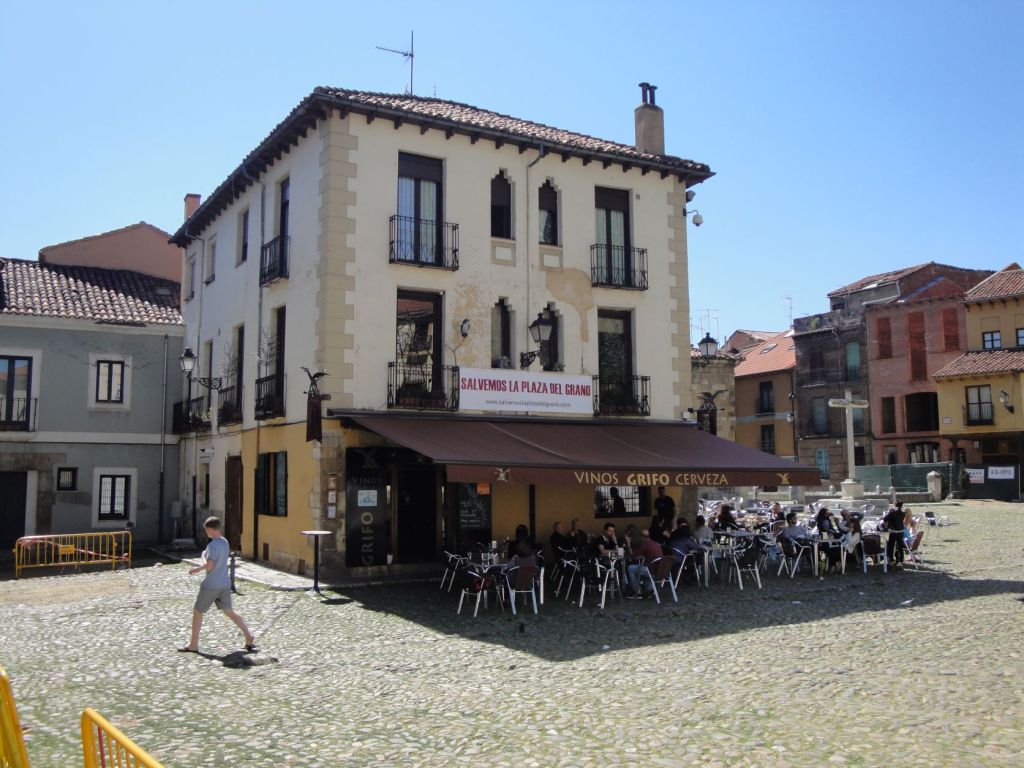
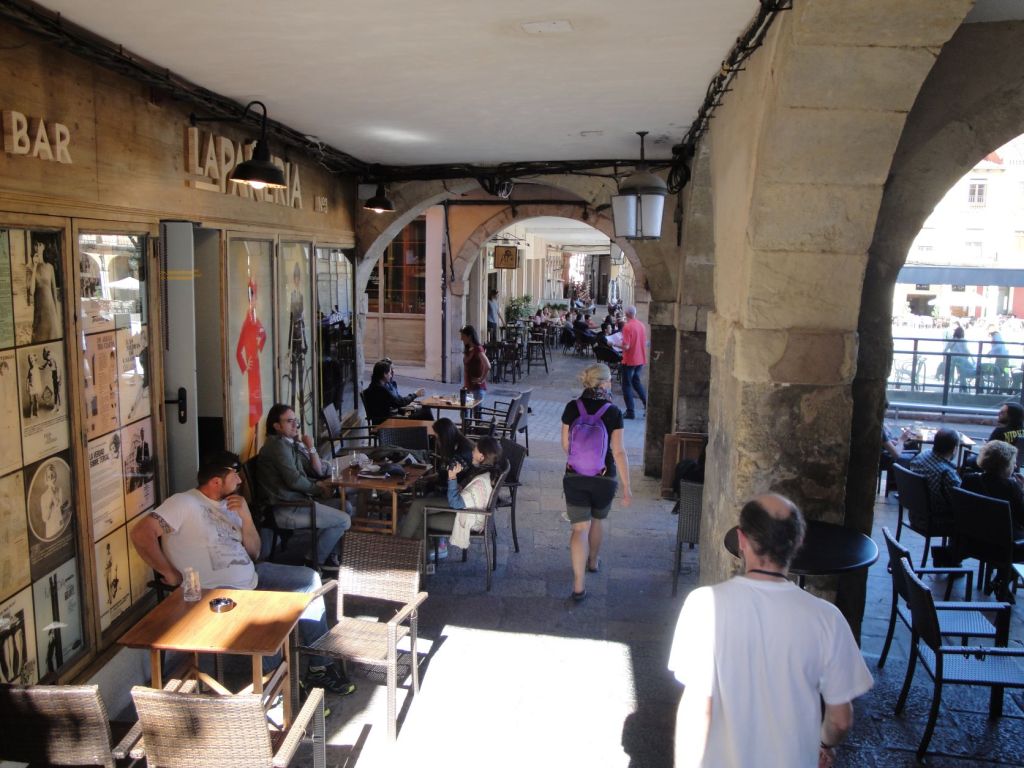
After we walked the entire afternoon around in the old town of León (in the hot sun), there was only one more thing we had to do. Yes, ice-cream was a good way of cooling down a bit!
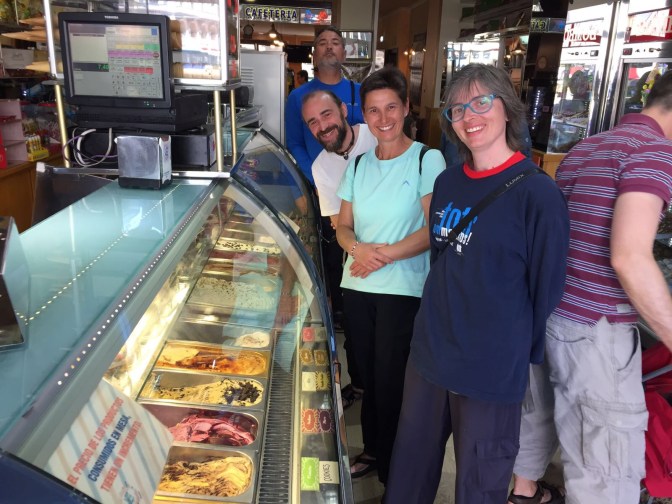
Ice-cream time!
On the way back to our albergue, we noticed a big white tent in Plaza Mayor. We had a quick look inside and saw people busy preparing religious sculptures for the processions that would take place later that evening.
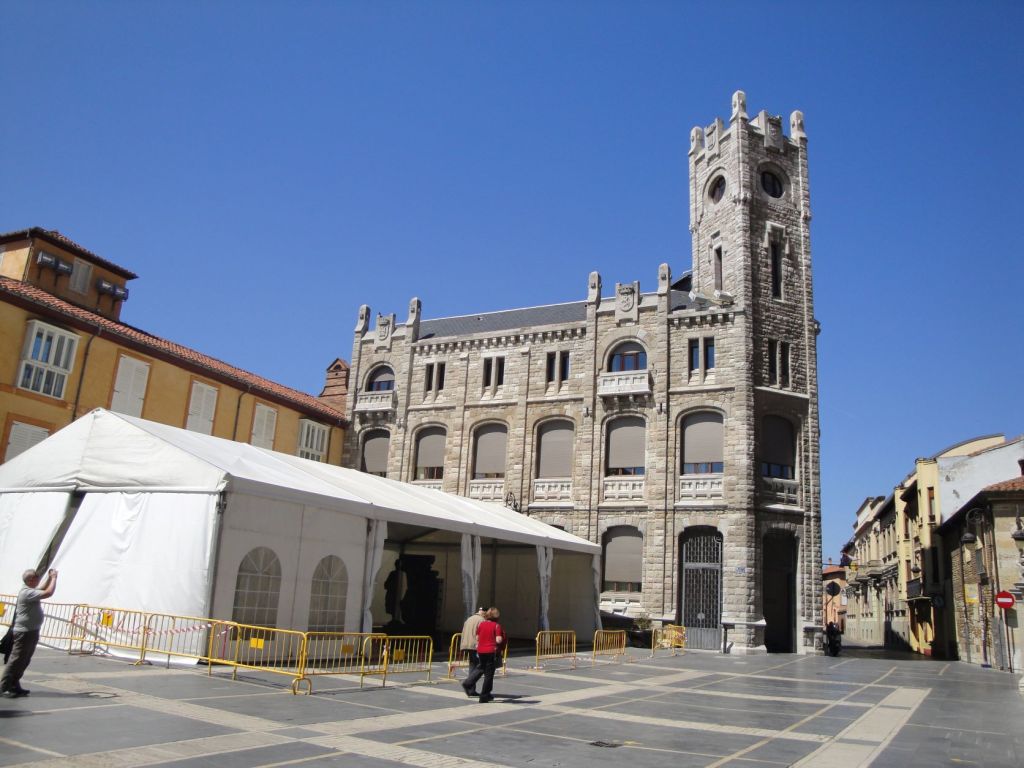
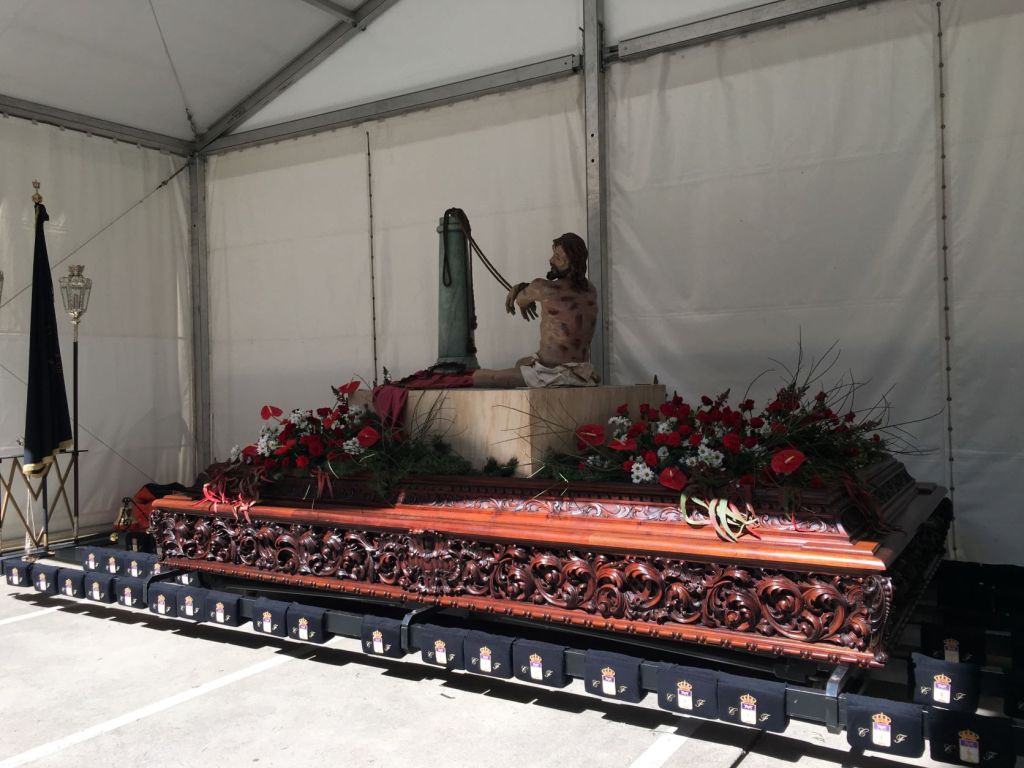
That evening was the biggest processions we saw while walking the Camino Frances. As mentioned before, we are not Catholics and therefore don’t fully understand all the customs during processions … but it was quite fascinating to watch these.
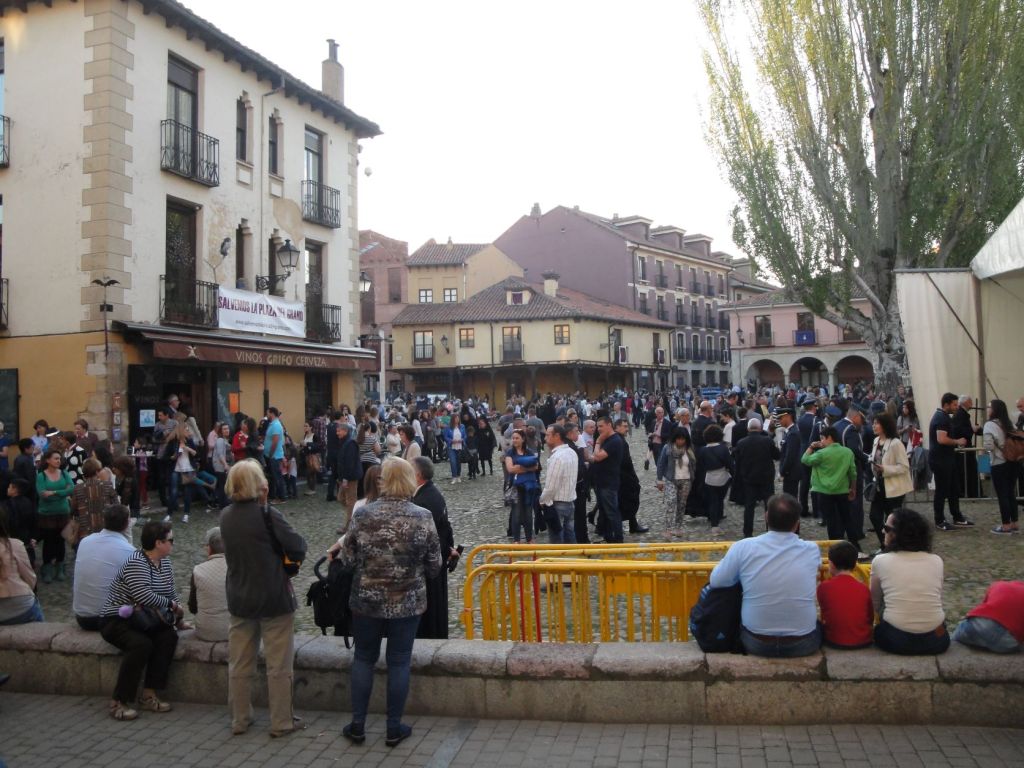

Here are just a couple of photos we took while the processions moved along León’s Plaza Mayor.


Easter weekend processions
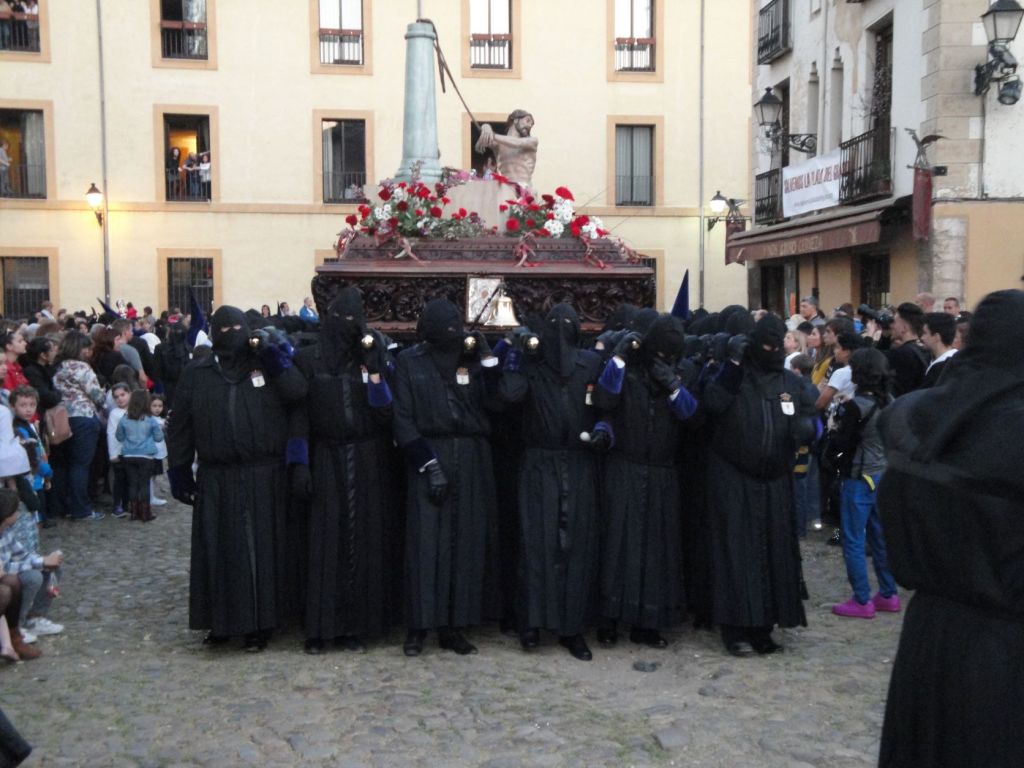
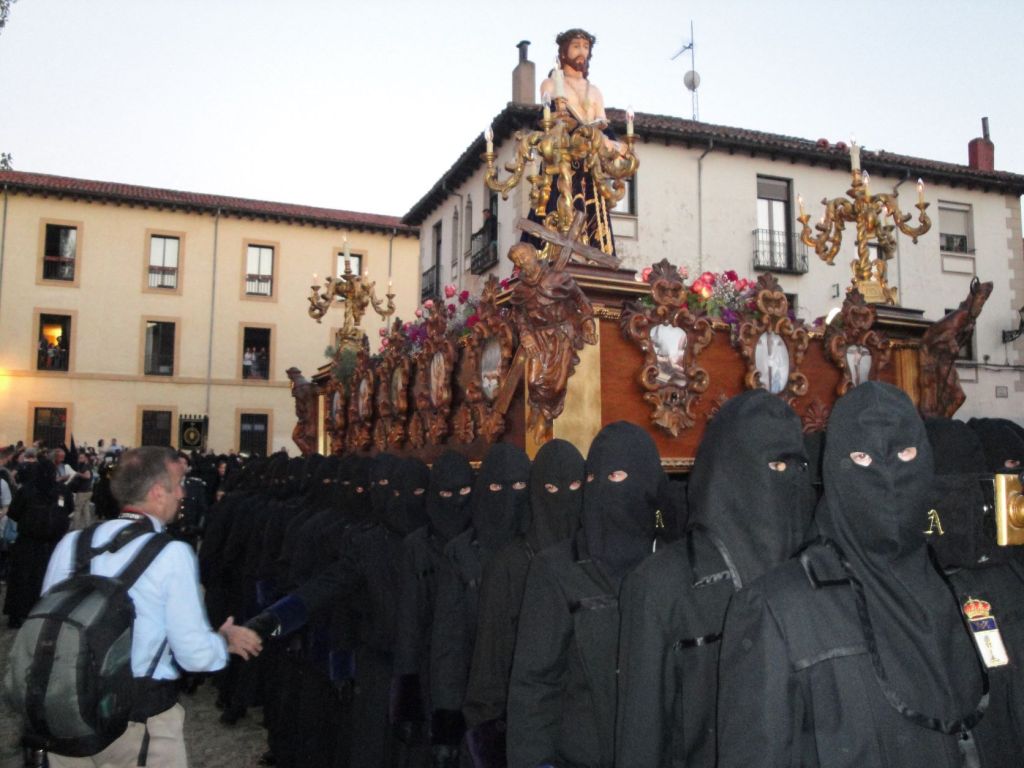
Our pilgrim friend, Carl from the USA, were standing on the other side of the road while the processions went past. And he was so kind as to forward a photo that he took of the event where Berto and I were also in the picture. That’s a great reminder that we were really there!
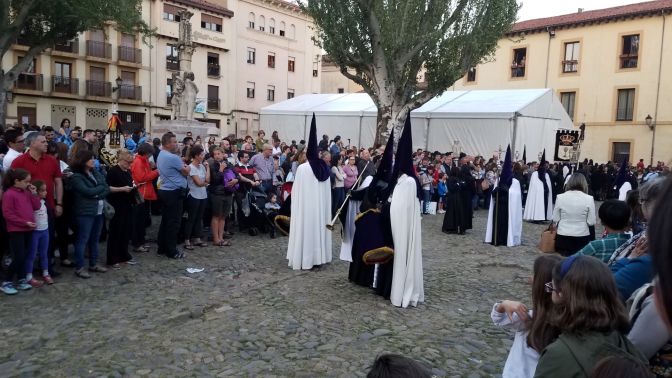
Here we are in the photo of the Easter weekend processions (Photo credit: Carl Lockamy)

One last photo of the Easter weekend processions
We felt really privileged to be able to watch these processions. Walking the Camino Frances during Easter, was indeed a good time.
The festivities continued until very late that evening (actually, until the early morning hours). But the nuns were waiting for us at the door of the albergue and by 22:30 all pilgrims had to be in bed.
When we left León the next day, everything was quiet. It was almost unthinkable that there was a festival the previous evening and León looked beautiful in the early morning light.
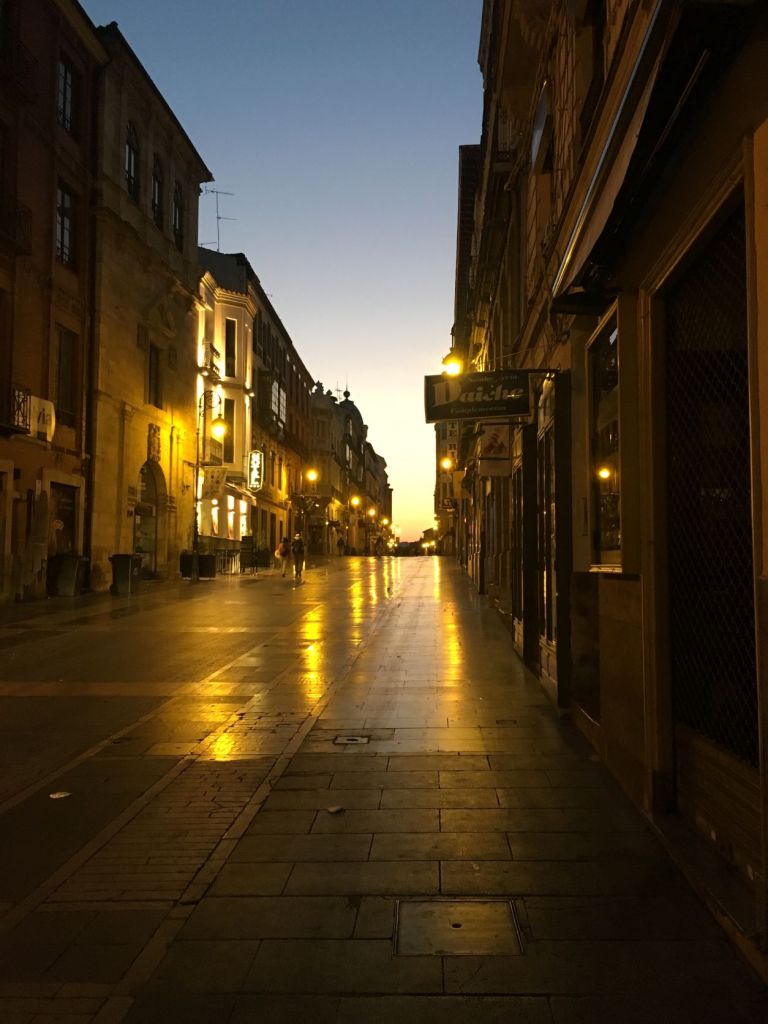
Leaving León early morning

A last look at León Cathedral
On the way out of León, we walked past another stunning building. The Convent of San Marcos (Parador) is one of the greatest architectural gems in León. It dates back to the 12th century when it was built to house pilgrims travelling along the Camino. Today however, this old monastery is a luxury hotel … and unfortunately a bit out of reach for a pilgrim’s purse.
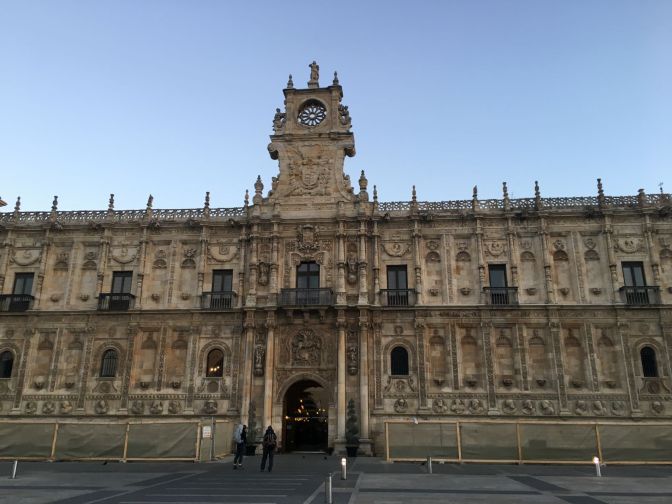
The Convent of San Marcos
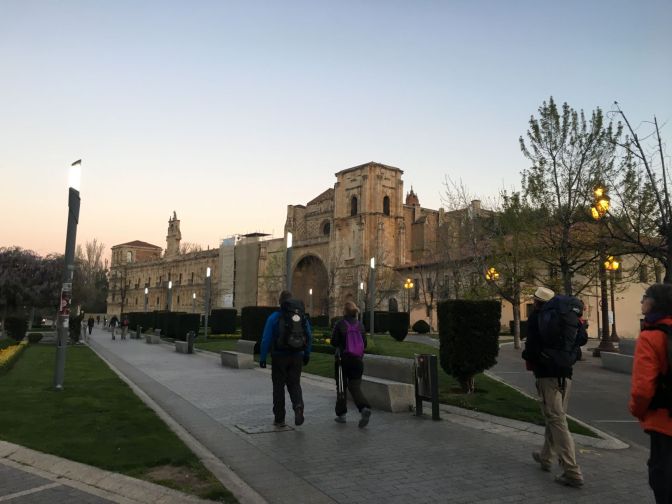
We could only look in envy at those who were lucky enough to spend the night there
León is maybe not the best-known city in Spain, but definitely worth a visit. Here you will see amazing historical architecture, narrow streets and beautiful plazas at the picturesque old town – fit for both tourists and pilgrims.
The next city on the Camino Frances is much smaller than León, but definitely worth a quick visit. Looking forward seeing you there!


The experience in Leon was certainly amazing. Since then every year during Holy Week I am sorry that I am not in Spain and think, “Next year in Spain”.
LikeLiked by 1 person
Yes, it was Carl. And the same in Astorga a couple of days later. Every year, during Easter, we’re thinking back to our time on the Camino … that was such perfect timing! Thanks again for the photos, it’s much appreciated!
LikeLiked by 1 person
I don’t think I’ve ever visited or even seen pictures of a Spanish city which I didn’t like. Leon looks so typically Spanish too. I’ve done some long distance trails myself but I have to say your miles-per-day count means that your pilgrimage must have been pretty demanding…
LikeLiked by 1 person
That’s true Phil … I just want to pack the whole of Spain in my backpack 😉. Yes, it was very demanding (I will tell you, Berto not so much – men)! All because we had limited time and needed to reach Santiago within 30 days … next time (I hope there is a next time), I want to take at least 3 months to complete the Camino – which mean a lot of tapas and wine on route!!
LikeLiked by 2 people
It’s a very dignified looking city. Former neighbours hailed from there so I was interested to see it. And Easter is always special in a Catholic country.
LikeLiked by 1 person
It’s a lovely city – the architecture of the Spanish buildings are just in a class of its own! You’re right Jo, we were really happy walking the Camino during Easter … though we are not Catholic, we are Christians and we sort of understood the wider picture of the processions. But wow, it was really something to experience!
LikeLike
🤗💗
LikeLiked by 1 person
Wow! I got tired just reading about this wonderful pilgrimage. You picked the ideal time for it. Leon is a beautiful city. Your outstanding photos leave no doubt about that. I admire the effort required to plan and complete the journey.
LikeLiked by 1 person
Yes, this was an epic journey! We were quite fit back then (and got fitter as the hike continued), but there were some really long days! The historic town centres on the Camino Frances are really beautiful, as was the case with Leon. Thank you John, I appreciate your comments.
LikeLike
Fascinating walks and quite inviting images. The Easter weekend processions reminds me of our visit to Barcelona.
LikeLiked by 2 people
Thank you Rupali 🌸. Oh yes, I can imagine the processions must be very similar to those in Barcelona. We really enjoyed this experience and it was truly special.
LikeLiked by 1 person
What an incredible journey and so well documented. The organization of the pilgrimage is wonderful and must give you such a great feeling of connection. It shows there s some hope for humanity. Leon looks wonderful, especially the early morning scenes. I always loved leaving foreign places in the dawn while they were still quiet. You have such a great smile!
LikeLiked by 2 people
Thank you so much for your kind words Carolyn. That’s exactly what it was … it was here on the Camino where I found new hope for humanity – it’s out there somewhere, unfortunately just not so visible as it should be! Oh yes, it was always great leaving early in the morning – we saw so many sunrises! ‘That smile’ was my best asset in my client service days 😉 (thanks for the compliment).
LikeLike
You are giving me itchy feet!!
LikeLiked by 1 person
Ha 😄, I give myself itchy feet!
LikeLiked by 1 person
Leon looks absolutely stunning. That cathedral is gorgeous. And what an opportunity to see the procession, how fascinating. Maggie
LikeLiked by 2 people
Thanks Maggie 🌸. Leon is definitely one of the most beautiful cities on the Camino trail and we were blown away by the processions here – the efforts from the community to make these such a huge success, is admirable.
LikeLike
Ongelooflik mooi! Ek glo die saamstel van hierdie reeks bring vir jou tonne lekker herinneringe op?
LikeLiked by 1 person
Dis die heerlike ding van foto’s, ne? Terwyl ek dit saamstel, het ek en Berto ons eie “trip down memory lane” en elkeen van ons deel dan die hoogtepunt van elke dag se stap … dis ongelooflik hoe goed ons klein details onthou 🙂.
LikeLiked by 1 person
Dis presies hoe mens jou brein oefen en die ouderdom op n armlengte hou!
LikeLiked by 1 person
Leon looks like a beautiful place with a stunning cathedral, and many other lovely sites. I’m impressed that after hiking so many miles, you walked all over the city! Great post!
LikeLiked by 2 people
Leon was probably my favourite city on the Camino Frances … maybe because there was such a festive atmosphere 🙂. We really wanted to see Leon, so not even ‘n few blisters would keep me from exploring! Thank you Tricia for reading, as always it’s much appreciated.
LikeLiked by 1 person
Well Corna, I always think of myself as being fairly well-travelled in Spain, but here you are with another city I haven’t yet made it to. León looks lovely, another ridiculously handsome cathedral I see, though Casa Botines outshines it I think. Good old, Gaudi. I see you were starting to become a processions veteran at this point 😉 Another fine chapter for your collection with more good company to boot.
LikeLiked by 1 person
I was really impressed with León and would not mind going there again … enjoying a few tapas and beers! Yes, I think you’re right … Gaudi made sure ‘his’ building is a good competitor for the cathedral (watch out for another one his buildings in our next post). And more processions in the next post – by then, I got to knew this so well, I could almost partake myself 🙂. Thanks for reading Leighton – you know it’s much appreciated.
LikeLiked by 1 person
Lovely captures along your walk from Burgos to Leon. It looks like you had fabulous weather. The Leon Cathedral looks beautiful, but it’s too bad you weren’t able to go inside. I’d say the timing worked out well though as you instead go to to watch the processions in the evening.
LikeLiked by 1 person
We had really nice weather, though on this specific stretch between Burgos and Leon, there were a couple of really hot days. Leon Cathedral (and just basically the old town of Leon) is beautiful. It was special to watch the processions – it seemed Easter was a good time to be on the Camino.
LikeLiked by 1 person
Definitely one of the highlights of the camino.
LikeLiked by 1 person
I absolutely agree!
LikeLiked by 1 person
It’s amazing how many different places you saw and the variety represented here. What an awesome way to see the country up close! I also noticed that the landscape seems drier than I was expecting.
LikeLiked by 2 people
Totally! I think this has to be the best way to see a country … you get to places that tourist buses won’t travel to. The first and last part of the Camino Frances is green, but this particular stage between Burgos and Leon is in the drier part of the country. And we walked in spring, which means it was actually green. This stretch (called the Meseta) is hot and dry in summer time when it’s the Camino’s peak season… then this landscape is brown and a challenge to walk (that’s when you need good walking buddies for sure 😉).
LikeLiked by 1 person
I’d not heard of Leon but it looks to be a beautiful Spanish city with a magnificent cathedral. I’m so pleased you had sufficient energy left after so much walking to explore the city.
LikeLiked by 1 person
I don’t think Leon is so well-known to tourists (probably more a festival city to the locals). Yes, the cathedral is really stunning … the churches and cathedrals in Spain are just so beautiful. I just knew when I saw the historical town of Leon, that I will regret it if I’m not exploring. We almost walked another 10km just around the city … silly-silly, but so worth it 😉.
LikeLiked by 1 person
I love your photos of León, especially its magnificent cathedral, architecture and its rich heritage. When it comes to walking Camino, it’s amazing how many people you can meet from all walks of life – it is as a journey in which people establish special bonds and from some of these bonds, strong friendships can be formed, which last a lifetime. Thanks for sharing and have a good day 🙂 Aiva xx
LikeLiked by 2 people
Leon (and its cathedral) is really beautiful! And you’re right that Leon’s got a rich history – one can sense it by just looking at the buildings in the old city. Do you know what’s the beauty of meeting new people on the Camino? The fact that we only knew their names and where they come from … seldom we would knew their occupation or political orientation. These things did not really matter when we formed friendships – and that’s wonderful! Thank you for reading once again Aiva, enjoy your weekend 🌸.
LikeLiked by 1 person
What an amazing adventure, Corna. I am adding a camino walk to my bucket list! I would absolutely love the experiences you’ve described here. And that old-world architecture – can’t get enough of it! Thanks for sharing your wonderful story & photos, and inspiring me yet again! Wishing you & Berto a joyful week ahead! 🌞
LikeLiked by 1 person
I’m so glad you enjoy this series about our Camino. If you ever get the opportunity, do it! You are definitely the kind of person one would like to meet on the Camino 🙂. The villages and old city centres are amazing to explore … even when you’re dead tired of all the walking! Thank you, we wish you a great week as well.
LikeLiked by 1 person
Thank you Corna for sharing your walk for over 400km and then generously sharing the amazing León and it’s rich history too.🌸💕I’m grateful for reading about your wonderful experiences and feel like I’ve accompanied you all the way.
LikeLiked by 1 person
Thank you so much for your kind words Henrietta 🌸 … I should have had you on my support team when I walked the Camino! León is such a beautiful city and I would certainly not mind going back there again!
LikeLiked by 1 person
Gaudi on the bench brought a smile! The historic brick road in one photo looks like it could have been a moat at one time. Glad to see you making pilgrim friends along the route.
LikeLiked by 1 person
Old Gaudi … it would have been really cool if I sat next to him on that bench 😉. You are right about that brick road – we said the same when we walked there. That’s probably the most memorable thing about our Camino… the friends we made there!
LikeLiked by 1 person
This series was a really enjoyable read!
LikeLiked by 1 person
I’m glad you enjoyed reading about our Camino Frances cities (we still have a few to go) … it was such an adventure!
LikeLiked by 1 person
I look forward to them!!
LikeLiked by 1 person
As painful as it must be to walk that far, that is the best way to see everything that you did and you could get up close. I just love that cathedral. Thank you for sharing this amazing adventure with us.
LikeLiked by 1 person
That’s absolutely true Diane! While walking, you are just that much more observant and you see things that you wouldn’t otherwise. The cathedral in Leon is beautiful, so are their other buildings in the old city centre. Thank you for walking with us 🌸.
LikeLike
Dis ongelooflik hoe ver julle teen die tyd al gestap het! Leon is ‘n ongelooflike stad! Soveel ou geboue en kan net dink hoeveel geskiedkundige storie daar vertel kan word. Jammer julle kon nie binne in die katedraal ingaan nie!
LikeLiked by 1 person
Ja, net om weer daaraan te dink oor hoe ver ons gestap het … sjoe, ek weet nie hoe ons dit gedoen het nie! Hierna het ons omtrent nog 300km gestap 👀👀. Leon was een van die mooiste stede vir my en as ons nie op die Camino was nie, sou ons beslis ‘n paar dae hier wou deurbring.
LikeLiked by 1 person
Ongelooflik Corna!! So ver te voet…
LikeLiked by 1 person