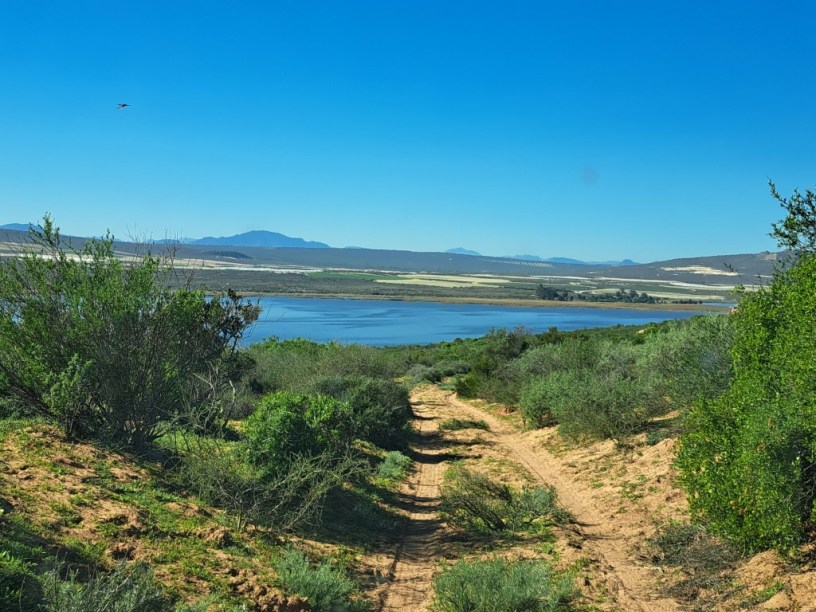
June 2026
Not just an estuary, but one of the few coastal fresh water lakes in South Africa
We’ve been to the small fishing village of Elands Bay quite a few times. It’s one of our favourite spots on the West Coast to pitch our tent and gaze out over the Atlantic Ocean.
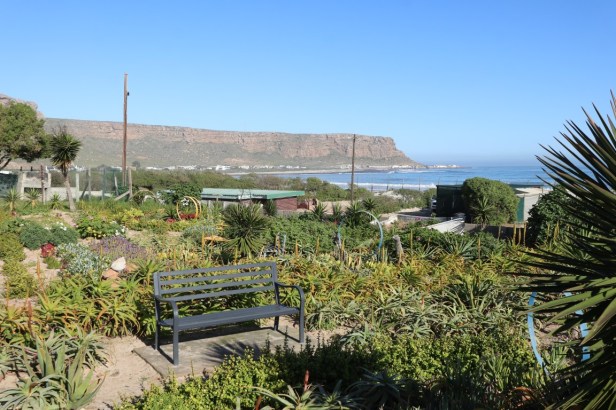
Elands Bay sits at the foot of the Bobbejaansberg
In this post, however, we’re not going to show much of the sea, but rather take you to the Verlorenvlei Estuary. This is right on the doorstep of Elands Bay, and after the recent heavy rains the area received, the estuary is almost full to the brim. When given sufficient rain inland it fills and sometimes even overflows into the sea at Elands Bay. Since this is not so common (considering that this lake was almost completely dry a few years ago), Verlorenvlei Estuary called us for a visit.
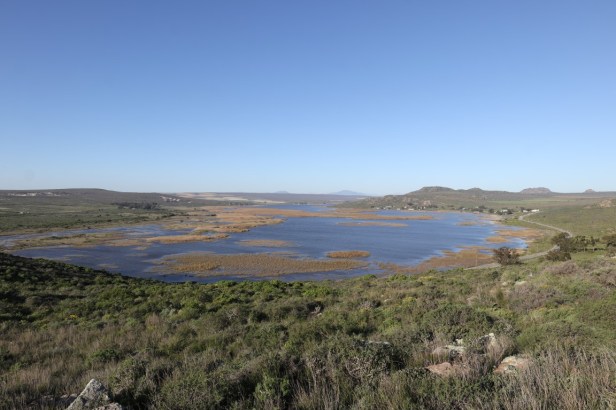
Verlorenvlei Estuary
Even though we have been to Elands Bay many times, we have never taken the dirt road that runs parallel to the estuary. On this visit, we followed the tarred road and then took a left turn to the Verlorenvlei Heritage Settlement to see if the dirt road is passable. From here we had the chance to see the estuary up close and also how much water there is currently. What a beautiful sight.
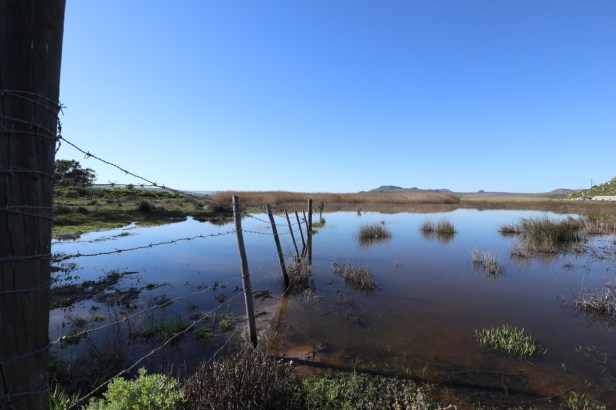
Fence under water – proof of how much water the estuary (and lake) recently got
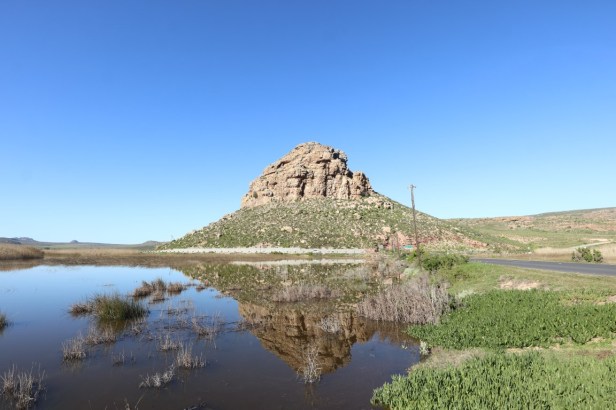
Reflections in the water
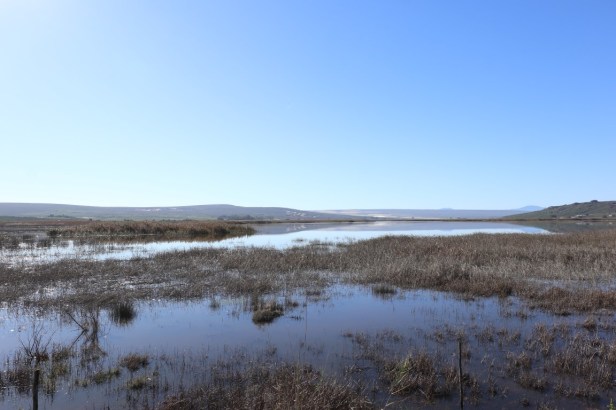
Verlorenvlei Estuary as seen from the main tarred road
The estuary is a bird paradise. We read earlier that there can usually be more than 5,000 birds, and sometimes even up to 20,000. We saw and heard lots of birds when we stopped to enjoy the scenery. There were quite a few pelicans among the reeds, and we watched them for quite some time before they swam to the other side of the estuary.
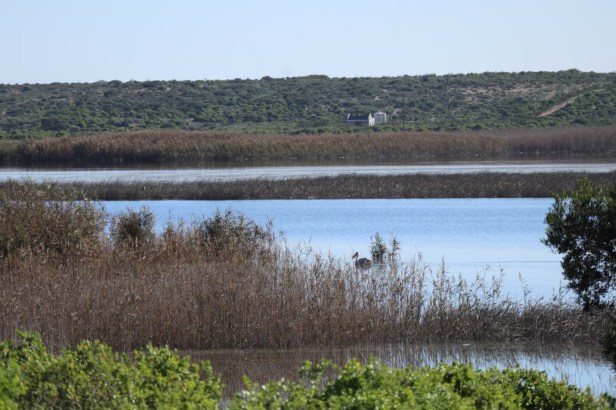
Pelican on the water
On the way to the dirt road, we saw a sign with the words ‘Provincial Heritage Site’. This is known as the Verlorenvlei Heritage Settlement and some of the buildings here are from the late 18th century. The houses were built with sun-dried clay bricks, white-washed with lime which was probably made from local seashells. They also had thatched roofs and dung floors. These houses are known as ‘langhuise’ (long houses) and are recognised as being significant and unique remnants of the once thriving hamlet on the shores of the estuary.
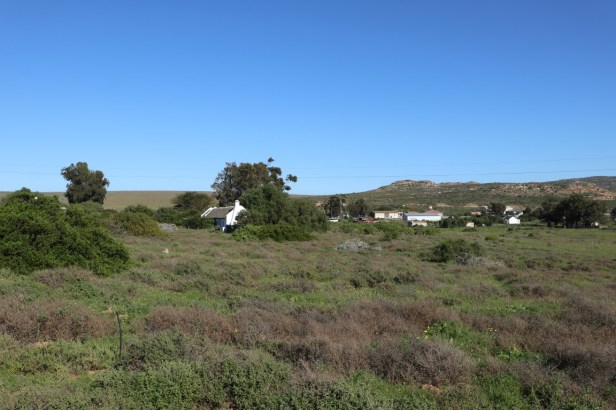
Verlorenvlei Heritage Settlement
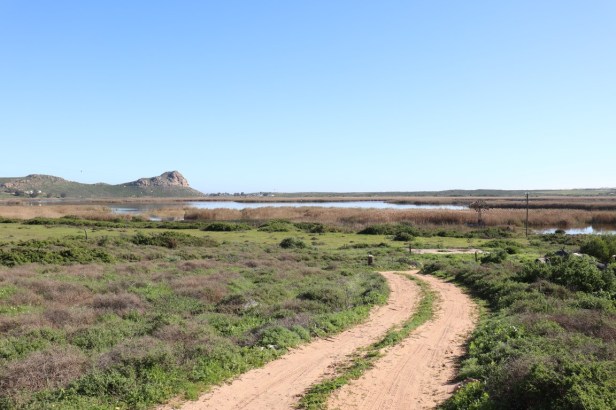
Dirt road leading to the heritage site
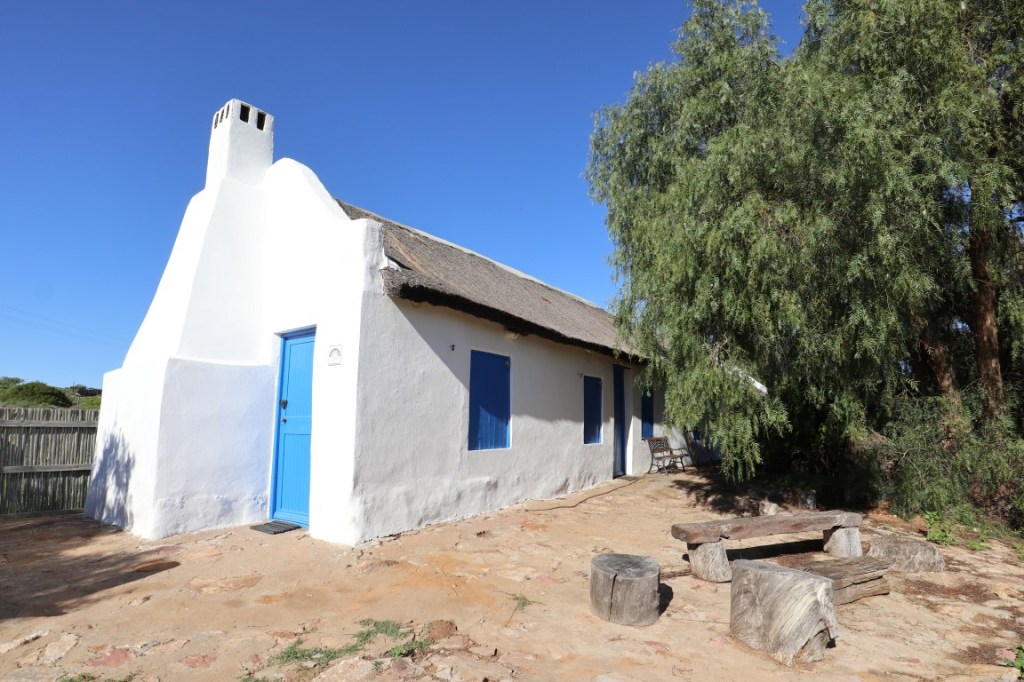
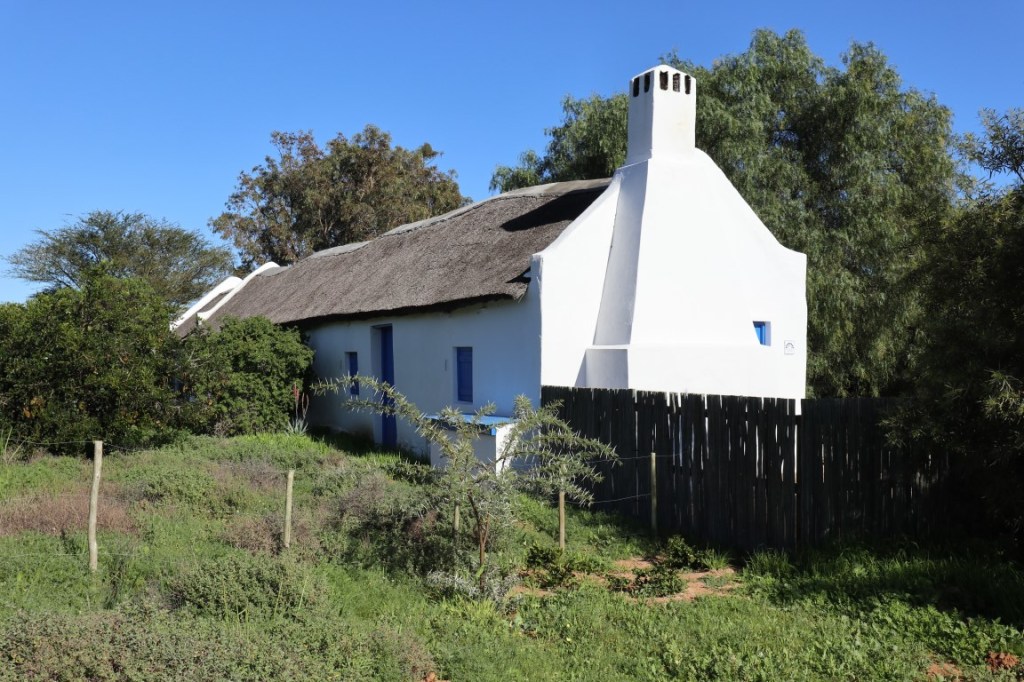
‘Langhuis’ from the 18th century
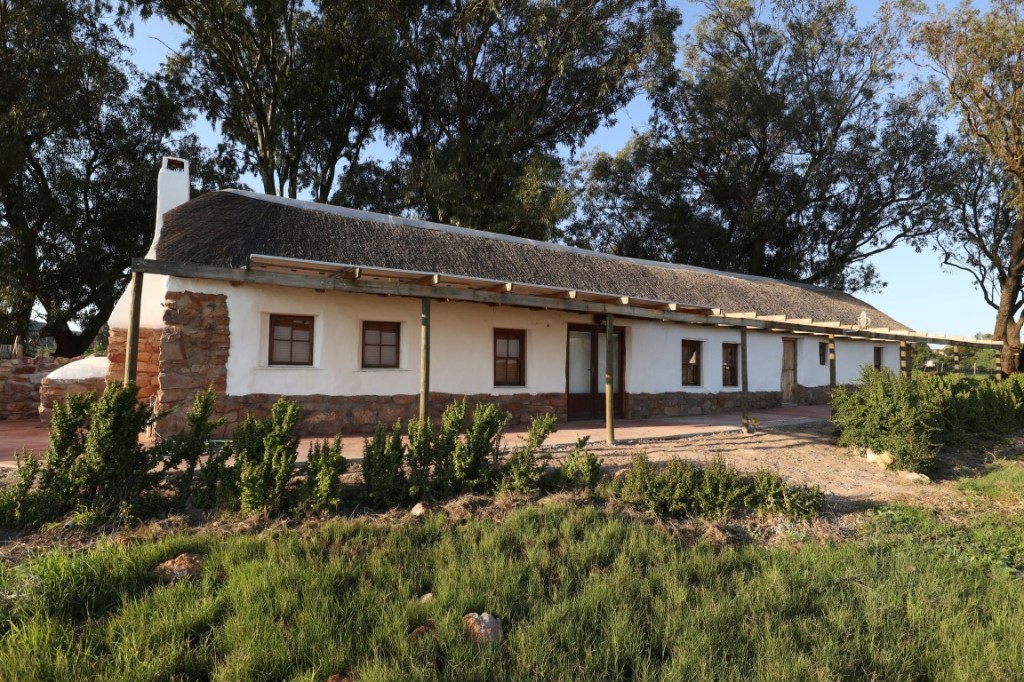
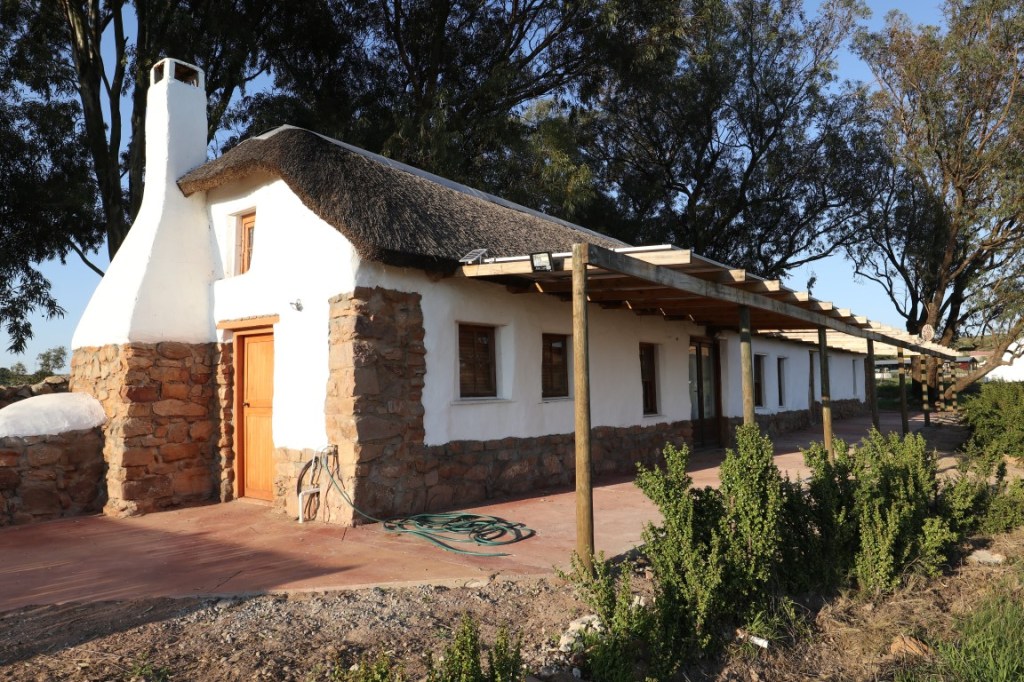
Another ‘langhuis’
While we were admiring the ‘langhuise’, a man stopped next to us. Berto asked him if we could drive on the dirt road, and he said he had just unlocked the gate and that we were welcome to continue on the road (*). There were some nasty ditches and large rocks – probably due to the recent rain. We would suggest that this road should be driven with either a 4×4 or a vehicle with high ground clearance.
(*) There is an information board at the gate that is almost completely faded by the sun, but we could vaguely make out the words ‘Nature Reserve’ on it. We intended to go to the museum at Elands Bay after finishing the route to find out if there is an entrance fee, but it was closed when we got back. Maybe, for any future travellers, it’s a good idea to make a stop at the museum and ask if there is an entrance fee (and the condition of the road).
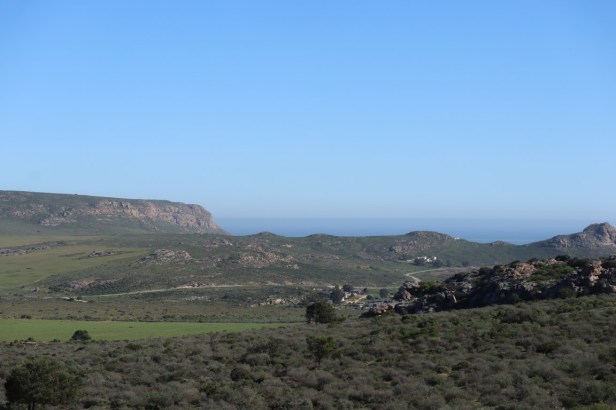
The Atlantic Ocean visible from a high point
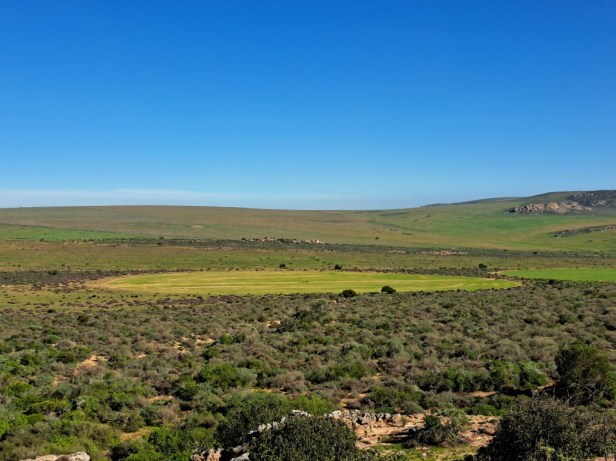
We could also see farm fields
Apart from the stunning views of the lake, we also saw lots of tiny flowers along the road. During spring, this area is covered with wildflowers. Most of these flowers are probably hardy shrubs and succulents. After a long, dry summer, the recent rain has turned nature into beautiful shades of green.
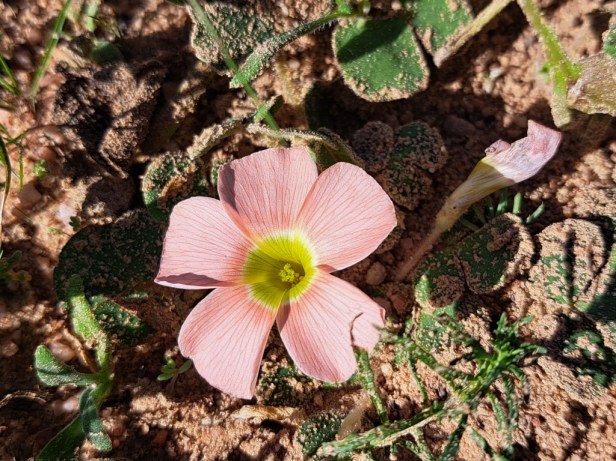
Sorrel
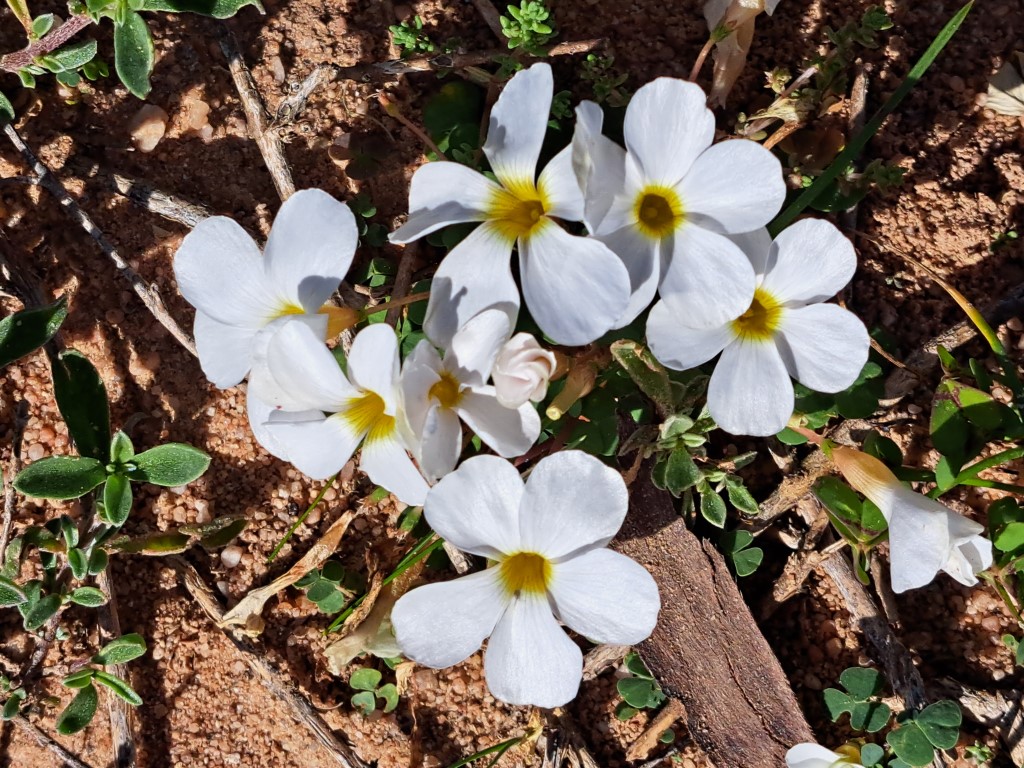
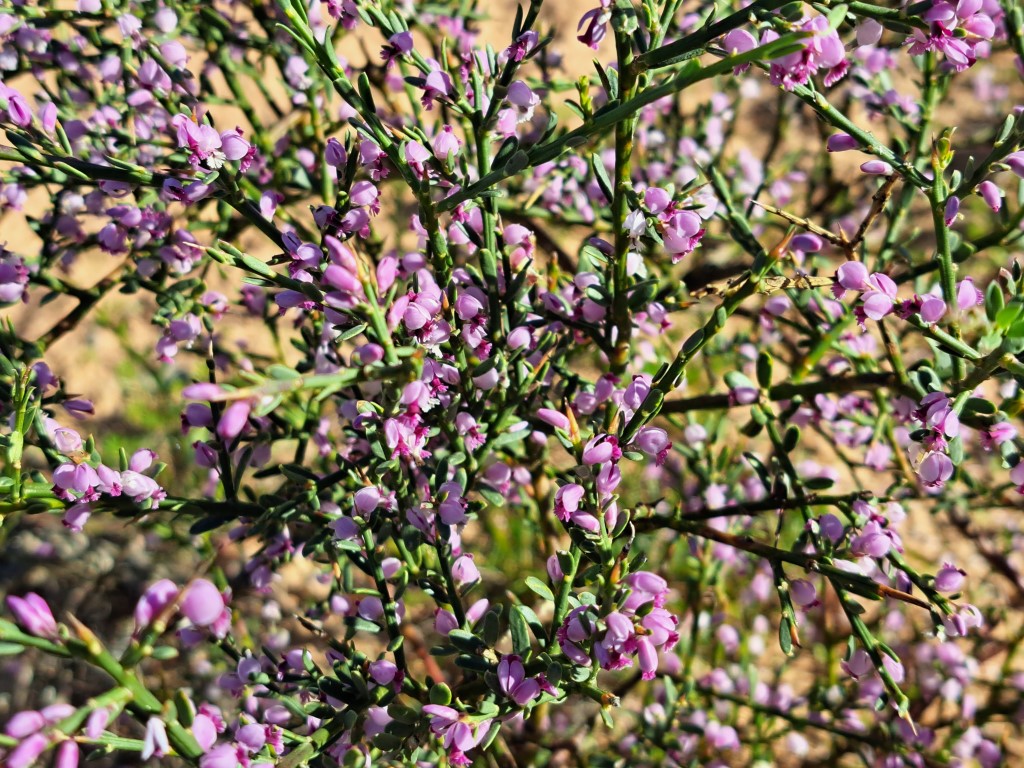
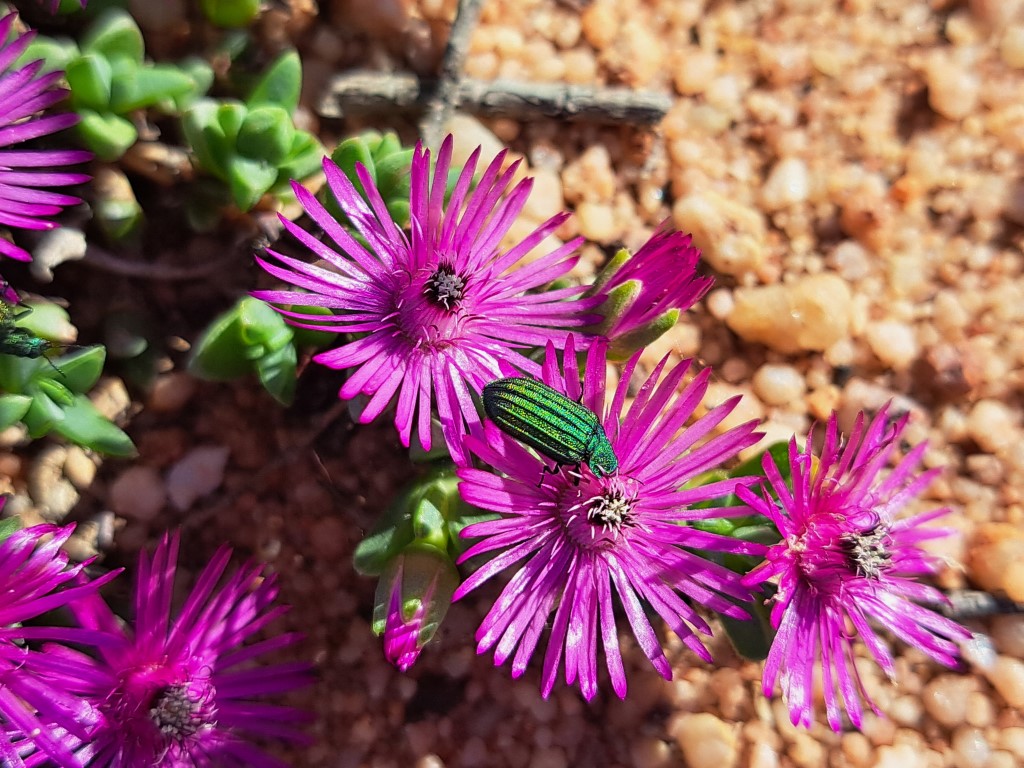
Colour in the field
As I mentioned earlier, the road was pretty rough in some places. However, we drove slowly and stopped often to look at the lake.
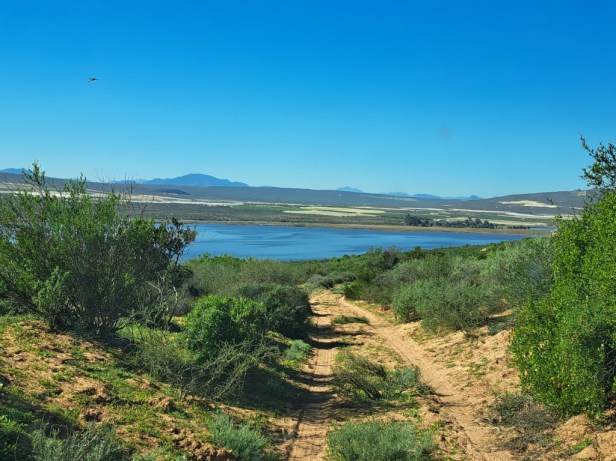
Following the dirt road along the lake
Verlorenvlei is one of the largest natural wetlands along the West Coast of South Africa and one of the few coastal fresh water lakes in the country. The lake is approximately 13.5km long and 1.4km wide.
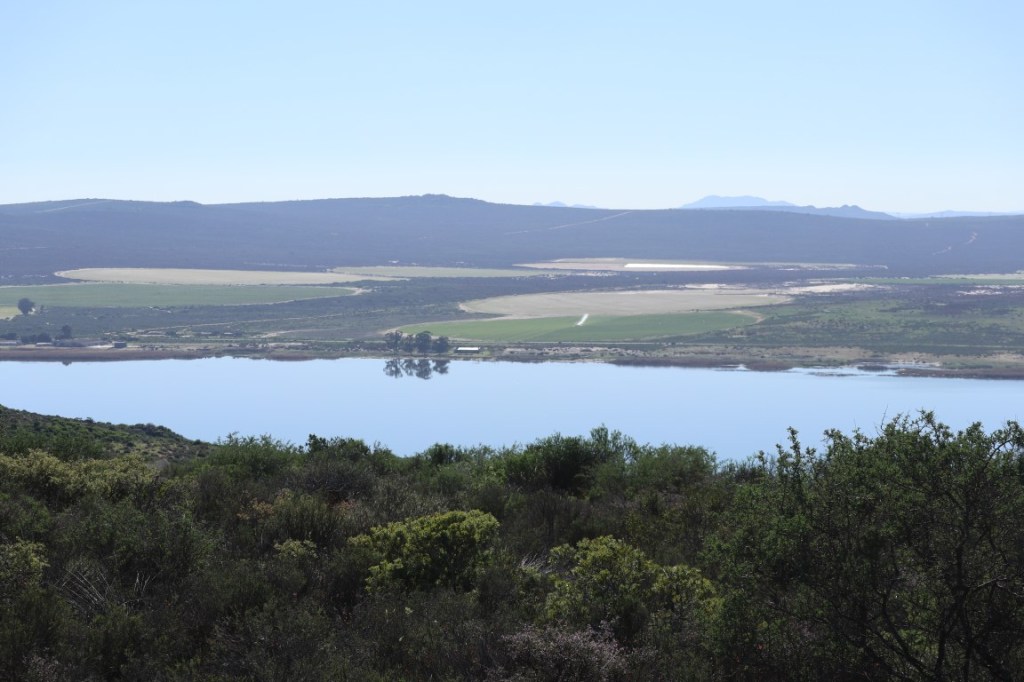
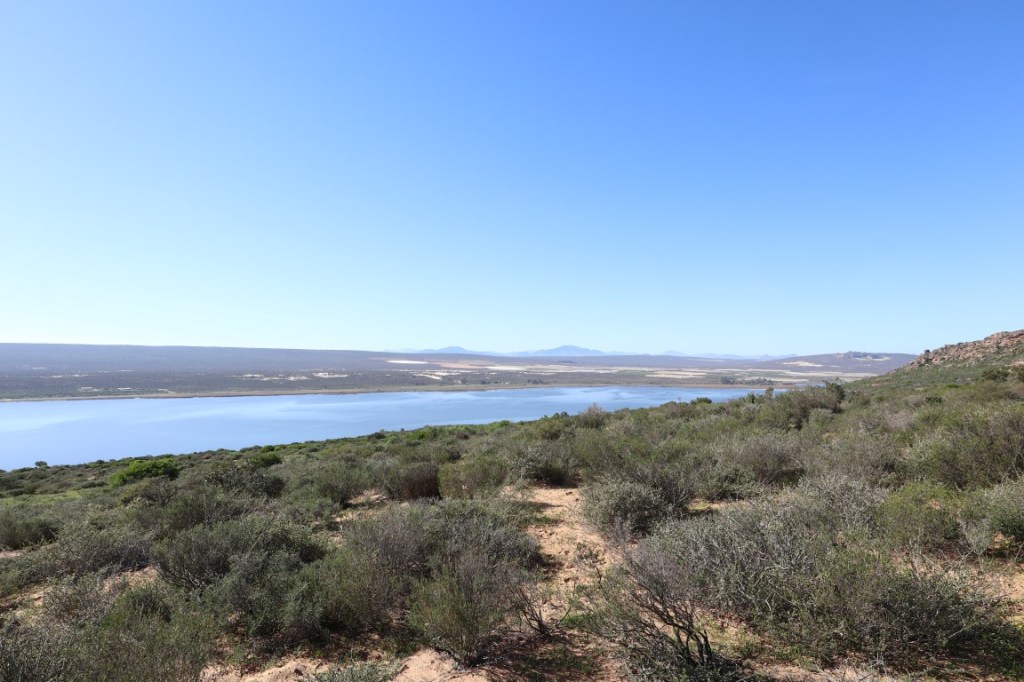
Beautiful lake at Verlorenvlei
After about an hour of driving, we reached an area with natural grassy field and here too we could see how high the water had risen after the rain – some of the trees were halfway in the water.
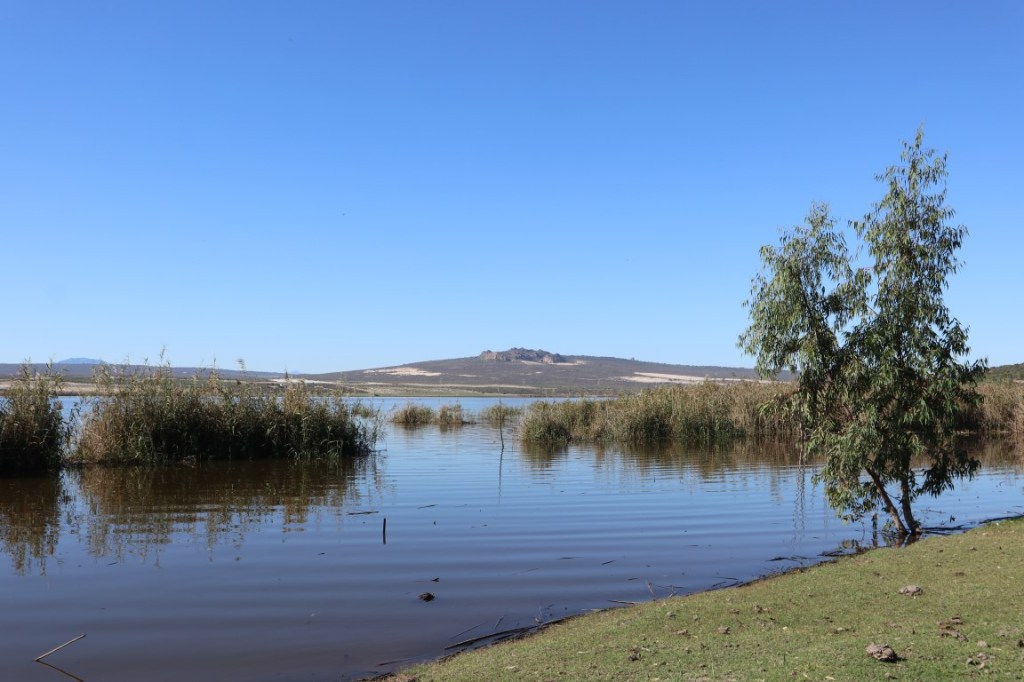
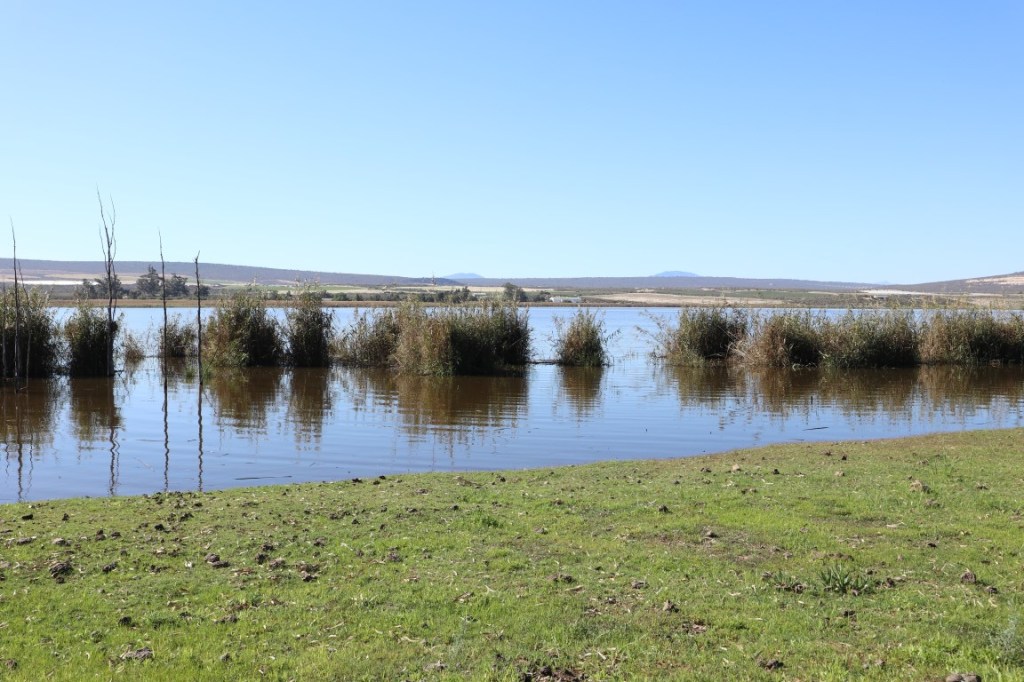
Lake at Verlorenvlei
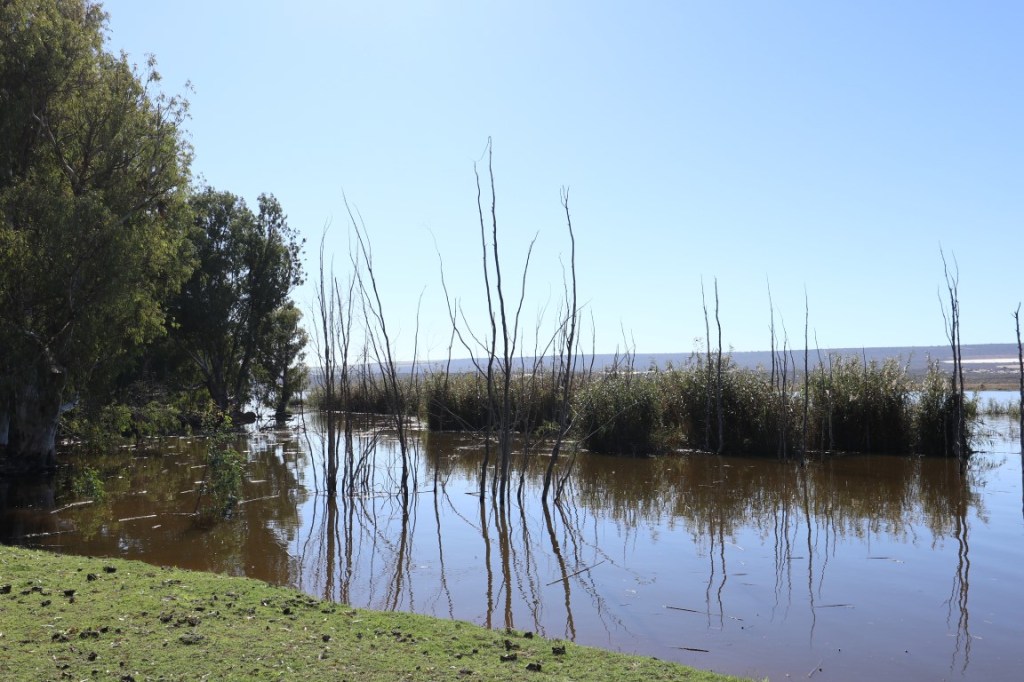
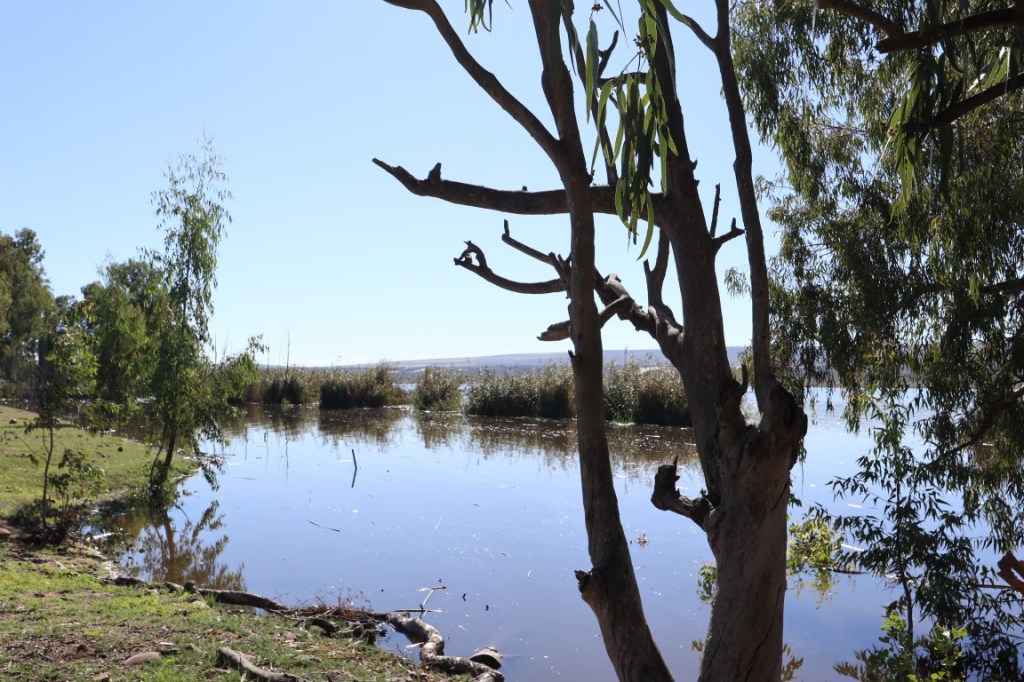
Trees in the water
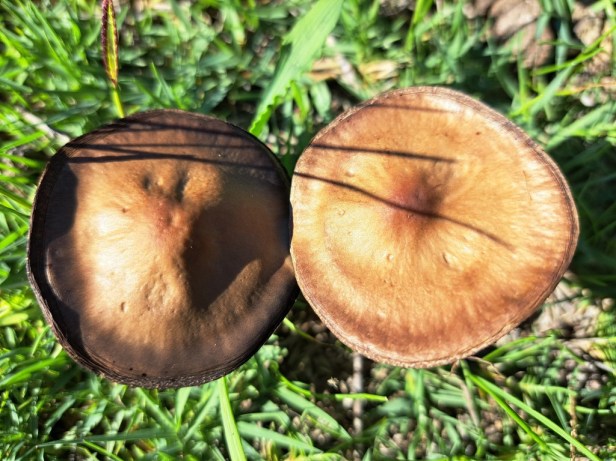
The grass was covered with these mushrooms
Shortly after we stopped at the grassy area, we came across a closed gate. It wasn’t locked, but we started to wonder if we might have to turn around to return to Elands Bay. However, there was a beautiful farmhouse on the other side of the gate, and we decided to stop there and ask if we could continue down the road.
When we stopped, a man came out and introduced himself as Johan Smit – he greeted us as if we were long lost family. Johan, his wife Leona, and Johan’s 93-year-old mother were just on their way to another place across the lake that belonged to them, but they invited us to have coffee and cookies with them first. I shouldn’t be surprised, but South Africans’ friendliness always blows me away.
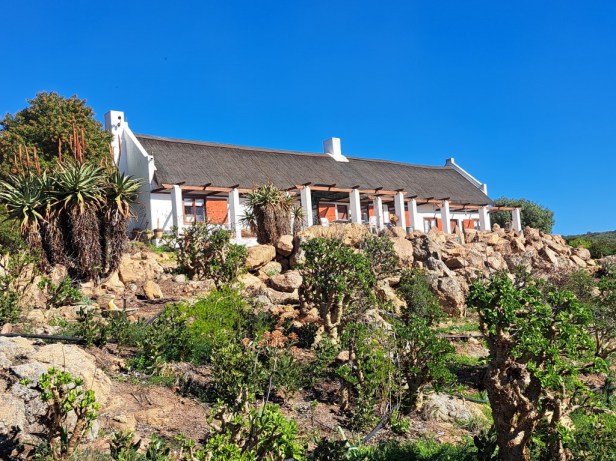
Beautiful farmhouse
While Berto and Johan were having a chat, Leona showed me her garden. She told me that she grew up here and after many years, they decided to come back. When I look at the view from their front porch, I can understand why they came back – it is stunning.
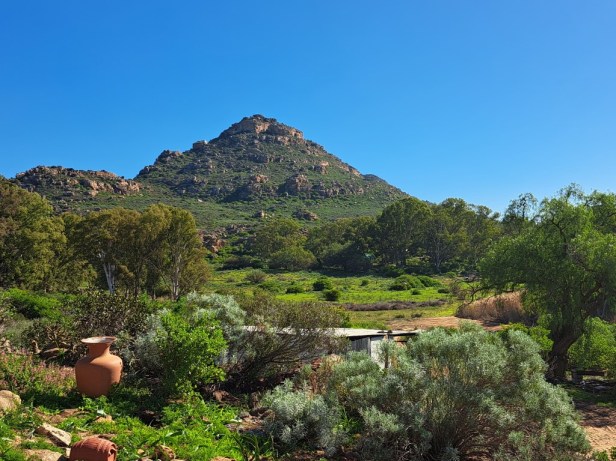
Muishoekberg – from the farmhouse’s front porch
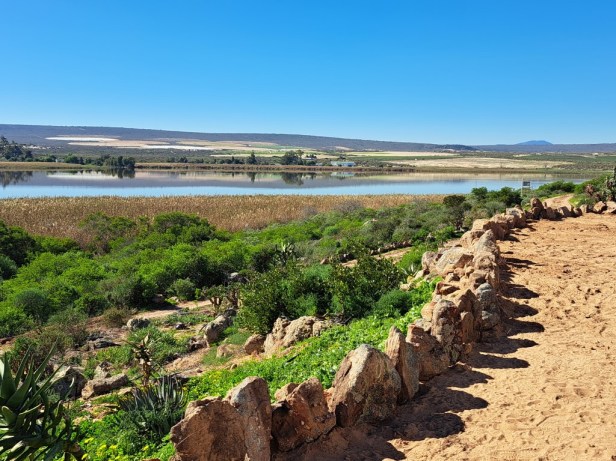
Verlorenvlei lake – the view from the porch
After about an hour, we followed the vehicle of the Smit family. It was a good thing they were home, because there was one farm gate on our way to the main road that was locked (they had a key). We would definitely have had to turn around and drive back if it wasn’t for our kind-hearted new friends.
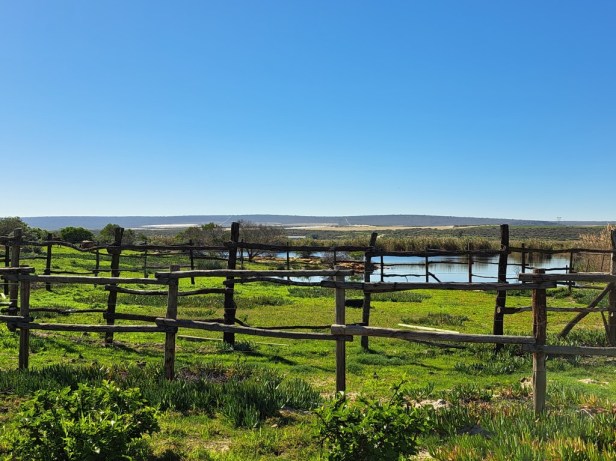
The last stretch next to the lake
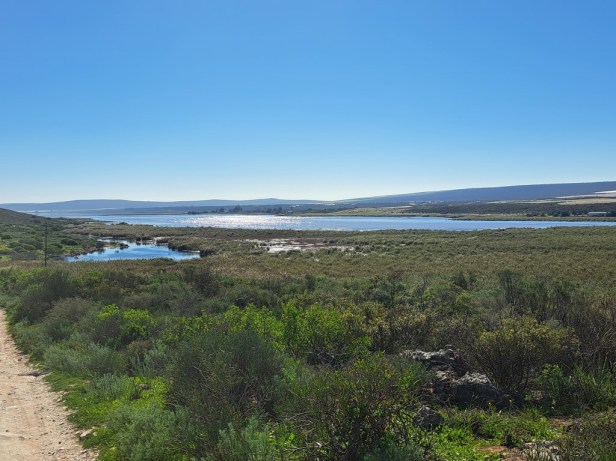
Looking back over the lake
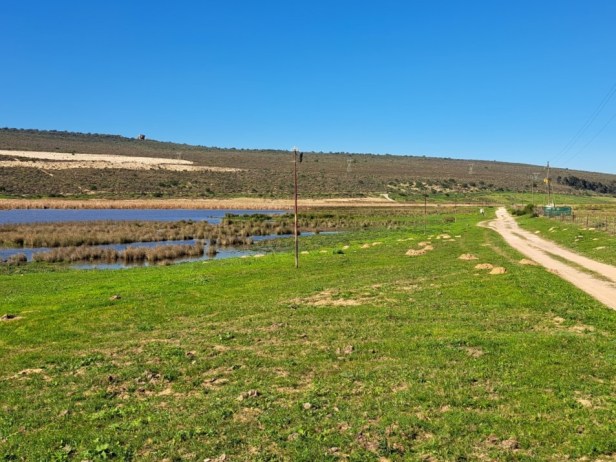
This is where the Verlorenvlei lake ends
We were back on the main road within 10 minutes after leaving the farmhouse and followed Johan and Leona to their place on the other side of the lake where we said goodbye and thanked them for their kindness.
At Elands Bay, we drove to another high point where we could look out over the Verlorenvlei Estuary again. After driving all the way around the lake, we now have a much clearer picture of how big it is (and how much rain must have fallen in order to fill the lake).
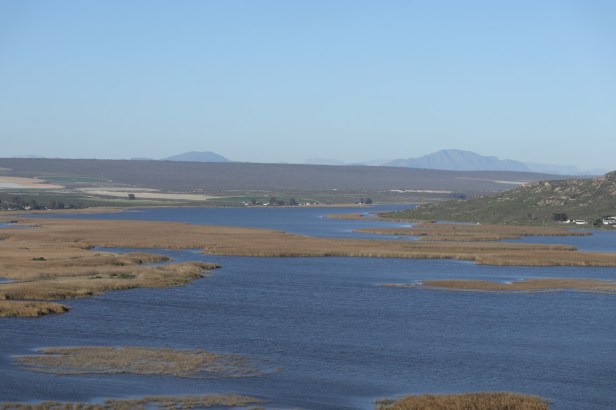
Verlorenvlei Estuary
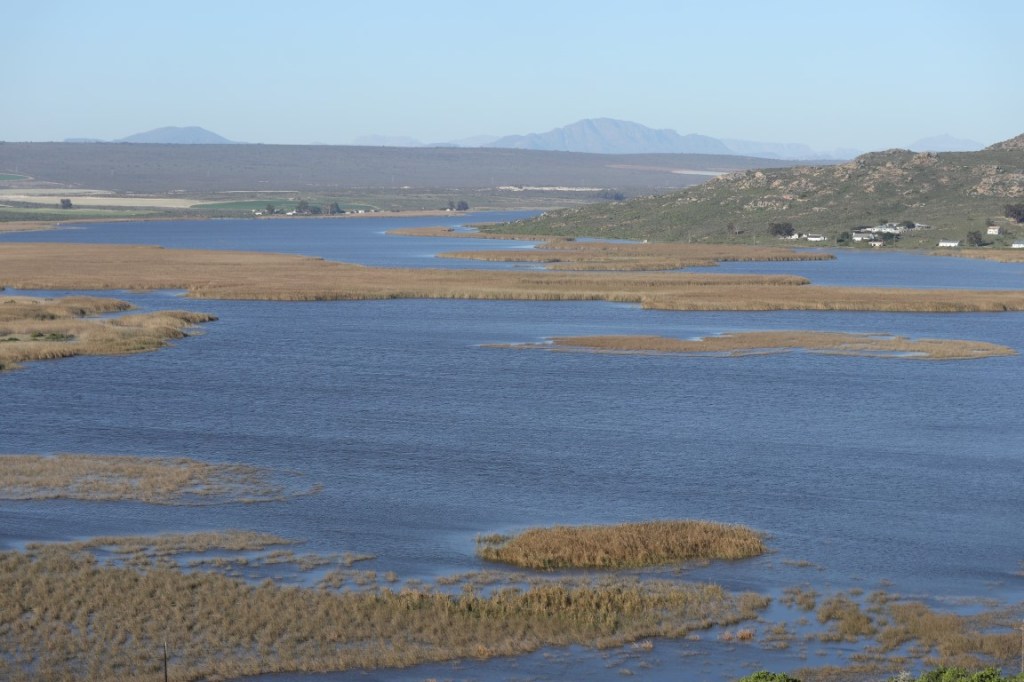
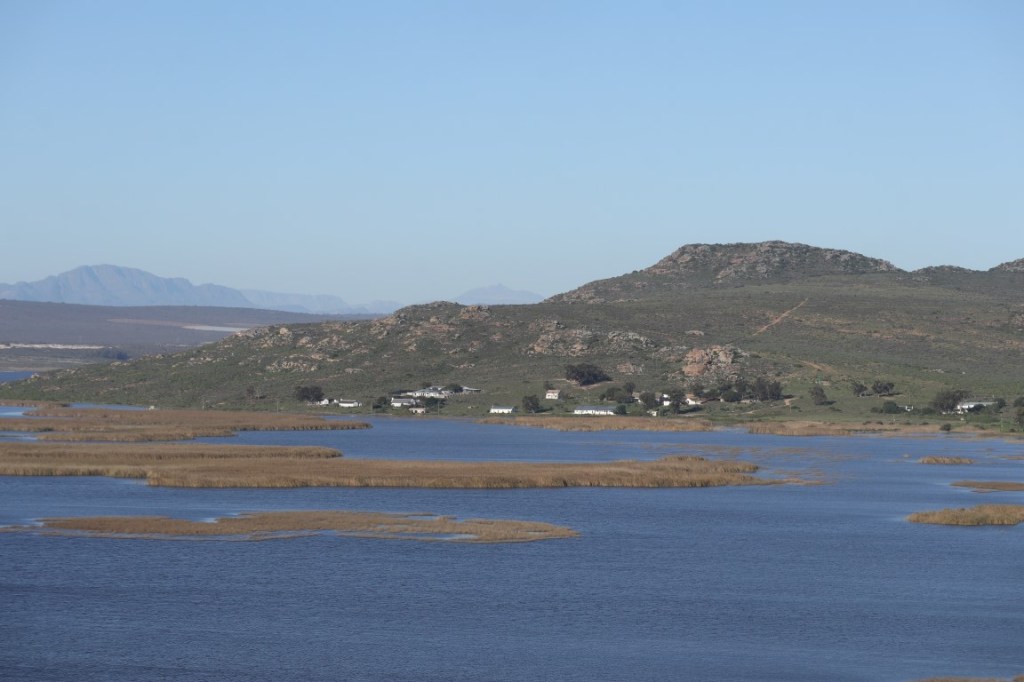
Verlorenvlei Estuary
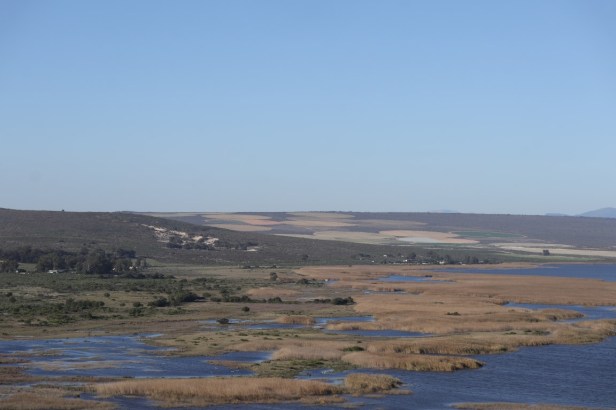
On this photo the reedswamp of Verlorenvlei is clearly visible
The West Coast is known for its beautiful sunsets and delicious seafood, and it’s no different here at Elands Bay. The sunset and dinner were both amazing. We’ve eaten at the ‘Wit Mossel Pot’ before and really enjoyed their food.
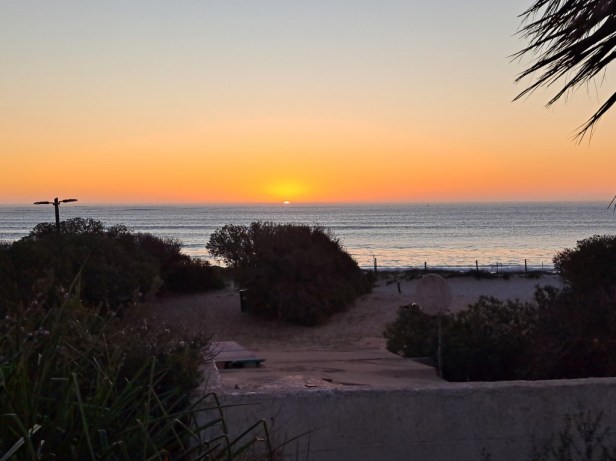
Spectacular sunset at Elands Bay
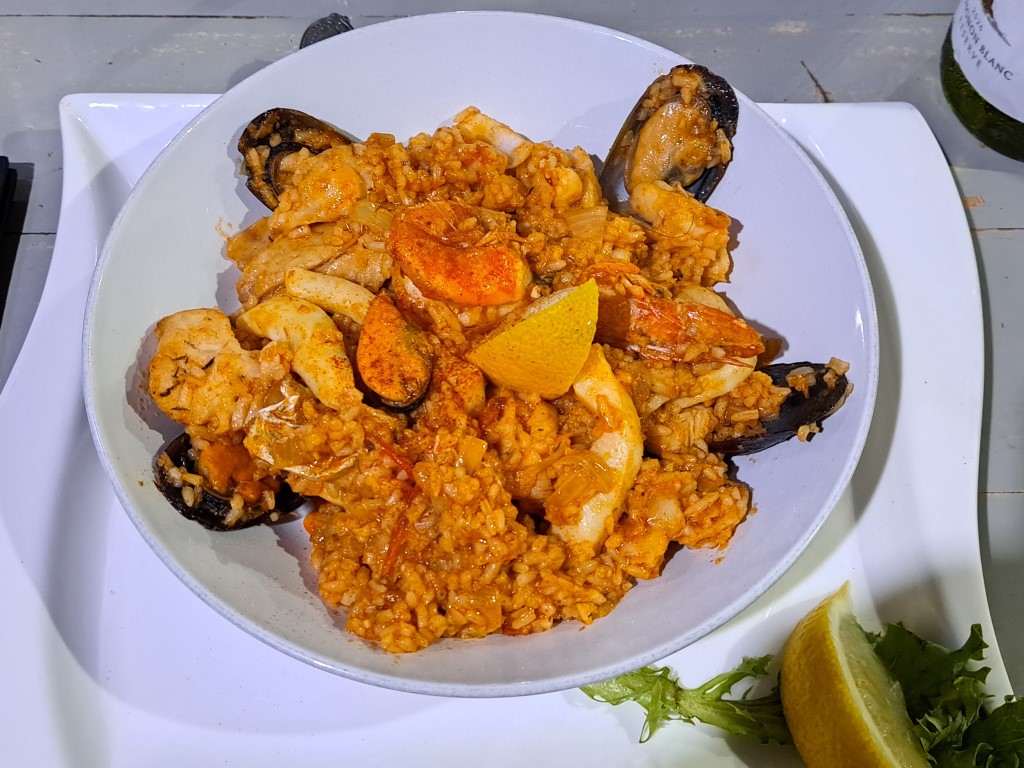
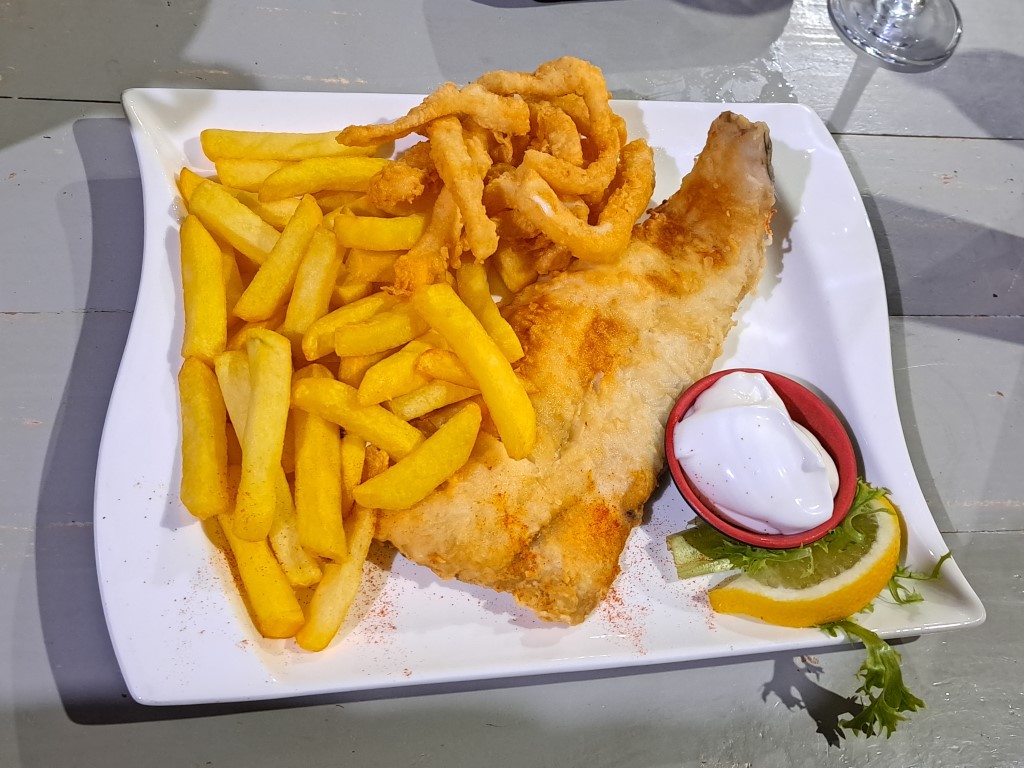
Delicious seafood at ‘Wit Mossel Pot’
It’s astonishing how rain can transform nature, turning ordinary landscapes into shimmering spectacles of renewal and beauty. Verlorenvlei Estuary is currently a sight to behold and definitely worth a visit.
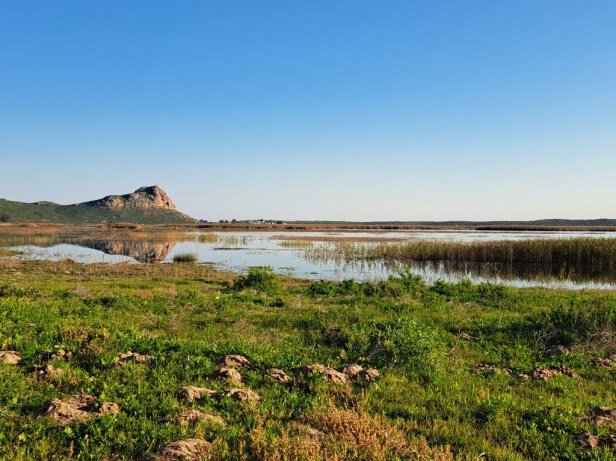
Verlorenvlei Estuary in the early morning light


Definitely worth a visit, but not an easy one from the sound of things, Corna. I imagine if you live in such an isolated place you’re happy to see visitors but if they hadn’t been home it would have turned out differently. Glad you had such a warm welcome xx
LikeLiked by 1 person
Besides the road not being in the best condition, the directions weren’t very clear either. In hindsight, we actually thought maybe we weren’t supposed to drive there 🫣. Yeah, I think you’re right Jo, probably not many people pass by the Smit family’s house and we’re really glad they were home – I was not really in the mood of driving the same road back!
LikeLiked by 1 person
This drive looks idyllic Corna and how wonderful to be able to pass through the gates courtesy of your new found friends. My husband would be in his element as he is a keen birdwatcher!
LikeLiked by 1 person
I’ve never seen the estuary and lake from this dirt road before – and it’s just so beautiful! We are really grateful to our newfound friends … if it weren’t for them, we would have had to drive back on that rough road. Absolutely, your husband would have been in seventh heaven with all the birds at Verlorenvlei (especially now that there’s so much water in the lake).
LikeLiked by 1 person
Such a beautiful place and thank you for sharing all the photos. There are so many places in the world and I am happy that I can see some of them through photos by fellow bloggers.
LikeLiked by 1 person
It’s a beautiful place – especially now after it has rained so much. And it’s not just us enjoying it, but all the birds too. You’re right, fellow bloggers also help me to see a lot of the world that I otherwise would never have known about.
LikeLiked by 1 person
Up to 20,000 birds? Wow, that’s incredible! Imagine seeing them all there; what a sight that would be. The estuary is very beautiful, and it’s fortunate that you made some new friends along the way to see even more. Wonderful post, Corna.
LikeLiked by 1 person
Thank you, Tricia. It’s amazing how many birds there are at this estuary and lake – I think the presence of the reeds also helps the birds make their nests and maybe hide from predators as well. I love making new friends while travelling – it always makes the experience so much more fun, doesn’t it?
LikeLiked by 1 person
Yes, fellow travelers sometimes make instant friends!
LikeLiked by 1 person
It is so nice to read about people who are kind hearted and friendly! How fortunate that you net the Smits too, since they could let you through the gate. Fate does look after us. You have so many wonderful places to visit and you get to enjoy the seasons as we do which offer such variety of scenery. It is always a relief to get rain after a long dry spell, though wouldn’t it be nice if it didn’t all come at once! I loved the photographs.
LikeLiked by 1 person
Yes, an incredible amount of rain fell in just three days. I think the farmers might have preferred a gentle rain over a longer period, but they’re not complaining, because the rain was desperately needed. The estuary is now at its most beautiful and is teeming with all the birds. We were really grateful to the Smits – besides good company and refreshments, they did us a big favour by opening the locked farm gates so we could get back onto the main road.
I’m glad you liked the photos, Carolyn – it’s sometimes hard to capture something as big as an estuary and lake in its entirety with a camera.
LikeLike
You always find such stunning places to visit. Although that road does look rough! I remember many years ago my then husband drove our van on a dirt road leading to the coast north of Cape Town, possibly Bokbaai, and got stuck in the sand. We had a very young baby with us too! And of course no mobile phones in those days. Luckily someone came along who was able to tow us out of trouble. Thank goodness for friendly folk.
LikeLiked by 1 person
As you probably know, there are lots of beautiful places not too far from the Cape to travel to – many of which are just a day trip away. I had to Google where Bokbaai is, and when I saw it is near Grotto Bay, I immediately understood why you got stuck in thick sand. Yes, we have met many friendly people on our trips (a reminder to also try to be a good Samaritan to our fellow travellers when the need arises).
LikeLiked by 1 person
“Verlorenvlei” – wat ‘n pragtige, heimweevolle naam. Ek wonder wat daartoe aanleiding gegee het. Die ou boere kon soms onverwags poëties wees. Van boere gepraat – ek dink julle het die Smits se dag gemaak!
LikeLiked by 1 person
Die plaaslike mense praat ook van “V’loorvlei” 😊. Ja, as ons so op die agterpaaie van SA ry en al die plaasname sien, dan wonder ek ook so in my enigheid hoe die boere op die name besluit het. Leona het juis genoem dat haar ma altyd verbygangers gaan stop het sodat sy bietjie met hulle kon gesels omdat sy nie gereeld besoekers gekry het nie … en nou sê Leona sy doen presies dieselfde!
LikeLiked by 2 people
The water is so still that you have some beautiful reflections 🙂 The drive doesn’t sound easy but worth it, it seems. And how kind of that family to invite you for coffee!
LikeLiked by 1 person
Yes, the reflections in the water were beautiful. It’s usually quite windy here and we were really lucky that it was such a calm day. Our unexpected visit to the Smit family ended our day on a high note – another day we’ll remember not just for the beauty of nature, but also for the kindness of strangers.
LikeLiked by 1 person
What a fun experience – not just the scenery and the birds but also the people. It’s always such a wonderful addition to traveling when you have pleasant encounters like this!
LikeLiked by 1 person
I agree with you 100%, Diana. As I mentioned to someone else here, it was a bonus to meet such hospitable people after having a wonderful time in nature – I think these two go hand in hand on our travels.
LikeLiked by 1 person
What an absolutely beautiful place, truly a haven for the bird life. And how wonderful that the people were so welcoming and even gave you cookies! It looks like such a peaceful and beautiful place.
LikeLiked by 1 person
It’s true, if you’re a bird lover, this estuary will be an absolute treat to visit. Hospitality and friendliness are very well-known qualities of people who live in rural areas in South Africa (and especially here on the West Coast) – I hope it’s something that will never disappear!
LikeLike
What a beautiful area. Good call on going after some heavy rain so you can see the estuary at its peak. I guess the one downside was the sketchy dirt road. Funny how if it weren’t for that closed gate you might not have stopped at that farmhouse. It was very kind of that family to invite you in for coffee and cookies ..and of course unlock the gate for you. Beautiful captures of the scenery and sunset.
LikeLiked by 1 person
We had seen this estuary a couple of years ago when it was almost bone dry, and it was amazing to see it so full of water after the recent heavy rain. Yes, we are grateful that we found the Smit family home … otherwise we would have had to drive that rough road back again (and I wasn’t really in the mood for that). I love the sunsets on the West Coast – I guess you can see why 😉.
LikeLiked by 1 person
It is so beautiful with the rich greens on land and the deep blue of the water. I was worried (for you) there was another getting stuck in the mud story, but you made it. 😊 Maggie
LikeLiked by 1 person
Haha 😁, there was one spot that was pretty muddy and I said to Berto that we better not get stuck in the mud because it doesn’t seem like this road is really used! You’re right Maggie, the green really stood out after the rain … in this sense I like winter, but not necessarily when it’s so cold.
LikeLike
What an amazing adventure you had in this gem of a place on our West Coast. I love that Smits were so friendly. Meeting lovely people on your travels is always fun.
LikeLiked by 1 person
The Verlorenvlei estuary is such a beautiful place – and even more so while there’s so much water! Yes, the Smit family has once again proven that South Africans are a special bunch of people 😊. As you say, that’s one of the reasons why we love travelling so much.
LikeLiked by 1 person
Another gorgeous place Corna.
LikeLiked by 1 person
Thanks again, Mélodie. Verlorenvlei is always beautiful, but during the rainy season it’s an incredibly beautiful sight to see when the estuary is so full of water (and bird life).
LikeLiked by 1 person