July 2026
From the farm dam/pond to the dinner table
It’s winter, wet and cold. Which means, it’s the perfect time to introduce you to a traditional South African winter dish. And I promise it tastes much better than the English name suggests.
What is ‘Waterblommetjie Bredie’?
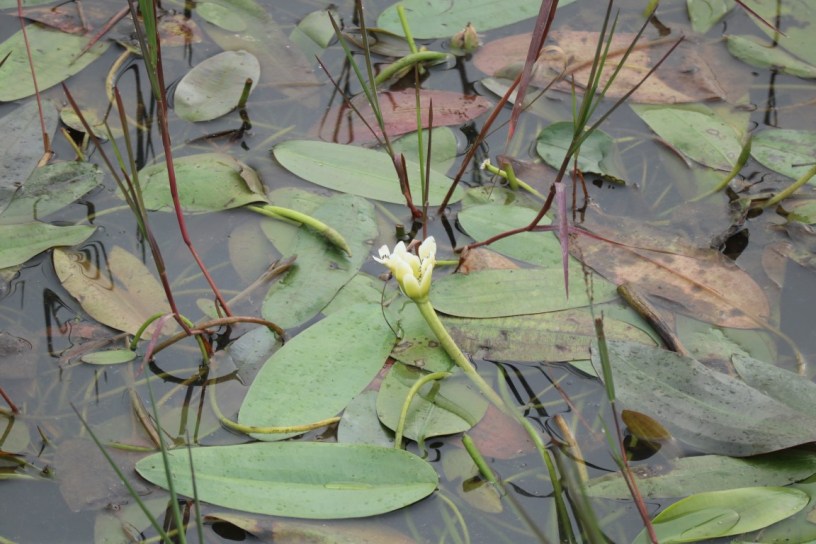
‘Waterblommetjie Bredie’ originating from the Western Cape Province in South Africa. It’s made with lamb and the unique ‘waterblommetjies’ (Aponogeton distachyos), which are small edible buds of a water plant found in dams/ponds and marshes.
The name comes from Afrikaans, where ‘waterblommetjie’ means ‘little water flower’ and ‘bredie’ is derived from the Malay word for ‘stew’.
Pronunciation: (Afrikaans: vaa-ter-blom-ekies)
Before we’re heading to the kitchen to prepare this hearty dish, we’re going to show you where ‘waterblommetjies’ grow. The ‘waterblommetjie’ season is currently in full swing in the Boland. Just a few kilometers outside Wellington, there’s a farm where they grow ‘waterblommetjies’ and that’s where we were heading on a very foggy morning.
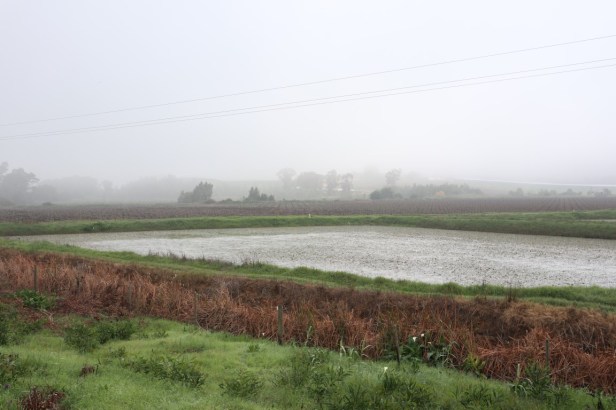
‘Waterblommetjie’ dams on a foggy morning
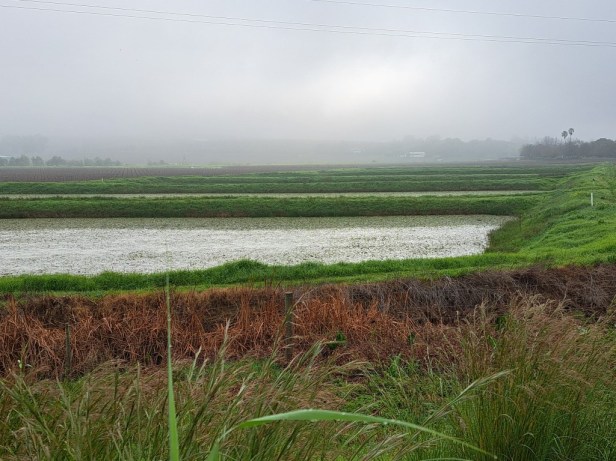
There are quite a few dams with ‘waterblommetjies’
The flower season for ‘waterblommetjies’ is from June to August (thus a very short season) and they are fast growers. These lightly scented flowers – they smell much like jasmine – drift on top of a valley dam/pond. The flowers cannot be used in food (they will simply cook away), but rather the young seed heads of the plants which are harvested and then used to make tasty ‘bredies’ (stews).
The texture of the flowers is somewhat like miniature artichoke leaves, but the taste steers more towards green beans with a hint of lemon.
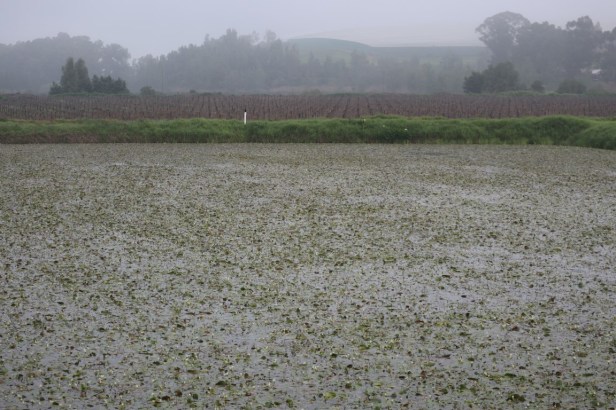
‘Waterblommetjies’ drifting on top of the dam
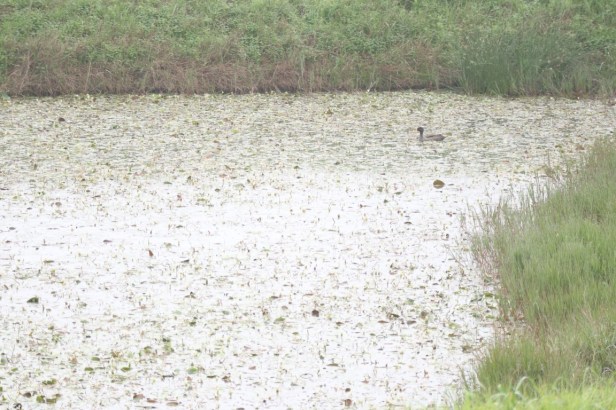
Duck between the ‘waterblommetjies’
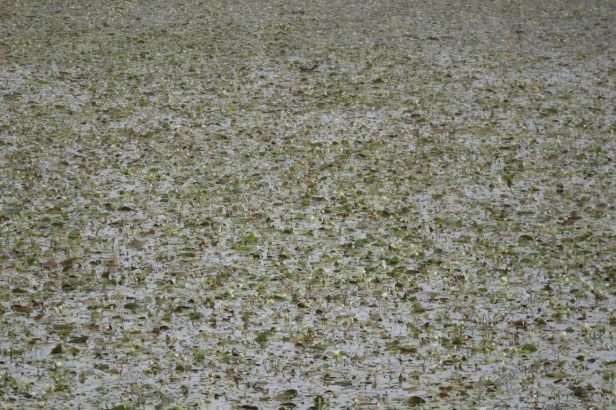
‘Waterblommetjies’
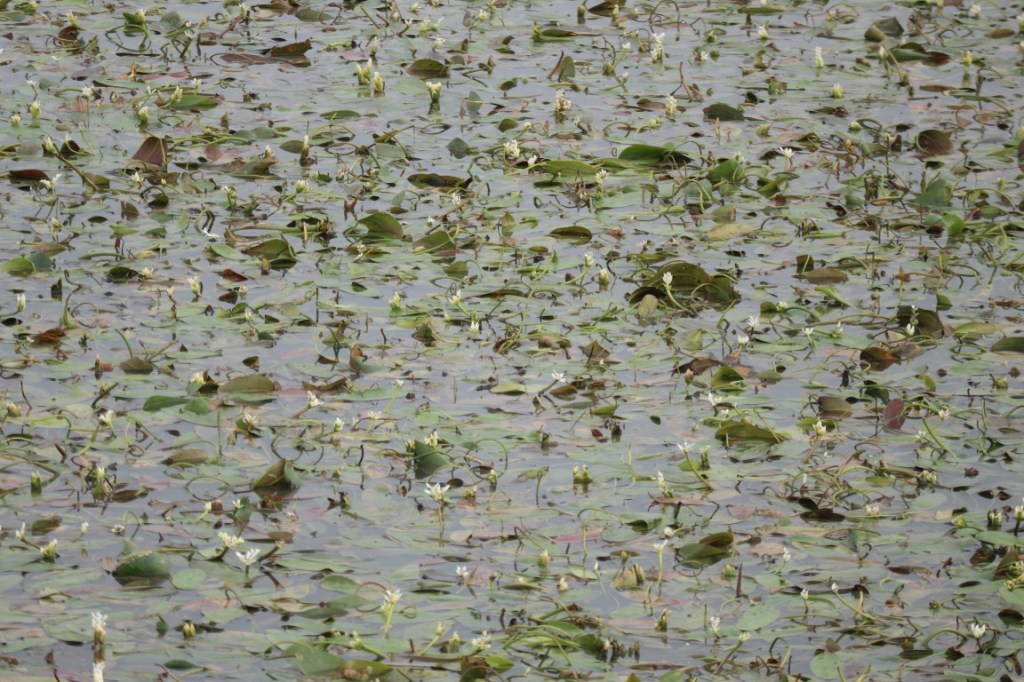
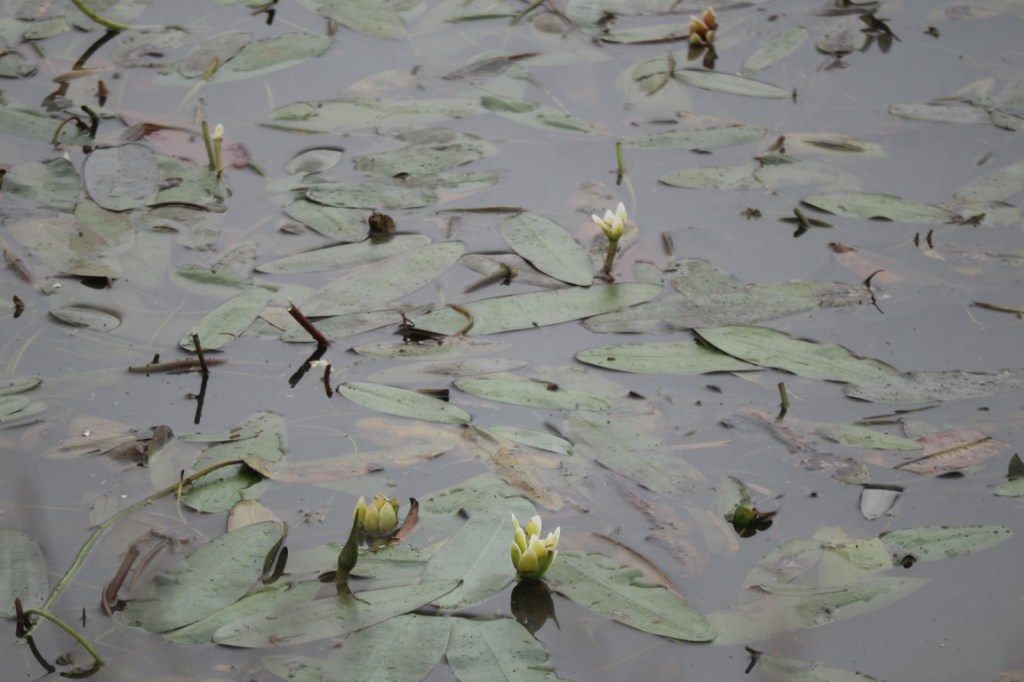
Getting closer to the ‘waterblommetjies’
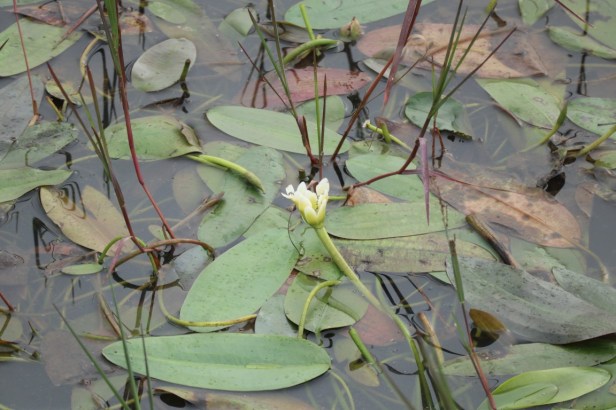
Close up of a ‘waterblommetjie’
We bought fresh ‘waterblommetjies’ at our local market and turned it into a delicious stew on a rainy day (which is why it’s called a ‘winter dish’).
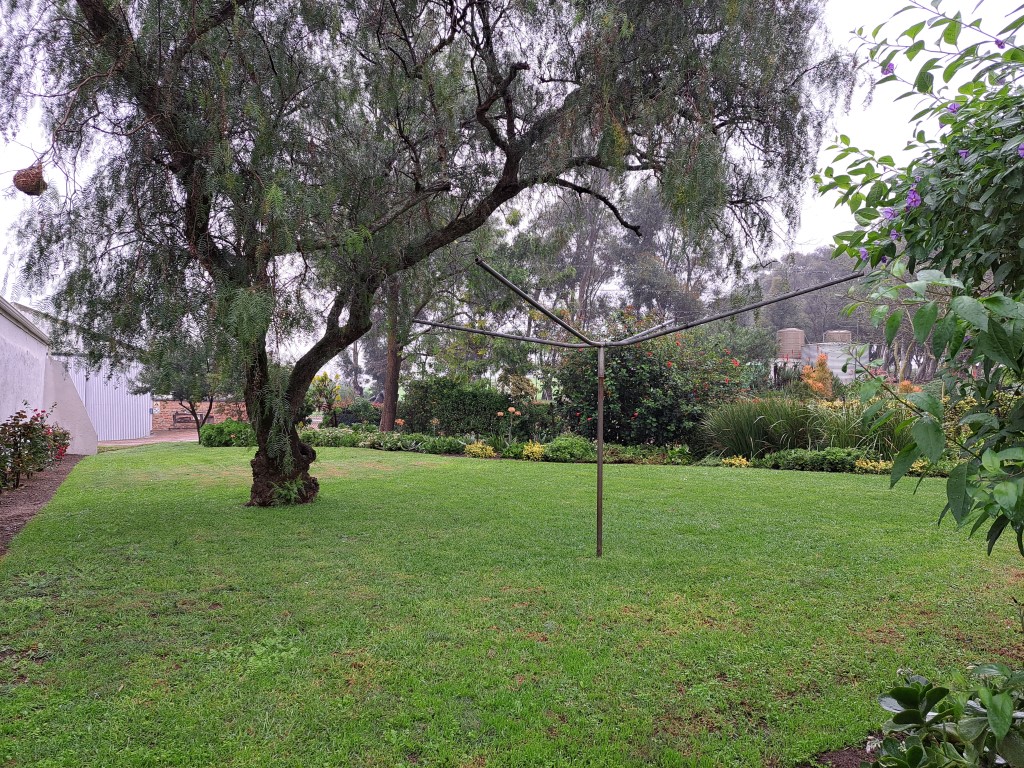
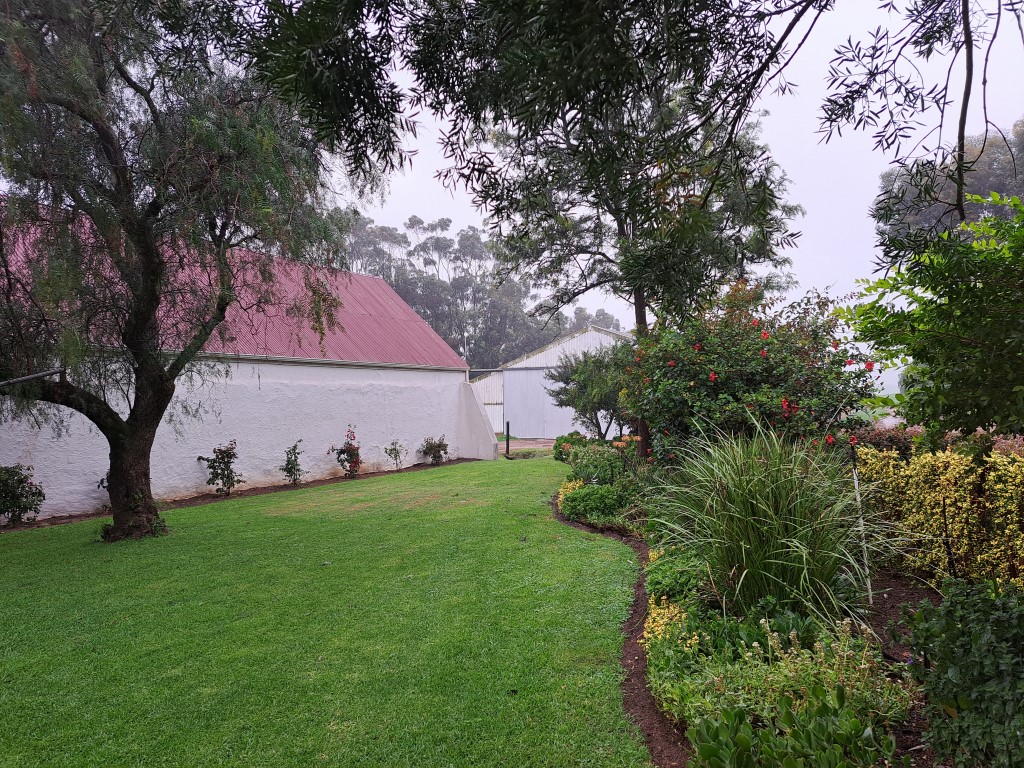
A rainy day on the farm
Although we made the ‘Waterblommetjie Bredie’ on the stove, we couldn’t resist lighting a fire in the indoor fireplace. With the house getting all warmed up, we opened a bottle of red wine – what could be better than this on a cold winter’s day?
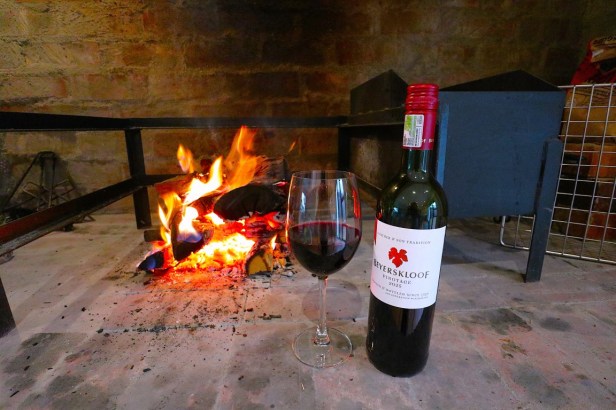
We need this to make winter more enjoyable
Let’s start with our ‘Waterblommetjie Bredie’.
The ‘waterblommetjies’ need to be thoroughly washed before being used in the stew. It was soaked in salt water for a few hours and then washed under running water. This is to make sure to get rid of all the mud, sand, and bugs. The last step to prepare the ‘waterblommetjies’ is to boil it rapidly in clean water. Pour off the water and refresh the ‘waterblommetjies’ in cold water. Now, it’s ready to be used in our stew.
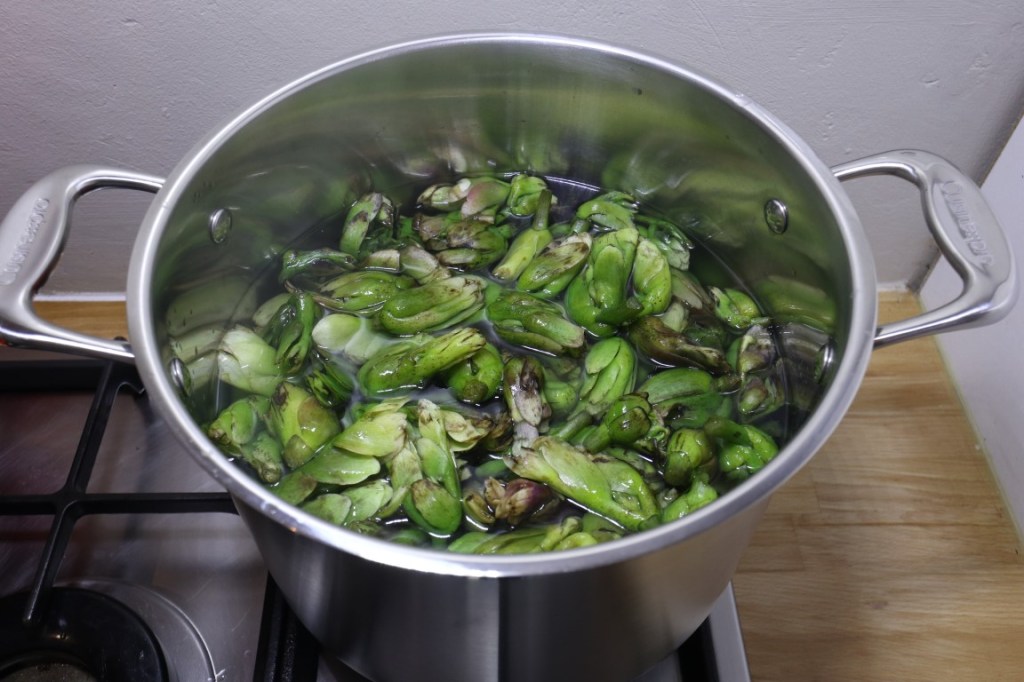
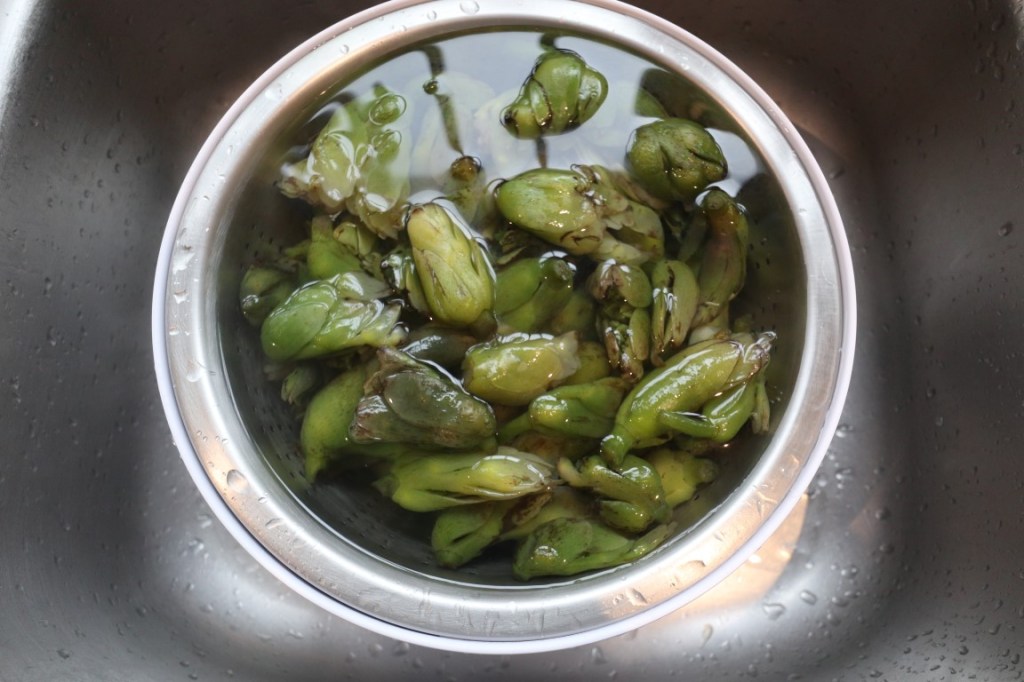
‘Waterblommetjies’ boiling and then placed in cold water
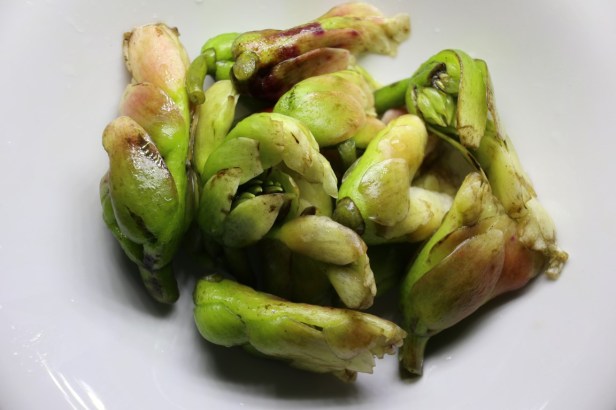
Clean ‘waterblommetjies’ and ready to be used
Ingredients:
1kg fresh ‘waterblommetjies’
1,5kg lamb
Olive oil (for braising)
2 Onions, chopped
4 cloves of garlic, crushed
5 cloves
10ml (2 teaspoons) coriander seeds
15ml (1 tablespoon) salt
5ml (1 teaspoon) black peppercorns
700g potatoes, cut into quarters
Lemon juice (2 small lemons)
Nutmeg, to taste
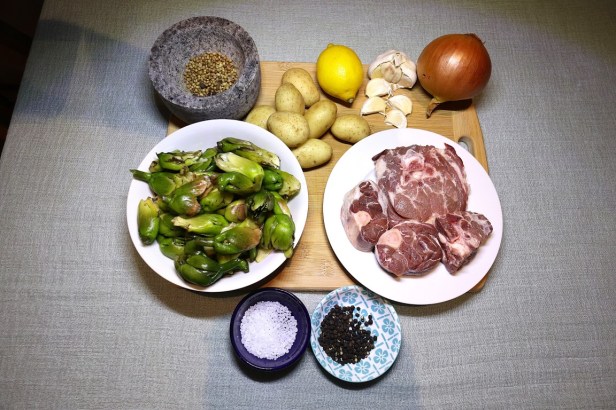
Ingredients
Method:
Sauté the meat in the olive oil. Scoop it out and set aside.
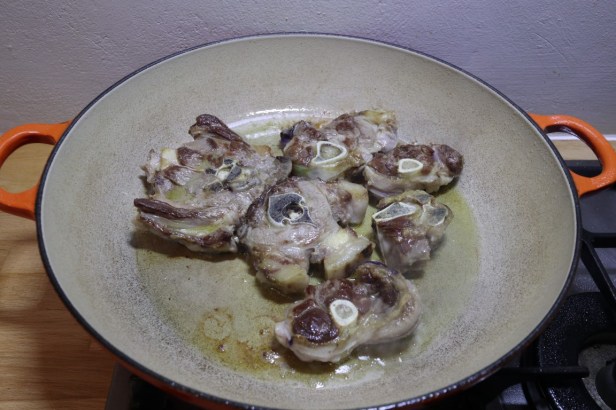
Sauté the meat
Sauté the onions and the garlic until transparent, then place the meat back in the pot.
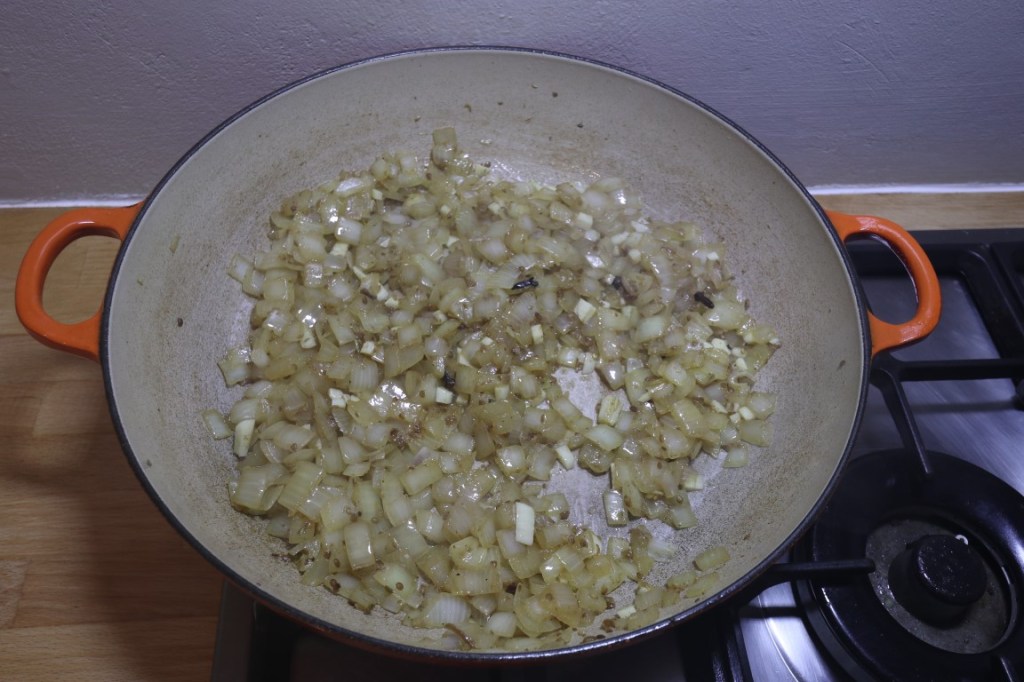
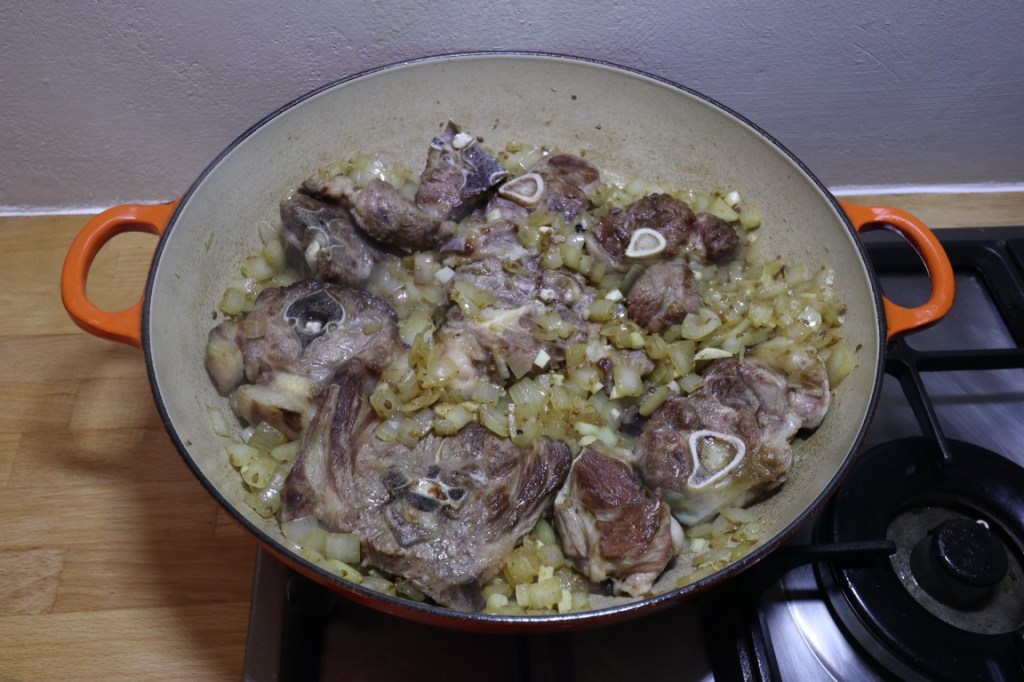
Sauté onions and garlic and put meat back in pot
Sprinkle with cloves, coriander, salt and black peppercorns. Layer a quarter of the potatoes over this. (The potatoes will soak up some of the water so that the meat doesn’t cook to a pale colour). Put the lid on and cook on low heat for 30 minutes.
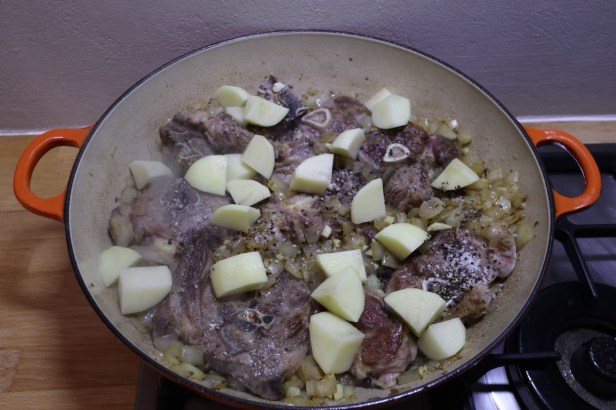
Add spices and layer half of the potatoes on top
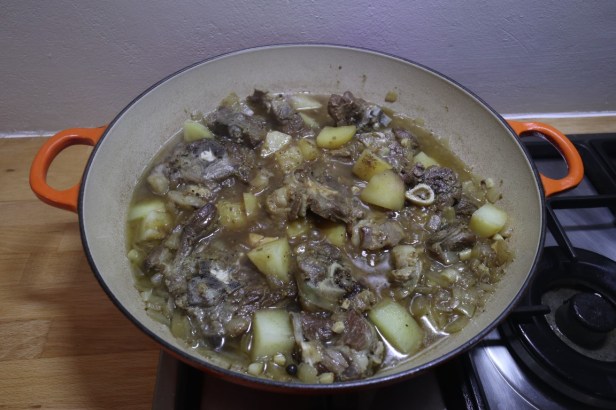
Stew after half an hour
Toss in a layer of ‘waterblommetjies’, followed by the lemon juice. The rest of the potatoes come right on top of everything else. Finally add the nutmeg.
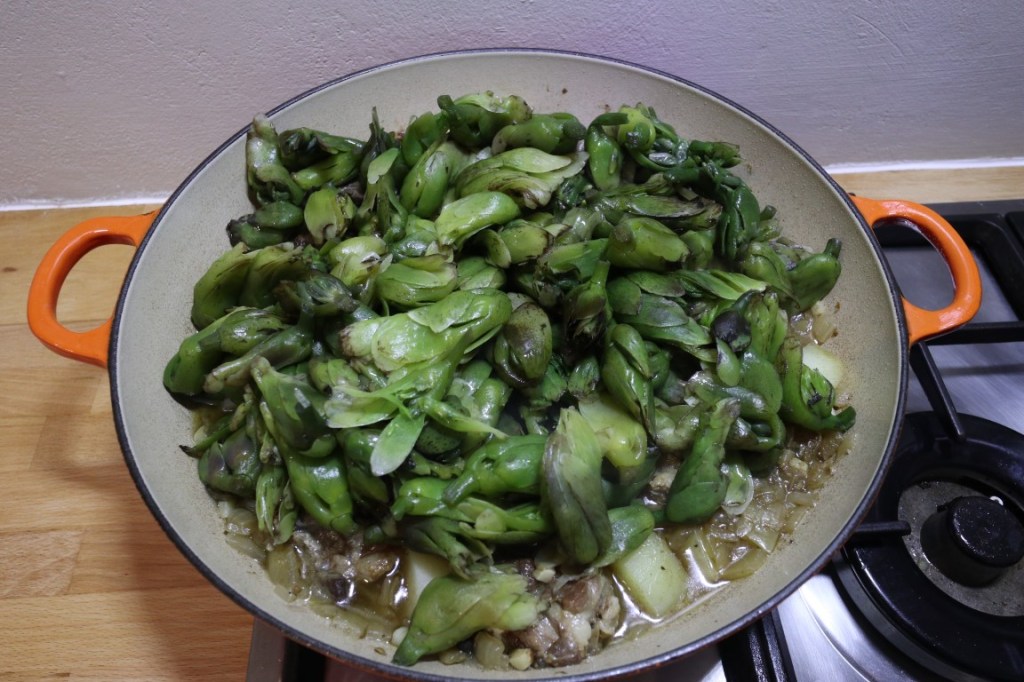
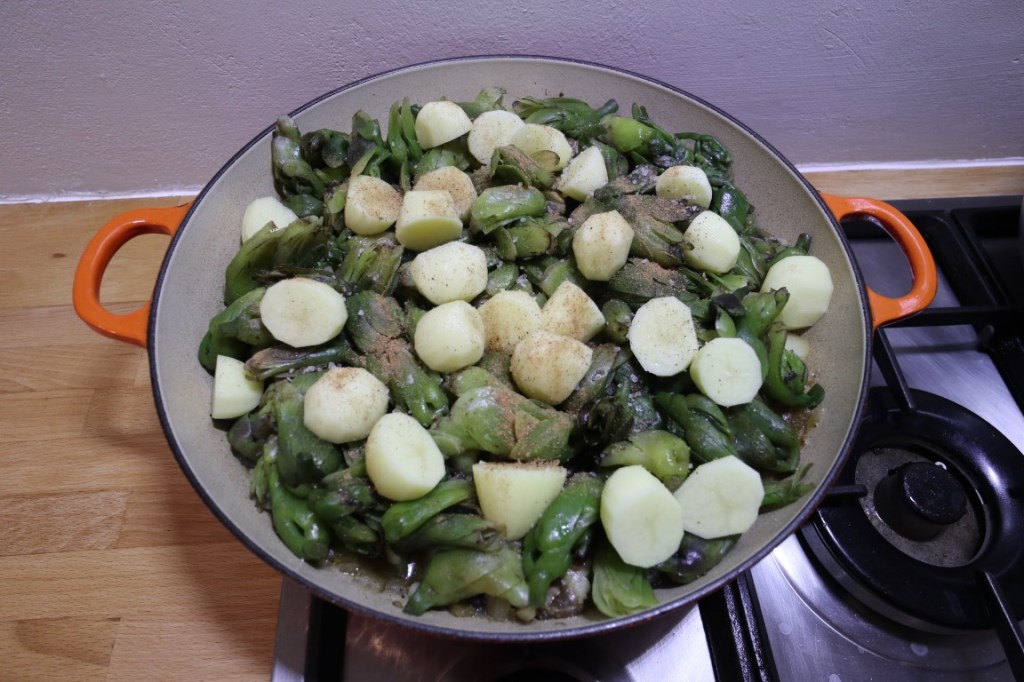
Add ‘waterblommetjies’ and potatoes
The ‘waterblommetjies’ will cook until they fall apart and the flavours of the vegetables and meat will blend well.
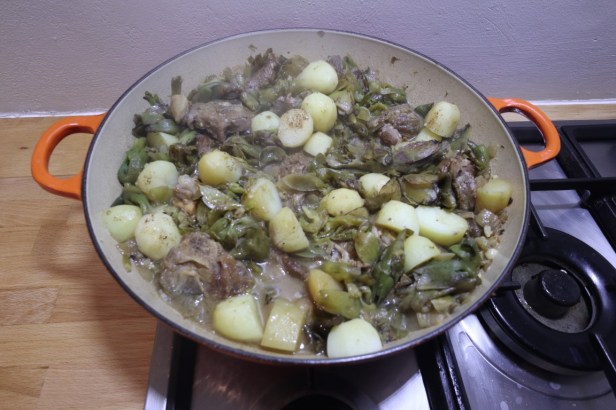
Remove the lid to get rid of the excess liquid
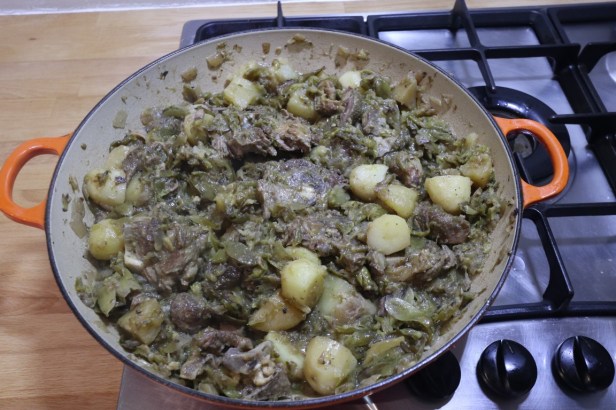
‘Waterblommetjie Bredie’ ready to be served
This stew is best when it’s served over fluffy white rice. Besides being delicious, it’s also good to know that ‘waterblommetjies’ are a fat- and cholesterol-free vegetable offering a good source of protein, iron and Vitamin C – best of both worlds!
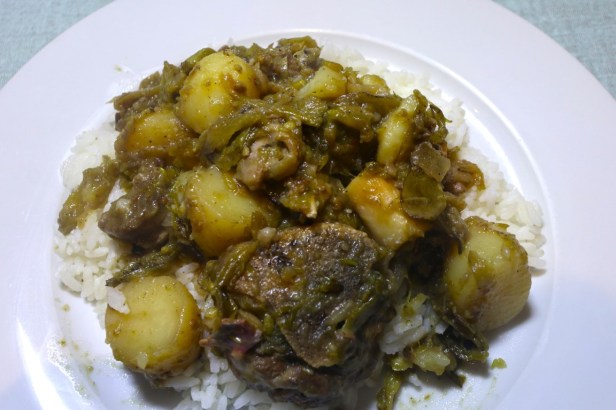
‘Waterblommetjie Bredie’ served over rice


Never say never, but it’s an interesting process, Corna. I presume they’re farmed specifically to be eaten? I’ll just watch from a healthy distance. I don’t eat lamb anyway. Happy weekend xx
LikeLiked by 1 person
You’re right, Jo. It’s a ‘waterblommetjie’ farm. To skip the whole cleaning process, you can buy the ‘waterblommetjies’ already cleaned and bottled. It’s a very unique taste and maybe not something everyone will enjoy. Enjoy your weekend – we’re off camping again (and it’s still cold) 😁.
LikeLiked by 1 person
We’re at the beach, chasing a breeze. Have fun xx
LikeLiked by 1 person
I’m jealous 🥶🥶
LikeLike
32C and a warm wind xx
LikeLiked by 1 person
Looks delicious and interesting too! I love your photos, Corna, they truly capture the beauty of the area.
LikeLiked by 1 person
It has a very unique flavour (very much like green bean stew), and it’s the perfect dish for a cold winter’s day 😊. The Boland area in the Western Cape Province is just so picturesque during winter (even though it’s very cold) – we love driving around this time of year to see all the water streams, dams and green farm fields.
LikeLiked by 1 person
What an interesting recipe. Grant says he’s not familiar with it but it’s the sort of thing he would like. Sounds perfect for a cold winter day with a nice glass of red wine. Here we finally have a the sort of heatwave that is typical at this time of year. I am relieved we were spared for so long and it is nowhere near as bad as in Europe. It is very hot but not too humid – for now! August is usually steamy but then the end will be in sight. Oh dear. Did I say that? Another year half gone already? Wow.
LikeLiked by 1 person
I think you mentioned before that Grant is originally from Durban in KwaZulu-Natal (or somewhere nearby). In that case, I’d understand if he doesn’t know ‘waterblommetjie bredie,’ because it’s unique to the Western Cape (especially the Boland area). So, what you’re saying is that this year your summer is actually less intense than in previous years – I hope the same goes for our winter 😂. I also can’t believe the first six months of the year went by so quickly – when I was young, time never went by this fast!
LikeLiked by 1 person
Such an interesting stew and process to make it. It does seem like the perfect dish on a rainy cold day though.
LikeLiked by 1 person
It’s quite time-consuming to clean the ‘waterblommetjies’. There is actually a shortcut … it’s also sold in jars in stores (already cleaned). But we like the fresh ‘waterblommetjies’ without any preservatives added. Absolutely – this is a proper winter dish.
LikeLiked by 1 person
Og, hoe lus kry ek nou!
LikeLiked by 1 person
As ek dit nou so kan stel: Ons het onsself trommeldik geëet 😉 … vars waterblommetjies – njam!
LikeLiked by 1 person
Wow – what a process! I have only eaten waterblommetjie once – at a restaurant in Stellenbosch – don’t remember the name. It was good. I have now learnt how it is made and what the plant looks like – thanks for sharing!
LikeLiked by 1 person
It’s quite a process, isn’t it? There’s, of course, the shortcut, which is to buy it already cleaned and packed in jars at the shops – but we wanted to make it from the freshly picked ‘waterblommetjies’. I’m glad you enjoyed seeing where this beautiful (and tasty) little flowers grows and how to turn it into a lovely winter dish.
LikeLiked by 1 person
I have never seen or heard of such a dish, but it actually looks delicious.
LikeLiked by 1 person
Because ‘waterblommetjies’ only grow in the Western Cape Province, it’s also not that well known in the rest of South Africa (although it can be bought bottled in most stores) … so I don’t blame you for never having heard of it 😉. It might also be an acquired taste, but for us, it’s a delicious winter stew.
LikeLike
Jinne, ek sal darem graag ñ bord bredie wil eet, Corna. Dankie vir die resep en die fotos. Nou moet ek net nog die blommetjies ook in die hande kry.😉
LikeLiked by 1 person
Vir ons is ‘n tuis gemaakte bredie in die winter koningskos! Ag Una, waar is “sixty60” as mens hulle nodig het – hulle kon darem nou lekker ‘n paar pakkies waterblommetjies op hulle fietsies gelaai en vir jou gebring het 😂.
LikeLike
I’ve never heard of this, but it sound delicious (and definitely much better than the name, as you said). I’m curious to try waterblommetjies too. They look similar to what I’d call “water lilies” though I have no idea if those are edible.
LikeLiked by 1 person
Apparently, water lilies are also edible, but I think it’s a lot like wild mushrooms – in other words, you need to be able to properly identify them before you can put them in your mouth 😉. ‘Waterblommetjie’ really has such a unique taste, I think it’s one of those traditional dishes that visitors just have to try when they visit South Africa.
LikeLiked by 1 person
Interesting. I guess I’ll just have to come visit SA!
LikeLiked by 1 person
It does look delicious Corna.
LikeLiked by 1 person
Thanks, Mélodie. It’s a very unique dish that you won’t easily find in any other country, but any stew in winter is great, right?
LikeLiked by 1 person
Oh I miss waterblomnetjie bredie! There’s a dish I wish I could make here. I wonder if I could grow those flowers here 😁
LikeLiked by 1 person
This is such a delicious winter dish – and even better if the waterblommetjies are freshly picked! Well, you definitely won’t get fresh waterblommetjies where you live now … so, you’ll have to build a pond/dam and grow them yourself 😉 … good luck!
LikeLiked by 1 person