April 2026
The Jewel of the Cape —History, Art, and Culinary Delights
As mentioned in our previous post, we booked a luxury camping weekend outside Franschhoek (read here). We were looking forward to strolling up and down Franschhoek’s famous main street while admiring the buildings, restaurants, artwork, and – well basically just everything beautiful.
Franschhoek (Afrikaans for ‘French Corner’) is one of the oldest towns in South Africa. It is hard to believe that this town was previously known as Olifants Hoek because of large groups of elephants that roamed the valley. These days it is better known as a tourist town surrounded by vineyards and wine farms.
When Protestantism was banned in France in 1685, hundreds of French Huguenots were forced to flee their country. In 1688, about 300 French Huguenots arrived in Cape Town by ship, and the Franschhoek Valley was given to them to settle. It’s therefore by no means surprising to see the French influence everywhere in town – whether it’s street names, shops, or even wineries.
The best way to explore Franschhoek is on foot. We parked our car under big oak trees next to the Dutch Reformed Church and then walked up and down the main street.
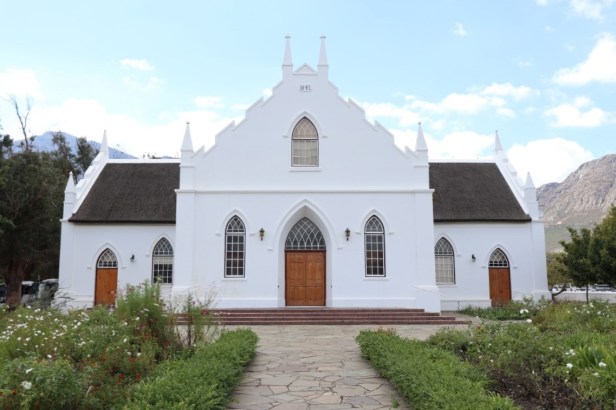
Dutch Reformed Church (built in 1847)
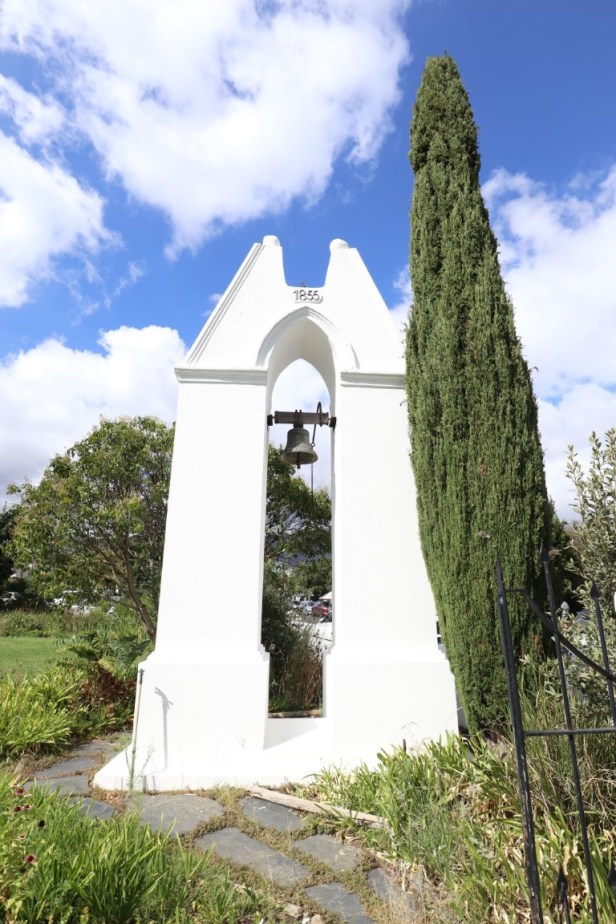
Church Bell (built in 1855)
The church garden is beautifully maintained and it was lovely to see my favourite flower (and South Africa’s national flower), the Protea, in the garden.
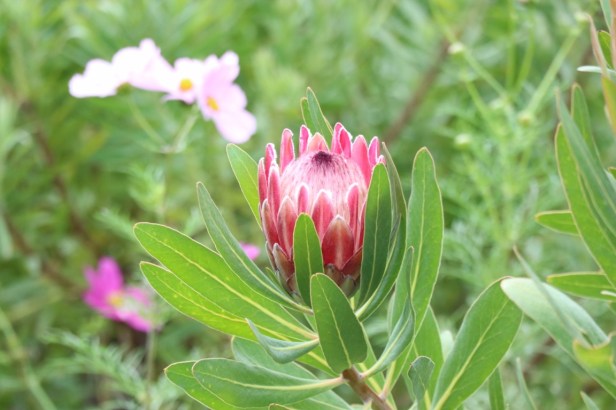
The beautiful Protea
There is a wide variety of restaurants, boutique shops, and art galleries. You will probably need more than just a morning to look into every little shop and alleyway. Feel free to walk with us through Franschhoek’s main street and see for yourself how beautiful it is.
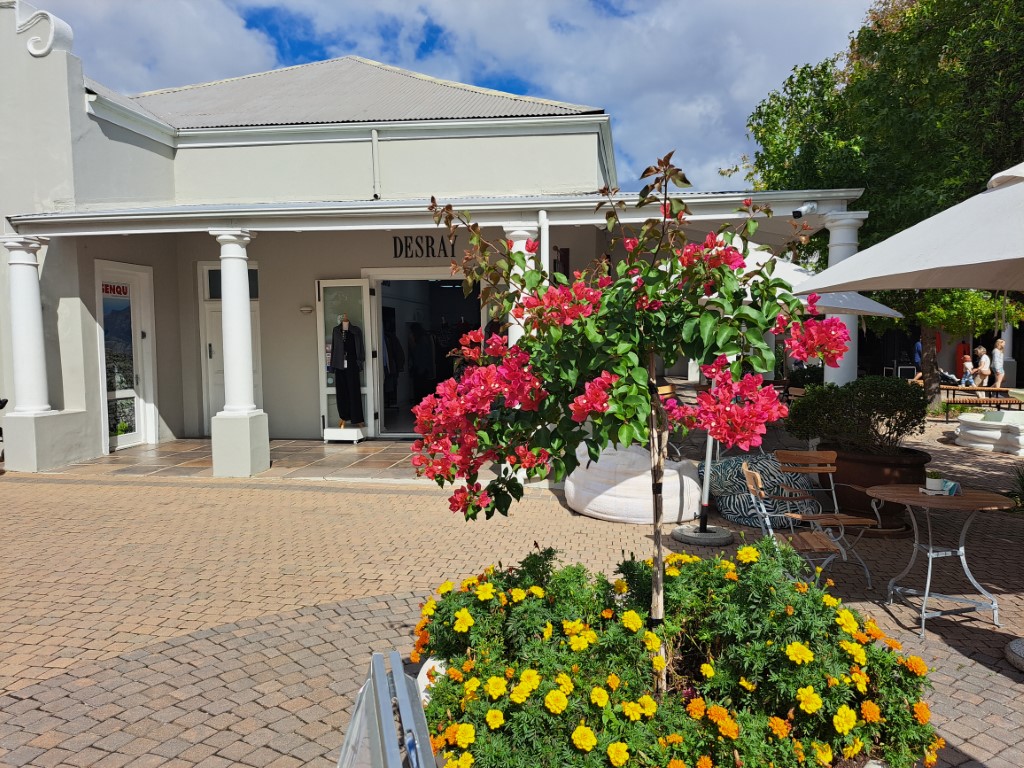
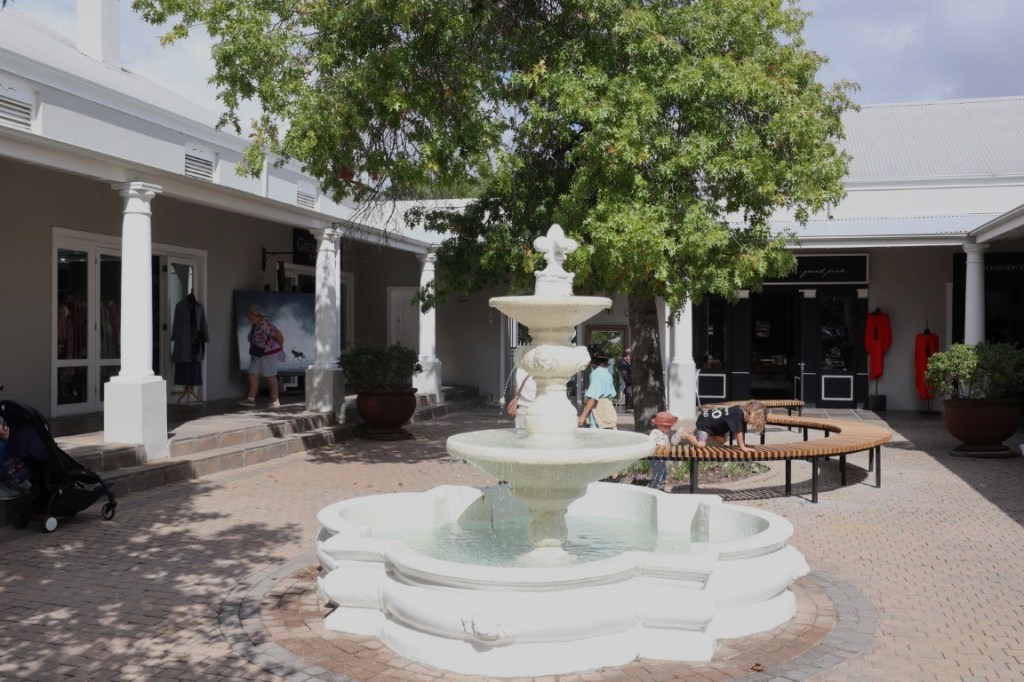
There is no shortage of flowers and fountains in Franschhoek
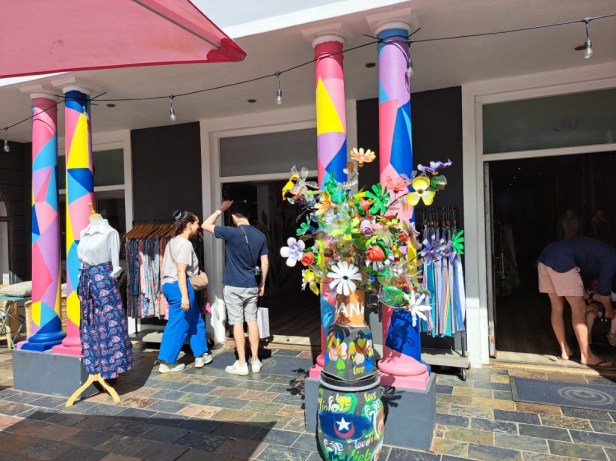
Colourful pillars in front of a boutique shop
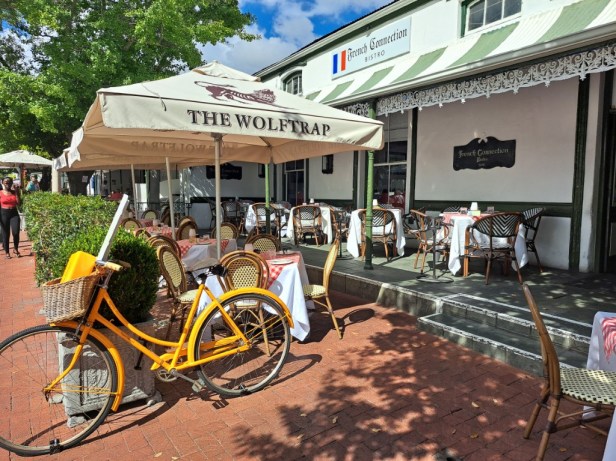
Restaurant tables on the pavement – the French Connection Bistro
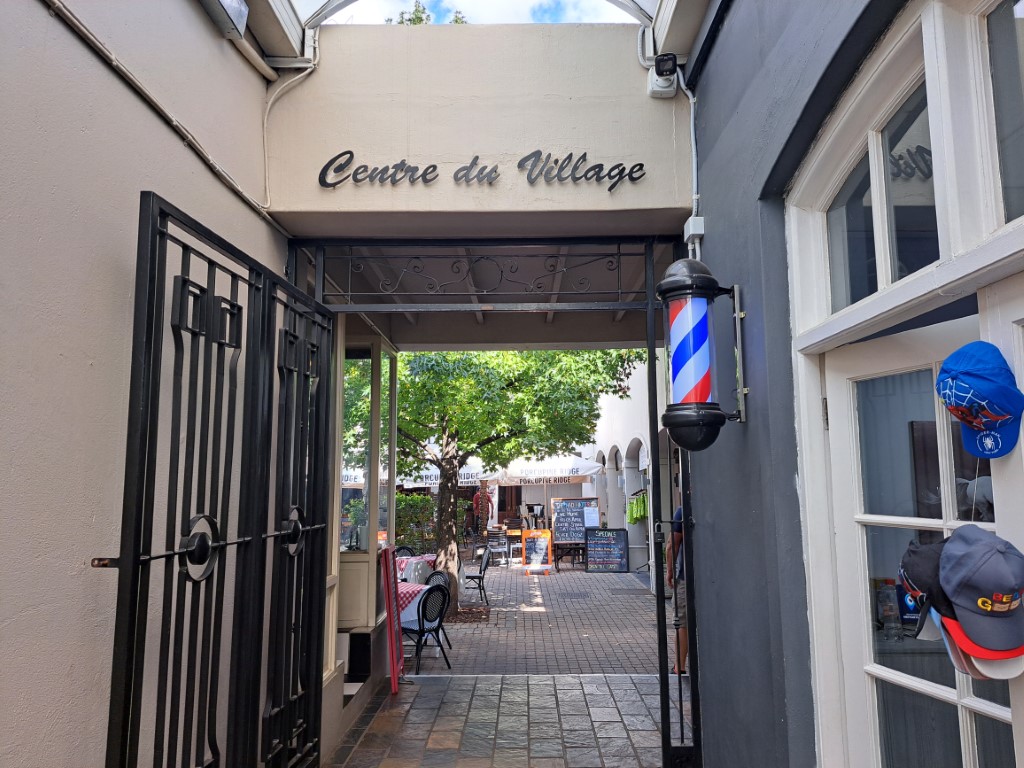
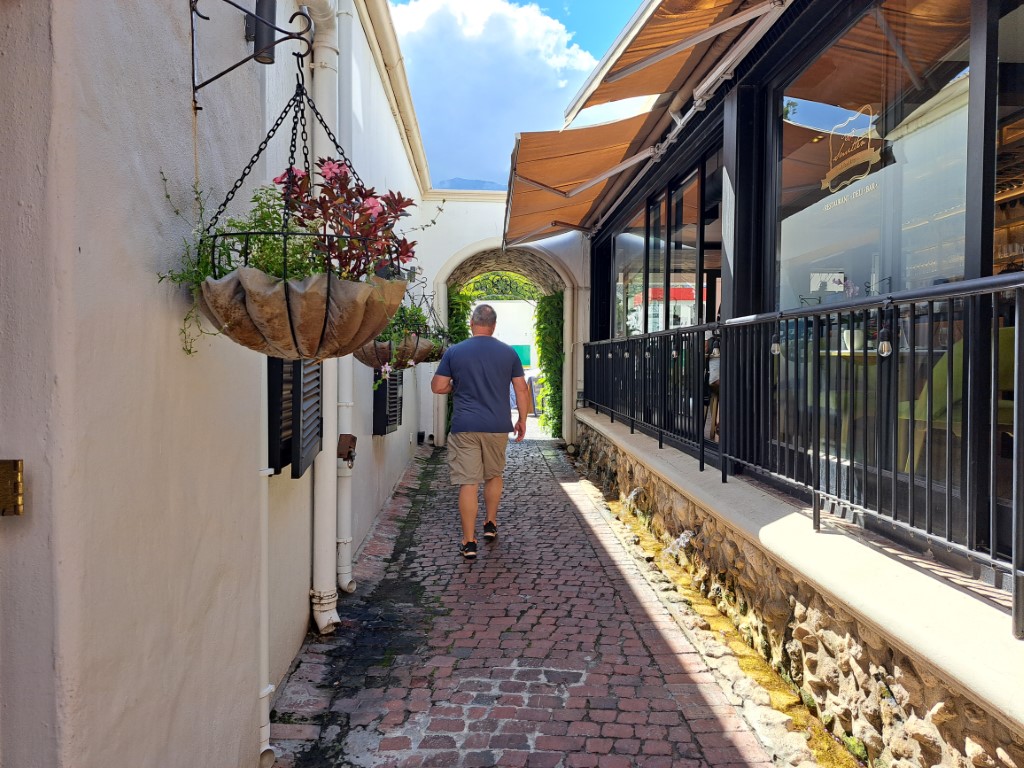
Walking down alleyways
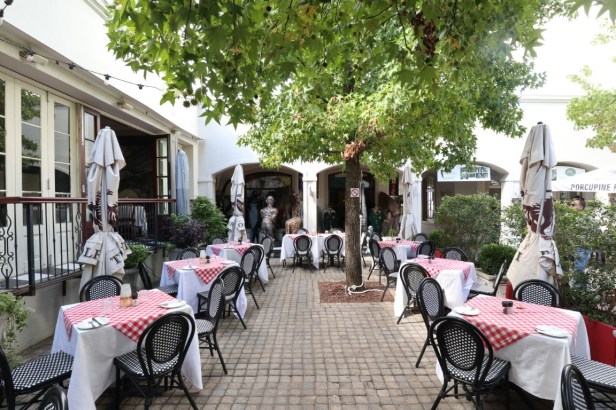
Restaurant and shops in a courtyard
Whether you’re an art enthusiast or not, you will enjoy the wide selection of art galleries and antique shops in Franschhoek. And don’t hesitate to stop for a moment at the street vendors’ tables on the sidewalk where they display their handmade arts and crafts.
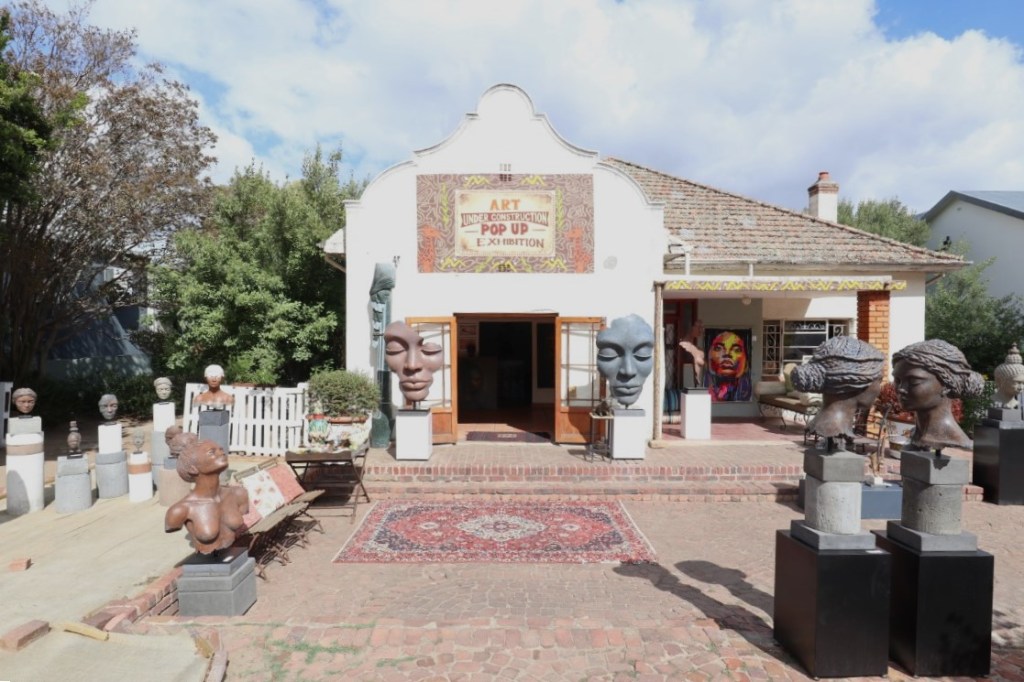
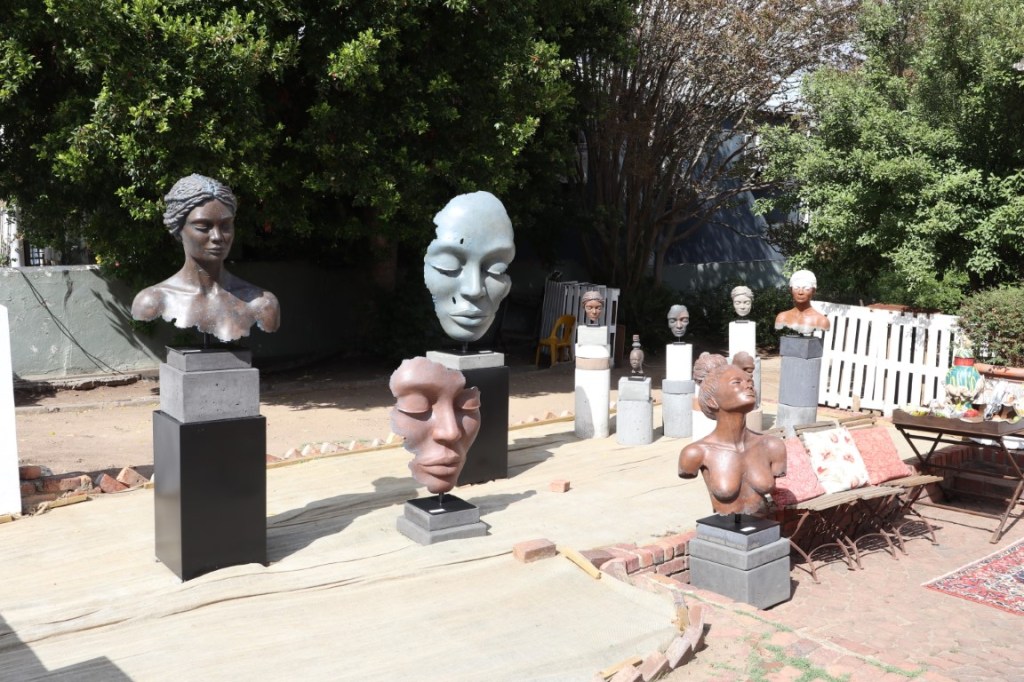
Just one of many art galleries
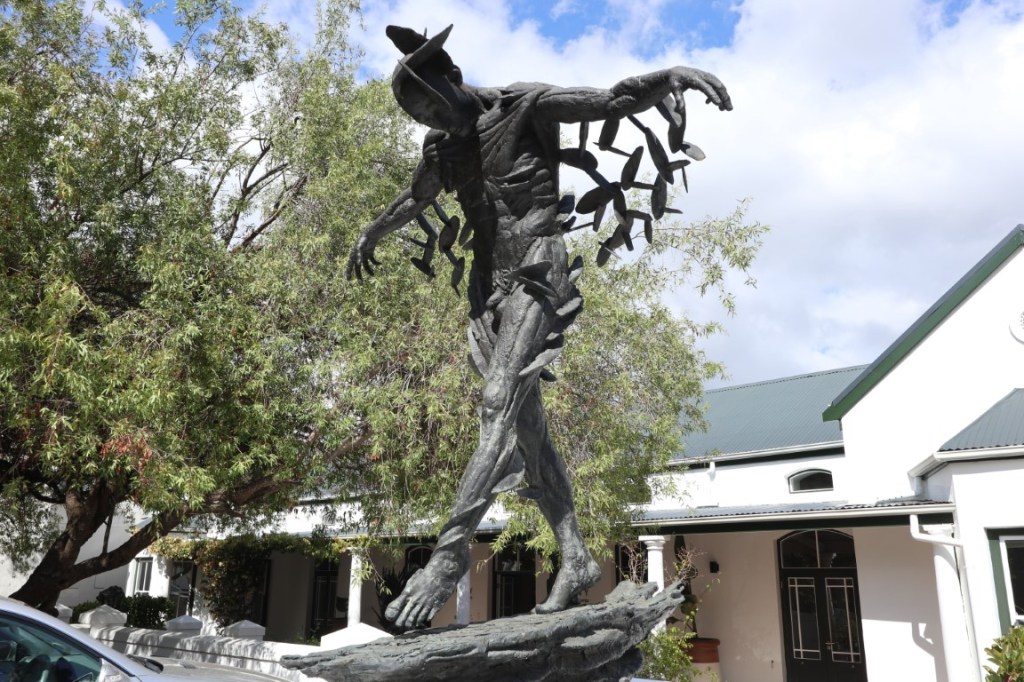
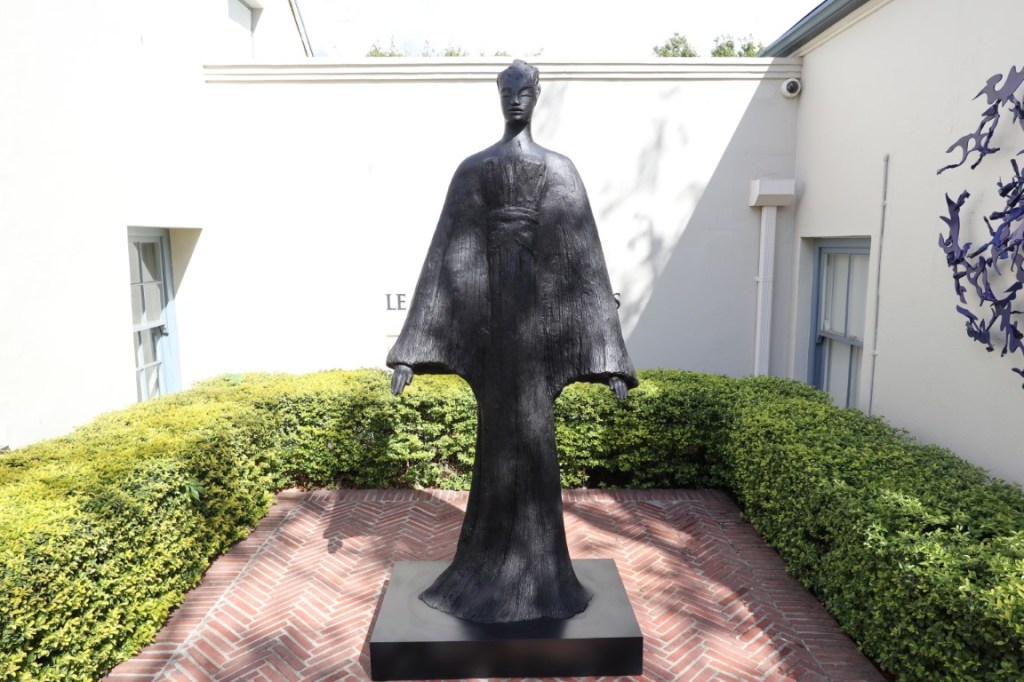
Unique artwork
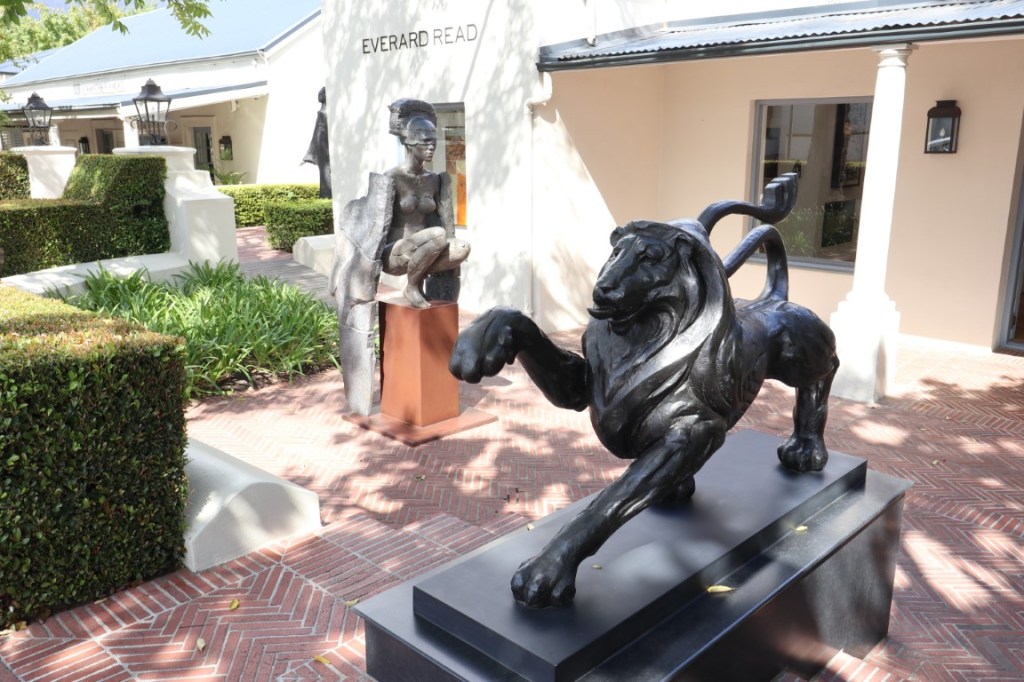
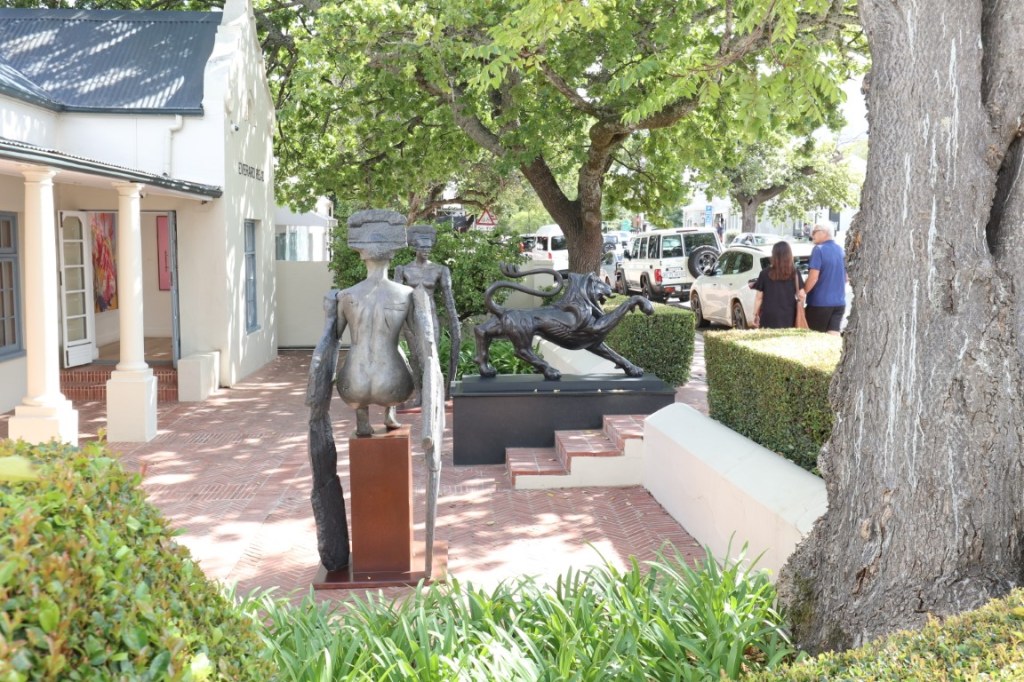
Art in front of an art gallery
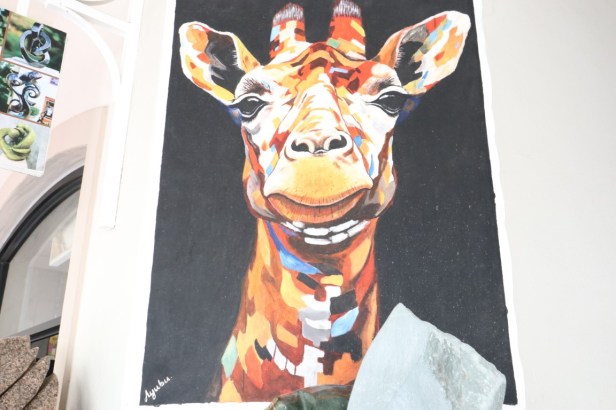
Colourful giraffe
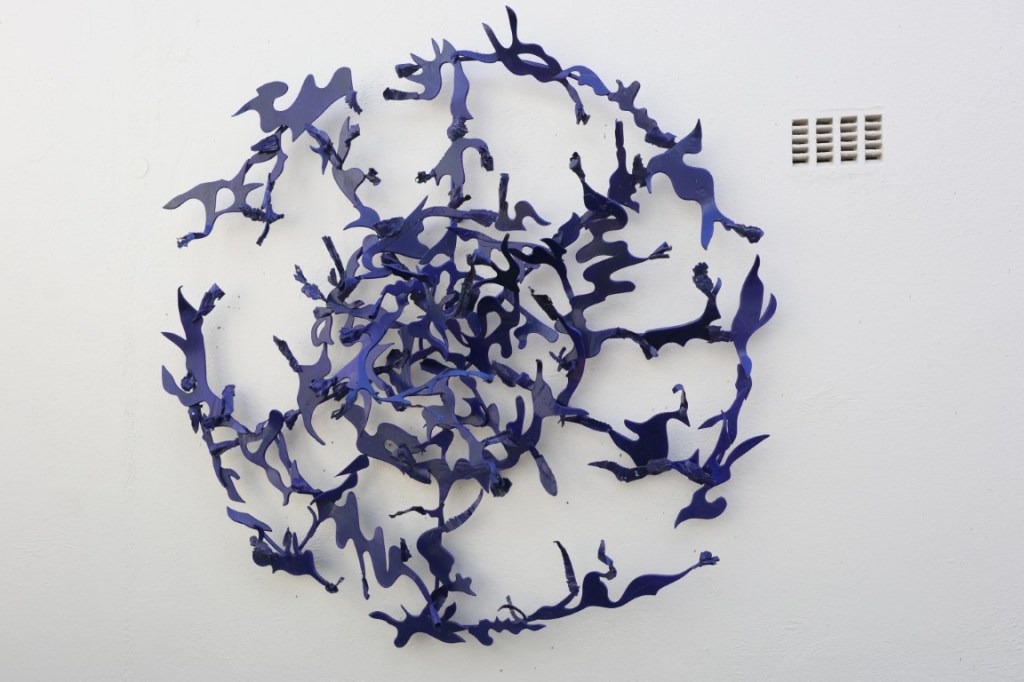
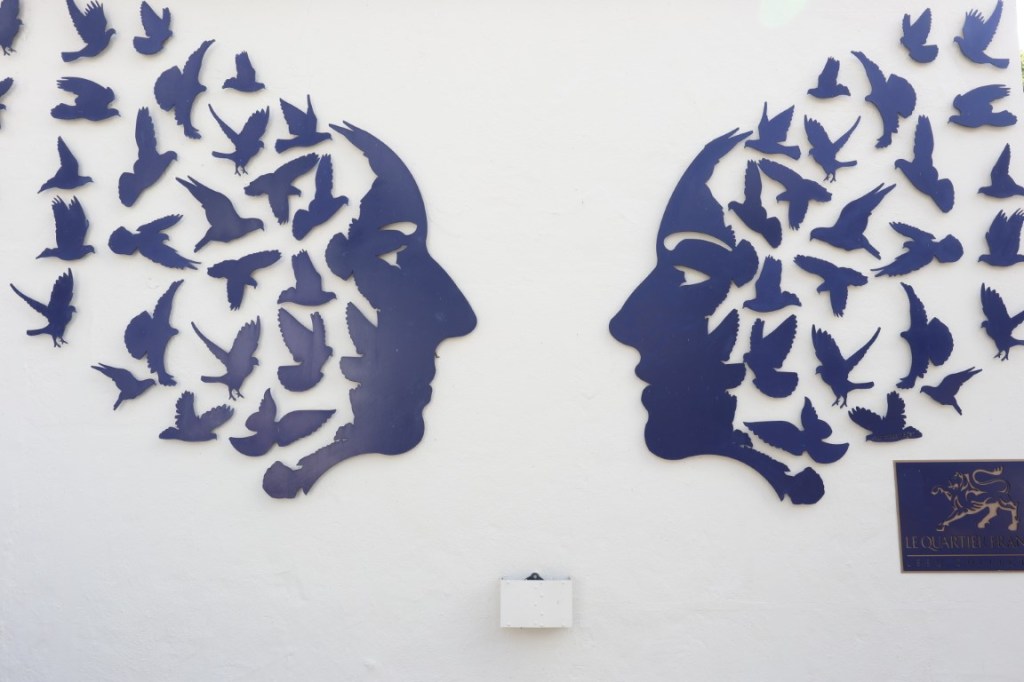
Wall art
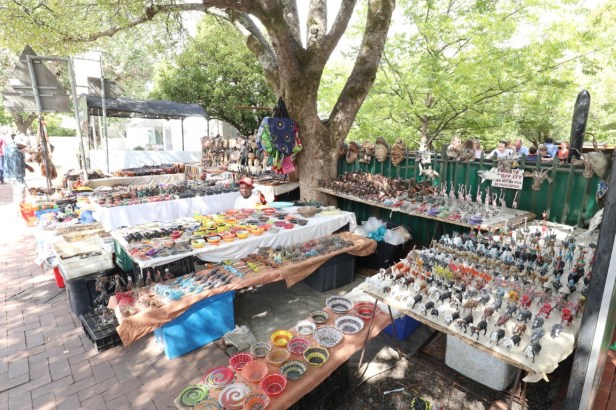
Street vendors’ arts and crafts
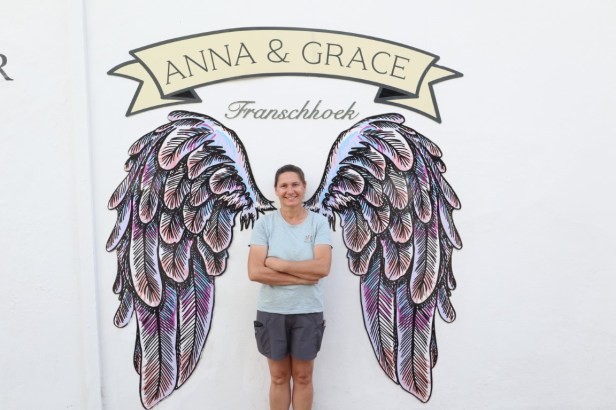
You can even create your own artwork
Franschhoek is home to several historical buildings that reflect its rich history and architectural heritage. We have only a few photos of these, but almost every building has its own style and character.
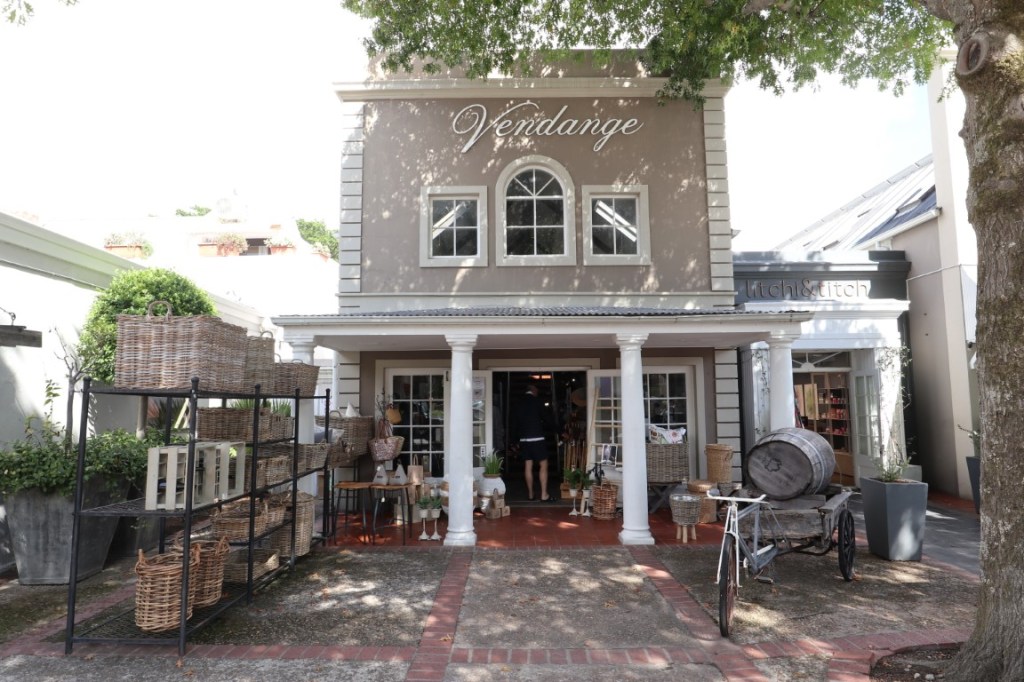
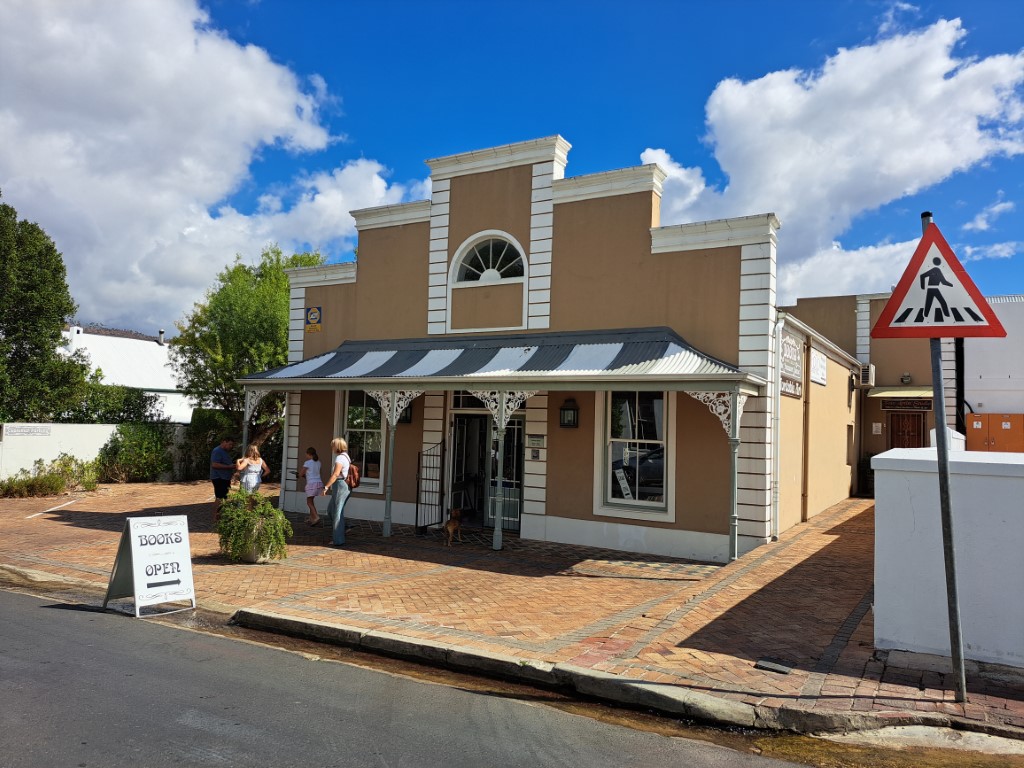
Gift- and Book shop
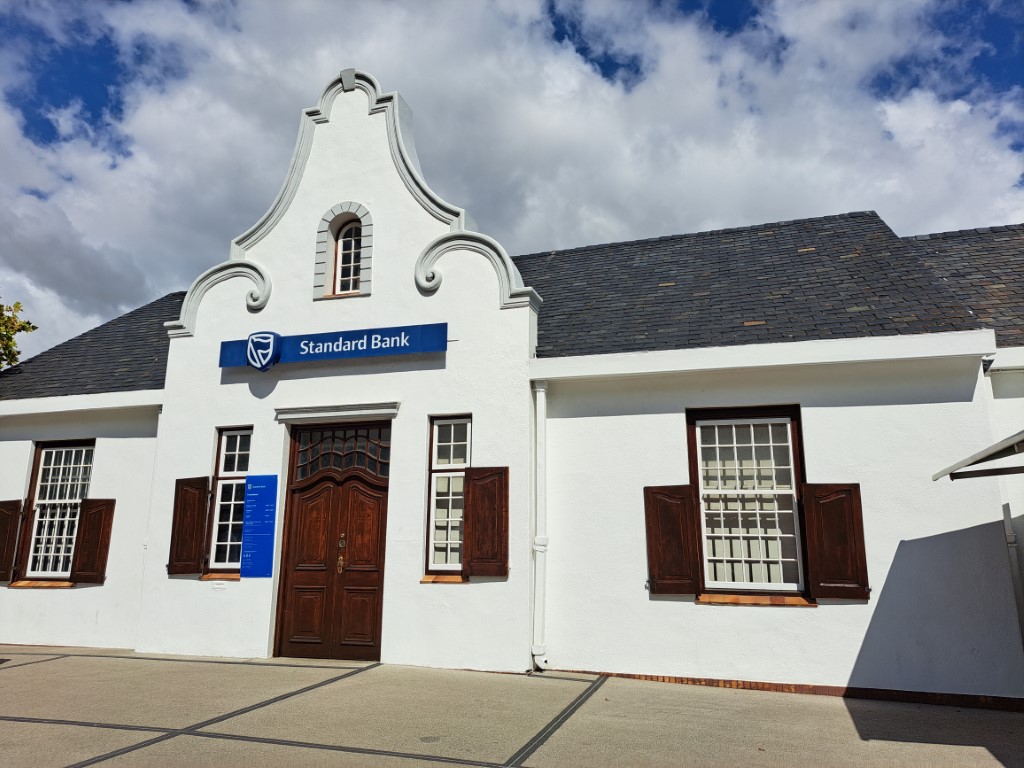
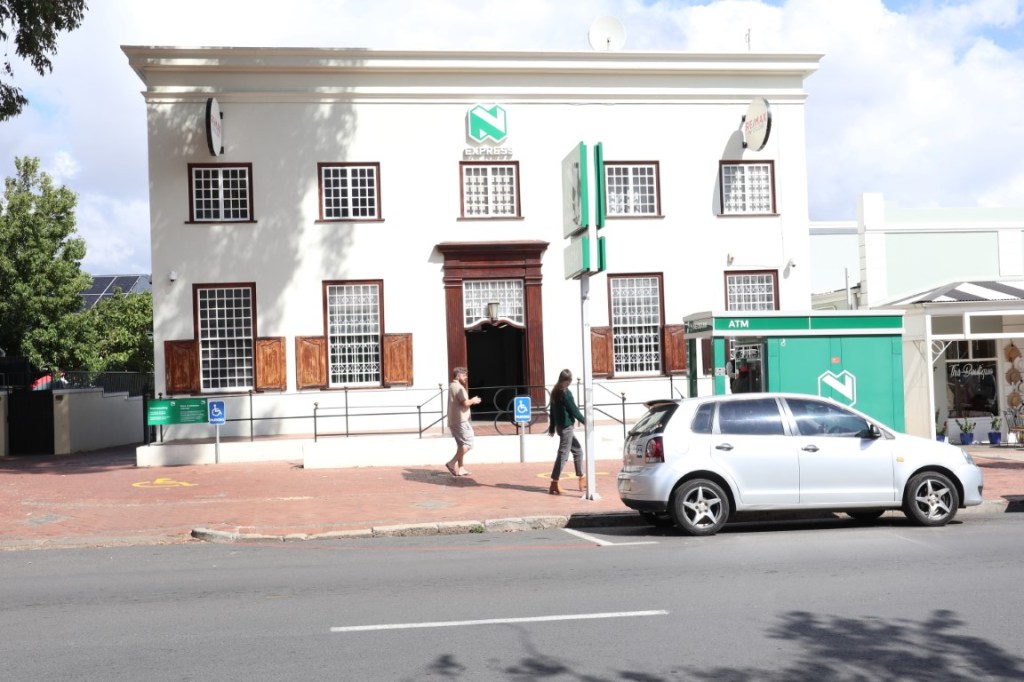
Even the banks are noted for its architectural details
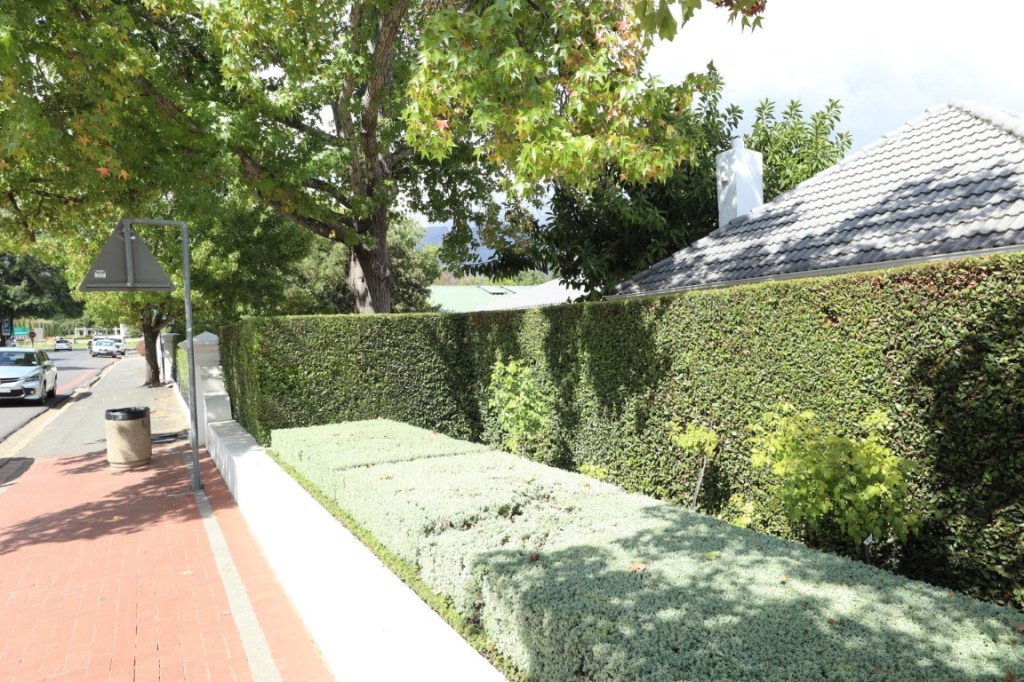
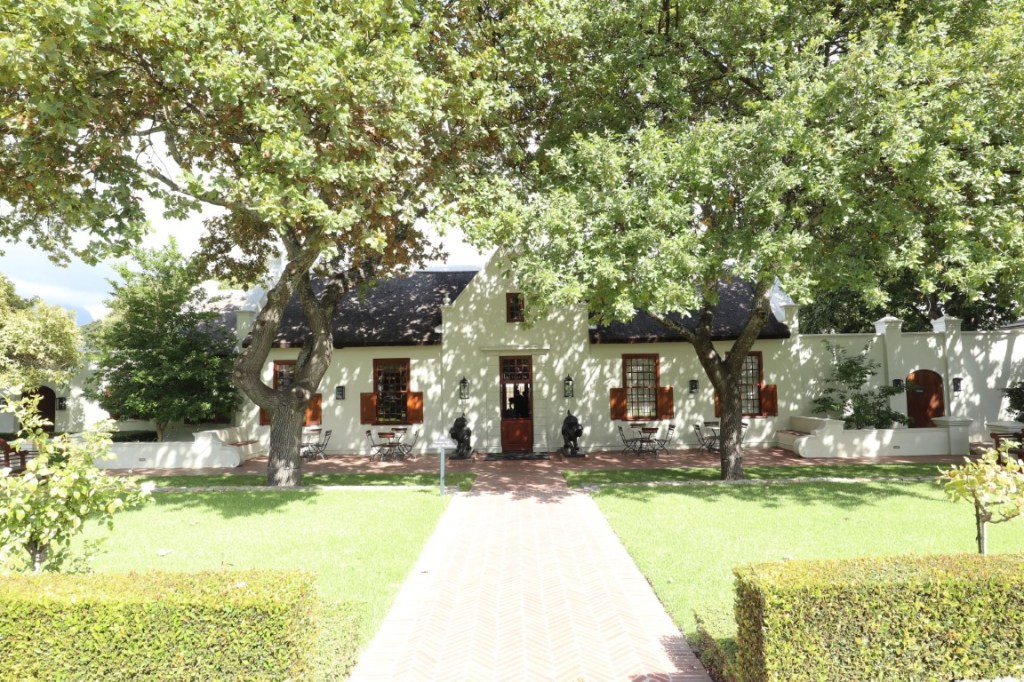
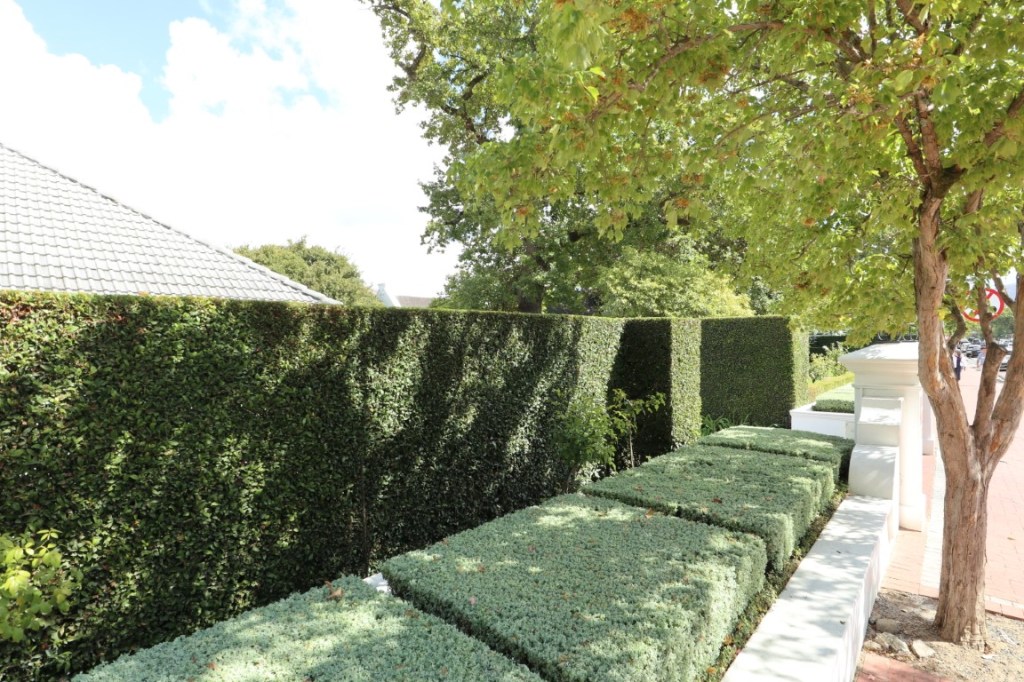
Leeu House – luxury hotel in the main street
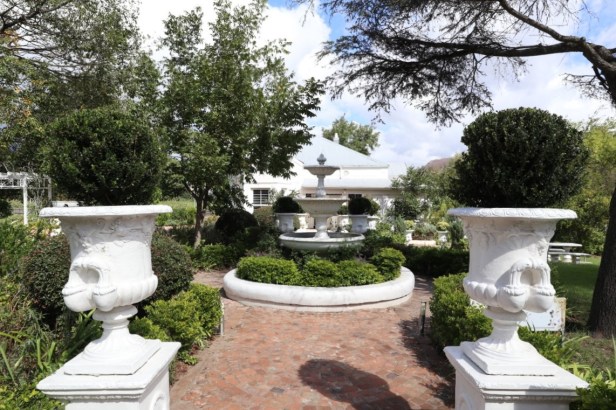
Lovely front garden with water fountain
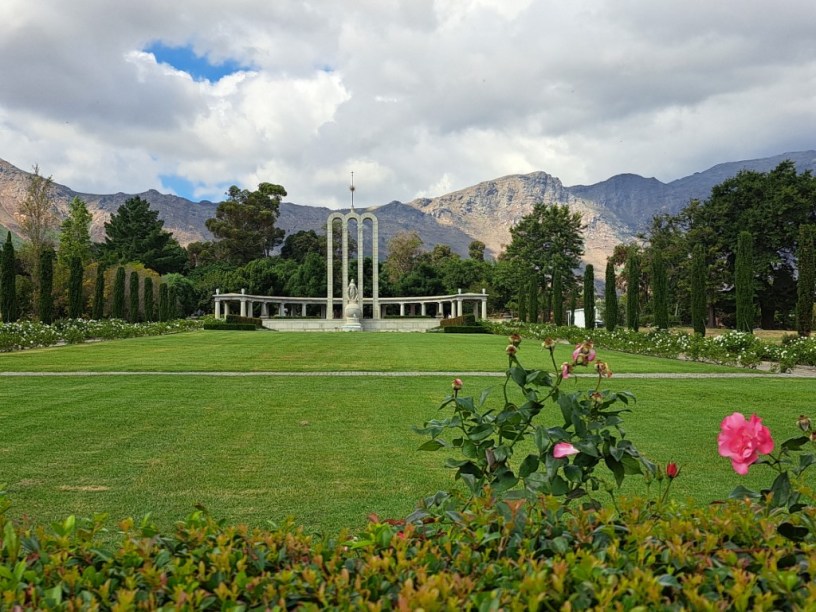
At the end of the main street is probably the most prominent monument in Franschhoek, the impressive Huguenot Monument. It is situated in a beautiful garden landscape with the Franschhoek mountains in the background.
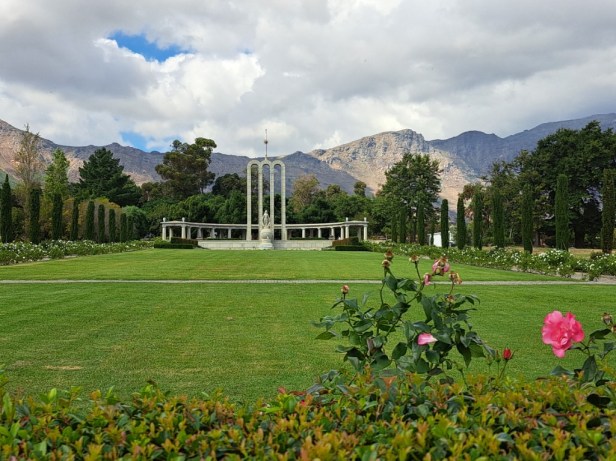
Huguenot Monument
The monument is dedicated to the cultural influences that the Huguenots have brought to the Cape Colony (and ultimately the whole of South Africa).
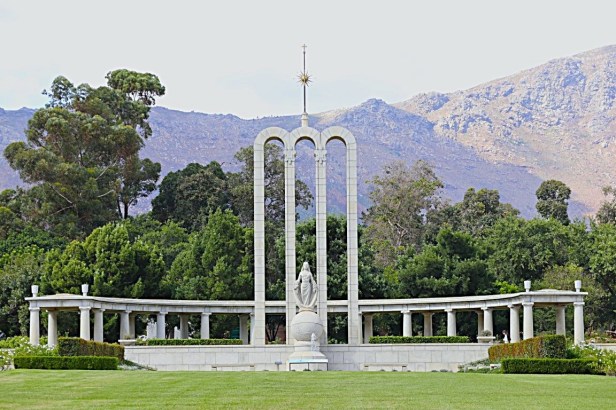
Huguenot Monument
After we lingered for a while at the monument, we turned back and walked slowly down the main street again – this time on the other side of the road.
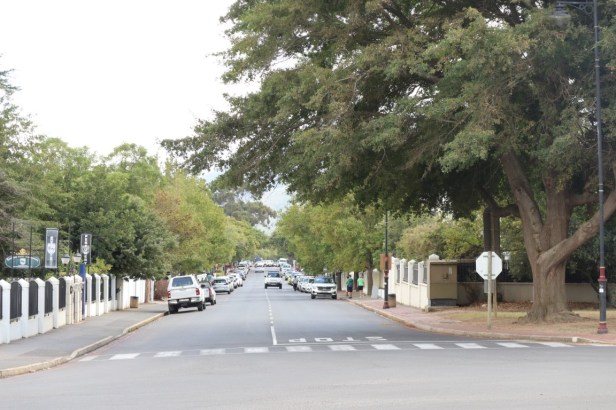
The main street in Franschhoek
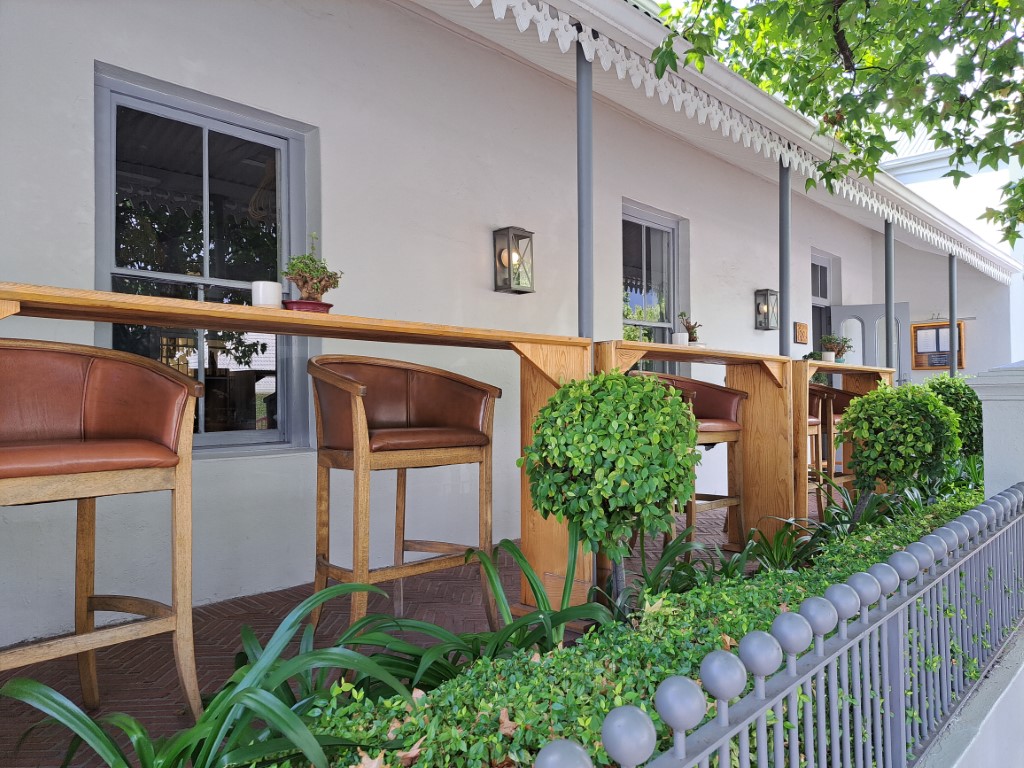
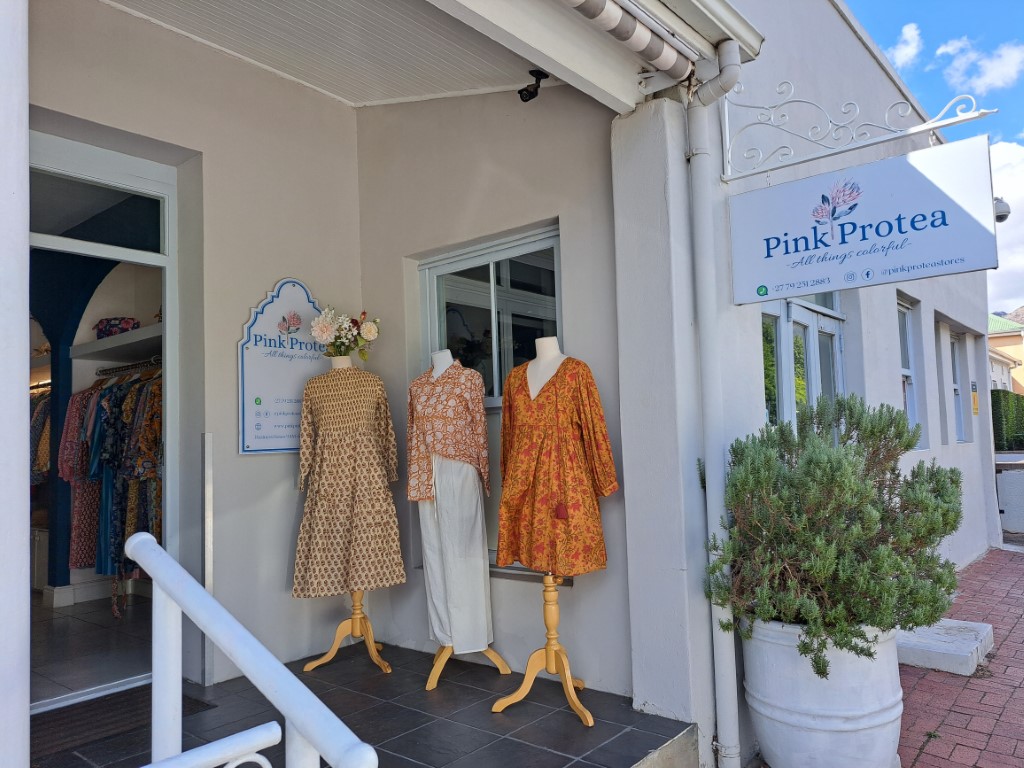
Coffee house and clothing shop
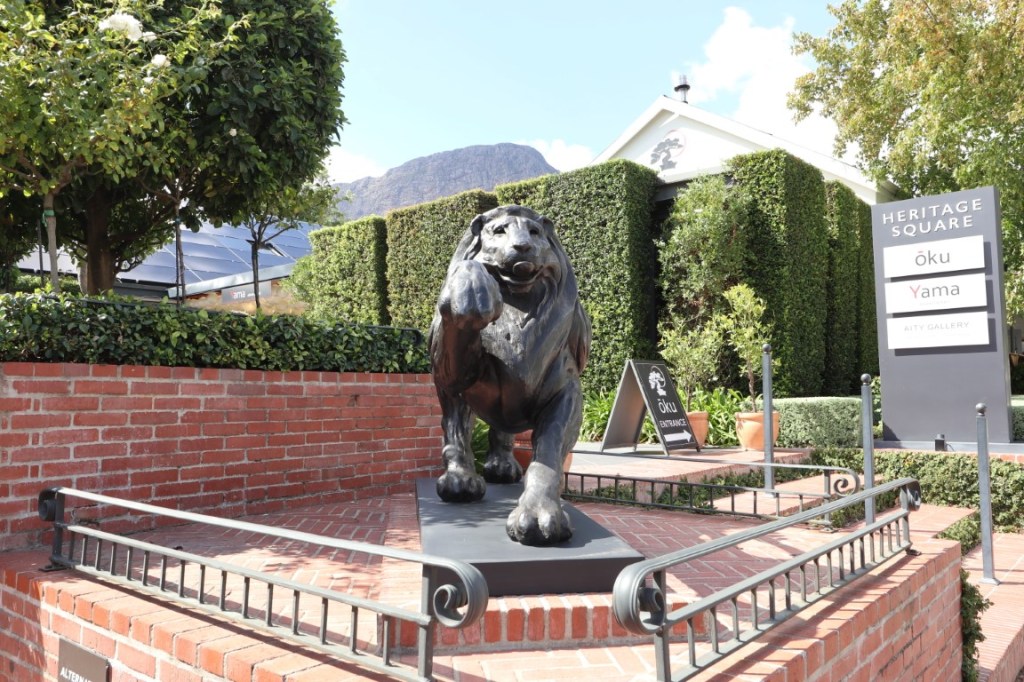
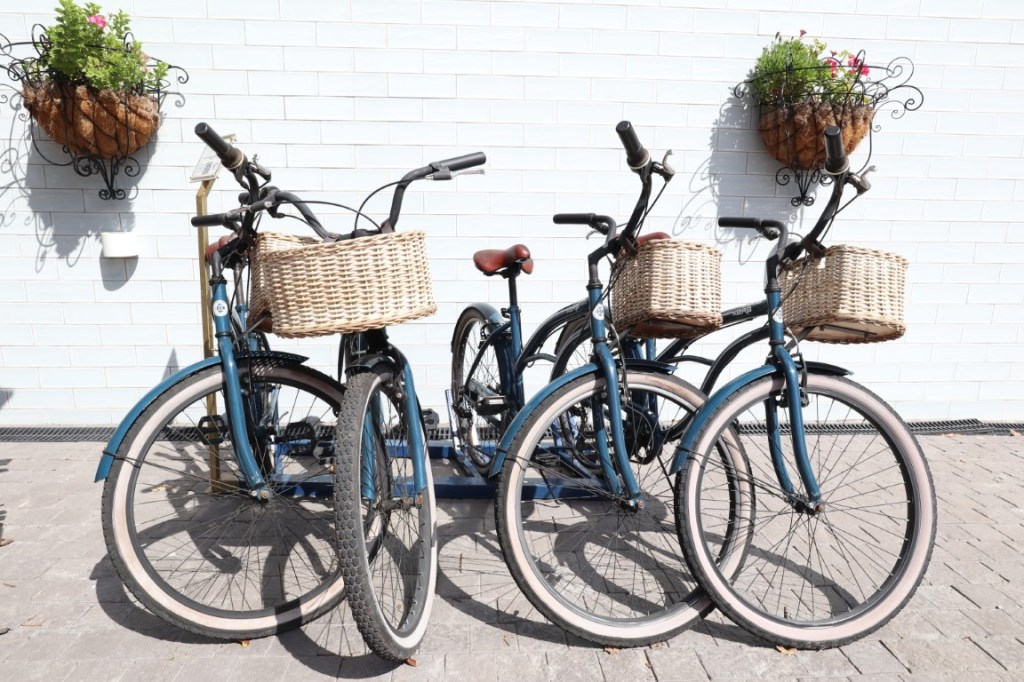
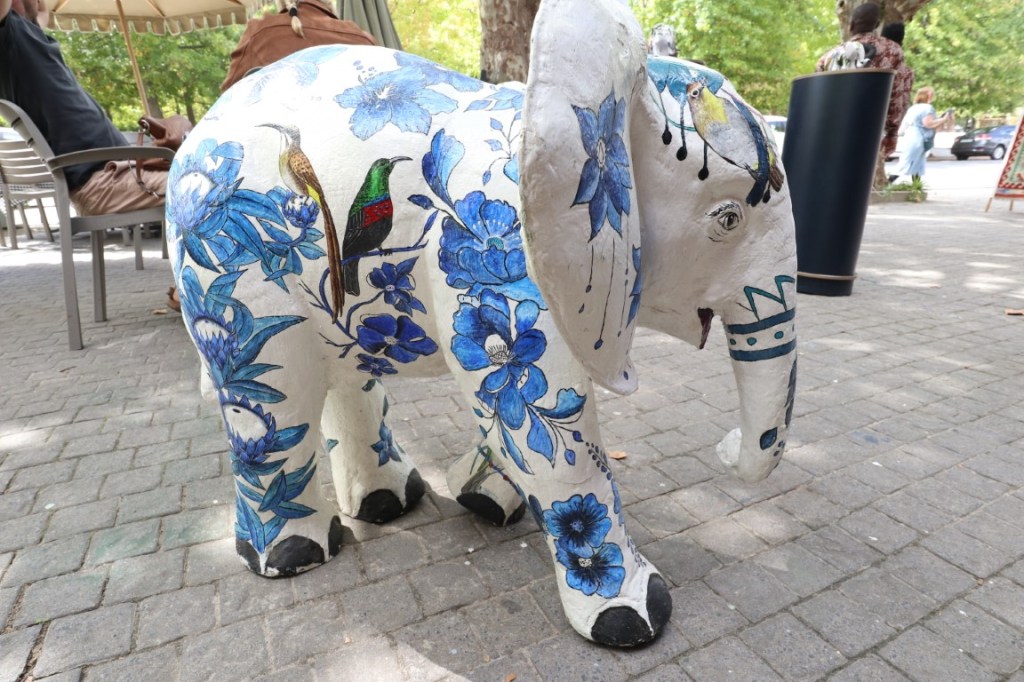
More artwork
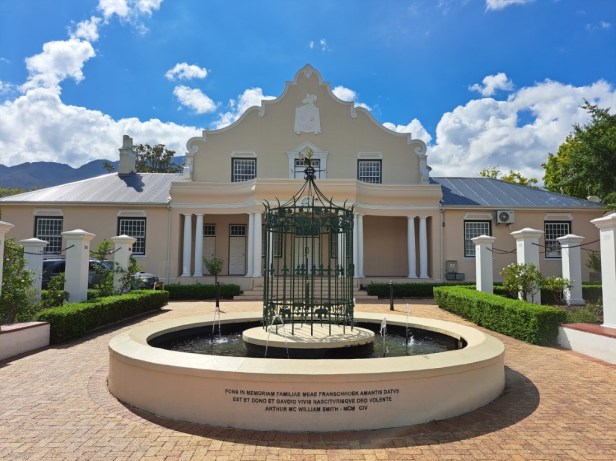
Cape Dutch style City Hall
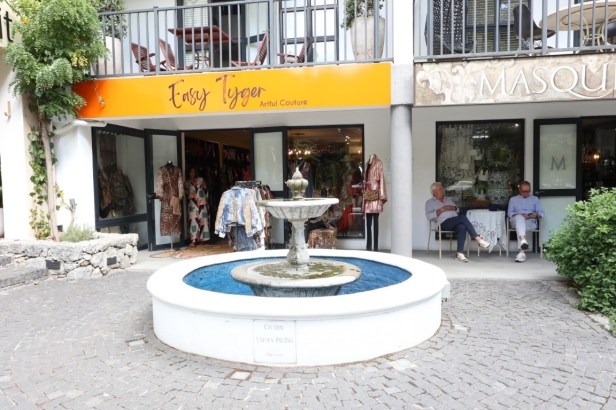
Tourists taking a break at one of the many coffee shops
We also came across the Franschhoek Wine Tram ticket office in the middle of the town where you can buy tickets for the wine tram. We had already bought our tickets online and will tell you more about this fun day in our next post (read here).
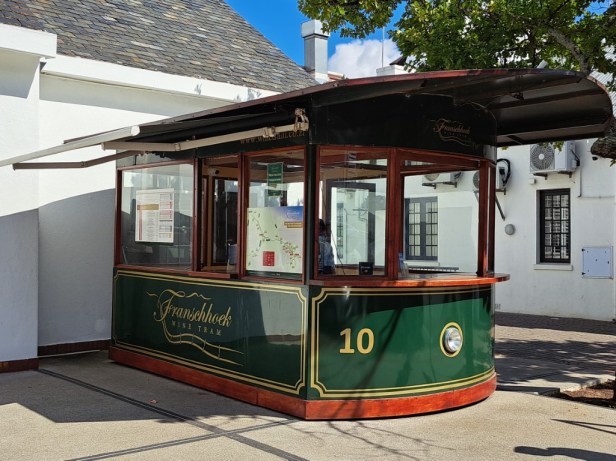
Wine Tram ticket office
We decided not to have lunch in the town, but rather to buy a few snacks at a deli and then drive back to our campsite. Away from the crowds, where we could sit back and enjoy life quietly.
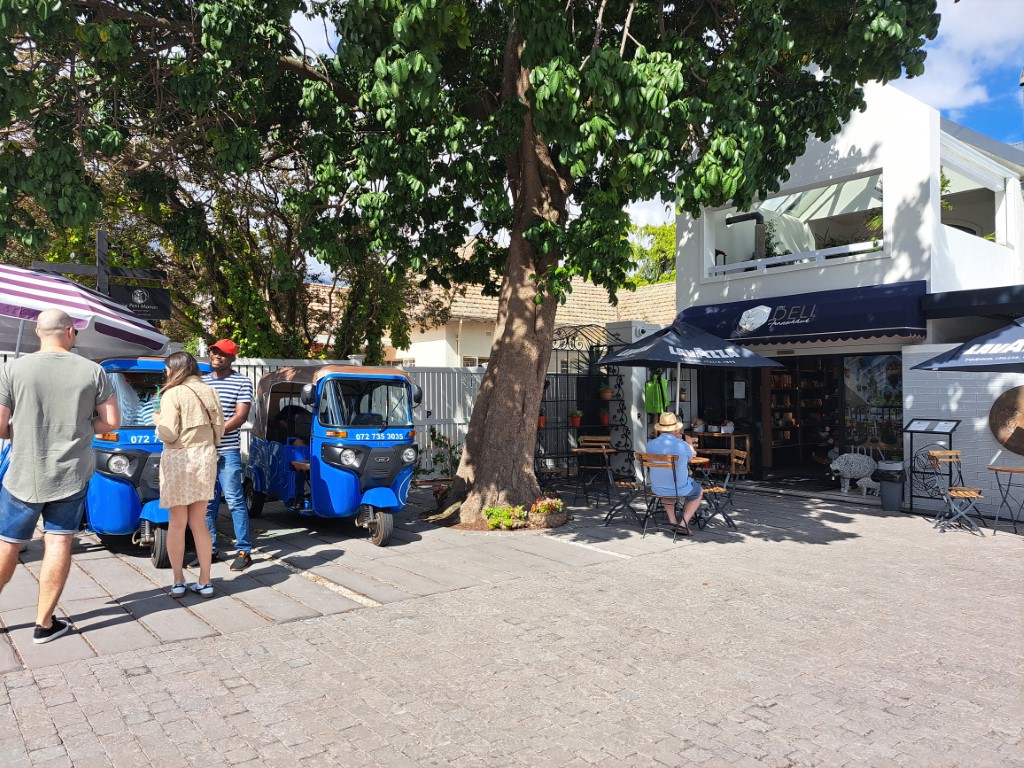
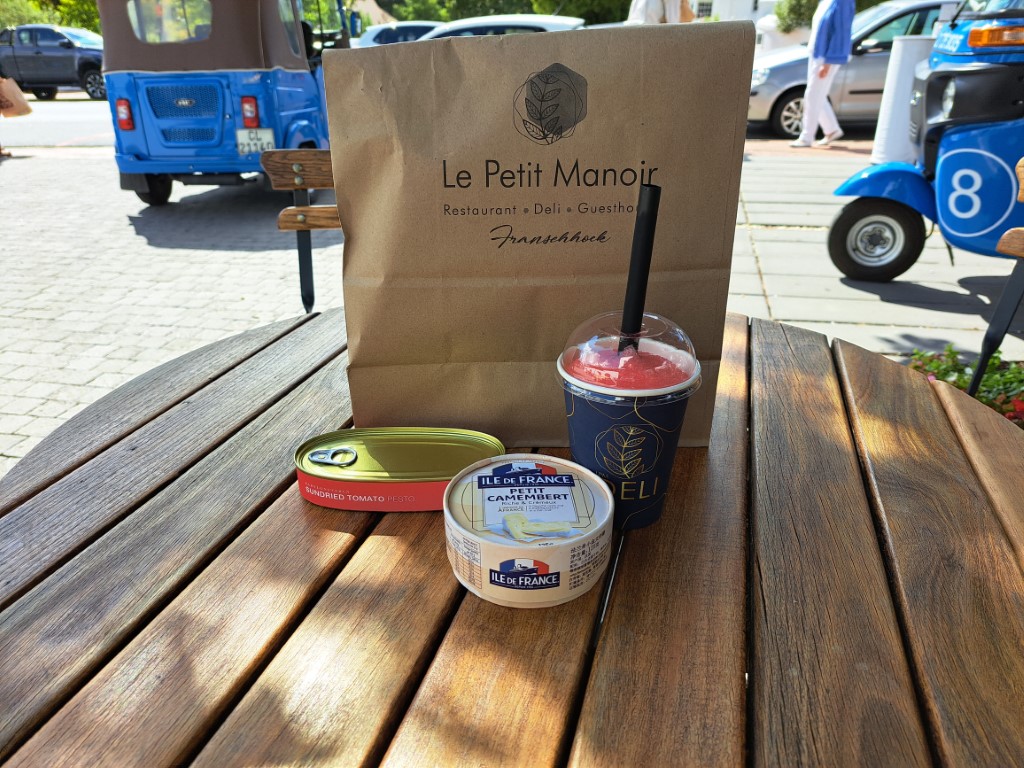
We bought a variety of snacks at the Le Petit Manoir
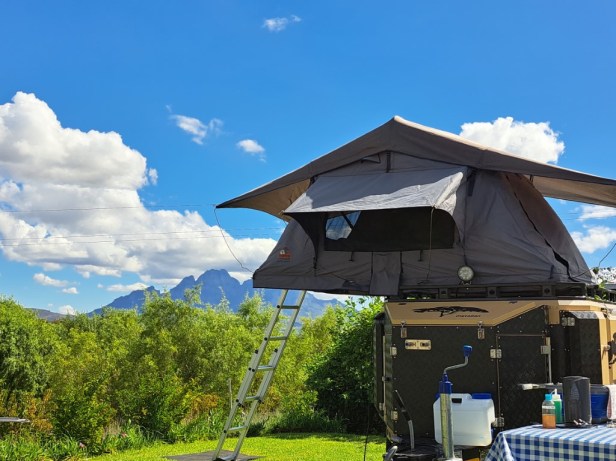
Back at our campsite at Franschhoek Camping
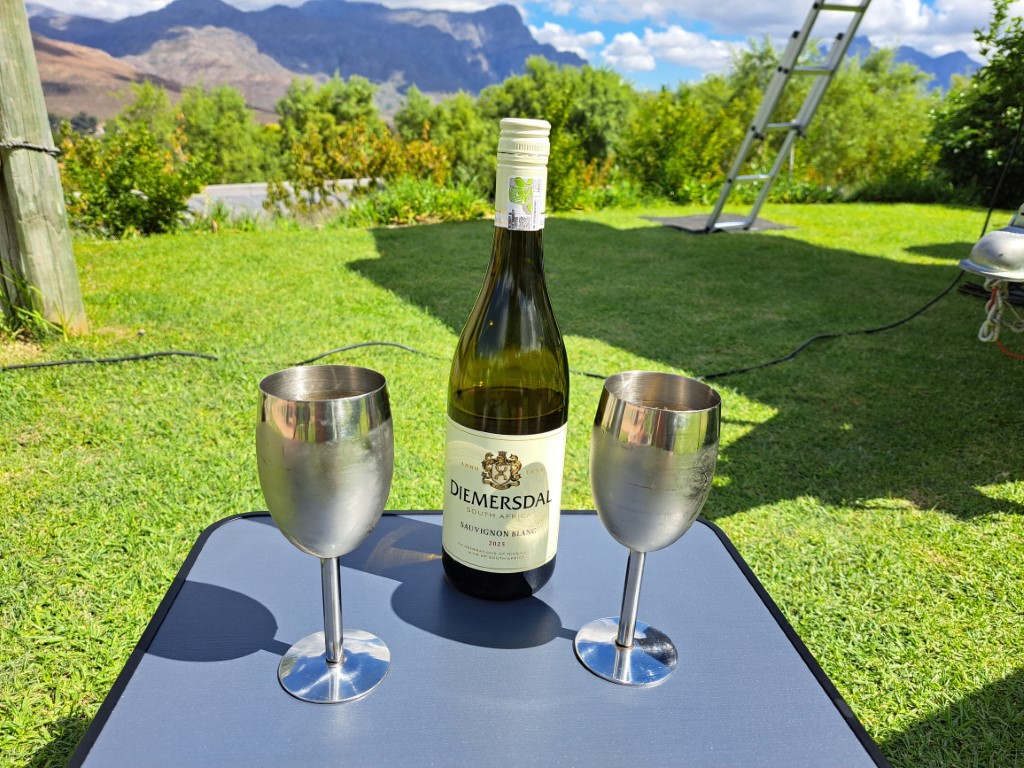
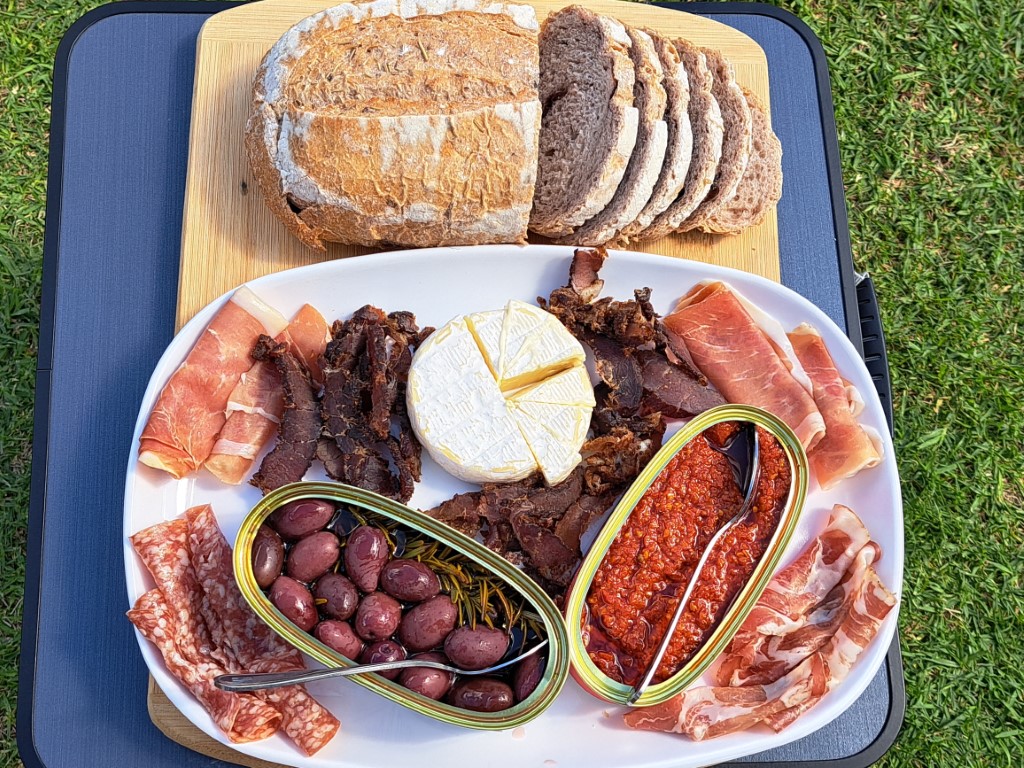
Life is good
Franschhoek, with its welcoming atmosphere and undeniable charm leaves a lasting impression. Strolling past its elegant Cape Dutch buildings, admiring local galleries, and pausing at the Huguenot Monument, you feel the town’s rich heritage woven into every corner. If you’re seeking a town that blends culture, beauty, and character, Franschhoek should be at the very top of your list.
Quick fact: The Franschhoek Bastille Festival take place every year in July. This annual event celebrates French heritage with the town adorned in the ‘tricolore’ of France – a real festive occasion with wine and cheese tastings, gourmet food stalls and live entertainment.
We have attended this festival a few times already, and it’s lots of fun. See you again in July Franschhoek.


What a very elegant town, Corna xx
LikeLiked by 1 person
Quite charming, Jo. Probably one of the most picturesque towns in the greater Cape Town region.
LikeLike
And expensive, no doubt? xx
LikeLiked by 1 person
Maybe not necessarily for the overseas tourists with their pounds, euros, and dollars, but for us South Africans, it is quite expensive. That’s why we made our own platter at the campsite 😁.
LikeLike
That’s what I thought xx
LikeLiked by 1 person
Franschhoek is indeed a beautiful and charming town and the French influence is quite noticeable. I would love to visit someday and stroll up and down the pretty streets. Your photos are wonderful, particularly the Protea; stunning. Lovely post, Corna!
LikeLiked by 1 person
I thought you would be able to notice the French influence in Franschhoek and I’m sure you will enjoy a visit here. The Protea is such a special flower, and I’m always happy to spot it – whether in nature or planted in a garden. Thank you very much, Tricia, your comment is much appreciated.
LikeLiked by 1 person
I knew you were an angel! That is such a charming town. The architecture, flowers, art and such a stunning setting. I remember the memorial. Some of my ancestors were Huguenots. It looks to me as if you did well to take your bag of goodies and enjoy lunch back at the campsite and well deserved after all that walking! thank you for the delightful tour.
LikeLiked by 1 person
Haha 😁, an angel in disguise. It’s nice to know you have also been to Franschhoek – that monument is in one of the most beautiful locations (the stunning garden and majestic mountains make it picture-perfect). I think our own bag of goodies was half the price of what we would have paid for it in one of the restaurants! Thank you for walking with us through the streets of Franschhoek.
LikeLike
I would be very happy poking around a few of those galleries and the craft stalls, then relaxing over a drink and watching the world go by!
LikeLiked by 1 person
What you mention here in your comment is exactly what one should do when visiting Franschhoek, Sarah. Walk until your feet are tired and then find a corner table at one of the many restaurants and enjoy a glass of wine from one of the many nearby vineyards … and sit there for the rest of the afternoon 😁.
LikeLiked by 1 person
Wonderful. Looks just like I remembered. I hope you are going to take us on the wine tram. That wasn’t an option when I was last there.
LikeLiked by 1 person
I’m glad you enjoyed the post, Jude (and that Franschhoek still looks like you remembered it … nowadays so many of our smaller towns are run down, that I’m always happy to see when that is not the case). Oh yes, in our next post we are going to get on the wine tram and visit a few wineries – that was such a lot of fun!
LikeLiked by 1 person
You captured so many beautiful photos! It looks like a wonderful place for lovers of fine wine, gourmet food, and stunning scenery. I love how there’s art everywhere you look and how you are not too far from stunning scenery and nature. Thanks for sharing and have a good day 🙂 Aiva xx
LikeLiked by 1 person
Franschhoek is such a beautiful place and I’m sure one can actually spend a whole day here – have a coffee, eat a piece of cake, later have a glass of wine and enjoy a gourmet lunch … all at different restaurants! I don’t always understand art, but I do appreciate beautiful artwork (and there are plenty of that in Franschhoek). Thank you, Aiva, enjoy your weekend.
LikeLike
What a pretty town. And, as always, a great campsite!
LikeLiked by 1 person
Franschhoek is an attractive little town – besides being so beautiful, there are also more than enough places to eat. But it became quite busy towards the afternoon, so we were more than happy to go relax at our lovely campsite with snacks and a bottle of wine.
LikeLiked by 1 person
Franschhoek looks to be a charming town with its Dutch architecture and wonderful little church.
LikeLiked by 1 person
Despite the fact that Franschhoek is a very popular village to visit – by both foreigners and locals – it never feels crowded (well, except when it’s the Bastille Festival). We always enjoy our time here – and the food is top-notch!
LikeLiked by 1 person
It looks like a beautiful place; and I love the look of a wine tram!! I’d also be taking that giraffe painting home with me 🙂
LikeLiked by 1 person
We really enjoyed the wine tram – the day was too short and the wineries too many 😁. Isn’t that giraffe painting just too cute?
LikeLiked by 1 person
Life isn’t good, it’s great!! You so make me want to come back to RSA! Melx
LikeLiked by 1 person
South Africa (and especially the Western Cape) has so many beautiful places – whether you like the sea, the mountains (or the vineyards 😉). I am sure a lot has changed since you were last here, but I’m also sure you will still enjoy it just as much!
LikeLiked by 1 person
Definitely!
LikeLiked by 1 person
Franschhoek looks charming and I love all the historic buildings. I’ve always enjoyed places that are best explored on foot.
LikeLiked by 1 person
Because Franschhoek is one of the oldest towns in South Africa, there is heaps of history in the buildings and monuments. And exploring the town on foot ensures that you can slip into every tucked-away alley to see what is hidden between the buildings – this at least excludes the drama of traffic jams (one of my pet peeves).
LikeLiked by 1 person
Looks like a great town to visit. I didn’t know this part of the French History.
LikeLiked by 1 person
It is interesting, right? Yes, it’s astonishing to think that the French presence in South Africa already began in the late 17th century. You can see the French influence clearly in the cuisine and wine of South Africa, particularly in Franschhoek. Like you said, it’s a wonderful town to explore – we can’t wait for our next visit!
LikeLiked by 1 person