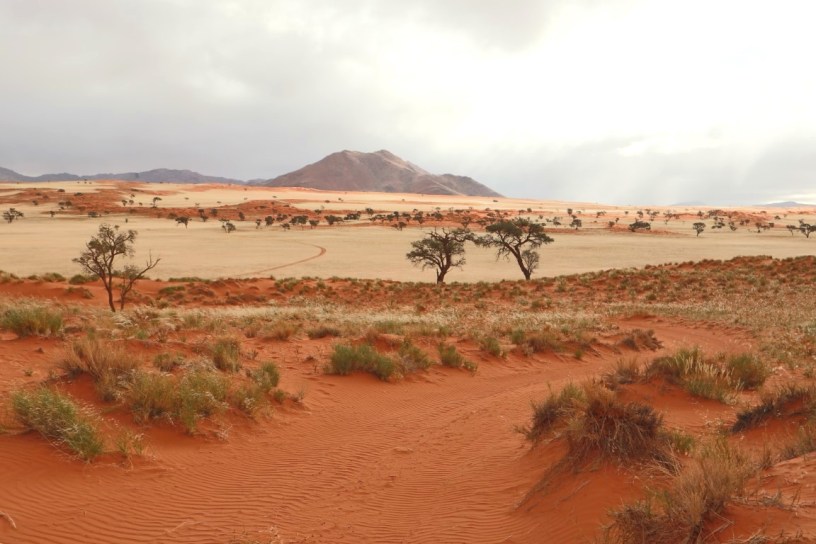
May 2025
An old farmhouse, red sand dunes, wildlife and rain in the desert
In our previous post, we showed you the beautiful road leading to NamibRand Nature Reserve (read here).
NamibRand Nature Reserve:
The NamibRand Nature Reserve is a small addition to the Namib-Naukluft National Park, which is one of the largest nature reserves in the world. Within its 200,000 ha boundaries lies the world’s oldest desert known as the pro-Namib.
Wildlife is plentiful, such as zebra, springbok, kudu, ostrich, leopard, giraffe, oryx (gemsbok) … oh, the list is long, but we have been warned that, because it is such a big reserve, sightings remain incredibly rare. We wondered if we might be lucky enough to see even just one of these animals.
There are also many 5-star luxury desert lodges to choose from where you can have those authentic desert experiences. But staying there would cost us an arm and a leg. However, after searching the internet for days, we found a place that was within our budget.
NamibRand Family Hideout:
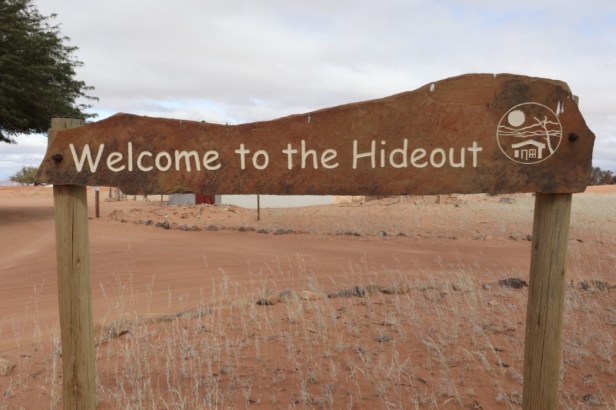
Our accommodation inside NamibRand Nature Reserve
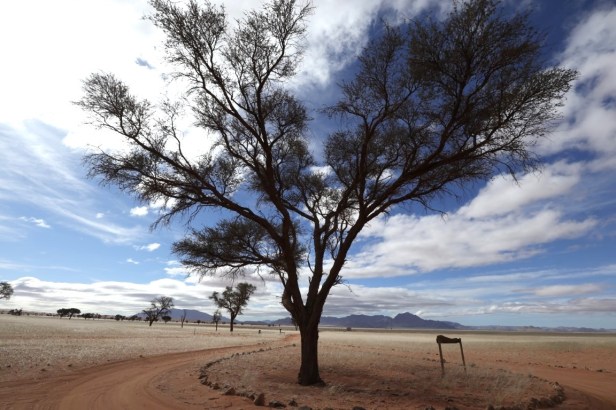
The signpost to the farmhouse was under this beautiful tree
The farmhouse is definitely not luxurious – there are a few rooms with single beds, a bathroom, kitchen, and dining/living rooms. But it had everything we needed. For an extra fee, bedding could be provided, but we decided to use our own bedding since we had it with us anyway. And there was a fire pit outside – for us, that’s as good as the most luxurious lodge out there!
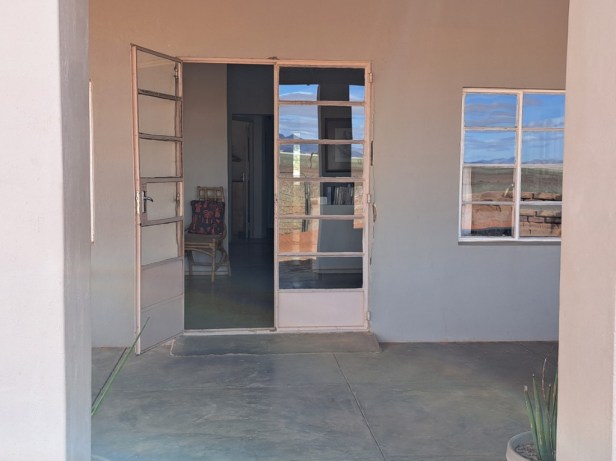
Front door of the farmhouse
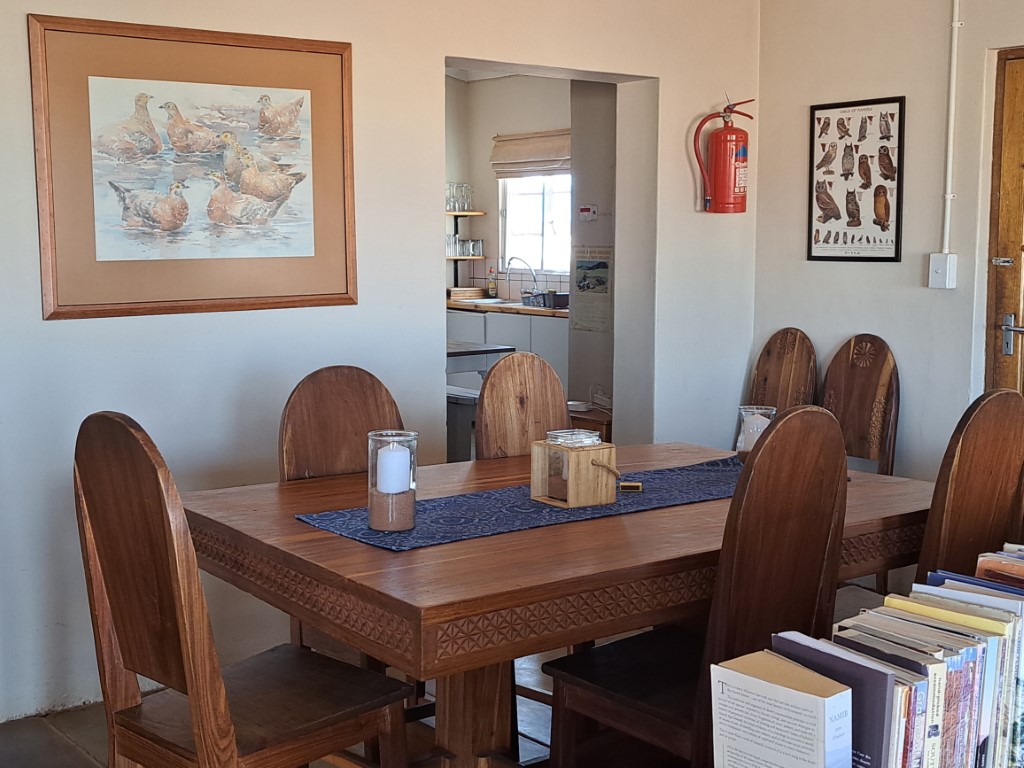
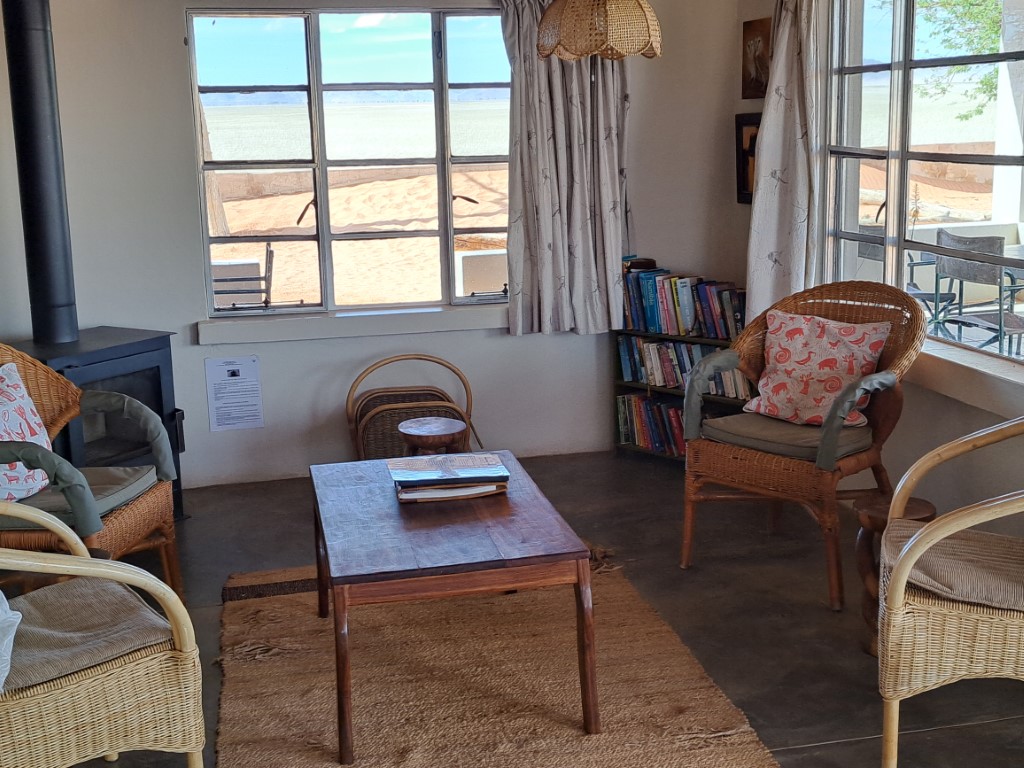
Dining/living rooms
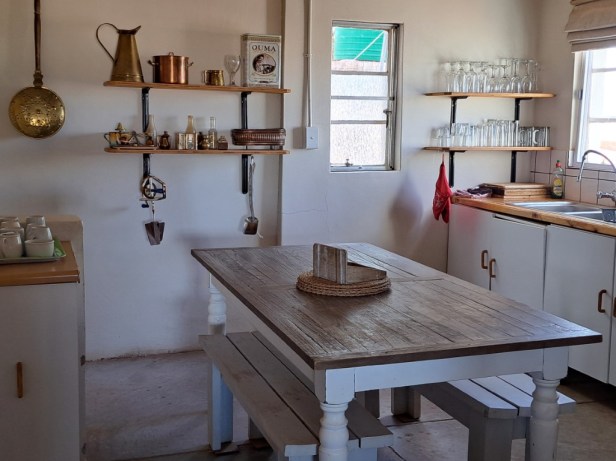
Kitchen
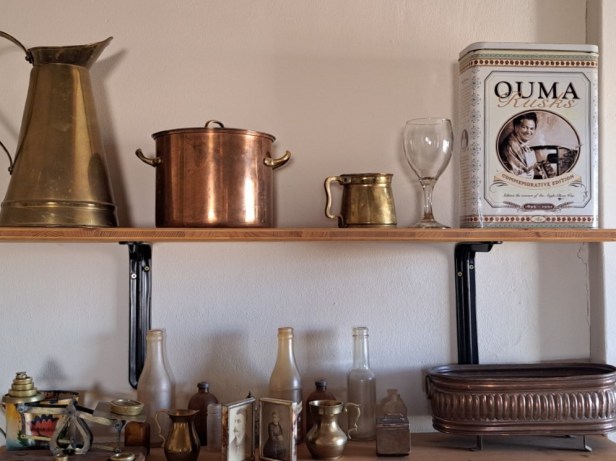
One of the kitchen shelves
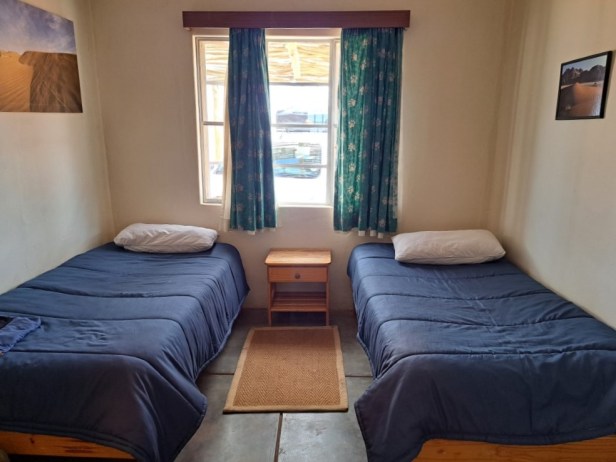
Our humble room
There was a large covered veranda (‘stoep’) outside the house with sweeping views over the grass-covered desert. And of course, the fire pit where we could ‘braai’. This was definitely our favourite part of the farmhouse.
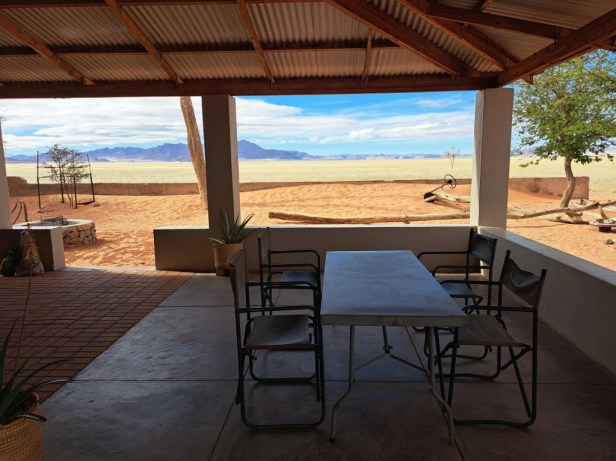
Veranda to relax outside
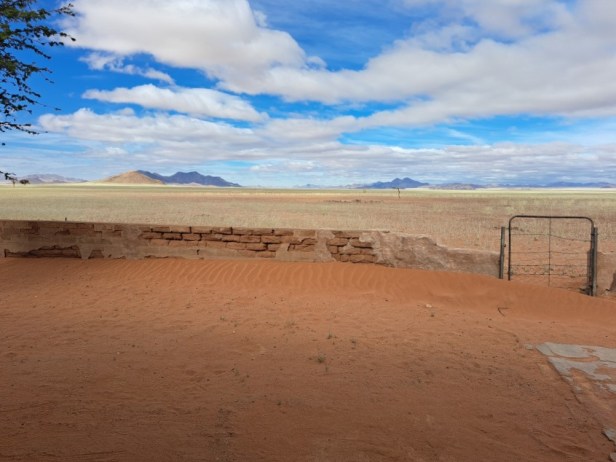
Magnificent views over the desert and mountains in the distance
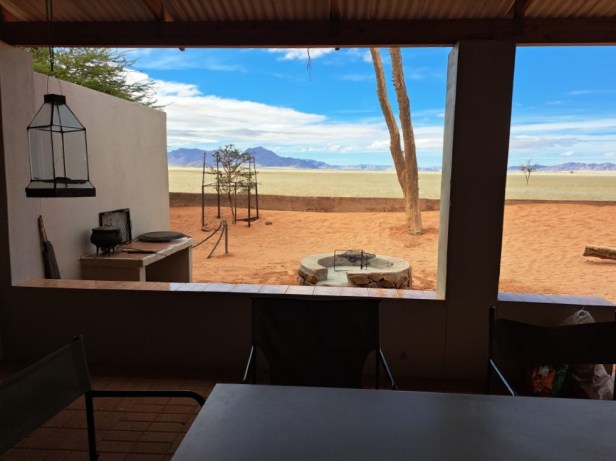
The fire pit
A big green lawn is the last thing you’ll find here. Instead, everywhere is fine red desert sand, a succulent garden, an old reservoir, and a gate that’s almost buried under the sand.
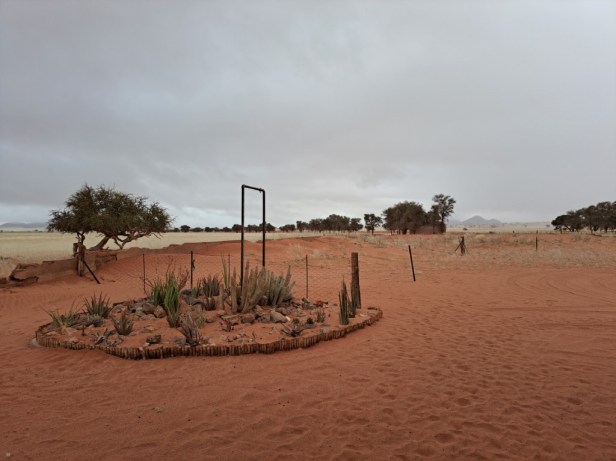
Succulent garden
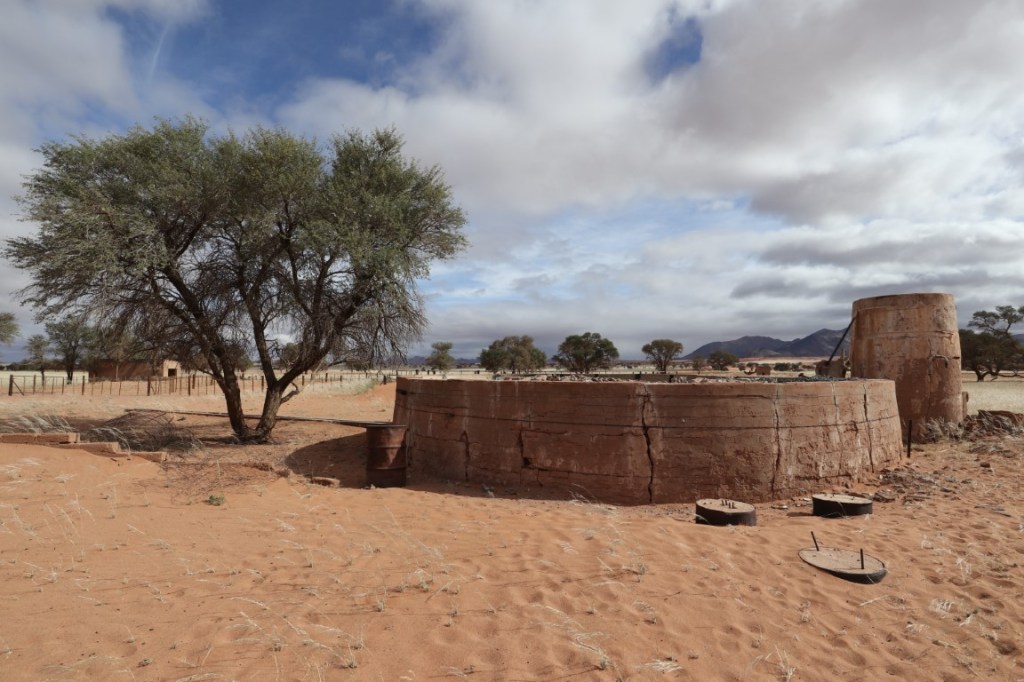
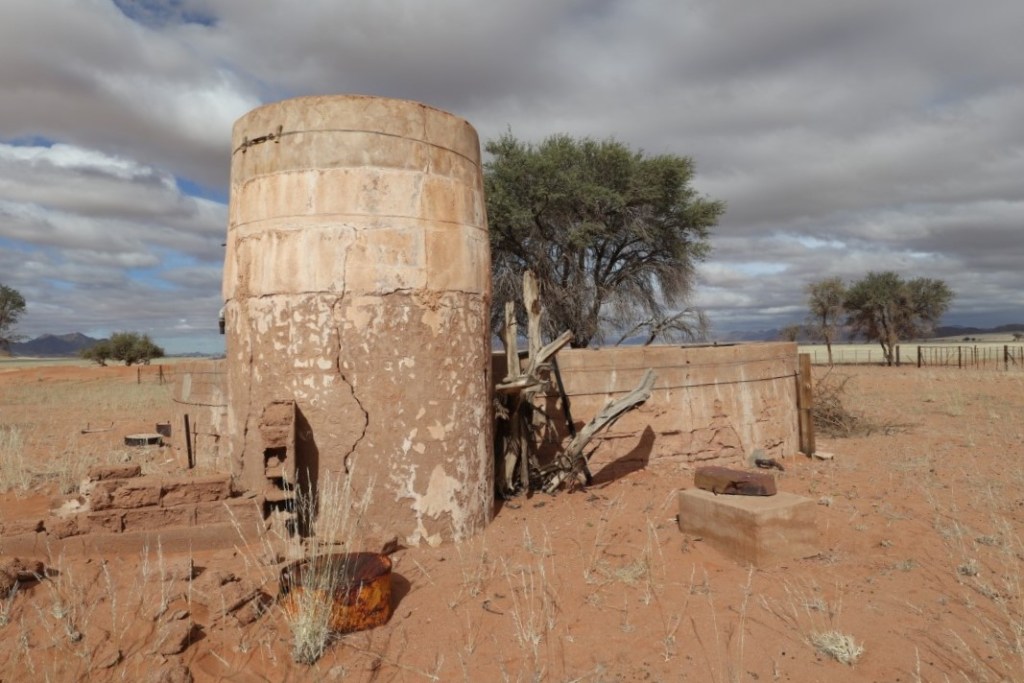
Old reservoir
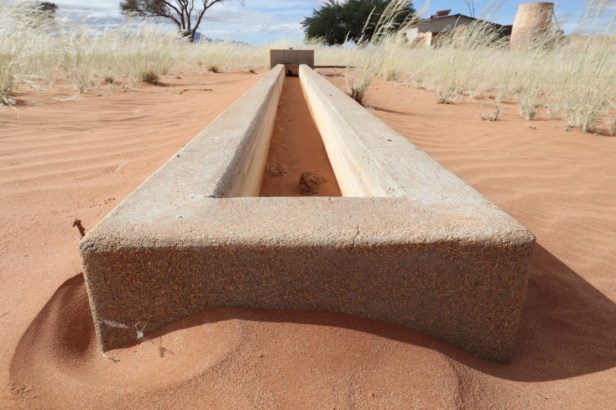
Watering trough for animals (presumably not in use anymore)
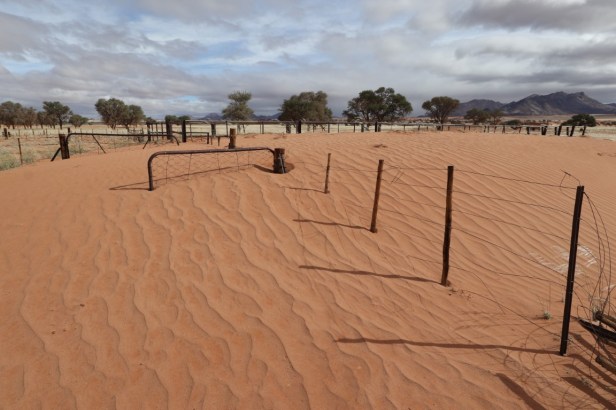
Gate and fence buried under desert sand
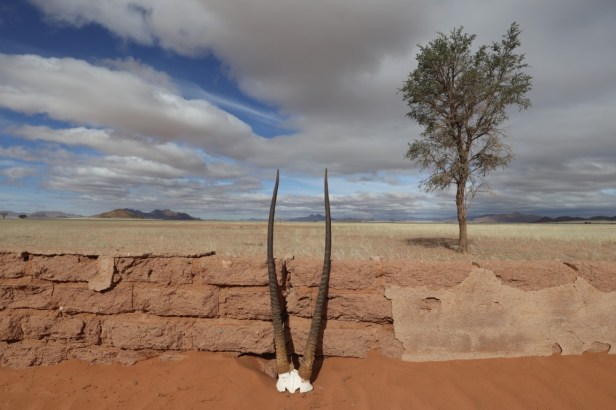
Oryx (gemsbok) horn against an old crumbling wall
The caretaker who welcomed us at the farmhouse told us about a self-drive route through the dunes that is suitable for 4×4 vehicles only. He promised that the views from the dunes are incredibly beautiful. That was enough encouragement to jump in our ‘bakkie’ and went on the 30-minute-long drive.
And he was not wrong about the stunning views!
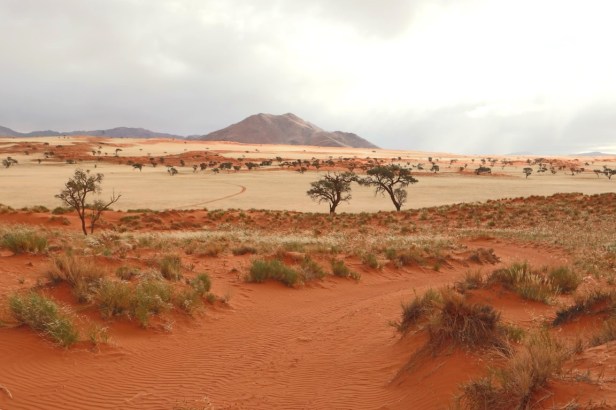
Magnificent view from the top of the dunes
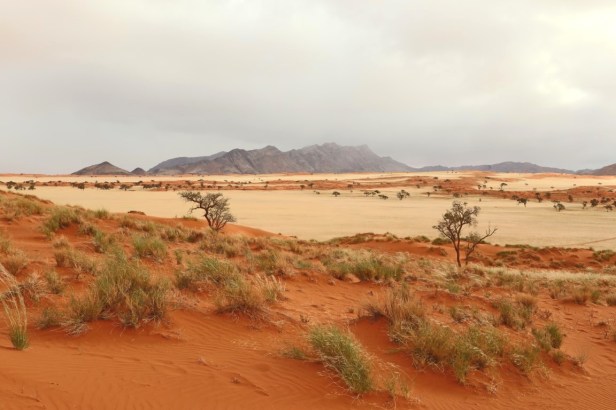
Golden grass in the plain
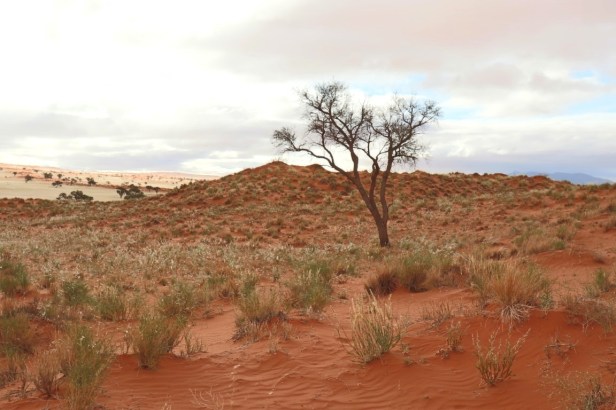
The beautiful slow-growing Camel Thorn Tree (‘Kameeldoring’ in Afrikaans)
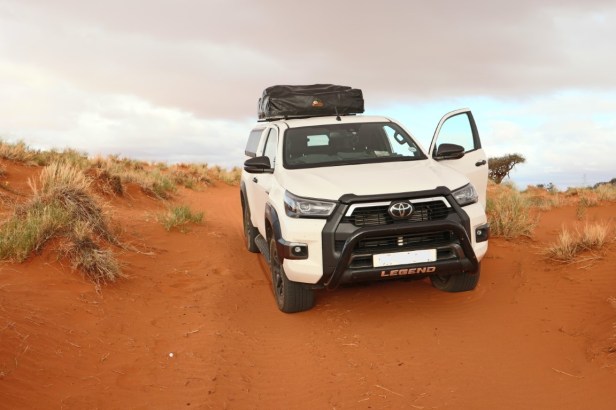
On top of the red dunes
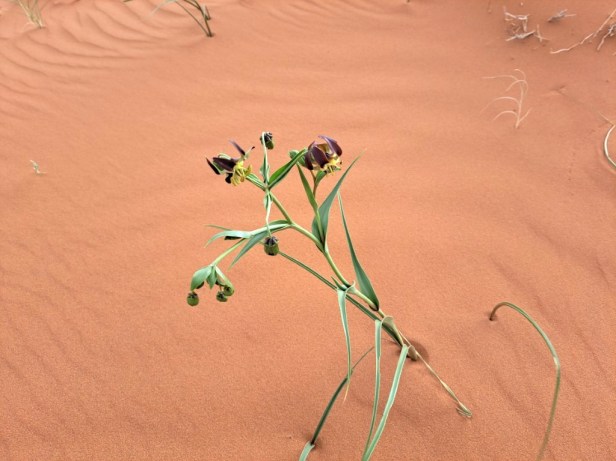
Purple flower on the sand dunes
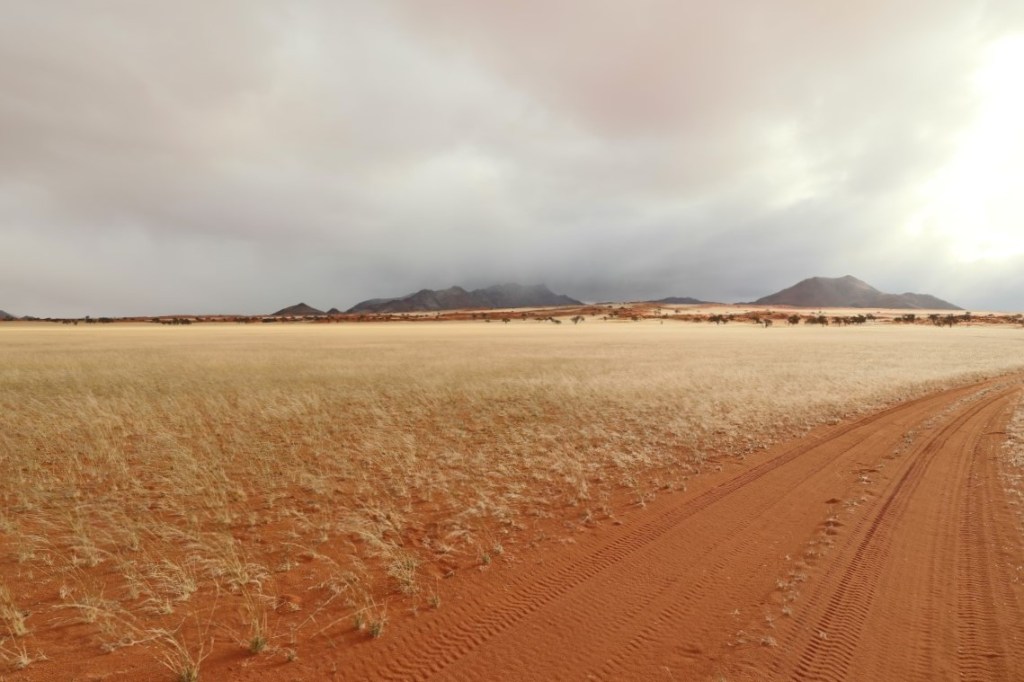
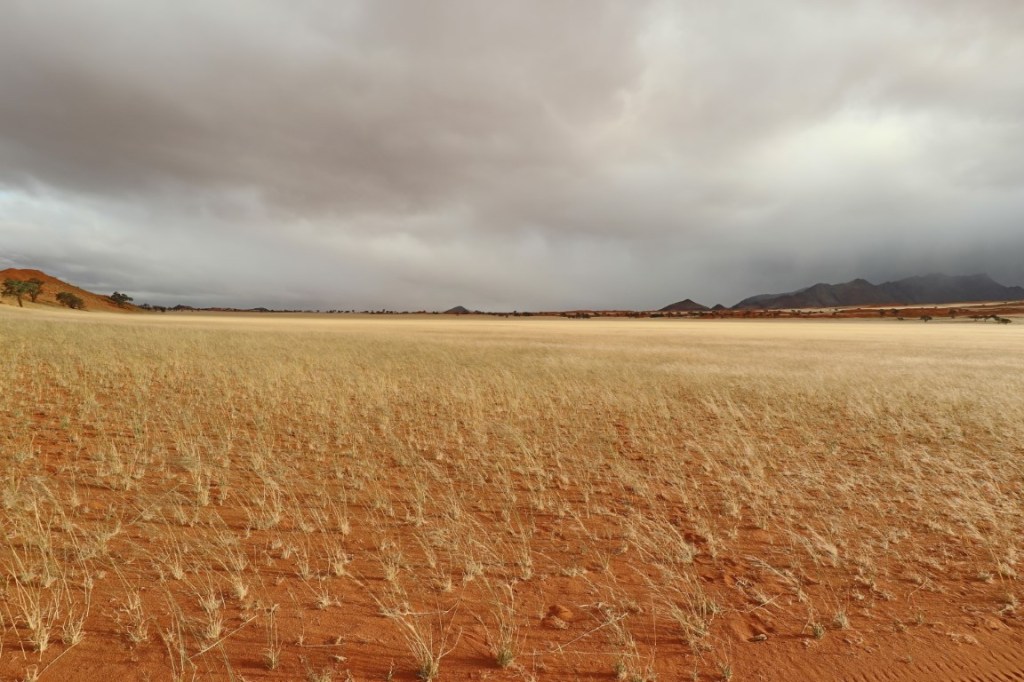
Desert sand covered with grass
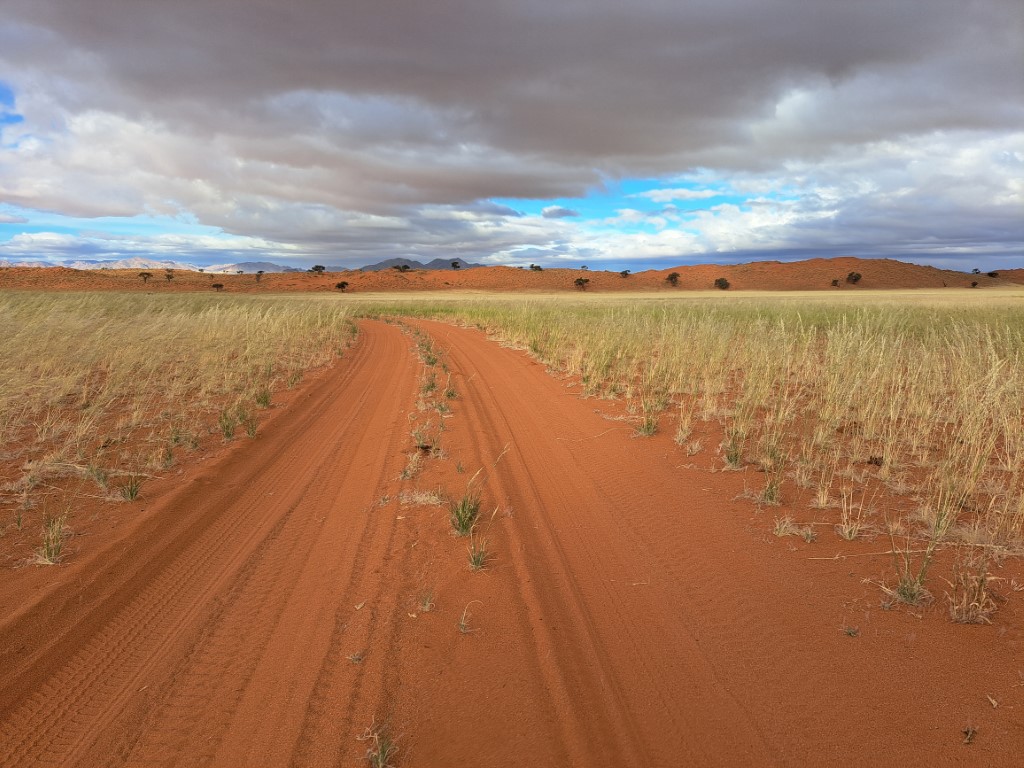
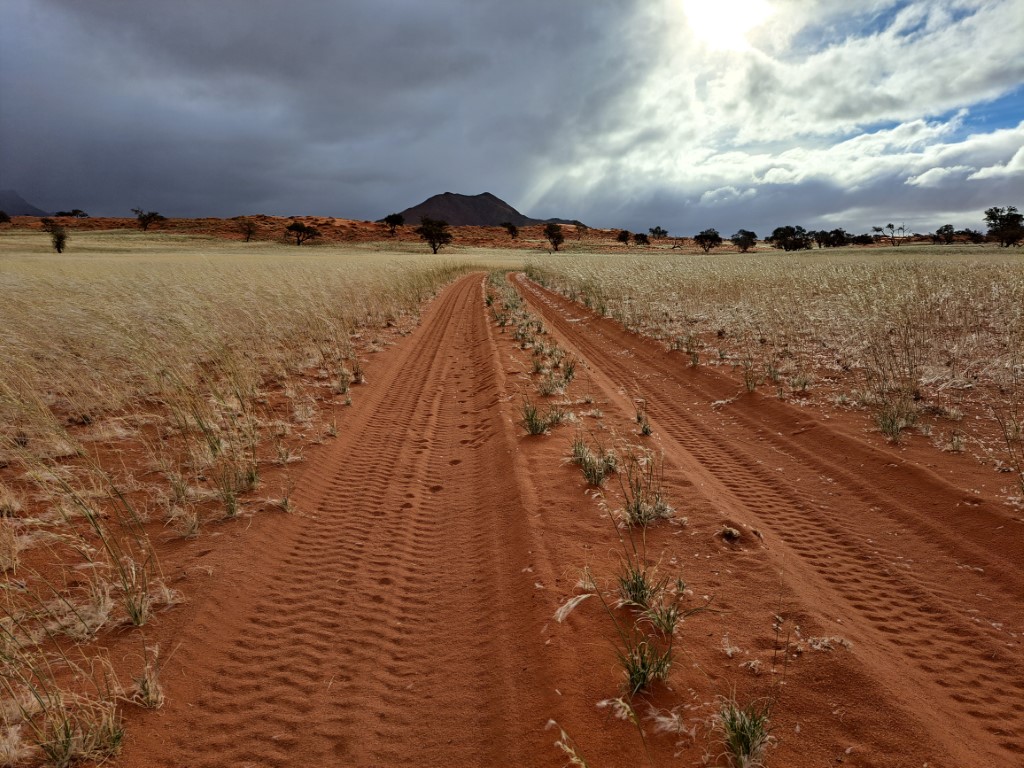
The sandy road
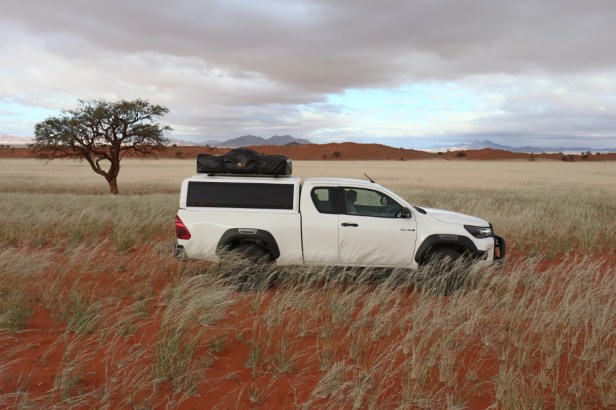
Our ‘bakkie’ between the feathered grass
We stopped one last time along the route and got out. But we didn’t linger too long, because the clouds began to gather and the breeze was cool – probably a sign that rain was on its way (not a common sight in the desert, right).
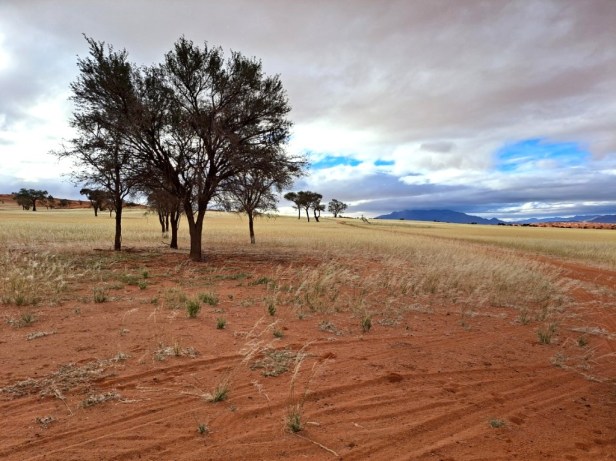
A last stop to enjoy nature
At the farmhouse, we sat outside on the veranda and gazed into the distance. Seeing the desert covered with grass was one of the most beautiful sights – it’s not something one sees often in Namibia.
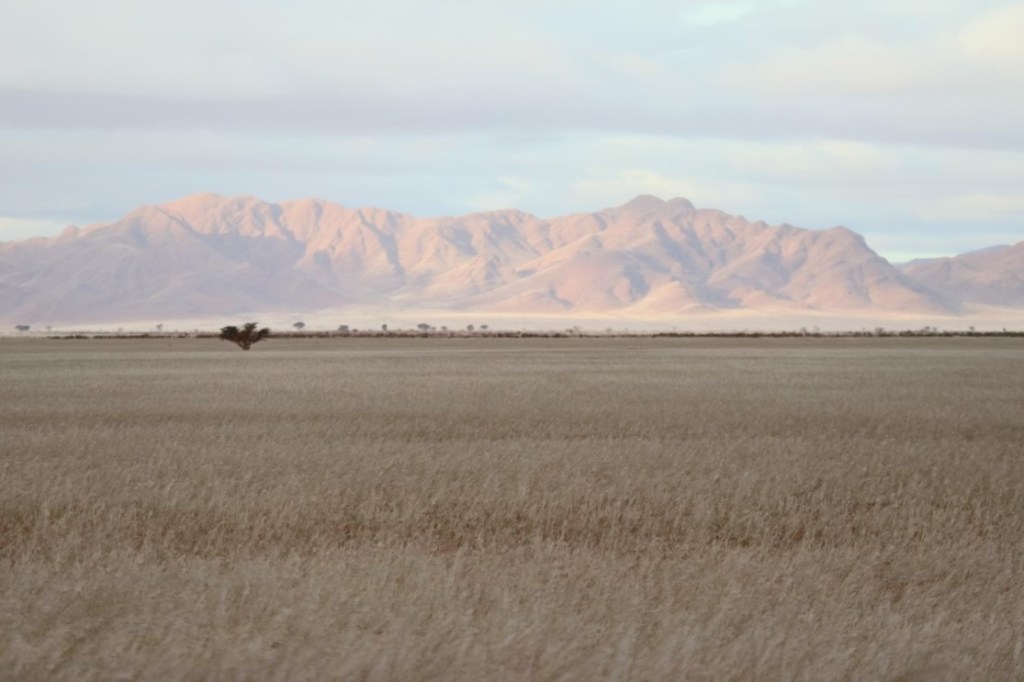
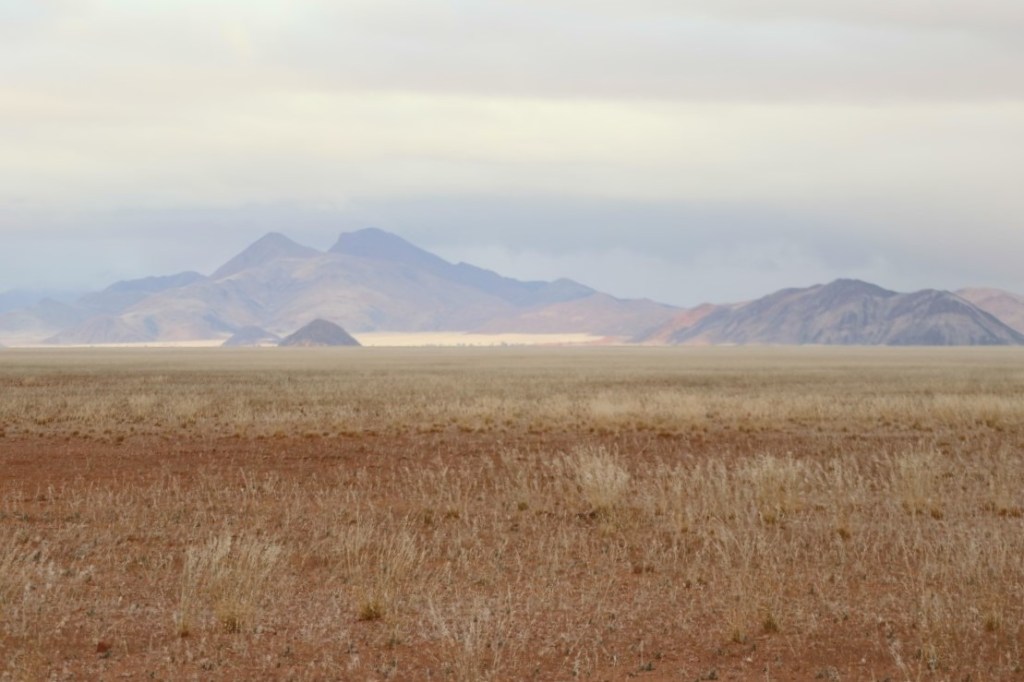
Grass covers the red sand of the desert
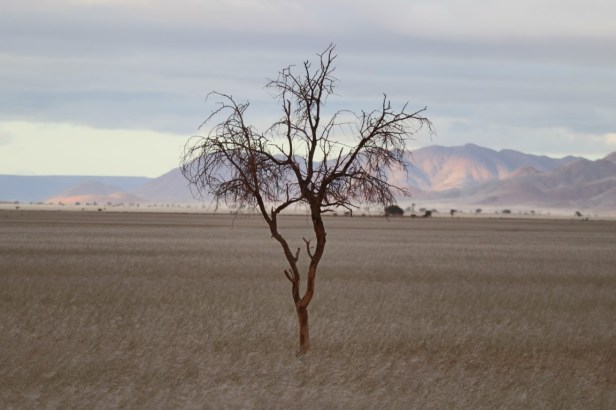
A seemingly dead tree
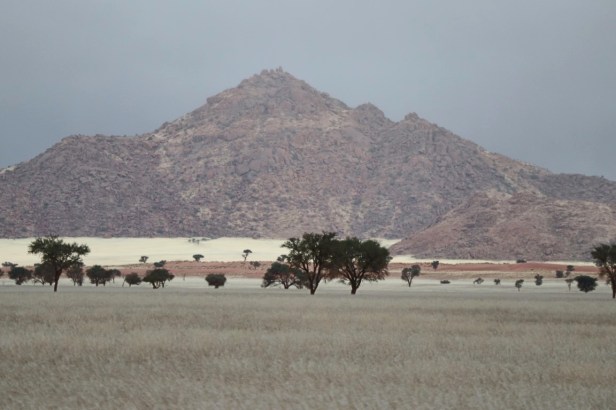
The grass stretches right up to the foot of the mountains
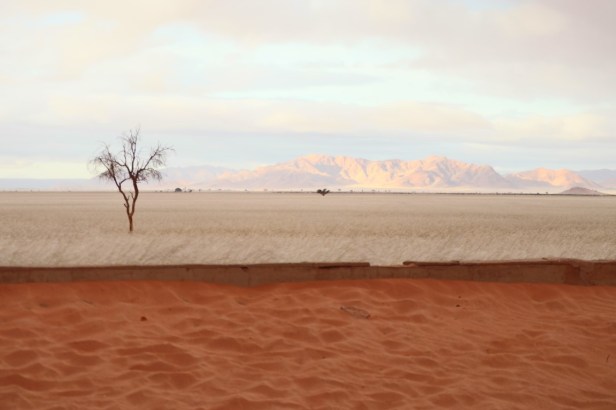
View from the veranda of the farmhouse
While we were sitting on the veranda, it started to drizzle and then the rain became more persistent. It was wonderful to experience this in the desert. In the distance, we saw animal silhouettes approaching through the misty rain – there is a waterhole just a few meters from the house. We were amazed when a herd of nearly fifty oryx (‘gemsbok’) came to stand almost right in front of us to drink water.
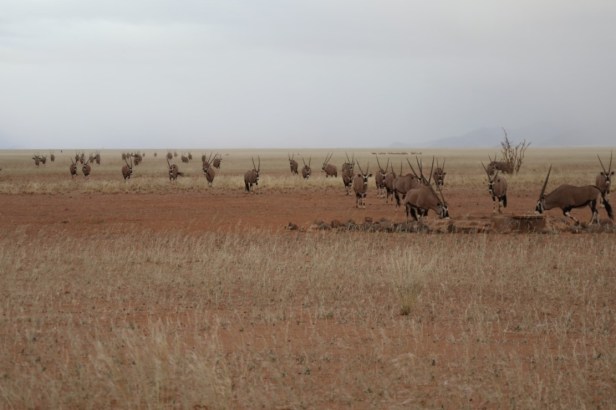
Oryx approaching the waterhole
It was such a peaceful moment – listening to the rain on the veranda’s roof, while the oryx walked through the misty rain to drink water. Here are a few photos:
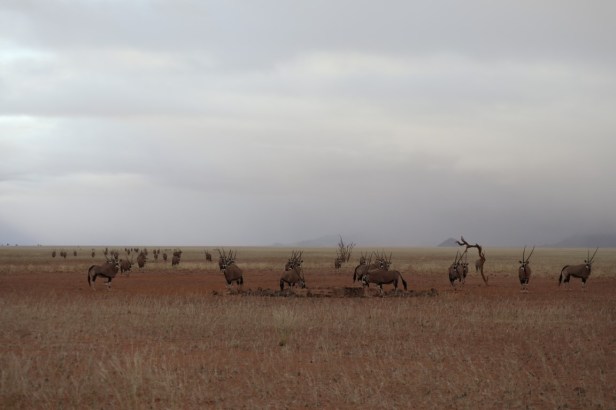
Oryx at the waterhole
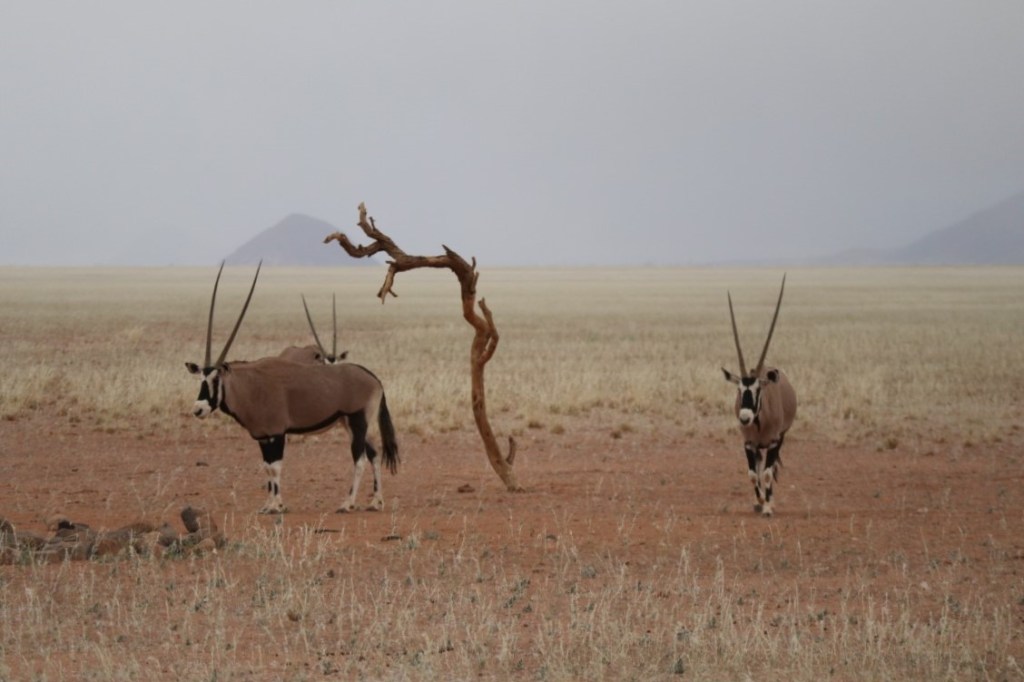
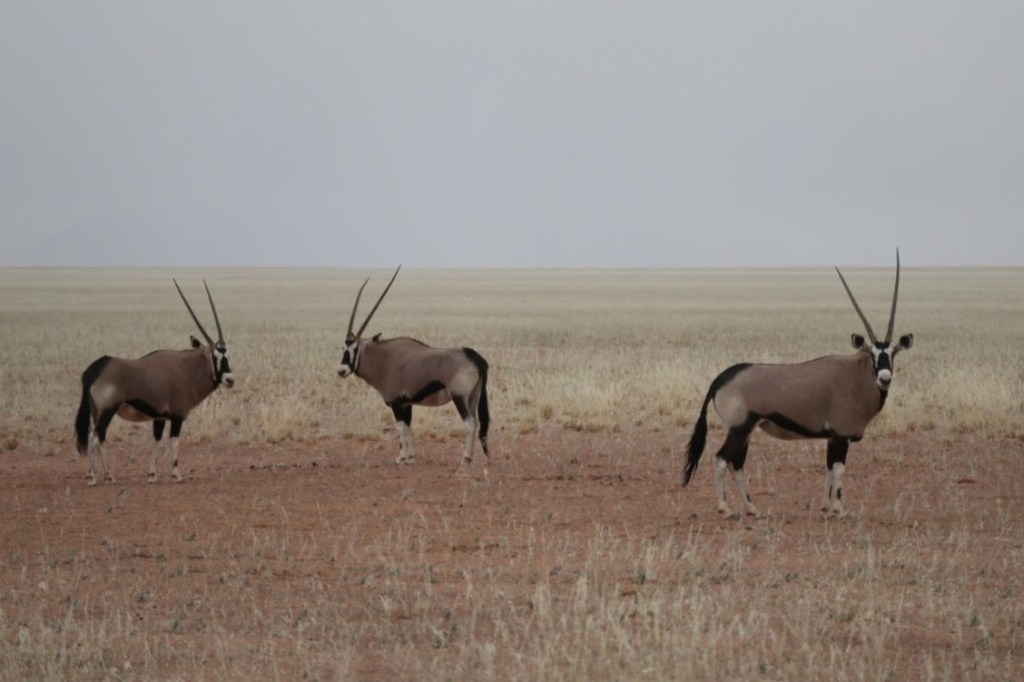
Oryx looking at us
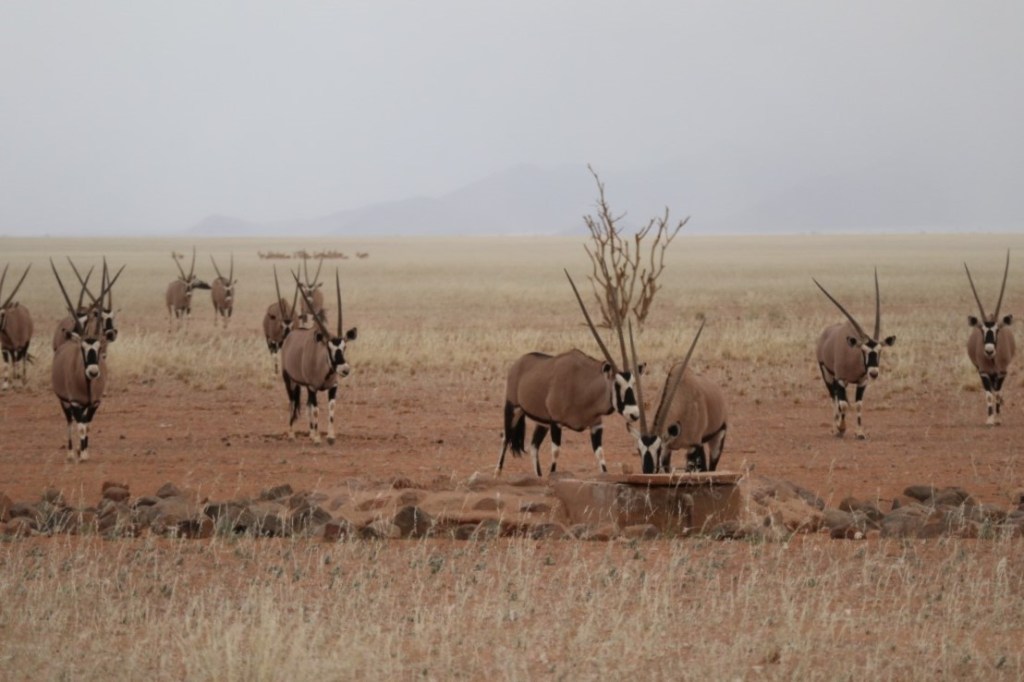
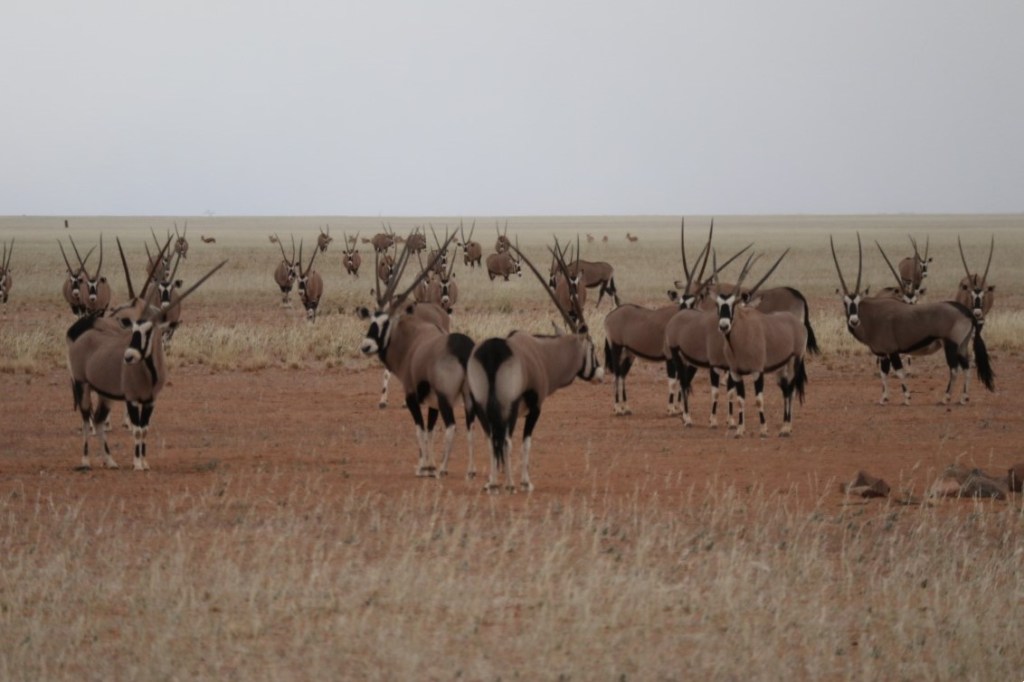
Big herd of oryx
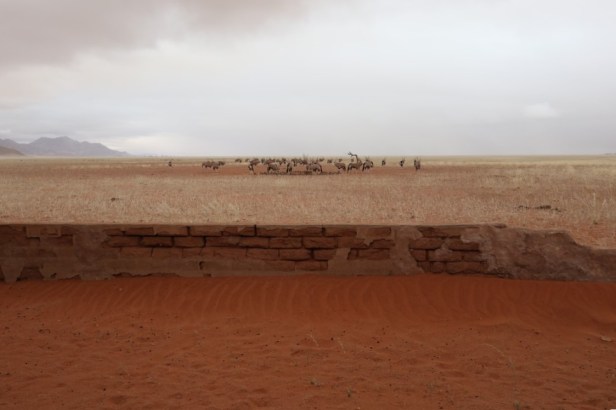
That’s how close they were to us
After about half an hour, the leading herd of oryx slowly began to head back in the direction of the mountains from where they had come. It was now time for the trailing oryx to come to the waterhole.
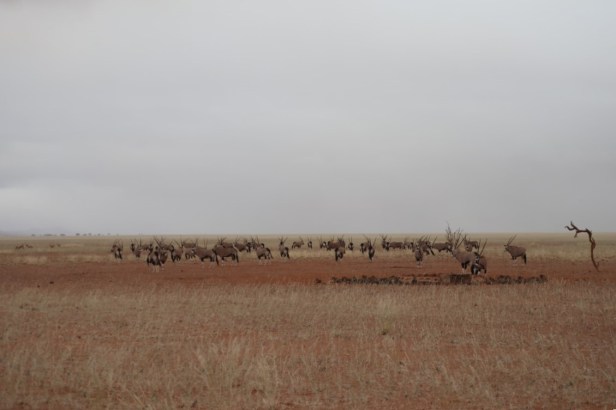
Oryx leaving the waterhole
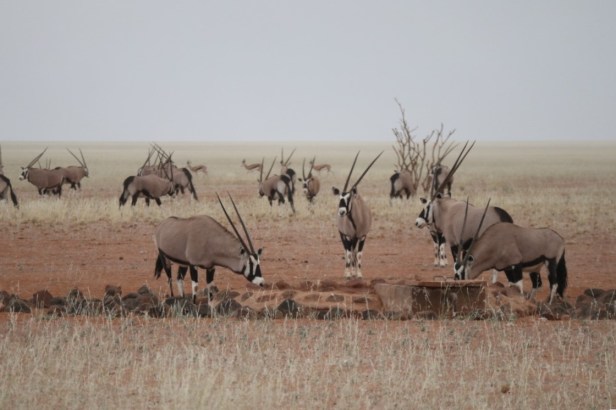
More oryx at the waterhole
It was, while we were still watching the last herd of oryx, that we saw a springbok approaching. Within moments, there was a large herd of springboks gathered.
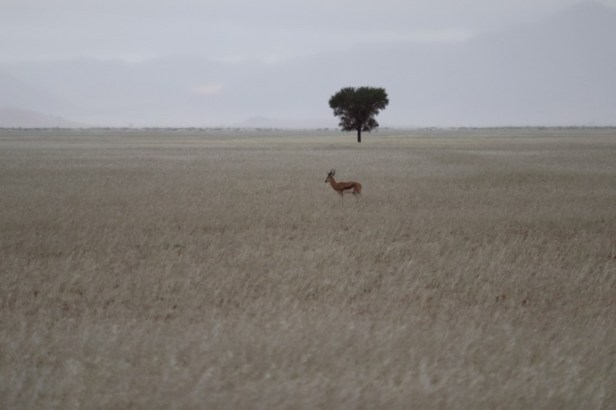
The first springbok
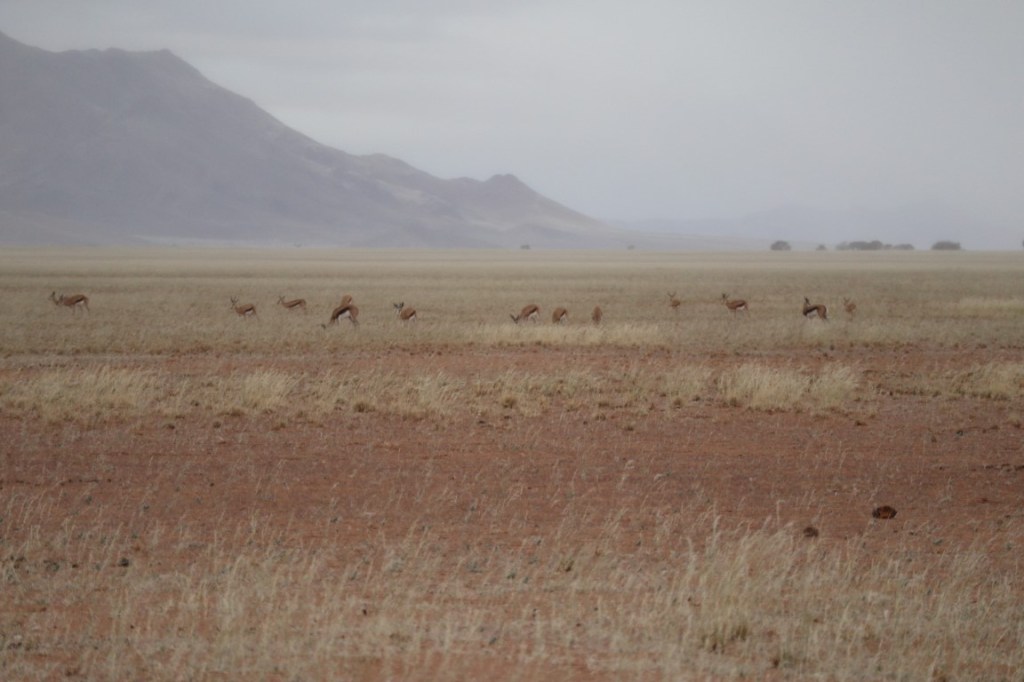
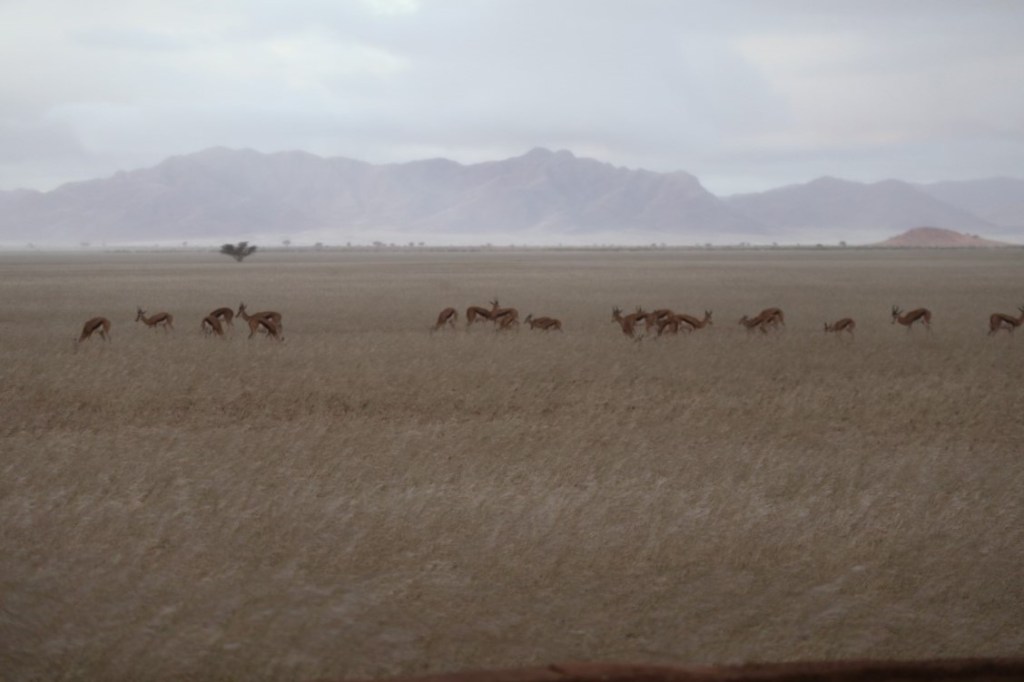
Big herd of springbok
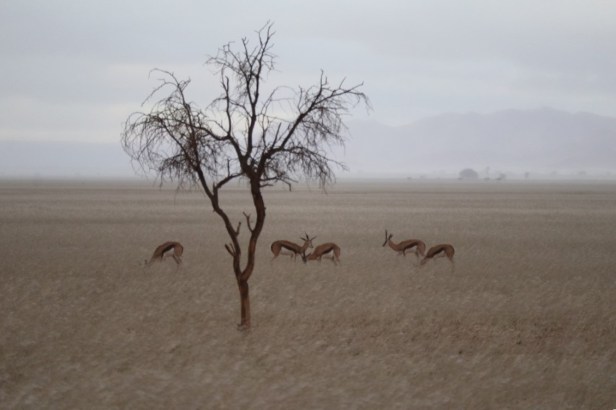
A moment of serene beauty
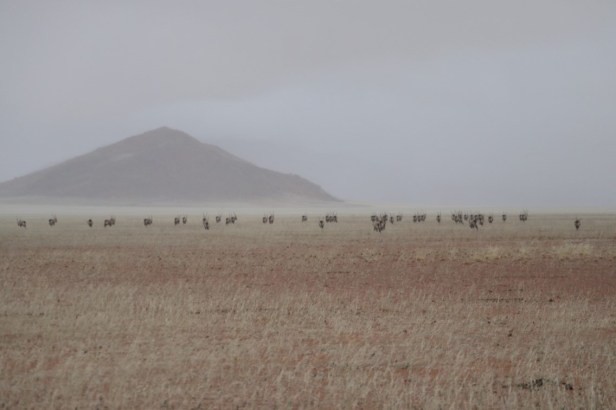
The last of the herd of oryx leaving the waterhole
The springboks grazed in the tall grass for a while before they playfully leaped in the air and left to call it a day.
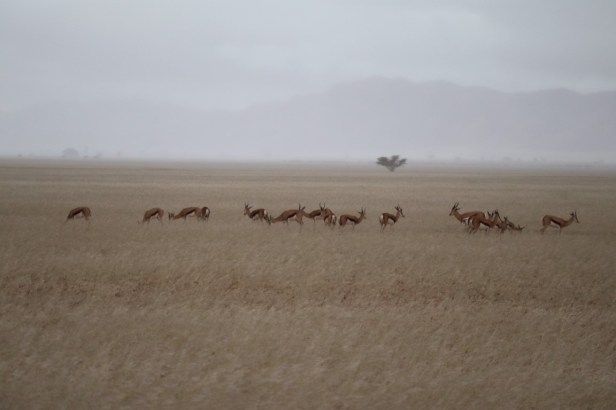
A last look at the grazing springboks
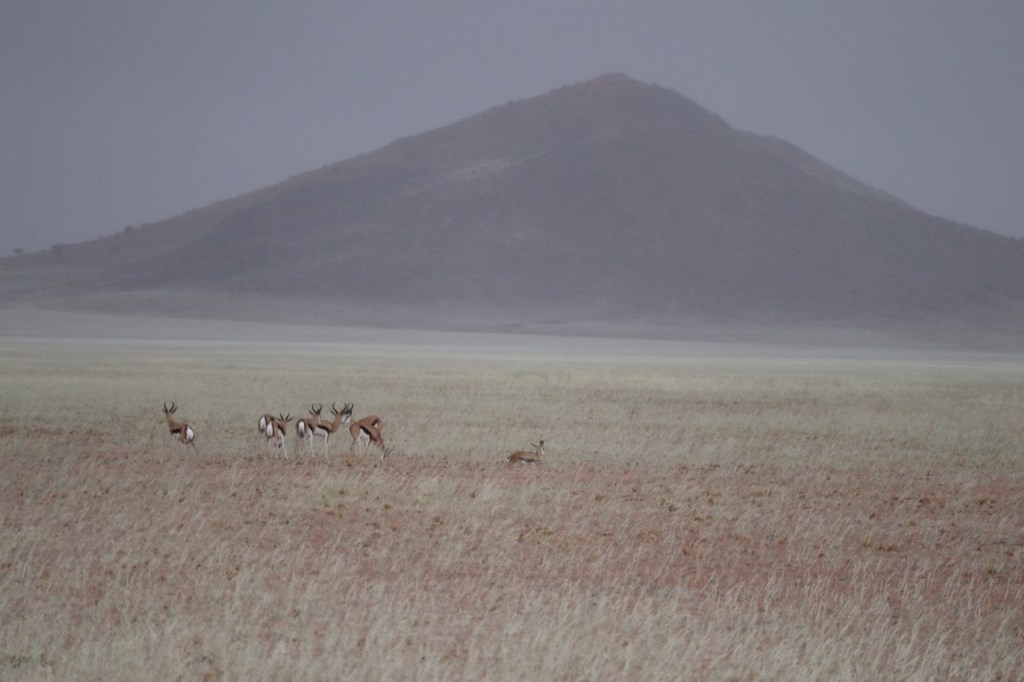
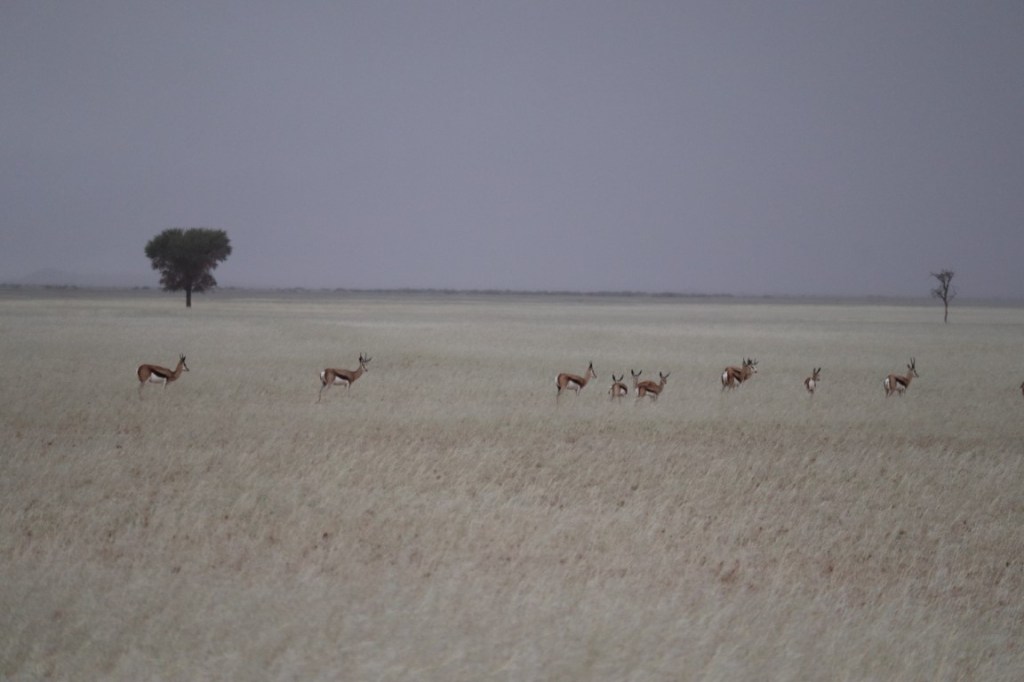
Springboks getting ready to leave
The gentle rain was starting to move away and we sat quietly next to each other – it was a magical hour to watch the animals in the rain without them feeling disturbed by our presence at all.
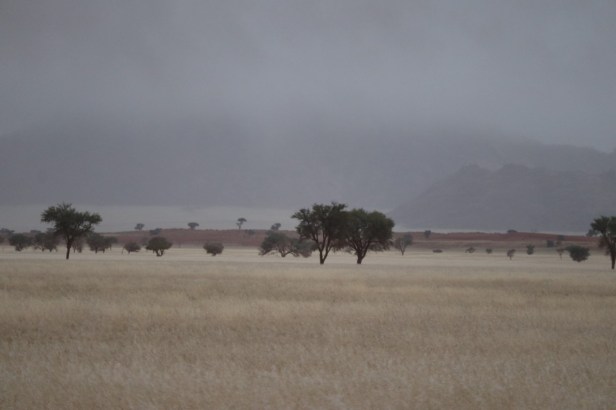
The animals are gone, and the weather is clearing up
It was time to make a fire and enjoy a ‘braai’. Not only did we see wildlife in the NamibRand Nature Reserve, but we also experienced rain in the desert. We will remember this day for a very long time!
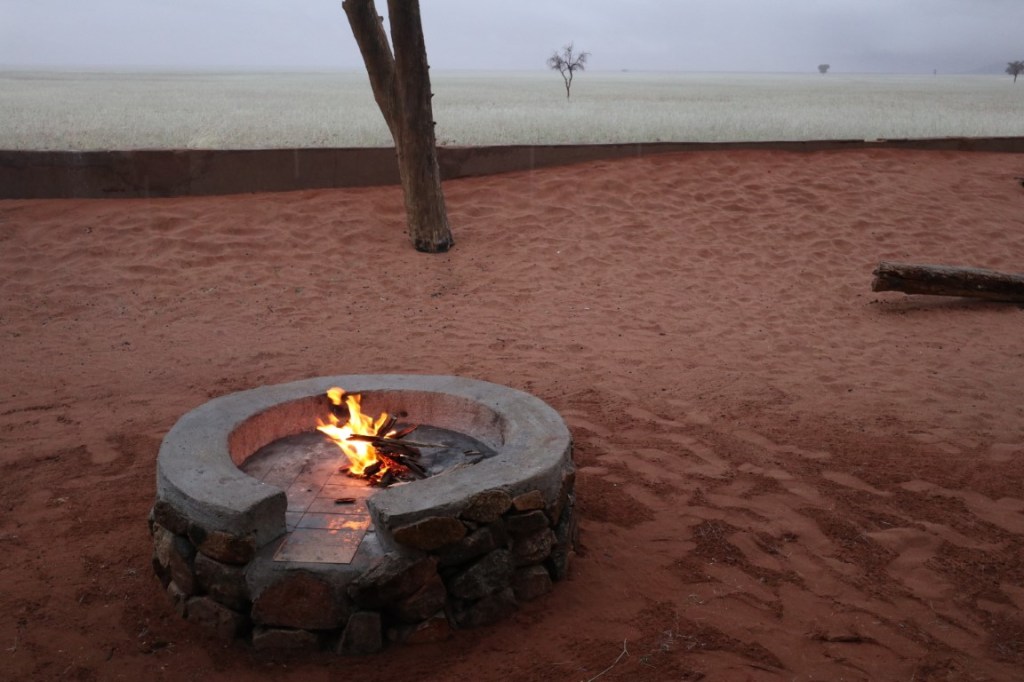
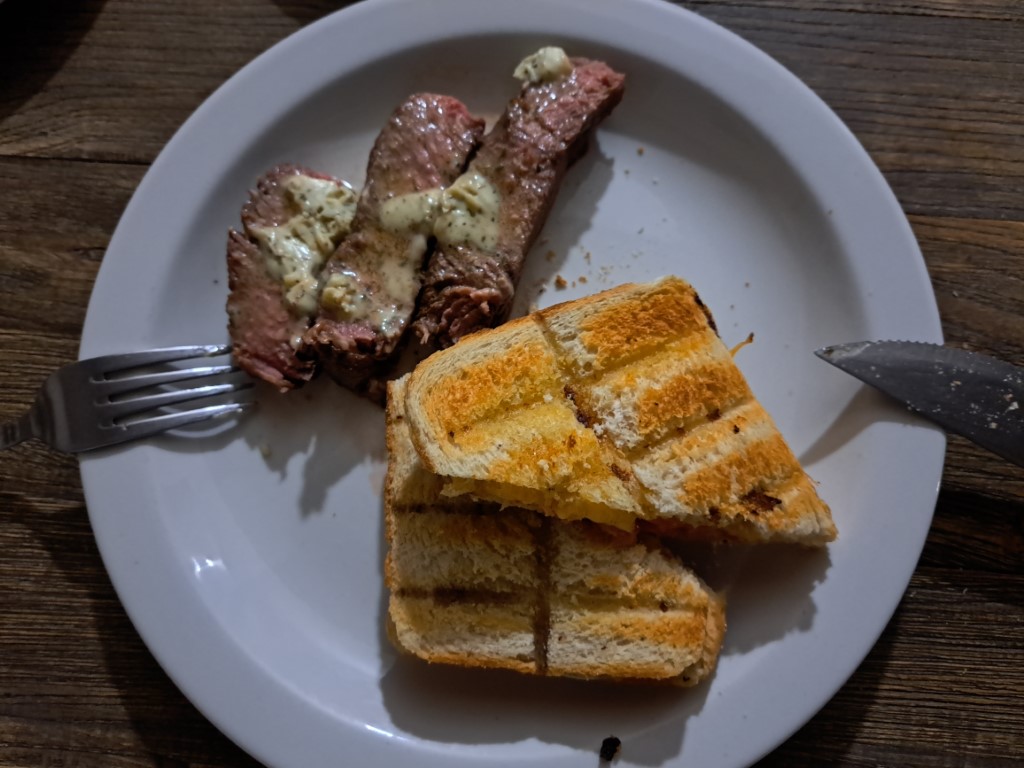
Time for a ‘braai’
In our next post, we visit the famous high dunes of Sossusvlei and the dead trees at Deadvlei … and experience a sandstorm while trying to sleep in our rooftop tent!
If you want to see photos of Sossusvlei and Deadvlei (and whether we survived the sandstorm), click here.


What a magnificent day.
LikeLiked by 1 person
One of the best, Carl!
LikeLike
The desert is very beautiful, and so many animals right infront of your hotel! How great is that. It rained when we were in Erg Chebbi Morocco last November. They said it is their once in 7 years rain!
LikeLiked by 1 person
So, it seems that it was a good time for both of us to visit the different deserts to experience the improbability of rain! Absolutely – it almost felt like the oryx and springboks came to visit us, that close they were 😉.
LikeLiked by 1 person
Stunning landscape and how marvellous to see such a large herd of oryx. A most magnificent animal I think. And springbok too. A most memorable day.
LikeLiked by 1 person
The herd of oryx was an incredible sight. Because it was foggy and had been raining, we couldn’t see how many there were, and we were actually quite surprised to see how large the herd was when you got to the waterhole! Yes, the oryx and springbok are some of my favourite antelopes and seeing them together was such a great treat!
LikeLike
I think I need to do a painting from one of these, will do it digitally so I can send you the pdf for printing, how does that sound?
LikeLiked by 1 person
You know what Terry? Absolutely! You are more than welcome to choose a photo for your painting … if I could draw, I would definitely have chosen one of these too! I would be honoured if you could send it to me!
LikeLiked by 1 person
It is done, I just need an email to send it. Took a bit of artistic license, but hopefully captured the vibe.
LikeLiked by 1 person
That was quick! My email address: corna.wiese@gmail.com.
Thanks Terry 😊.
LikeLike
It’s wonderful how animals show up for you. How thrilling to see so many oryx. I would be happy to see just one. The desert is so beautiful. Those colours – the sand and the sky. Sensational.
LikeLiked by 1 person
It was an incredible sight to see such a large herd of oryx – we sat and watched them for an hour (almost like in a movie) 😊. Yes, the colours of the sky and the desert were absolutely perfect – I don’t know how often one will have the opportunity to experience scenes as beautiful as this in your life.
LikeLike
Beautiful desert scenery, those red sands really do create a special scene
LikeLiked by 1 person
When I was a child – and lived on the edge of the desert – I never thought I would say that the desert is beautiful 😉. But now, years later, I find it one of the most beautiful places. Maybe it has to do with the tranquility I experience when I’m there …
LikeLiked by 1 person
What a wonderful day Corna, all those animal sightings and then rain, incredible! I thought that the farmhouse looked very homely with its veranda and copper pots on the kitchen shelves. What an adventure you went on!
LikeLiked by 1 person
The combination of the wildlife and unexpected rain in the desert made it a wonderful evening on our road trip. And I think you’re right with your description of the farmhouse – it could perhaps be described as a home away from home!
LikeLiked by 1 person
This is a lovely post, Corna; excellent photos and a wonderful description of your experience listening to the rain and watching the animals come and go. I think your accommodations look comfortable and inviting. I’m looking forward to reading more!
LikeLiked by 1 person
Thank you so much Tricia. It was a great post to write and to browse through the photos again. We are still talking (almost two months later) about how amazing this day in the Namib desert was. You’re right, the farmhouse was very comfortable and exactly what we needed. Thank you for your comments, I appreciate it as always.
LikeLiked by 1 person
great views and images.
LikeLiked by 1 person
Thanks Ritva. Namibia is a beautiful country, which makes it a great country for photography!
LikeLiked by 1 person
Wow the Oryz photos are amazing – I’d always associated them with the Middle East but never with Namibia. The desert is just magical, and having it on your doorstep like that is so special 🙂
LikeLiked by 1 person
The oryx is actually the national animal of Namibia! So, the chances are high of seeing them when you visit Namibia. Yes, the desert has a unique charm (perhaps not when there is a sandstorm 😉), but otherwise, I love the red sand dunes and the vastness of the Namib.
LikeLike
That farmhouse looks simple but comfortable, and absolutely right for this setting. The dunes are beautiful, and how wonderful that you got to see rain in this dry landscape and some wildlife! I especially like the oryx, their markings are so striking 🙂
LikeLiked by 1 person
You’re right Sarah, I think the farmhouse was perfect for where we were and what we wanted to experience (although, we still had to make our own food 😉). It was incredible to experience rain in the Namib desert – especially because it rarely happens. As for the oryx, it was such a wonderful hour to watch them so closely!
LikeLiked by 1 person
Beautiful shots. It looks like you’re on Mars with all the red sand dunes. And it’s amazing to see that there is grass and flowers growing in the sand. How exciting to see a herd of oryx and springbok. Sounds like such an incredible experience. Can’t wait to hear more. Although dealing with a sandstorm while camping doesn’t sound fun!
LikeLiked by 1 person
Ha, I think Namibia can compete with Mars when it comes to red sand! But I don’t think there is grass on Mars, so Namibia is one step ahead 😉. The sight of those large herds of oryx and springboks was incredible to see and yes … the sandstorm was not the best camping experience we’ve ever had – to say the least!
LikeLiked by 1 person
Stunning landscapes and wonderful close ups of the wildlife. Cheers
LikeLiked by 1 person
It was one of the most beautiful views we had on our Namibian road trip – and the wildlife was a definite bonus!
LikeLike
Oh my gosh, what a great place to stay! The animal sightings must have been so exciting. And that red sand… I can’t get over it. It’s so pretty, and I love the contrast of the sand with the yellowish grasses and the blue sky.
LikeLiked by 1 person
Because this reserve is so big and we thought the chances were slim to see just one of the animals, the herd of oryx and springbok was such a wonderful surprise. You’re right, the different colour shades at NamibRand Family Hideout were special – it’s rare to see the red sand of the desert covered with long grass! Oh, and blue sky … that’s always welcome!
LikeLiked by 1 person
I am speechless! What an amazing post Corna! You are so fortunate to see all this beautiful land and animals.
LikeLiked by 1 person
NamibRand Family Hideout was the biggest surprise on our road trip. We enjoyed everything so much here – the views, wildlife, and the rain in the desert – it was quite amazing!
LikeLiked by 1 person
It’s always the unexpected things that make a trip so fun!
LikeLiked by 1 person
Those views, colours and animals beat any 5-star resort hands down! Thanks, Mel
LikeLiked by 1 person
Absolutely Mel! With views like that, no one wants to be inside a 5-star resort anyway … the best place is actually outside under the stars!
LikeLiked by 1 person
What a beautiful place to spend some time relaxing, admiring the view and observing animals. You were lucky to have these visitors drinking nearby.
LikeLiked by 1 person
You’re right, we didn’t expect the animals to come almost right up to our front door to drink water – it was incredible to watch!
LikeLiked by 1 person
Wat ‘n mooi prentjie,
LikeLiked by 1 person
Dankie Lolla 🌻. Namibië was vir my mooi om elke hoek en draai (of moet ek eerder sê “op die lang reguit pad”). By NamibRand was die tonele eenvoudig asemrowend – natuurskoon wat ek nooit sal vergeet nie.
LikeLike