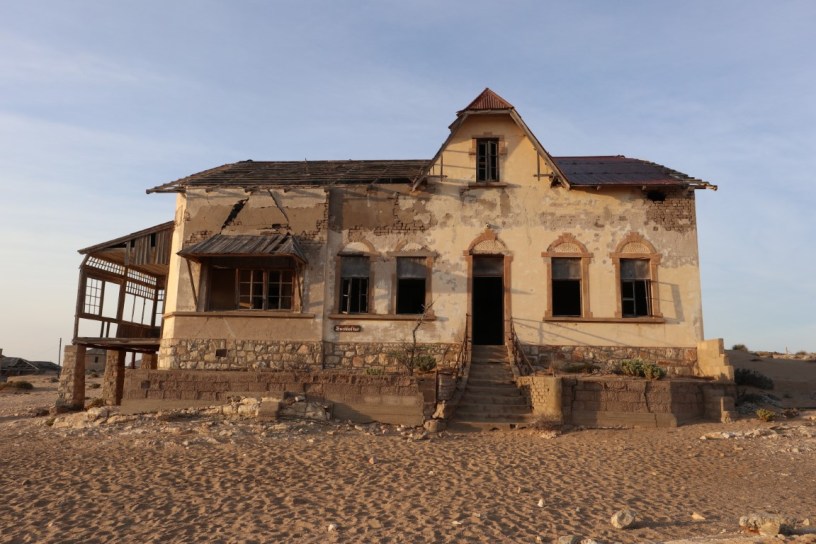
May 2025
Ghost town in the Namib Desert
In our previous post, we showed you how beautiful it was in the coastal town of Lüderitz (read here). The next morning, we left before sunrise because there was a very special place we wanted to visit – and we wanted to be there before the tour buses arrived.
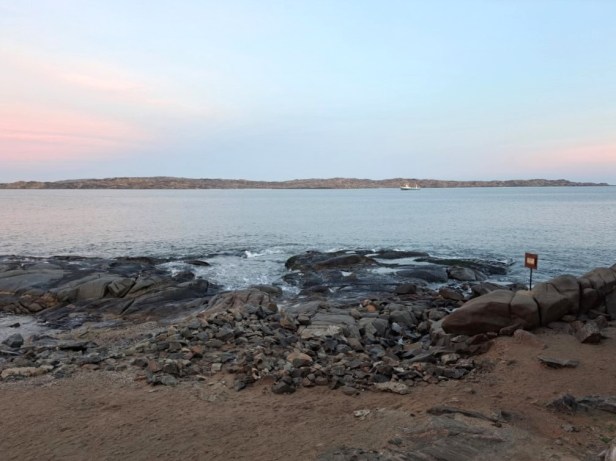
The bay of Lüderitz before sunrise – taken from our room
Kolmanskop (Kolmannskuppe in German) is a ghost town in the Namib Desert and about 10km/6 miles inland from Lüderitz. It was regarded as one of the richest towns in Africa during a diamond boom in 1910, but then abandoned after World War I.
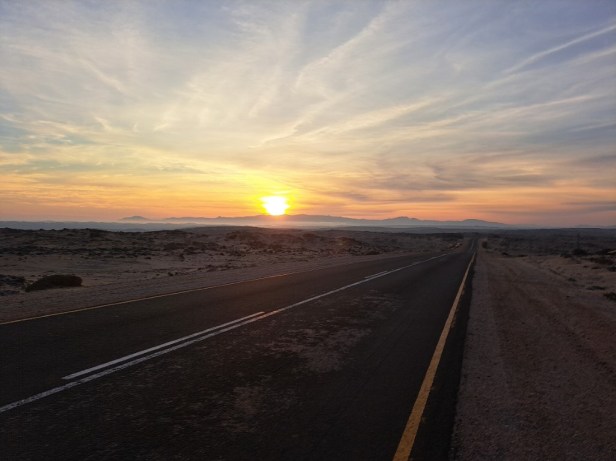
Sunrise on our way to Kolmanskop

Part of Kolmanskop as seen from the main highway
A bit of history on Kolmanskop:
In 1908 Kolmanskop was just a small railway station between Lüderitz and Keetmanshoop, but everything changed when Zacharias Lewala, a railway worker, found a shiny stone. He took the stone to the chief railway foreman August Stauch. Stauch immediately assumed that the stone was a diamond which was confirmed by his mining engineer friend Söhnke Nissen. The two of them kept quiet about their finding, quit their jobs and secured claims at Kolmanskop where they successfully continued their search for diamonds.

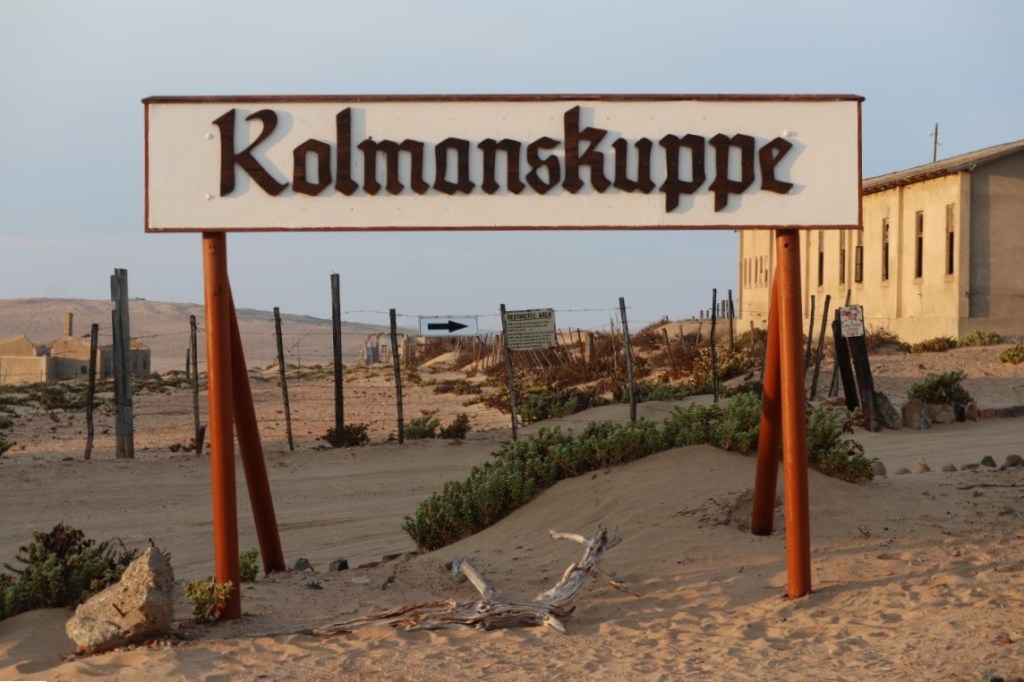
At the entrance of Kolmanskop
But, unfortunately for them, this was not a secret for long, and soon diamond fever hit Kolmanskop when diamond seekers flocked to the area. Suddenly, the once small railway station transformed into a thriving town. By 1911, there was electricity, luxurious stone houses, a school and hospital. It seems that entertainment was also important, as there was a theatre, ballroom, bowling alley, and even a casino. All of this was built for the less than 400 people who lived there.
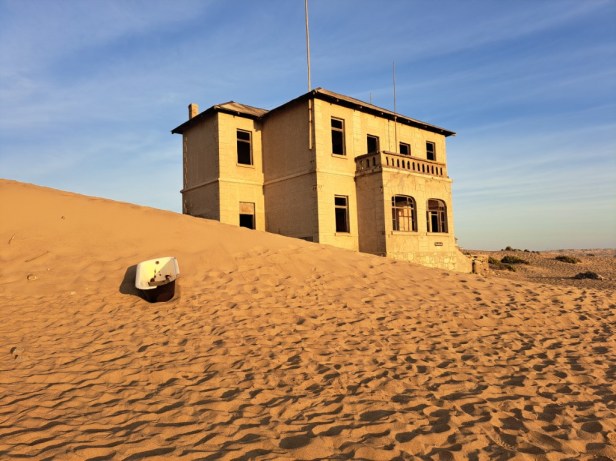
Abandoned house among the sand dunes of the Namib Desert
Until the outbreak of World War I, more than 1 ton of diamonds was mined in Kolmanskop. However, with the production in 1914 nearly zero, the diamond mining in Kolmanskop ended as swiftly as it had begun. Diamond mining then moved to Oranjemund, a town along the Orange River and south of Lüderitz.
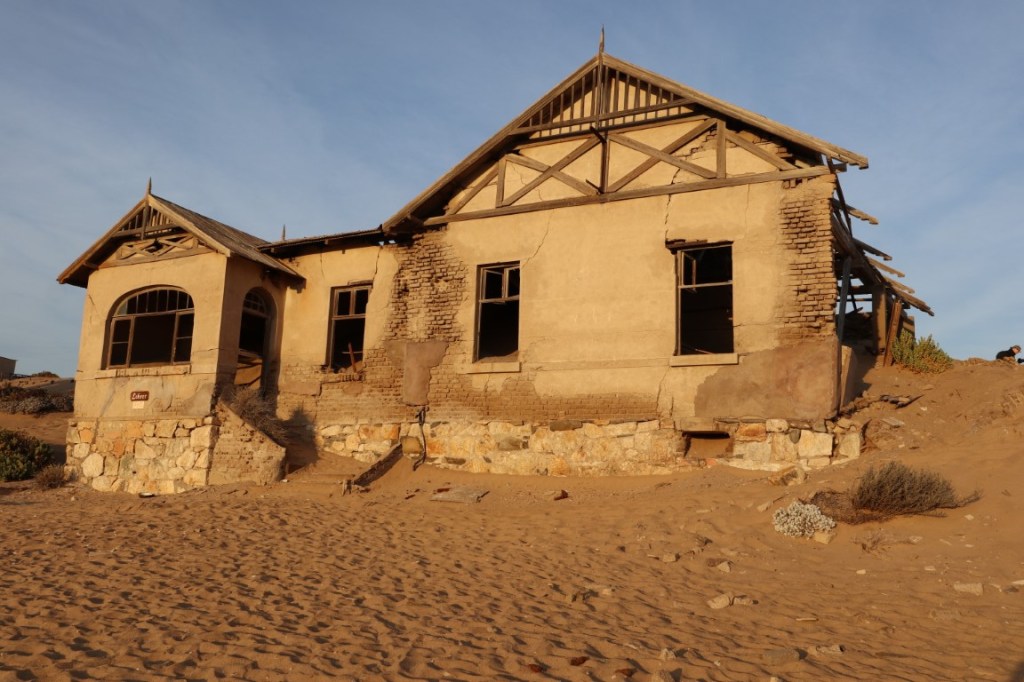

More abandoned houses
This was the end of a once prosperous town. With the last resident leaving Kolmanskop between 1956 and 1960, the desert reclaimed the area.
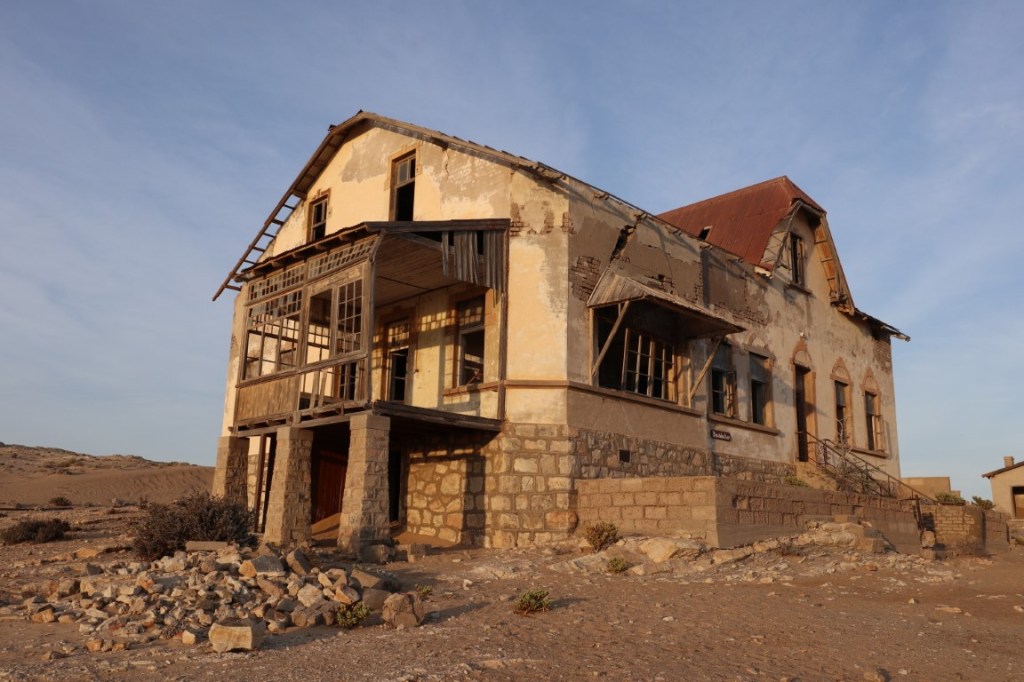
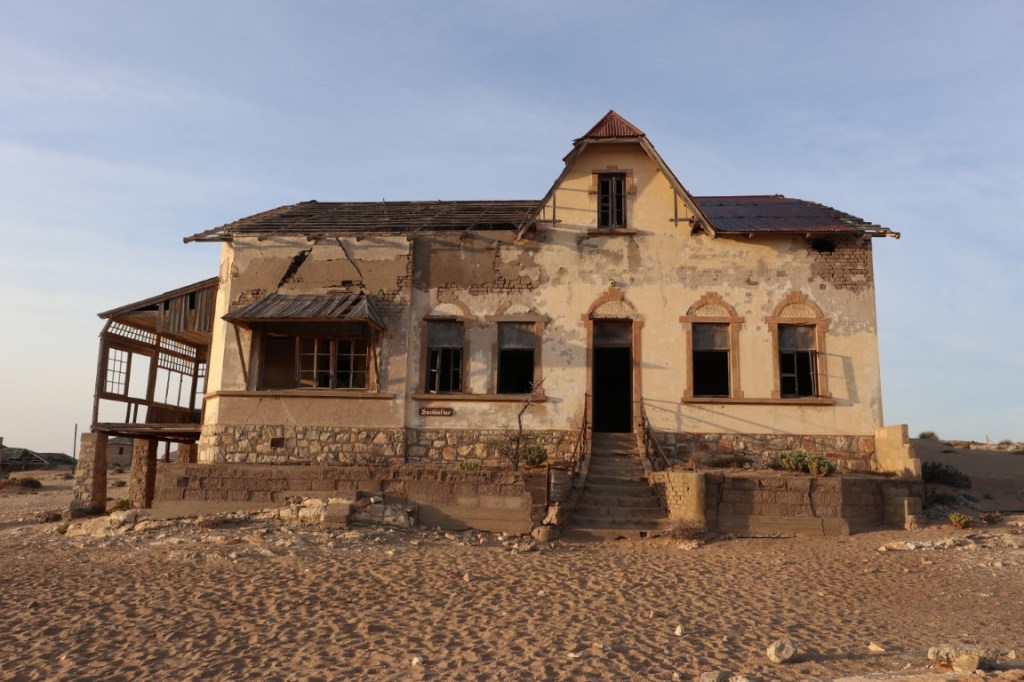
The once luxurious houses of Kolmanskop
The houses of Kolmanskop:
Some of the houses have been restored to show how they looked in the heydays and others not. These houses are now slowly but surely being taken over by the desert again.
Let’s go for a walk through the once luxurious houses of Kolmanskop:
Direktorenhaus (Director’s House):

The director of Kolmanskop’s house
The director’s house was the first to be renovated and is the most impressive of all the houses in Kolmanskop.
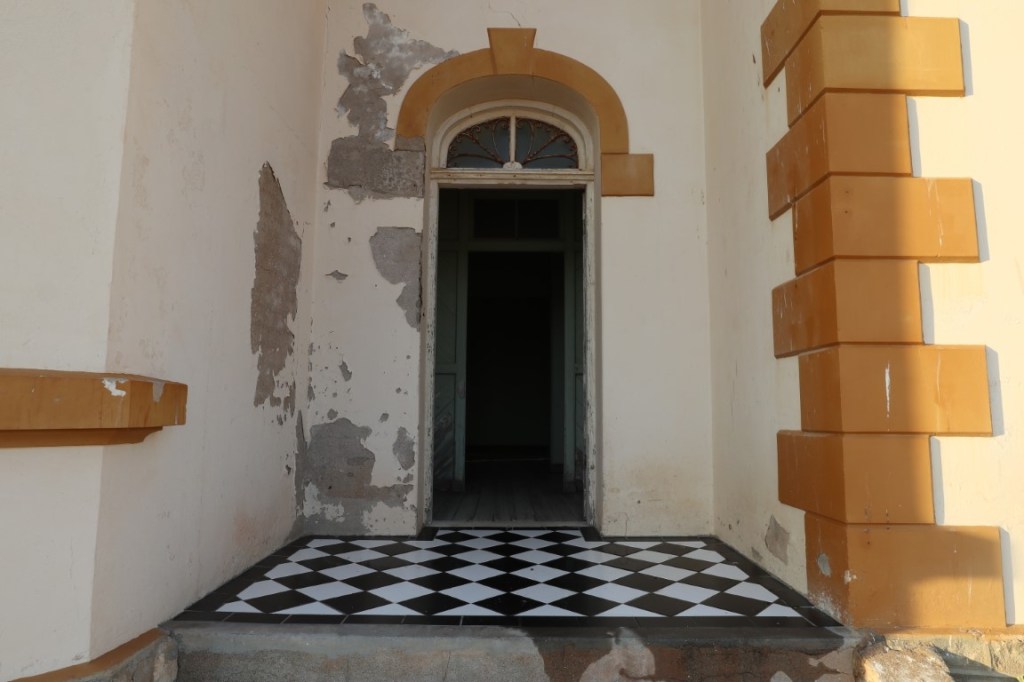
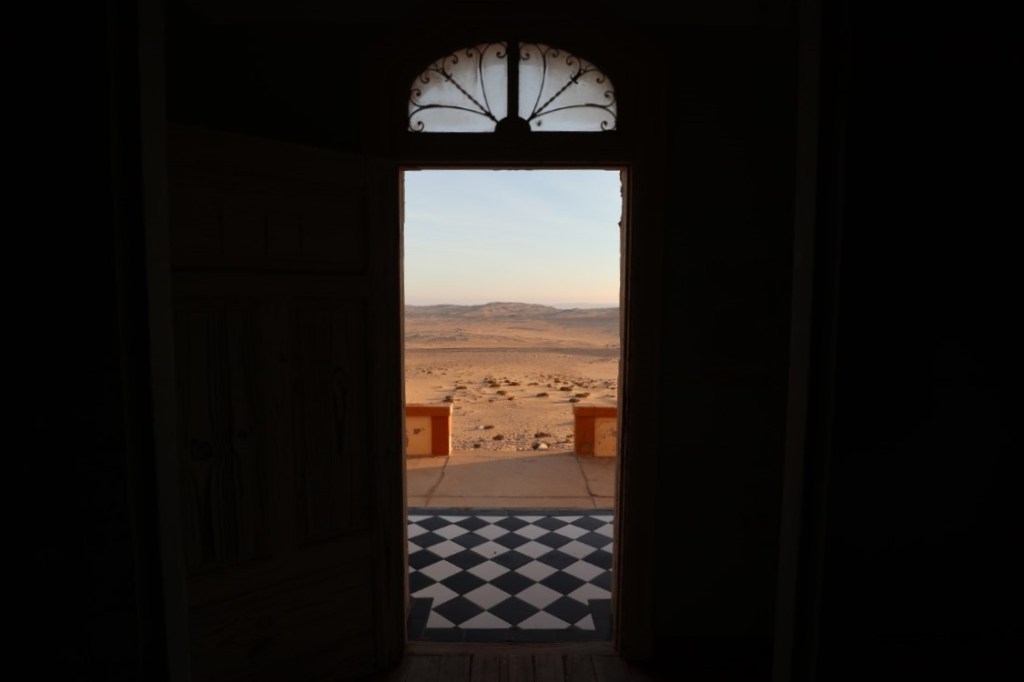
Entrance of the house

One of the rooms

Staircase
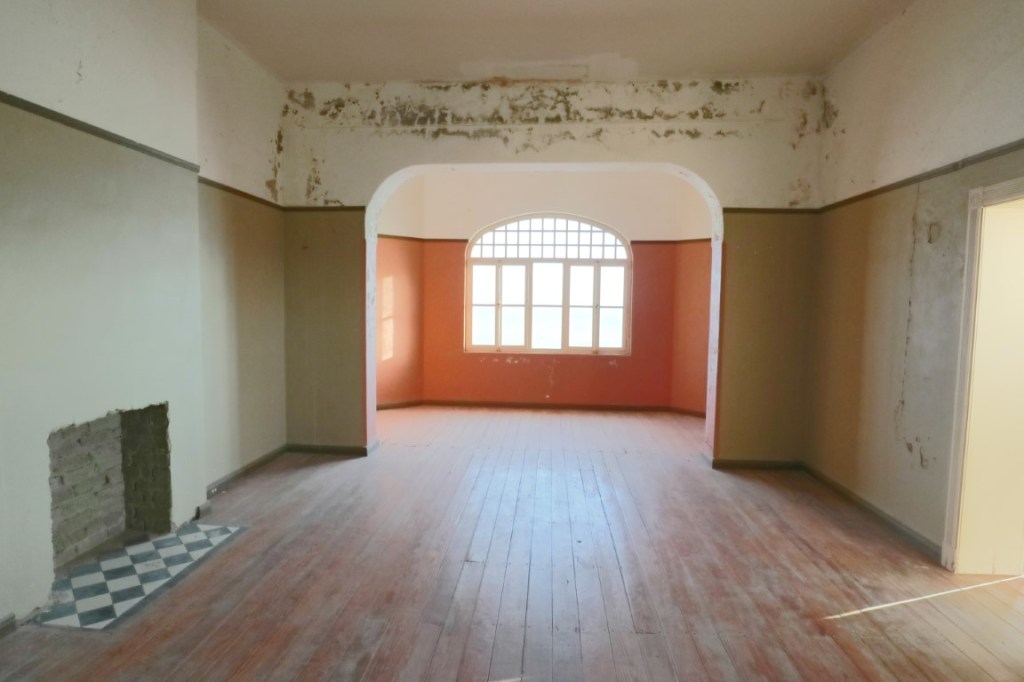
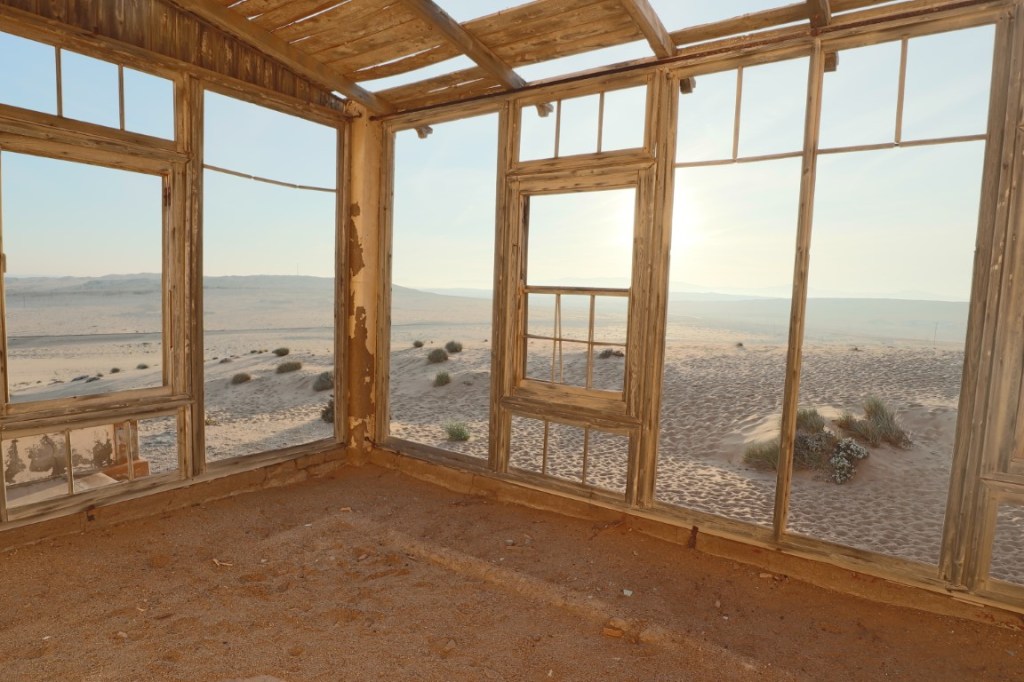
Top floor

Corridor to the bathroom
Buchhalterhaus (Bookkeeper’s House):
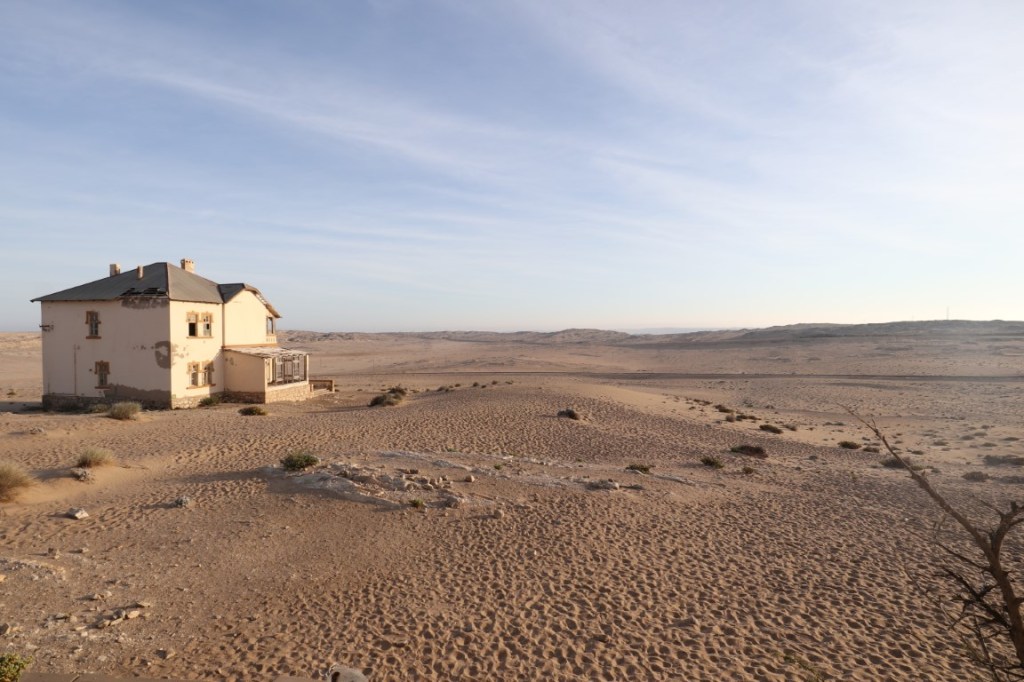

Bookkeeper’s house
The bookkeeper/accountant lived next door to the director.
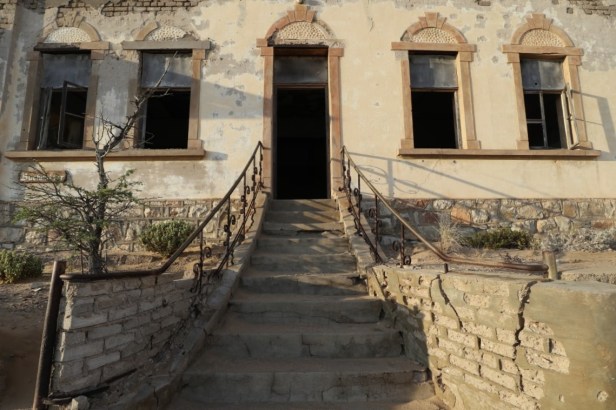
Entrance
Some of the rooms are blocked off where visitors are not allowed to enter, due to their deteriorated condition.
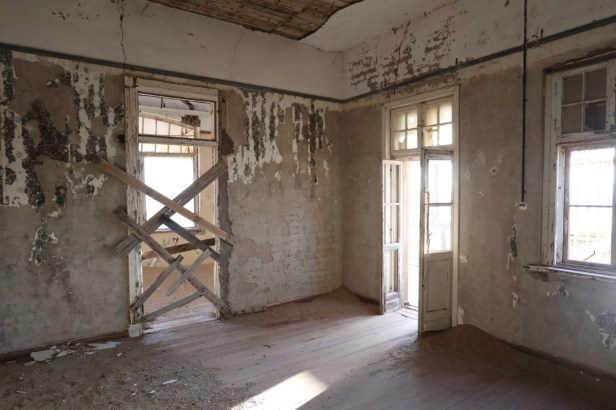
Do not enter

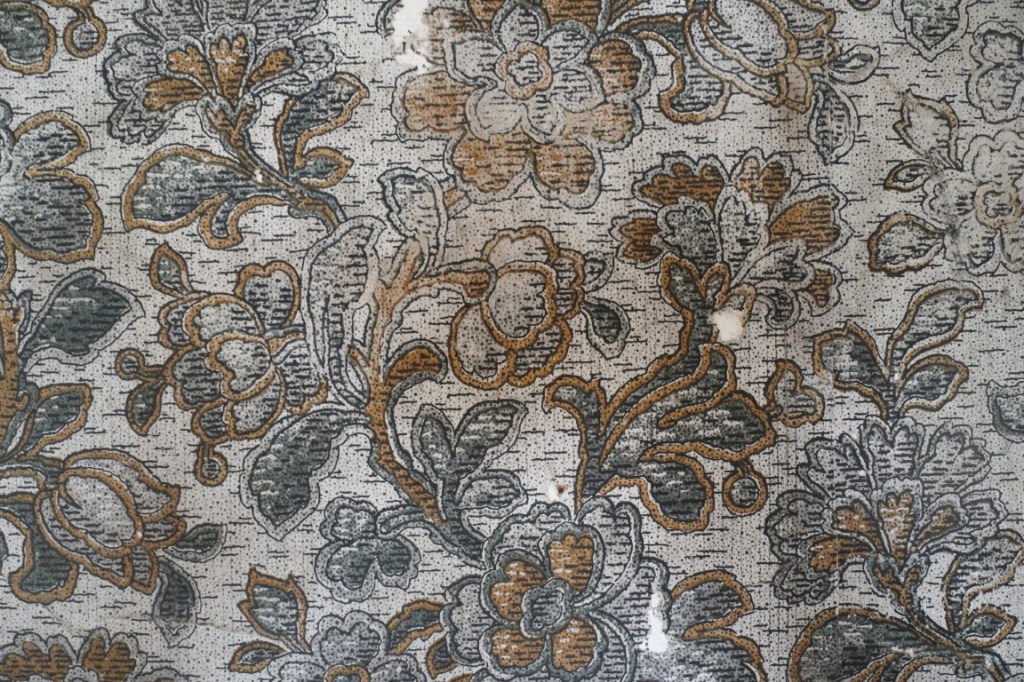
Once expensive wallpaper decorated some of the rooms

One of the upper rooms with a view

Washbasin

Big window
Architektenhaus (Architect’s House):

Architect’s house
The architect of Kolmanskop, Mr Ziegler built numerous houses together with Herrmann Metje, the state architect. They also built the railway station in Lüderitz in 1914.
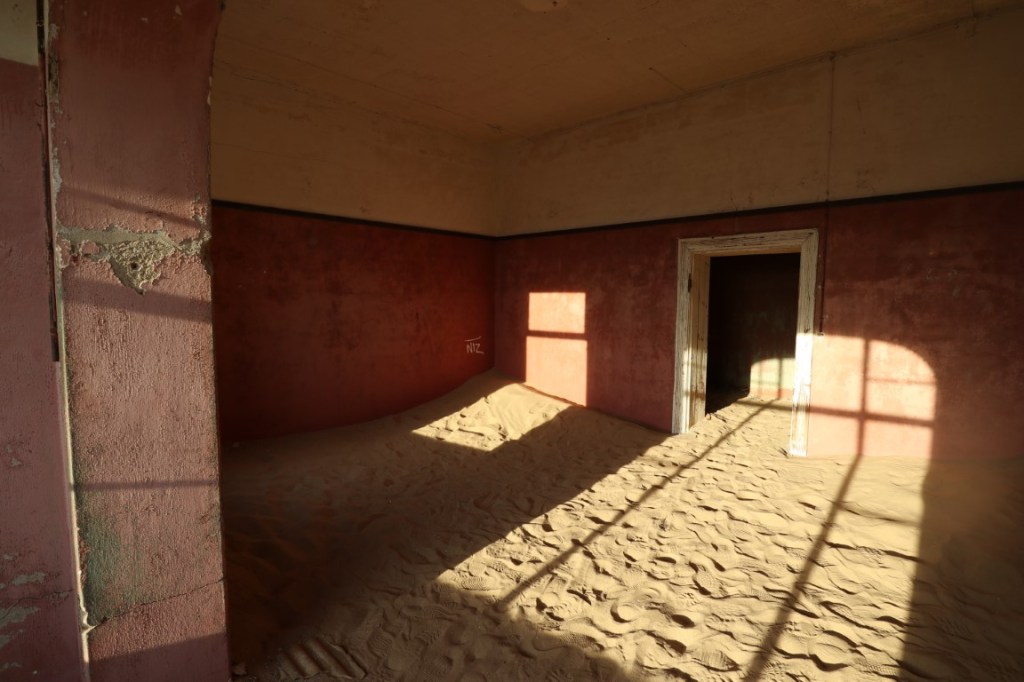
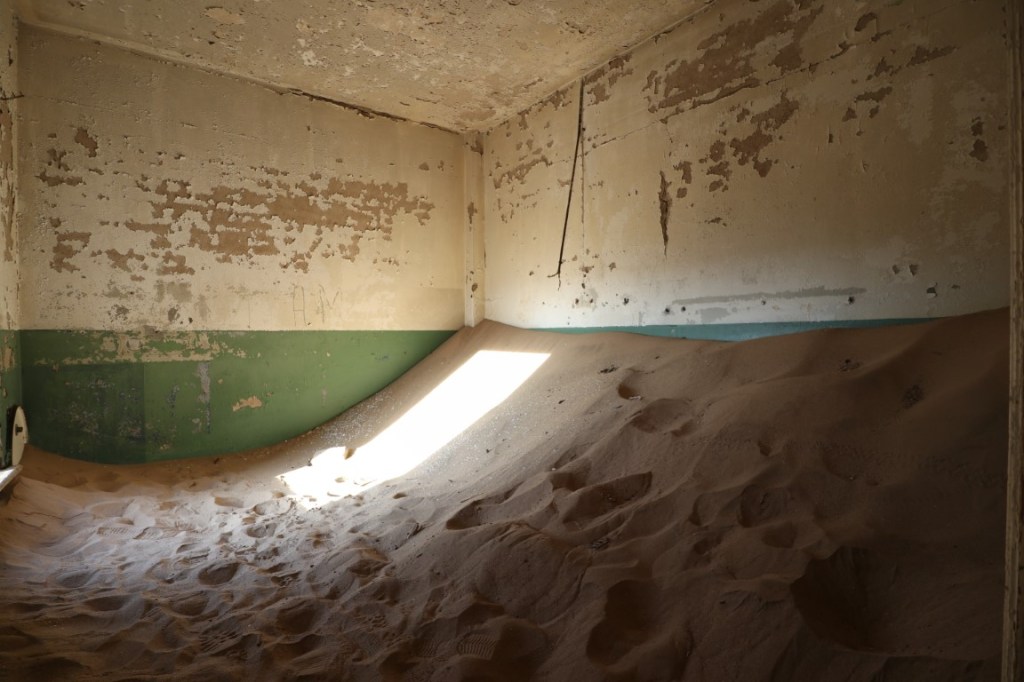
Inside the architect’s house

Window with a view over the desert
Lehrerhaus (Teacher’s House):
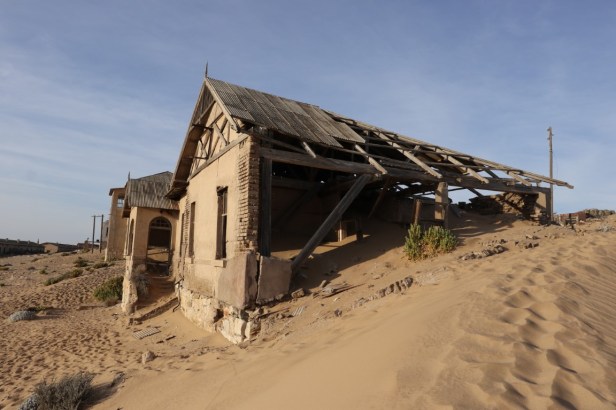
Teacher’s house
Entrance to this house is prohibited due to its condition and the amount of sand.
Quartiermeisterhaus (Quartermaster’s House):
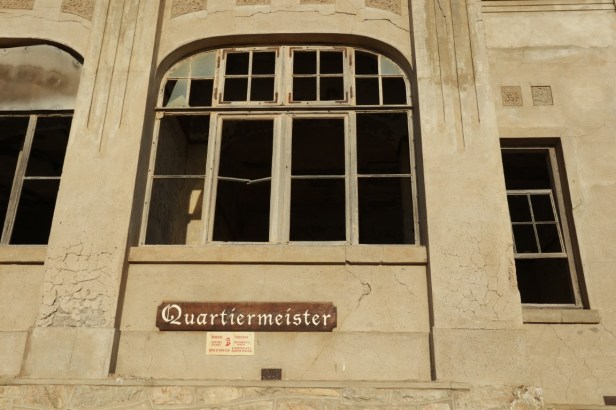
Front view of the quartermaster’s house
Compared to the teacher’s house, that of the quartermaster is much larger. The quartermaster was in charge of supplies for the town. This house also had room for a post office and has an elegant sweeping staircase.


Elegant staircase
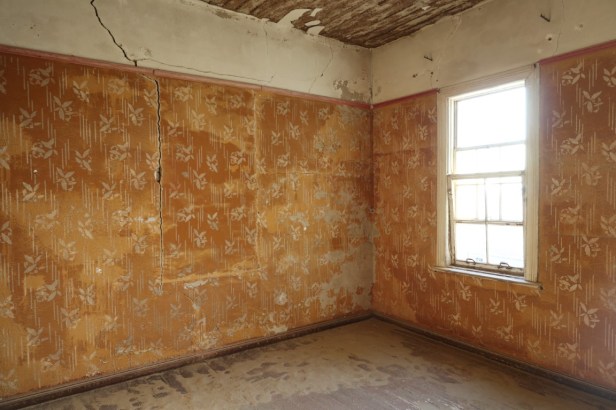
More of the beautiful wallpaper that we have also seen in some of the other houses
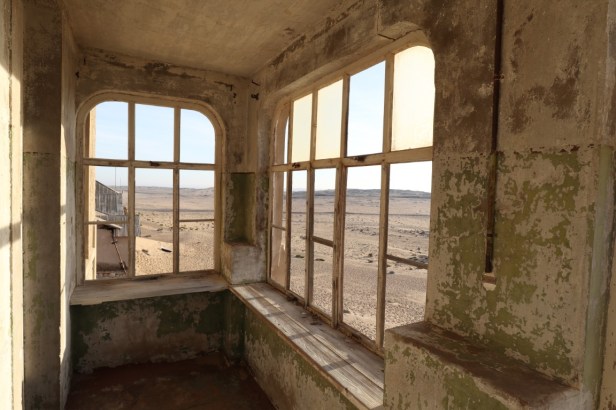
Balcony with a view
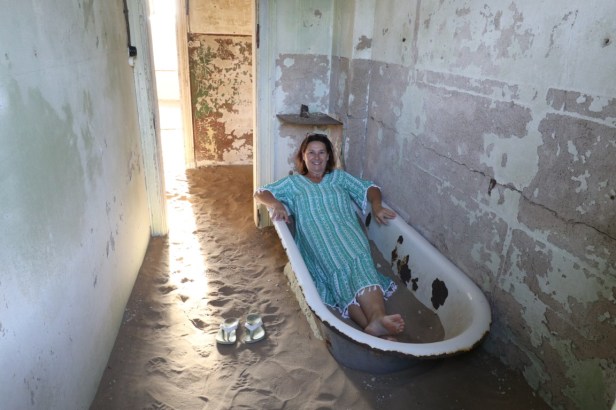
I couldn’t resist the bath
Haus des Ingenieurs (Engineer’s House):
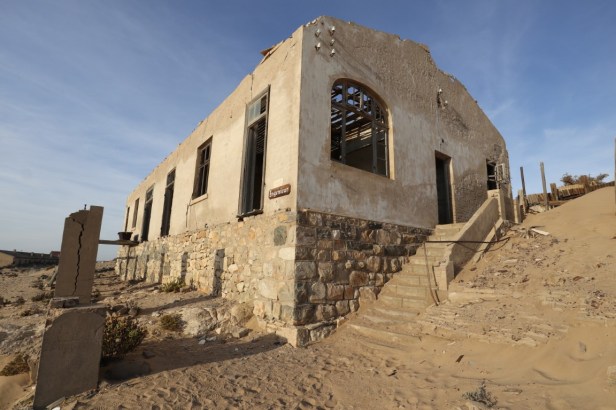
The engineer’s house
According to the information in the museum, Leonard Kolle was the engineer of Kolmanskop. Most of the rooms in this house have been almost completely taken over by the desert.

Inside the house

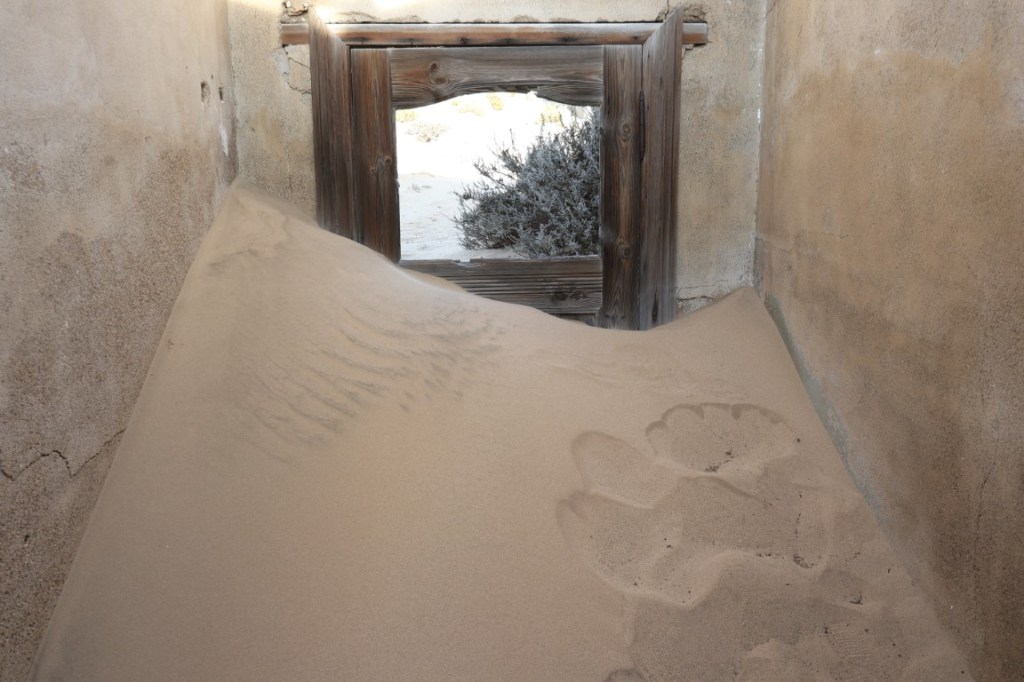

The desert claims its place back
Arzthaus (Doctor’s House):
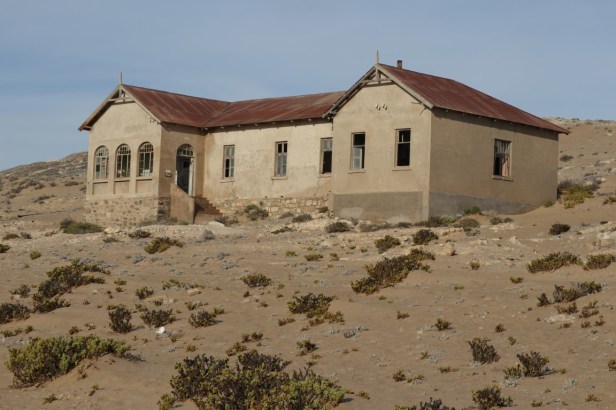
Doctor’s house
Kolmanskop had the services of two doctors, one of whom had a strong belief in using a little wine or champagne to heal patients – because of this, the hospital had its own wine cellar. I think he must have had quite a few patients.
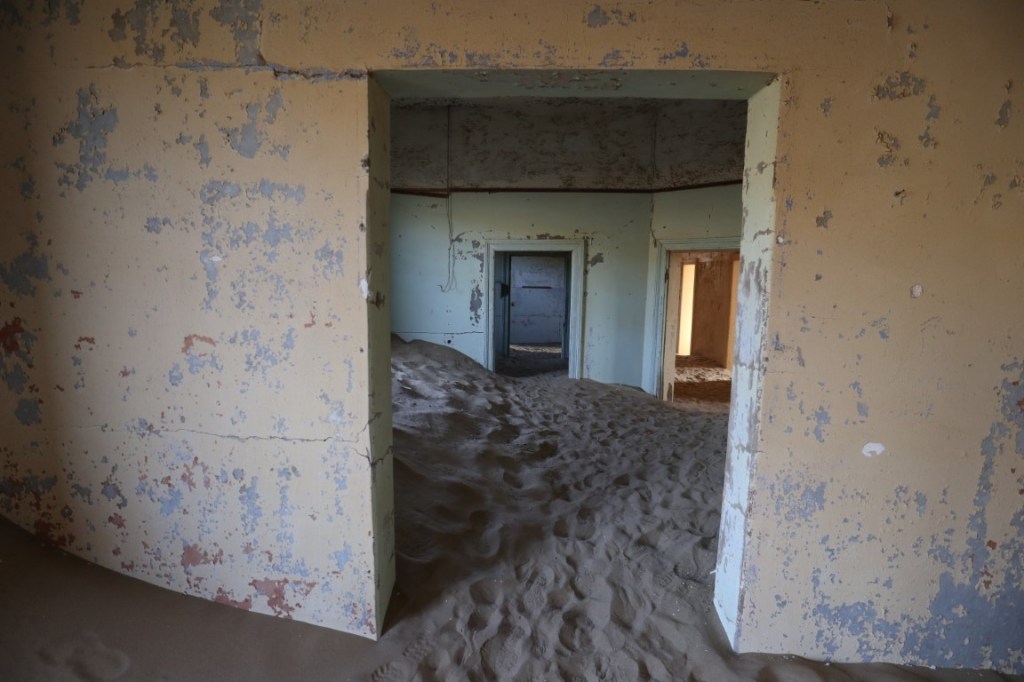
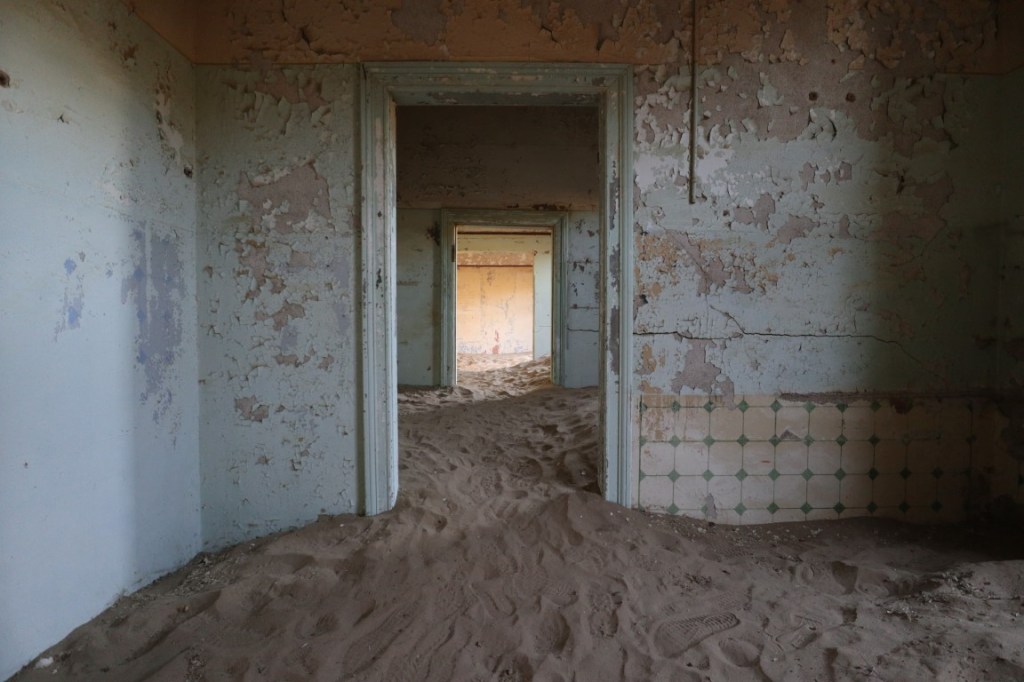
Inside the doctor’s house
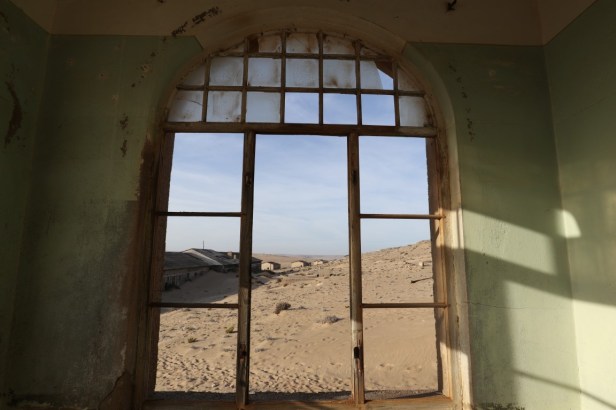
One of the windows with a view towards the hospital
Krankenhaus (Hospital):
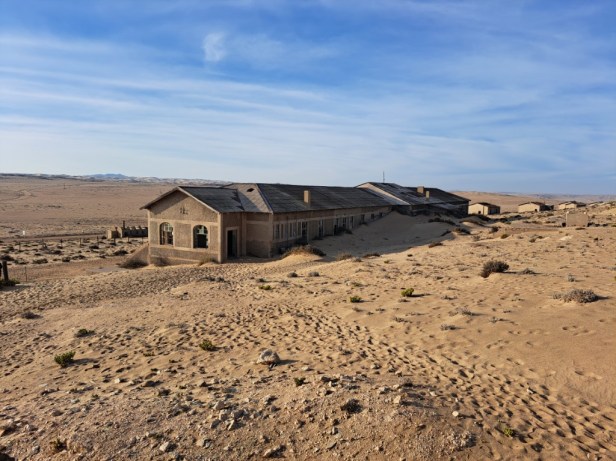
The hospital
The hospital in Kolmanskop had the first X-ray machine in the southern hemisphere. In addition to using this machine on patients, it was also used to detect the smuggling of diamonds.
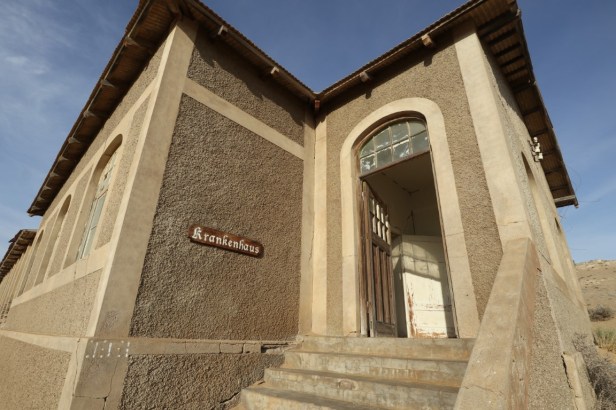
Entrance to the hospital

The long corridor is typical of a hospital
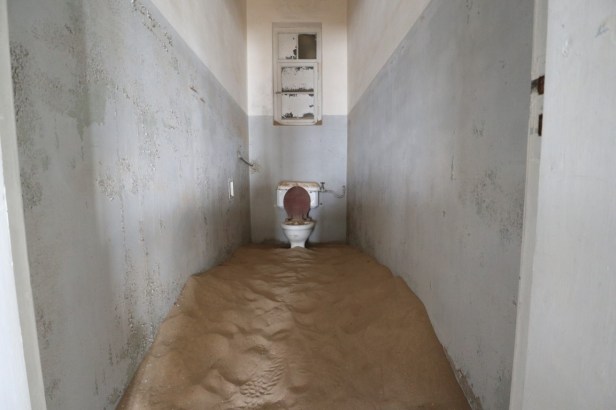
Sandy road to the loo
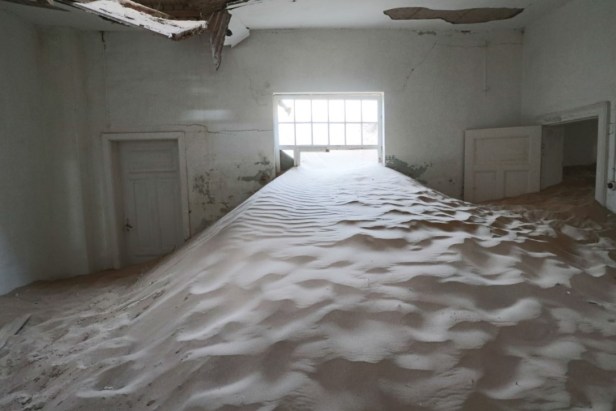
You can leave the hospital by walking through the window
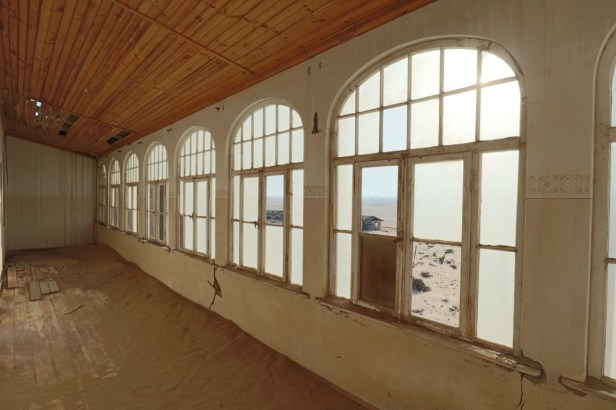
Many windows with views over the desert

We’re leaving the hospital through one of the side entrances
There are quite a few more buildings that one can visit, such as the school, a bakery, a cooldrink and ice factory, bar and also the butchery. But by now, we were sand-tired (if that’s a word) – and I’m sure you too. It was almost two hours since we started our tour through Kolmanskop and we were hungry, so we headed towards the restaurant.
On the way to the Kolmanskuppe Café, we stopped by the bowling alley and casino. The casino was also used for social gatherings, a gym, and theatre performances. They really had it all!
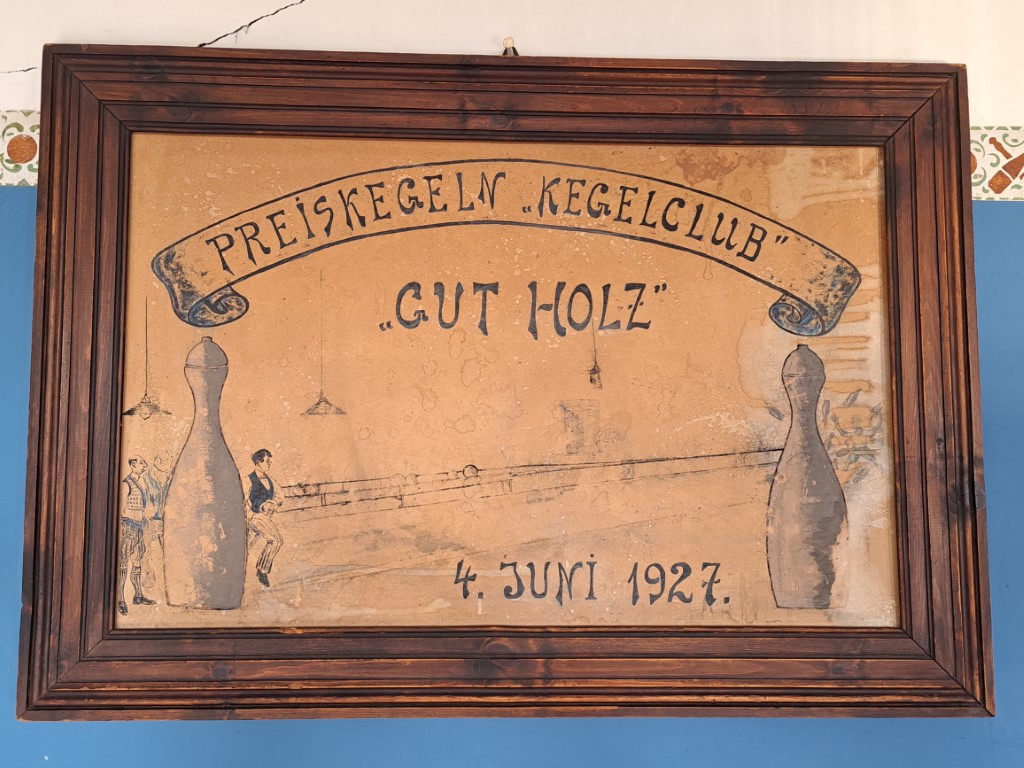
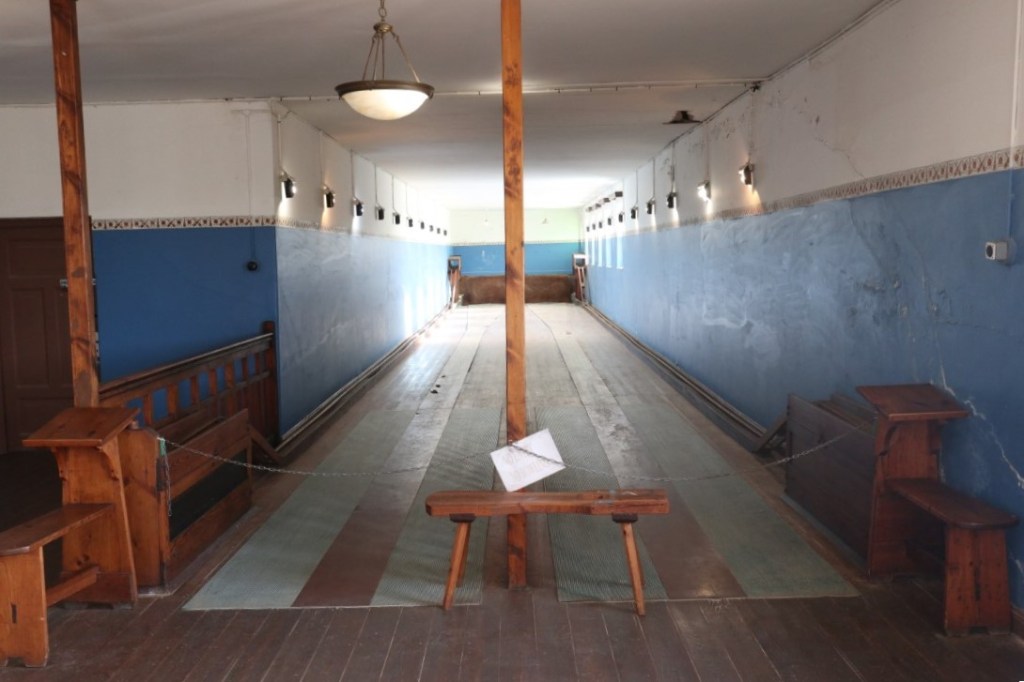
Bowling alley of Kolmanskop

Casino and also the place for all other social gatherings
The restaurant was quite busy with tourists and guides. But Soekie, the waiter/barista/cashier, was excellent and kept everyone happy. We ordered toasted sarmies and omelette, which were delicious.
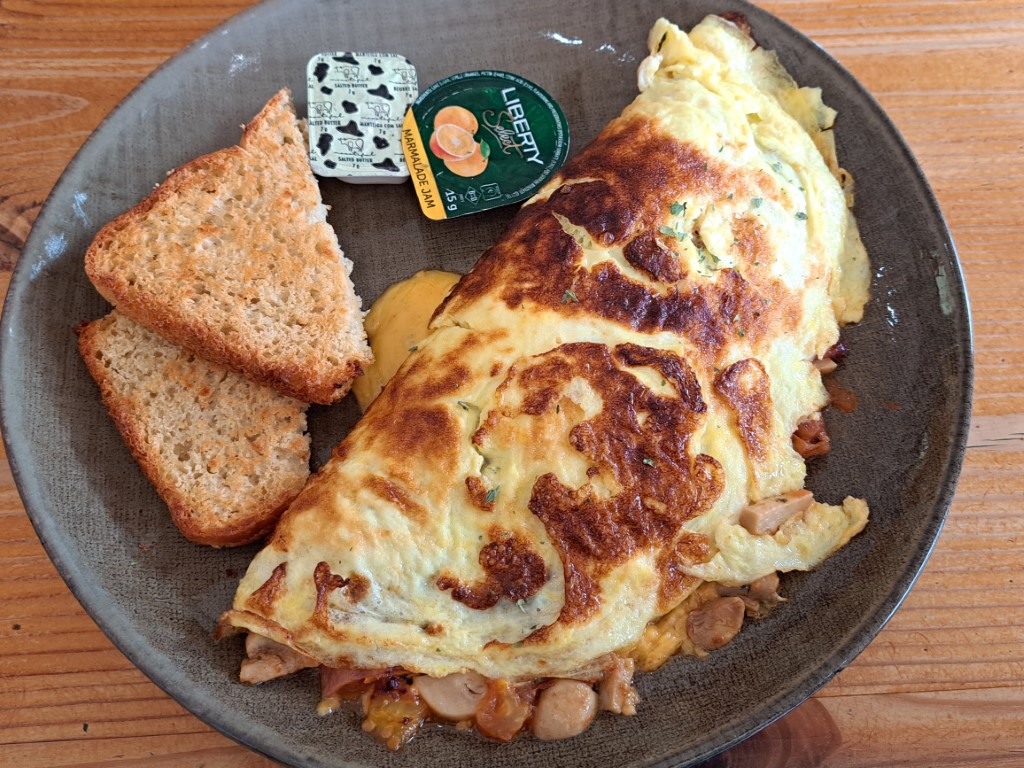

Look at the size of that omelette
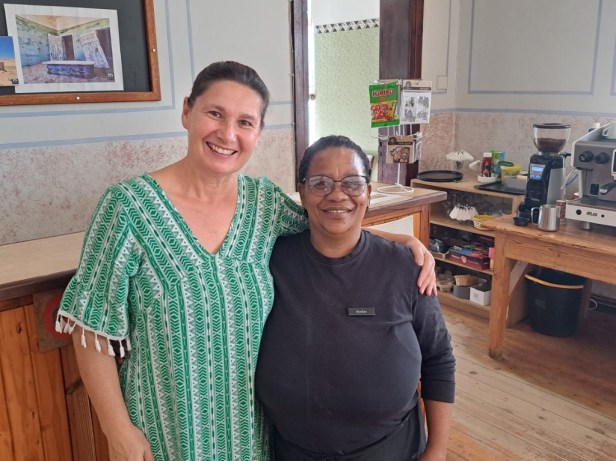
Soekie was such a wonderful host at Kolmanskuppe Café
We hope you enjoyed this post about a forgotten diamond town in the middle of a desert. It’s a place we always wanted to see (probably because we both worked for a diamond mining company at the beginning of our working careers), and we’re glad we set aside a considerable amount of time to explore the last remnants of a once-flourishing town.
In our next post, we’ll show you our first campsite on this road trip – but not before we search for the Namibian Wild Horses again. You can read more about this when you click here.
 Wet and Dusty Roads
What a cool place! I can see why you wanted to arrive early, and it seems to have paid off. It’s amazing to see how quickly the sand reclaims the landscape. And sand tiredness is definitely a thing; we had it by the end of our most recent trip and it was nowhere near as sandy as the Namib Desert.
LikeLiked by 1 person
Oh yes, we missed the tour buses by a good hour. It gave us long enough to walk undisturbed (and in silence) between the houses and take photos. I think the strong winds that often occur here (luckily not during our visit) cause the desert to quickly reclaim its territory. Sand tiredness is now part of our vocabulary – thank you 😉.
LikeLiked by 1 person
How nice that they have preserved this bit of history.
LikeLiked by 1 person
It’s a wonderful opportunity to see what Kolmanskop looked like back in the early 1900s – to think it was once the richest town in Africa is just mind blowing! And of course, tourist visits to Kolmanskop also help the economy of Lüderitz – so it is to everyone’s benefit.
LikeLike
Don’t you look pretty in that adorable dress! What a shame all these houses can’t be used for more than a tour bus. I loved all the history too.
Thank you for sharing your wonderful pictures.
LikeLiked by 1 person
Thanks so much Diane – that dress was ideal for the warm summer day we had (and fortunately no wind to blow my dress over my head 😁). I don’t think the houses are sturdy enough anymore to serve as housing for others, but luckily, it’s positive for the economy of Lüderitz with all the visiting tourists (like us). I’m glad you enjoy the photos – it was a wonderful day to have a camera!
LikeLiked by 1 person
Jou vertellings oor Suidwes is werklik boeiend, baie dankie daarvoor.
LikeLiked by 1 person
Dankie Tannie Frannie 💕. Dis ‘n plek waaroor ‘n mens waarskynlik eerder ‘n boek moet skryf – daar’s net so baie om van te vertel en wys. En dan het ek nog nie eens geraak aan die feit hoe besonders die mense van Nambië is nie!
LikeLiked by 1 person
Man is very fickle at times, Corna. I’m not normally too keen on ghost towns, but this one is impressive. The sweeping views out across the desert. You’d cry to abandon such a house xx
LikeLiked by 1 person
I’m also not a fan of ghost towns … come to think about it, this might be the wrong description for Kolmanskop – it’s actually more like an abandoned place full of history (and not scary at all 😉). Absolutely, there are houses there that could definitely qualify as being mansions.
LikeLiked by 1 person
What an interesting site, with its story of boom and bust!
Thank you for sharing.
LikeLiked by 1 person
I knew a little about the history of Kolmanskop before we got there, but with our visit it was nice to be able to read (and actually see) the full story unfolding.
LikeLiked by 1 person
Ooh I want an omelette like that. It’s one of my favourite foods. I love the photo of sunrise and railroad tracks at Kolmansdorp. What an impressive ghost town. Just looking t the pictures I feel haunted by it. All those beautiful home looking out into the dessert. I try to imagine how it must have been to be the last to leave. Heart-wrenching. It is amazing that so many of the buildings are still in good shape but I suppose that is due to the climate. Definitely a place to visit before the tourist busses arrived!
LikeLiked by 1 person
It was one of the best omelettes I’ve ever had (and I almost ate it all – just a small piece was left for later 😉). It was worth spending such a long time at Kolmanskop – and arriving early in the morning before the tour buses got there. I think it must have been very sad for the last person to leave Kolmanskop – having to leave everything just like that, it couldn’t have been easy. Oh, and sunrises and sunsets in Namibia was always spectacular to watch while we were there!
LikeLike
Kolmanskopf!
LikeLiked by 1 person
😁👍
LikeLike
I had no idea that some of the houses had been restored, I thought the desert had reclaimed them. Do you pay a fee to enter the town?
Thanks for the history. I’m guessing the chap who discovered the first diamond stone didn’t make any money from it?
LikeLiked by 1 person
As I understand, they started restoring the houses in 1980 after tourists visited Lüderitz – probably as a way to contribute to the economy of Lüderitz. The entrance fee is N$90 (£3.70) per person. I tried to see if there was any mention of Zacharias Lewala again, but nowhere is it mentioned that he was compensated … who said that life is fair?
LikeLike
This is absolutely my sort of place to explore and photograph! It’s very reminiscent of the former gold mining ghost towns we visited in California but with the sand adding extra atmosphere!
LikeLiked by 1 person
Oh yes, I thought you would have enjoyed Kolmanskop – I can just imagine how many photos you could have taken here. I think mining towns have the ability to turn into ghost towns because they are usually left as is once whatever was being mined is depleted. Hmm, the sand became a bit overwhelming later – I wondered how the people of Kolmanskop managed to live day after day in the desert (well, they had all that entertainment 😉).
LikeLiked by 1 person
What an interesting place to visit! It’s amazing how the desert sand has taken over almost the entire town. It looks as though many of the buildings will soon be completely gone. I bet the “wine doctor” was far more popular than the other one! Great post, Corna!
LikeLiked by 1 person
Very interesting place Tricia. Yes, I’m not sure how long the houses will still be safe to visit (there are quite a few areas that are cordoned off and people are not allowed to enter due to their dilapidated condition). But the director’s house is still being maintained, and it was amazing to walk through this house and see what it originally looked like). I think I read somewhere in the museum that the other doctor believed in giving garlic and onions to his patients … I know which doctor I would prefer 😉. Thanks for your comments as always.
LikeLiked by 1 person
Wow what a place!! The houses are absolute mansions, you can really imagine how impressive they would have been in their hey day. I hope they continue to at least preserve a couple of the houses….and I’m all for a wine/champagne doctor!
LikeLiked by 1 person
I think the houses must have been quite impressive when they were built – I read in the museum that the street with all thoset big houses was called ‘Millionaire’s Avenue.’ I think Kolmanskop contributes a lot to the economy of Lüderitz, so they will probably ensure that the old houses are taken care of and remains a tourist attraction. Ha, I’ll see you in the consulting room of the wine/champagne doctor 😂!
LikeLike
Such a fascinating look at Kolmanskop! The desert slowly reclaiming the town is both haunting and beautiful. Loved the stories and details—especially the doctor’s wine cellar! Thanks for sharing this amazing journey.
LikeLiked by 1 person
Kolmanskop is truly a unique place – it’s hard to believe that at one point it was the richest town in Africa! Ha😁, to hear about the wine cellar at the hospital was definitely a surprise – if you ask me, I think the doctor who promoted this was trying to keep his patients happy (not necessarily healthy). I’m glad you enjoyed the post about Kolmanskop – it was a great place to visit, and we had fun sharing this on our blog.
LikeLiked by 1 person
Haha, you’re probably right, that doctor definitely knew how to keep spirits high! 😄 Kolmanskop’s history really is one-of-a-kind. Thanks again for taking us along on your adventure!
LikeLiked by 1 person
Good call on getting an early start so you can enjoy the sunrise on the road and avoid the tour buses. The ghost town is fascinating. And it’s neat how some of the houses have been restored. I can see why you’d want to explore this place before the crowds come in. Love the shot of you in the bathtub!
LikeLiked by 1 person
It’s definitely worth entering through the gate at Kolmanskop early in the morning – by the time we left, there were already two tour buses and quite a few other visitors. I’m also glad that some of the houses have been restored, it gives you a good idea of what it looked like in 1911. Ha😁, I’ve never sat in a bathtub filled with desert sand before – it was a lot of fun!
LikeLiked by 1 person
The Kolmanskop ghost town looked to be a fascinating place to explore especially before it got crowded with your buses. The toasted sandwich and omelette would have been a good start to the day too!
LikeLiked by 1 person
Yes, it seems that if you want to avoid the crowds, you have to get up early to be at Kolmanskop – and it was definitely worth it! Ha, we always make sure to start the day with a good breakfast when we’re on a road trip … then you have energy for the rest of the day to explore new places 😉.
LikeLiked by 1 person
Fascinating place and uniquely photogenic. Thanks for sharing. Cheers
LikeLiked by 2 people
Kolmanskop is one of those places where you need enough time to take in every small detail (and walk with your camera in your hand and don’t put it away, because there is just so much to capture 😉). Thanks Mark.
LikeLike
Oh wow this is so weird. It is so interesting though to see these deserted buildings.
LikeLiked by 1 person
Yes, Kolmanskop is one of those unique places that tells a story of glorious days … but now lies abandoned in the desert.
LikeLiked by 1 person