
September 2024
You will remember that last week we gave an overview of the Mountain Zebra National Park which we visited a few weeks ago (read here). Today we are going to introduce you to this park’s beautiful wildlife – sit back and enjoy the ride.
Three types of zebras:
But before we do that, it might be a good idea to just remind you that there are actually three different species of zebras:
- The Grévy’s zebra (found in Ethiopia and northern Kenya)
- The Mountain zebra
- The Plains/Burchell’s zebra – this is the most common of the three species.
On our visit to the Addo Elephant National Park in June this year, we saw the Plains/Burchell’s zebra and here in the Mountain Zebra National Park it is of course the Mountain zebras’ territory.
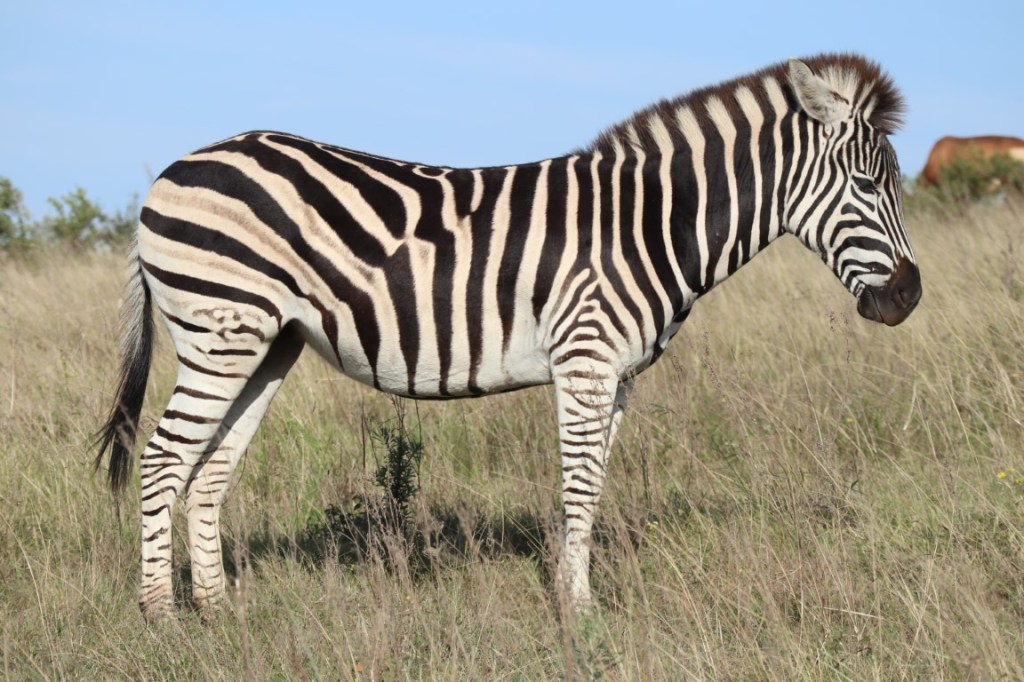
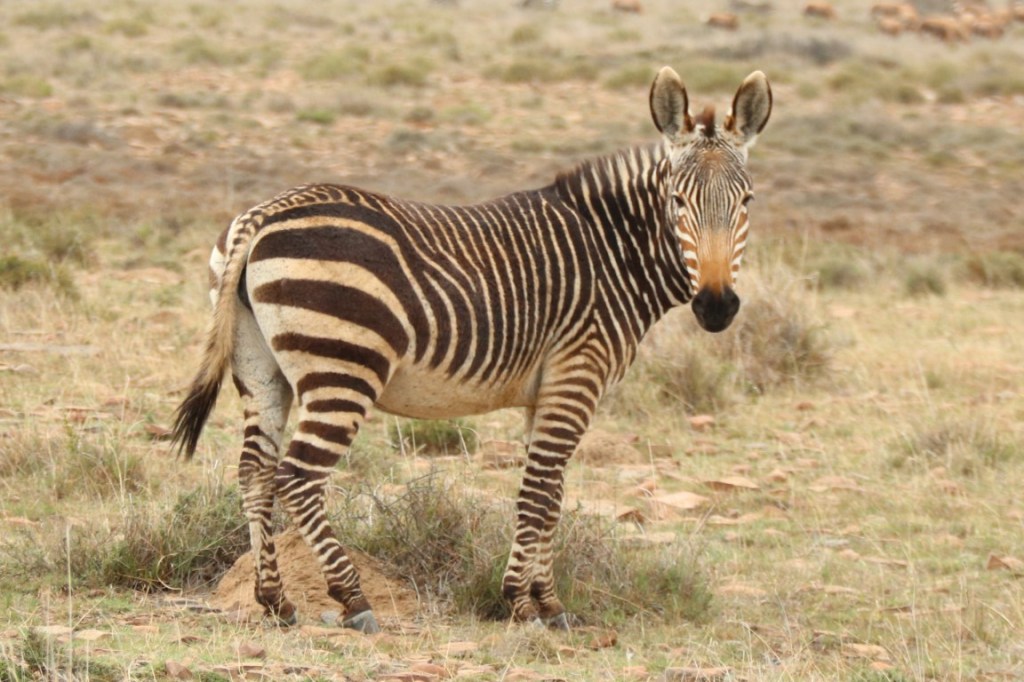
Plains/Burchell’s zebra (left) and Mountain zebra (right)
The Burchell’s zebra can easily be mistaken for the Mountain zebra, but the Mountain zebra have white bellies and longer ears. They are also smaller than the Burchell’s zebra.
Ok, enough of the Zoology lesson, let’s see what the animals in the park look like!
The first animal we saw was one that has eluded us for a long time now, namely one of the largest antelopes, the Eland.
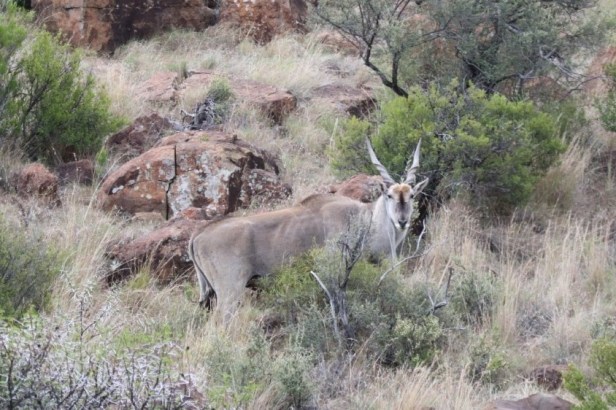
A well camouflaged Eland among the rocks
Just a short distance away, a few Kudu cows were grazing. Besides Springboks, these were the antelopes we saw the most.
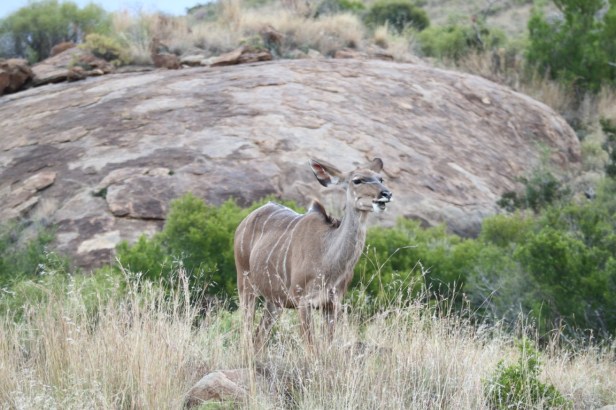
Kudu cow
I was very excited to see our first Mountain zebra. After reading how this particular zebra was saved from near extinction, it was wonderful to see so many of them in the park.

Mountain zebra
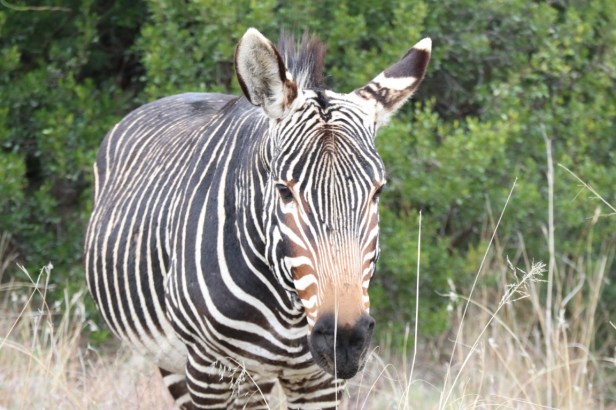
Mountain zebra

Mountain zebras
What? Would you like to see more zebras? No problem!
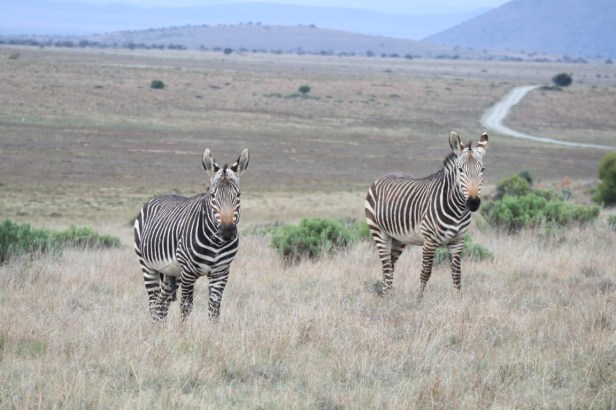
And more Mountain zebras
We love Springboks – and not only because it’s the name of our country’s national rugby team, but also because it is one of the most beautiful smaller antelopes. And they are quite photogenic.
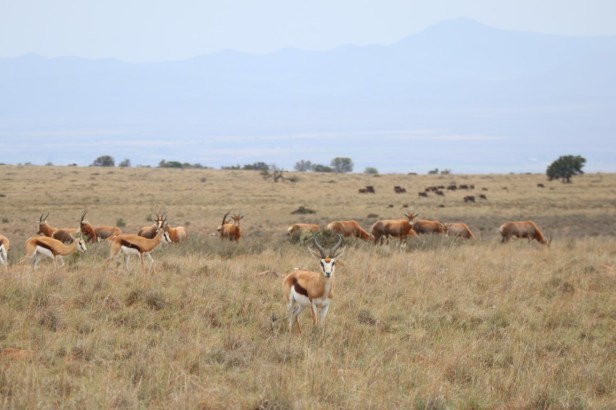
Springboks (with Blesbok in the background)
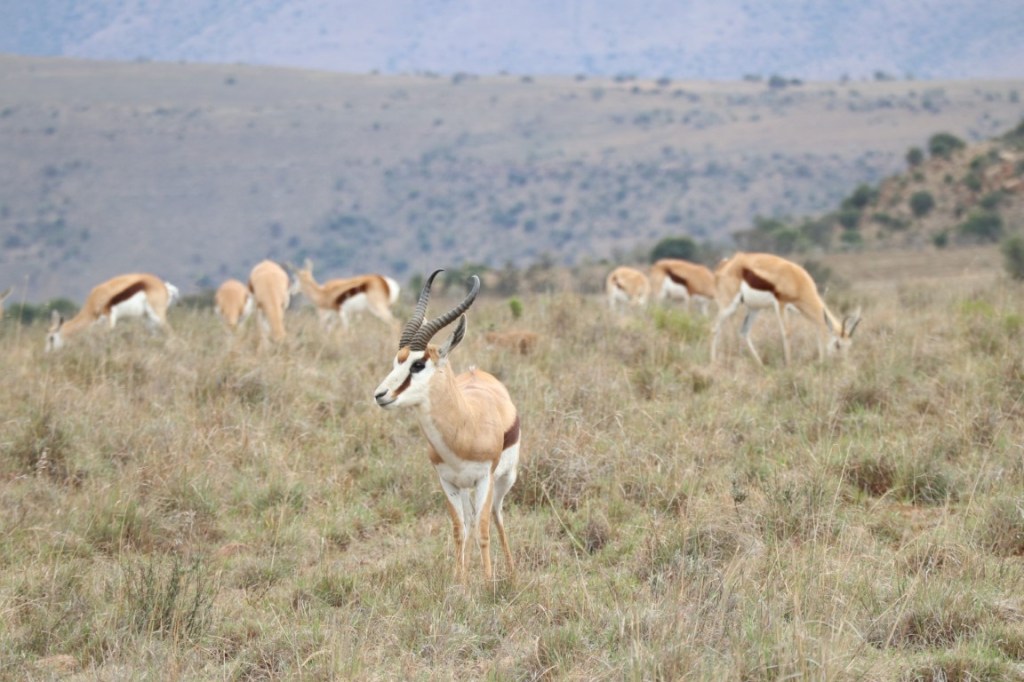
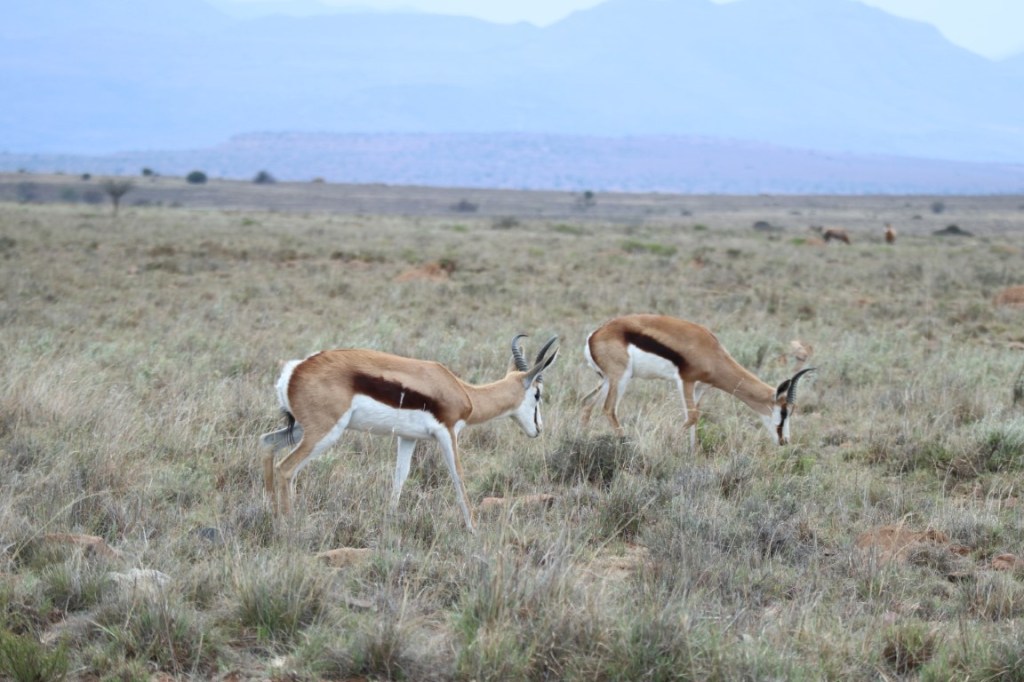
Springboks
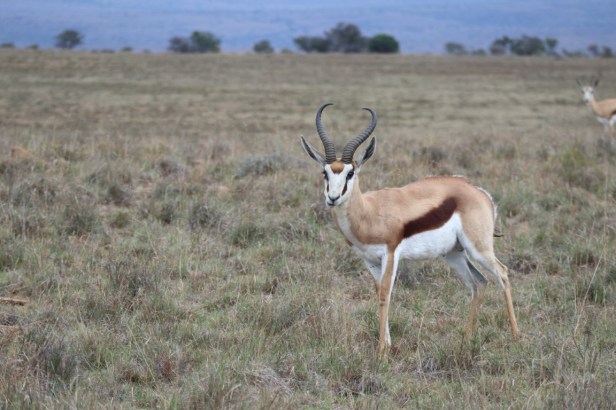
Springbok
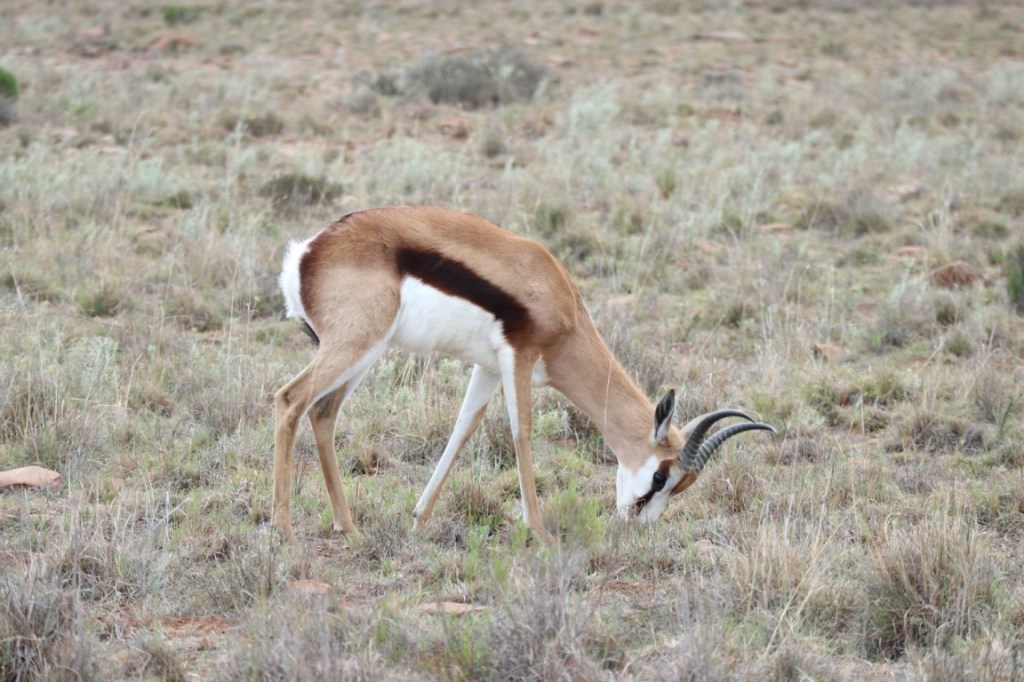
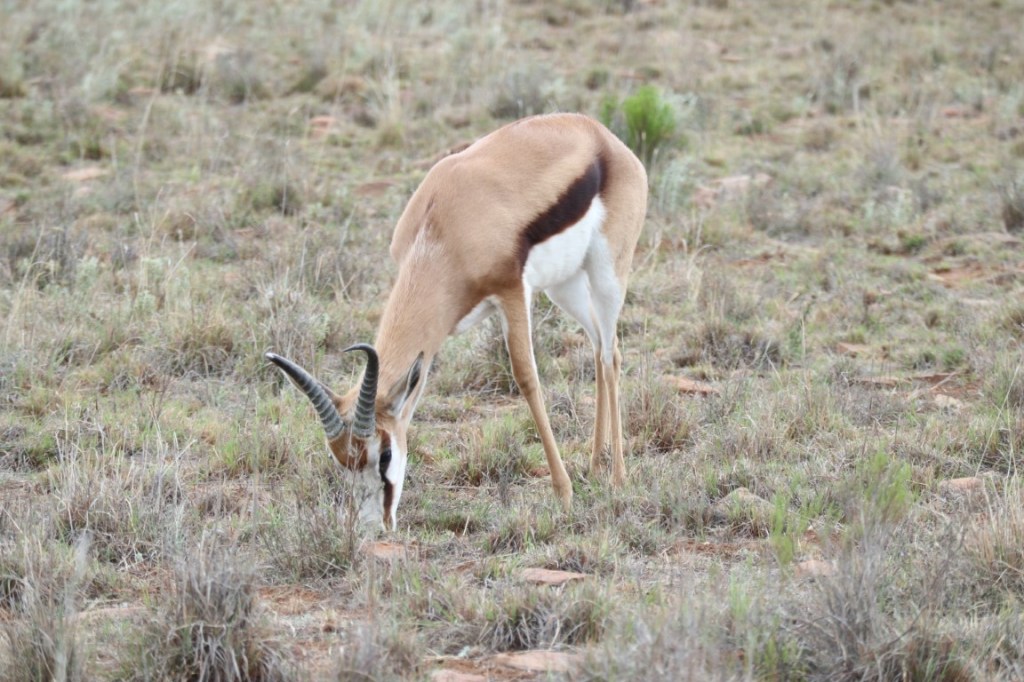
Grazing Springbok

Such a beautiful animal
The Blesbok is a medium-sized antelope with a prominent white blaze on the face. This is an antelope that we often see in the West Coast National Park near Langebaan and we were happy to see them here in the Mountain Zebra National Park as well.
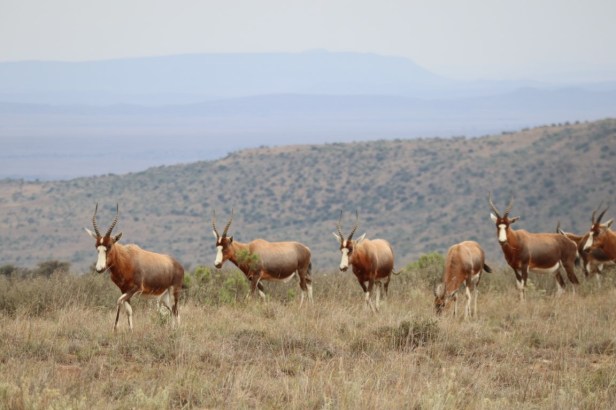
Herd of Blesbok
We couldn’t resist stopping again when we saw more Springboks and Zebras standing in the field.
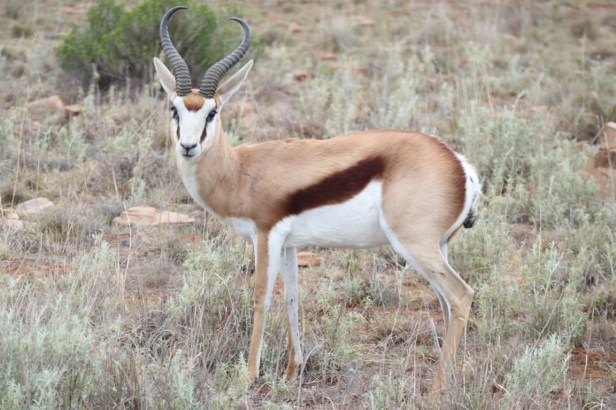
Springbok

Mountain zebra
We also saw quite a few Black Wildebeest. A fun fact about the Wildebeest is that when a person approaches a herd within a few hundred meters, they will snort and run a short distance before stopping and looking back. They will repeat this behaviour if approached further. I think that’s the reason why we could never get a decent photo of them!
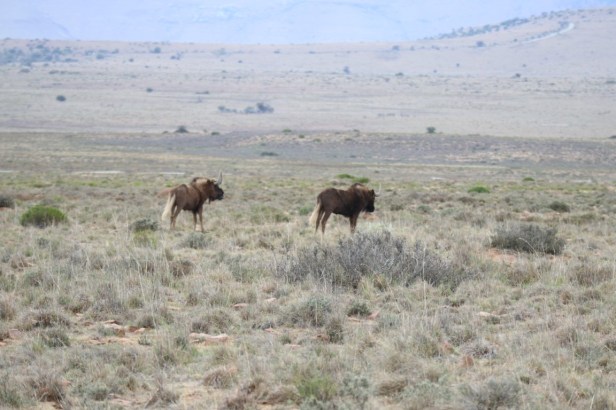
Black Wildebeest
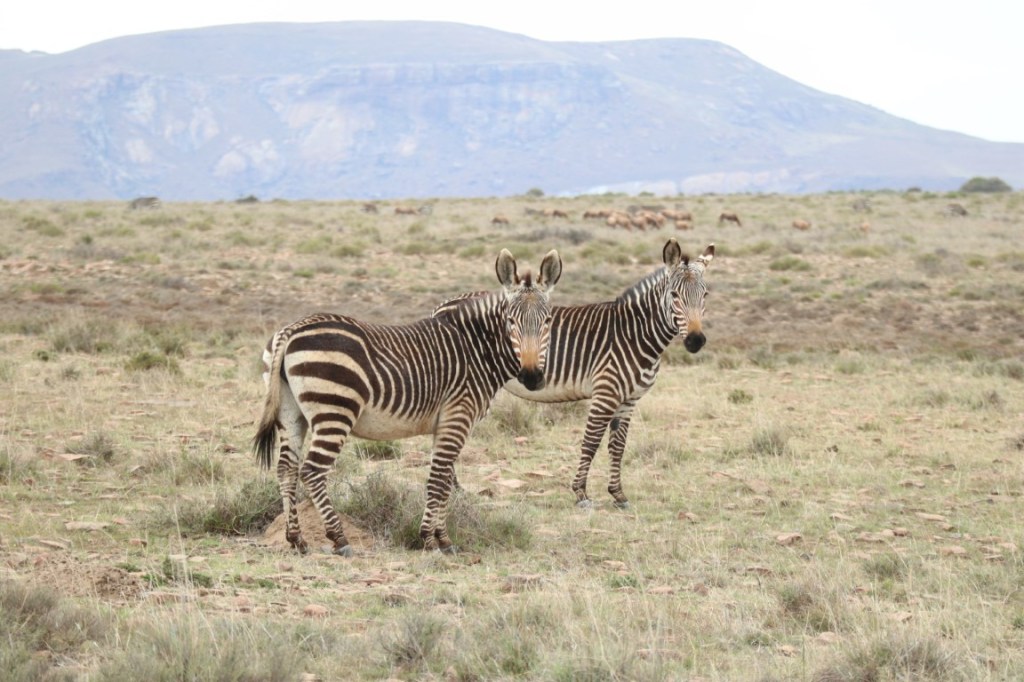

Mountain zebras and Blesbok
We read in the park’s brochure that we might see the Blue Crane – the national bird of South Africa. And we were very happy to see two of these elegant birds not far from the road in the field.

Blue Crane
We saw a couple of Vervet Monkeys near our cottage earlier in the morning, but were too late to take photos of them. But we were rewarded with two Chacma baboons relaxing on a rocky area in the field.

Chacma baboons (also known as the Cape baboon)
Seeing Kudu bulls is always a highlight. They have the largest horns of any antelope species and I find the graceful twists fascinating.
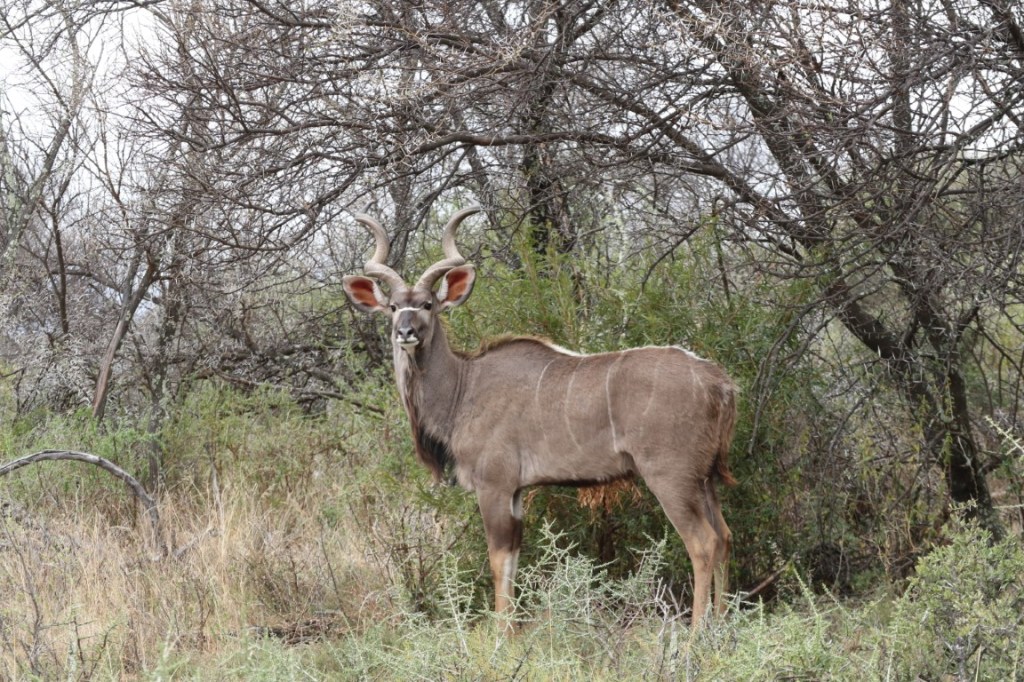
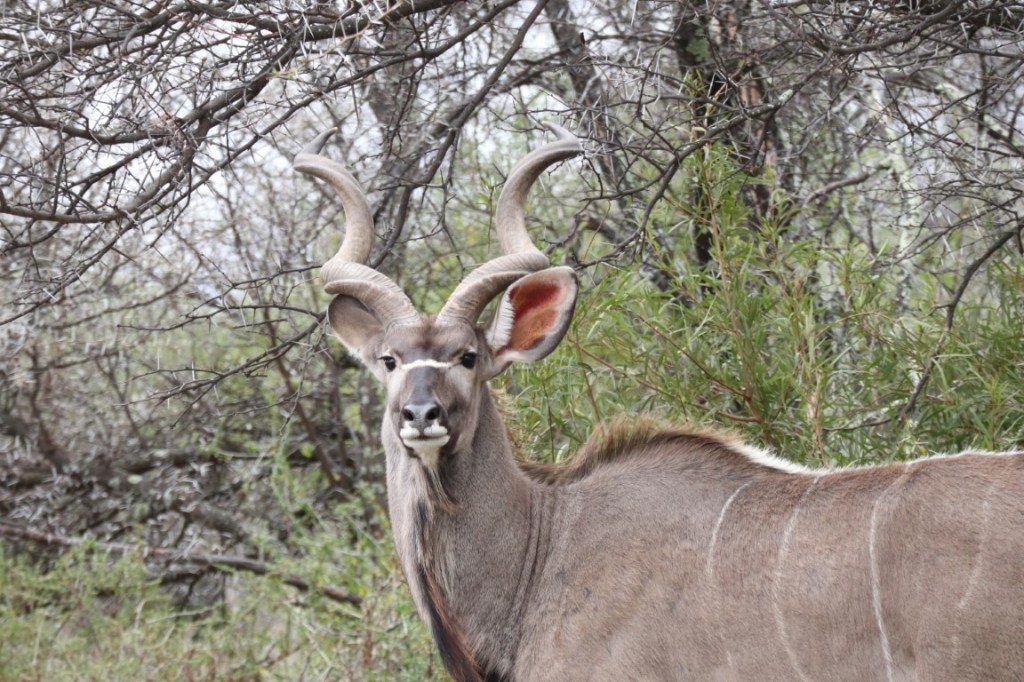
Kudu bull
I admire the Red Hartebeest that they can run up to 65km/h (and maintain that speed over a long distance), but I think it’s their long narrow faces with a half-confused expression that always makes me want to laugh when I see them.
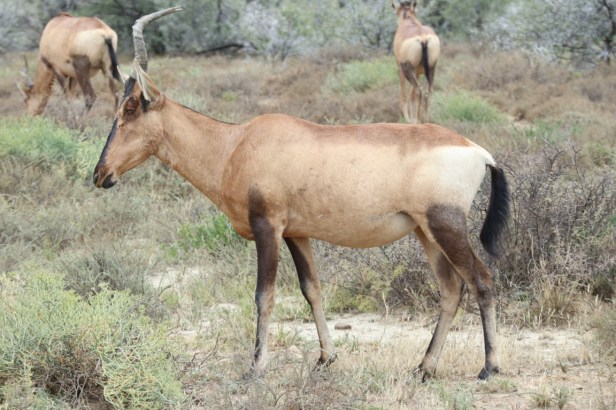
Red Hartebeest

Just look at that facial expression
You will remember that in our previous post I mentioned that we heard there were four lionesses lying by the river. We drove very slowly along the river hoping we would see them too. Our first sight was that of Kudu cows and while I was taking a photo of them on my side of our vehicle, Berto gasped while looking the other way …

Kudu cows
About 50m from the road, four beautiful lionesses laid stretched out next to each other. We took quite a few pictures (which all look exactly the same because they didn’t move an inch). But that didn’t matter and we just sat and watched them for a long time – seeing lions in their natural habitat remains a wonderful moment.
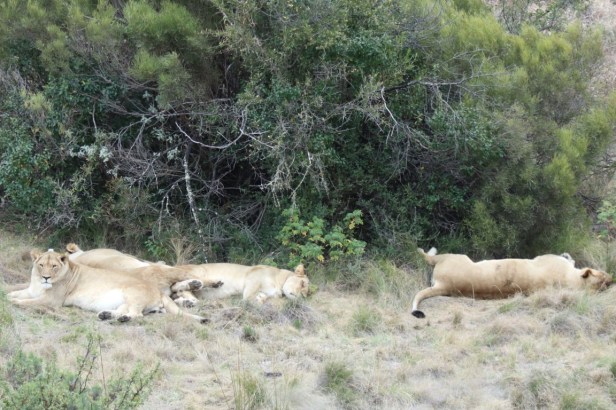
Four lionesses

It’s a good day to be a lion
As we drove away from the four lionesses, I said to Berto that it would take a special animal to top the lions we had just seen. And what did we see? One of the smallest animals that stole my heart! A small Ground Squirrel sat and scratched in the dirt by the side of the road and didn’t even move when we stopped right next to him.

Cute Ground Squirrel
You may also remember from our previous post that we drove one of the 4×4 trails in the park. We didn’t think we would actually see animals in this area, but were surprised to see a beautiful Gemsbok within the first kilometer.

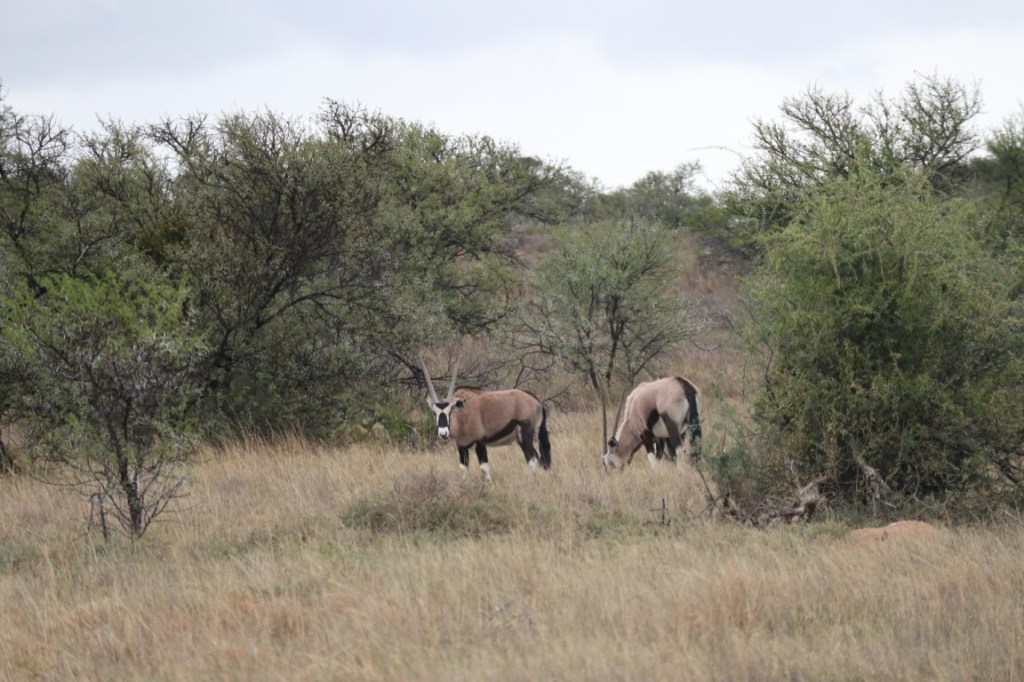
Gemsbok
We also saw the elusive Black Wildebeest again – this time we were able to take a photo when he stopped running and turned around to look at us.
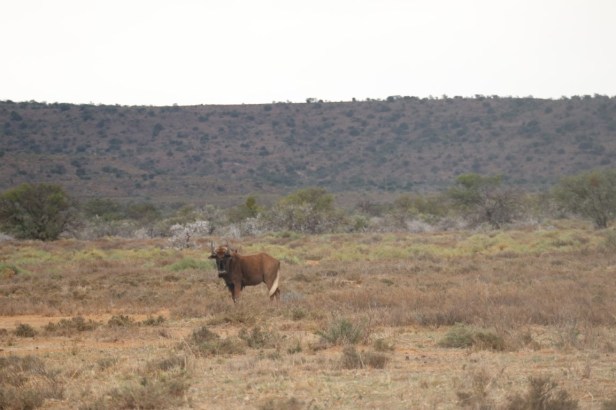
Black Wildebeest
It was once again great to see a herd of Springboks. But the golden moment was when we saw a lamb drinking from its mother – right next to our vehicle. I looked at Berto and said: “My day could not have ended better!”
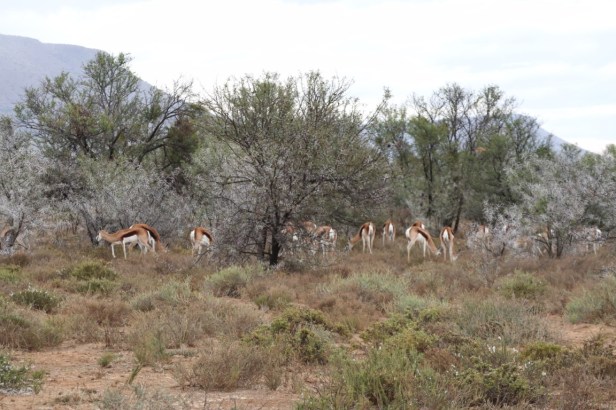
Springboks

A lovely moment
When we left the park the next morning, we didn’t expect to see any animals. But we were greeted by a beautiful Kudu cow by the side of the road and also an Ostrich shaking out its puffy feathers.
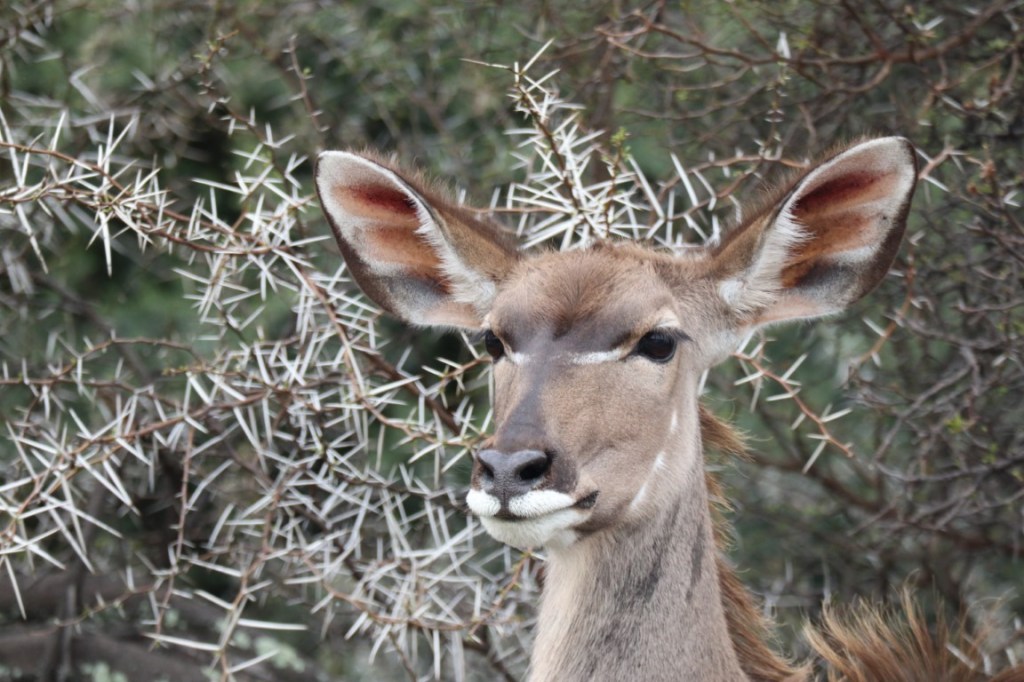
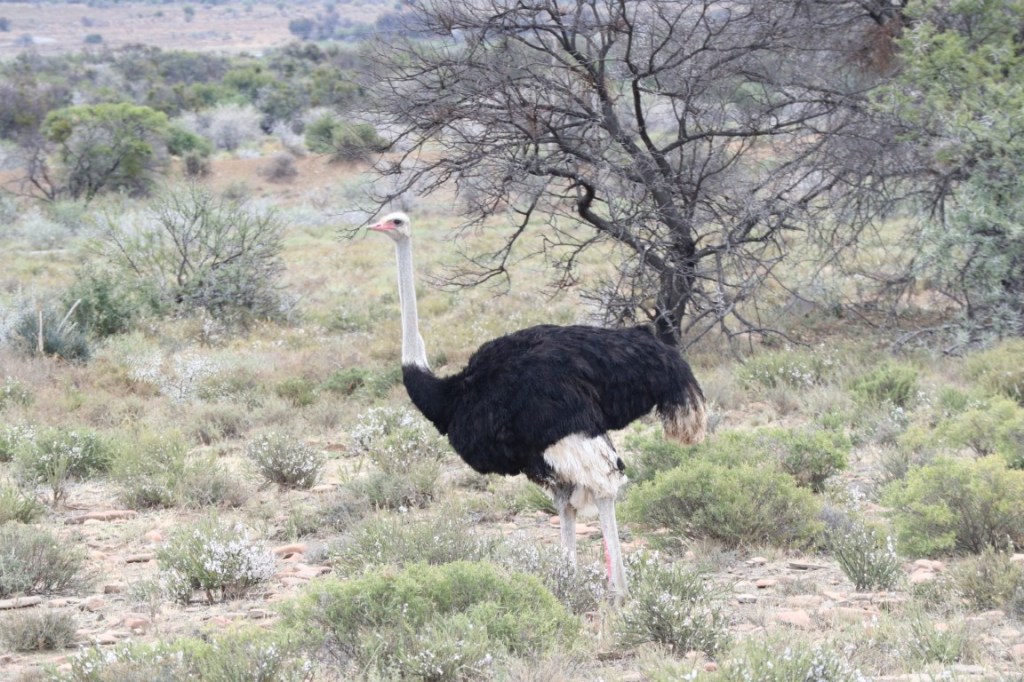
Kudu cow and Ostrich
A lovely cottage, beautiful scenery and amazing animals ensured that we had an unforgettable visit at the Mountain Zebra National Park.
Oh, and do you know what you call a group of zebras? A dazzle of zebras – I can’t think of a better description.
 Wet and Dusty Roads
Perfect.
LikeLiked by 1 person
You’re right, it’s very close to the perfect day!
LikeLike
What an awesome experience, I hope one day to see all those beautiful animals for myself
LikeLiked by 1 person
Although we often have the opportunity to see animals in the wild, it always remains a wonderful privilege to see them again (and again). I really hope you get such an opportunity one day, too.
LikeLike
Fabulous pictures of the wildlife. I had no idea there were different species of zebras. I love that a group of them is called a dazzle. It does seem very fitting doesn’t it?
LikeLiked by 1 person
We always thought there were only two species of zebras (because we had seen both) and were therefore also surprised to read there are actually three different types of zebras. Thanks, I’m glad you liked the photos – I wouldn’t mind adding another 50. You know, I wish I could use the phrase “dazzle of zebras” more. Like you said, very fitting!
LikeLiked by 1 person
A dazzle of zebras, what a splendid term. I’ll remember that! Your wildlife photos are impressive Corna and it’s good to learn about all these native animals first hand.
LikeLiked by 1 person
I just had to share the description of “dazzle of zebras” – I feel it’s the perfect collection name for these beautiful animals. Thank you Marion, I’m glad you enjoyed the photos – and also that you were able to learn more about our South African animals.
LikeLiked by 1 person
Great stuff. That springbok is definitely the one I saw in Botswana, I recognise his face. He mus5 have seriously hurried to cover all that ground so quickly 😂😂
LikeLiked by 1 person
Haha, they can move quite fast … but I rather think this one might be a distant cousin 😂.
LikeLiked by 1 person
That image of the Springbok fawn and mother is so sweet! But my favourites have to be the lionesses and all the zebras!
LikeLiked by 2 people
Yes, the zebras and lions are definitely at the top of our list as well (and mum and baby Springbok). But then again: What about the cute Ground Squirrel 😉?
LikeLiked by 1 person
Your photos are so wonderful. How marvellous to be able to visit a park where you can see such a variety of animals. They are so beautiful. I love the tiny squirrel and the baby Springbok. Thank you for taking me along on this great drive! I have a story about the South African rugby team. I must write about it some day.
LikeLiked by 1 person
I was hoping you’d enjoy the photos (and guess you’d like the squirrel too). I’m glad you joined us on this drive. Oh yes, I would love to hear the story of the South African rugby team – don’t wait too long to share that!
LikeLike
You definitely had a wonderful visit. So many great animals. Zebras are lovely herd animals and Springboks so delicate loving. I love seeing them pronking!
LikeLiked by 1 person
We didn’t know what to expect from this park. There isn’t much information on the internet (probably because it’s one of the smaller parks), but we were pleasantly surprised. Oh yes, I agree with the pronking Springbok – we’ve witness it a few times during this weekend and it’s lovely to see.
LikeLike
It’s so amazing to see animals in their natural habitats, and you saw so many; what an amazing experience! The lionesses look so regal lounging in the grass. Amazing photos!
LikeLiked by 1 person
Thank you Tricia. We were very surprised to see so many different animals – we had hoped for zebras, of course (and maybe a few springboks), but then we found a whole bunch of wildlife! Ha, I think those lionesses may have full bellies and that may be why they looked so relaxed.
LikeLiked by 1 person
Well zebras are dazzling so the name is perfect. And you’re right, the Red Hartebeest did make me laugh. What another amazing animal park you’ve shown us. Clearly you don’t need to go to the famous ones. Great pictures of them all. Mggie
LikeLiked by 1 person
Thanks Maggie. Dazzling zebras – my new favourite word! And I’m glad you also like the funny looking Red Hartebeest. We’ve never been to the most famous national park in South Africa – the Kruger National Park – but I think we see a lot of animals in the smaller parks … and where there are not so many tourists. Of course, this does not mean that we do not want to visit the Kruger one day, but in the meantime we are quite happy with the ones close to us.
LikeLike
Fabulous photographs. I enjoyed having this preview of MZNP as we are headed there in a week’s time! We are currently visiting Karoo National Park and will also include Camdeboo in this trip.
LikeLiked by 1 person
Oh, you’re on a wonderful trip! We would also like to visit the Camdeboo at some point. The MZNP was a big surprise – we enjoyed the scenery just as much as the animals. Safe travels to you guys.
LikeLiked by 1 person
Thank you. The smaller parks are really worth a visit.
LikeLiked by 1 person
Amazing! There is nothing better than seeing wild animals in the open like that. Fantastic pictures Corna!
LikeLiked by 1 person
I’m glad you like the photos of the animals we saw in the park Diane. As you say, it is a great privilege to see them in their natural habitat … I just never get tired of that!
LikeLiked by 1 person
I bet, I wouldn’t either!
LikeLiked by 1 person
Oh my heart was so happy seeing these photos. The Springbok is a truly majestic animal, I’m not sure I’ve ever looked at one in such detail before. And I never knew about the different types of zebra.
LikeLiked by 1 person
I’m so happy you enjoyed the animals with us Hannah – it’s always great to see them in their natural environment. The zebra is a beautiful animal, but I have to admit I was fascinated by the stunning Springbok … it was wonderful to be able to see them up close.
LikeLike
You were so lucky to see all these animals. They are beautiful 🤩
LikeLiked by 1 person
We thought we were going to see zebras, but then were surprised to also see so many different animals. And you’re right, they’re all beautiful!
LikeLiked by 1 person
A dazzle of zebras. I love that! Thanks for explaining the difference between the types; I could see it in the photos and now know how to identify the mountain zebra.
LikeLiked by 1 person
I think ‘dazzle of zebras’ deserves a special place in the dictionary – it’s the perfect description for these beautiful animals! I’m glad the photos depicted the different zebras well – now we just have to go to Kenya or Ethiopia to take a photo of the third specie …
LikeLike
Oh, that’s perfect – a dazzle of zebras. They are truly dazzling. No wonder the ground squirrel stole your heart, it’s such a cutie. The Red Hartebeest does have a very funny face, it made me laugh too. That moment when you are sitting in your car just marveling at the four lionesses 50m away from you – that really is something. You have shown us another amazing park and what a collection of fantastic wildlife photography you have. Do you frame your favorite photos of wild animals?
LikeLiked by 1 person
I now try to use the words “dazzle of zebras” in every conversation – it’s such a beautiful expression! You know what was the funny thing about the Red Hartebeest? Every time we saw a herd, they all had the exact same expression … and each time we had such a good laugh. No, we don’t frame our favourite wild animals … because then we need to live in a mansion! We have so many favourites!! I’m very happy you enjoy our parks and wildlife – it’s great to visit and share them with you guys.
LikeLiked by 1 person
What a special place, so many beautiful animals! The coloring of the Springbok is so interesting and the other -boks, and of course the zebras. The mother and fawn photos is lovely. I did a trip to Kruger years ago and this brought me right back.
LikeLiked by 1 person
You’re right that the Springbok has special shades of colour – I loved watching them as we drove through this park (and of course, the dazzling zebras too). Can you believe that we haven’t visited the Kruger yet – and this is after all the most popular park in SA. We’ll have to rectify this!
LikeLiked by 1 person
That’s actually the only safari place I’ve been to. I’m sure there are different variations, herds, habitats. You have them all around you!
LikeLiked by 1 person
There are 19 national parks in South Africa (and you’re right, they are very different from each other). We like the quieter parks, but I think we should visit the Kruger at least once – after all, it became South Africa’s first national park in 1926.
LikeLiked by 1 person
I’m glad to know so many areas are preserved for wildlife and natural places in South Africa!
LikeLiked by 1 person
Bergkwagga Park het julle omtrent bederf! Pragtige foto’s, Corna en Berto!
LikeLiked by 1 person
Ons het nie geweet wat om te verwag nie en was regtig verras met die groot verskeidenheid diere. Dankie Dries, komende van jou, waardeer ons hierdie kompliment.
LikeLiked by 1 person