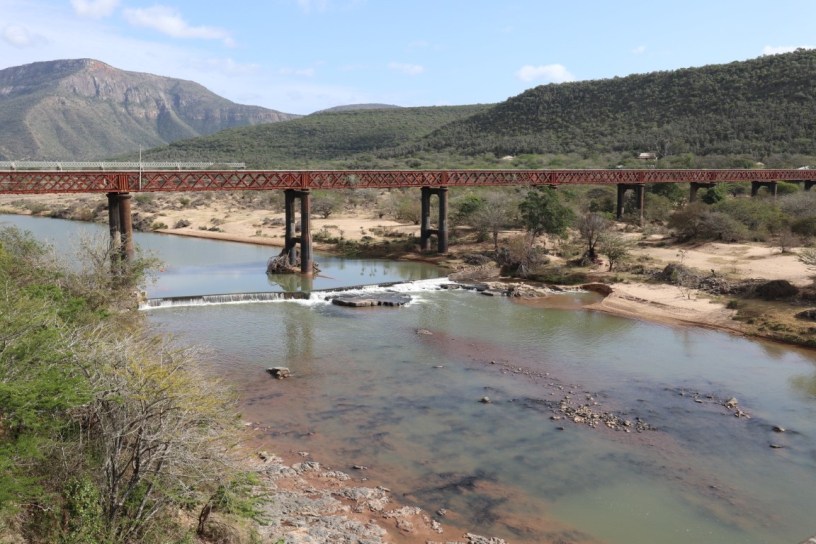
August 2024
In our last few posts we shared with you our wonderful weekend at Outspan Safaris and Lodge. It is now time to return home, but on the way, we will visit a very old bridge over the Kei River and an old church in the small village of Komga.
Great Kei River and Bridge(s):
During our visit at Outspan Safaris and Lodge, we only saw the Kei River from a distance. We decided to drive the extra 11.9km/7.3 miles to see the river up close and were rewarded not only with the river but also a beautiful old bridge full of history.
The Great Kei River (320km/199 miles) is a river in the Eastern Cape Province. Historically, this river formed the southwestern border of the Transkei region and the old Cape Province. The river depends on rain and was quite low when we visited (the rainy season is during the summer months so will soon have more water).
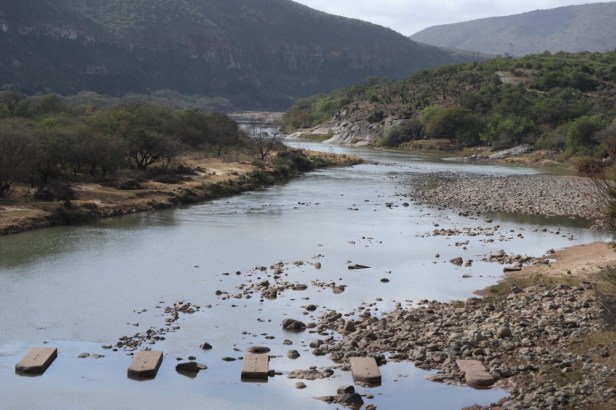
The Great Kei River
And although it was finally nice to see the Great Kei River up close, we were pleasantly surprised at the sight of an old bridge.
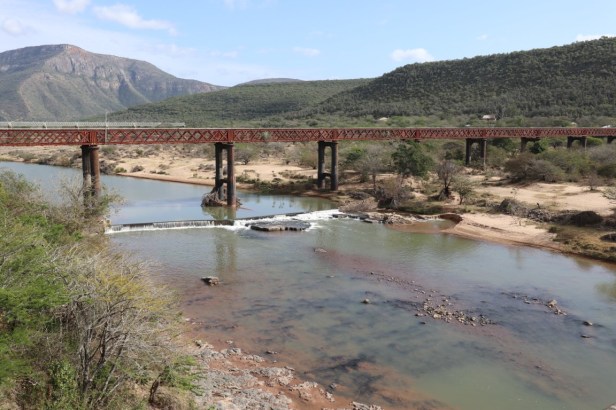
Old steel bridge over the Kei River
The Great Kei Bridge was manufactured in London, England during 1877 and shipped to East London, South Africa from where it was transported by ox wagon and rail to where it is currently located.
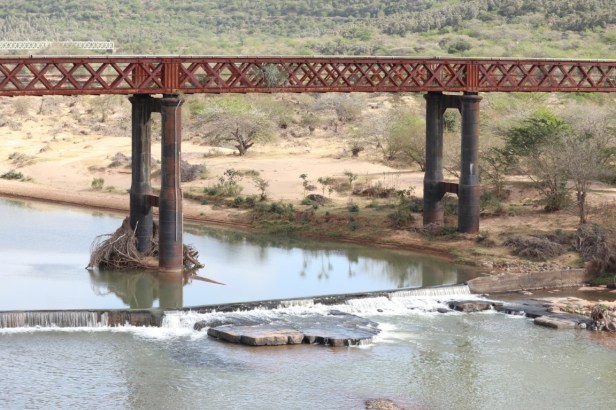
Closer look at the old steel bridge
Apparently, the eleven pairs of riveted circular cast iron columns are typical of British engineering. The columns are filled with concrete and topped with decorative hollow cast iron moulded capitals.
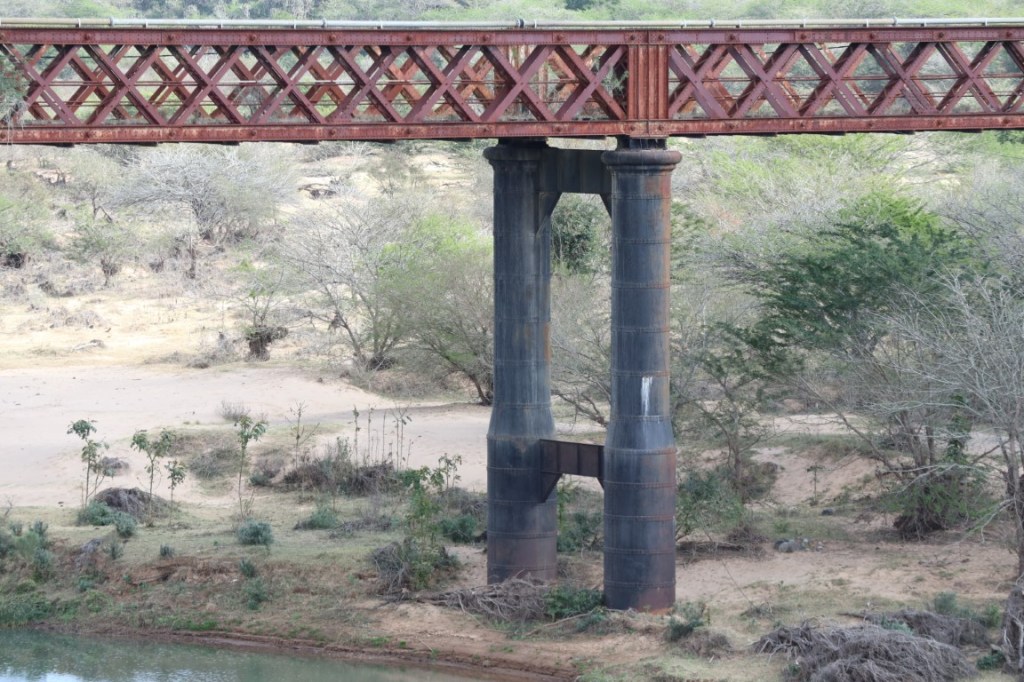
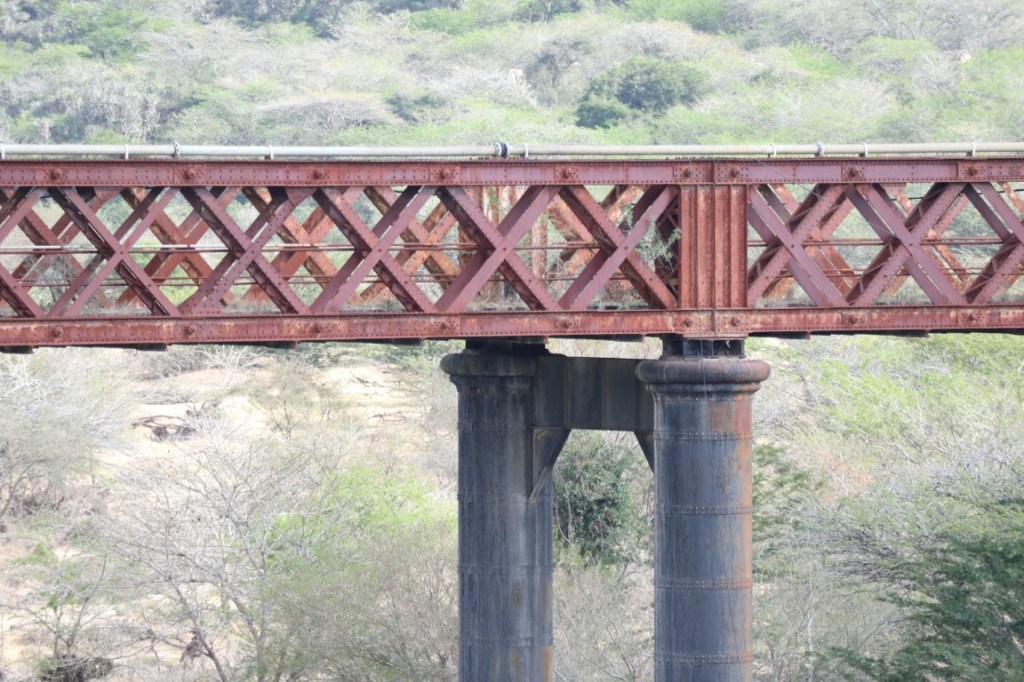
The columns of the Great Kei Bridge
We saw a road leading to the old bridge and decided to take a closer look. While the bridge was being built, there was considerable conflict in the area. A few British soldiers were killed by Xhosa warriors at a hill near the bridge, called ‘Moordenaarskop’ (Murderers’ Hill), after which the bridge was finally completed in 1879.
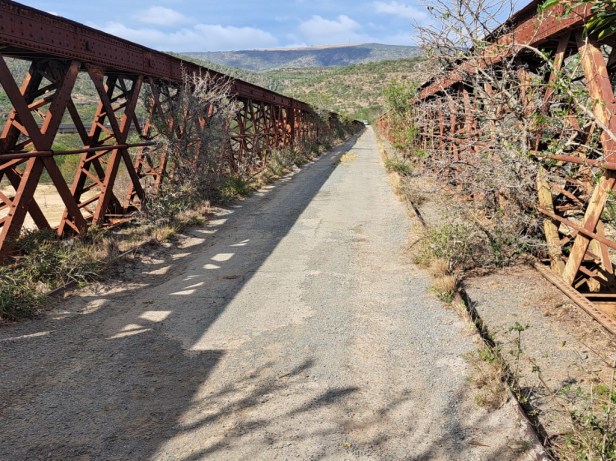
View along the deck of the Great Kei Bridge
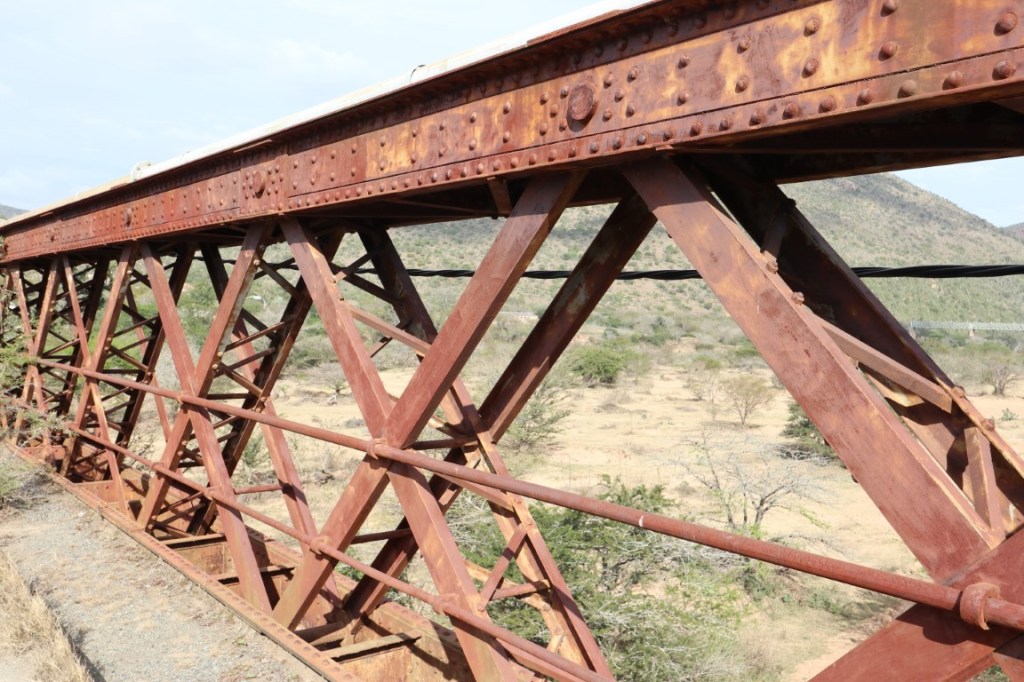
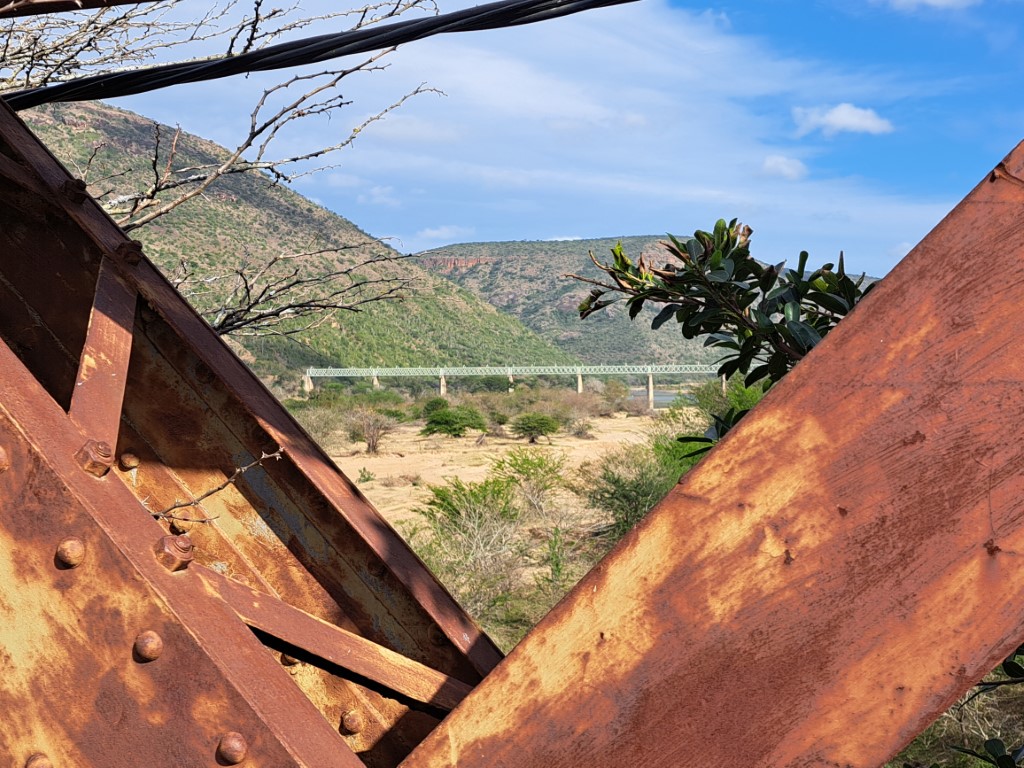
Riveted detail close up
The (new) N2 river bridge, which is currently in use, was opened in 1977 – exactly one hundred years after the old Great Kei Bridge was constructed.
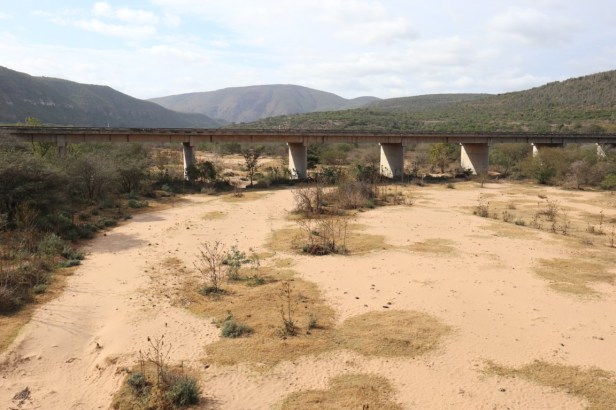
The N2 river bridge
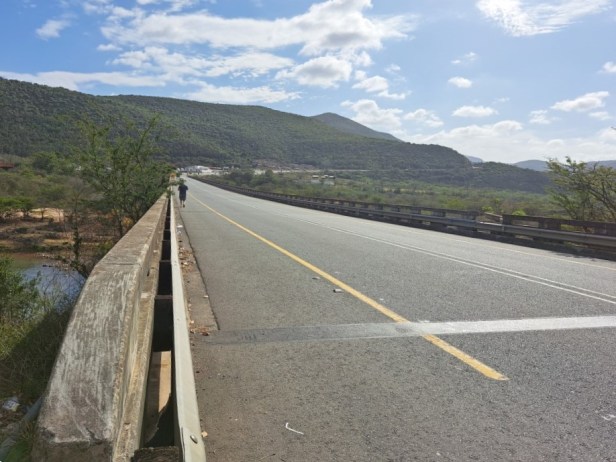
The N2 river bridge
While we were taking photos of the Great Kei Bridge, we saw another bridge further upstream. We later read in archive documents that the first wooden Rail Bridge was destroyed in a major flood in 1917 and that the Great Kei Bridge then served as both road and rail bridge until the new steel Rail Bridge was completed 32 years later in 1949 – the bridge we saw from the old Great Kei Bridge.
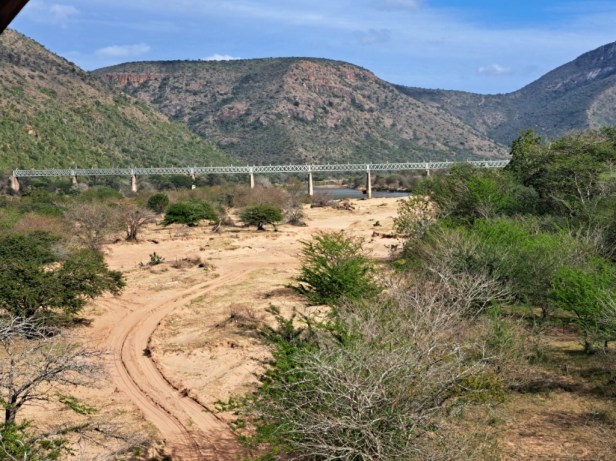
The Rail Bridge
While there is the convenient N2 river bridge that now takes traffic over the river, we understand that locals and farmers still use the old Great Kei Bridge – we could hardly believe that vehicles still drive over this bridge.
Between the old and new bridges is a big coral tree in full bloom and after we took some photos of the tree’s beautiful flowers, it was time to say goodbye to all the bridges and Great Kei River.
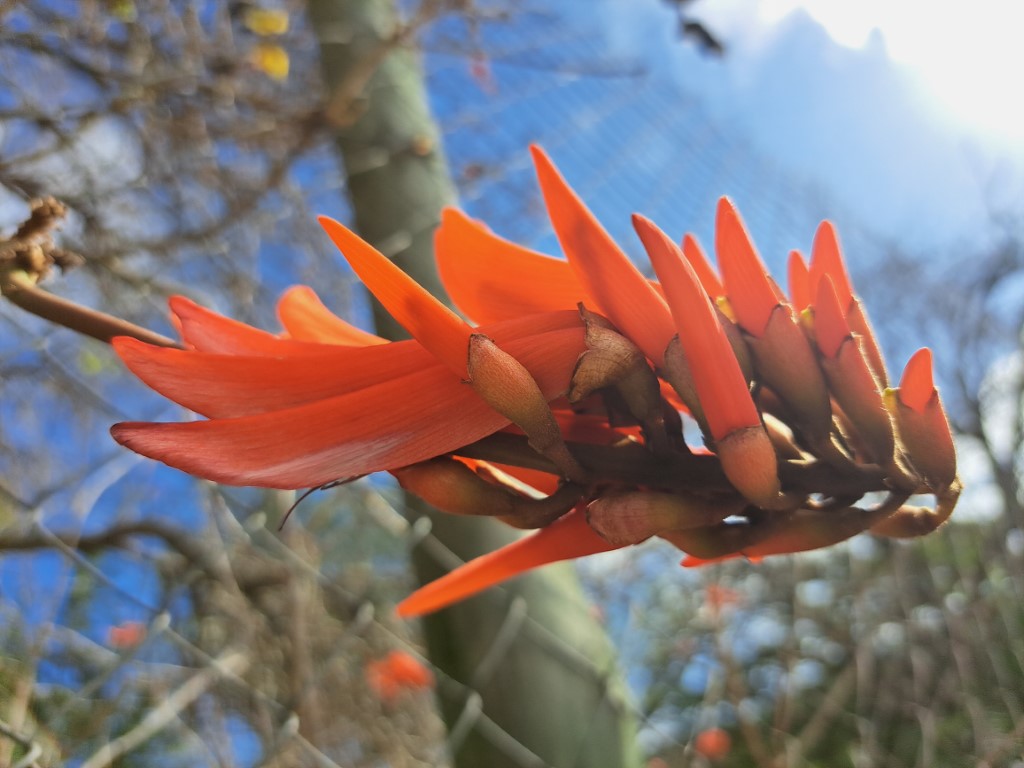
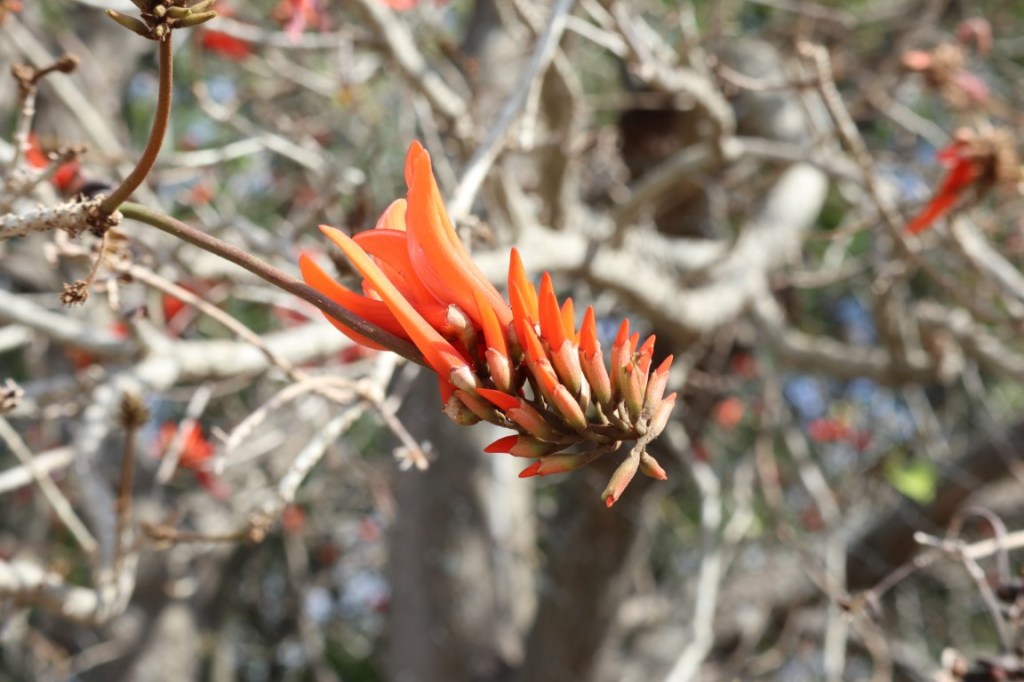
Flowers of the Coral tree
St Pauls Anglican Church in Komga:
While we were staying at Outspan Safaris and Lodge, Stuart told us about an old church in Komga that might be worth a visit on our way home.
Komga is a small village founded in 1877 as a farming centre on the site of a military camp established in 1854. When you have a close look at the dates, can you see the similarity between this village, the bridges, as well as the two military graves we visited at Outspan? (Read here about the military graves).
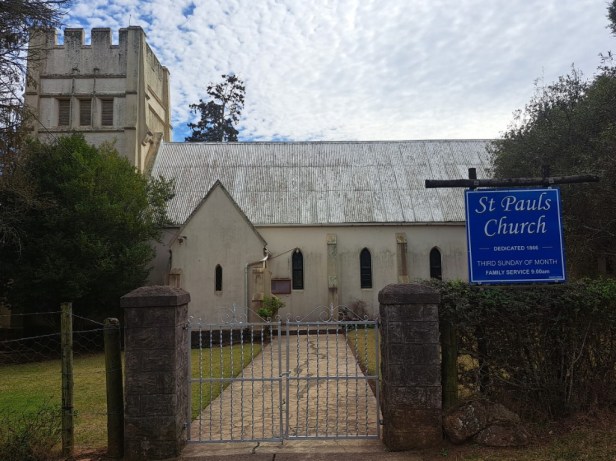
St Pauls Anglican Church
The St Pauls Anglican Church was completed and opened on 13 June 1866 and was declared a national monument.
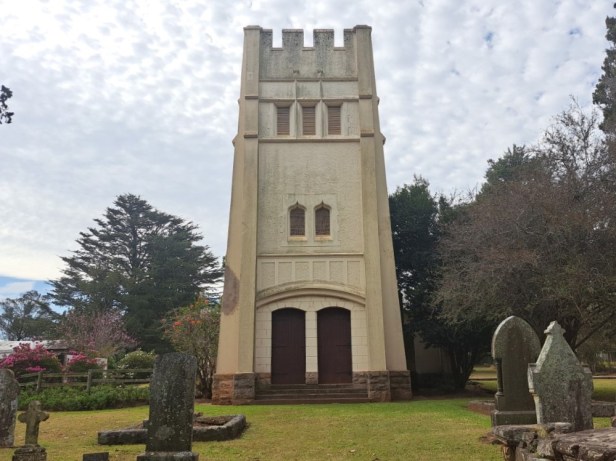
Tower of St Pauls Anglican Church
The gate to the church grounds was open, and although the church was closed, we could walk around the building. There are many old graves from frontier wars and the site is in surprisingly good condition.
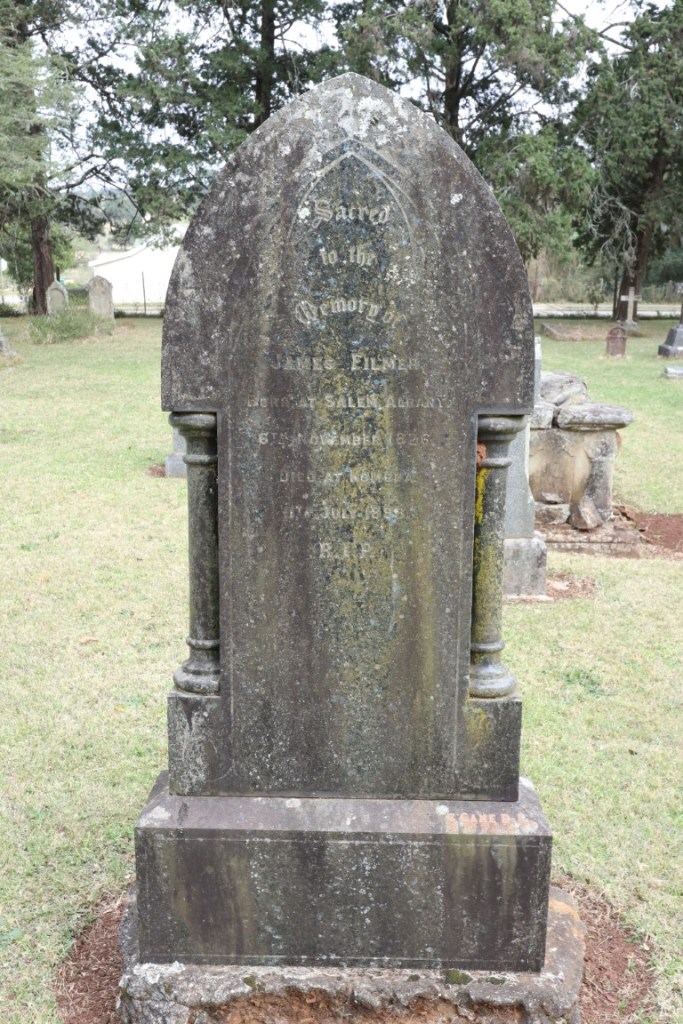
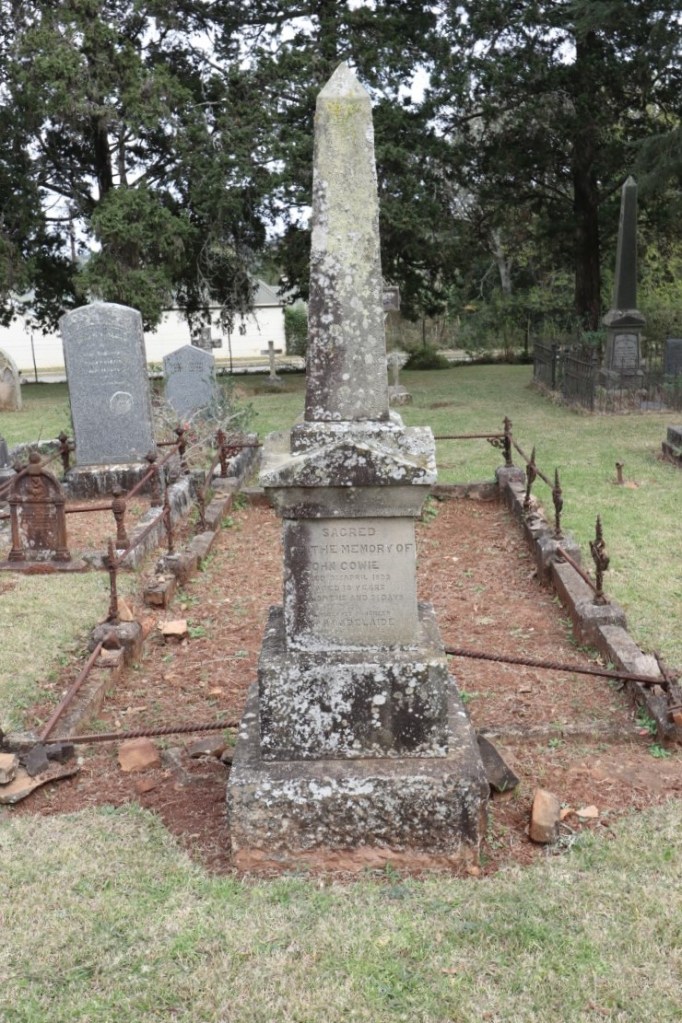
Old graves dating back to the late 1800’s
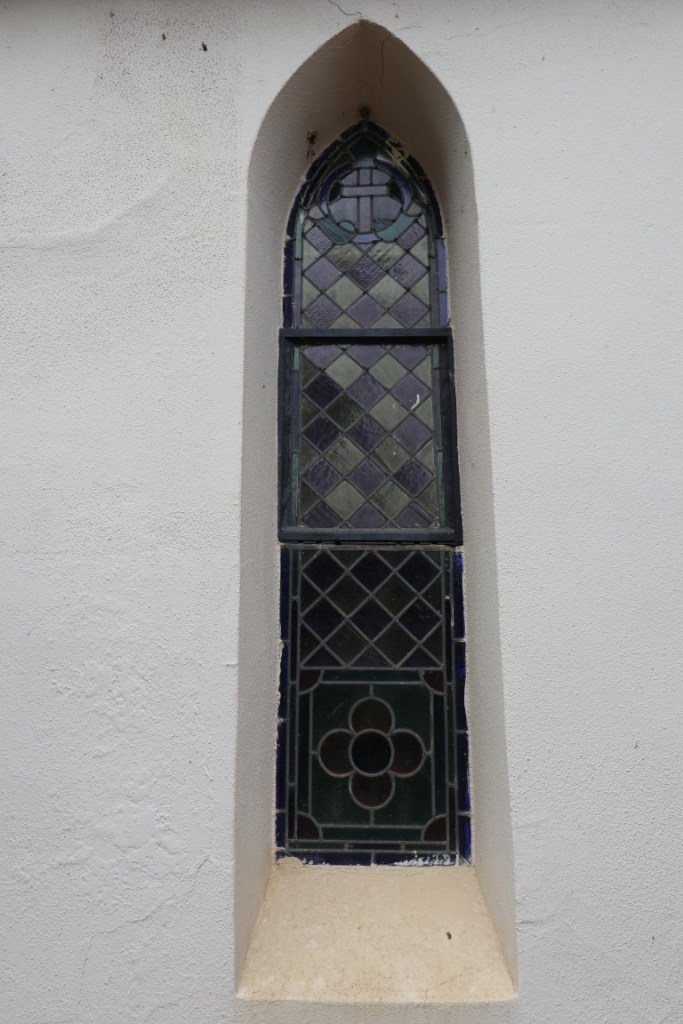
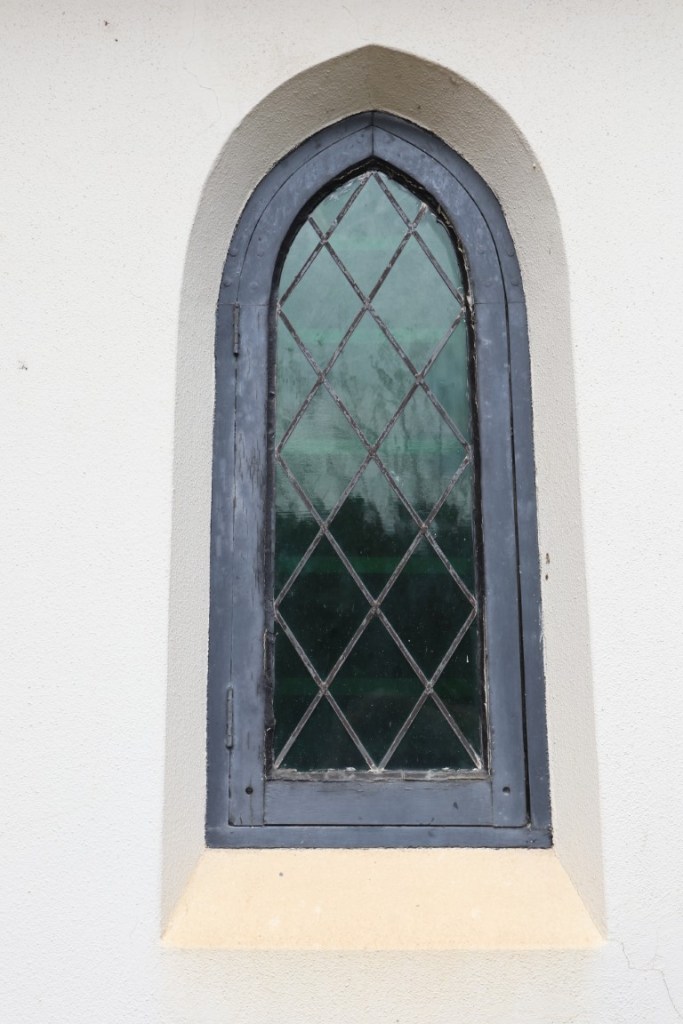
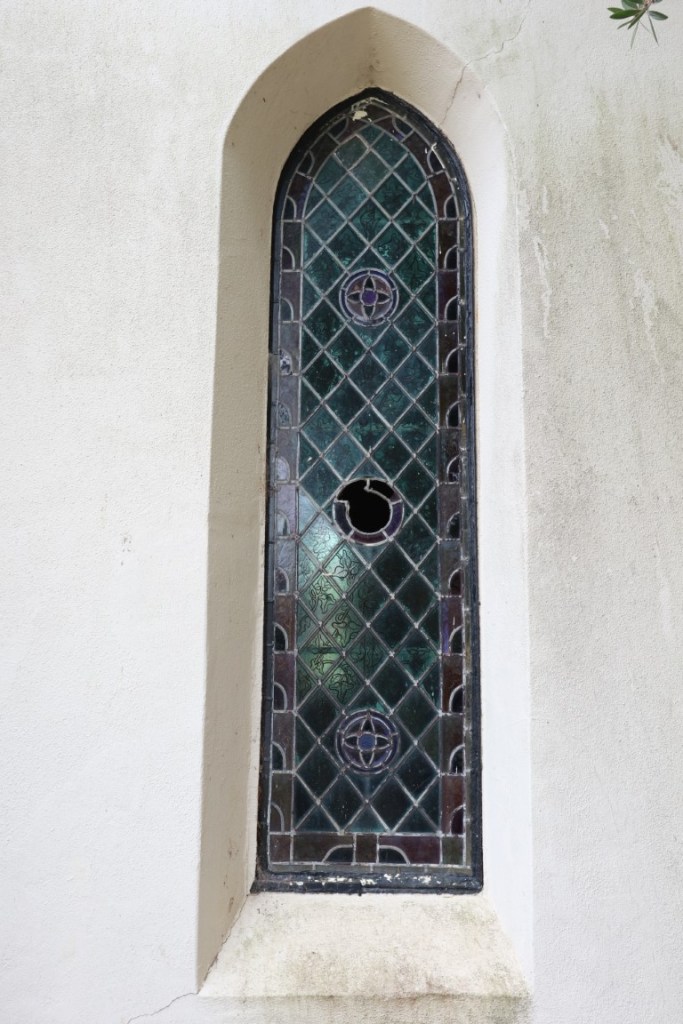
Windows of the church
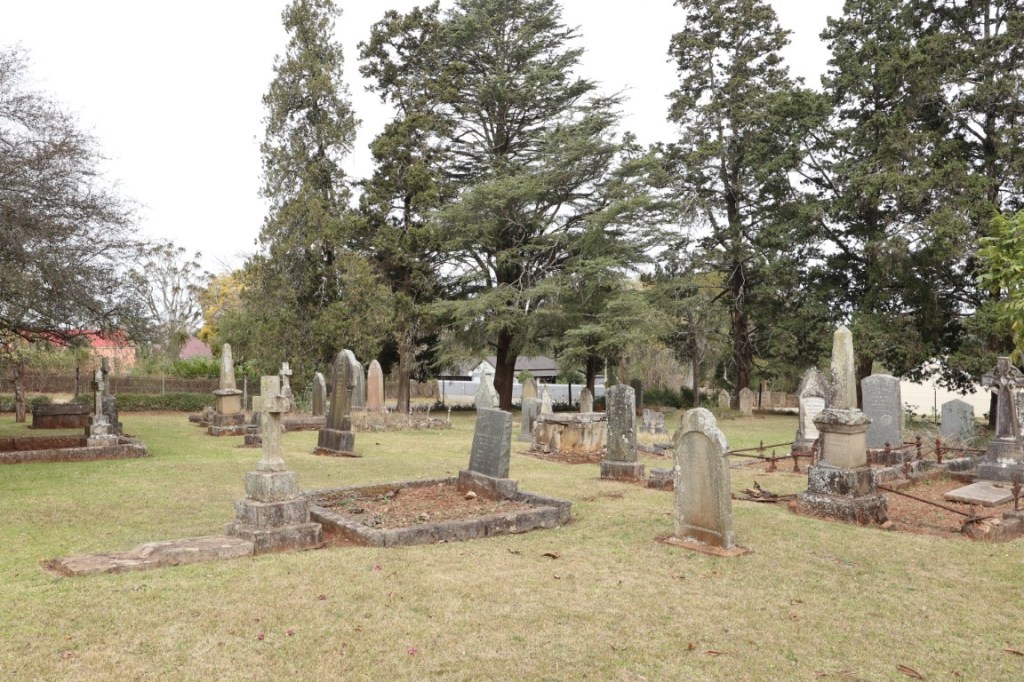
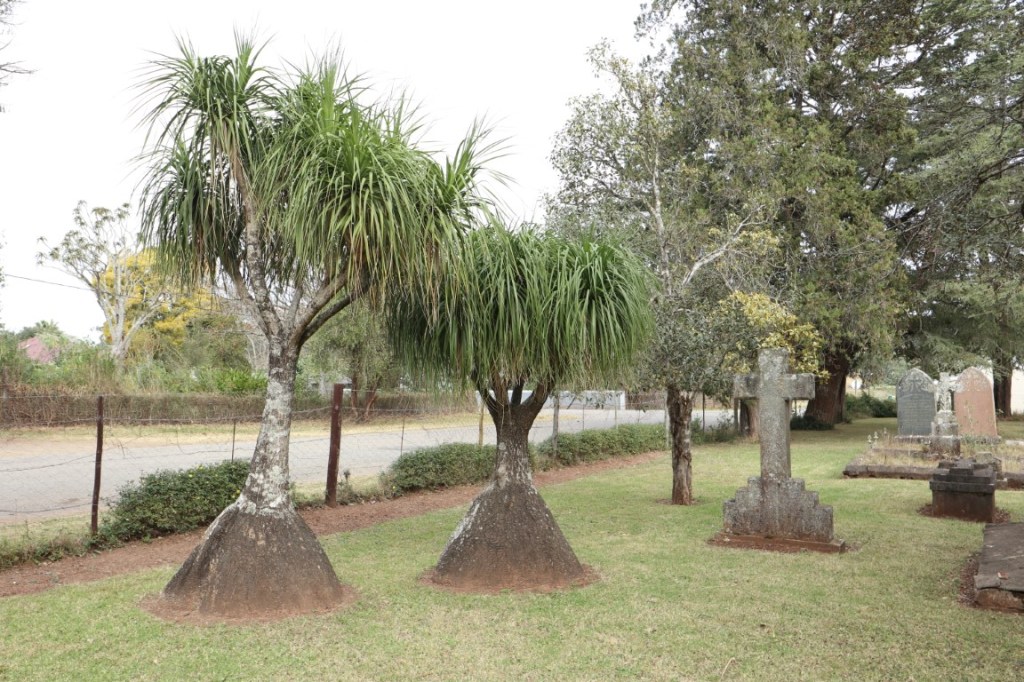
Old graves and neat garden
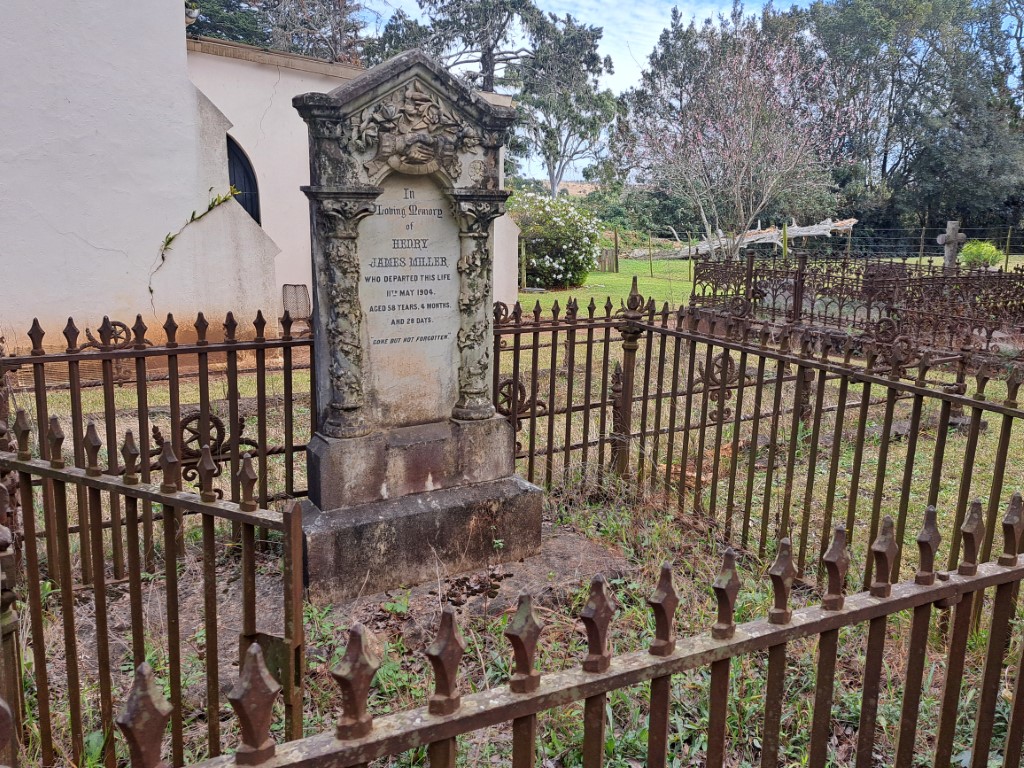
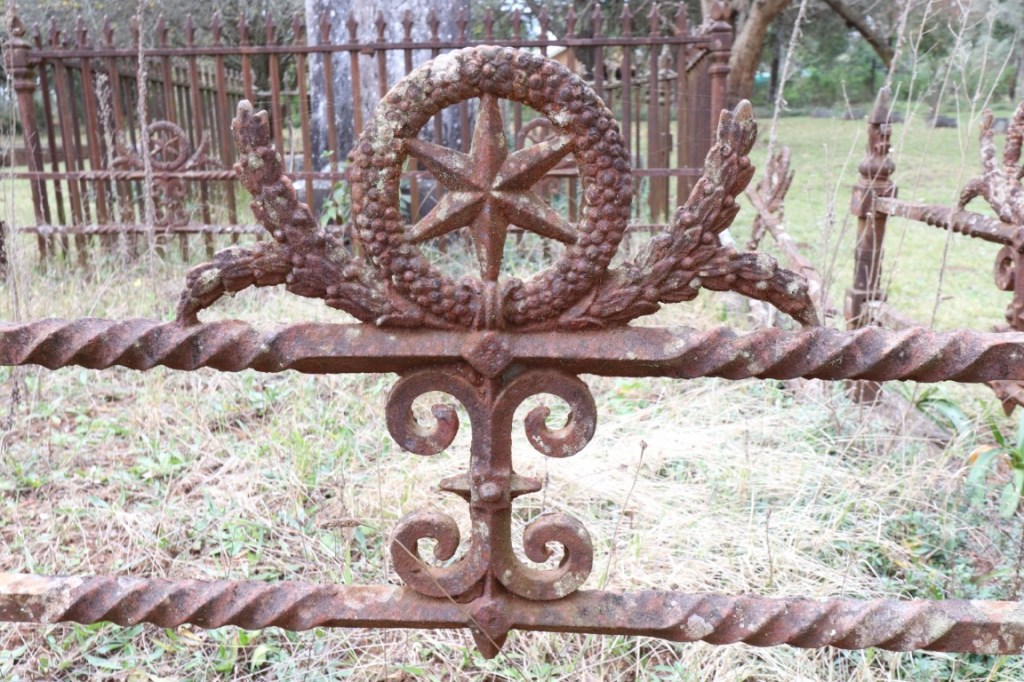
Detail at some of the graves
At the back of the church is a colourful and fragrant flower garden. After so many years, it seems that the church and premises are still well looked after.
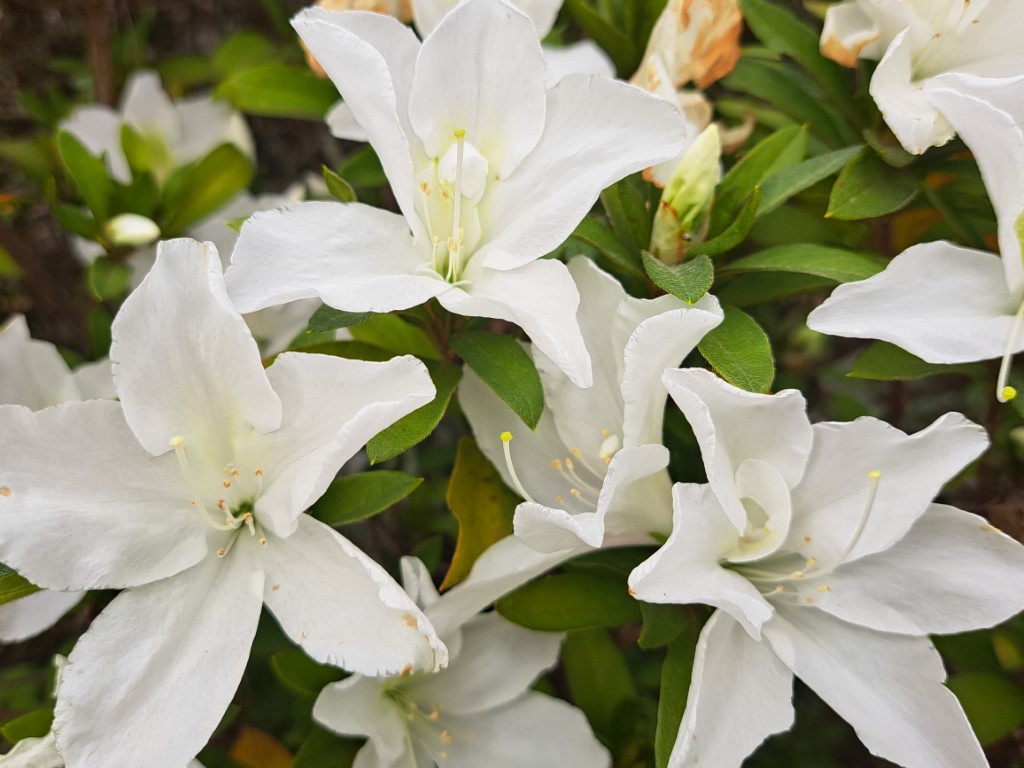
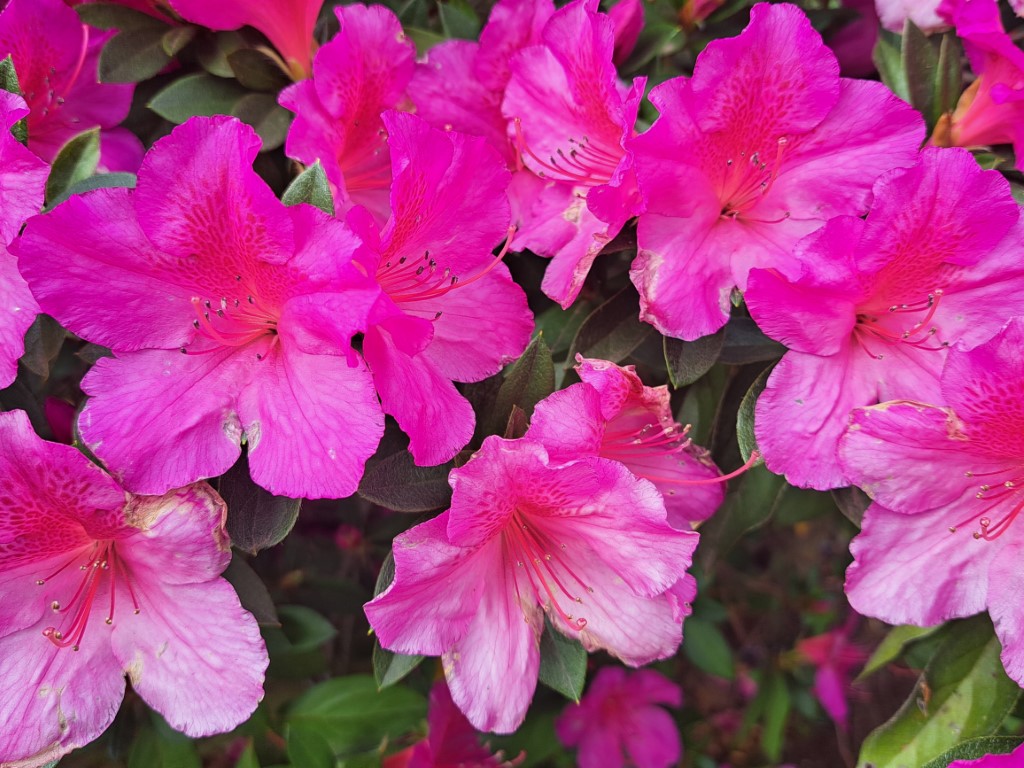
White and pink azaleas
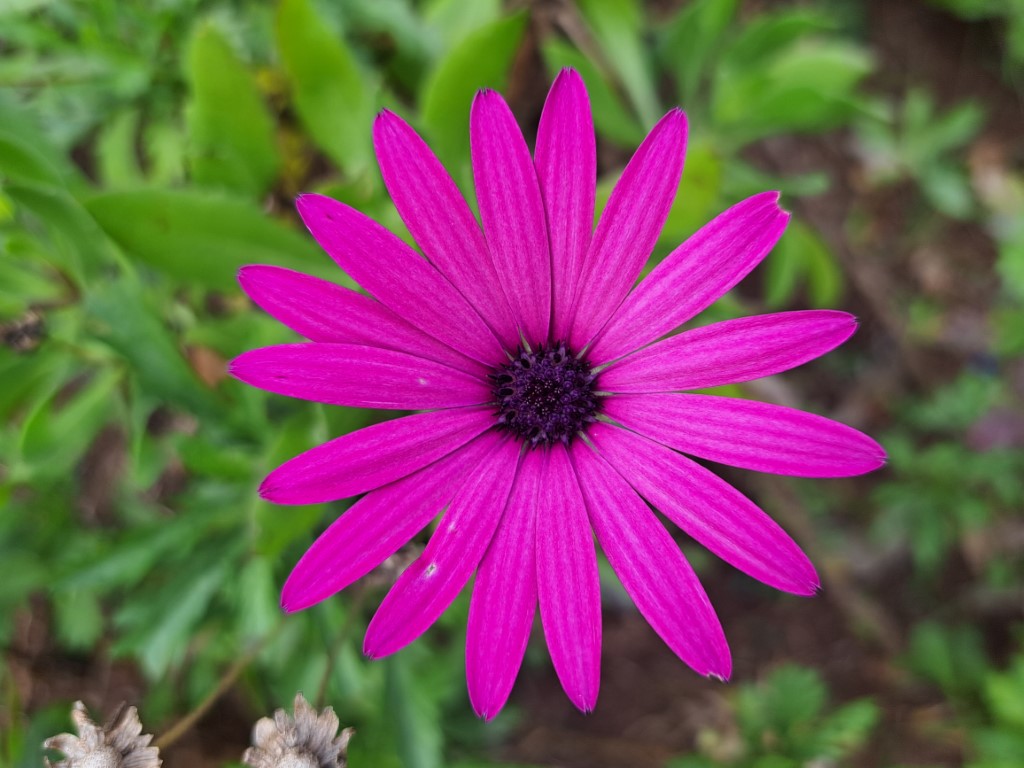
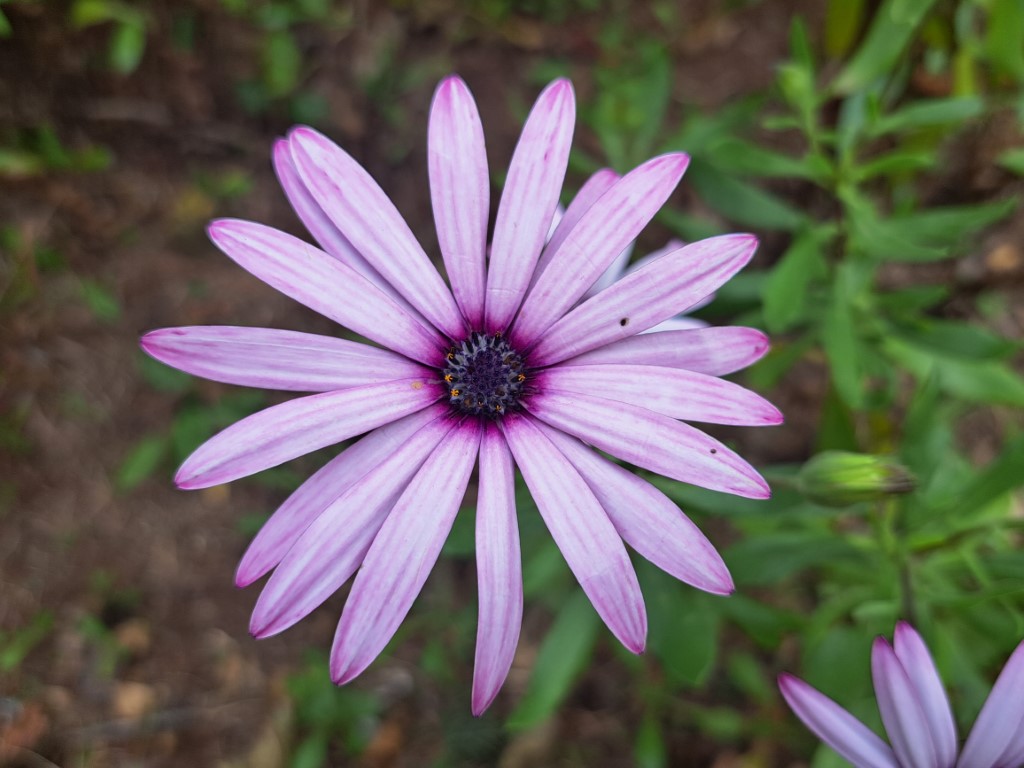
Daisies
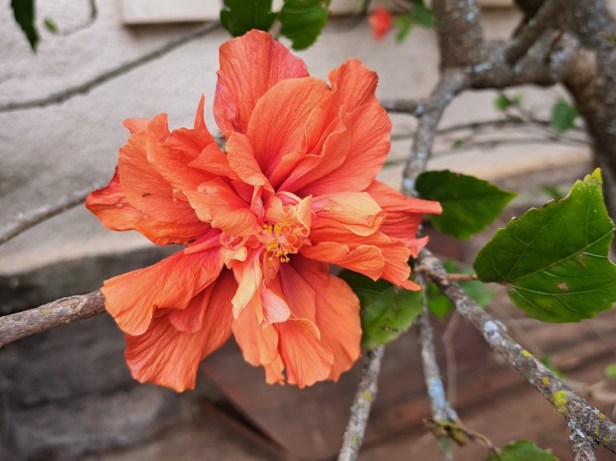
Lovely hibiscus
We were really pleasantly surprised with how beautiful the old church and grounds still look.
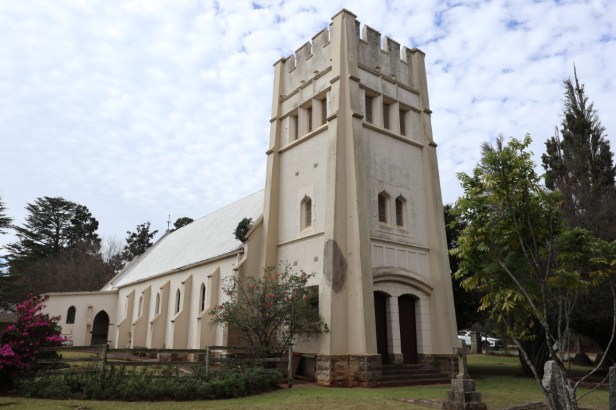
Final look at the St Pauls Anglican Church
I think it’s important that our country’s old buildings are preserved – there is a rich history to these places which we must not forget (just like the old Great Kei Bridge).


The whole idea of manufactured in UK then shipped and assembled is quite something.
LikeLiked by 1 person
I think that’s also what impressed us the most Terry! Now that’s what one probably calls “master class engineering.”
LikeLiked by 1 person
My brain is exploding at the logistics of manufacturing and transporting a whole bridge!! Not for the faint-hearted! 🙂 Mel
LikeLiked by 1 person
Isn’t that fascinating? Just think how the engineers in the UK held their breaths while the men had to assemble the bridge in South Africa. I think they probably cracked a bottle (or two) of bubbly to celebrate their success 🙂!
LikeLiked by 2 people
and what if they had left the nuts and bolts behind in the UK!? 🙂
LikeLiked by 1 person
Haha, you’re so funny Mel 😂!
LikeLiked by 1 person
For sure..
LikeLiked by 1 person
I love your beautiful river photos – it looks like there are quite a lot of bends and curves compressed into its length. Thanks for sharing, and have a good day 🙂 Aiva xx
LikeLiked by 1 person
Yes, the river has many twists and turns before it finally reaches the Indian Ocean. I’ve seen pictures of this river in the summer months (during the rainy season) and then it’s a beautiful sight from the bridge. May your day (and week) also be good Aiva 🙂.
LikeLiked by 1 person
Dit is wonderlik om te weet iemand sorg so mooi vir daardie kerk en kerkhof! My kind hier in die VSA het dieselfde hibiskusblom in haar tuin.
LikeLiked by 1 person
Ons is deesdae so gewoond daaraan dat ou geboue en tuine in klein dorpies in SA verwaarloos word, dat ‘n mens amper uit jou vel wil spring wanneer jy op so ‘n stukkie juweel soos hierdie kerk en kerkhof afkom. Dis die mooiste hibiskusblom, ne? Hier’s ‘n geheimpie: Daar het ‘n mooie op die grond gelê wat ek opgetel en saamgebring het huis toe – dit het vir ‘n hele week gesorg vir die mooiste kleur in die kombuis 🙂.
LikeLiked by 1 person
Wow. Hoe interessant. Ek het die meereis en inligting geniet. Mooie foto’s. Veral die koraal.
LikeLiked by 1 person
Hier is so baie koraal bome in Oos-Londen (iets wat ek nooit aan die Weskus gesien het nie) en ek kan nie genoeg kry van die pragtige blomme nie! Ek is bly jy het saam gereis!
LikeLiked by 1 person
Such interesting history of the bridge, church, graves and even the newer bridge! The area seems rich with historical significance. Catching these last few sites on one’s way home after an enjoyable trip makes the time away even more special!
LikeLiked by 1 person
Oh yes, the Eastern Cape Province is packed with history and we enjoy the learning experience! It’s never fun to return home after a great weekend, so we always stretch it out a bit with visiting more sights!
LikeLiked by 1 person
I can see similarities between those columns and some I’ve seen here in England, yes. For example, the still-standing columns of the demolished Blackfriars railway bridge in London (see https://images.app.goo.gl/zHLhsNtnWEha4Qky6) It’s good that church is well-maintained but a shame to find it locked.
LikeLiked by 1 person
Thank you very much for the link Sarah – I can see now that there is a definite similarity between the columns of the bridges! I would have liked to see what it looks like inside the church, but I assume it was locked because a notice mentioned that services are only held every third Sunday. Nevertheless, it was nice to just walk around there and enjoy how neat it was (something we don’t often see in the smaller towns/villages).
LikeLiked by 1 person
Alex’s great-great-great grandfather joined the Civil Service in 1876 and was stationed at various districts in the Transkeian Territories and took part in the Kaffir Wars. He apparently married the daughter of one of the original 1820 Settlers! Eventually ended up living in King William’s Town. I wonder if he visited this bridge and church? A fascinating time in the history of South Africa. So many conflicts and bloodshed.
LikeLiked by 1 person
Now that’s a wonderful story Jude! I enjoyed reading your comment – thanks for sharing it! The Great Kei Bridge was a definite gathering place for the British settlers, so chances are we may have walked in Alex’s great-great-great grandfather’s footsteps. Oh, by the way, King William’s Town’s new name is now Qonce (no, I don’t know how to pronounce it either)! Yes, from about 1880 onwards there were constant wars in South Africa – it was certainly not a good time to be a soldier!
LikeLiked by 1 person
I noticed Fort Beaufort and Alice have also changed names. My ex in laws would be turning in their graves, but I guess all the old colonial names are reminders of those conquests.
LikeLiked by 1 person
I’m trying to understand why the government wants to change the names of towns and cities, but there are other more important things they should rather spend money on – such as flush toilets and clean drinking water in the poorer rural areas. When towns are mentioned on the radio (under their new names), I usually don’t have a clue where the place is and have to google it (another challenge, because I normally can’t spell it)! And it’s not just town names that are changing, but also streets, schools and hospitals – feels like a waste of money to me. They want to change East London’s name to KuGompo … I mean!
LikeLiked by 1 person
I hadn’t thought about the cost of changing everything, but of course that has to come at a cost. I am disappointed that all the houses and electricity and yes, running water, promised by Nelson Mandela have yet to happen, thirty years on!
LikeLiked by 1 person
Those flowers are so beautiful. It’s nice that the church and cemetery are well looked after and I agree that historical sites should be preserved. Here there isn’t much that is really old. I remember being so impressed by Roman ruins where you could see ancient ruts in the roads. As you know, I love bridges and even more if there is a story!
LikeLiked by 1 person
I love it when we come across flowers on our visits – then I usually take a bunch of pictures! Oh yes, I love Roman ruins … I really enjoyed the Roman pathways on our Camino in Spain. Ha, I knew you’d love the bridges (as I did) and the story around it was fascinating!
LikeLike
I’m such a fan of making detours along the drive. These look like great spots to stop. Beautiful captures of the river, bridges, church and flowers. I’m not sure I’d want to drive over the old bridge!
LikeLiked by 1 person
It’s never fun for me to drive home directly after an enjoyable weekend, so I’m always excited when there are back roads we can take with the hope to see more interesting things! Ha, we first considered driving across the old bridge because we heard the locals were doing it, but after closer inspection, we decided to just walk on the bridge and take photos. Rather safe than sorry, right?
LikeLiked by 1 person
What a unique bridge and how amazing where it came from. I love those church windows and the flowers are beautiful! I love waking through old cemeteries and looking at the names and dates on the headstones.
LikeLiked by 1 person
The history of the bridge is very interesting – it boggles my mind to think how a bridge can be built in one country and then assembled in another! I agree with you Diane, the church windows and flowers were special to see. I also like to walk around old cemeteries and read the headstones … but preferably not after sunset … you know 🙂.
LikeLiked by 1 person
As many others have said, I’m very surprised and confused by the logistics of transporting a bridge such a long distance!
LikeLiked by 1 person
I was a logistical manager at an export company for a few years of my life, but I can say this to you: I’m very glad I wasn’t the logistical manager back in 1877 when this bridge was sent from the UK to South Africa!
LikeLiked by 1 person
Sjoe, dit ismooi foto’s. En mens wil amper nie glo ons land het sulke ou brûe en geboue as jy in Centurion woon nie. Toe ek op universiteit was, was dit nog nie eens ‘n gedagte nie!
LikeLiked by 1 person
Baie dankie Christa. Dis interessant om te sien hoeveel geskiedenis daar hier in die Oos-Kaap is! Natuurlik kom ons ou geboue en brûe nie naby aan die in Europa nie, maar dis lekker dat daar tog “100 jaar en ouer” in Suid-Afrika is … en dan nog in ‘n goeie toestand ook – dis ‘n bonus!
LikeLiked by 1 person
it may have been easier to ship the people to build the bridge rather than a built bridge 😊 Maggie
LikeLiked by 1 person
Haha 🙂, yes that probably could have worked too. Perhaps South Africa did not have the facilities to build the bridge. I don’t think it had anything to do with technology because there probably wasn’t such a thing in those years.
LikeLiked by 1 person
Amazing that the local workers still choose to use that dangerous looking bridge!
LikeLiked by 1 person
Yes, we could not believe that either, but they were very nonchalant about it: “Of course we’re still driving over the bridge, there’s nothing wrong with it,” was their simple reply when we asked a few of the men nearby 🙂.
LikeLiked by 1 person
Die brug het ñ wonderlike geskiedenis, Corna. Soos almal sê, die logistieke om dit tot in SA te kry! Moordenaarskop, ek kan my net indink hoe die konflik daardie jare homself afgespeel het.
LikeLiked by 1 person
Ons is mal daaroor om op plekke af te kom met soveel geskiedenis. Die Britte wou regtig graag ‘n brug oor die Kei Rivier gehad het as hulle bereid was om dit in Engeland te bou, te verskeep en dan met ossewaens aan te ry, dink jy nie? Ja, die naam Moordenaarskop gee ons ‘n goeie idee van wat in daardie jare in hierdie area gebeur het.
LikeLiked by 1 person
Wow those bridges would make me worry!! And the church really keeps its old graves beautifully – in England I’m forever cutting off ivy and scrubbing the headstones when I go family tree hunting back in to the 17/1800s
LikeLiked by 1 person
Yes, although the locals see no problem crossing the old bridge, I had my reservations. If you pour some water over the old headstones, the words are also clearer – we found this out at the military graves at Outspan. But I’ll remember the ivy …
LikeLike
Nice river and bridge indeed 😁
LikeLiked by 1 person
Thanks. It’s always fun to come across something like this on our travels!
LikeLike
What a beautifully preserved church. The churchyard is really well kept and the flower garden is gorgeous. How interesting that you discovered all these different interconnected sights that give you an insight into the history of the area. The coral tree flowers are magnificent.
LikeLiked by 1 person
We were very impressed with the church building and premises. Nowadays the smaller towns in South Africa have been very neglected and I am always happy when these old buildings are still being looked after. We immediately made a connection when we saw that the dates at all the different places were more or less the same – the Eastern Cape province was a bustling place in the mid-1800s it seems to me 😁!
LikeLiked by 1 person