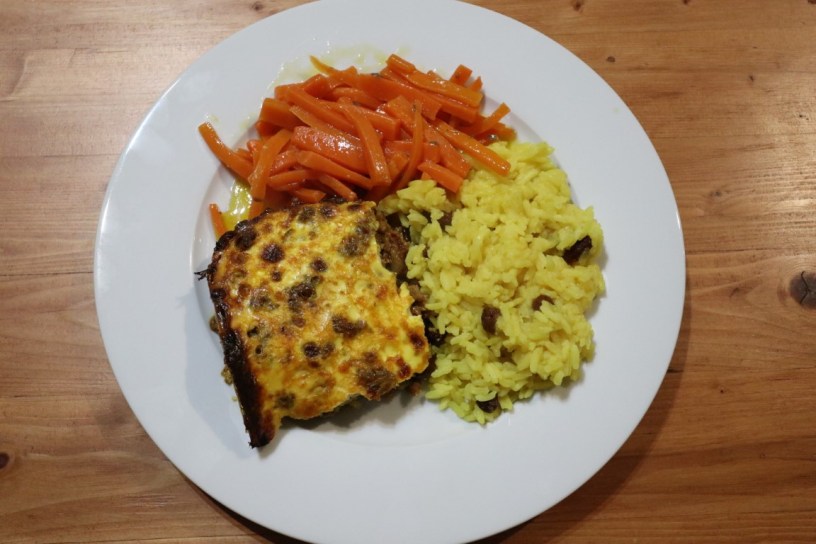
Traditional South African Bobotie
Our friends (and most of our readers here on the blog) know that Berto and I love to explore new places. But our other love is cooking – maybe more for Berto than for me. Our favourite place in the house is definitely the kitchen and outside at the ‘braai’ where we can sit around the fire and dream about which places we want to visit next.
For the next few weeks (maybe months) we would like to share some of our favourite dishes with you – most of these will be traditional South African dishes.
We’ve been wanting to put our favourite dishes together in one place for a long time and our blog seems to be the perfect place to do it. It will almost be like our own recipe book. And who knows, maybe there might be one of the dishes that you want to make yourself.
What is bobotie?
In our first edition of ‘Dish of the Week’ we make a genuine traditional dish, namely Bobotie. This is a dish that is particularly loved by the Cape Malay community and consists of spiced minced meat baked with an egg-based topping. It’s also the only dish I could make when Berto and I got married 27 years ago … and it’s still a big favourite in our house after all these years.
Put it on the table:
To make it is easy. We have divided the ingredients into three groups.

Group A
20ml fine ginger
30ml soft brown sugar
10ml mild curry powder
15ml turmeric
salt & pepper
60ml butter (or margarine)
5 medium onions
(Let me confess first: I cry a river when I have to chop onions, so I always have few onions in my dishes. If Berto is nearby, he jumps in and does the chopping).
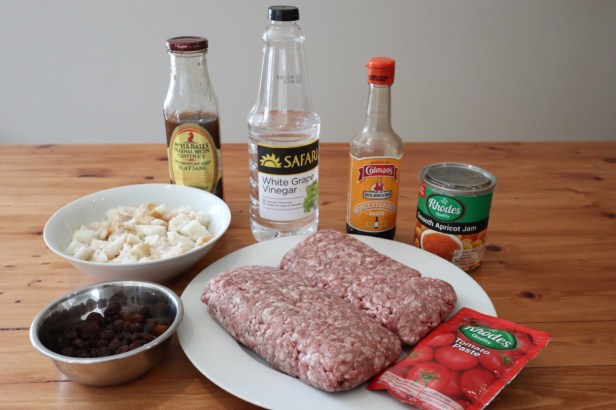
Group B
2 slices of white bread (soaked in water)
1kg minced meat
150ml seedless raisins
60ml chutney
30ml fine apricot jam
30ml vinegar
30ml Worcestershire sauce
30ml tomato paste
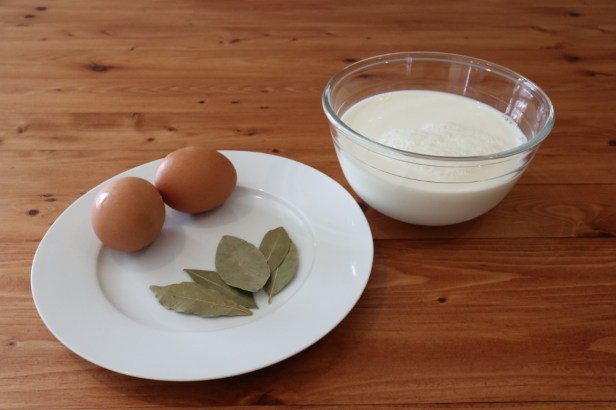
Group C
375ml milk
2 eggs
bay leaves
Now what?
The most effort of this dish is to get all the ingredients from the cupboard. Now comes the easy part (that’s why I love making this dish so much).

Dry ingredients on the stove
On a low heat, all the dry ingredients in Group A are now heated – just keep an eye that they don’t burn.
When I start to smell the spices, I add the butter until it’s melted and then I add the onions. When the onions are soft (or, as in my case, when you can no longer hold back the tears), it’s time for Group B’s ingredients.

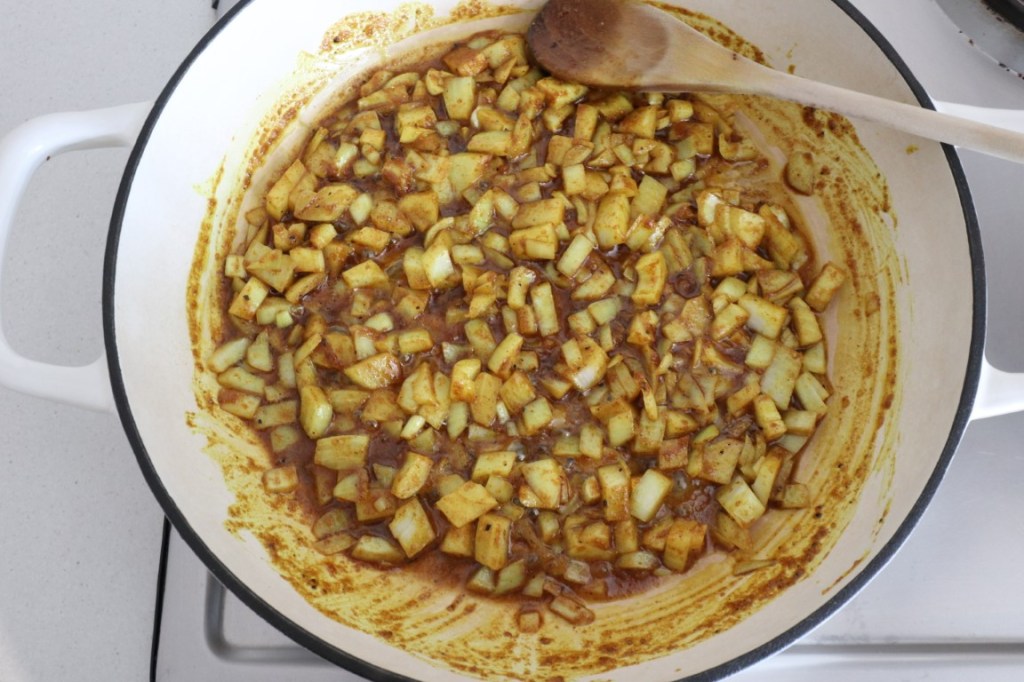
Time for the butter and onion
After the water has been squeezed out of the bread, that and the rest of the ingredients from Group B are added to the sautéed onions. Give it a little stir and put a lid on. Now it just has to simmer over low heat for about 20 minutes. Remember to stir every now and then.


Group B’s ingredients are in and now it needs to simmer
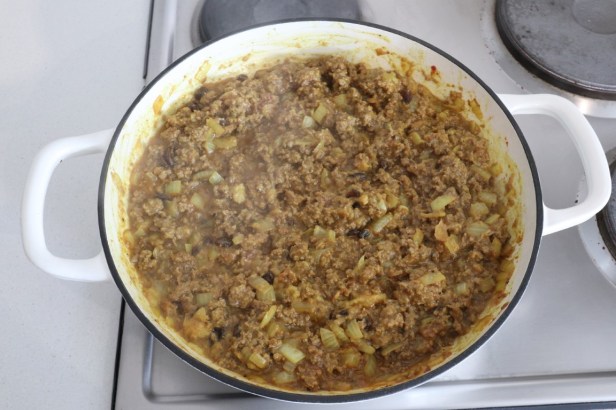
After 20 minutes (it looks great and smells amazing)
Transfer the mixture to a greased bowl and then it’s time for Group C’s ingredients. Mix the milk and eggs together and pour over the meat. And do you remember those bay leaves? Squeeze it into the meat mixture here and there (believe me, it makes a difference to the taste of the dish).

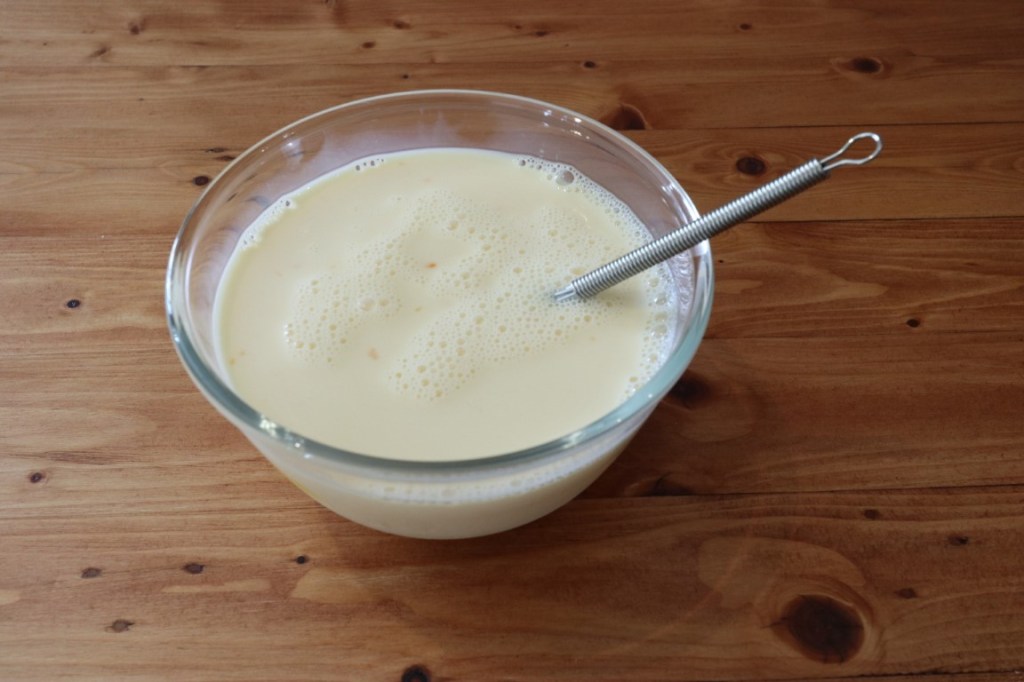
The final step to a great dish
Place the dish in a preheated oven of 180°C (350°F) and let it bake for 45 minutes.

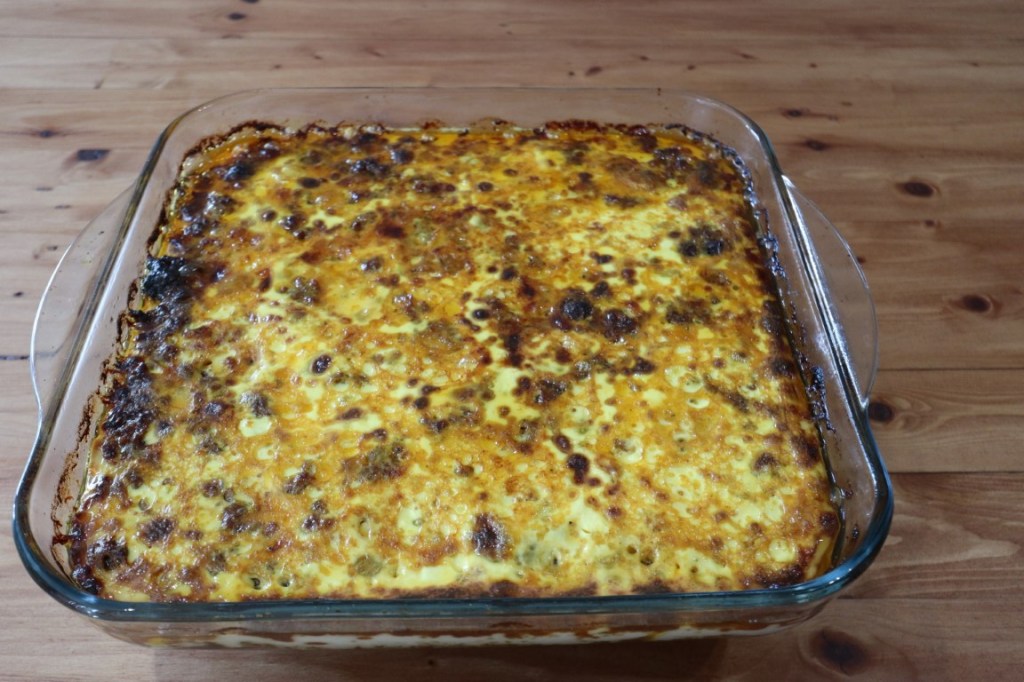
Before and after
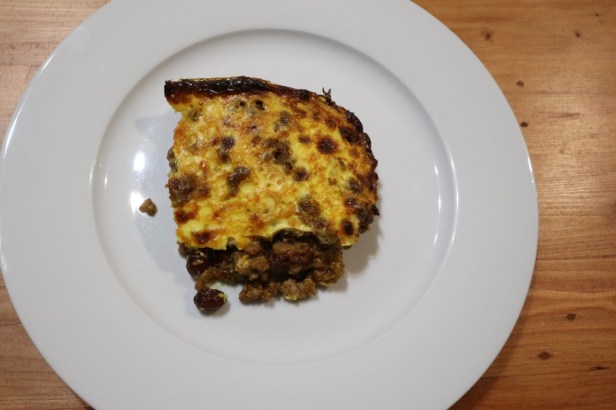
Bobotie
Bobotie tastes even better when served with yellow rice and raisins. Yes, all those raisins in the bobotie and rice will give you more than enough fiber (and we all know that fiber aids digestion and reduces stomach problems, right). And for more colour in your plate (than just yellow), why not try aniseed carrots with it?
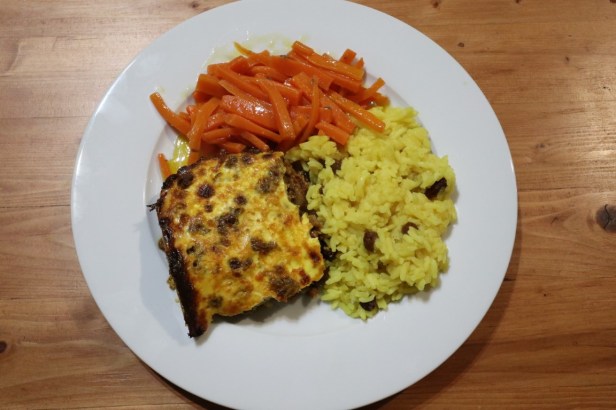
Traditional South African meal
Now, do you understand why we love bobotie so much? It is easy to make and tastes delicious.
Note: Oh, and the one who discovers a bay leaf in his/her plate is exempt from washing the dishes!
 Wet and Dusty Roads
We had bobotie at Saana restaurant, Animal Kingdom Disney World and fell in love with it! I bet yours was delicious too!
LikeLiked by 1 person
Wow, I’m surprised to hear that bobotie is also served in other countries so far from South Africa! This is a wonderful dish and always reminds me of when I was a little girl and my grandmother used to make it for us – great memories!
LikeLiked by 1 person
Yes, Walt Disney World did a few things right, in my humble opinion. Many people from other countries came to work at Disney World in Florida to make dishes like bobotie from their homelands.
LikeLiked by 1 person
I think this is a great idea and would love to know more about traditional South African food.
A little tip for chopping onions: cool the onion and knife in the refrigerator for 10-15 minutes. It will help to avoid tears. At low temperature the release of corrosive gases will be reduced. 🙂
LikeLiked by 1 person
Thanks so much for the great tip Angela, I’m definitely going to try that next time. And I hope you enjoy our dishes – it’s always nice to see what dishes are served in other countries, isn’t it?
LikeLiked by 1 person
Absolutely! I may not try everything but very very curious 🙂
LikeLiked by 1 person
Well done! Lovely presentation and photos. We LOVE bobotie. I must try your recipe sometime. Thank you.
LikeLiked by 1 person
Thank you very much Morag 🙂. I’m sure you’ll be able to make bobotie there in your new country (maybe it’ll turn up a search for Mrs Balls chutney … but hopefully there’s a South African shop nearby)!
LikeLiked by 1 person
Yes, Mrs Ball chutney is a must! I must do my research on that one. 🙋♀️
LikeLiked by 1 person
Ah, bobotie. I have made it, but not for many years and I dislike raisins in savoury dishes. I’m querying 5 onions though, unless they are very small. And my tip for cutting them is not to cut the base off until the very end. (or call for the OH) 😁
LikeLiked by 1 person
We have a friend who also doesn’t like the raisins in bobotie. I always make a separate bowl for her without the raisins when she comes to visit, because she loves bobotie. Yes, I think it might be small onions (I use 2 medium size onions). And will remember your tip … but when the OH is close, it’s his job!
LikeLiked by 1 person
Bobotie looks fantastic; I’ll have to give it a try. I share your love of cooking; I even majored in food science and nutrition in college. I’m looking forward to more in your series on cooking; great idea Corna! BTW, my son-in-law has the same problem when chopping onions, so wears swimming goggles when chopping them. It’s an amusing thing to see, but it works!
LikeLiked by 1 person
Oh my, I had such a good laugh at the picture of your son with the swimming goggles while cutting onions 😁. Berto has safety glasses in the garage – that might be an option for me. Food science and nutrition … you are definitely an asset in any kitchen Tricia! I’m sure you’ll like bobotie – the flavours are great in this dish.
LikeLiked by 1 person
It is funny, but he swears by it! Thanks Corna!
LikeLiked by 1 person
We enjoyed our dishes of Bobotie during our stay at a country pub in southern England a couple of years ago and now that you have presented the recipe so clearly I will give it a try this winter!
LikeLiked by 1 person
Oh yes Marion, I remember that post where you mentioned eating bobotie in the UK – it was with South Africans if I remember correctly? So, you know exactly what it tastes like … and now you can make it yourself too!
LikeLiked by 1 person
Sjoe dit klink heerlik! Ek gaan onthou om my spices eers warm te maak …
LikeLiked by 1 person
Ek het al bobotie gemaak waar ek die spices saam met die vleis ingegooi het, maar dit proe vir my net lekkerder as ek dit vooraf in die pan braai. Dalk is dit my verbeelding 😉, maar dit laat die kombuis tog so lekker ruik!
LikeLiked by 1 person
Ek gaan dit beslis probeer.
LikeLiked by 1 person
I’ve never had this but it does sound good and not difficult to make, although I’ll have to get the calculator out to reduce the size for just the two of us!
LikeLiked by 1 person
Fortunately, bobotie also freezes very well. I sometimes put half of this in aluminium foil containers and freeze it for later. But it’s also nice on ‘snackwiches’ (grilled sandwiches) the next day 😉.
LikeLiked by 1 person
That’s good to know – we often cook double what we can eat and freeze half for a day when we don’t have time to cook!
LikeLiked by 1 person
I will have to give the recipe to Grant. He is the cook but as I am vegetarian and have to avoid so many ingredients, he only cooks for himself. He makes curry and shares with our neighbour but I think bobotie would go over well too. My dear aunt that I lived with for so long had a South African cookbook that we used often. No idea where it came from!
LikeLiked by 1 person
I’m sure Grant will love this. Bobotie is not such a strong curry dish (it’s more of a sweet curry), but you can throw in a stronger curry (and a teaspoon or two extra) to give it that extra kick. It’s interesting to read about your aunt who had a South African cookbook (I love cookbooks). We’ll try to post a vegetarian dish or two too – maybe there’ll be something you like.
LikeLike
This looks and sounds delicious, Corna! I’ve never heated spices before, so that’s a new trick that I will try when I make this dish. Thank you for sharing your wonderful recipe.
LikeLiked by 1 person
Kellye, maybe it’s my imagination, but it’s like there’s more flavour to the dish when you preheat the spices first. Either way, at least it makes your kitchen smell nice 😉.
LikeLiked by 1 person
I’m definitely going to try it, and I’m also going to try your recipe when I start cooking again. Mike and I both have Covid ☹️but we’re getting better.
LikeLiked by 1 person
Oh dear, I hope you both get better soon. Take good care of yourselves 💌.
LikeLiked by 1 person
Thank you. We’re on our road to recovery.
LikeLiked by 1 person
It sounds tasty, Corna. I just might try it.
LikeLiked by 1 person
I could describe this dish as comfort food – it’s delicious on a cold winter’s evening (of course with a glass of wine 😉).
LikeLiked by 1 person
Oh I think I can do this! And yeah looks easy enough. Uhm what did you put on the yellow rice, Corna. I’m interested to cook that too hehehe. And oh wow I’ve never heated the spices. I’ll try on this one.
LikeLiked by 1 person
This is a very easy recipe and really tasty! The yellow rice is also very simple – you just add a teaspoon of turmeric, little salt, two spoons of sugar and of course raisins and then you cook it as usual … delicious! We don’t usually preheat our spices, but somehow it makes a difference in bobotie. I hope, if you make it, you’ll love it too.
LikeLike
I am so excited to see your recipes and try them. This one looks delicious. It is great to have all your favorite recipes in one place but a word of advice, print them off or save them somehow in case WP messes up and losses some of your posts. They removed about 3,000 followers from my site about a year ago. I wish I could figure out how to put my recipes on a thumb drive.
LikeLiked by 1 person
Oh my word, it must have been terrible to suddenly lose so many followers 👀. Thanks so much for that valuable tip Diane (I’ll leave it in Berto’s capable hands – he knows a lot more about technology than I do). Bobotie ranks among my top 10 favourite dishes (maybe because it’s so easy to make, but definitely also because it has such a nice flavour).
LikeLike
Corna, hierdie is wonderlik! Die manier wat jy die resep so uiteensit maak my sommer opgewonde om dit uit te toets. Sal jou laat weet as ek dit gemaak het.
LikeLiked by 1 person
Ek is bly jy hou van ons nuwe reeks Una. Vir my is kosmaak maklik(er) as dit in prentjies is. Nou toe, maak daai bobotie en smul van die lekkerte 😄.
LikeLiked by 1 person
Thank you so much for the recipe, bobotie is definitely a must try. I love trying new dishes and I’m sure I’ll like this one!
The most common question at our house is, “what should we have for dinner?” Here, it’s my husband who takes care of the cooking and I’m going to surprise him by giving him this recipe of a traditional South African meal. 😁
Haha.. love your little note there at the end!
LikeLiked by 1 person
I’m glad you think the recipe looks good Anita! Haha 😅, you’re right … when we eat breakfast in the morning we always wonder “what’s for dinner tonight”! I hope your husband makes the bobotie soon (and that you get the bay leave)!
LikeLiked by 1 person
I love your idea of showcasing some of your favourite recipes and dishes with us. You sure picked a good one to start with. I was surprised to hear that you serve bobotie with raisins added into the yellow rice. But then again, I’m sure there’s something about the sweetness that helps bring out the flavour of the saltiness.
LikeLiked by 1 person
I’m glad you like our new series Linda. And you’re right, bobotie was a good dish to start with (I think if you don’t like raisins, this dish might not go down so well 😉). Sometimes I replace raisins in the bobotie with cranberries – then it’s not as sweet.
LikeLiked by 1 person
Bobotie is a favourite of ours too.
LikeLiked by 1 person
Bobotie is my go-to recipe when I wonder what to make for dinner 😉. It’s nice to hear you love it too.
LikeLiked by 1 person