December 2025 & January 2026
A Day of Crayfish Diving on the West Coast
While we were wild camping at Waterval on the West Coast of South Africa, there were a few days when the crayfish season was open (the past year the season for recreational fishermen was only open for 12 days). During these days, Berto and Frans put on their wetsuits to dive for crayfish.
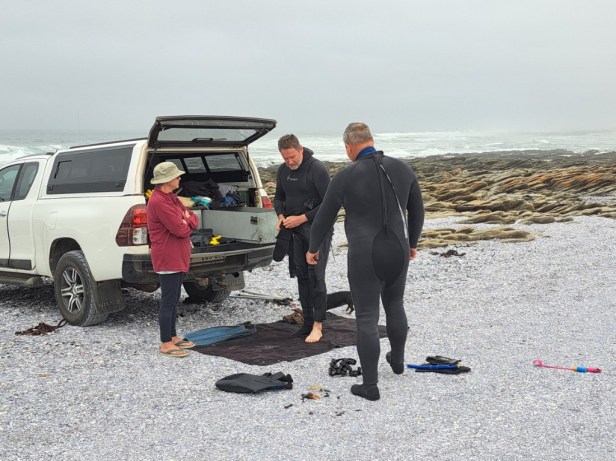
Fiela watched as Berto and Frans put on their wetsuits
The crayfish are found in cracks in rocks and on the rocky sea- and kelp beds along the rugged coastline. There are a number of methods to catch crayfish. The most popular for the recreational fisherman is to dive for them – by swimming around in the kelp beds and looking under submerged rocks to see a feeler sticking out. This is all done while it is low tide.
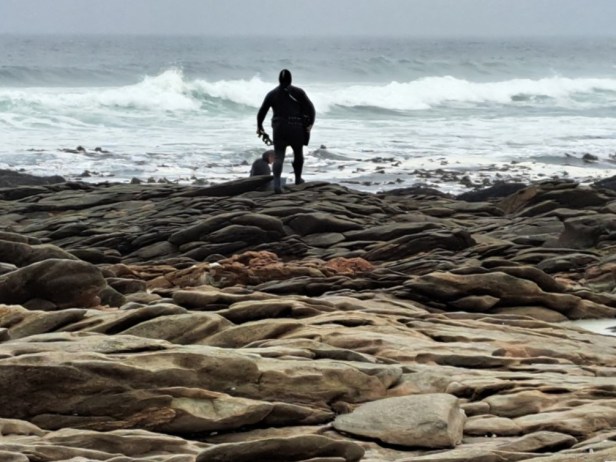
The guys walk over the slippery rocks to get into the cold water
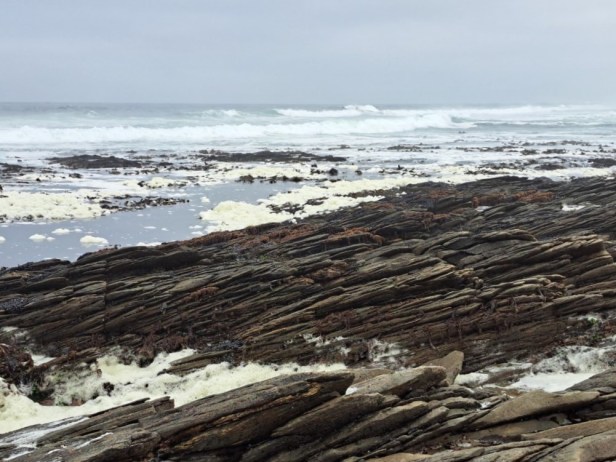
Low tide is the perfect time to dive for crayfish
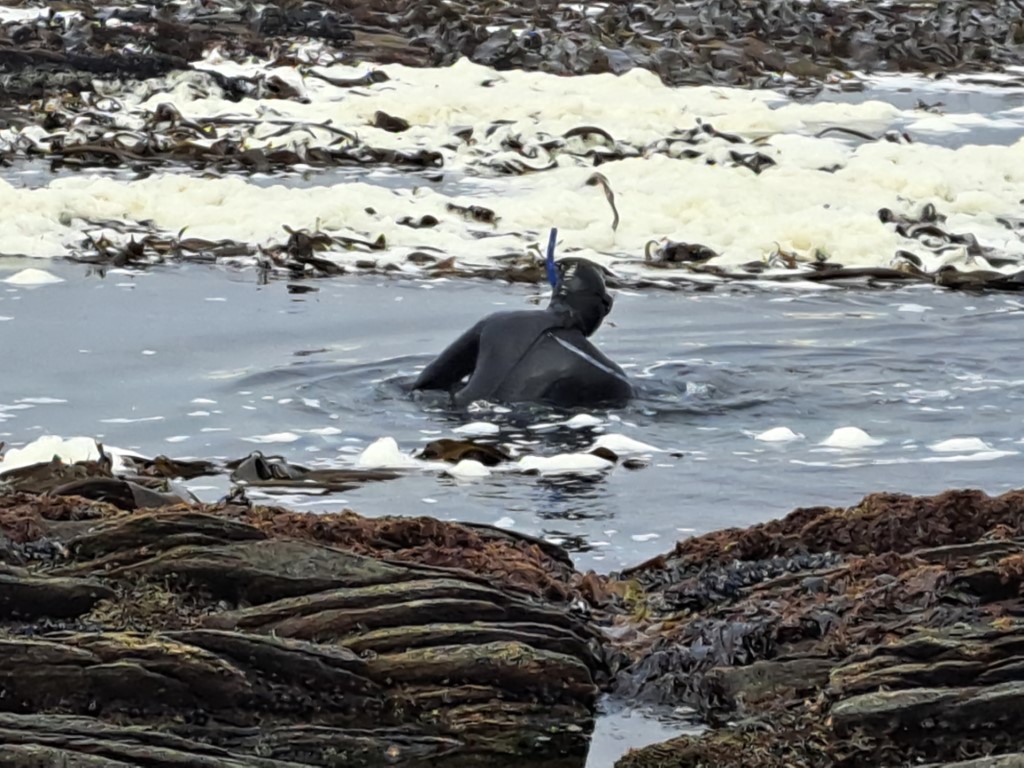
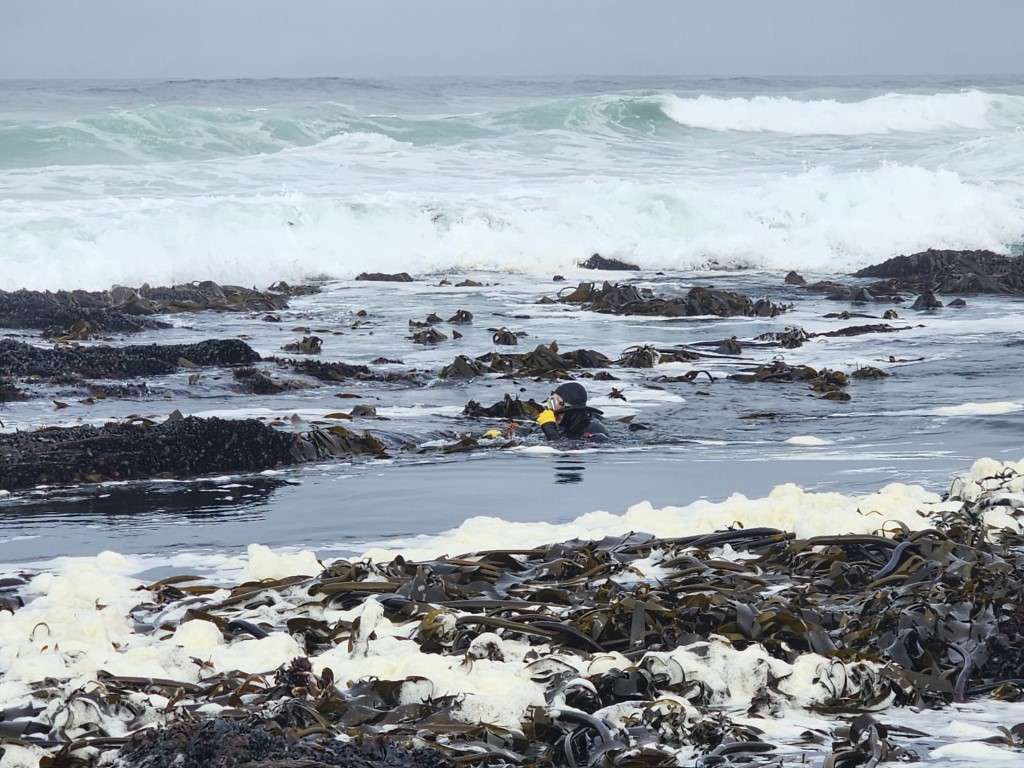
Berto and Frans diving for crayfish
While the men dived for crayfish, Fiela and I walked on the rocks to see what we could find in the small pools.
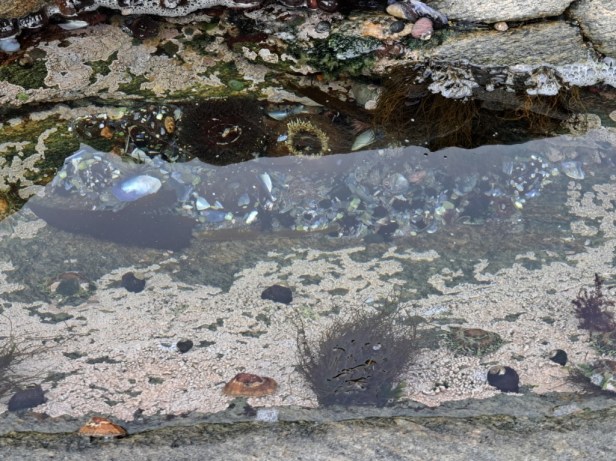
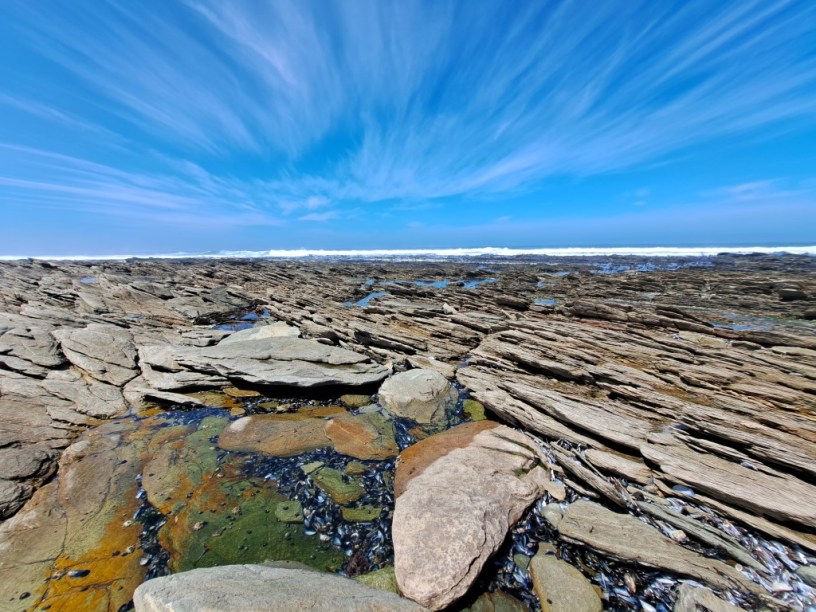
There are many pools between the rocks
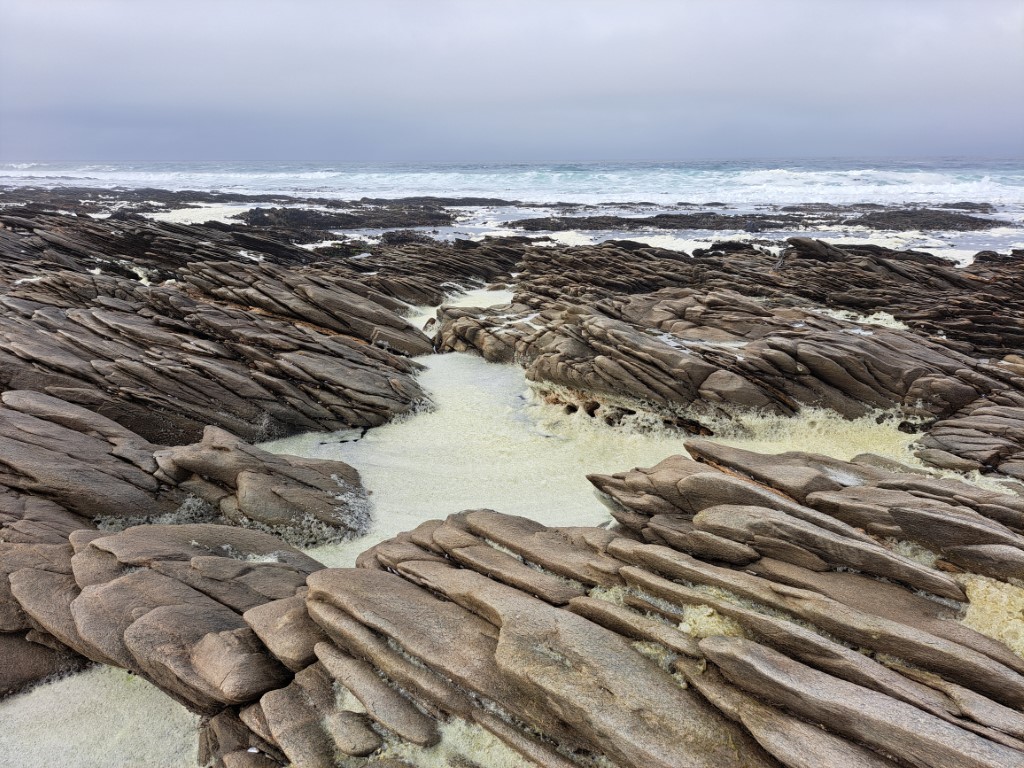
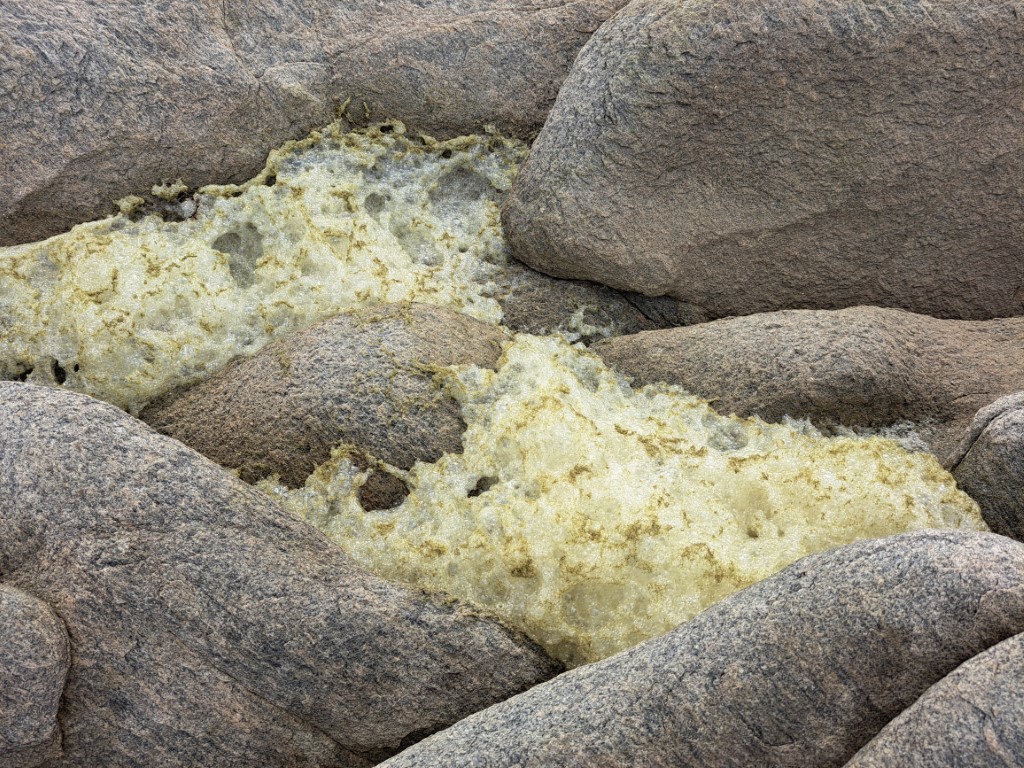
Sea foam on the rocks
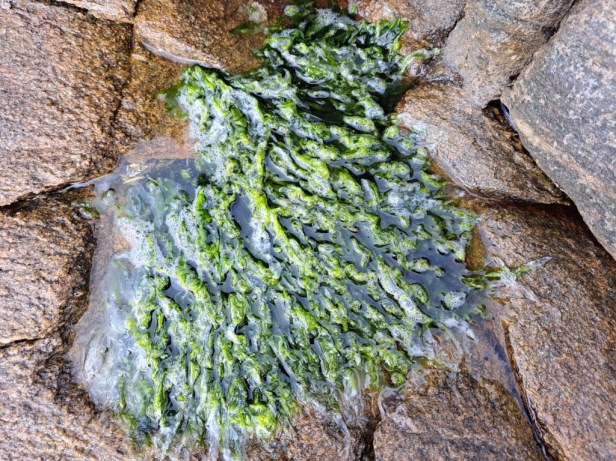
A pool with sea grass
While we looked closely at all the small pools, we also had to keep an eye on the men. They usually call us over when they need a bag to put the crayfish in that they caught.
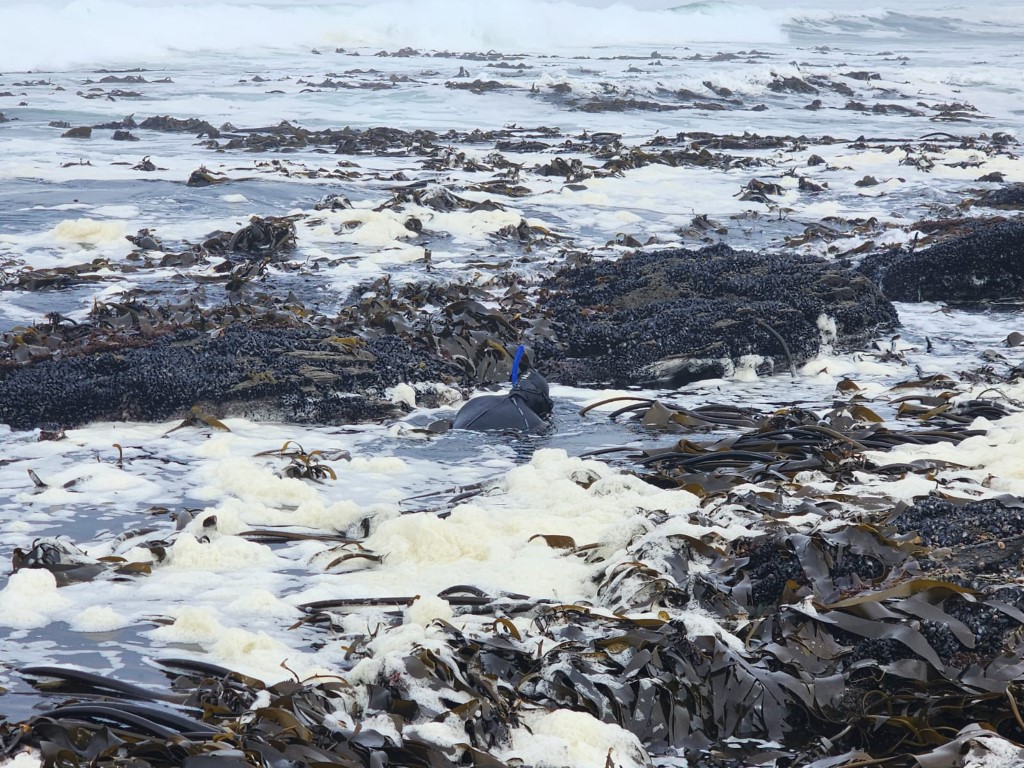
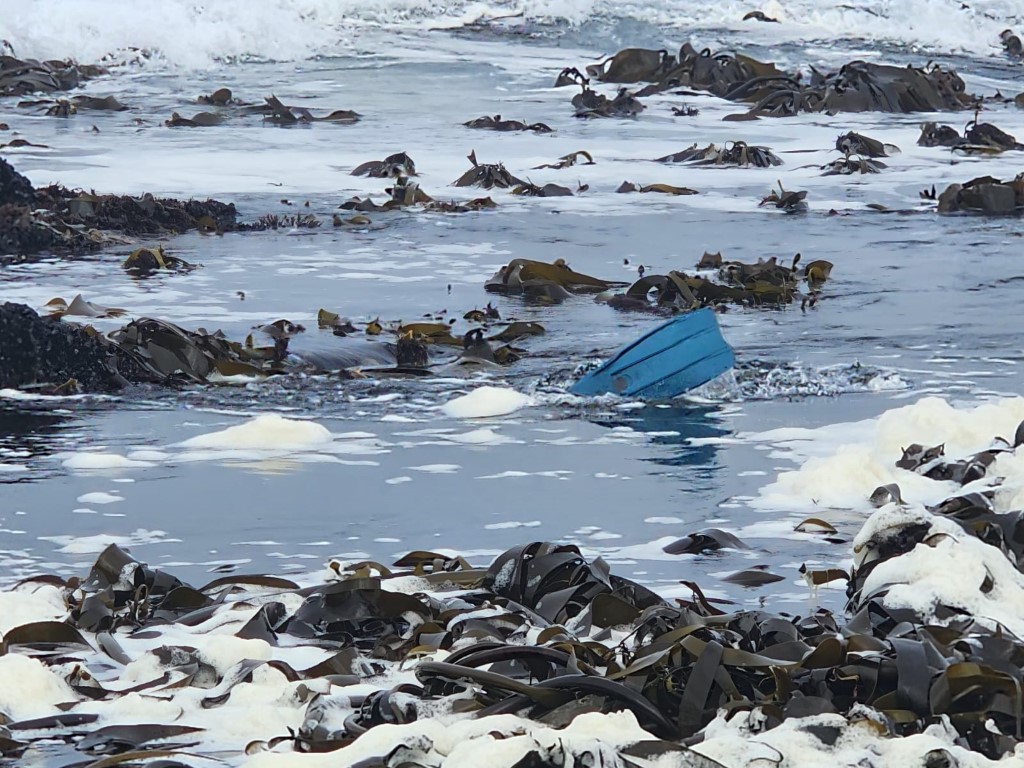
We could see Berto’s head and Frans’s dive fin (Photo Credit: Fiela Basson)
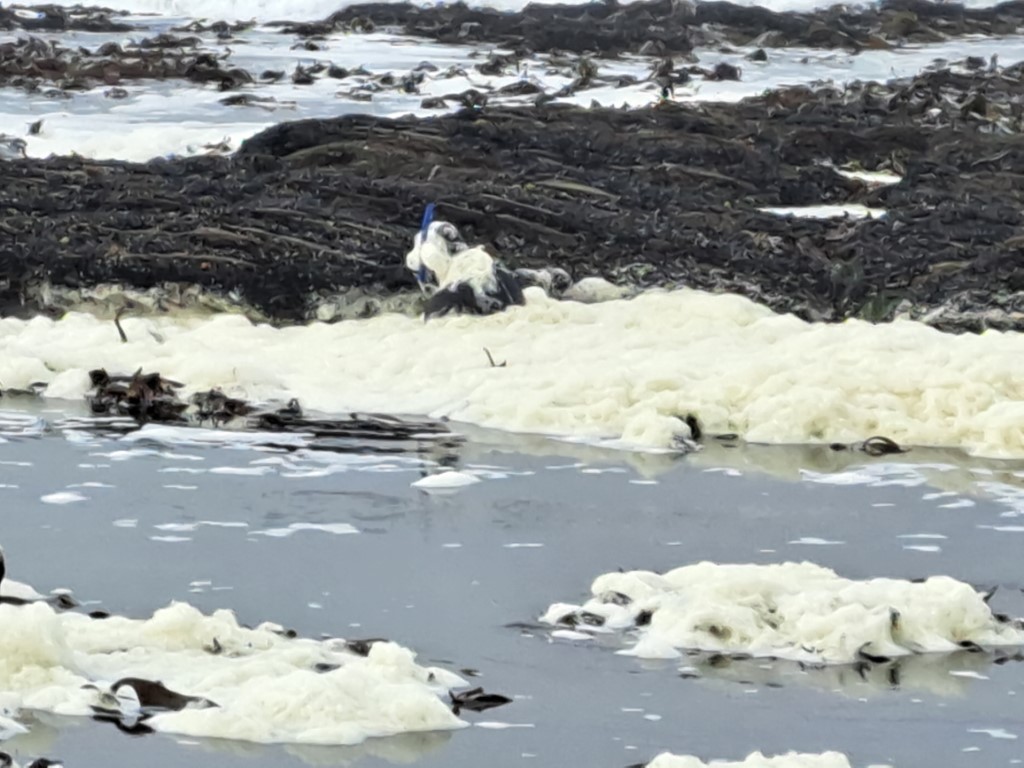
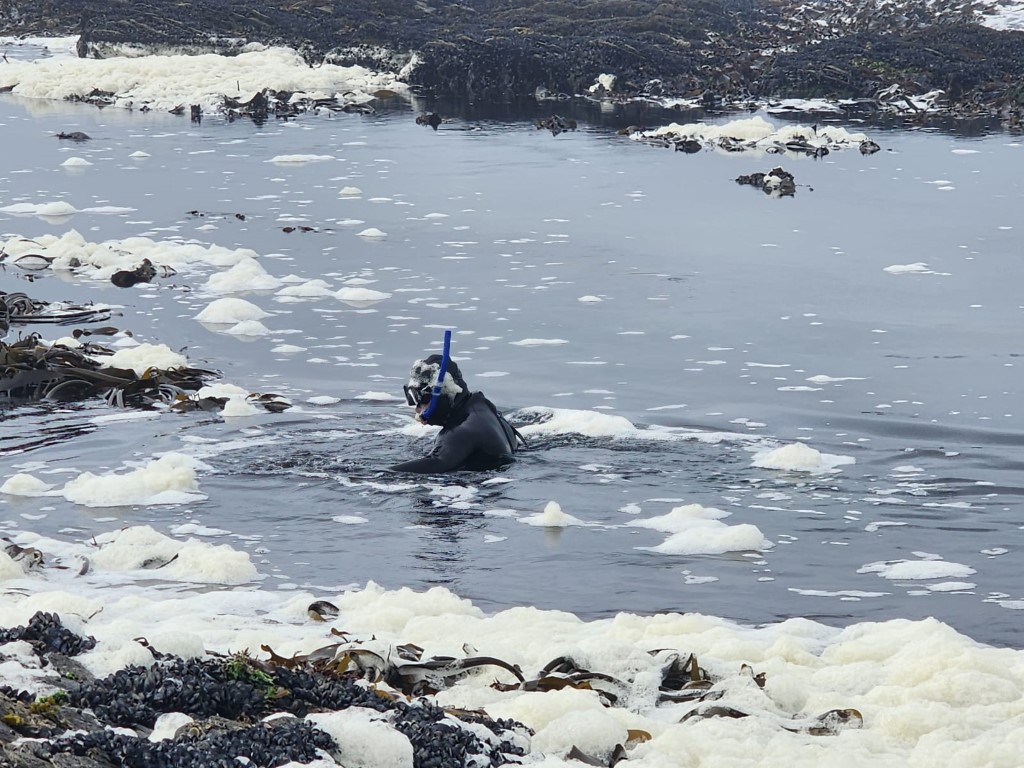
Berto found himself in a foamy spot (Photo Credit: Fiela Basson)
While Fiela was gathering periwinkles (small marine snails) to eat later, I walked from pool to pool to look at all the shells and sea life. It’s actually amazing to think that these pools would be completely covered by seawater again within a few hours when it’s high tide.
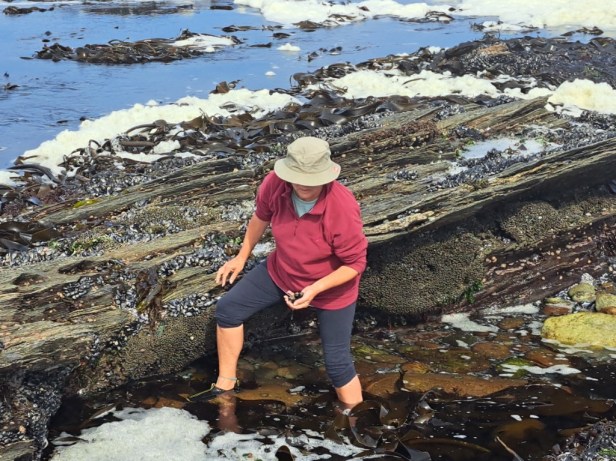
Fiela looking for periwinkles
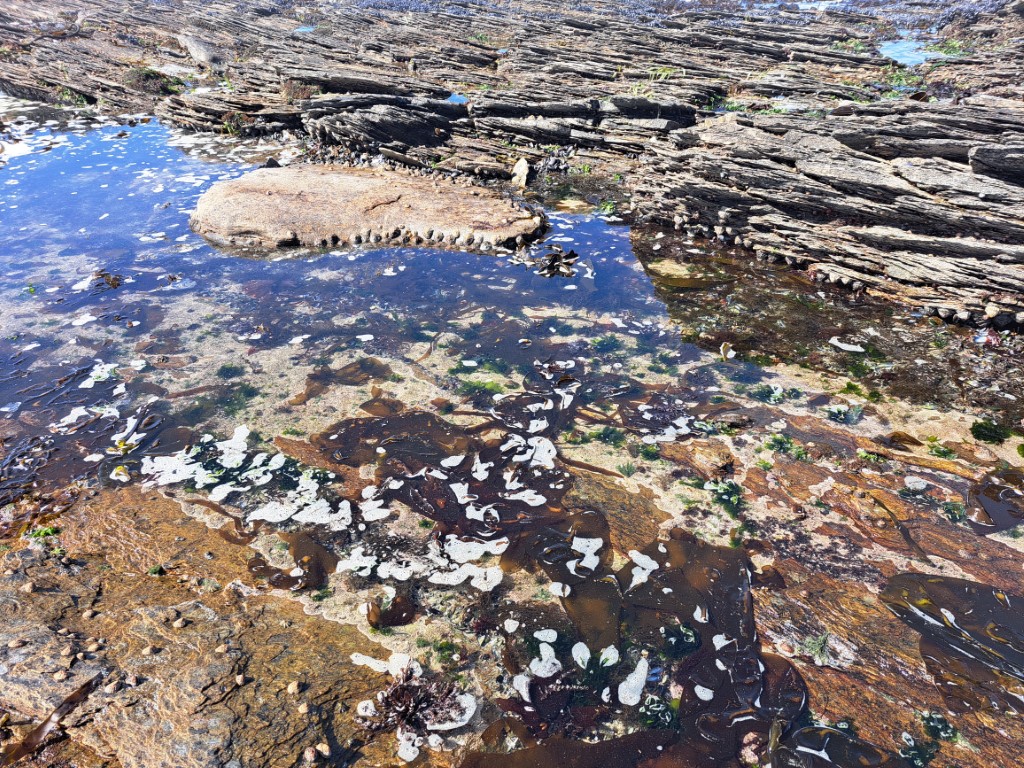
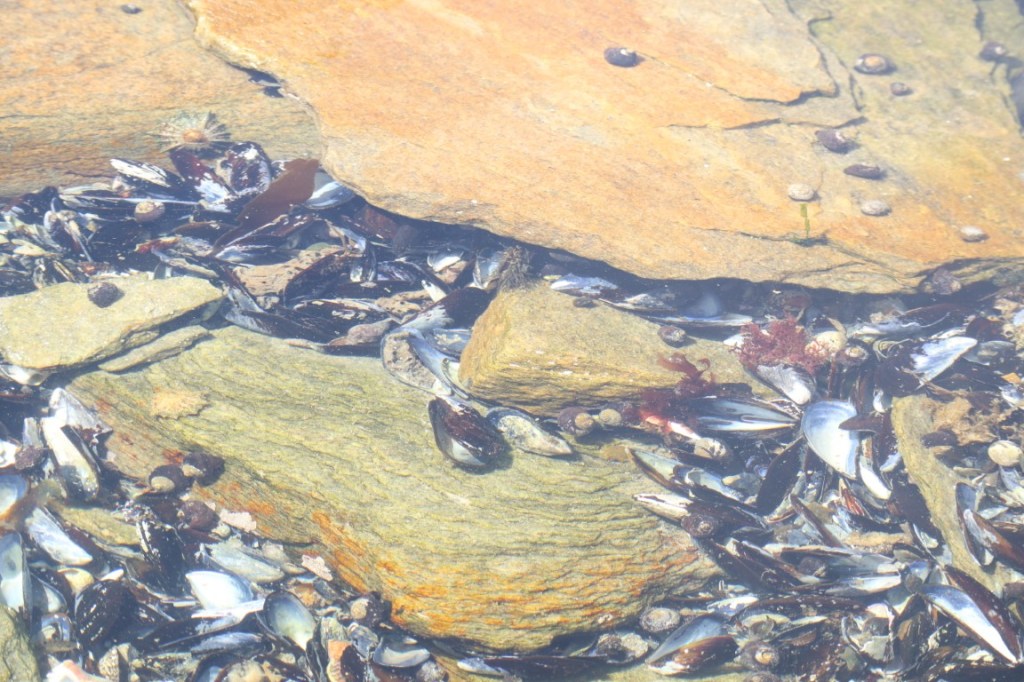
Pool with mussel shells
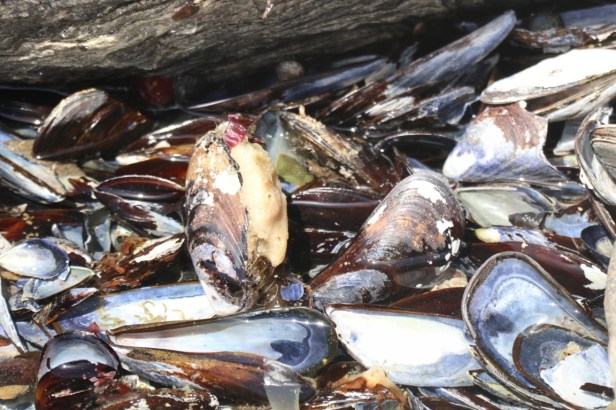
Mussel shells
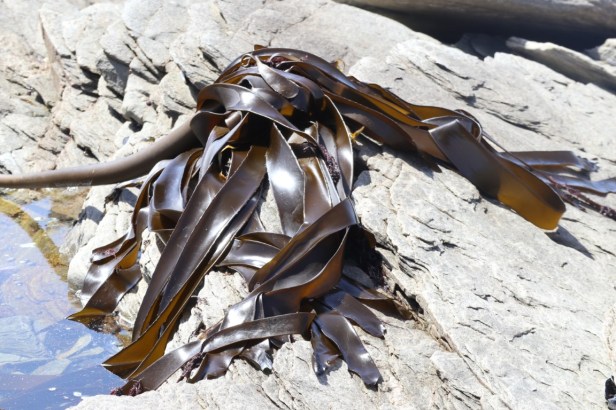
Kelp on the rocks
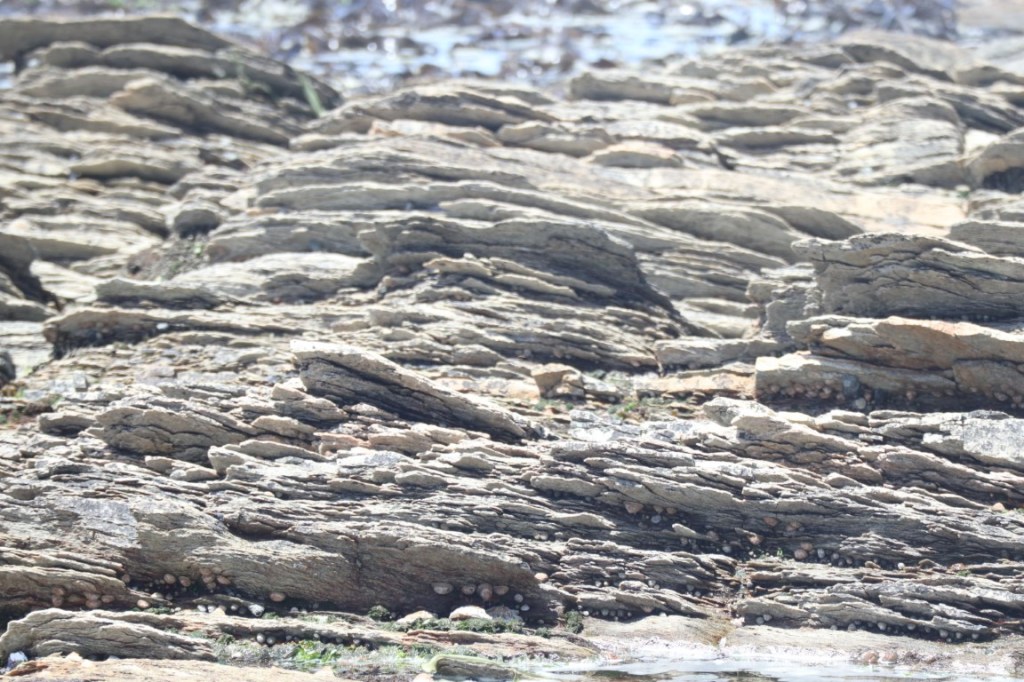
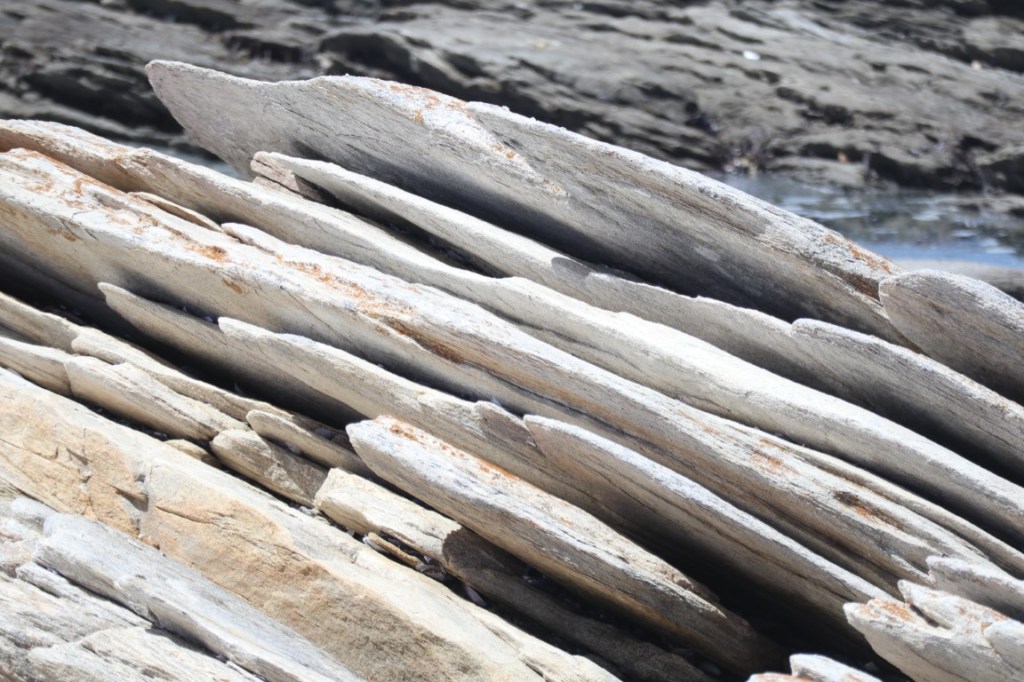
Interesting rock formations
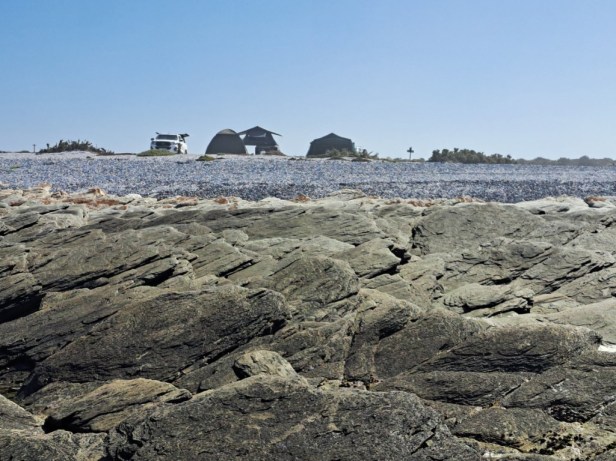
Our campsite as seen from the rocks
Although the morning started foggy, the sun quickly cleared the mist, and we were able to enjoy the bright blue sky.
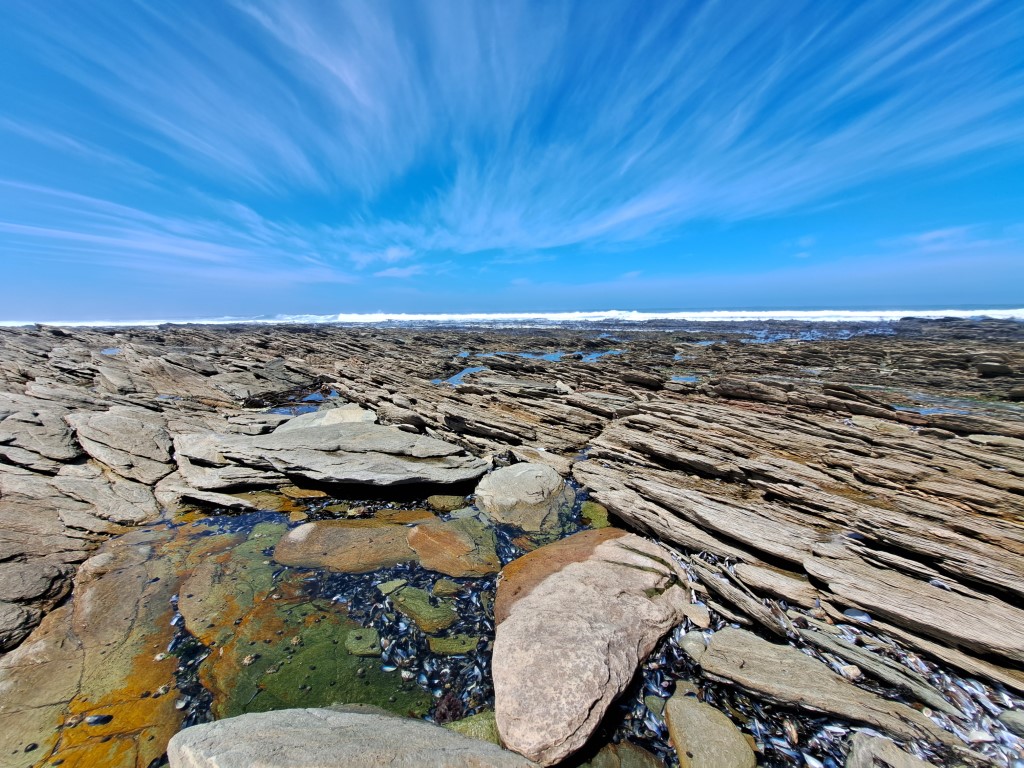
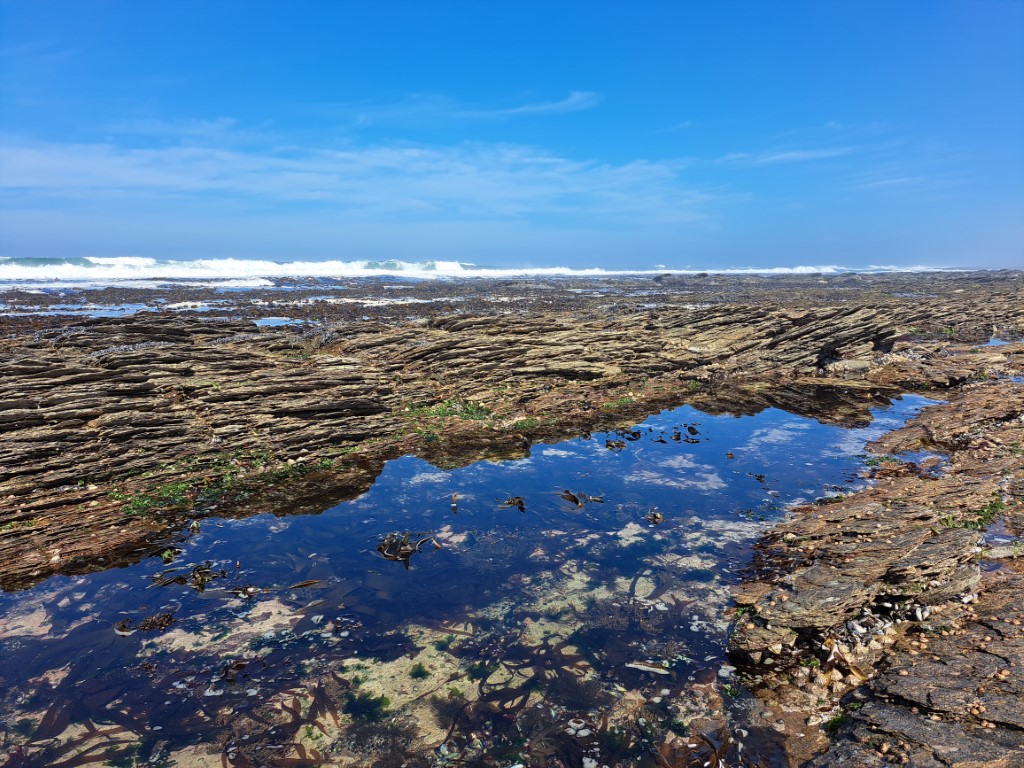
A perfect summer’s day on the West Coast
After about an hour, the men called us over to bring a bag for the crayfish they had caught.
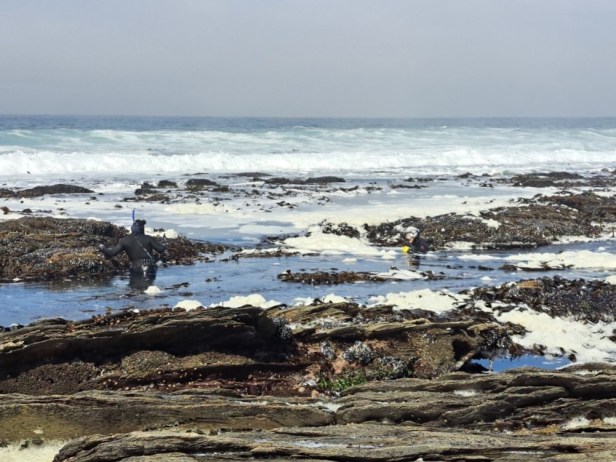
The men making their way back to the shore (Photo Credit: Fiela Basson)
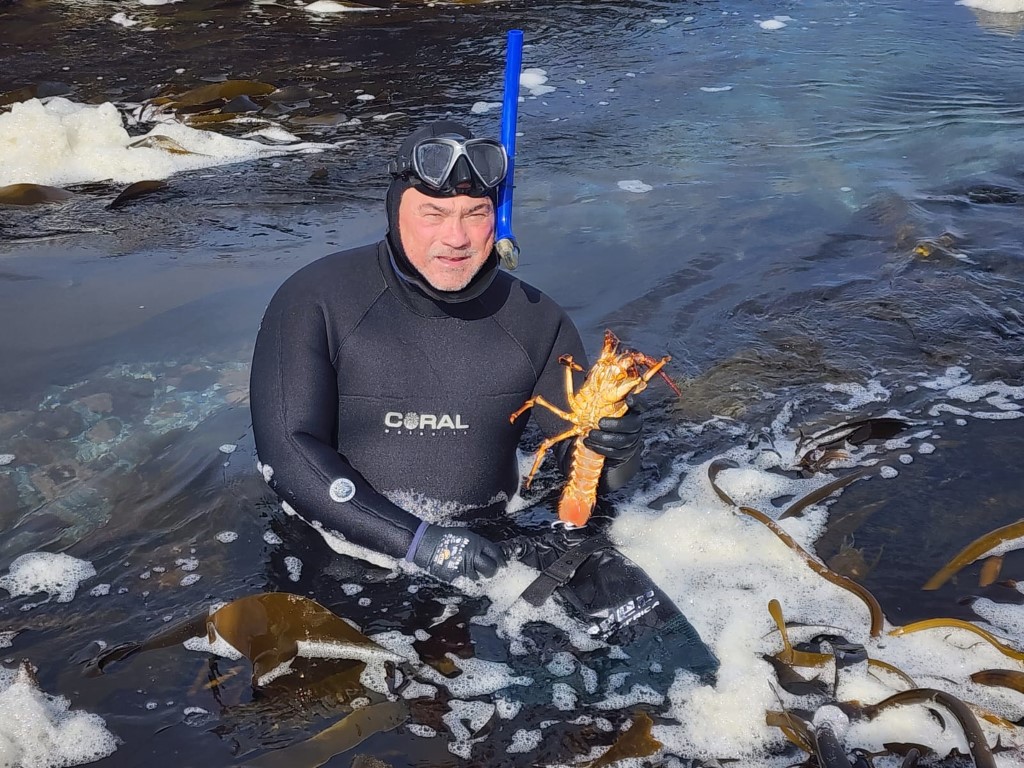
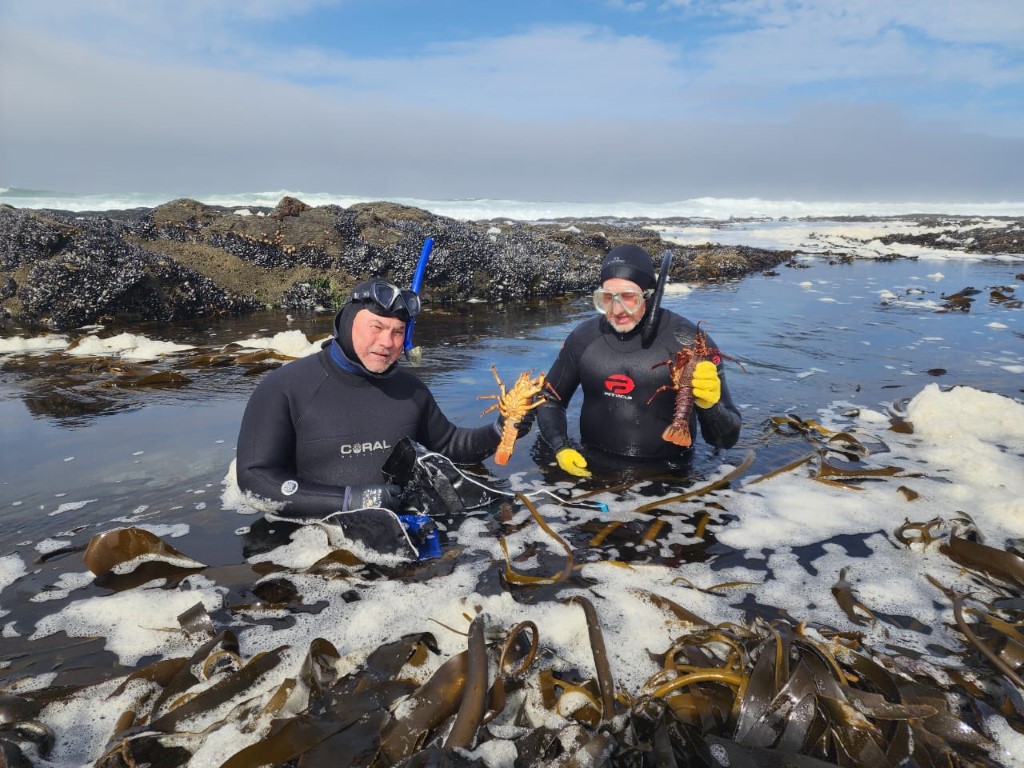
Catch of the day (Photo Credit: Fiela Basson)
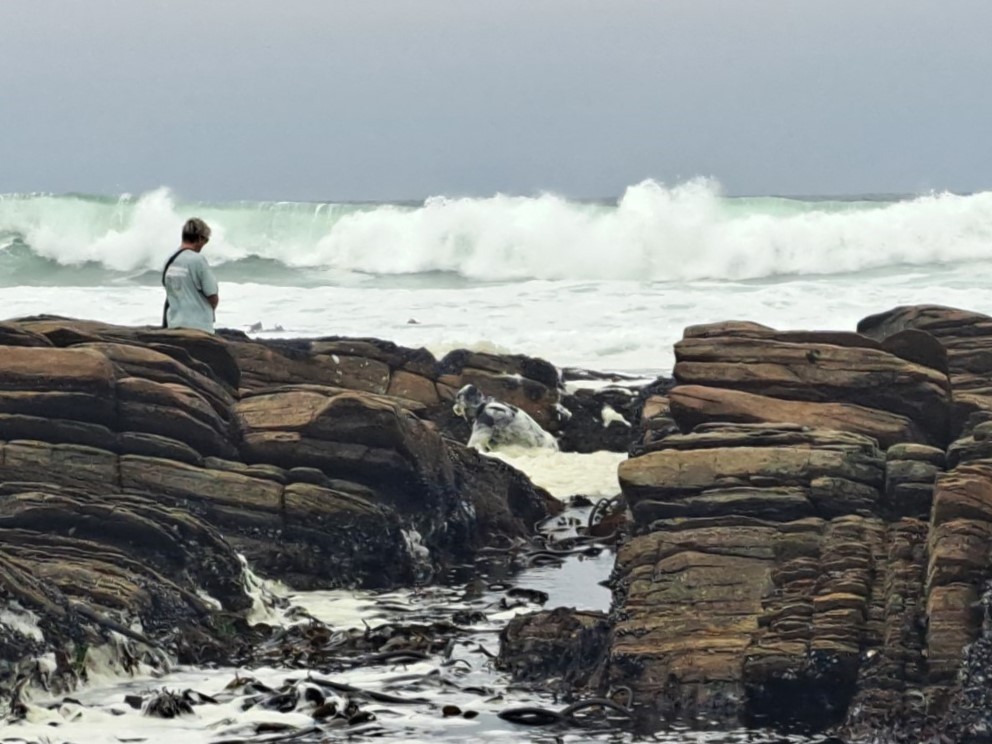
Frans decided to go in one last time to see if he could catch another crayfish or two to make up the quota for the day. Berto sat on the rocks to keep an eye on Frans (and also on the tide that was busy coming in).
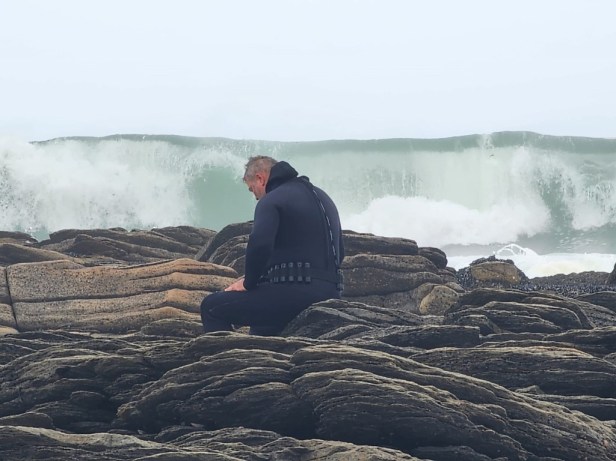
Berto keeps a watchful eye on Frans
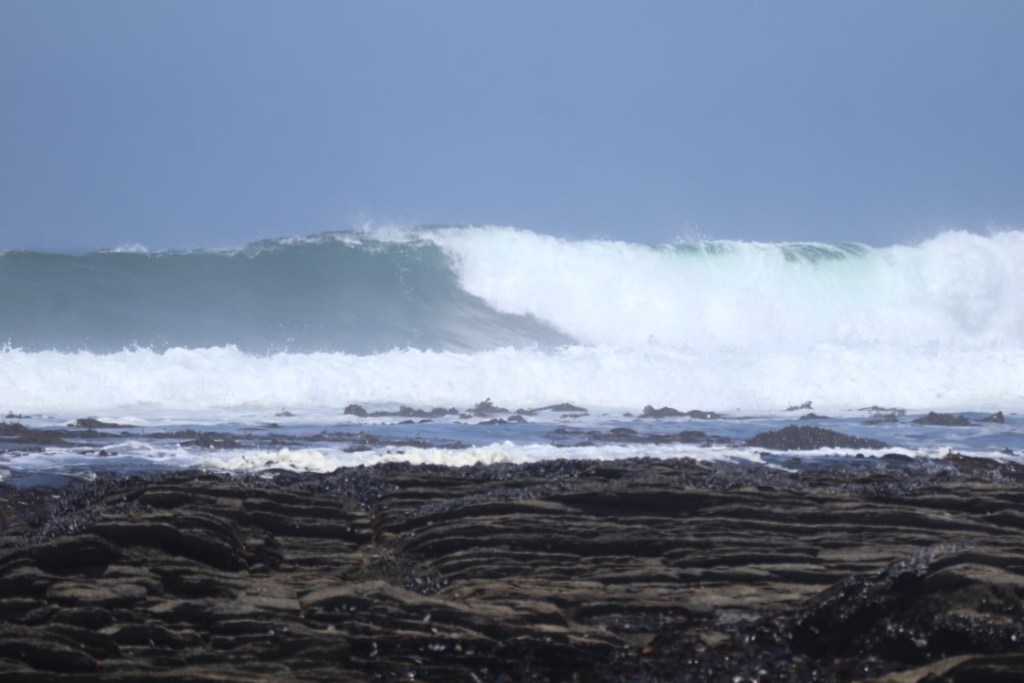
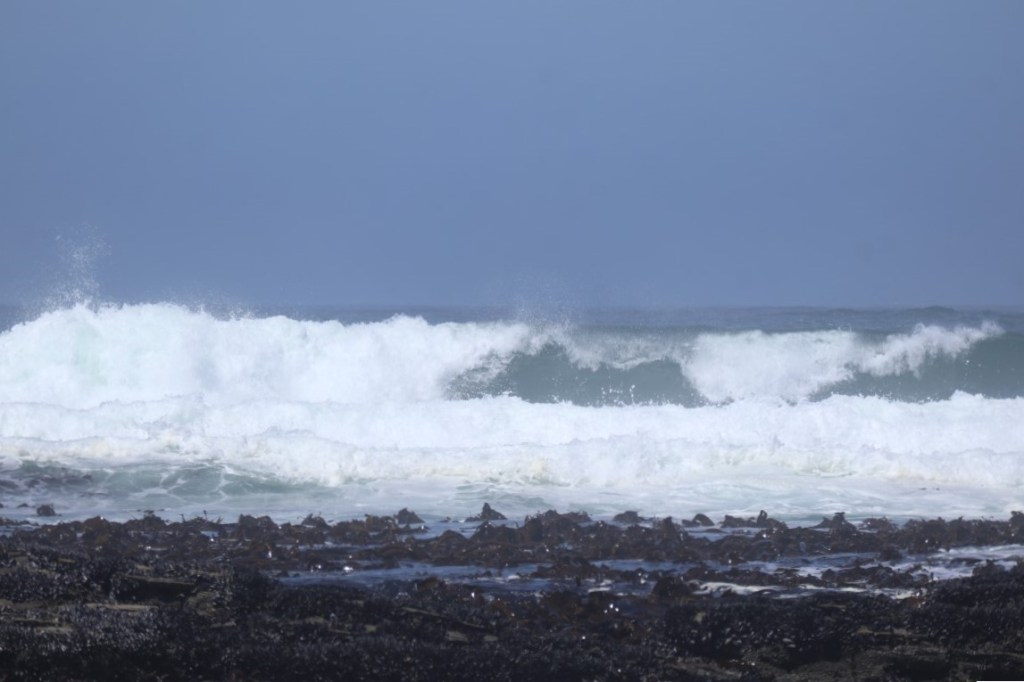
High tide was coming in
It wasn’t long, however, before Frans decided to come out as well. With the high tide rising, the rocks began to submerge under the water and it was no longer safe to dive for crayfish.
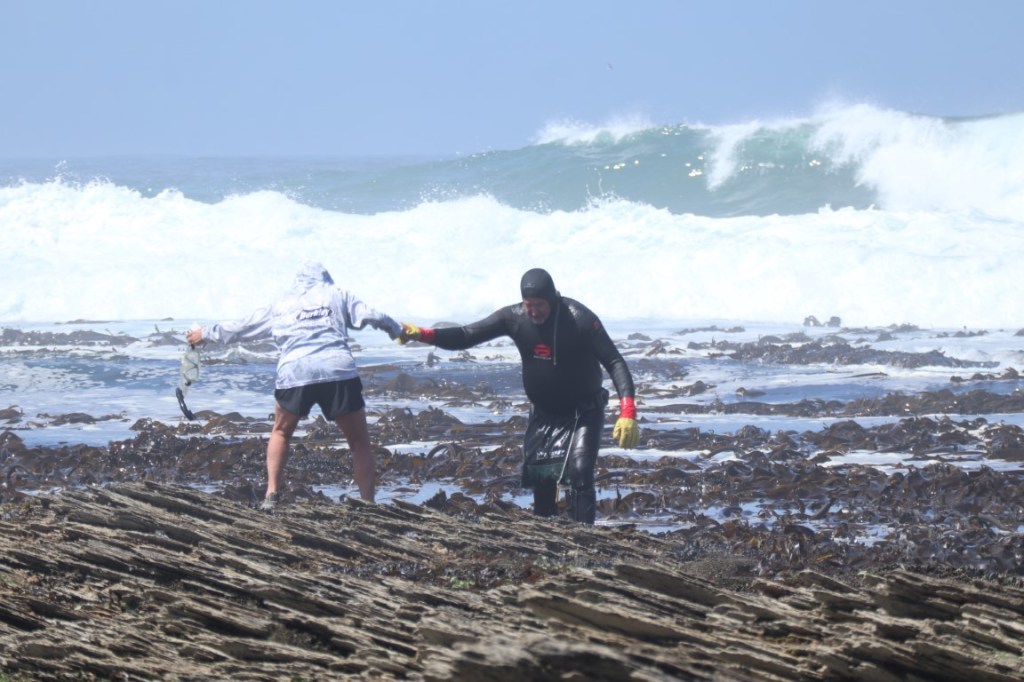
Fiela helping Frans out of the water
The rocks that had been exposed an hour or so ago and all the pools we had looked at were now underwater. It was time for us to walk back to our campsite.
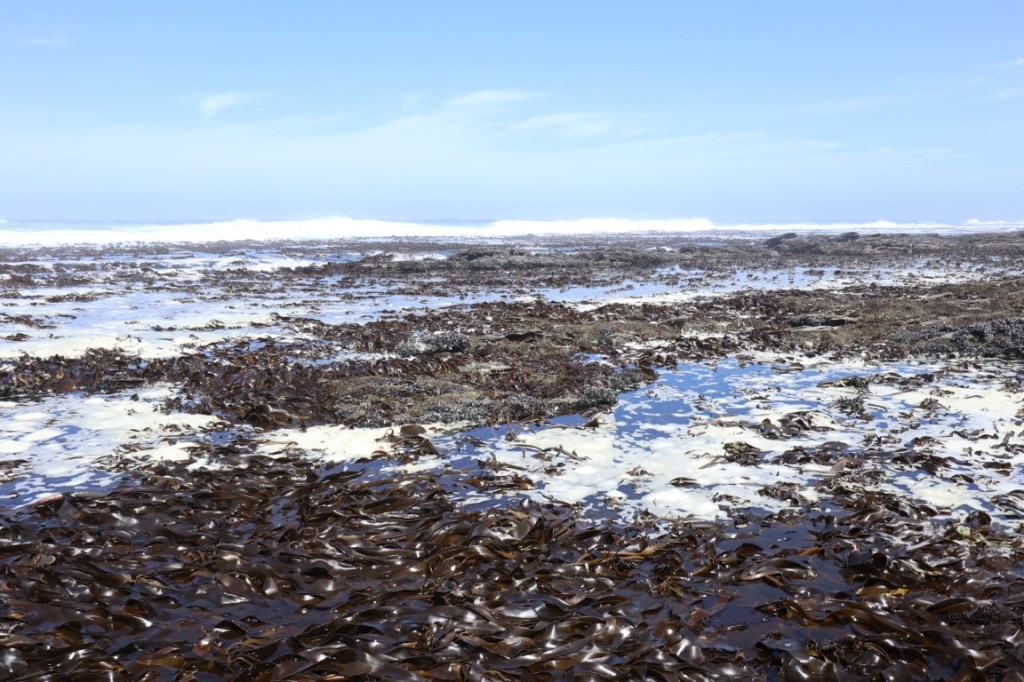
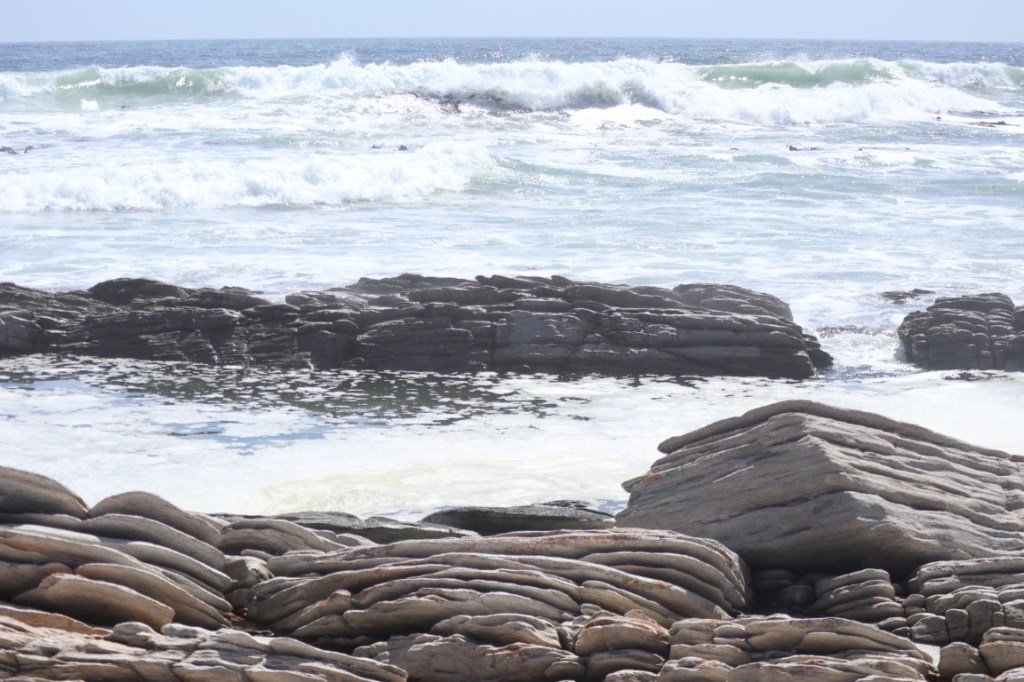
It was now high tide
Berto and Frans have been catching crayfish for many years now, and although they make it look easy, it is far from that. But at least we know that if we run out of meat in the freezer, the men will make sure we get food from the sea.
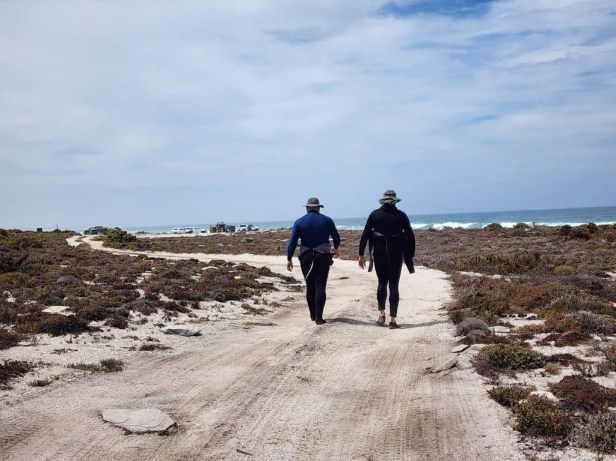
Berto and Frans walking back after diving for crayfish (Photo Credit: Fiela Basson)
In our next post (read here), the last of our Waterval wild camping series, we are going to take you on a stroll on the beach – and I suspect there might be another photo (or two) of yet another beautiful sunset.
 Wet and Dusty Roads
What brave people! I’m very sure it’s not easy with the high tide coming in full force.. Your post reminded me of one of our trips back home in Romania, 25 yrs ago, when we were wild camping in the Danube Delta, and our friends, as skilled as Berto and Frans introduced us to the world of crayfish. What a fun experience we had (although it was in a small channel of the river), we enjoyed them to the fullest, so delicious!
They are so big, how do you cook them?
LikeLiked by 1 person
Yes, when high tide is coming in, it’s always a bit scary – well, for us ‘spotters’ on the rocks anyway! But the guys in the water do keep an eye on the incoming tide, and they are (fortunately) not irresponsible. It’s amazing that you’ve also had the opportunity to dive for crayfish – I didn’t realise you could do it in a river too. We have a very large pot that’s filled with seawater and then the crayfish is cooked over the fire – I don’t think it’s something you’d really want to do on your stove in your kitchen 😉. Crayfish is best enjoyed right there by the ocean.
LikeLiked by 1 person
Right, fresh is always soo good!!
LikeLiked by 1 person
It sounds quite a challenging activity – I hope the catch was a delicious reward for their efforts?!
LikeLiked by 1 person
If you’ve never dived for crayfish before, it can definitely be a challenge … especially when the sea is rough (even when it’s low tide). Yes, the reward was great – we could even freeze some of the crayfish and brought it home – perfect for a seafood paella 😉.
LikeLiked by 1 person
Diving for crayfish looks like quite a skill to me! And hard work as well. But I used to love seafood and nothing beats fresh from the sea. I always enjoyed walking along the shore and examining shells and tiny sea creatures. Rock formations are so interesting and I love watching the waves crashing over them. Thanks for letting me enjoy this!
LikeLiked by 1 person
You’re right – I think diving for crayfish is a combination of skill and being (dive) fit. Watching the waves is one of my favourite things to do … I think that’s why I love camping along the ocean so much. I’m glad you enjoyed the views of the sea and rocks with us (which make me think, you will definitely enjoy the next post too when we go for a stroll on the beach).
LikeLike
The ocean always fascinates me with what is exposed at low tide, and how much the landscape changes between high and low. Maggie
LikeLiked by 1 person
Exactly, that’s what I think too. At low tide everything looks so calm, but it’s a completely different story when it’s high tide and there’s these huge waves.
LikeLiked by 1 person
Diving for crayfish sounds like a thrilling and rewarding activity, dear Corna. Whenever we are by the sea, we love exploring rockpools because it is a great way to get closer to nature. They are such wonderful miniature marine worlds packed with biodiversity, featuring creatures like crabs, sea anemones, starfish, urchins, and small fish. Thanks for sharing, and have a good day 🙂 Aiva xx
LikeLiked by 1 person
I remember how much I enjoyed exploring rock pools since I was a little girl (and that hasn’t changed a bit 😉). It’s like getting a quick glimpse ‘under the water’ while it’s low tide, isn’t it? Thanks for your comment, Aiva. Enjoy your week.
LikeLiked by 1 person
🥰🥰🥰
LikeLiked by 1 person
What a fun adventure, Corna, with wonderful photos and commentary. I love observing sea life in tide pools; there’s always so many interesting creatures to see. I’m looking forward to reading more about your wild camping trip.
LikeLiked by 1 person
I always enjoy walking on the rocks – there’s a surprise in almost every little pool! I’m glad you enjoyed the photos, Tricia – in our next post, I’ll share the last photos of this beautiful spot on the West Coast!
LikeLiked by 1 person
Quite scary to go searching for crayfish when the tide is coming in but I’m sure everyone knew what they were doing. Finland is big in crayfish parties in early August so we’ve enjoyed them sometimes there but though delicious I find them quite fiddly and messy to eat. At the parties everyone is given a matching crayfish bib and napkin so that helps!
LikeLiked by 1 person
Luckily, both Berto and Frans have been crayfish diving since they were very young – so, they always make sure the conditions are favourable enough and they are not irresponsible. You’re right, Marion, it’s quite messy to eat … that’s actually why it’s perfect to eat it outside (and on the beach). Haha, I love the idea of a crayfish bib and napkin – maybe I should make a few sets and hand them out to everyone next time we eat crayfish 😁.
LikeLiked by 1 person
Delicious!! Thanks for making me hungry and for your beautiful photos. Mel
LikeLiked by 1 person
What can I say … other than it’s my pleasure 😁. Thanks for popping in Mel!
LikeLiked by 1 person
Die weskus het ñ bekoring van sy eie, Corna. Sal maar altyd my hart se punt bly in Suid-Afrika.
LikeLiked by 1 person
Absoluut Una – daar’s maar net iets aan die Weskus wat nes skop in jou hart (en dan daar bly)! Ek’s bly jy voel ook so oor “my” plek 😊.
LikeLiked by 1 person
Nice! I can imagine it must feel very satisfying to catch your own food like this. What a fun addition to your camping trip!
LikeLiked by 1 person
It’s definitely reassuring to know we won’t go hungry 😉. And then it’s also a bonus that the guys enjoyed catching the crayfish just as much as us two girls who got the opportunity to explore all the little pools!
LikeLiked by 1 person
Wow what a catch that is! I didn’t realise crayfish were that big. It looks like an idyllic way to spend an afternoon, and your photos are lovely.
LikeLiked by 1 person
The crayfish that Berto and Frans are holding in the photos are of average size – there are even crayfish that are much bigger! This was definitely one of my favourite days of our wild camping adventure – the absolute tranquility on the rocks (despite the rough sea) was pretty special. Thanks Hannah 😊.
LikeLike
Seems like a lot of effort to catch crayfish, but somehow I think Berto has a lot of fun with it!! I enjoyed hearing about the experience. Did you end up cooking any of the crayfish for dinner?
LikeLiked by 1 person
You’re absolutely right, Linda, when it comes to diving in any form, Berto is a happy man! Yes, the crayfish was cooked in seawater at our campsite that very same day – you couldn’t ask for fresher seafood.
LikeLiked by 1 person
Interesting post Corna. It does look hard to be honest. The big wave in one of your photo looks impressive. Great than the men managed to catch some.
LikeLiked by 1 person
The guys might make it look easy, but I don’t think it’s that easy to dive for crayfish. Yes, that huge wave is a good indication of how quickly the sea conditions can change when it becomes high tide – then it is definitely safer to be on the shore than in the water!
LikeLiked by 1 person