
June 2025
Camping in late Autumn & introducing our Metalian Parthian trailer
It is true that we have already written a few posts about a previous camping weekend at Kromrivier in the spectacular Cederberg Mountains (read here, here, here and here). But there are five very good reasons why this was our first camping destination upon our return to the Western Cape Province.
- The Cederberg Mountains are one of the most beautiful mountain ranges in the Western Cape,
- We wanted to see what this campsite, with its many trees, looked like during the late autumn season (spoiler alert: it was incredibly beautiful),
- With our previous camp weekend, there was no time to visit Truitjieskraal, a short but fascinating hike through fantastic Cederberg rock scenery – we had to rectify that (more about that in our next post – click here),
- It was time to camp with our friends (this, after we had camped on our own in the Eastern Cape Province for three years),
- And we wanted to test our new addition to our camping collection (another spoiler alert: this is by far the best piece of camping gear we have ever bought).
But as always, I will not let the opportunity pass to show you the beautiful road to our campsite in the Cederberg Mountains.
There is no better way to start a camping weekend than to drive one of the oldest and most scenic mountain passes in South Africa. Bainskloof Pass is located between Wellington and Ceres and was built in the 1850s by the Scottish master road builder Andrew Geddes Bain (using prison labour).
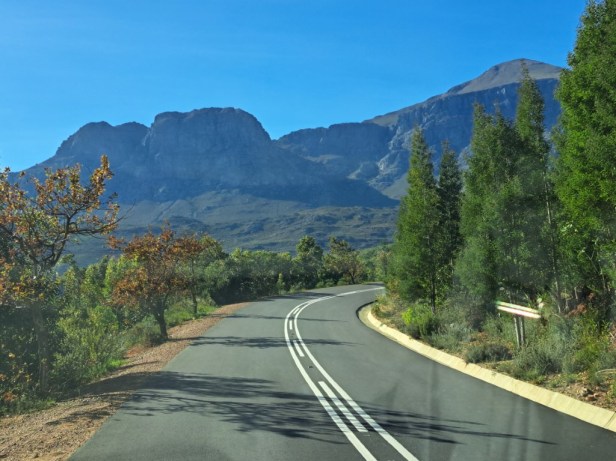
At the start of Bainskloof Pass
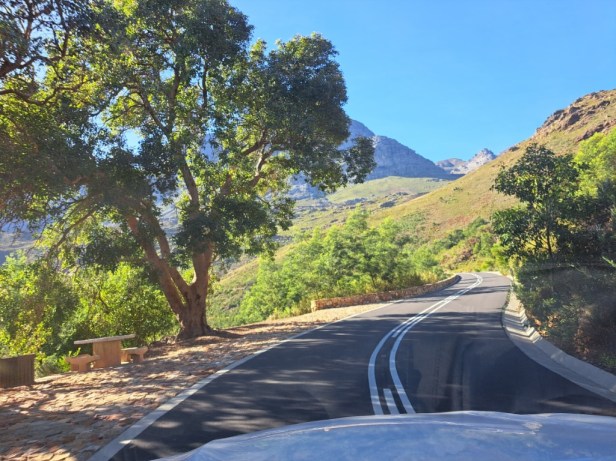
There are a few picnic areas and viewpoints along the pass
The pass, stretching over the Limiet Mountains, was originally built for horse-drawn traffic, but later tarred. Some people say the pass is 18km/11 miles long, while others reckon that from the very start on the outskirts of Wellington to the bridge over the Breede River (on Ceres’ side) the pass is officially 26km/16 miles. At the top of the pass is a stunning view over Wellington and the Cape Winelands.
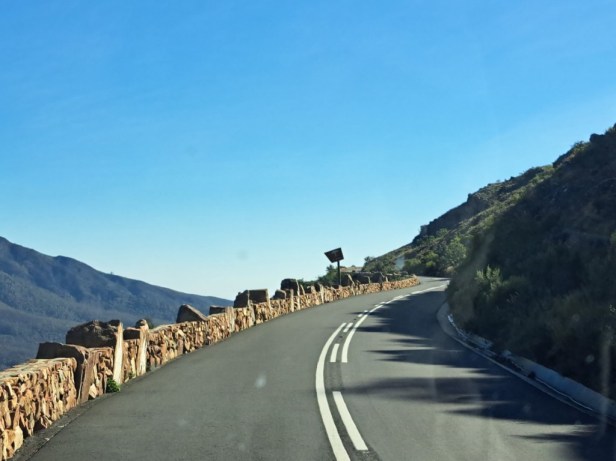
At the steepest part and nearing the top of the pass
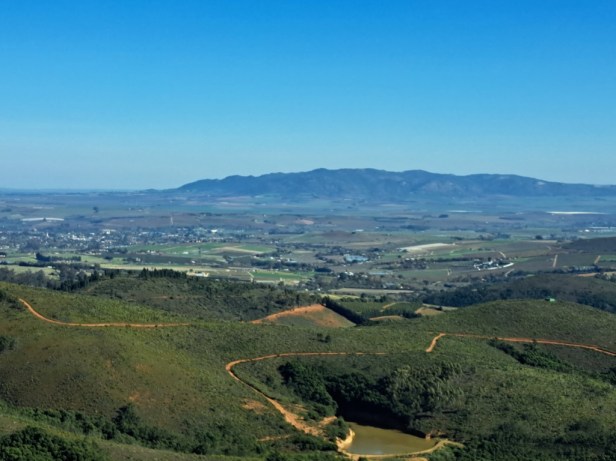
Magnificent view over the Cape Winelands
Once you’ve reached the highest point of the pass at 594m/1949ft, the road joins the Witte River, which descends on the northern side of the mountains. At some places the road is quite narrow, but the views are absolutely amazing so there’s no need to rush through this section.
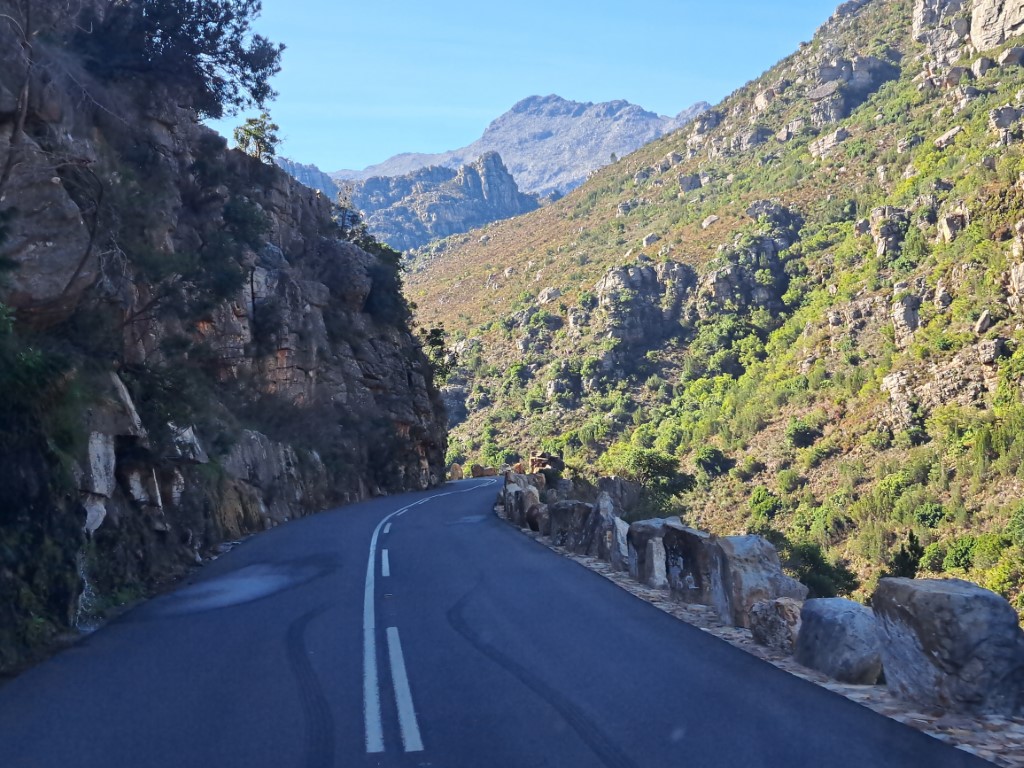
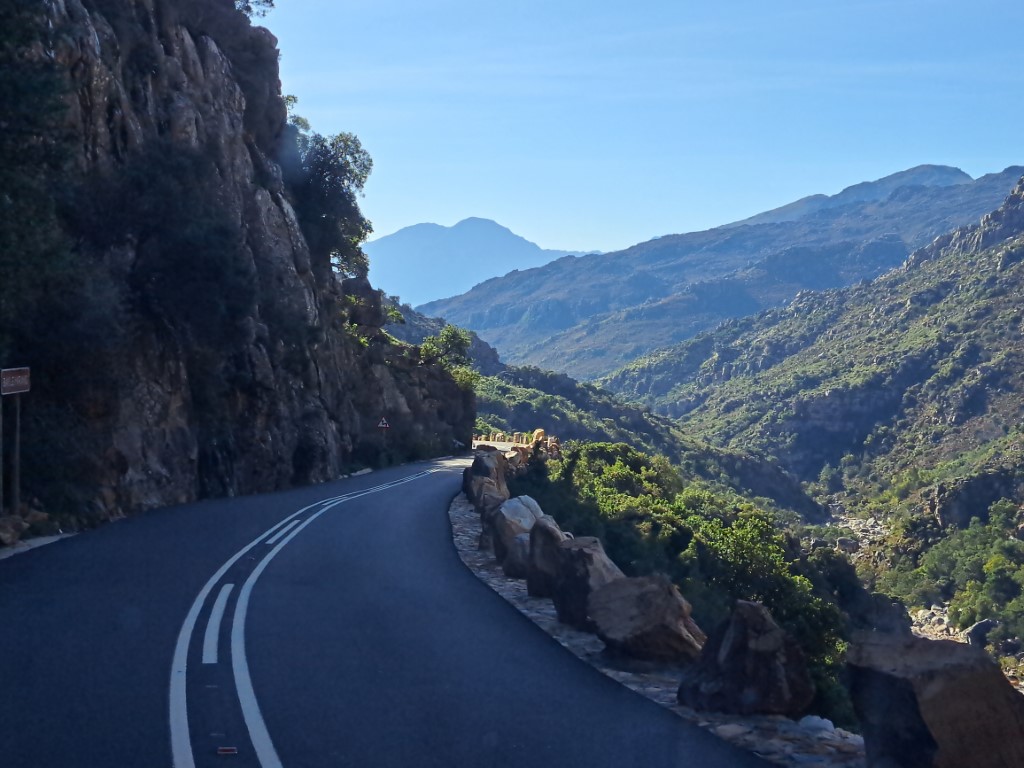
Descending Bainskloof Pass
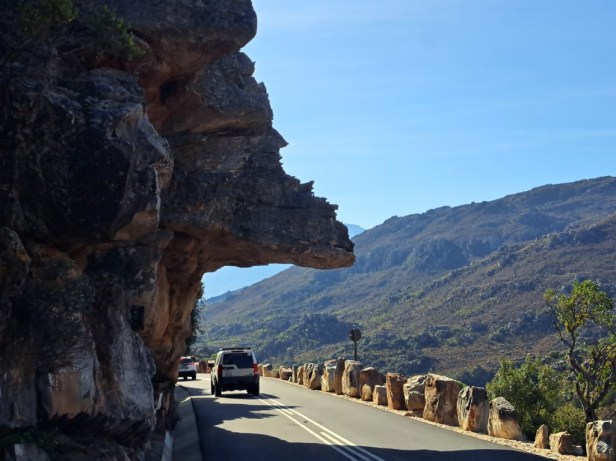
The famous Dacre’s Pulpit
Note: There is a dedicated post on Bainskloof Pass in our Throwback Thursday series (Throwback Thursday #17 – read here).
With the beautiful Bainskloof Pass behind us, we still had 124km/77 miles to drive to get to Kromrivier in the Cederberg Mountains. This meant we could do one of our favourite road trip activities – stopping along the way to enjoy lunch.
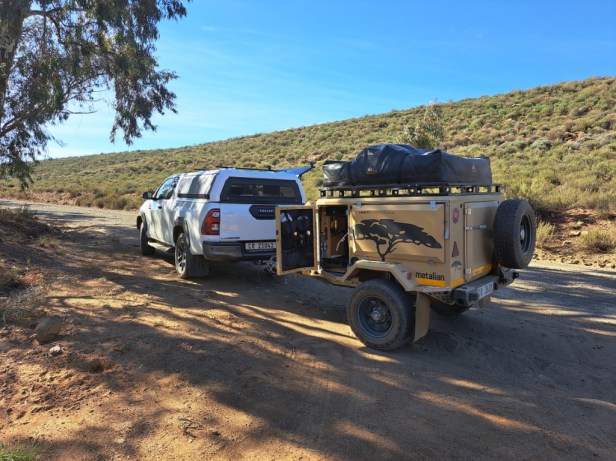
Stop for lunch (here you can see our new camping companion)
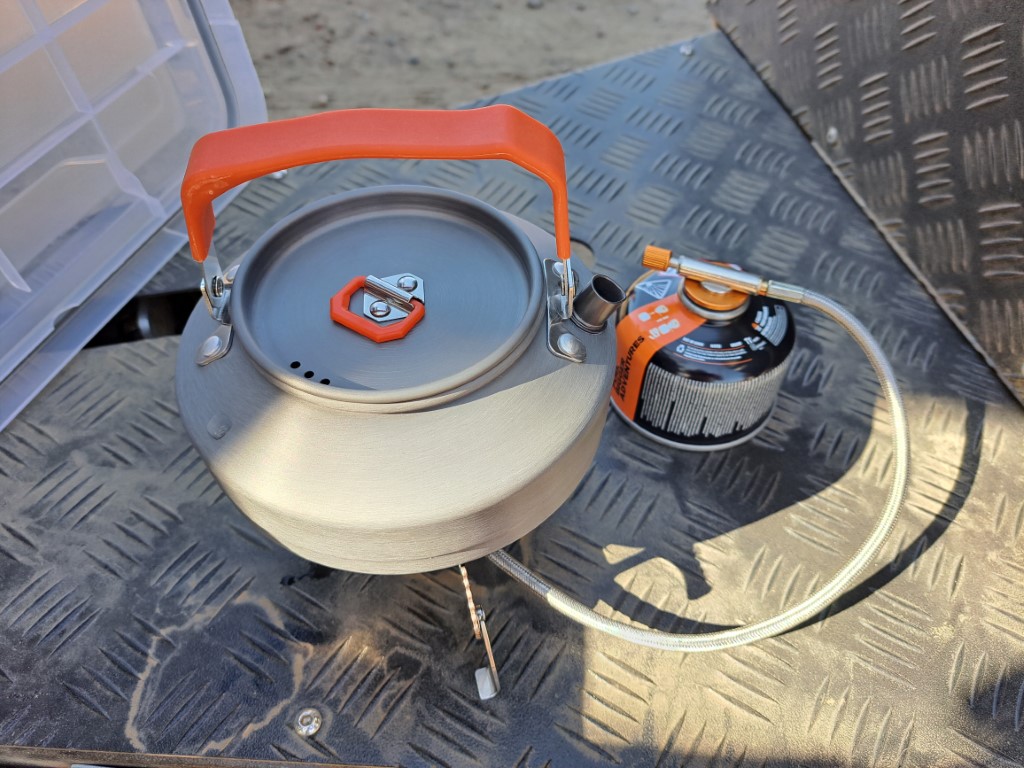
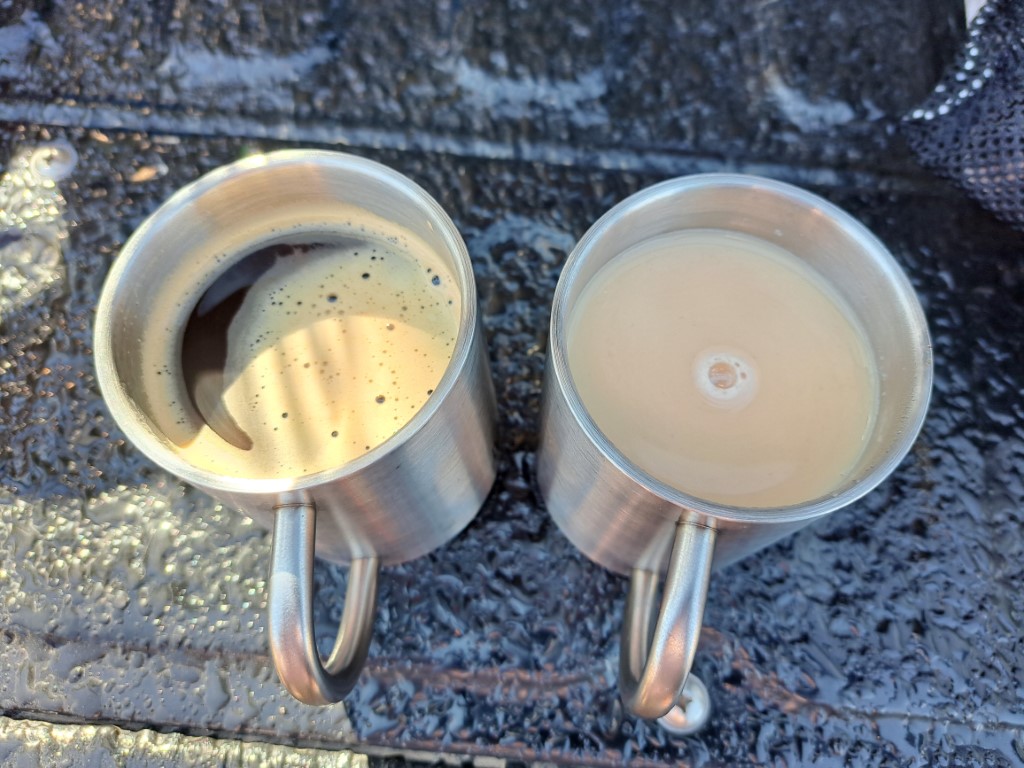
Time for coffee and tea
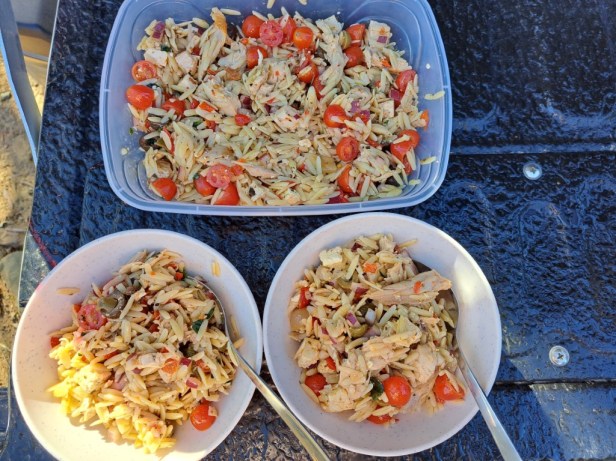
Berto prepared chicken and orzo salad before we left
The dirt road winds through the mountains for several kilometers until we reached the official sign that indicates we have reached the Cederberg Conservancy (also home to the Cape Leopard).
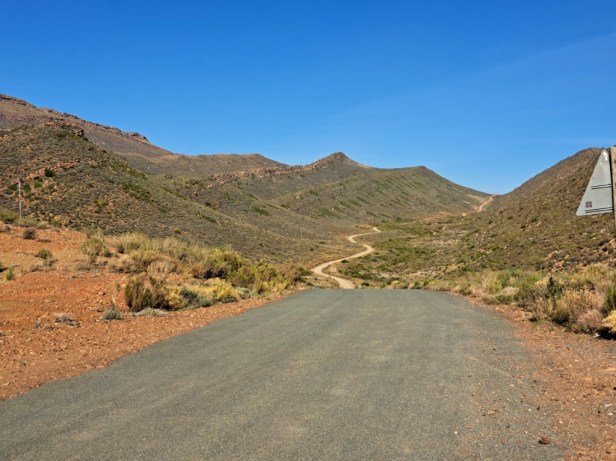
Dirt road on our way to Kromrivier
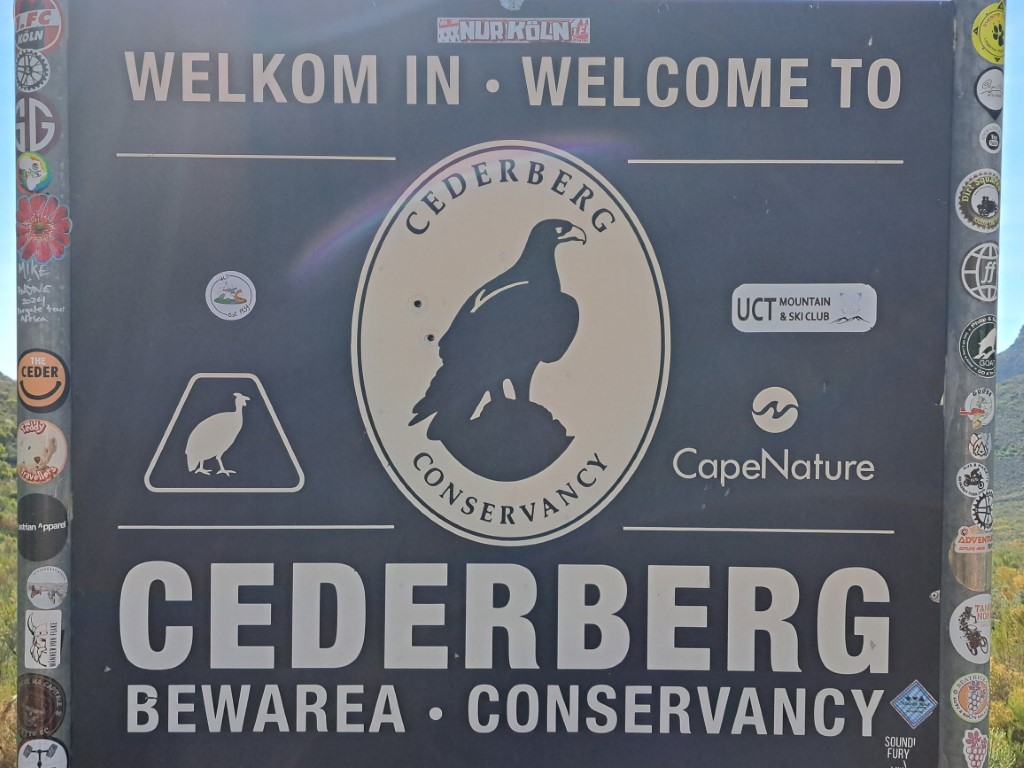
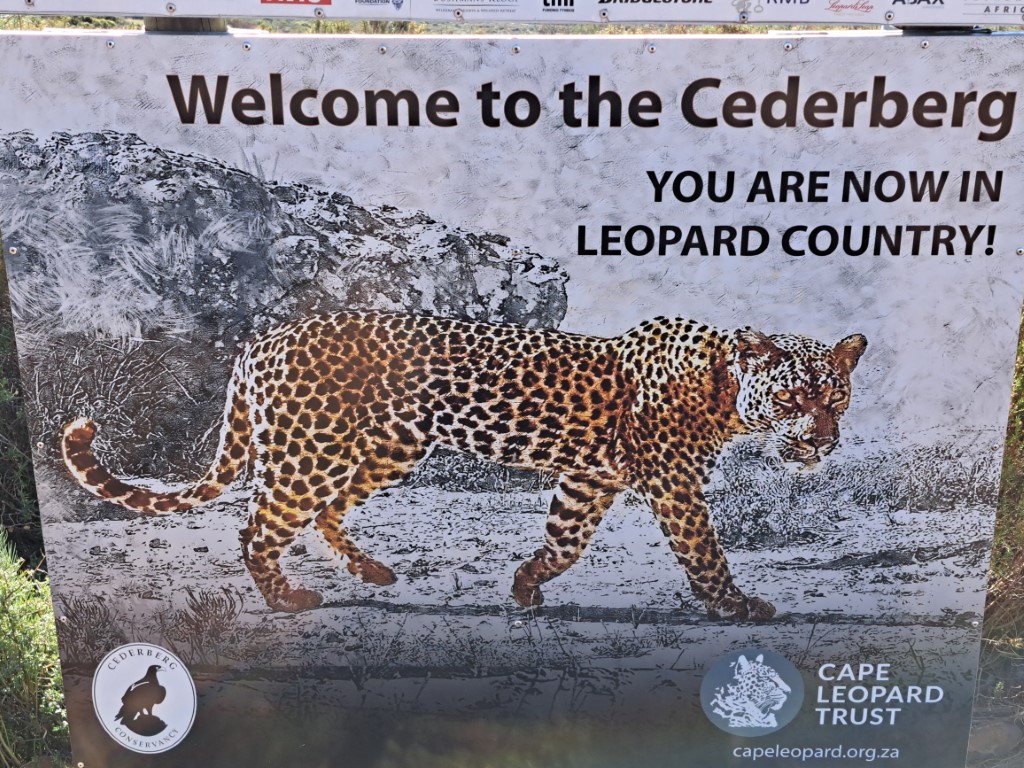
We are now in the Cederberg Conservancy
Kromrivier Cederberg Park:
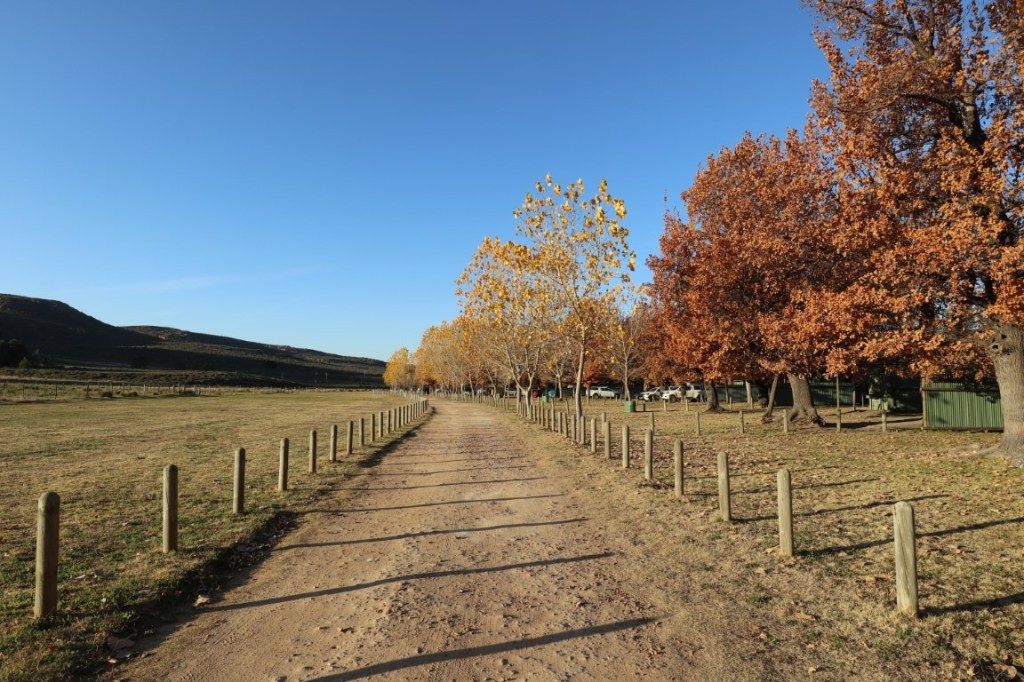
As we expected, Kromrivier was adorned in the most beautiful autumn colours. I will not write about our campsite again (as mentioned earlier, we wrote a comprehensive story about our camping weekend here in 2022). Today we will just show you how incredibly beautiful this campsite can look during Autumn.
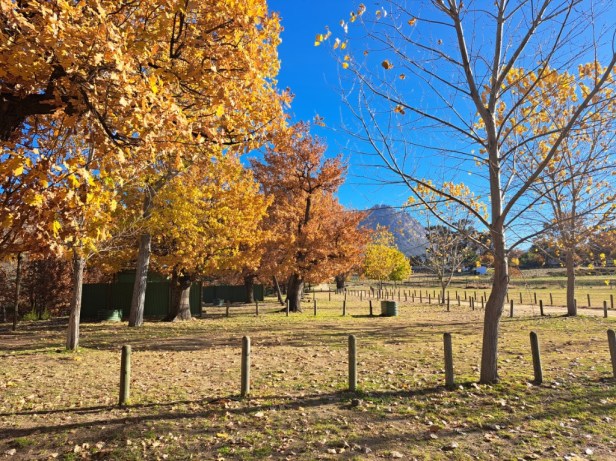
Our campsite at Kromrivier
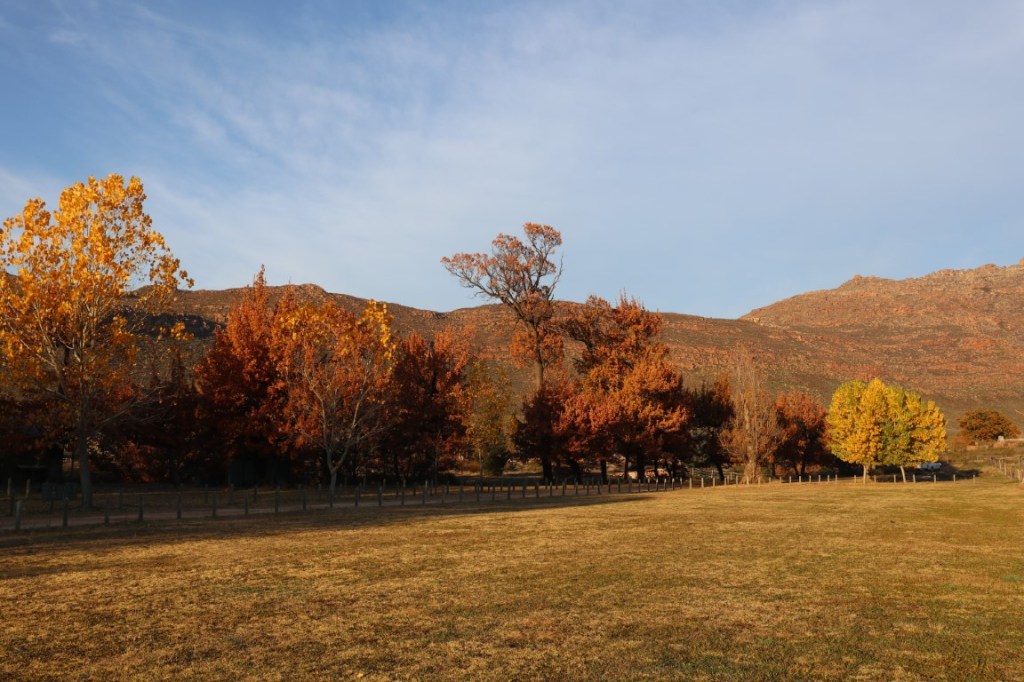
The campsites under Autumn-coloured oak trees
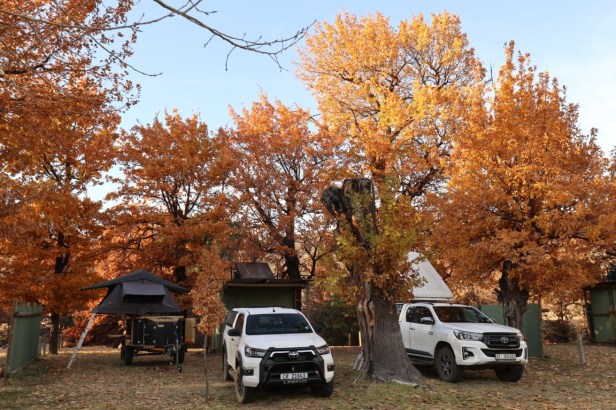
Beautiful camping spot
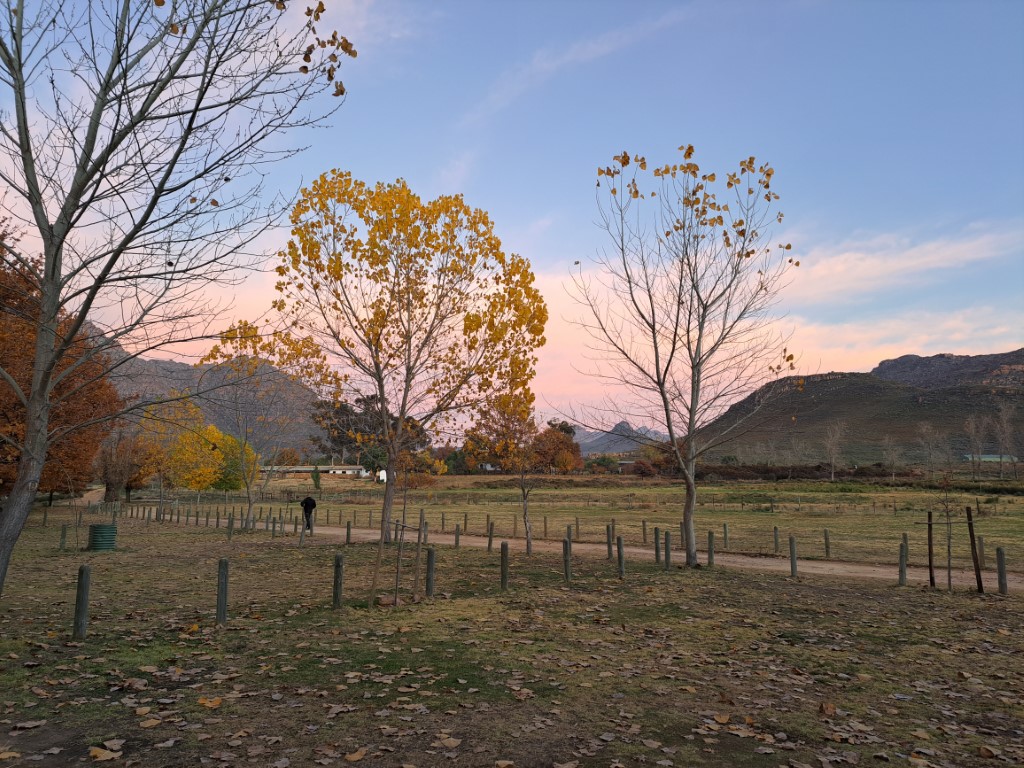
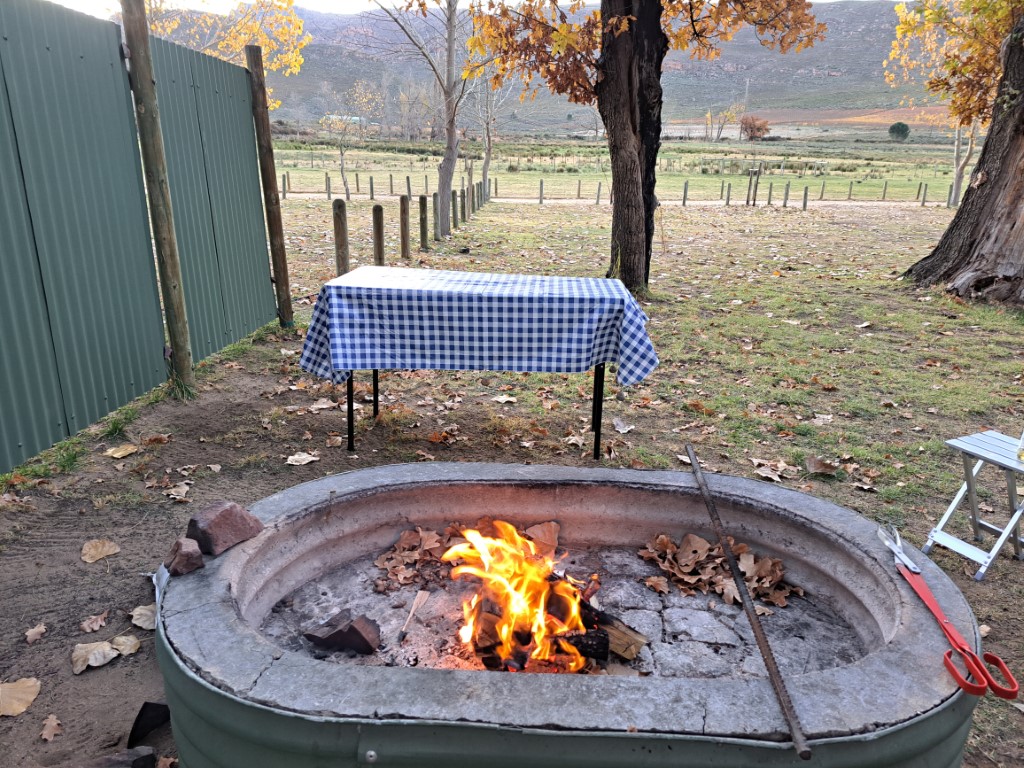
Sunset and time for a campfire
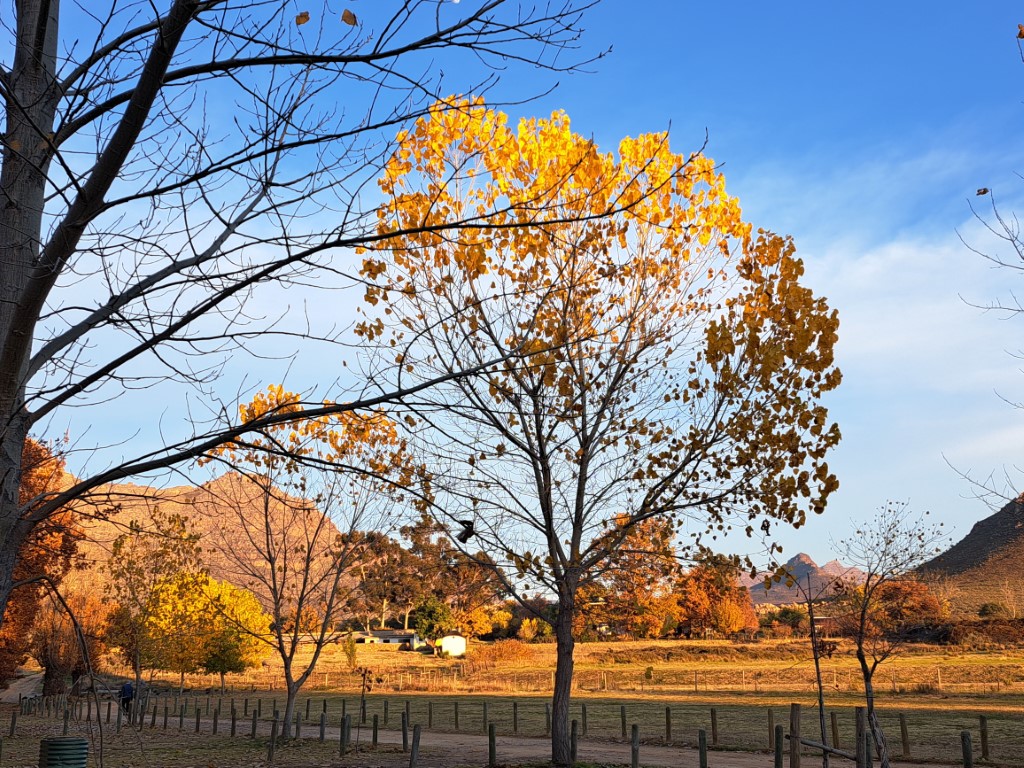
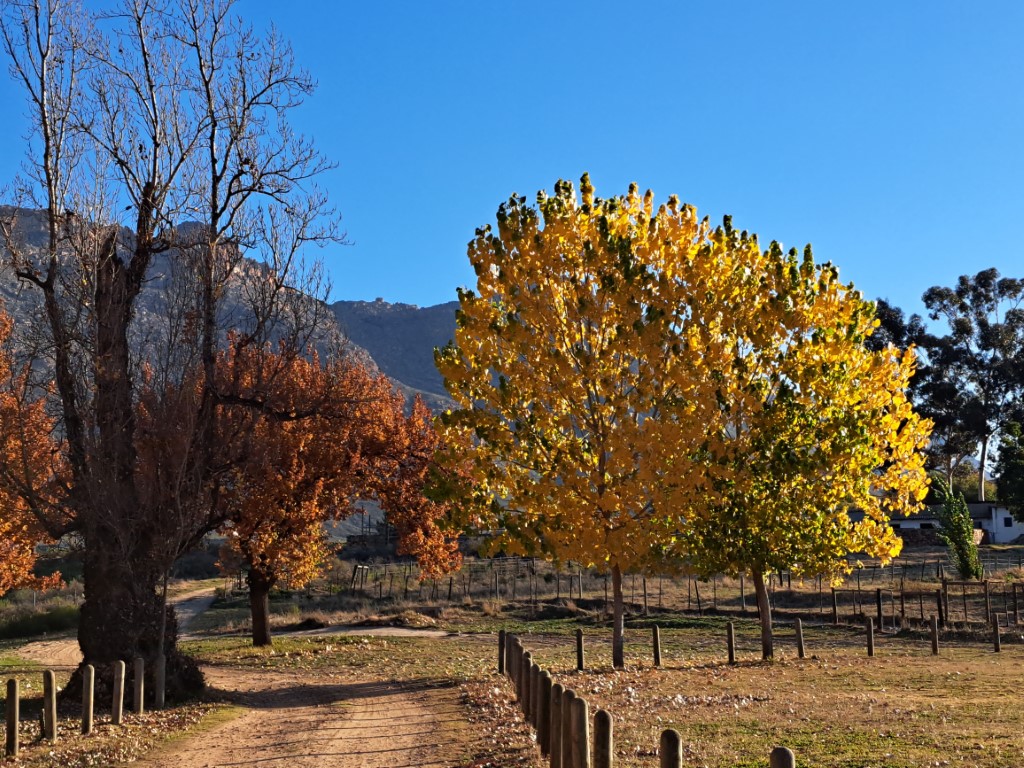
Sunrise at Kromrivier
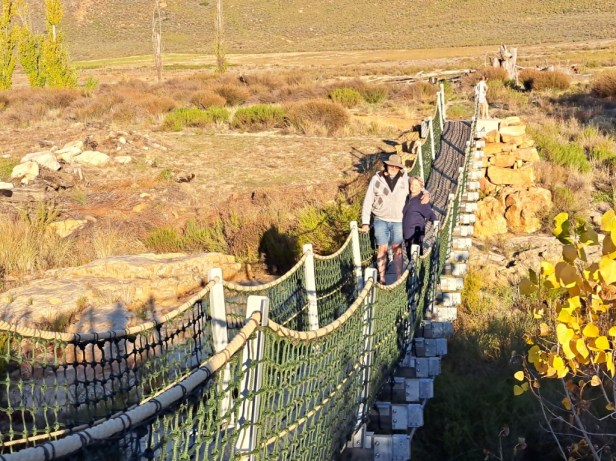
Our friends, Frans & Fiela on the pedestrian bridge over the Krom River
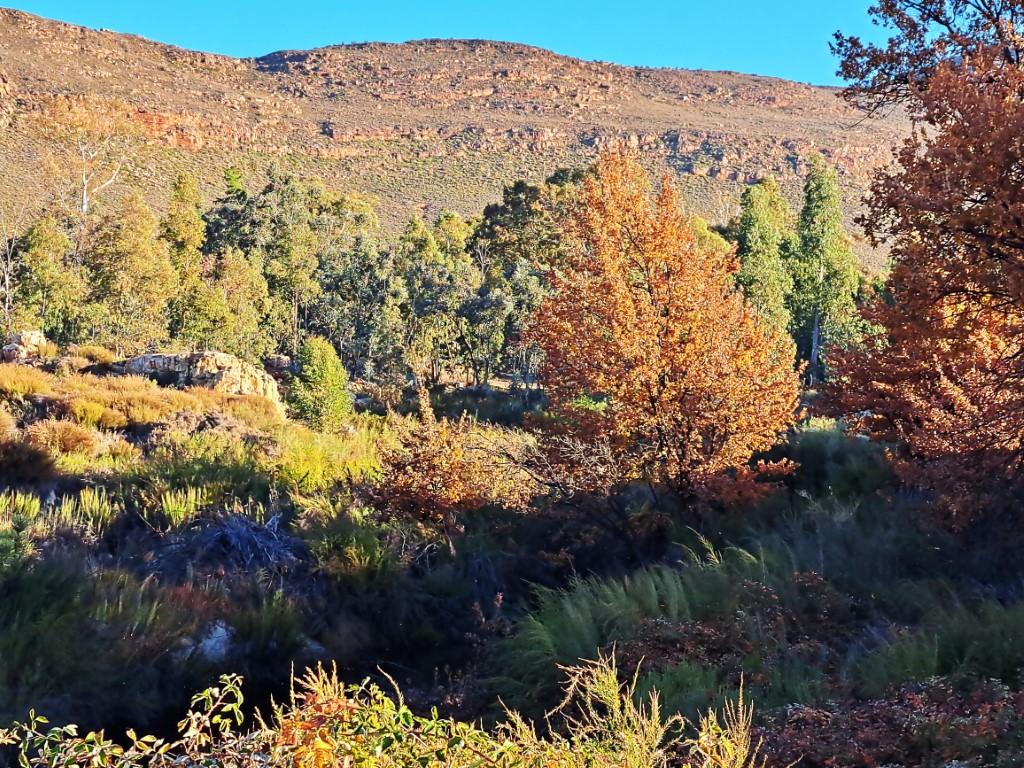
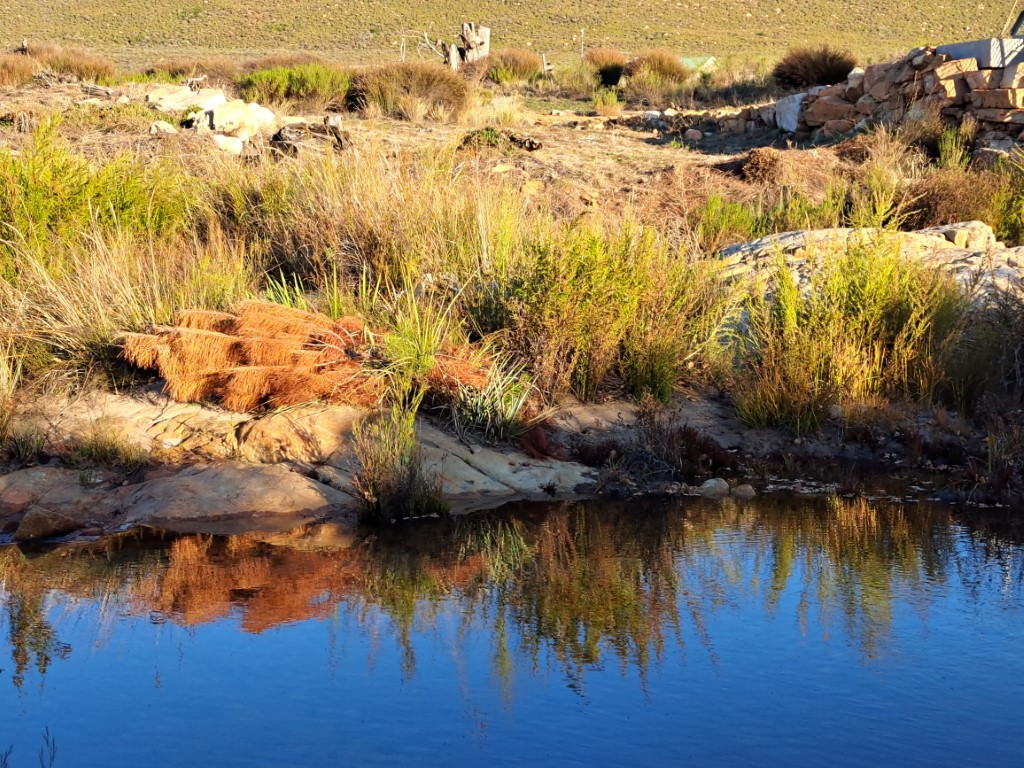
Late Autumn is a beautiful season for camping at Kromrivier
Metalian Parthian Trailer:
Now, let’s get to the star of this camping weekend … our new Metalian Parthian Trailer. It’s currently one of the best off-road options in South Africa and a perfect fit for anyone who wants to explore the outdoors – like us!
After we camped in the Eastern Cape and saw that it is quite a hassle to set up a ground tent with a kitchen tent for just a weekend, we began to look at other alternatives. After months of research (on Berto’s side), we decided to buy the Metalian Parthian trailer.
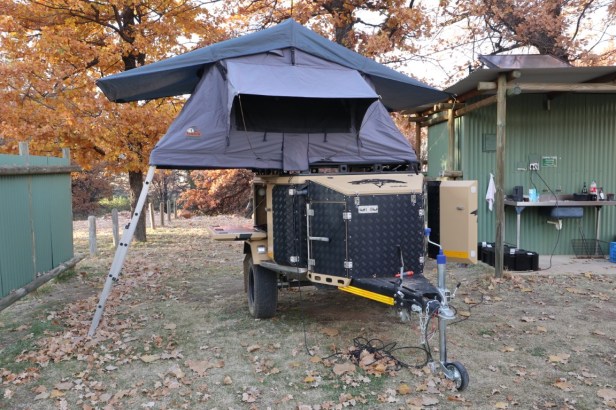
The Metalian Parthian Trailer with our rooftop tent (the one we had on our Namibia trip)
The Metalian Parthian is very compact and has everything to meet our needs. Most of you know how much we love to prepare food while camping, and with the Metalian, it is now very easy.
We bought the off-road trailer from 4Matt Campers in Bellville (a suburb of Cape Town) while we still lived 1400km away in East London. It required a lot of calls and emails, but in the end, great service from 4Matt Campers – and their patience to answer all Berto’s questions – ensured that we could pick up the Metalian Parthian trailer at their premises without any problems when we arrived in Cape Town in April.
The next part of our post has been written by Berto. The technical details may sound a bit strange (and over the top) to some of our readers, but for those of you who know something about off-road trailers (or want to know more), this information can be very useful.
Over to Berto:
When we bought the trailer from 4Matt Campers, it already had a fully self-sufficient 12v electrical system built in for off grid camping for extended periods. This system provides 12v power to the camping fridge, lights and to charge cell phones.
The 12v electrical system includes:
- Victron BMV700 Shunt and monitor to monitor the state of charge of the battery.
- Victron BlueSolar Charge Controller MPPT 100/20 to charge the battery from a solar panel.
- Victron Orion-Tr Smart 12/12-30A (360W) DC-DC Charger to charge the battery from the vehicle while driving.
- Victron BlueSmart IP65 Charger 12V 15A to charge the battery when you have 220V power available or charging at home.
- LiFePO4 Battery 105Ah with Bluetooth
- 8x LEDs to provide light at each of the doors
- 120W foldable Solar Panel
The fridge/freezer and the lights consume about 15% of the battery power per day. The solar panel can charge the battery to 100% in reasonable time depending on the weather. In South Africa we have clear weather most of the time (even in winter).
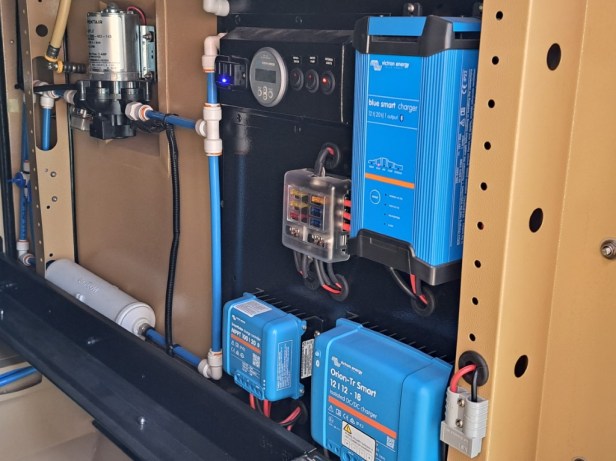
Built in electrical system
Another addition that the trailer already had was a complete water system. There are 2 x 68 liter tanks, a tap, a pump, and a filter, with a total water capacity of 136 liters of water.
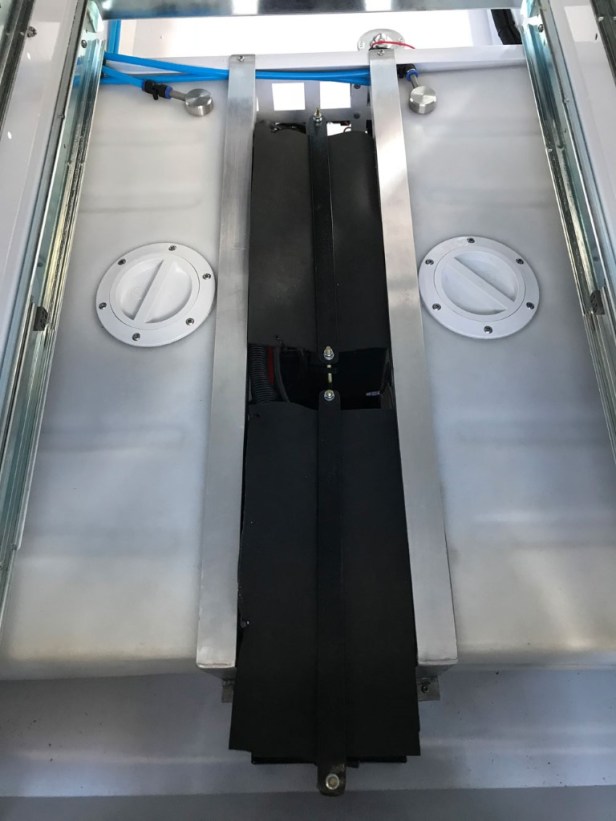
The 2 x 68 liter water tanks
To add the additional items we needed, I took the trailer directly to Metalian 4×4 Trailers & Canopies in Kuils River (another suburb of Cape Town). Again, we received excellent service from the team and here is what they installed:
- Hot water system (Gas water heater 5.5 liter) – yes, we can take a hot shower in the wilderness.
- Mixer tap in kitchen area for washing of the dishes
- Two Burner Gas Stove with Stainless Steel Worktop Kitchen Drop Down Door Hinged
- Cadac 5kg gas bottle to provide gas to the stove top and the hot water system.
- Canvas Caddie Complete set in all the doors to store cutlery and other items.
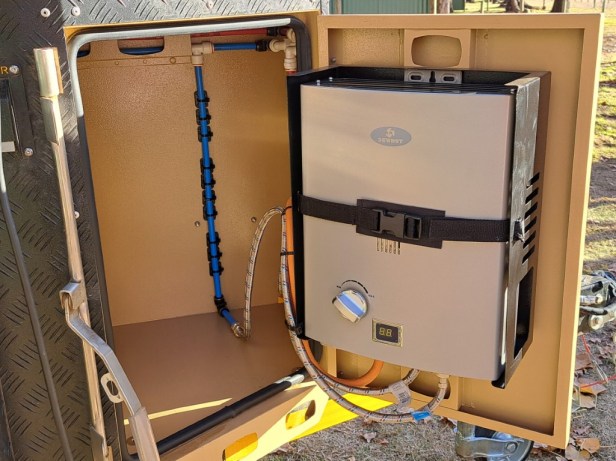
Gas water heater
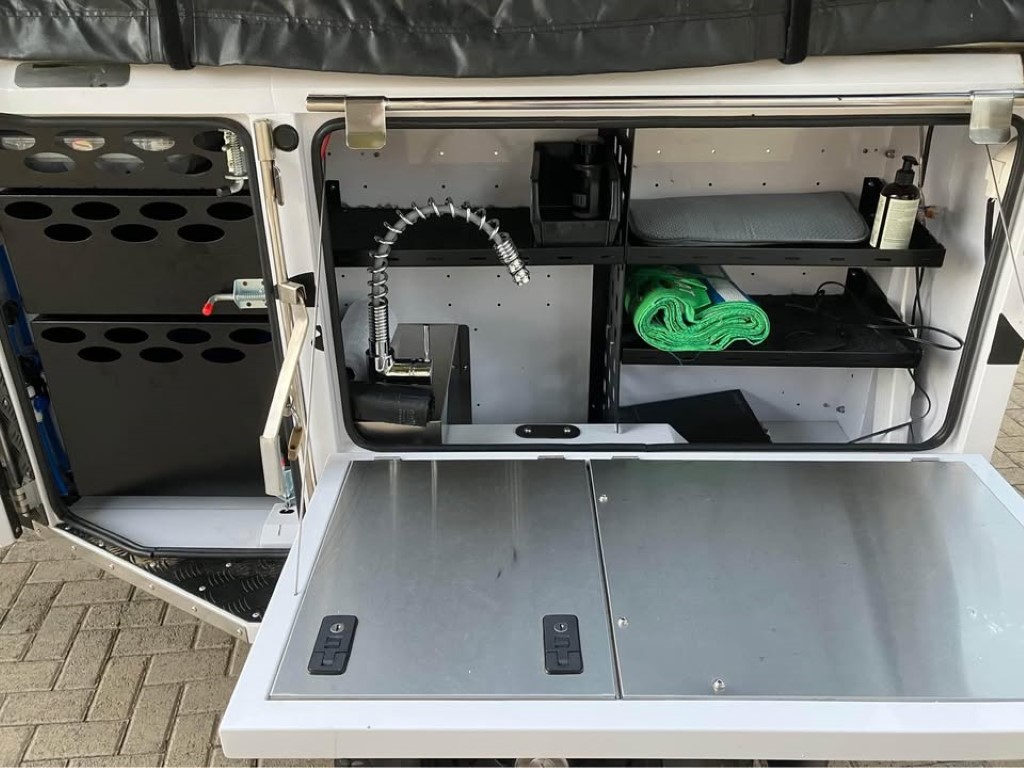
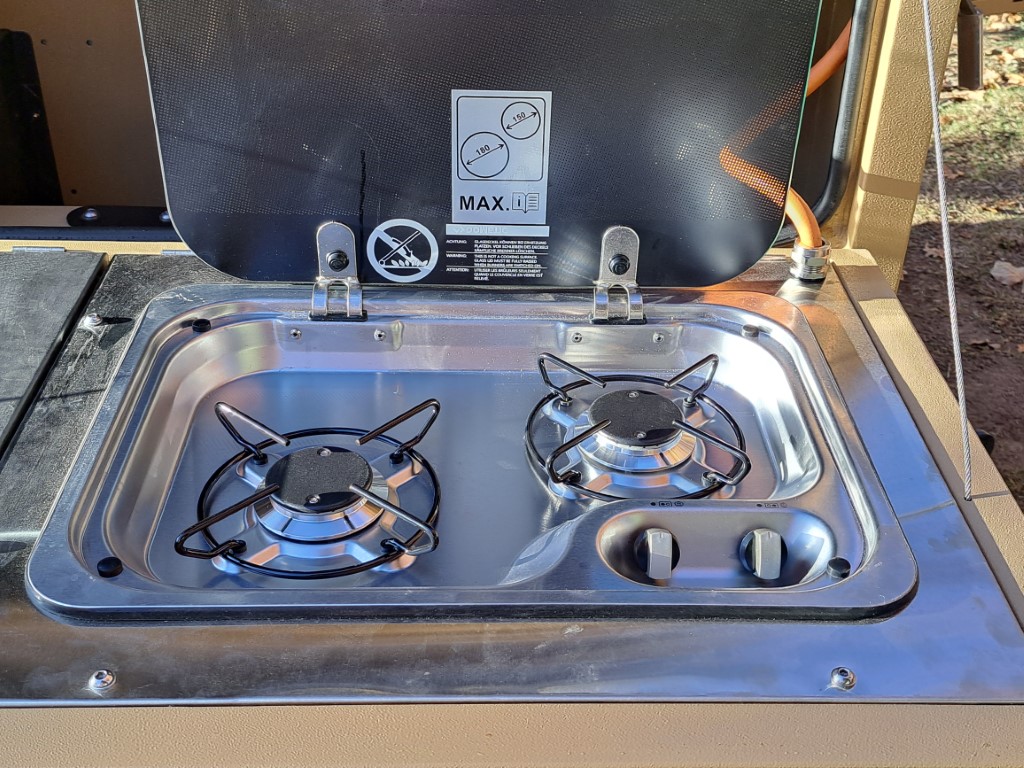
Mixer tap & two burner gas stove
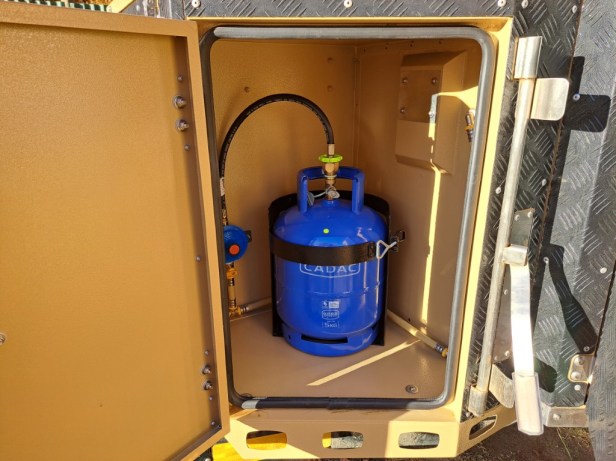
Cadac gas bottle

Canvas caddies for storage
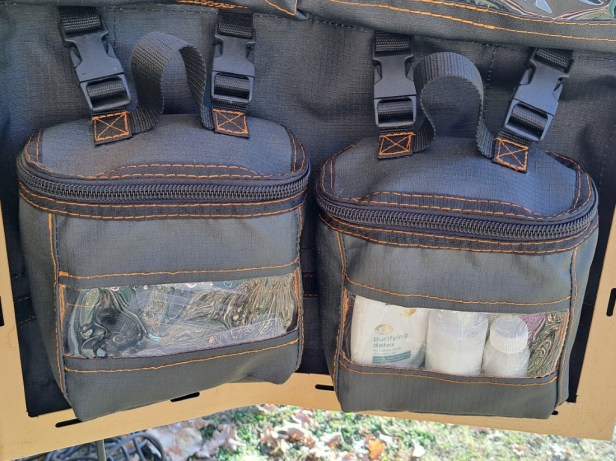
Our toiletry bags
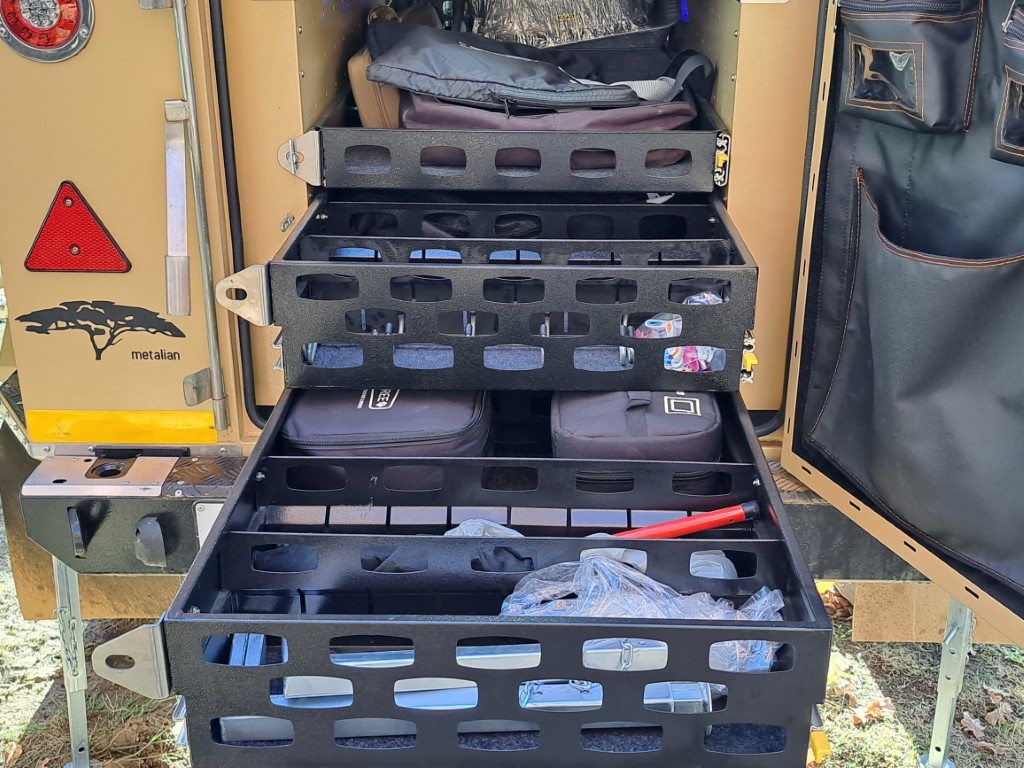

Pull-out drawers and more canvas caddies for storage
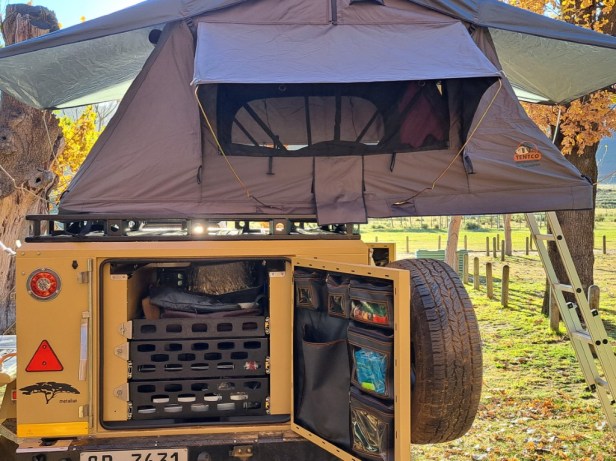
The back of the trailer
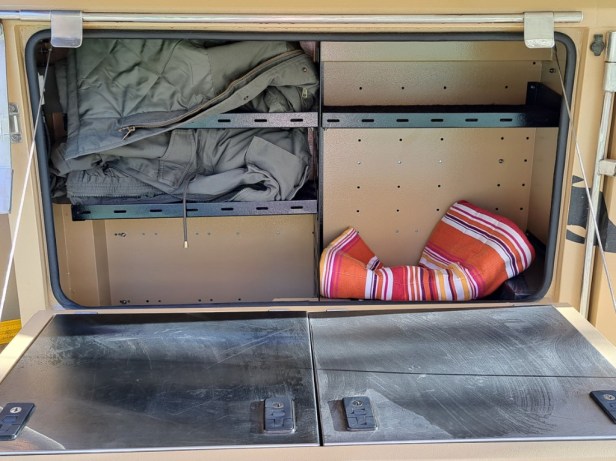
More storage – clothes, bedding, etc.
I also plan more electrical upgrades, which include the following:
- A second LiFePO4 Battery 105Ah with Bluetooth to increase the capacity to 210 Ah. The second battery is required to provide 220V power to the ice maker and other 220V equipment like a coffee machine.
- Victron 1200W Invertor to provide 220V when off grid.
- The current DC-DC Charger will be upgraded to a Victron Orion XS 12/12-50A DC-DC Charger.
- Solar panel with 220W capacity.
New electrical equipment that was not included on this trip (but we bought these in the meantime and will show them to you in our next camping post):
- National Luna 60 liter S/S Fridge/Freezer Combo with separate fridge and freezer compartments.
- National Luna 12kg Ice Maker (makes 12kg ice in 24 hours). The ice maker works from a 220V power supply and require an inverter to supply the 220V electricity from the battery.
That’s it, over and out from Berto.
If you didn’t understand everything, don’t feel alone – I struggle with all the terminology too. The most important thing (for me) is to know that I can take a hot shower when we go wild camping and that I have now more than enough space for everything I always want to bring along on a camping trip!
We enjoyed camping at Kromrivier again. The evenings around the fire while we listen to the sounds of nature are always the best part of camping. And it was great to do this with our friends again.
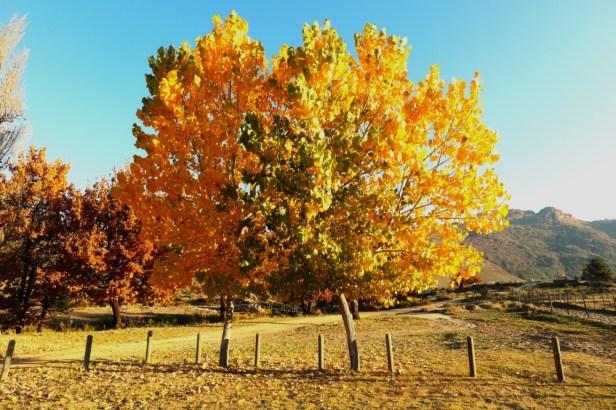
Kromrivier looks stunning during Autumn
We took a beautiful road out of the Cederberg Mountains. At the low-water bridge where the Olifants River flows, we paused for a while and enjoyed breakfast – French loaf with smoked chicken pâté and a warm cup of coffee and tea. That my friends, is how one wraps up a camping weekend.
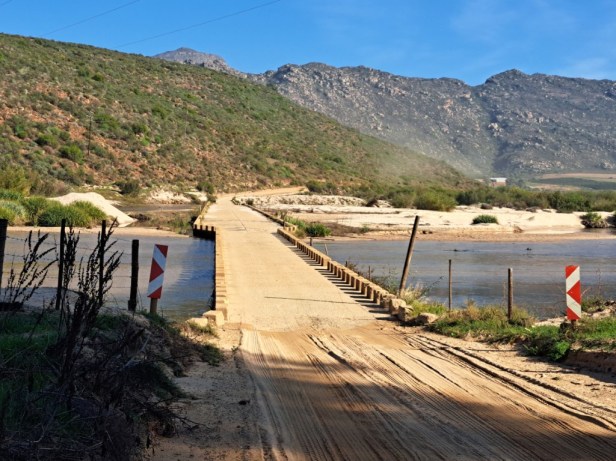
Breakfast at the low-water bridge

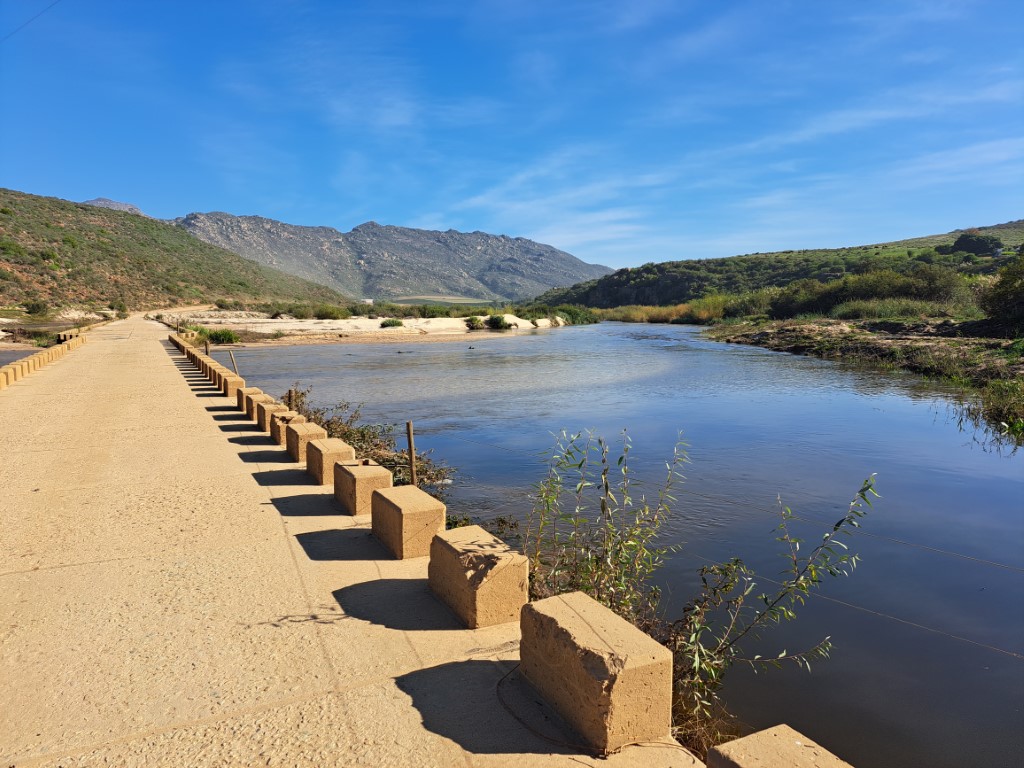
Olifants River
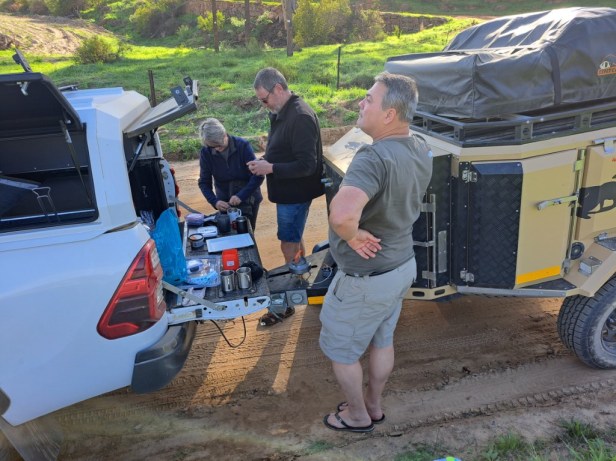
Preparing drinks and breakfast
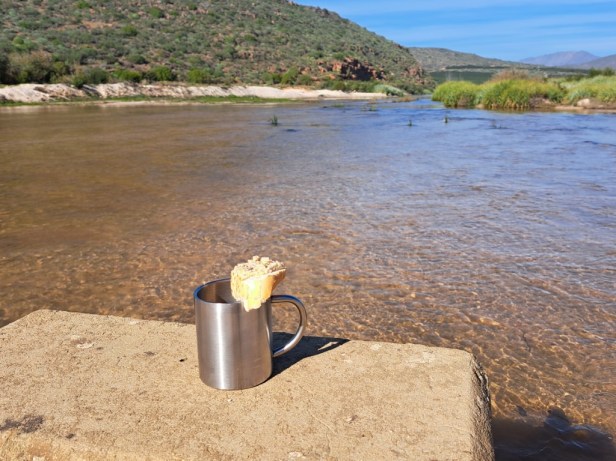
Breakfast in nature
In our next post, we’ll take you on a short hike through the amazing rock formations at Truitjieskraal – click here.
 Wet and Dusty Roads
Wow, that’s such a neat trailer! I’m always amazed at how much can be fit into such a small space, and all the strategies that are used to make it so functional.
LikeLiked by 1 person
That’s exactly what I thought too – how much storage space there is in this trailer! The Metalian Parthian is definitely functional – and ideal for all those rugged dirt roads that we so love to drive!
LikeLiked by 1 person
Wow. That is an impressive bit of camping gear, so well thought out and all-inclusive. As I’ve said before – you are the guys to go camping with, what with your culinary skills and now mobile warm showers! You chose a wonderful site for the initiation of your new companion and the Fall colours are glorious. My time of year – as you know!
LikeLiked by 1 person
Just think about it – a mobile hot shower! I was sold the moment Berto told me about this feature in the Metalian Parthian 😉. Yes, Kromrivier was the perfect first campsite in the Western Cape after our return – I would say it was the perfect backdrop to introduce our trailer. Isn’t Autumn just such a glorious season? I’m already looking forward to your photos of Autumn!
LikeLike
The fall colours are beautiful. And your new camping addition looks amazing. Great to hear that you can even take a hot shower with it! Now that’s luxury!
LikeLiked by 1 person
Autumn is my favourite season – well maybe Summer too (I miss the warmth of the African sun at the moment). But Autumn is definitely the most beautiful season at Kromrivier! Exactly – now there is no reason to stay in a hotel to experience a bit of luxury … our new camping trailer has everything I’m going to need (that hot shower was a stroke of marketing genius 😁).
LikeLiked by 1 person
Oh, wow! those trees! What a fabulous camp site. And another journey over Bainskloof Pass. One of my favourite places. And your new camping companion is going to make camping a doddle from now on. You will never have to ‘rough’ it again 🤭
LikeLiked by 1 person
During our last visit to Kromrivier it was summer and super-hot! I think I prefer autumn to camp here – the trees were incredibly beautiful (especially with sunrise). We love Bainskloof Pass – the views are always spectacular. Haha, yes, our rough camping days are over – now even wild camping can be a luxurious affair 😂!
LikeLiked by 1 person
That’s such a cool set-up and although you lost me with a lot of the specs, I can appreciate how much you’ve put into planning and installing what you want and need for your camping trips. Will make it so much more comfortable for future adventures!
LikeLiked by 1 person
I’m glad it’s not just me who doesn’t understand all the technical details … but what does matter (like the hot shower and plenty of packing space) has provided me with great pleasure! I think because my husband loves to cook when we camp, he made sure about that part of the trailer and that it has everything he could possibly need. And knowing him, this is probably not the end of all the accessories – I’ll keep you guys updated!
LikeLiked by 1 person
So much fall color (my favorite season). And what the heck!!!! That trailer is amazing. Now you know how I use to camp only I had to pack all the things like stove separately. It is so nice having everything all together. Great buy!
LikeLiked by 1 person
It seems to me that Autumn is a favourite season for many of us! I think Berto is trying to keep me away from hotels – that’s why he bought this camping trailer 😂. But I must admit, it gets my vote for the most convenience during our many camping excursions over the years. It’s nice that everything is together … maybe mostly for the man who has to cook during camping weekends.
LikeLiked by 1 person
I can see why it’s a favourite spot, looks beautiful in the fall too. Tell Berto he could go into camper sales, but we need a tent light enough to carry on our backs 😊 Maggie
LikeLiked by 1 person
Berto is – among other things – a qualified electrician (so you can probably understand why he had so much to say about the electrical system😉). Ha, the Metalian Parthian will definitely not work for a hike … but we can park it somewhere, put our hiking tent in our backpack, go for a hike for a few days and then come back and take a hot shower at the trailer!
LikeLiked by 1 person
Wow, your camping trailer is amazing, as are the autumn colors and beautiful scenery! If I ever have questions about camping I know who to ask! Lovely post and photos, Corna and Berto.
LikeLiked by 1 person
Kromrivier is definitely the perfect camping destination during autumn! Because we’ve been there before, I knew the campsite with all those oak trees would look lovely with their autumn leaves, but it surprised me just how beautiful it was. You’re welcome, we will show you how to camp luxuriously … but I promise we won’t be too far away from a lodge (just in case 😉).
LikeLiked by 1 person
Wow, I am not too sure what is more impressive – the stunning scenery or your camping gear. Some of the things on your list I need to look up, as I have no idea what they even mean. I have noticed that rooftop tents are gaining popularity in Ireland as an alternative to traditional ground tents, but it’s not that surprising, because you don’t need a flat, level surface, and they can be set up and packed away in a matter of minutes. Plus, there are enhanced views and increased comfort. Thanks for sharing, and have a good day 🙂 Aiva xx
LikeLiked by 1 person
Let me put it this way: The beautiful autumn-coloured trees were the perfect backdrop for our new camping trailer (the one as beautiful as the other 😉). Yes, rooftop tents are definitely the way to go when you want to set up camp quickly and easily … and the views from up there are amazing (as I will show in a next post at another camping weekend). I’m also not entirely sure about all the terminology, but when Berto told me about every little detail on the Metalian, I only heard the words “hot water geyser” and then I was like “Yes, let’s buy that trailer immediately”! Have a wonderful week Aiva.
LikeLike
Wonderful scenery, Corna, and that trailer looks perfect for seeing it xx
LikeLiked by 1 person
Autumn is my favourite season – and here at Kromrivier I realised why! As for the trailer … it’s perfect (for people who enjoy camping 😉).
LikeLiked by 1 person
I can’t pretend to understand all the details of your new trailer but I can see how it will make camping even easier and pleasanter for you 😀 And what a lovely autumn location in which to test it out!
LikeLiked by 1 person
You’re right Sarah, this trailer will definitely make camping easier, but especially more enjoyable! Kromrivier was the perfect backdrop to introduce (and test) our new Metalian Parthian – autumn in the Cederberg Mountains is a beautiful time!
LikeLiked by 1 person
Hierdie sleepwa is ñ wenner, Corna. Ek is verstom oor alles wat julle nou saamry, regtig als wat mens nodig het! Om nie eers te praat oor die voorreg van ñ warm stort nie! Definitief ñ uitstekende koop.
Die herfs-kleure is droommooi.
LikeLiked by 1 person
Berto het lank na ‘n treiler gesoek wat aan al ons behoeftes moes voldoen en die Metalian Parthian was uiteindelik die regte keuse. Ja, kan jy glo … ‘n warm stort terwyl jy “wild camp”?! Ons vat hom volgende naweek Tankwa Karoo toe en sal dan die geleentheid hê om die warm stort te toets (lekker in die middel van ‘n koue winter 😁). Og, die bome by Kromrivier was prentjie mooi – herfs is beslis ‘n goeie seisoen om hier te kamp!
LikeLiked by 1 person
Welcome back to the Western Cape and congratulations on your new trailer! It looks amazing and I wish you many happy trips with her.
Your photos a superb and the Cedarberg certainly looks splendid in Autumn.
LikeLiked by 1 person
Thank you so much, we enjoy being back in the Western Cape. I think we bought the new camping trailer just at the right time – there are many campsites waiting to be discovered 😉. Kromrivier in the Cederberg Mountains is one of those campsites that is beautiful in any season (although it can get very hot here in the summer), and I’m glad we could see how stunning it is during autumn.
LikeLiked by 1 person
WOW! Camping just got fancy!! I’m impressed! 🙂 Both the campsite and the kit are outstanding! Mel
LikeLiked by 1 person
Haha, who said that camping can’t be luxurious 😁. We hope to do much more wild camping with this trailer – I mean, a hot shower! Yes, Kromrivier was beautiful in late autumn and I’m glad we chose this campsite as the first one since our return to the Western Cape!
LikeLiked by 1 person
Wishing you many happy trails in your new camper. There’s nothing wrong with a bit of comfort. 🙂
LikeLiked by 1 person
Oh wowsers, what a camping companion that is!!! 🙂
LikeLiked by 1 person
Now there is no reason why we can’t go camping in the winter 😉. We have already gone camping three times with our Metalian trailer and it makes camping so much easier now – love our new camping companion!
LikeLike
Looks like you are well equipped to go camping. I hadn’t realised that camping is so popular in South Africa.
I used to love camping in the south of France with my parents but camping in UK is not for me. Too cold and wet 🤣.
LikeLiked by 1 person
Camping (and ‘braai’/barbecuing) is one of the most popular outdoor activities here in South Africa … two things we also enjoy a lot 😉. You’re right, camping in the rain and cold isn’t really my idea of fun either. However, here in South Africa it doesn’t get as cold as in Europe (and it doesn’t rain as much as in the UK), so we are fortunate to camp in winter.
LikeLiked by 1 person
Gotta love the trees in Autumn 🍁
LikeLiked by 1 person
That’s true, there’s just something special about the trees when they are dressed in beautiful Autumn colours.
LikeLiked by 1 person