May 2025
A geographical wonder & quirky campsite
Helmeringhausen was such a wonderful place to camp (read here). We wouldn’t have minded spending another night here, but it was time to move on.
After a blissful night in our rooftop tent – with no wind at all – we woke up early the next morning. With a hot cup of coffee and tea in hand, we enjoyed the beautiful sunrise from our campsite before started packing up. Today we had to drive 284km/176 miles to our final destination of our Namibian road trip.

Sunrise at Helmeringhausen
The dirt road was once again in very good condition. We stopped a few times to look at the big puddles of water next to the road. The south of Namibia has definitely received more rain than usual this season and the sight of these puddles must put a smile on every farmer’s face.
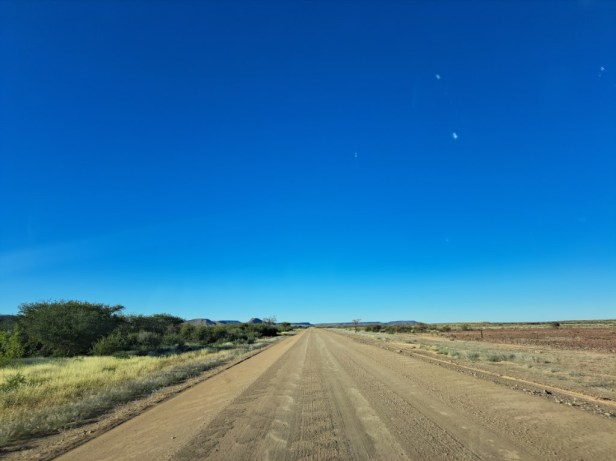
Another great dirt road in Namibia
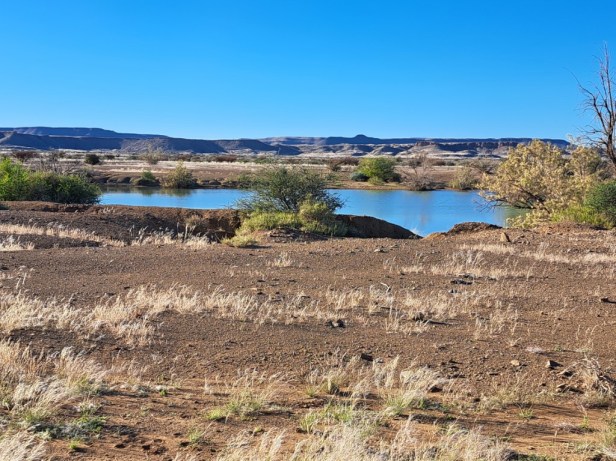
Puddles of water next to the road
For the next 150km/93 miles we only found one small village before we got to a tarred road which we followed for about twenty minutes. At the sign “Fish River Canyon/Ai-Ais” we turned right and drove the last 80km/49 miles on dirt road again.

We almost forgot what a tar road looks like
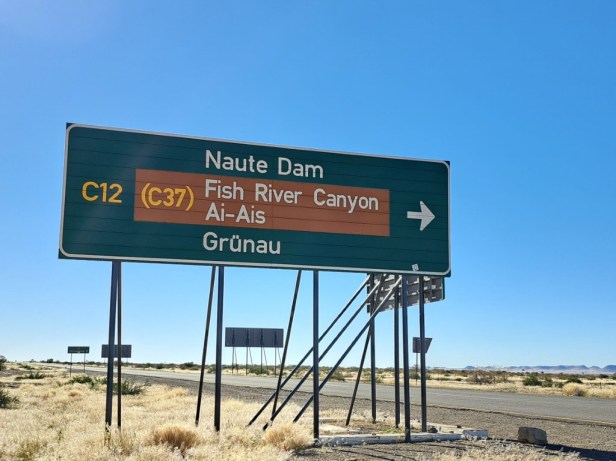
Heading towards the Fish River Canyon
Naute Kristall Distillery:
We drove past the Naute Dam and then over a low water bridge before we saw a place that looked like a ‘padstal’ (farm stall). It turned out to be the Naute Kristall Distillery where award winning gin are produced – well now, that sounded like the perfect place to stretch our legs before continuing on.
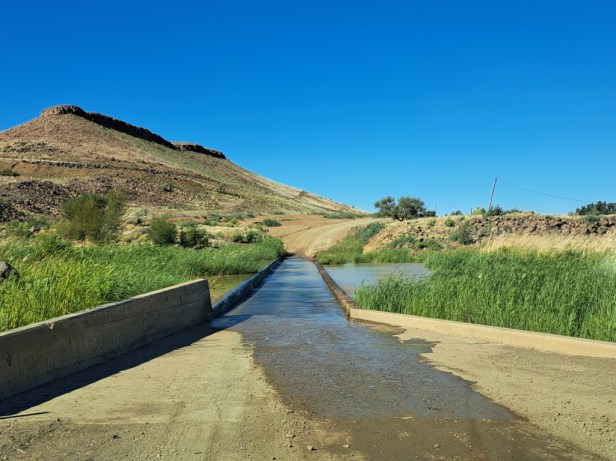
Low water bridge close to Naute Kristall Distillery
While we took a seat at one of the outdoor tables, we could see large date plantations. According to the receptionist, dates are produced here on a commercial scale. The fruit is suitable for human consumption, but does not meet the requirements for retail and is therefore used for the distillation of alcohol.
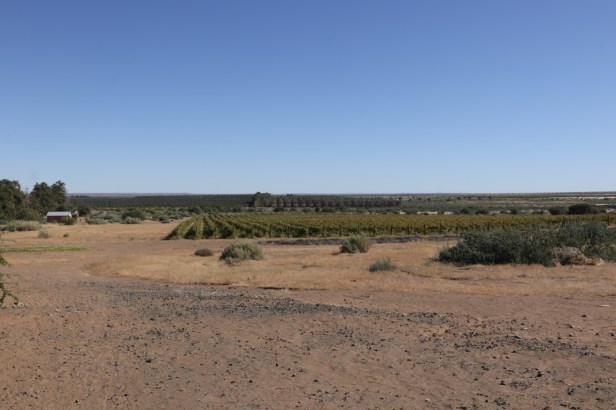
Date plantations at Naute Kristall Distillery
Although it was already past noon and a gin tasting session sounded very appealing, we still had about an hour’s drive to our accommodation and a further thirty minutes to the Fish River Canyon. So, we decided to rather enjoy their popular carrot and pineapple cake along with a cup of rooibos tea. However, we didn’t let the opportunity pass to buy a bottle of their famous Devil’s Claw NamGin to enjoy later.
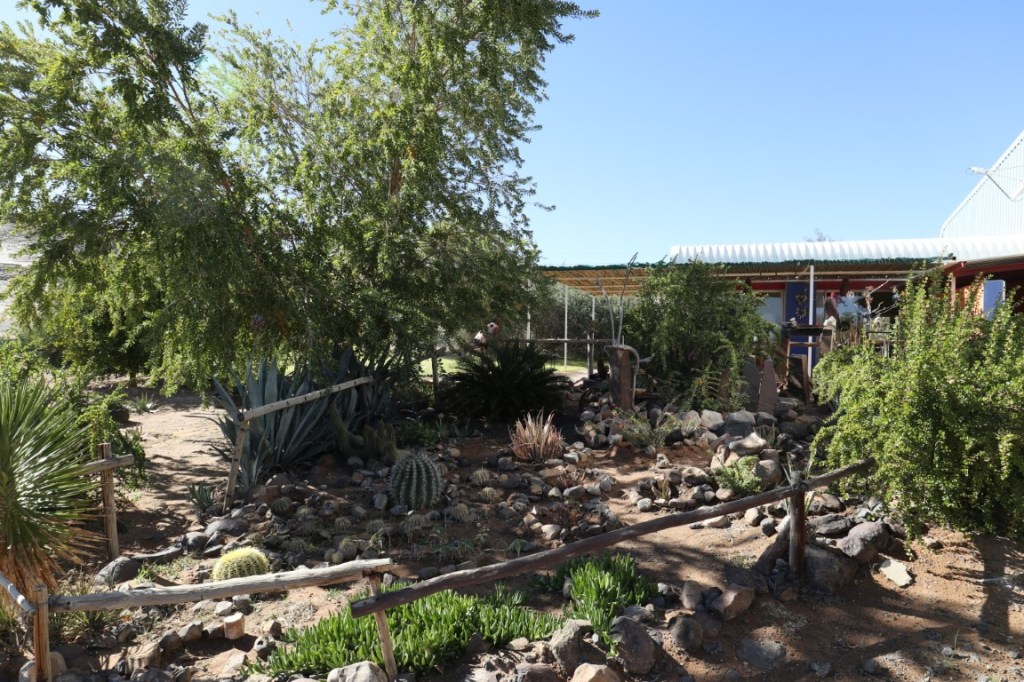

Outside seating area (with a bird taking a bath)
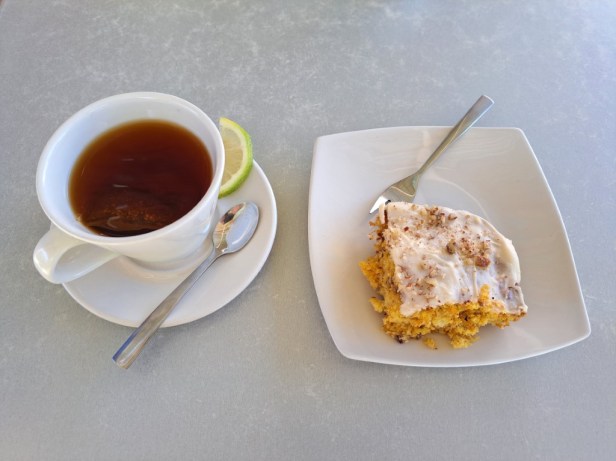
Carrot and pineapple cake – yummy
While we were enjoying our cake, a cyclist from The Netherlands chatted with us. He was on his way from Cape Town to Kenya on his bicycle. He asked if we knew of a place nearby where he could inflate the tires of his bicycle to ride more comfortably on the dirt road.
Berto said that there is no place nearby, but that we have a compressor with us for when we might need it for our ‘bakkie’ tires and that we can help him quickly. I could see the guy was quite relieved (and probably also surprised that we had a compressor with us).
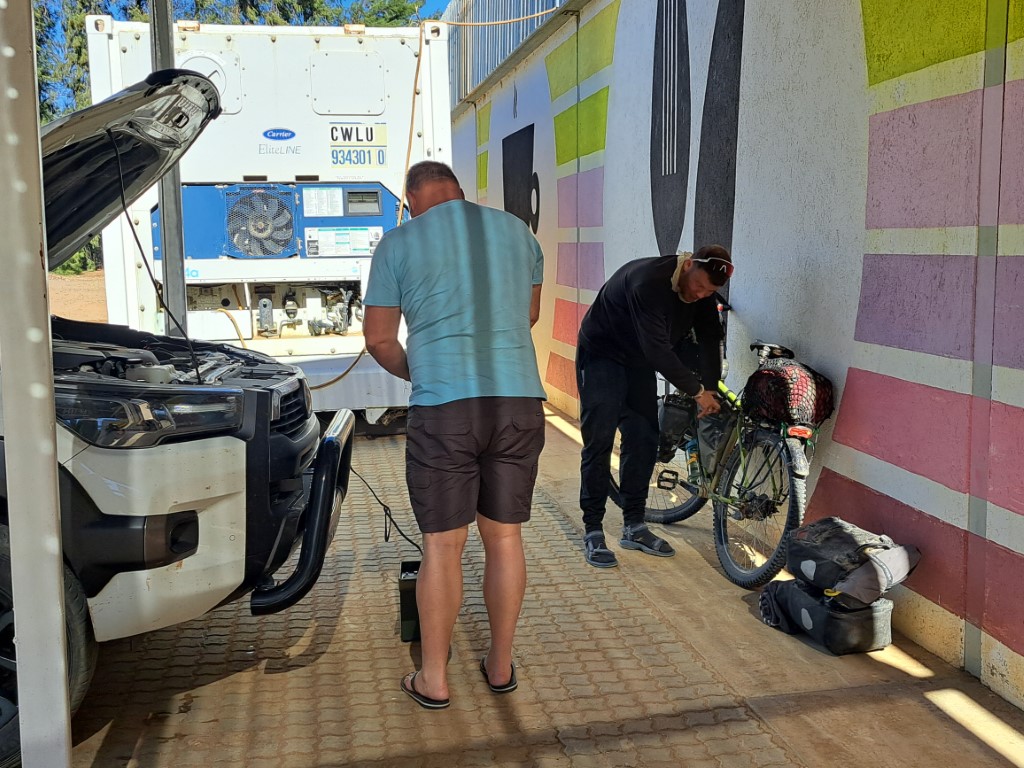
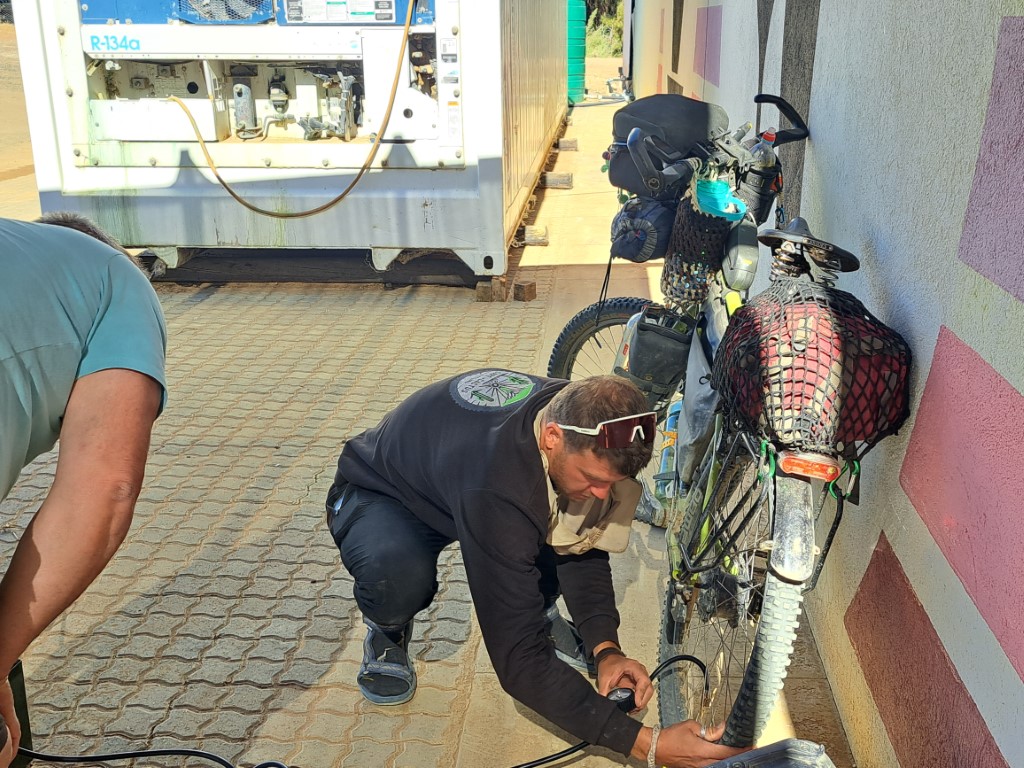
Helping a guy from The Netherlands to inflate his bicycle’s tires
Fish River Canyon:
Since it was already late in the afternoon, we decided to drive past our accommodation and visit the Fish River Canyon first. At Hobas, the entrance to the Ai-Ais Fish River Canyon National Park, we paid an entrance fee before buying takeaway sandwiches at the restaurant to eat on our way to the canyon.
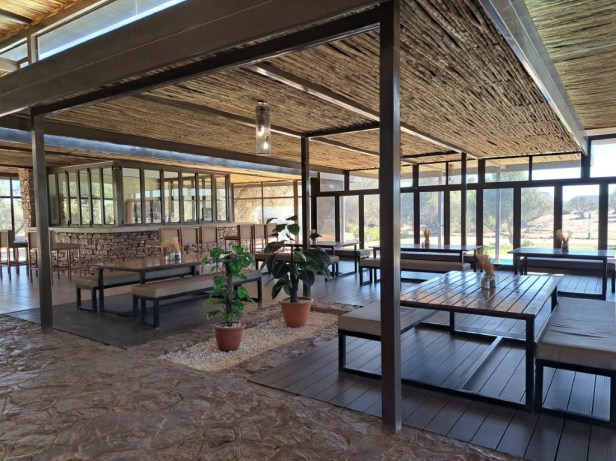
Inside the restaurant at Hobas
We followed the dirt road to the Fish River Canyon Lookout, which is the main viewpoint. This is the best (and probably most photographed) view over the expanse of the canyon.

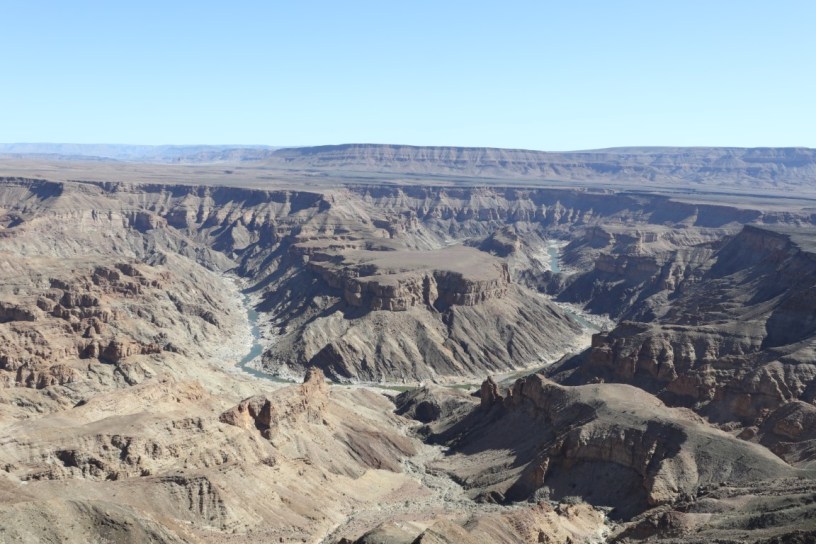
Fish River Canyon
The Fish River Canyon is the largest (by volume) canyon in Africa and the second largest in the world. It covers 5,900 square kilometers, is 160km long, up to 27km wide and 550m deep in some places. From the viewpoint you can see the sharp river bend, known as Hell’s Corner.
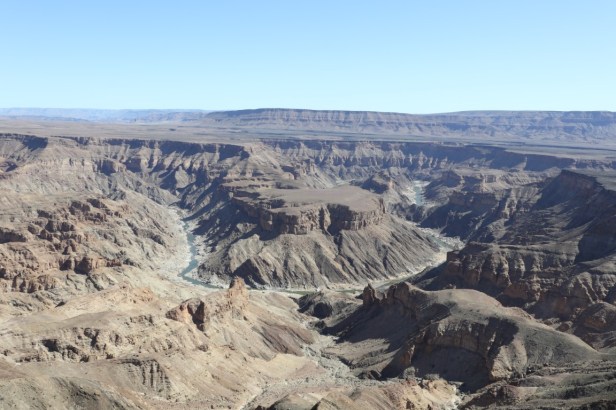
Fish River Canyon

Hell’s Corner
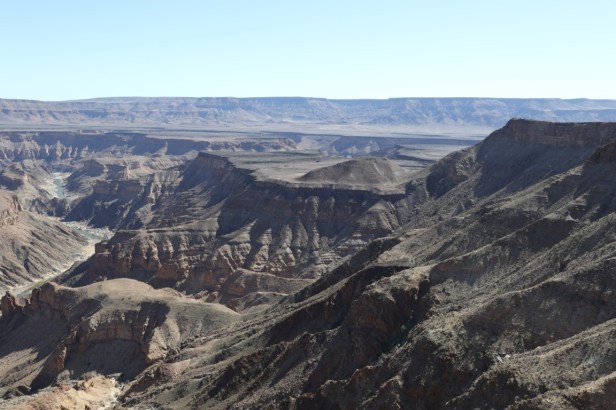
Rugged landscape at the Fish River Canyon
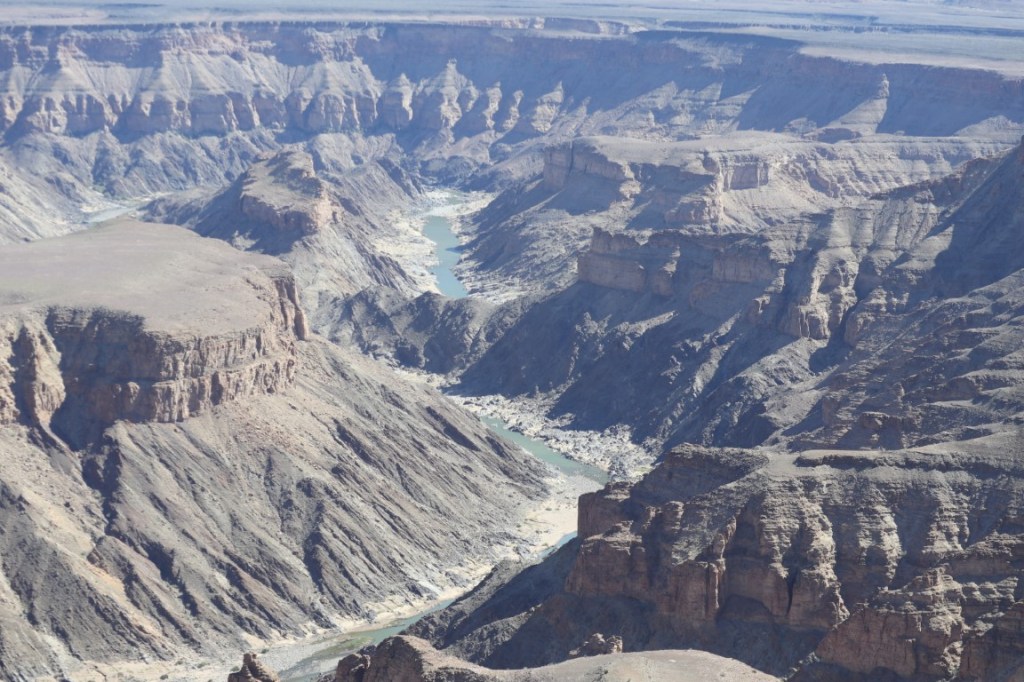

Fish River in the gigantic ravine
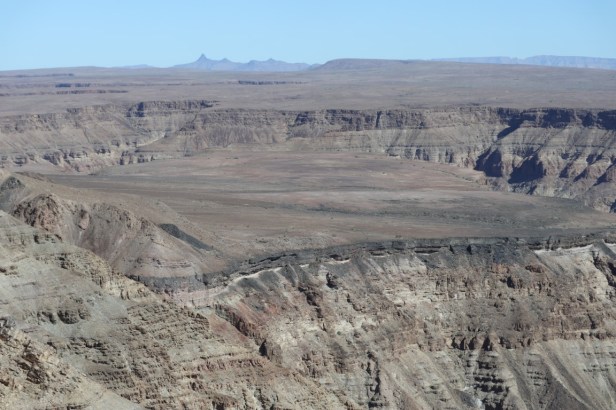
Incredible natural formation


At the main viewpoint of the Fish River Canyon
From the main viewpoint, it is 3km/1.8 miles to the start of the famous Fish River Canyon Hiking Trail.

Walking over to the start of the Fish River Canyon Hiking Trail
This hiking trail is a very popular route and is 85km/53 miles long, which will take you about 5 days to complete. You need a permit to do the Fish River Canyon Hiking Trails, and there is officially a maximum of only 30 people who can do it each day. It is self-guided, but you must be in a group of at least 3 people for safety due to the challenges of the geographical terrain. You’re required to show a medical certificate that says you’re fit enough to hike. This is partly because there are only two emergency exits along the route, other than the start and finish points. (So, if you did run into trouble, it’s a huge effort for rescuers to come and get you).
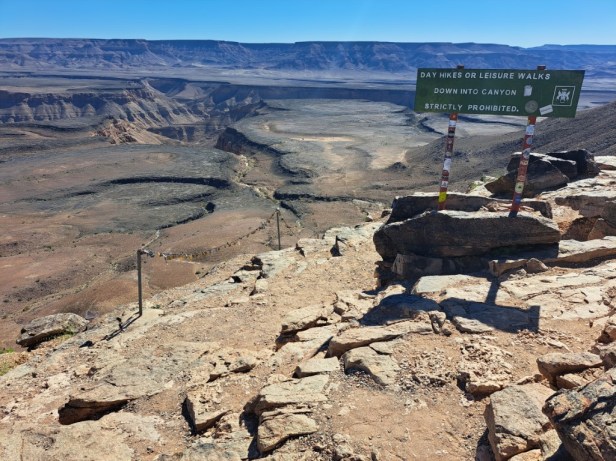
Start of the Fish River Canyon Hiking Trail
While we were walking back to our ‘bakkie’, a group of 5 hikers came towards us. They were ready to take on the 5-day route and with their heavily loaded backpacks, they looked quite prepared for what lay ahead of them. This is one of those hiking trails that has always been on our radar – hopefully one day (but not today).

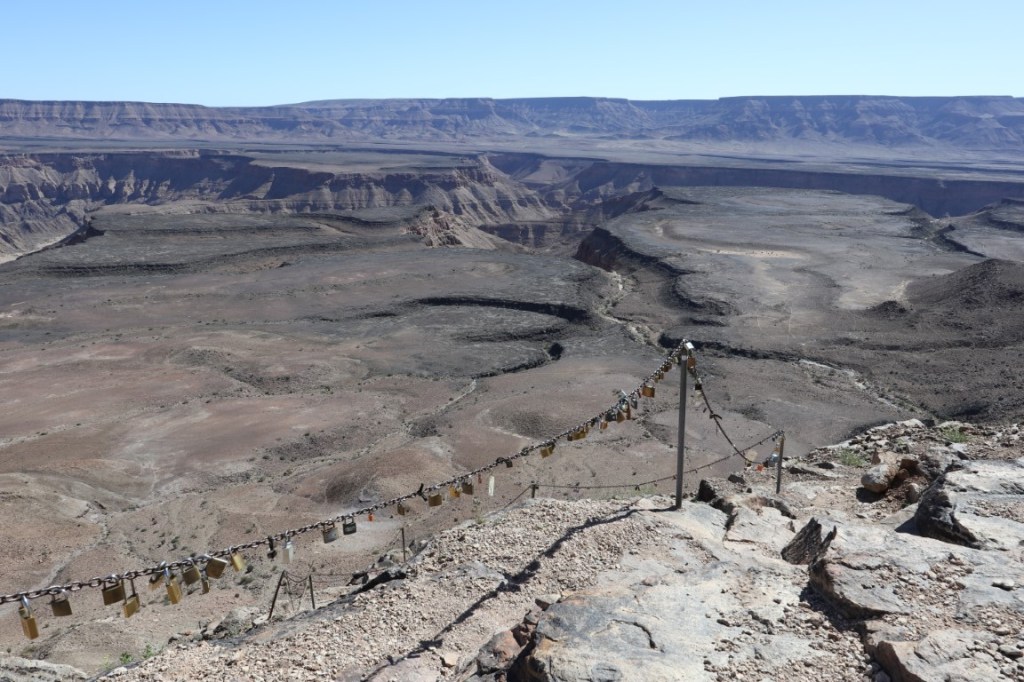
Hold on to the chain for support while scrambling down the steep slope
It was already late afternoon after our visit to the Fish River Canyon and time to drive the 40km/24-mile-long dirt road back to our campsite for the evening.
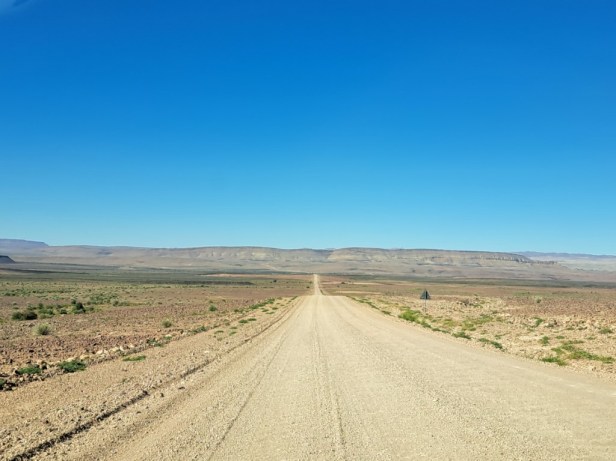
Dirt road to our campsite, Canyon Roadhouse
Canyon Roadhouse:
This quirky roadhouse/lodge with a vintage car theme was the perfect place to end our 8-day road trip through the south of Namibia. Here you will find rooms, a camp site, restaurant, fuel station and even a swimming pool – totally unexpected!
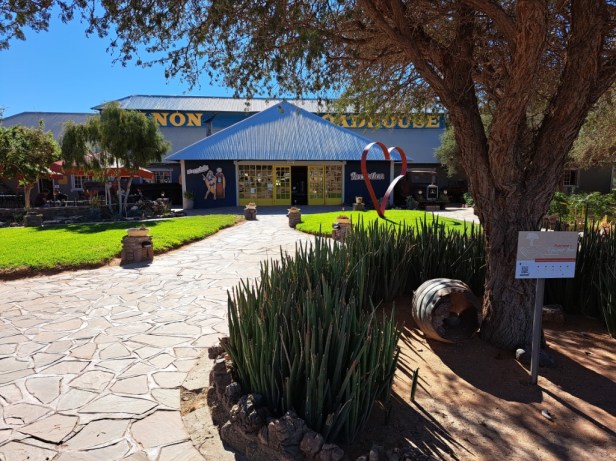
Entrance to the Canyon Roadhouse


Rooms and swimming pool
We set up our rooftop tent one last time. After the wind had blown quite strong during our visit to the Fish River Canyon, it was now a calm evening at Canyon Roadhouse – needless to say, we were very happy about this.
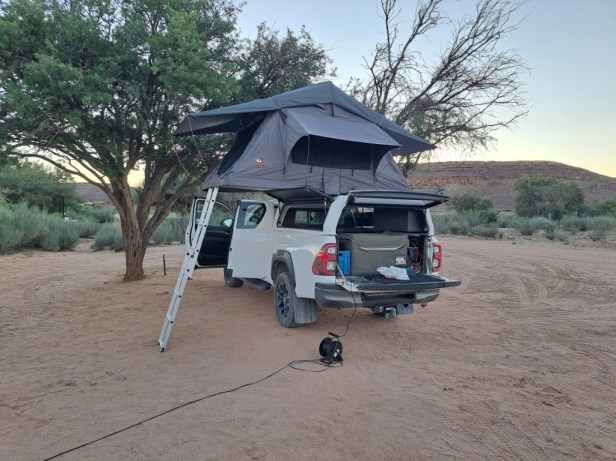
Our campsite for the night
We decided to enjoy a drink at the bar to conclude our epic journey through the south of Namibia. Come along and enjoy the vintage cars found both inside and out Canyon Roadhouse – it’s almost like strolling through a museum.
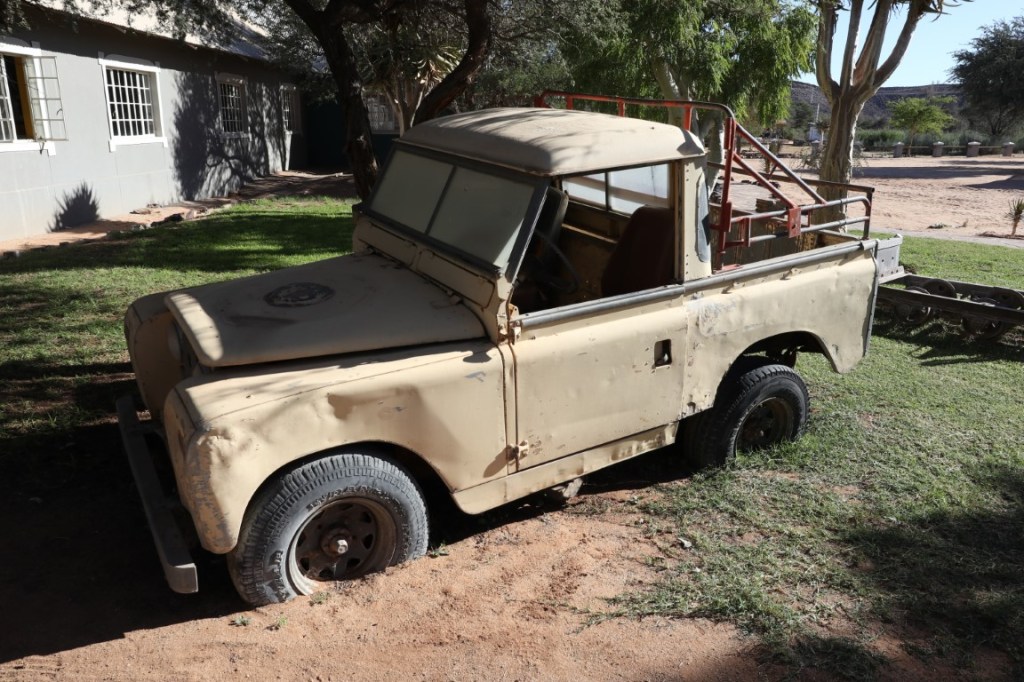
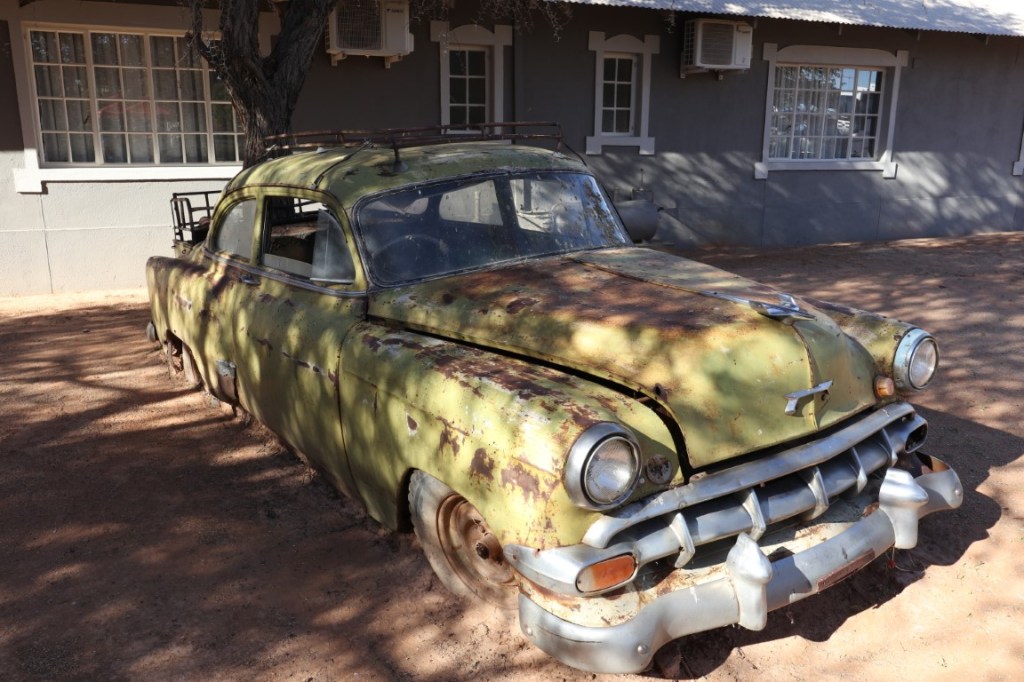
Vintage cars in the garden

“Fill up on Smiles”
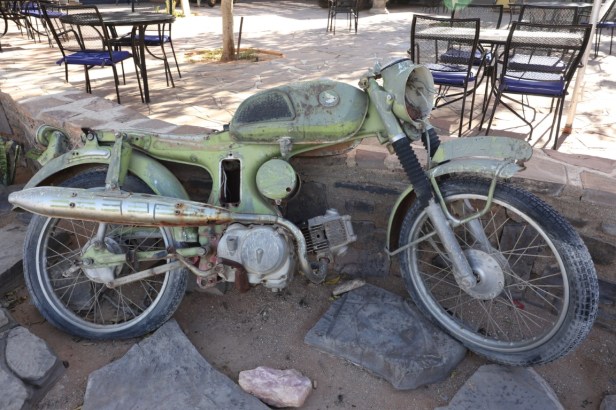
Old motorbike
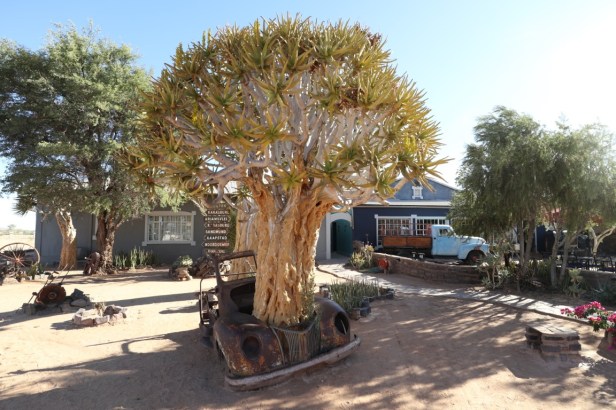
Quiver tree sprouts from the hood of a rusty car

Inside the restaurant
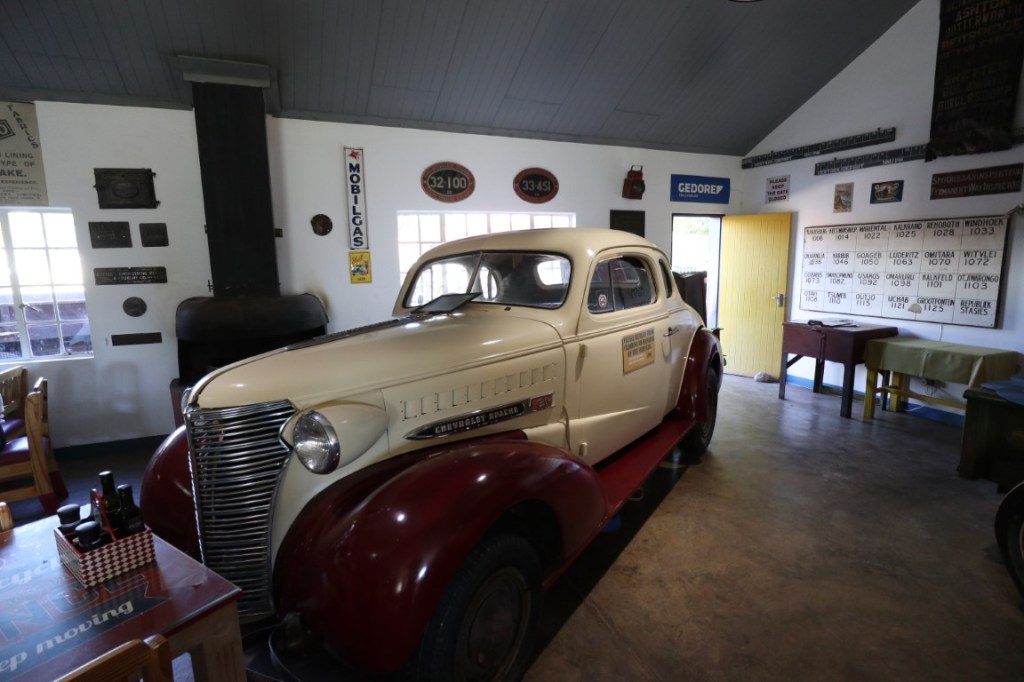
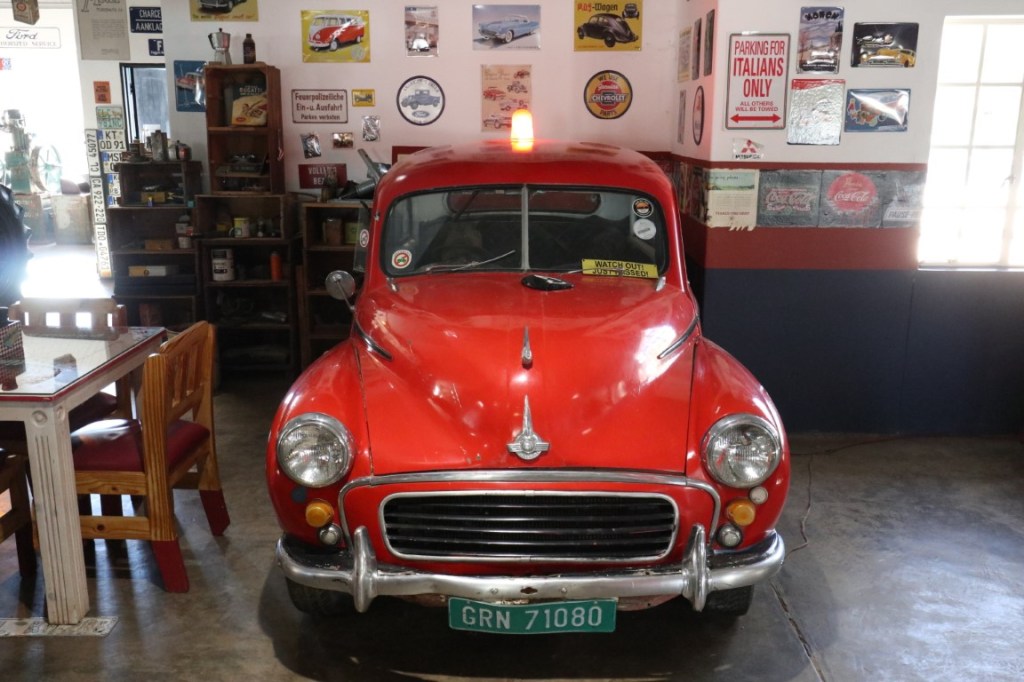
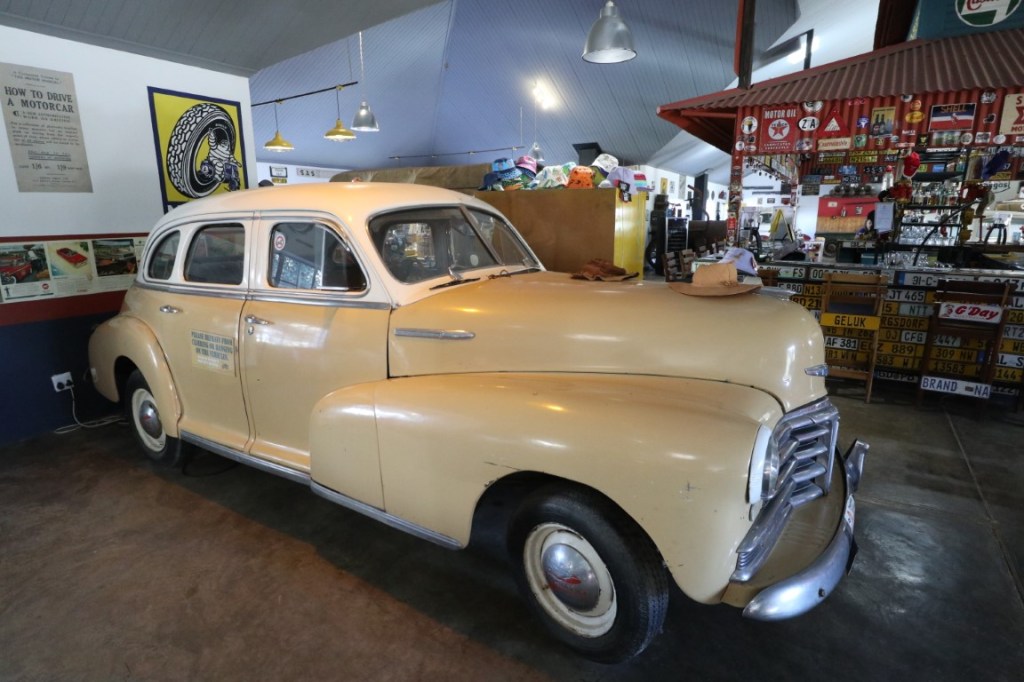
Vintage cars
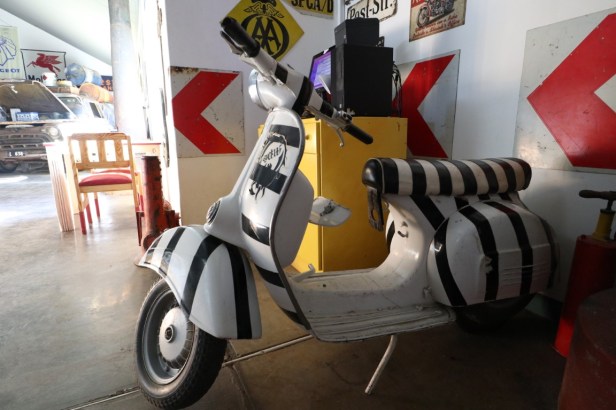
Vespa
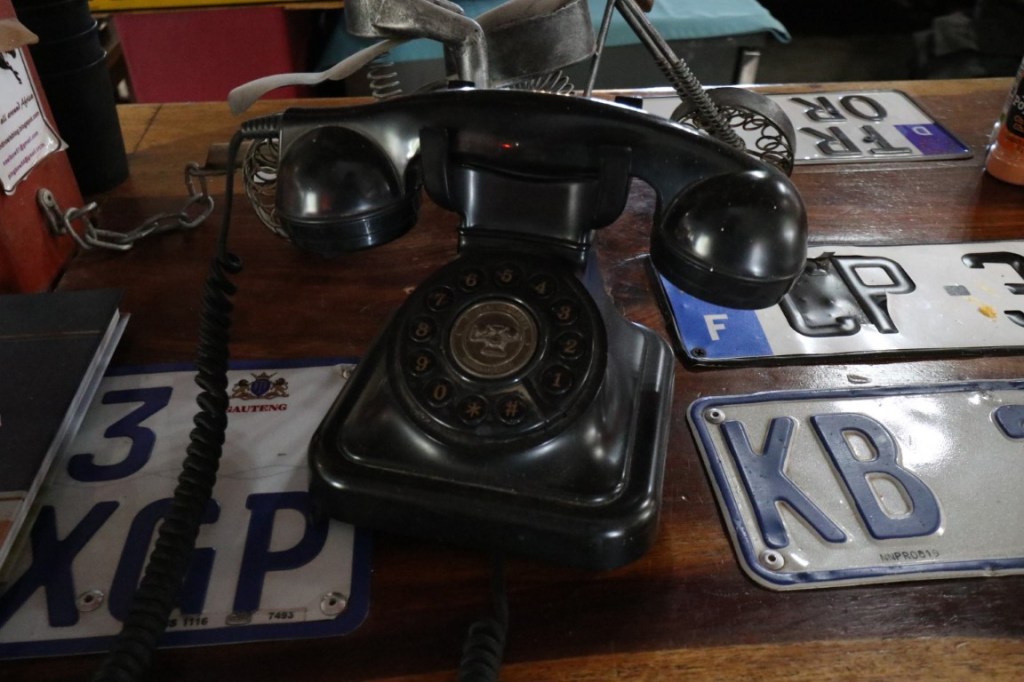

Old telephone and cold drink fridge
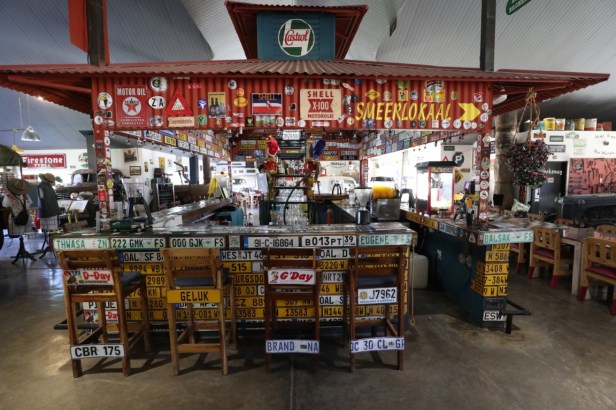
Bar decorated with number plates
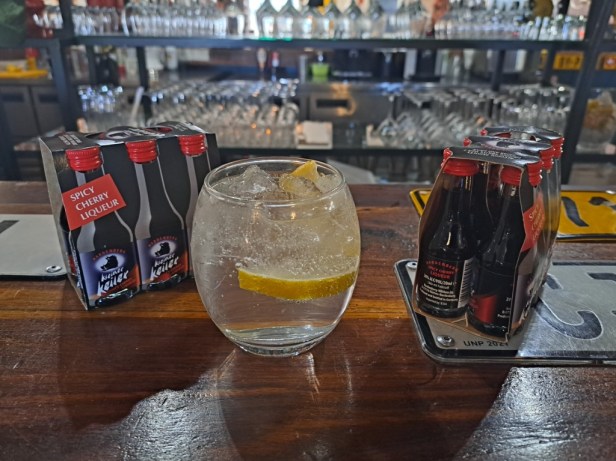
G&T (and Spicy Cherry Liqueur to take back home)
Although the restaurant’s food looked really good, we decided to have a ‘braai’. With wood and ‘braai’ packs from the restaurant, we walked to our campsite to watch the Namibian sunset one last time while sitting next to our campfire.
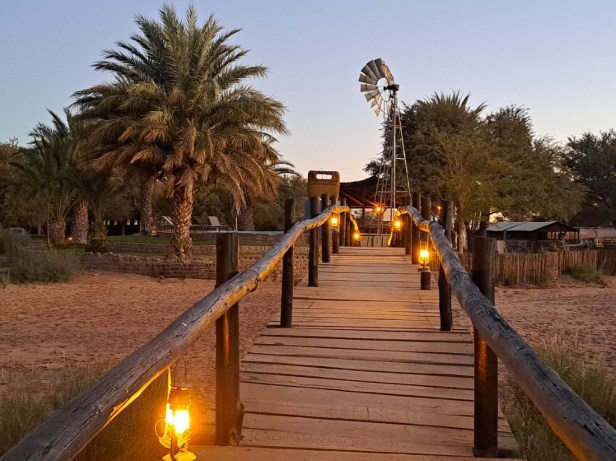
Heading back to our campsite

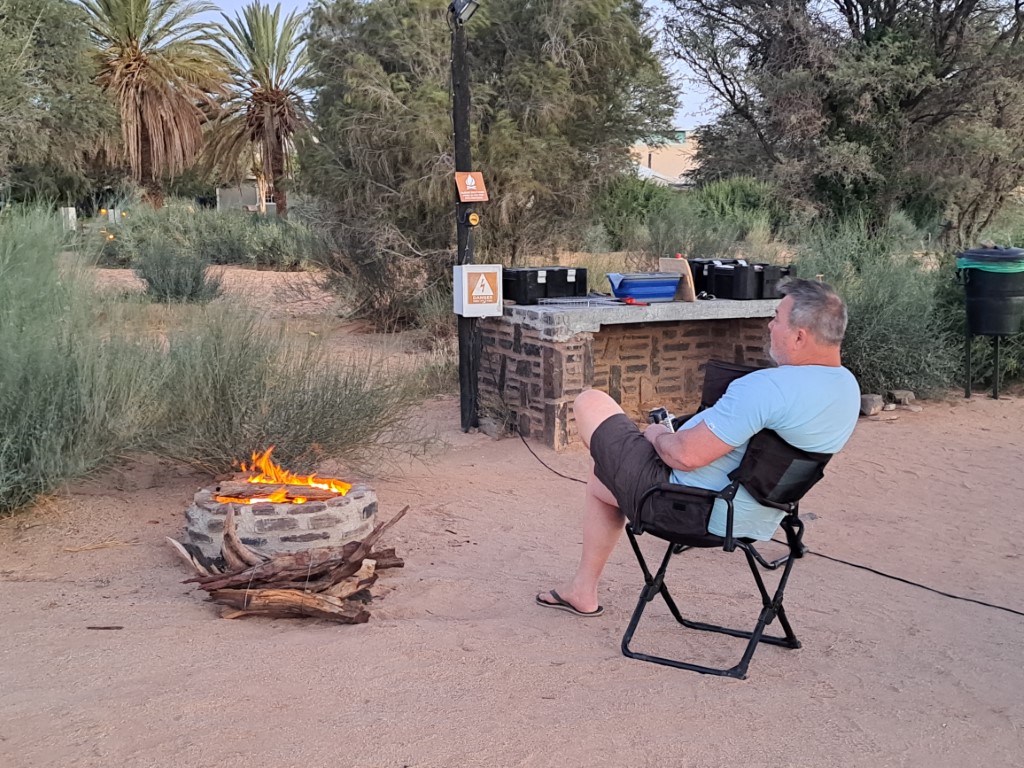
Last campfire on our road trip
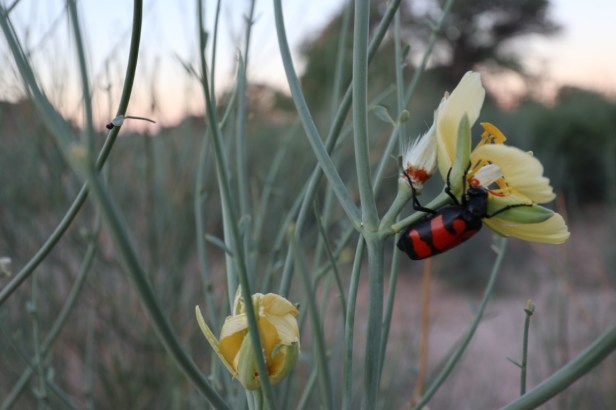
Close to our fire was an insect enjoying its last meal for the day

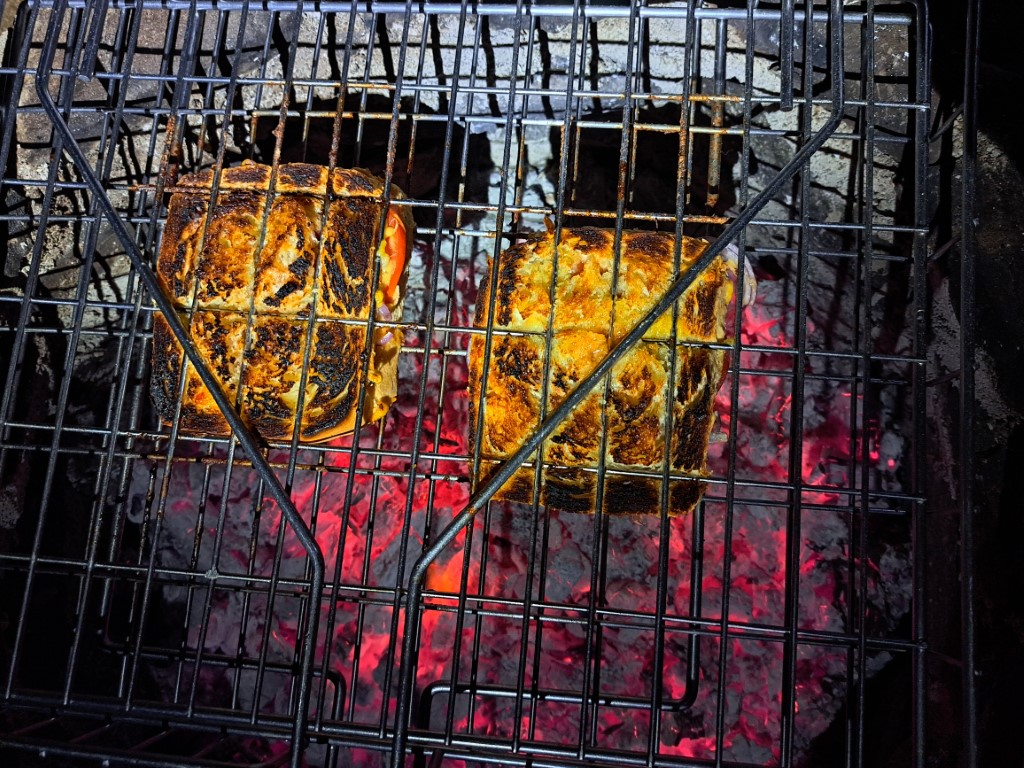
Food on the fire
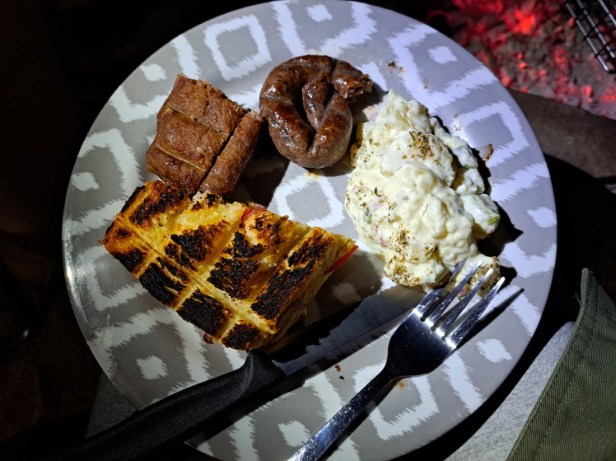
Our last meal in Namibia
We didn’t talk much while sitting by the fire – in that moment it was completely enough. Our road trip was over and Namibia will now always be part of our story.
In our next and final post (read here) on this Namibian series, we begin our last day on the road with an incredibly beautiful sunrise and end a long day with the majestic Table Mountain on the horizon.
 Wet and Dusty Roads
What a spectacular finish to a wonderful trip. Absolutely chockful of highlights. Thanks for the road trip! Mel
LikeLiked by 1 person
This was the perfect ending to our road trip – literally and figuratively at a high point! Thank you for coming along Mel 🌞.
LikeLiked by 1 person
My pleasure. I hope you are planning your next adventure. 😁
LikeLiked by 1 person
There is always a list of endless adventures waiting … but the time! Currently, we are doing weekend getaways (and enjoying the cold winter next to the fireplace with a glass of red wine).
LikeLiked by 1 person
Ahh, a glass of wine in front of the fire with a good book!? Heaven on a stick! 🍷🍷
LikeLiked by 1 person
I remember the canyon well. Several members of the group went on a hike to the bottom. I knew it was beyond my capability so headed back to camp with a couple of others and spent the afternoon cooling off in the swimming pool! You have had an amazing experience in Namibia. I hope you get back to explore more in the future.
LikeLiked by 1 person
Well, to be honest, cooling off in the swimming pool sounds like much more fun to me than going down the canyon with just a chain as a barrier! You’re right Jude, we have seen so many beautiful places in such a short time. We can’t wait to go back … hopefully with more time on our hands.
LikeLiked by 1 person
Wow, Fish River Canyon in Namibia looks amazing as its rugged, dramatic landscape stretches off in every direction. I have to be honest, raise my hand up and admit that I’ve never even heard of it, Corna. You know, nothing comes close to visiting places like these that offer such stunning panoramic views, a sense of remoteness, and opportunities for hiking and exploring a unique landscape if you are up for it. Thanks so much for sharing and taking me along on the trip. This looks like a truly wonderful corner of the world to explore for an awe-inspiring experience, away from crowds and typical tourist traps. Have a wonderful day 🙂 Aiva xx
LikeLiked by 1 person
I’m glad I could tell you more about the Fish River Canyon Aiva – this is a special place with incredibly beautiful views. Thank you for travelling with us through the south of Namibia … it may be a remote part of the world, but absolutely worth visiting. Have a great week 🌞.
LikeLiked by 1 person
🥰🥰🥰
LikeLiked by 1 person
What a fun place for your last night. The canyon pictures reminded me of the Grand Canyon.Such terrain is very beautiful but as you say, can be dangerous if you get lost or have an accident. It must be a great experience to camp there and listen to the silence. I have enjoyed your trip so much and all your wonderful photos. I wonder if the Dutch cyclist is still making his way north. Lucky for him to have encountered you!
LikeLiked by 1 person
When I compare the Fish River Canyon with photos of the Grand Canyon that I have seen on the internet, they look quite similar. I think it must be wonderful to be able to do this hike … but it may be one of those hiking routes for which one will have to train seriously. As for the Dutch cyclist – he mentioned that he hopes to arrive in Kenya by September – I hope he enjoys it (and all the challenges that come with such an adventure)!
LikeLike
The Fish River Canyon looks stunning! I really wanted to include it in our Namibia itinerary but it just wasn’t possible in the time we had. And that Roadhouse looks like such a fun place to stay!
LikeLiked by 1 person
I think the Fish River Canyon looks a lot like the Grand Canyon (just on a much smaller scale) and if I remember correctly, you have been to the Grand Canyon. So, maybe you didn’t miss out too much by not being able to visit the Fish River Canyon. I also think that the Canyon Roadhouse might be similar to what you could find on Route 66 in the USA – we were quite surprised to find it here in the middle of nowhere!
LikeLiked by 1 person
Yes, we’ve been to the Grand Canyon and also to the Copper Canyon in Mexico, but you can never have too many canyons!
LikeLiked by 1 person
I agree 😉.
LikeLiked by 1 person
I’ve never heard of Fish Canyon but it look dramatically beautiful. It must be a great hike! Maggie
LikeLiked by 1 person
The Fish River Canyon hiking trail is very popular – hikers need to book about a year in advance to make sure they get permits. We know a few people who have done this, and they loved it – so I guess we will have to do it sooner rather than later if we also want to experience it!
LikeLiked by 1 person
What a wonderful road trip you had; the scenery looks ruggedly stunning. Well done for helping the bicyclist inflate his tires. I think I’d have to pass on the hike into the canyon though; it looks quite treacherous. Wonderful post, Corna!
LikeLiked by 1 person
The unspoiled nature and vastness of Namibia captivated us – we had a bit of an idea of what to expect, but it was still an amazing experience. I’m glad we could help the cyclist – he still has a very long way to go (brave man) 🙈. And you’re right about the hike – it is definitely for the more experienced hiker. Thank you, Tricia, I’m glad you enjoyed Namibia with us.
LikeLiked by 1 person
Beautiful scenery, a gin distillery, date palm.plantation and a wonderful overnight stay with a barbecue by that inviting pool. What a lovely day you both had!
LikeLiked by 1 person
It was a great last day – we couldn’t have hoped for a better ending to our road trip through Namibia. Thank you for enjoying Namibia with us, Marion.
LikeLiked by 1 person
As I was scrolling through my feed and your post came up, at first glance I thought it was the Grand Canyon. What an incredible canyon, and a great way to end your trip!
LikeLiked by 1 person
Although I have never been to the Grand Canyon, I have seen many pictures of it and you’re right, the two canyons look very similar (with the Fish River Canyon of course being just a lot smaller). Agreed, this was the perfect end to our road trip – it went by way too quickly!
LikeLiked by 1 person
What an epic final stretch. Fish River Canyon looks absolutely stunning, and that quirky roadhouse is such a vibe!
LikeLiked by 1 person
The Fish River Canyon was the perfect end to our Namibian road trip. And sitting next to our campfire at Canyon Roadhouse while watching the sun set was just one of many highlights. This was a great road trip!
LikeLiked by 1 person
That sounds like pure magic! Watching the sunset by the campfire after a day at the canyon must’ve been the perfect way to soak it all in. Namibia clearly delivered an unforgettable journey!
LikeLiked by 1 person
Fabulous, it all just sounds wonderful and peaceful. Great trip, Corna, and you clearly loved it!
LikeLiked by 1 person
Although we visited many places and drove long distances, it never felt rushed. The vastness of Namibia definitely has a calming effect on its visitors – we will not hesitate to return to Namibia (the Etosha National Park is high on our list)!
LikeLiked by 1 person
It may be the end of your journey but what a journey it has been. Your pictures with explanations have been so much fun to read and see. Thank you for sharing your amazing trips with us.
LikeLiked by 1 person
When I think back to everything we experienced on our Namibian road trip, it feels like we were there for weeks – when in reality it was just 8 days. We really tried to see as much as possible 😁. Thanks Diane, I’m glad you travelled with us through the south of Namibia.
LikeLike
I missed a lot of your posts, but I’m so glad I caught this one—what a fun way to end the trip! That carrot pineapple cake sounds amazing. Loved the photos and little moments you shared. 🙋💗
LikeLiked by 1 person
Indeed, I haven’t checked in on you for a long time – I need to rectify that! Seeing the Fish River Canyon in all its glory and then camping at the quirky Canyon Roadhouse was definitely the perfect end to our Namibian road trip. Oh, and you just reminded me of that delicious carrot and pineapple cake – hmm, that was yummy!
LikeLiked by 1 person
No worries. We all have a life🙂
I enjoy reading your posts and following your journey—it’s always interesting!
LikeLiked by 1 person
Fish River Canyon looks absolutely amazing!! And the campsite looks like a lot of fun. Oh and don’t foget that pineapple cake looking delicious 🙂 You’re really making me want to visit Namibia!
LikeLiked by 1 person
Nothing against the incredible vistas at the Fish River Canyon or the fun campsite at Canyon Roadhouse … but damn, that carrot and pineapple cake was the best of this day 😁. Hannah, you will enjoy Namibia – and I promise you won’t have to pitch a tent, there are beautiful lodges!
LikeLiked by 1 person
The views of the Fish River Canyon are beautiful. The hiking trail sounds like it would be amazing, adventurous and challenging. Interesting to hear that you must be in a group of at least three people. I hope you’re able to hike it someday so you can report back and let us know how it is!
LikeLiked by 1 person
The Fish River Hiking Trail is very challenging – due to its inhospitable nature and accessibility. So, although we like to hike on our own, I think it would be better to hike in a group here. Who knows, maybe we’ll get that opportunity one day!
LikeLiked by 1 person