
May 2025
Namibian Wild Horses & Garub Train Station
After we witnessed the beautiful sunrise at Kwelanga River Lodge near Vioolsdrif (read here), it was finally time to cross the border into Namibia.
We had a very smooth border crossing. After we had our passports stamped, the customs officer on the Namibian side asked if we had anything to declare. Besides two bottles of wine, we had nothing else to declare. Without searching our vehicle, she then wished us a safe and joyful journey in Namibia. After just 20 minutes, we were on Namibian soil.
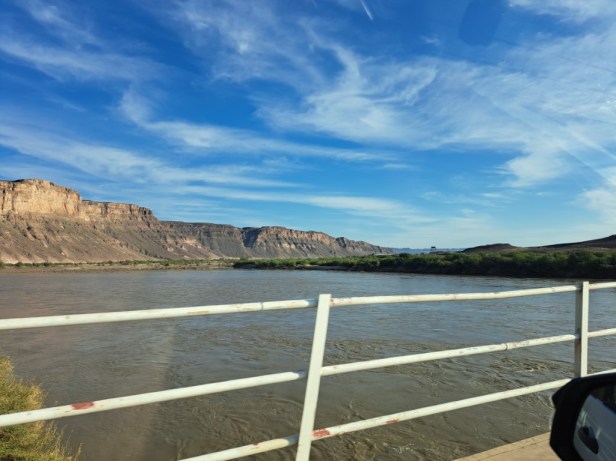
Crossing the Orange River at the border post
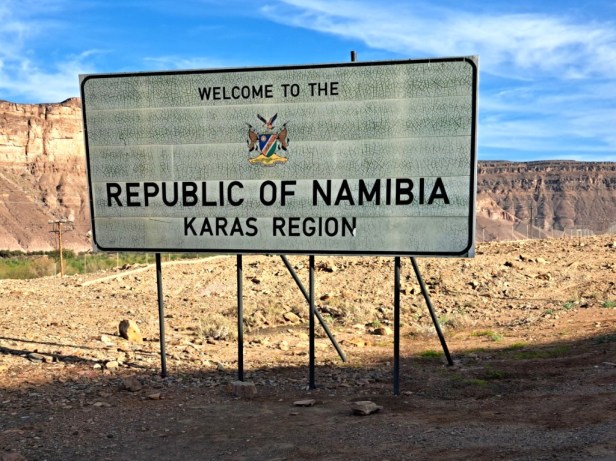
We are officially in Namibia
If there is one thing that travellers in Namibia, who drive their own or rented vehicles, should remember, it is not to miss the opportunity to stop at a petrol/gas station. The distances between towns are quite far and not all towns have petrol stations.
There are two petrol stations close to each other just after crossing the border from South Africa at Vioolsdrif. We filled up our bakkie and also bought toasties at the ever-popular Wimpy restaurant. Now we were ready to start our journey!
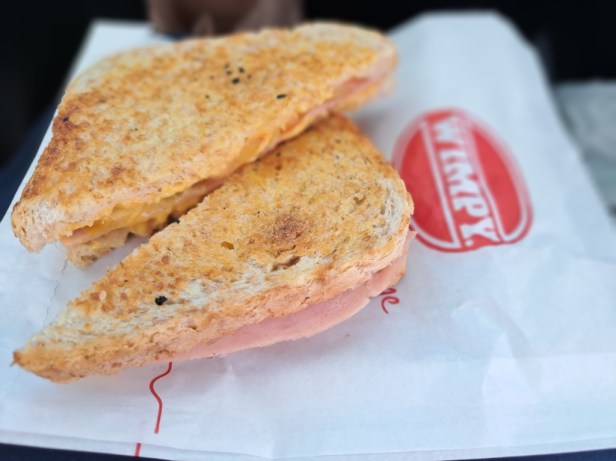
Wimpy’s favourite toasties – ham, cheese & tomato
We had to drive 452km/280 miles to Lüderitz, of which about a third was on a dirt road along the Orange River. This road was apparently not in the best condition, especially after the river had recently overflowed its banks due to the heavy rain. However, we heard from another traveller that it was still drivable and looked forward to this stretch.
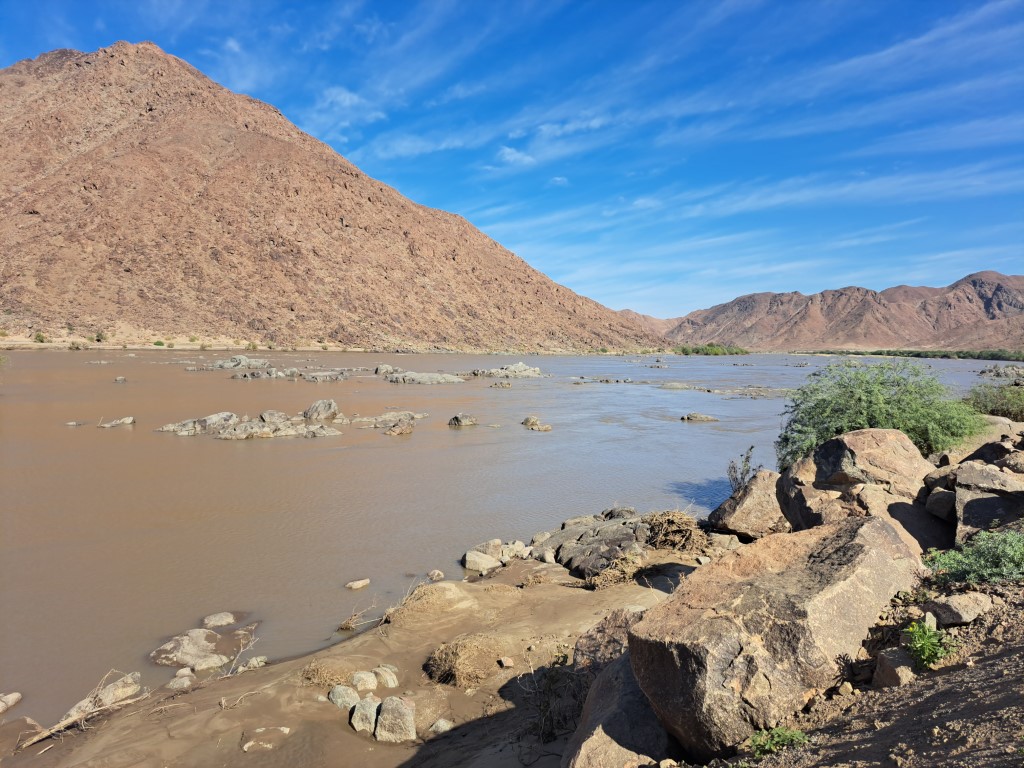
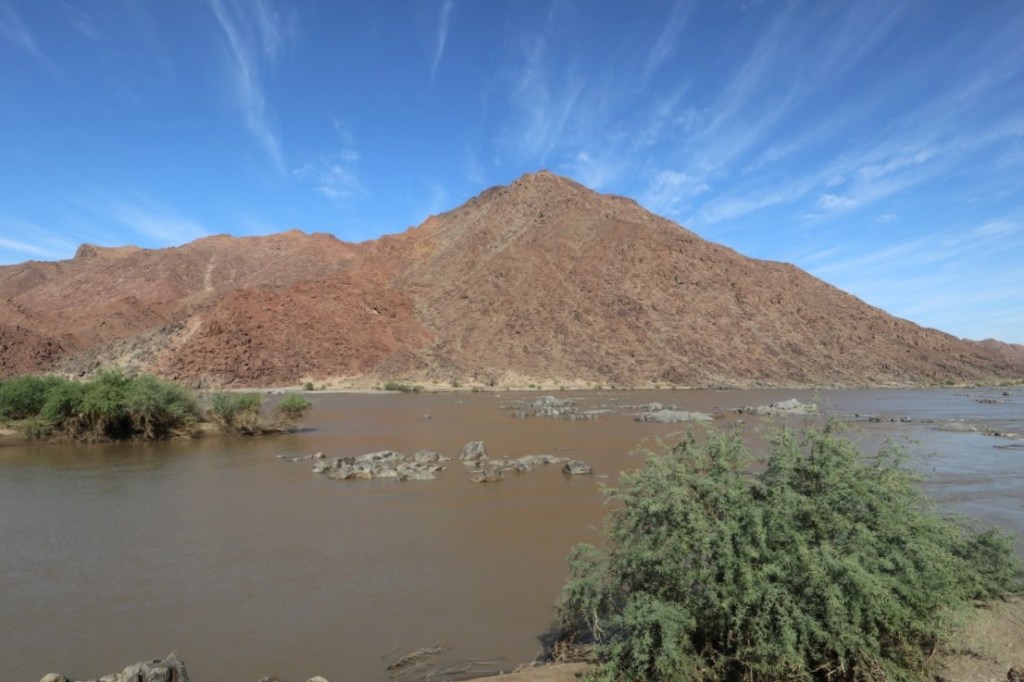
Dirt road along the Orange River
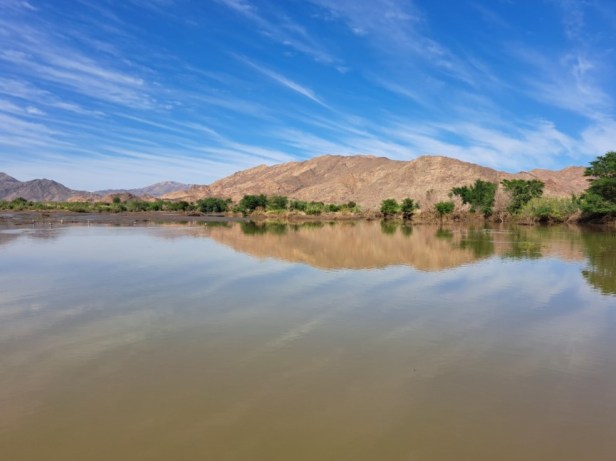
A full, but calm Orange River
Quiver trees (“Kokerbome”) are indigenous trees in Southern Africa. These trees are extremely tough and can live for more than 80 years and grow to heights of about 7 – 9 meters. We are always happy to find them in nature and have seen several along our route next to the river.
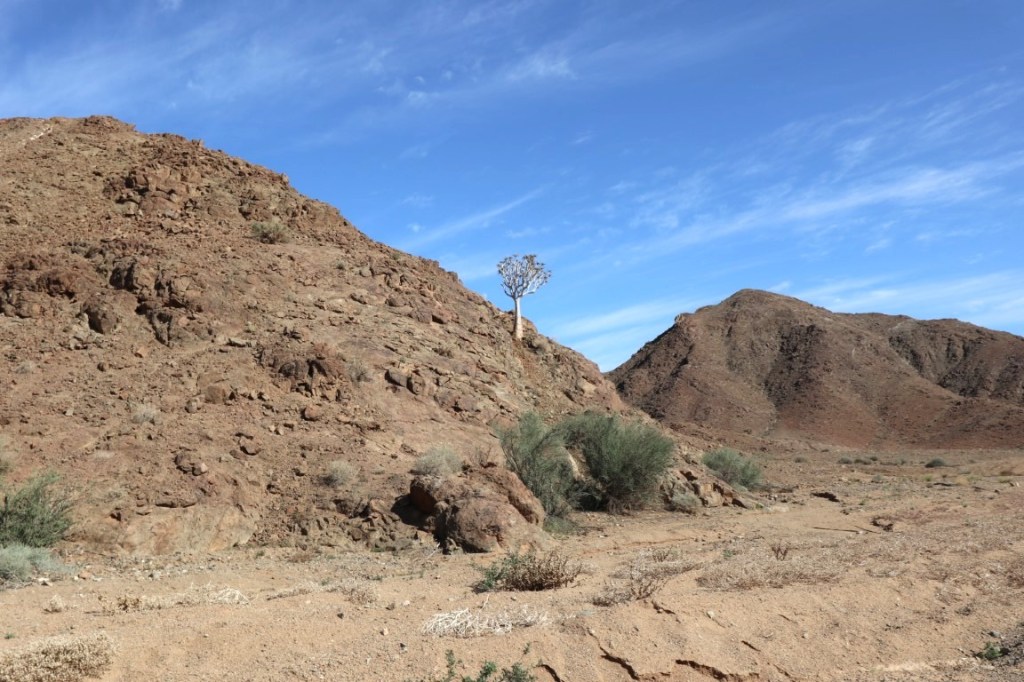
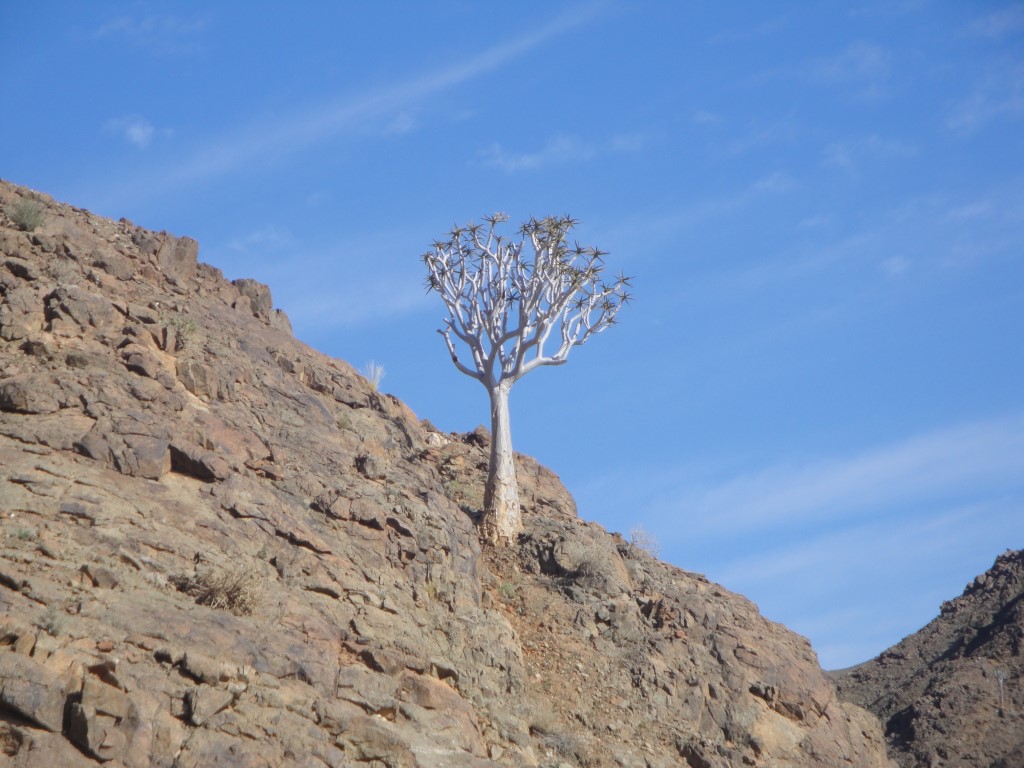
Beautiful Quiver tree

Another Quiver tree
The river was calm in some places and we could see the reflection of the mountains in it. But suddenly it would change and then there were significant rapids. We could now understand why it was still too dangerous for river rafting enthusiasts to venture onto the river.
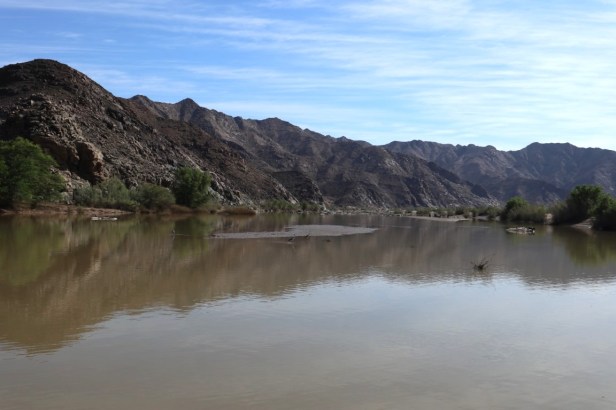
Calm Orange River

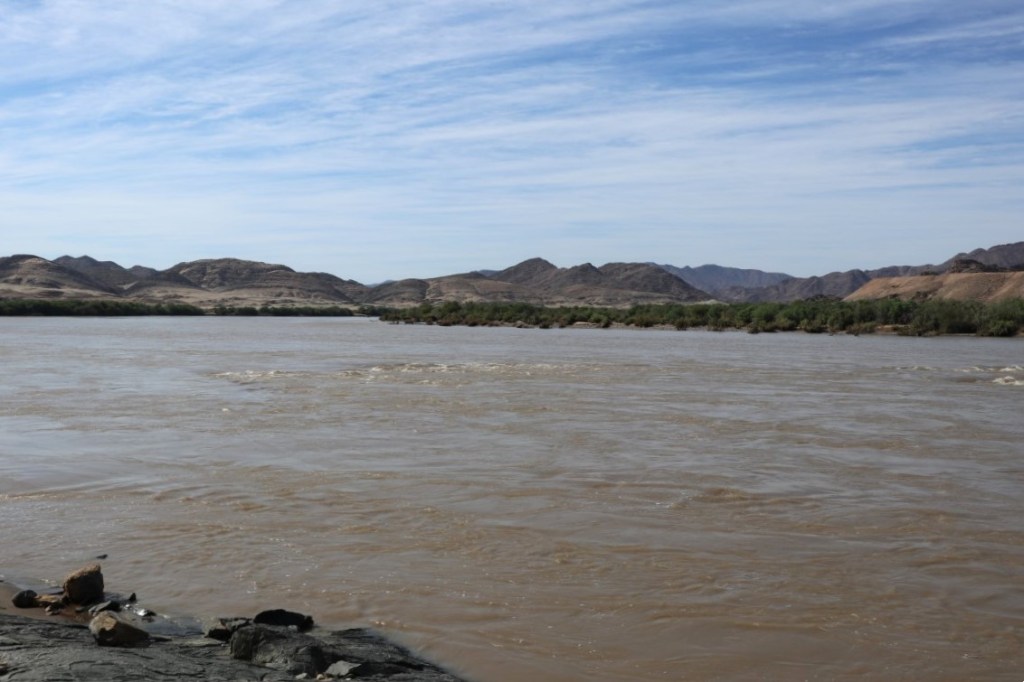
Fast flowing water in other places on the river
The Fish River is the longest inland river in Namibia and eventually joins the Orange River. At one point, we crossed the Fish River, very close to the Orange River, over a low-water bridge. A few days ago, the water was flowing over the bridge, but we were lucky that the river had now receded.

Low-water bridge over the Fish River
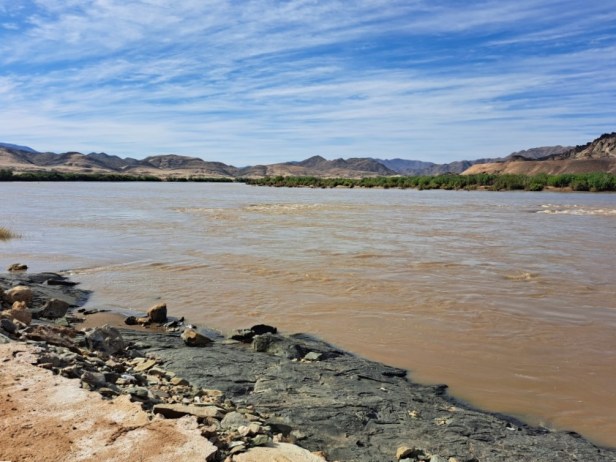
Looking towards South Africa over the fast-flowing Orange River
There were some places where we could see that the road had washed away. Here we just drove very slowly and made sure that our bakkie’s wheels did not come too close to the river’s edge.
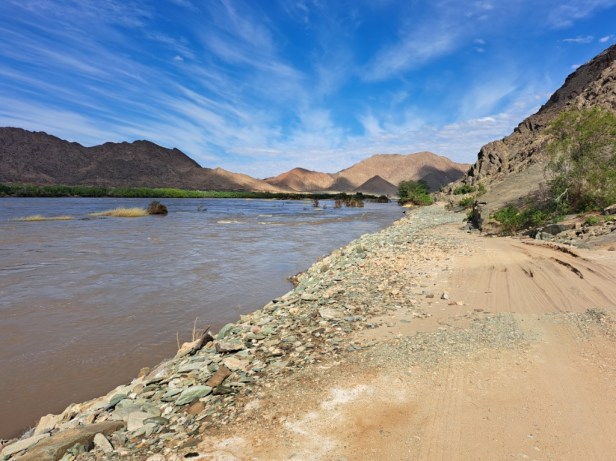
An almost washed away road next to the Orange River
After about two hours on the dirt road, it veered away from the river. We followed the directions towards the C13 and to Rosh Pinah where a tarred road took us all the way to Lüderitz.

Taking the road towards Rosh Pinah
Although we were on a tar road on the last part of today’s route, it did not mean at all that we would not see beautiful scenes. We stopped a few times to admire the vastness of the area.

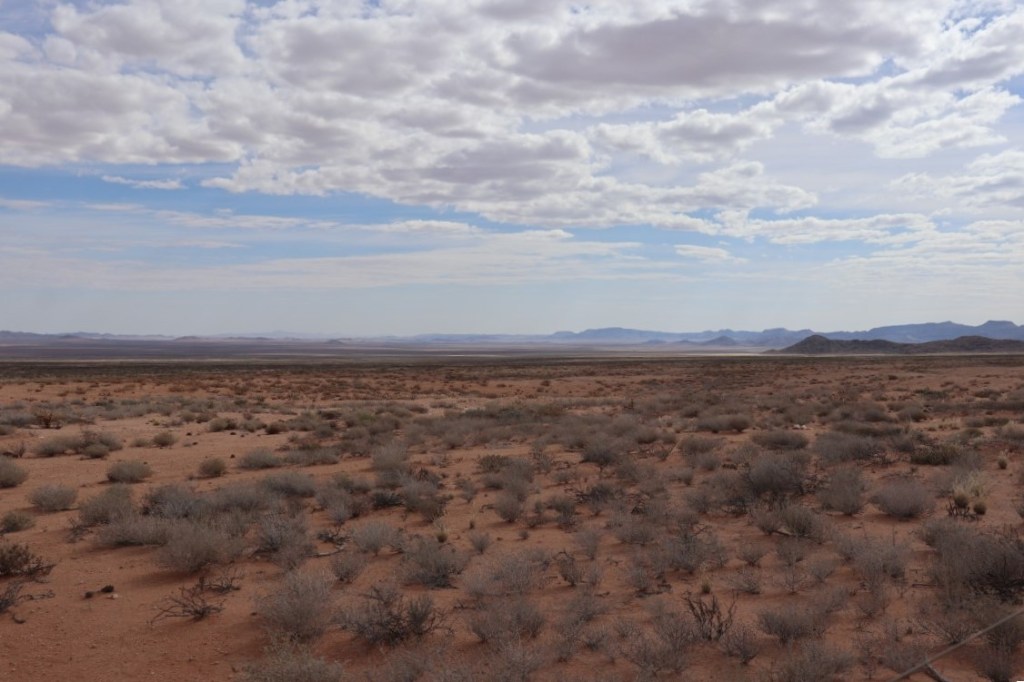
Stopping next to the road to take in our surroundings
After we refuelled our bakkie in Rosh Pinah, we drove another 168km/104 miles to the small town of Aus. It was now only 126km/78 miles to Lüderitz where we booked accommodation for the night.
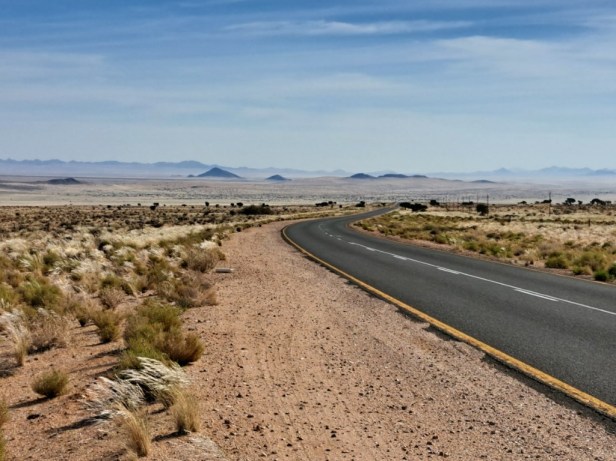
The road between Aus and Lüderitz
The Wild Horses of Namibia:
It is believed that the core of the herd consisted of horses of the South African army, the German troops, and the Kreplin studs (with connection to the breeding station of Hansheinrich von Wolf at Duwisib Castle) that fled to freedom after a bombing attack. These horses have lived in this area for more than 100 years, without any human assistance.
They were first counted in 1985 and since then the horse population has fluctuated from 89 to 280 animals. Drought conditions can account for these fluctuations and are quite normal.
We read earlier that we can see the famous Wild Horses of Namibia near Aus, on the way to Lüderitz (if we’re lucky). So, now it was time to set our eyes on the field next to the road.
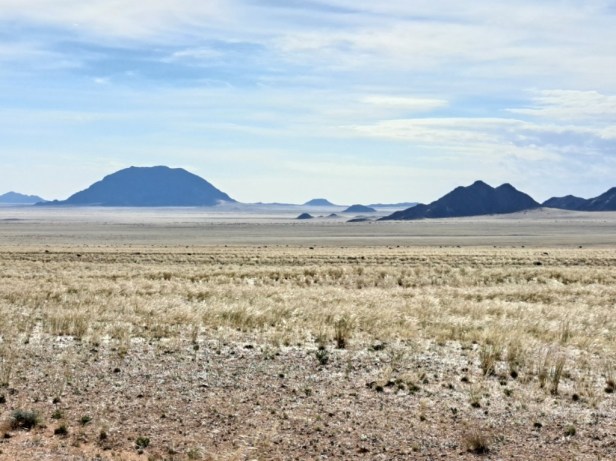
Where are the Wild Horses of Namibia?
It wasn’t long before we saw a horse standing in the field close to the road. “Is this a wild horse?” I asked Berto. We immediately stopped to take a photo – thinking that this might be the only wild horse we would see.
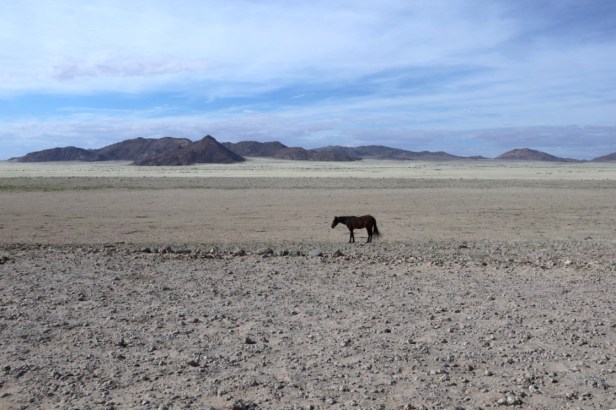
A (wild?) horse next to the road
However, it was not long before we saw a turnoff to the right with a sign “Wild Horses.” The dirt road leads to a small parking area and watering hole for the horses. There is even a wooden shelter for visitors to protect them from the fierce Namibian sun while they search for horses.
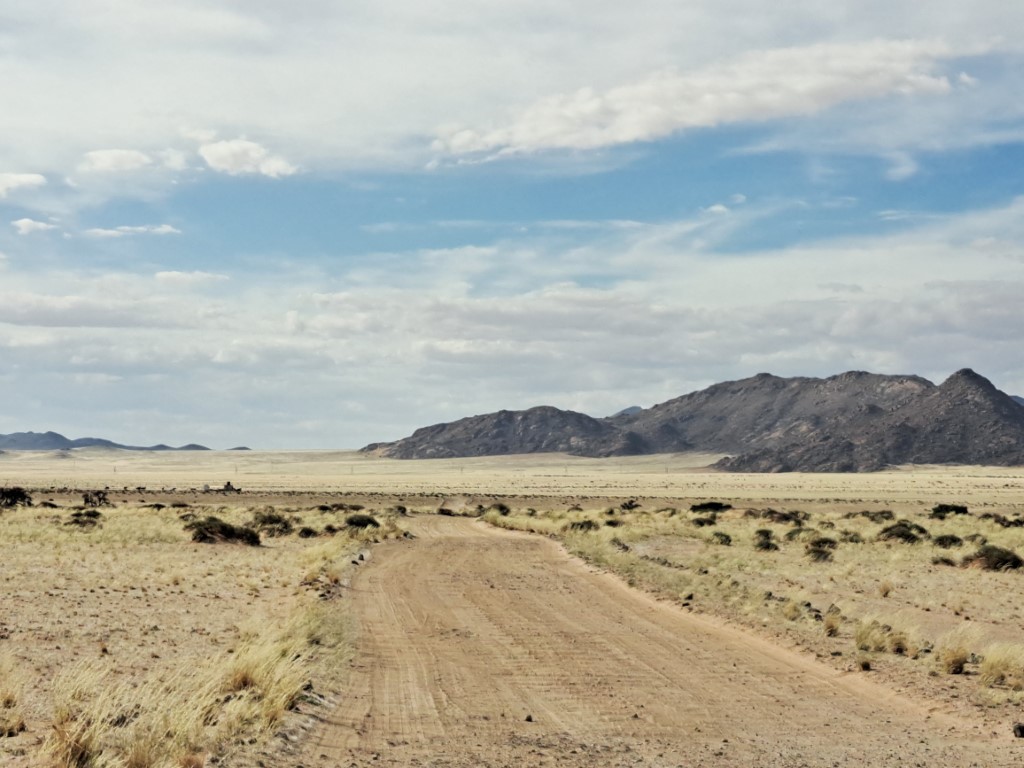

Road that leads to a shelter from where the Wild Horses can be seen
It turned out that we chose a good day to see the horses. Not only were there quite a few at the watering hole, but many were standing around the wooden shelter – probably to seek a bit of shade themselves because it was such a hot day.

A few horses at the waterhole
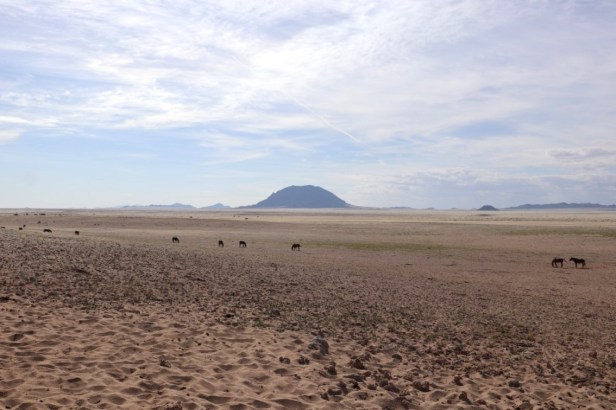
Wild horses in the desert landscape
We have heard from many people who visited this area that they did not see the wild horses or that they could only see them from a distance. So, we could hardly believe our luck. There were no other people around and for an hour, Berto and I could literally walk among the horses. It was quiet, except for the occasional neighing of a horse – such a serene experience. Here are just a few photos (of probably 100 that we took):
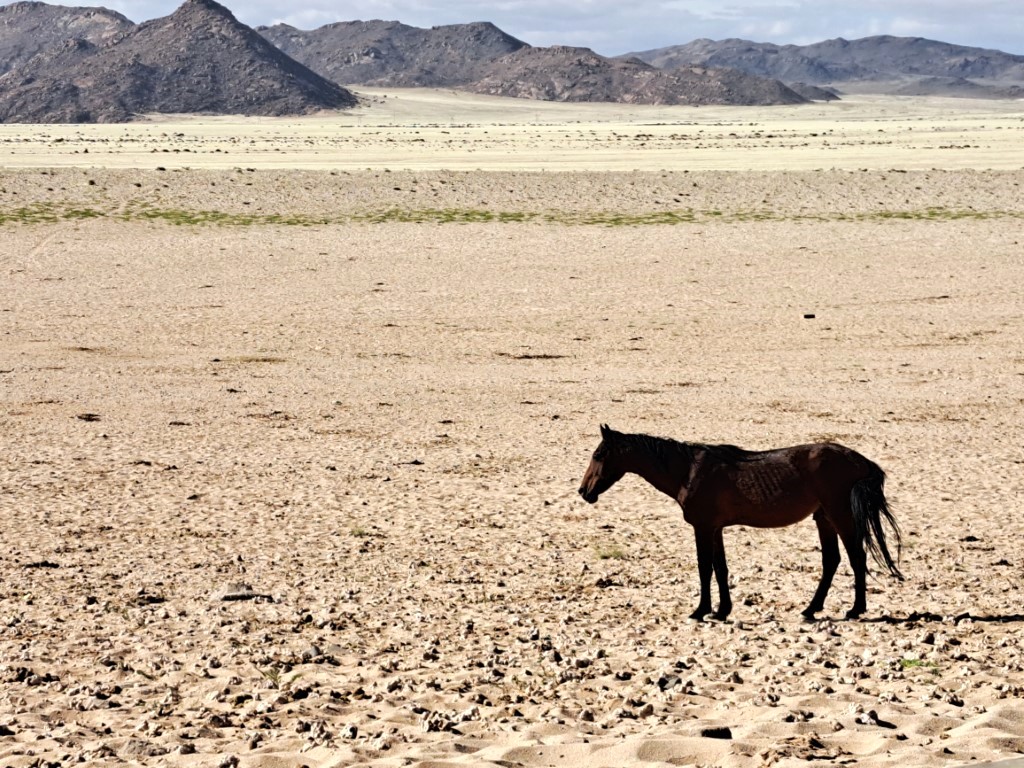

Wild Namibian Horses
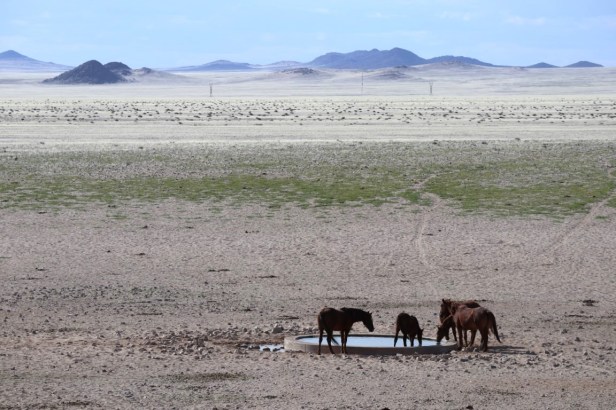
At the watering hole
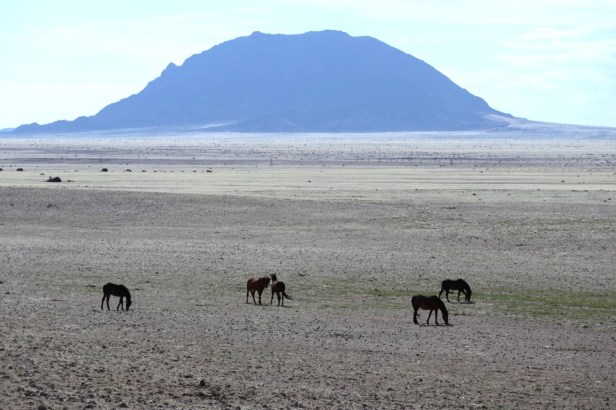
Perfect backdrop for these gorgeous animals

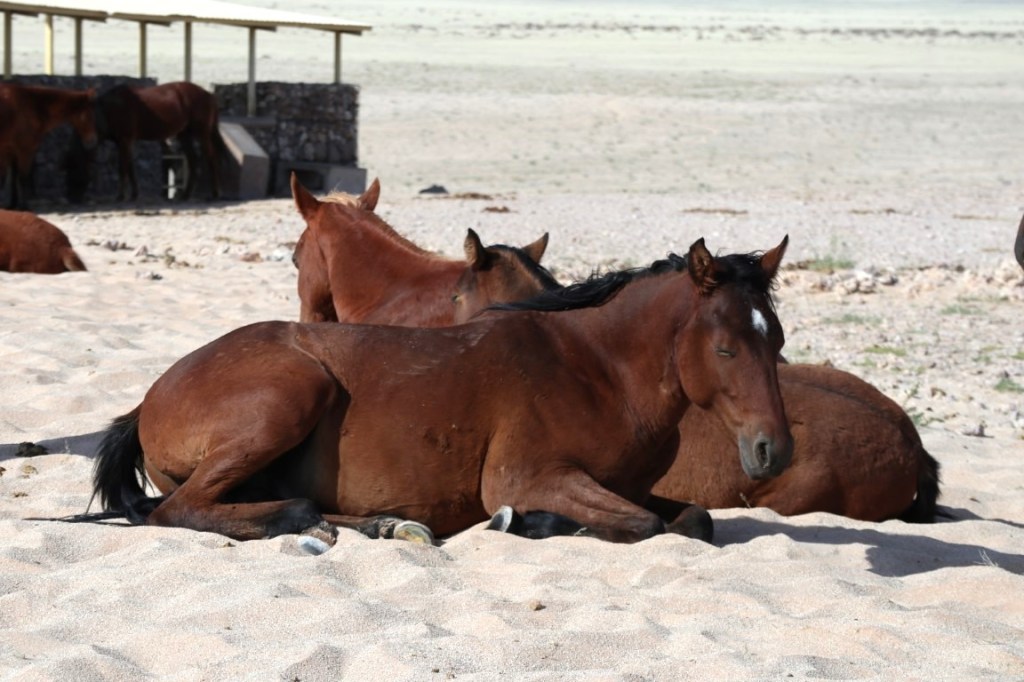
Some horses were lying on the sand
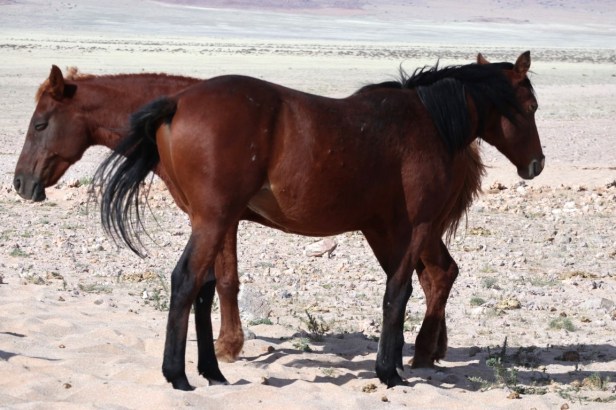
They looked quite healthy
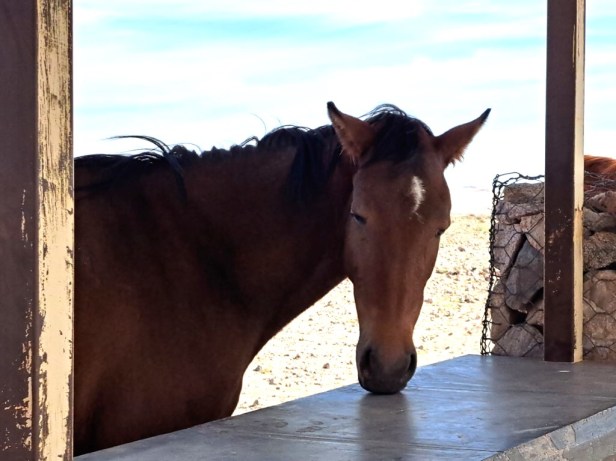
Resting in the shade of the wooden shelter
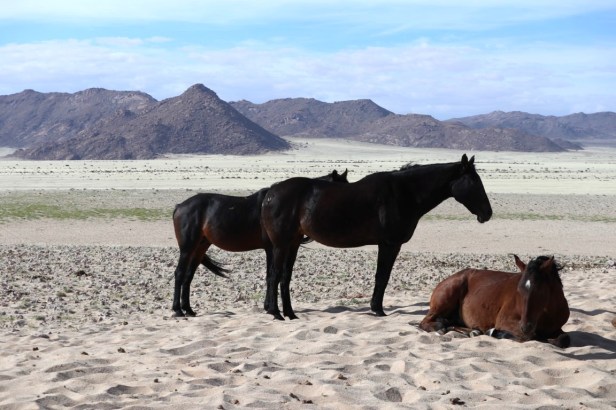
A lazy afternoon for the Wild Horses of Namibia
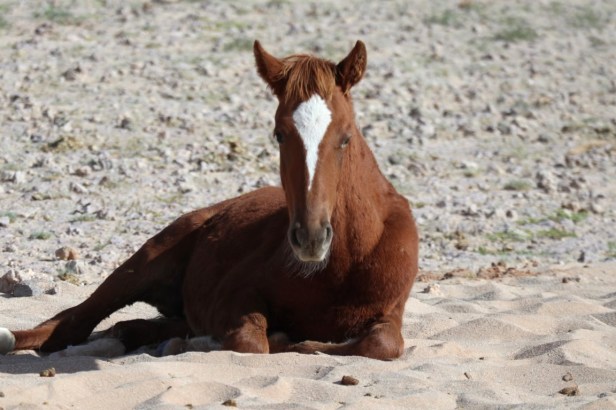
Only a few meters from us
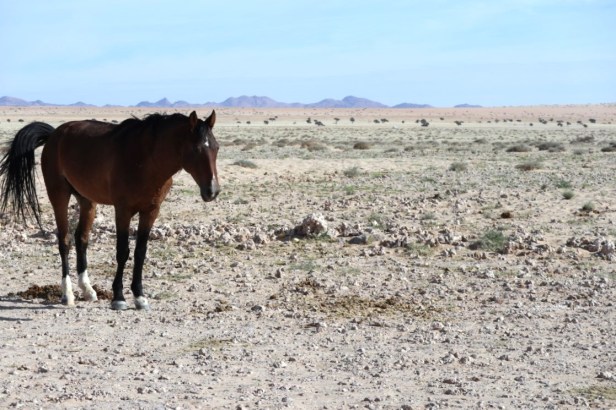
Hard to believe how they could survive when you look at the landscape
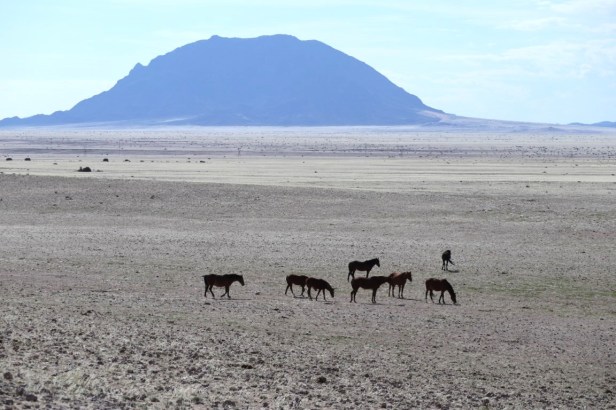
A last look at the herd close to the watering hole
We were a bit awestruck as we climbed back into our bakkie – being able to walk among the wild horses was amazing.
The next day we would drive back on the same road from Lüderitz to our camping site and we hoped to see the horses again. (Spoiler alert: These are not the last photos of the Wild Horses of Namibia – if you want to see our second visit to these stunning horses, click here.)

Beautiful tree close to the Wild Horses
Garub Train Station:
The Garub train station is just a few kilometers from the Wild Horses – on the left side of the road when you’re travelling to Lüderitz. There is only a dilapidated building, a rusty water tank, and a few dead trees – yet it is so picturesque.
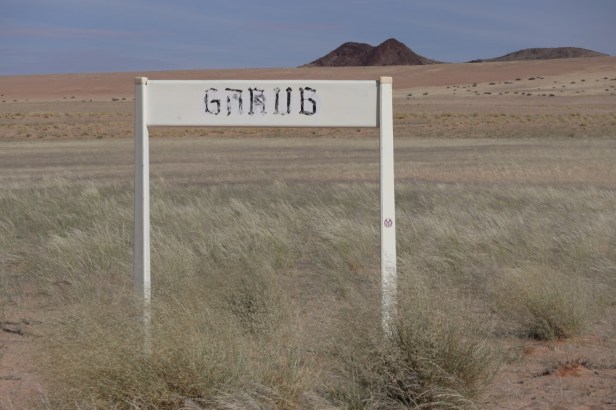
Old sign
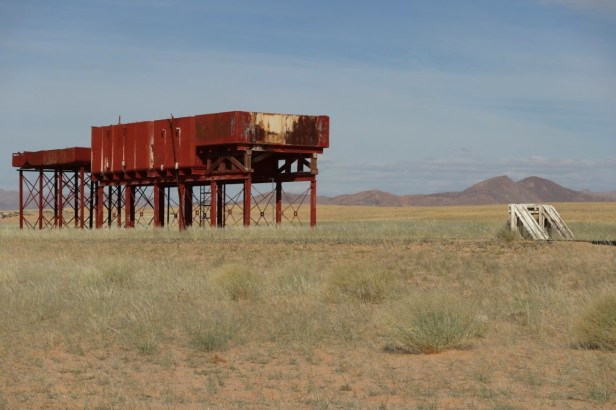
Rusty water tank
We did not know anything about this crumbling train station. While Berto was taking photos, I accidentally managed to get internet reception and thus found out more about this station. (By the way, cell phone reception is not something easily found in the desert.)

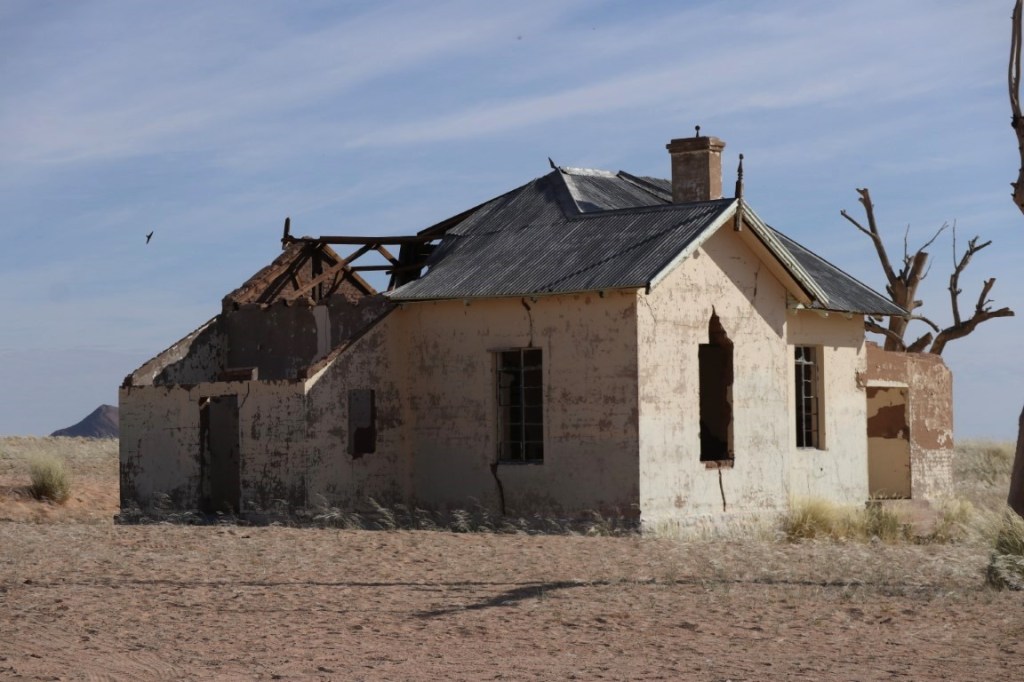
Dilapidated house (and a dead tree)
Apparently Garub train station was built in 1906 to provide the transport locomotives with water on the Lüderitz to Keetmanshoop line (until steam locomotives were replaced by diesel).
During the war years (1914/15) much of the railway and station building was destroyed by the fleeing German troops with the Union soldiers in slow pursuit, having to repair the line as they went.
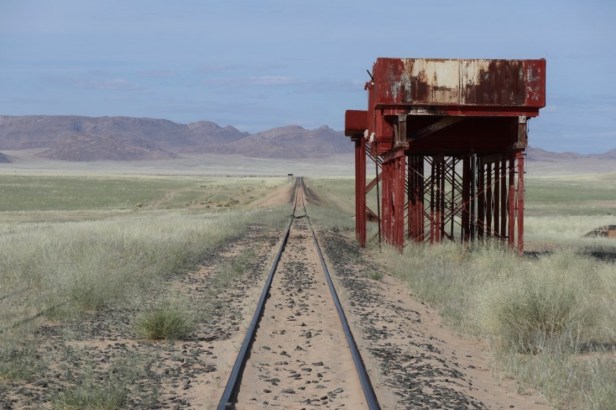
Railway line and rusty water tank
Several boreholes were built to supply the trains with water. One of these historic boreholes still exists today as a resource for the wild horses we saw earlier.
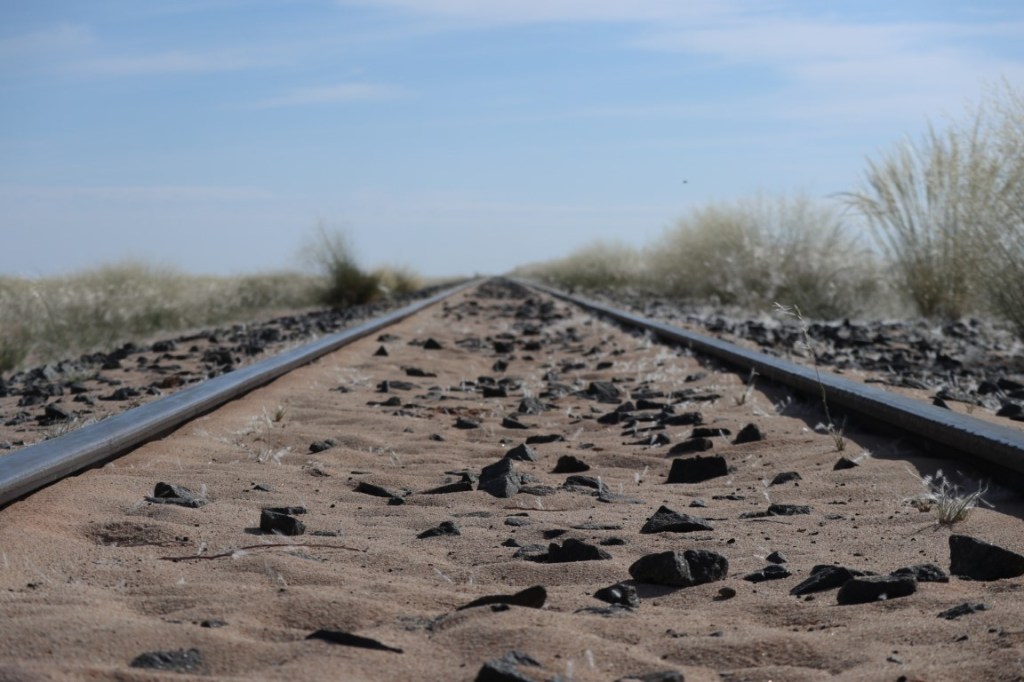
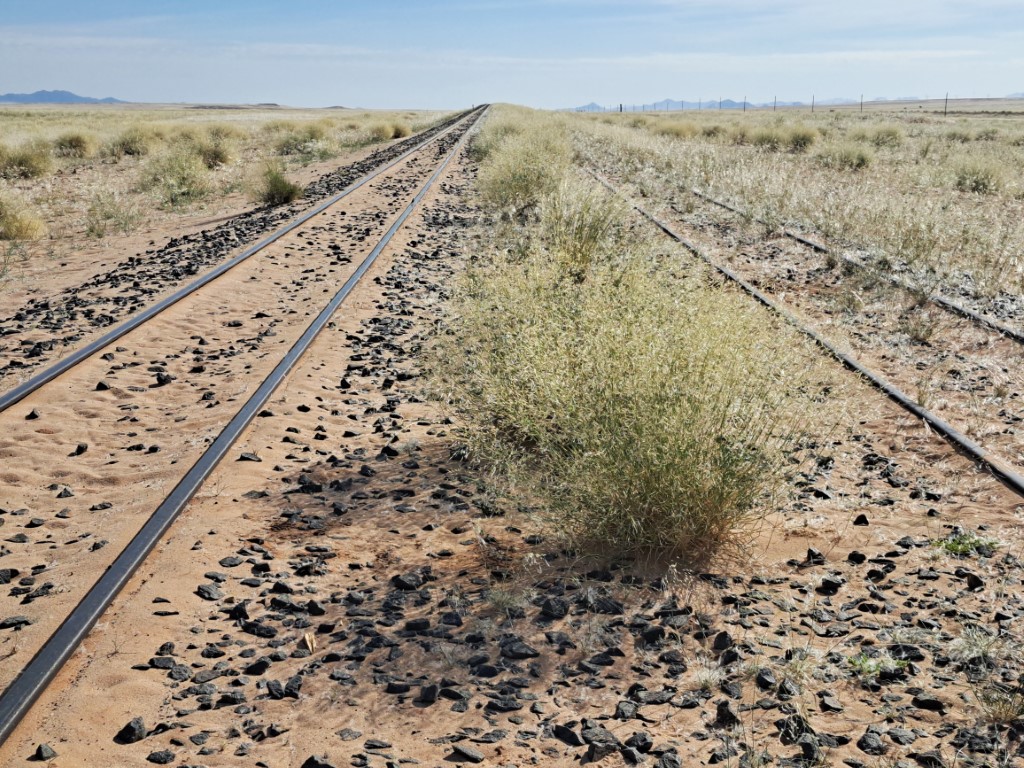
A railway that has long since fallen into decay

Once a refuge for weary soldiers, but now just another old building in the desert

Three in one shot: Rusty water tank, old building and dead tree
Our visit to the Garub train station was pure coincidence, but it was a great conclusion to our day in the desert.
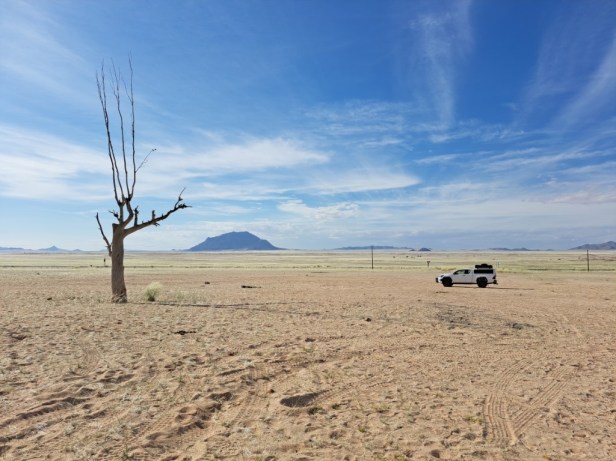
Just us, a dead tree (and wild horses in the distance) in the Namib desert
Our first day in Namibia brought many surprises and we couldn’t wait to see what else lay ahead for us. Oh, and I won’t blame you if you are already in love with Namibia.
In our next post, we arrive in the coastal town of Lüderitz, which offers its own hidden gems (read here).
 Wet and Dusty Roads
I don’t know what it is about wild horses. They just seem to represent survival and freedom somehow. They’re magnificennt. I’d love to see these. Thanks to Bero for letting you include so many pictures of them 🤣 Maggie
LikeLiked by 1 person
That hour we could walk among the wild horses, without the presence of any other people, was such a golden moment! Ha, Berto couldn’t believe I used so many photos of the horses in one post 😁. And with many more photos at my disposal, I’m going to have a field day with the next Namibia posts! Thank you, Maggie.
LikeLike
What a captivating post Corna and to see all those wild horses at close range must have been wonderful.
LikeLiked by 1 person
I don’t know if we were just lucky to see the horses up close (especially after other people told us that they didn’t even see the horses on their visits). It could be that, because of the heat, they were looking for shade at the shelter and also came to drink water at the nearby watering hole. Be that as it may, it was an incredible experience.
LikeLiked by 1 person
Beautiful views along the drive. Glad to hear you had no issues with the dirt road even if it was washed away in some places. How awesome that you got to see the wild horses!
LikeLiked by 1 person
We were spoiled with beautiful rides through Namibia Linda – the scenery is just breathtaking. Yes, I’m also glad the road at the river was drivable, because it would have been a pity not to be able take this route. The sight of The Wild Horses was a magical experience (it was so special that we paid them a visit for two consecutive days).
LikeLiked by 1 person
Namibia looks amazing, dear Corna, and it would be such a dreamy travel destination, particularly for travellers who appreciate unique landscapes, wildlife, and cultural experiences. I love its vast, dramatic scenery, including deserts, dunes, and coastal areas, which offers a memorable experience. Thanks for sharing, and have a good day 🙂 Aiva xx
LikeLiked by 1 person
With a population of just over 3 million, it is estimated that 97% of the country is uninhabited due to the fact that it is mostly desert or semi-arid. And still, Namibia is an incredibly beautiful country. Thank you for enjoying it with us, Aiva.
LikeLike
How wonderful to see so many wild horses! And Garub train station looks like an amazing site for photography 🙂 I particularly love your shot of the railway lines stretching into the distance next to the rusty tank!
LikeLiked by 1 person
The horses were definitely one of my highlights of the trip. That photo you are referring to was taken by Berto and we both love it. It might get a special place on our wall 😉. Thank you, Sarah.
LikeLiked by 1 person
Thank you. Having a wonderful time following your progress on Google Maps. Visiting places I had never thought I’d ever see. Dian loved your pictures of the horses.
LikeLiked by 1 person
I told Berto that I’m sure you are following us on Google Maps 😁. Thank you for travelling with us, Carl. I’m glad that Dian likes the photos of all the horses – then it was worth including so many in this post (and tell her more is coming)!
LikeLike
Yay, Namibia! How cool to see the wild horses. They’re beautiful and your photos are great! Also, I really like the quiver tree, it’s very unique.
LikeLiked by 1 person
Thank you so much Diana – I’m glad you liked the photos … I went a little wild with the wild horses 😁. The quiver tree is one of the most beautiful trees in the desert areas of Southern Africa – always a joy to see them in nature.
LikeLiked by 1 person
You’re right, Corna, I’m already in love with Namibia. I love the ghost town look of Garub, the strikingly beautiful scenery and the horses! Great photos. I’m looking forward to your future posts.
LikeLiked by 1 person
If you like the ghost town look of Garub, you will definitely enjoy our Kolmanskop post that I will be writing about soon! Namibia has the ability to crawl deep into your heart – whether you are just seeing photos of this beautiful country or visiting it yourself … that’s just how it is!
LikeLiked by 1 person
I shall never get there but I could easily fall in love with Namibia. Deserts have a unique quality, both stark and beautiful at the same time. It is wonderful that you were able to see so many horses and so close up. They obviously recognised you as gentle souls. It is amazing that they survive in the desert. It must be hard and yet they are free so perhaps they are the lucky ones. Thank you for the great pictures.
LikeLiked by 1 person
Since you can’t come to Namibia, I am glad that we can bring the beauty of Namibia to your home, Carolyn. The sight of the wild horses was definitely one of my highlights – to see how they survive in an untamed world filled me with absolute joy. And I agree with you – they have a freedom that not many other animals are aware of … they sure are the lucky ones.
LikeLike
How is it wild horses have a big belly? What in the world do they eat. They are absolutely beautiful and a moment you will never forget I’m sure. I can’t wait to see more!
LikeLiked by 1 person
That’s what I was also wondering, Diane 🤔 … one would think they were in your kitchen! The area had good rainfall and there were green bushes everywhere which they were nibbling on, but I wonder what they eat in the dry seasons! There are still a few surprises waiting in our upcoming posts – it’s just a mission to work through all the many photos!
LikeLiked by 1 person
You are hilarious Corna! Looking forward to seeing more!
LikeLiked by 1 person
Such a lovely post Corna. I will never forget the huge social weavers nests in the Quiver trees. To see wild horses is wonderful, but the deserted railway is a photographer’s dream. Fab shots.
LikeLiked by 1 person
Yes, we saw the weavers’ nests (not in a quiver tree, but in another one) – it is incredible how big those nests are! The wild horses were a wonderful experience – especially since we were the only two people among all those horses. And you’re right; the abandoned train station was fantastic for photos. Thank you for enjoying Namibia with us – even though you have already experienced this beautiful country yourself.
LikeLike
I only had a little compact camera then, film too so I didn’t take many photos and you never knew then whether you had a decent shot. So it’s lovely to see Namibia through your eyes.
LikeLiked by 1 person
Die suide van Namibië is vir ‘n agorafoob ‘n skrikwekkende plek!
LikeLiked by 1 person
Agorafoob … ag, dis lekker om vir Tannie Frannie hier op ons blog te hê! Ek leer so baie mooi Afrikaanse woorde ☺️. Ek is bly ek is nie ‘n agorafoob nie – daardie oop vlaktes van Namibië is so mooi vir my!
LikeLiked by 1 person
I’m already in love with it, and I have so much to comment on in this post. Firstly, another almost 300 mile driving day (!) – you guys are really covering the miles. Secondly, I love those Quiver trees, they are so unlike anything else I’ve seen before. Thirdly, the wild horses are beautifully but fourthly (is that even a word!?), YOU STILL HAVE WIMPY!? It long shut down in my area of the UK, and I googled it and discovered its success is largely SA driven. You learn something new every day!
LikeLiked by 1 person
“Fourthly” – because English is not my first language, I will believe you when you say it’s a real word 😁. When you drive in Namibia, you have to know that you will be driving long distances – the towns are far apart (just make sure you have enough snacks)! And you’re right, the Quiver trees are special – it almost looks as if the tree is upside down with its “leaves” looking like roots. Oh yes, Wimpy is still going strong here in South Africa (and also in Namibia it seems) – I love Wimpy breakfasts! Thank you, Hannah, I’m glad you find Namibia a beautiful country … I’m sure you will enjoy the next few posts.
LikeLike
I can just imagine your feeling of serenity as you wandered amongst the wild horses, what a lovely experience. There’s something inspiring about travelling through desert landscapes, a sense (like ours in Peru’s Sacred Valley) that nature is more powerful than mankind.
LikeLiked by 1 person
That hour we spent with the Wild Horses was truly a magical time. Not only were we fortunate to see the horses, but also that there were no other tourists – talk about being in the right place at the right time! We love being out in nature (as you very well know) … the silence of the desert is always the best place to quiet the noise in one’s head 😉.
LikeLiked by 1 person
This is stunning. These horses are lovely.
LikeLiked by 1 person
Thanks Mélodie. It was truly an incredible experience to be around the horses – definitely not an opportunity one gets every day!
LikeLiked by 1 person
Garub looks fascinating. Reminds me of outback Australian towns that have ‘died’ over the years since early European settlement. Like you we fill up with fuel at just about every available fuel stop as there are quite often hundreds of kilometres between towns in outback Australia.
LikeLiked by 1 person
I can completely understand that you must refuel at every available place – the outback of Australia is a vast area! Garub train station flourished with the discovery of diamonds in the early 1900s, but after the diamonds were mined out (and with the outbreak of the world wars), it turned into a desolate place … now it’s only good for photographers.
LikeLiked by 1 person
What a lovely road trip you’ve had, Corna! And so lucky to see so many wild horses, they look so well, healthy and well taken-care of I could say. Glad you could get so close to them, nice pics!
LikeLiked by 1 person
This was definitely our favourite road trip yet, Christie! The south of Namibia had a lot of rain, and the fields are dotted with bushes and grass (which the horses seemed to like), and I suspect that’s why they look so healthy. It was amazing to be so close to them – I could even have reached out my hand to touch them (but I didn’t dare to – after all, they are wild horses).
LikeLiked by 1 person
Not the easiest of roads to travel, Corna. I’ve never seen a Quiver tree and it’s hard to know what those horses survive on. They must roam far and wide in search of food xx
LikeLiked by 1 person
It was a bit of a rough start in terms of the roads, but the area was so beautiful that we didn’t mind. The Quiver tree is beautiful in its simplicity – there is a forest near Keetmanshoop that consists only of these trees (we hope to see it on our next trip to Namibia). You’re right, one wonders what the horses eat – there were many green bushes and grass during our visit, but when it’s dry, the food for them must be scarce.
LikeLiked by 1 person
I believed that I had left a comment on this post a week ago, but apparently it did not go through. Here’s another attempt: love quiver trees, they are going straight onto the list of my favourite things. The photos of the horses, as indeed the whole experience must’ve been, are brilliant. They seem quite relaxed around you. Do you know if people feed them? The sight of the abandoned train station is very atmospheric, as are the disused tracks running through the dessert.
LikeLiked by 1 person
I checked the spam box, but don’t see a comment from you there … maybe WordPress swallowed it😉. Quiver trees are a big favourite of mine – especially because they grow so easily in dry areas. Yes, I wondered about the term ‘wild’ horses, because it’s not as if they’re afraid of people. But the fact that they survive on their own in a desert surely justifies calling them ‘wild.’ No, I don’t think people feed them (having said that, I didn’t see any signs saying you shouldn’t), but I think people respect nature, the horses, and the way they survive. We just loved that train station – it shows, one shouldn’t only look at the road ahead but also what’s next to the road! Thank you for taking the time to send another comment, Leighton, it’s much appreciated!
LikeLiked by 1 person