February 2025
After a break of a few weeks in our Graaff-Reinet series, it is now time for our last post about our visit to the oldest town in the Eastern Cape Province.
If you want to read the first and second post on our visit, click here and here.
In this post we’ll take you on visits to:
- A cemetery with war graves,
- The Reinet House (a Cape Dutch house dating back to 1812),
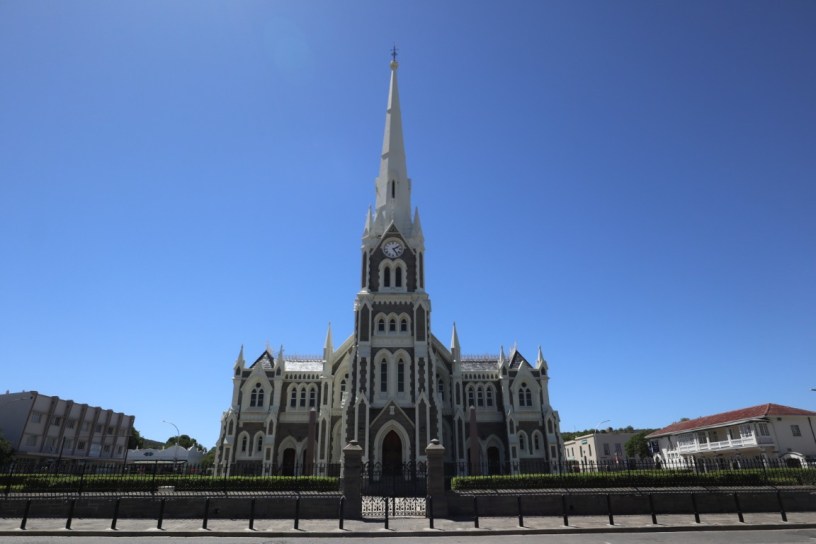
- And finally, the beautiful Dutch Reformed Church – one of Graaff-Reinet’s best known landmarks.
The Anglo Boer War (1899-1902), also known as the Second Boer War, was a conflict between the British Empire and two Boer Republics where it was the Boers’ desire to maintain their independence and control over their territories, leading to concentration camps by the British and in the end a war lost by the Boers. This is the short version, if you want to read more about this war, click here.
It was therefore no surprise that we saw quite a few monuments in Graaff-Reinet that referred to this war. On the way to the cemetery, we saw a monument on the corner of a street in memory of those who died during the Anglo Boer War.
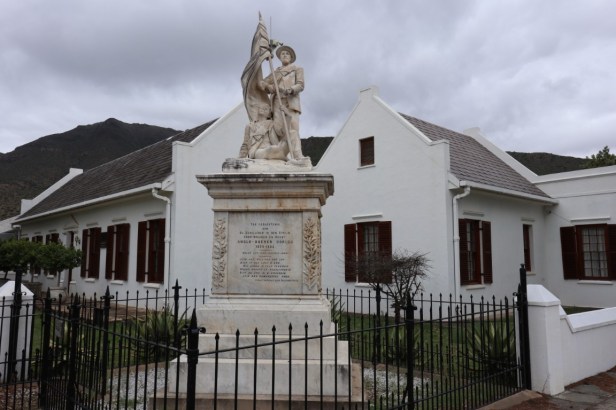
Anglo Boer War Monument
War Graves:
While driving to the Valley of Desolation the day before, we saw a cemetery almost at the end of town. These looked like very old graves and, from experience, we knew that it was a good place to learn more about the history of the town.
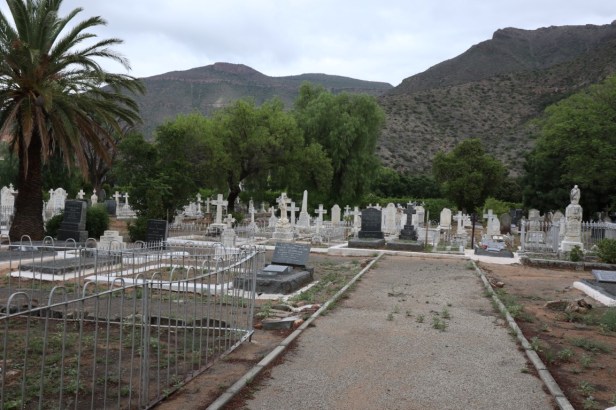
Cemetery with mostly war graves
We were pleasantly surprised that the cemetery was in fairly neat condition – especially since some of the graves date back to the mid-1800s.
The very first thing that struck us, was how many children’s graves there were – most of these dated back to the period during the Anglo Boer War.
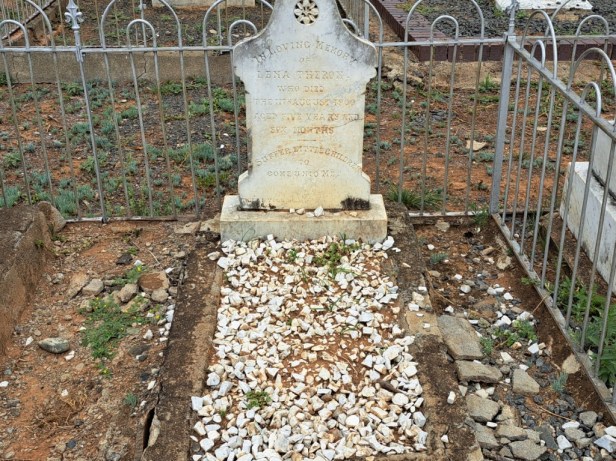
Grave of a 5-year-old child
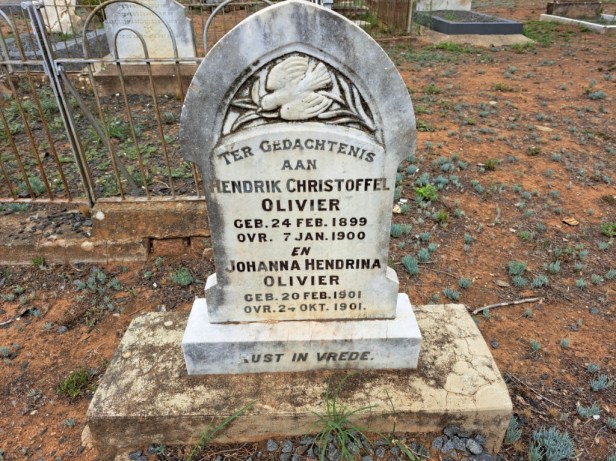
Brother and sister – both died before their first birthday
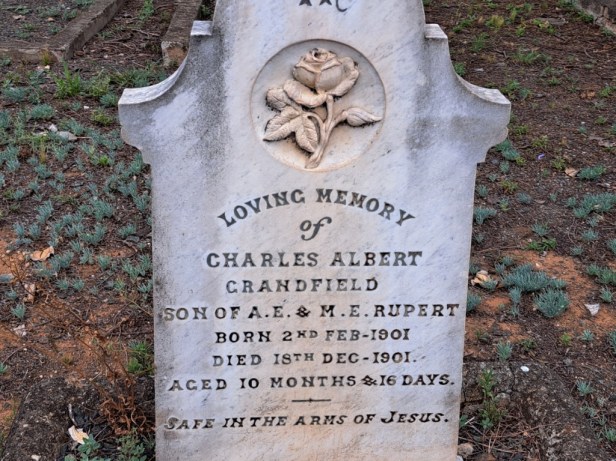
This boy was only 10 months old
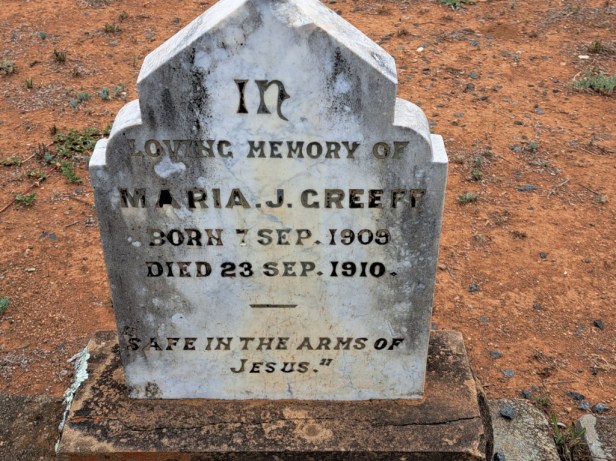
This little girl died a few days after celebrating her 1st birthday
We also saw a few graves in enclosures where families were buried together. Most of these tombstones were quite striking.
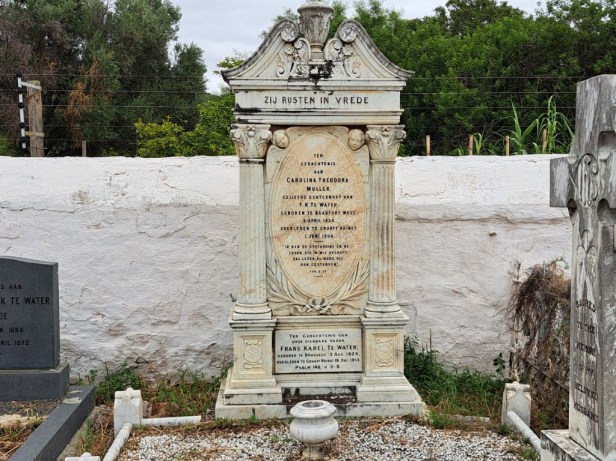
Beautifully decorated headstone of the wife of FK te Water
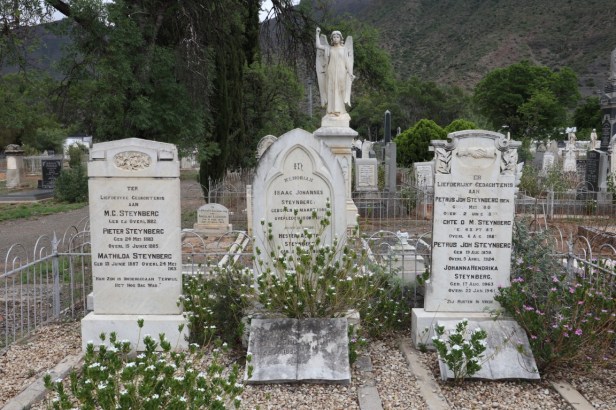
Graves of the Steynberg family
There were, of course, quite a few graves that referred to the period of the Anglo Boer War.

Graves of civilians shot dead during the Anglo Boer War
We also saw the grave of Rev. Andrew Murray, a well-known missionary of the Dutch Reformed Church. He was born in Scotland and came to Graaff-Reinet in 1822 in response to a call for shepherds to serve the widespread Dutch-African communities fleeing from the suffocating British rule at the Cape. He and his wife, Maria Stegmann, had 16 children. Two of their sons also had a profound impact on the ministry. Their second son, Andrew Murray (Jnr) also became a Christian pastor. There is a statue of him in Wellington, near Cape Town in the Western Cape Province, where he died. Charles Murray, the fifth child, became the pastor of the Dutch Reformed Church in Graaff-Reinet after his father died. The grave of Charles is also near his father’s grave in this cemetery.
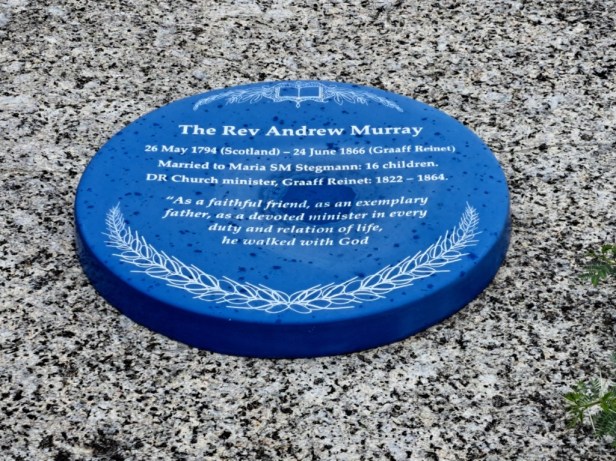
Plaque on the grave of Rev. Andrew Murray
While walking through cemeteries can sometimes make one emotional – for us, especially when there are so many children’s graves, it is a glimpse into the history not only of a town like Graaff-Reinet, but also of South Africa.
Town Hall & War Memorial:
On our way to our next destination, the Reinet House, we drove past the Town Hall and War Memorial. The Town Hall was opened in 1911 and was originally named the Victoria Hall (named after Queen Victoria). The Town Hall looks out over the Church Square Gardens which houses Graaff-Reinet’s War Memorial commemorating those who died in the two World Wars and South Africa’s Boer Wars.

Town Hall in Graaff-Reinet
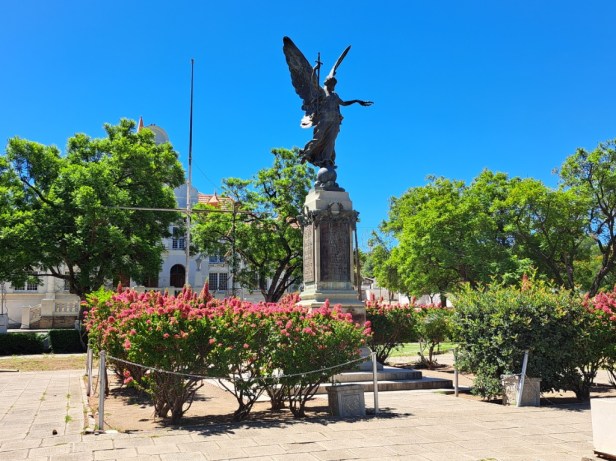
War Memorial
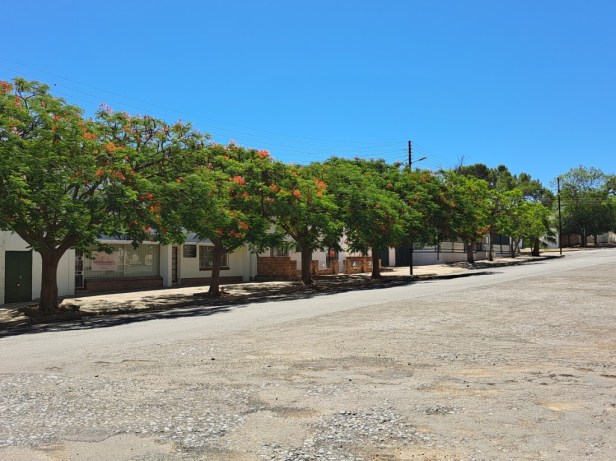
Quiet street in Graaff-Reinet on a Sunday morning
Reinet House:
Reinet House in Parsonage Street was built in 1812 and was home to Rev. Andrew Murray from 1822 – 1866 and then to his son Charles until 1904. The Graaff-Reinet Museum was established in 1956 in Reinet House. There is a significant collection of local memorabilia, furniture and paintings.

Reinet House looks down in Parsonage Street
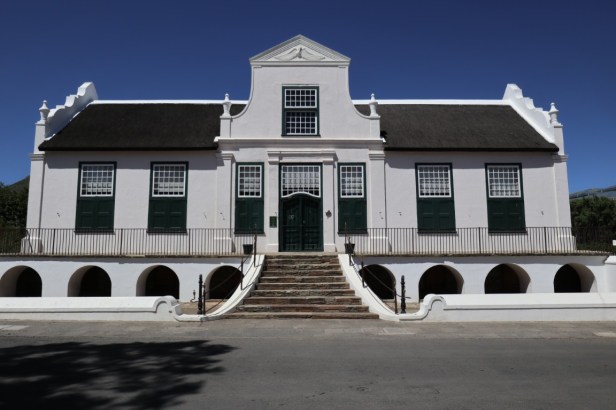
Reinet House, built in Cape Dutch style
There is a lot of history about the Murray family, who occupied the Reinet House. It was built in 1812 and became the home of Rev. Andrew Murray in 1822. After his death, it became the house of his son Charles until his death in 1904.
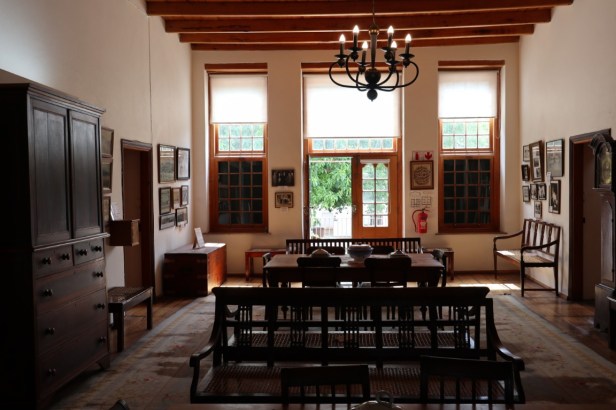
Entrance hall of Reinet House
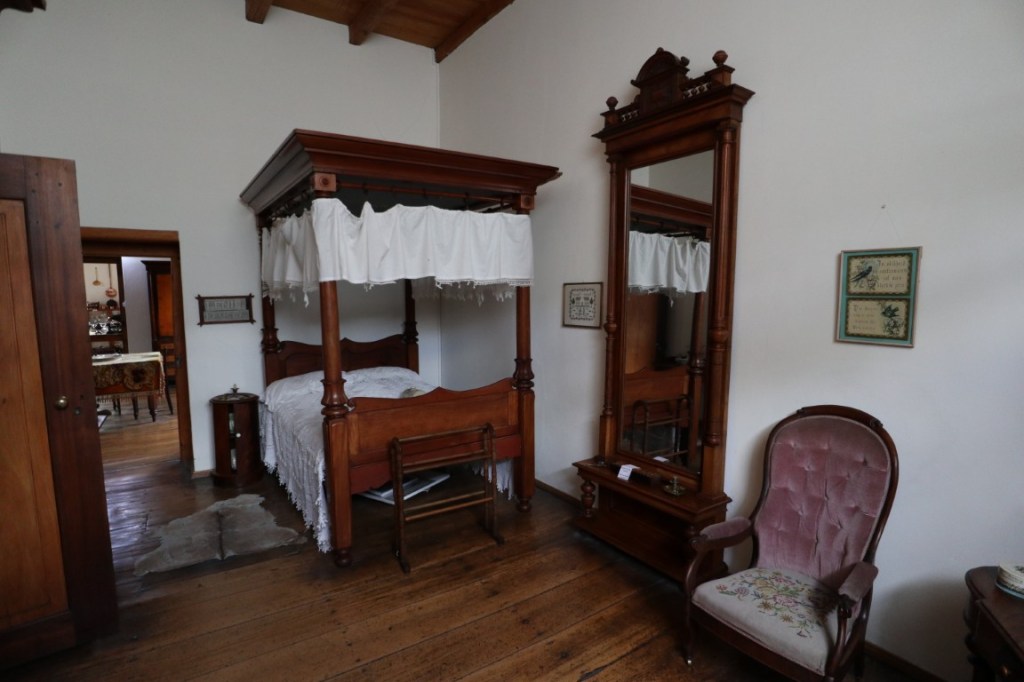
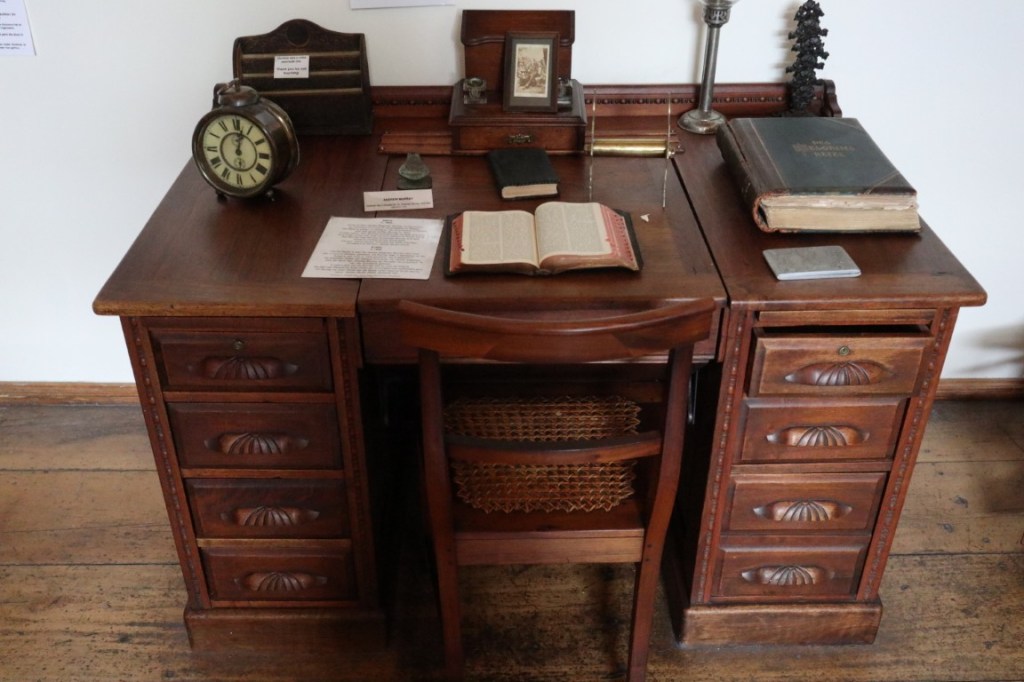
Bedroom and desk of Rev. Andrew Murray
By 1906, the building was being used as a boarding house for girls trained as teachers. It was then that the late Miss Helen Murray, a sister of Rev. Charles Murray, and for many years principal of Midland Seminary, named the house “Reinet House”. Later it was used as a residence for Training College students.
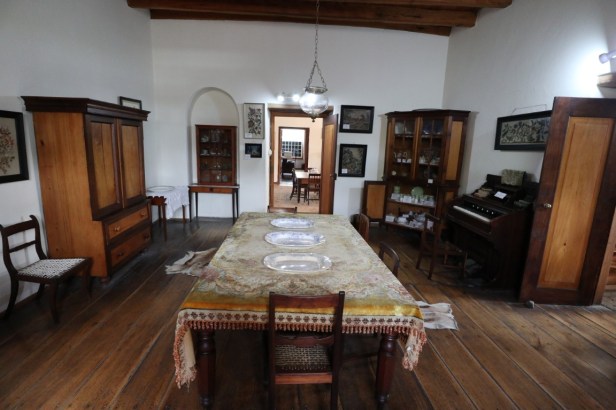
Dining Room
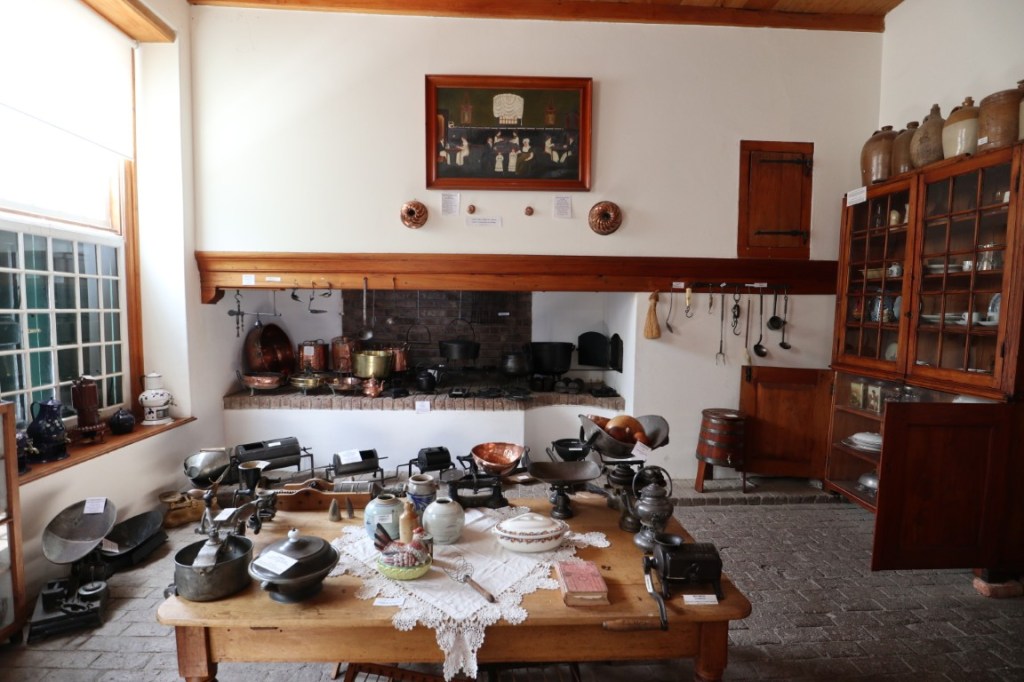
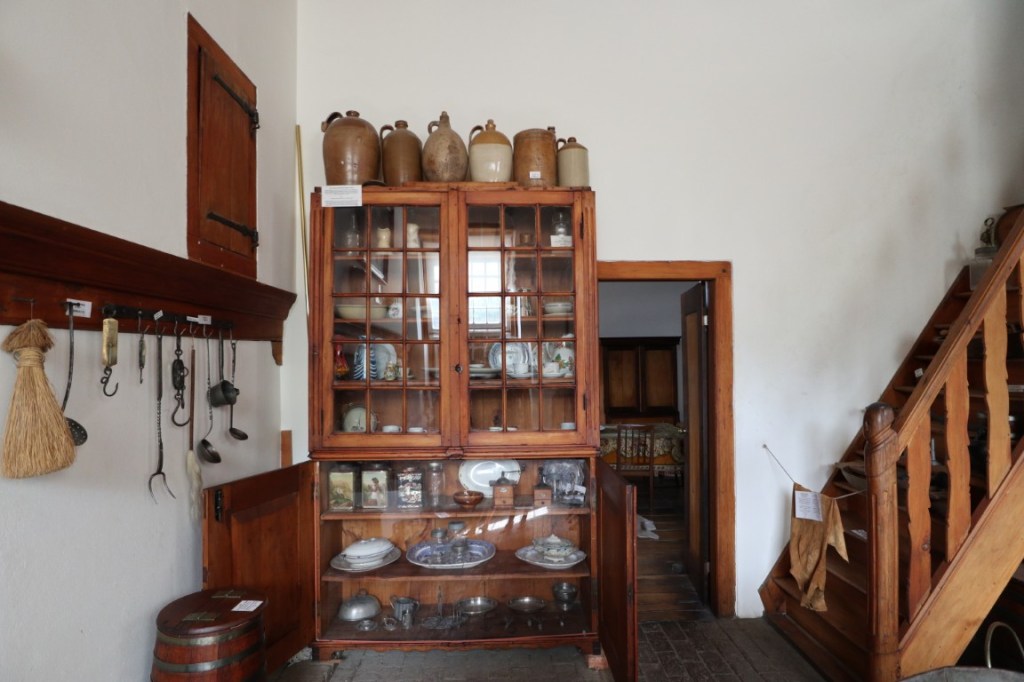
Kitchen
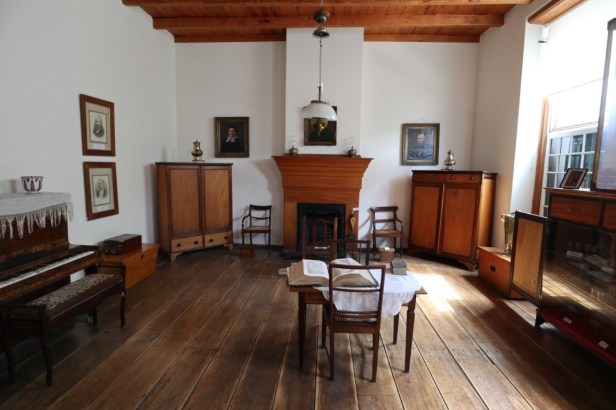
More memorabilia in another room
In 1944, the building became unoccupied and began to fall into despair. In 1947 it was purchased from the church by the Graaff-Reinet Publicity Society and restoration work began in 1952 which lasted four years. In 1956, it was officially opened as the Graaff-Reinet Museum.
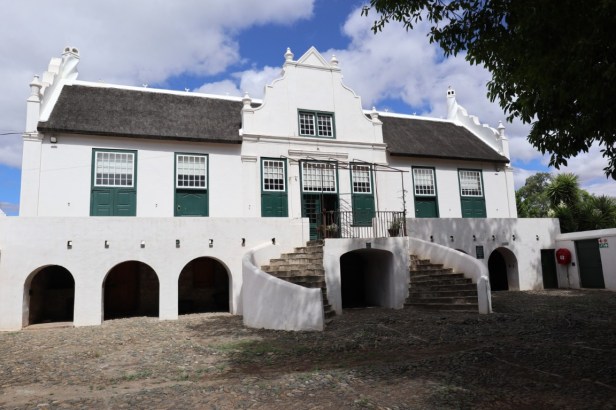
The back of Reinet House
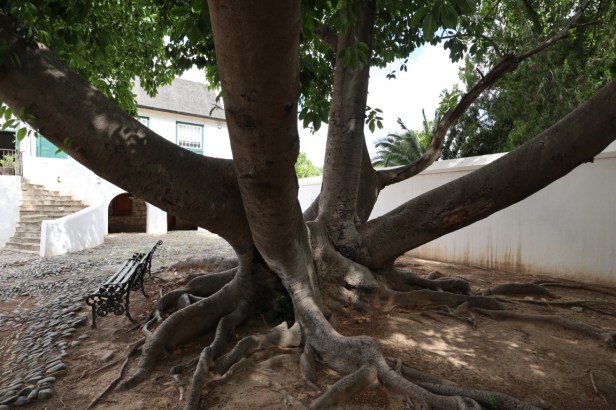
In the backyard is this Australian Banyan, planted in 1878
The largest and one of the oldest grape vines in South Africa can be viewed on the grounds of Reinet House.
The vine, a Black Acorn, was planted in 1870 by Rev. Charles Murray. The single stem attained a circumference of 3.10m, making it the thickest vine stem in the world at that time. A fungal rot caused considerable damage to the stem, however, in 1983 all the dead wood was removed to prolong the life of the vine, leaving a circle of separate stems.
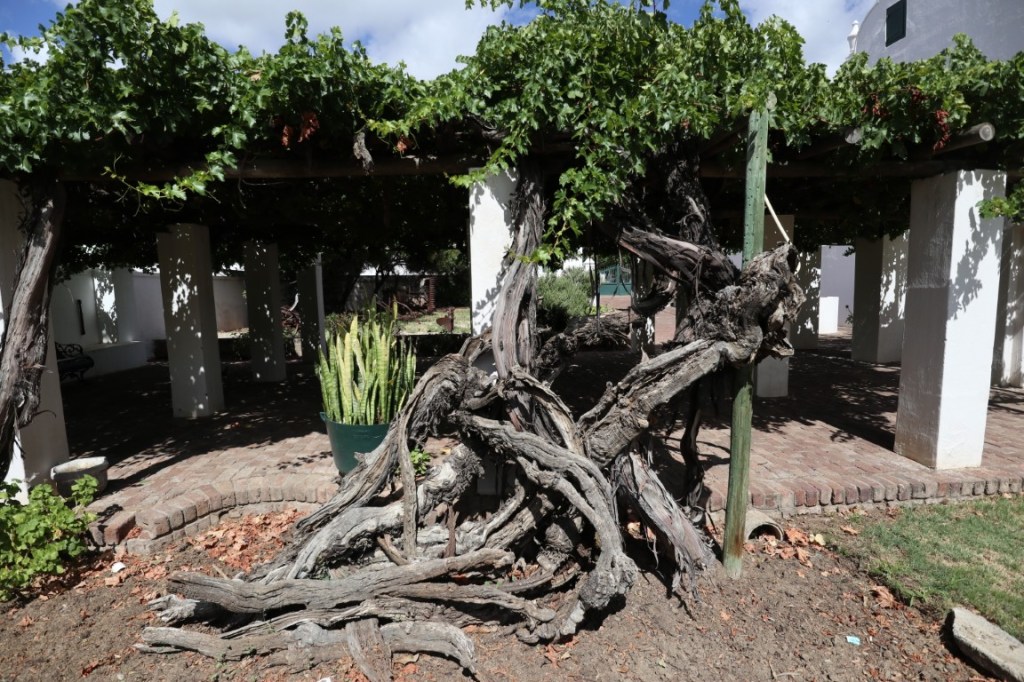
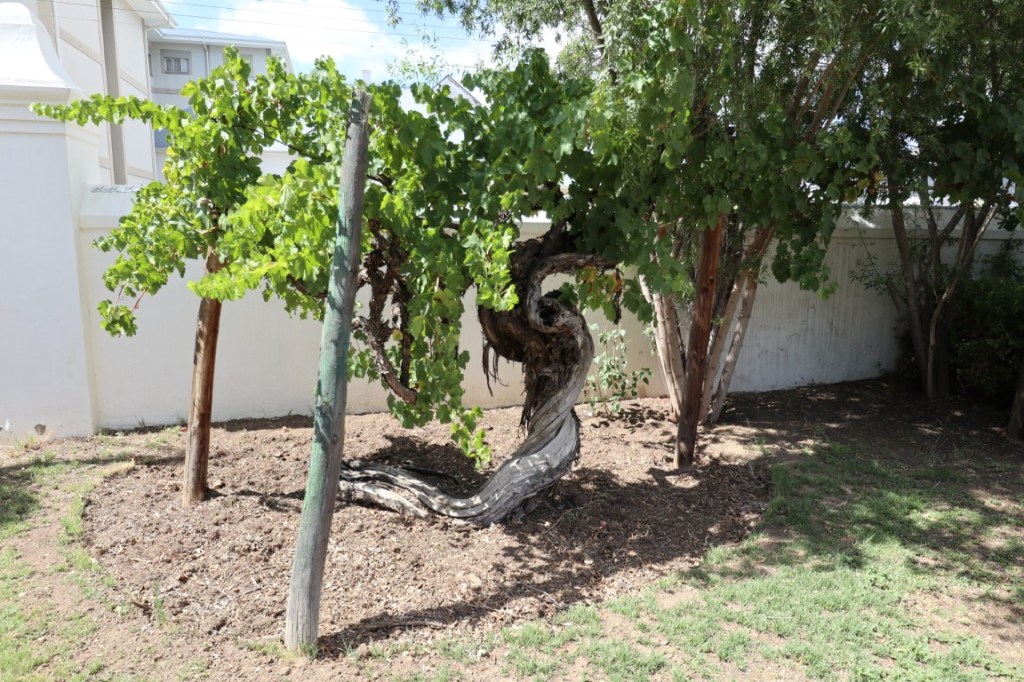
Grape vine
In the backyard is also a Mill house with a water wheel and a scale for weighing farm produce.
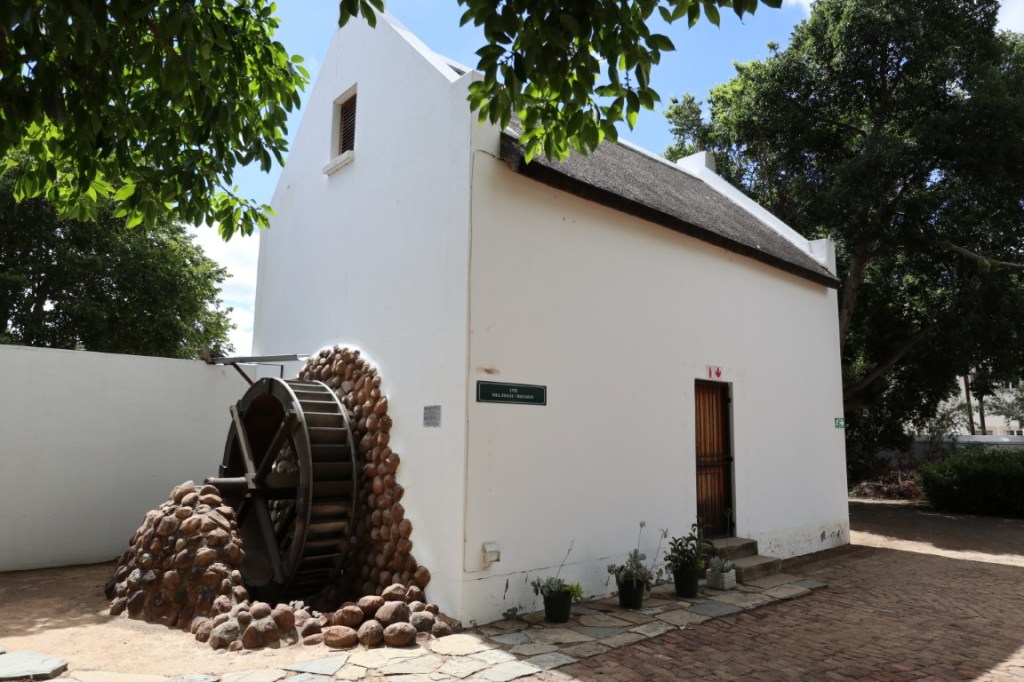
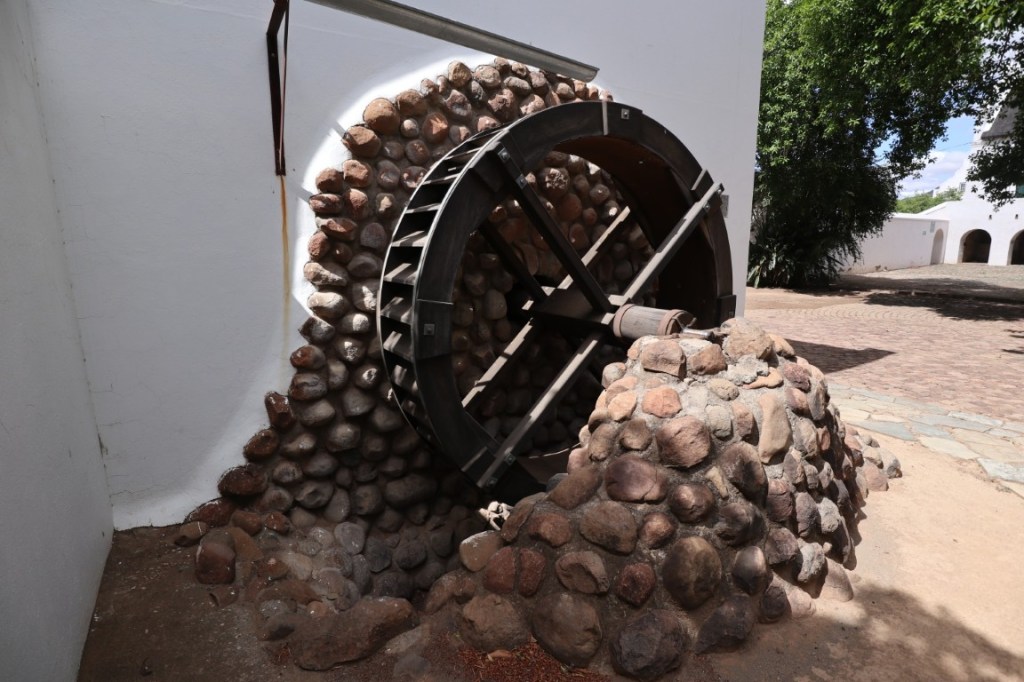
Mill house and water wheel
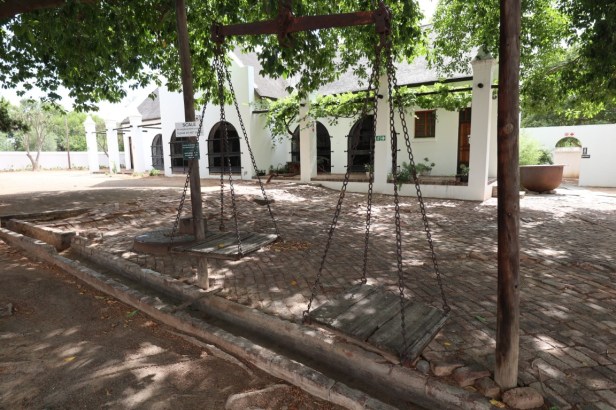
Scale for weighing farm produce
On 1 May 1980 a fire destroyed the back portion of the building, but fortunately much of the contents were saved. With the aid of public donations and with professional guidance to ensure an authentic restoration, reconstruction of the building was undertaken so that it could once again house the fine collection of period furniture and relics of the past.
We were very happy that the history of the Reinet House is so well preserved and it was great to get a glimpse into the years gone by.
Dutch Reformed Church:
The stately church, in the middle of the town’s ‘square’ (which by the way is not a square, but a traffic circle), is one of the most impressive for a small town in the middle of the Karoo.

Dutch Reformed Church, Graaff-Reinet
This is the third church on this site. With the arrival of Rev. Andrew Murray from Scotland in 1822, building of a third church was started and the second church demolished. The third church was completed in 1823 and served the community for 60 years. In April 1886 the foundation stone was laid for the fourth and existing church and the inaugural sermon was delivered on 11 September 1887 by Rev. Charles Murray who followed in his dad’s footsteps.
Charles remained as minister of Graaff Reinet until his death in 1904. This means that for 82 years the pulpit had been manned by these two generations of Murrays.
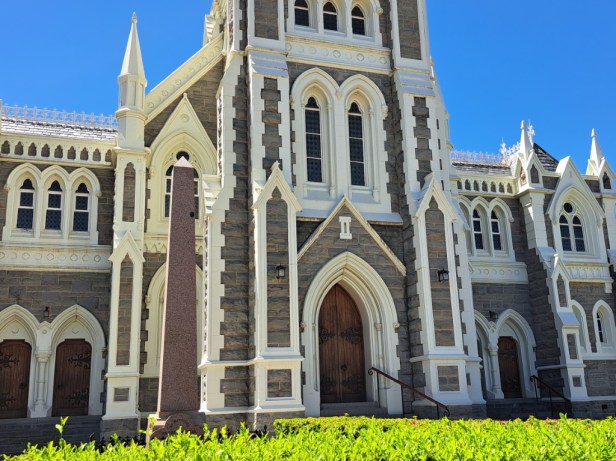
The stone for this church was obtained locally and can seat 1,250 people
Update – April 2025: Friends of ours were recently in Graaff-Reinet for a family wedding. Fiela took a few photos of the inside of the church, and I am happy to share them here with her permission.
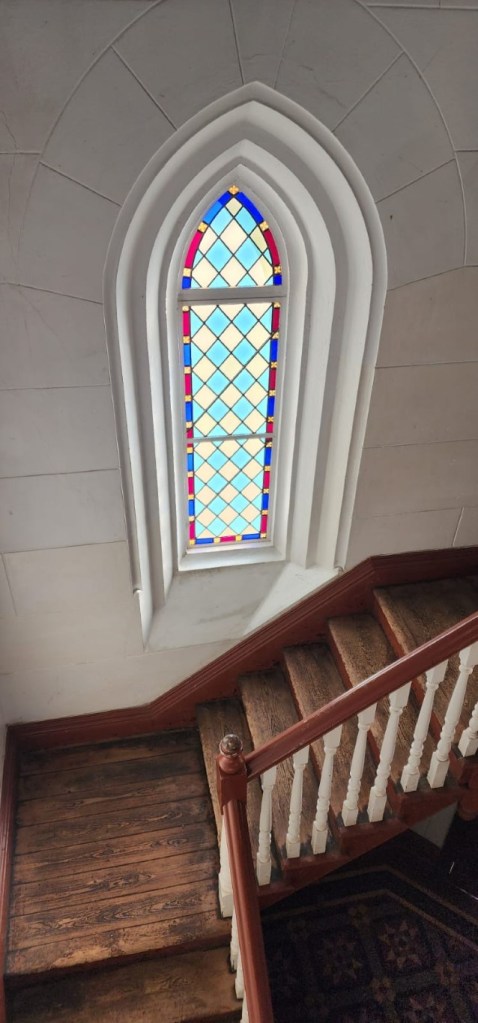
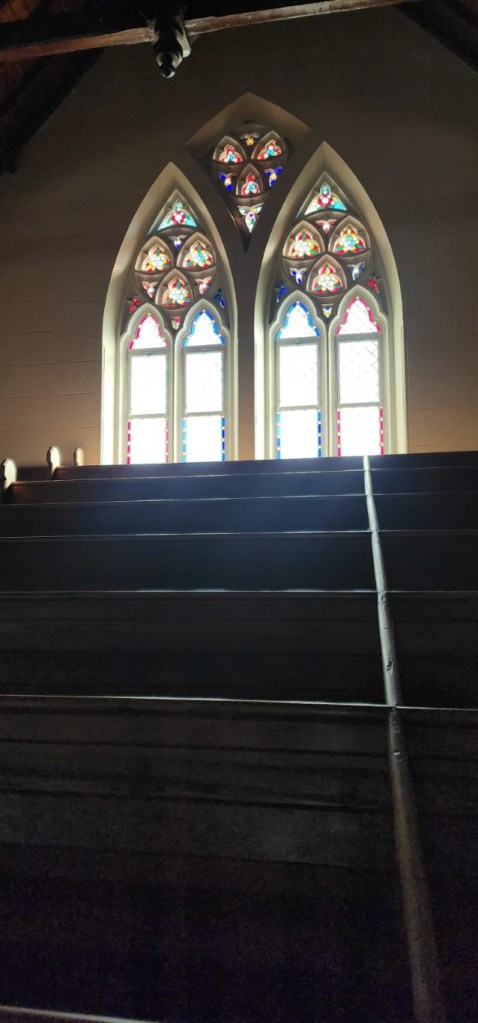
Stained glass windows (Photo Credit: Fiela Basson)
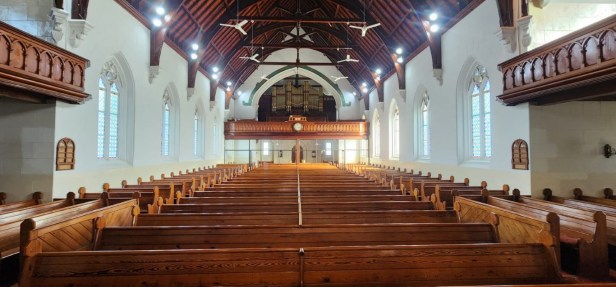
Inside the church (Photo Credit: Fiela Basson)
We took a photo in the evening of the brightly lit church – it is truly a beautiful sight.
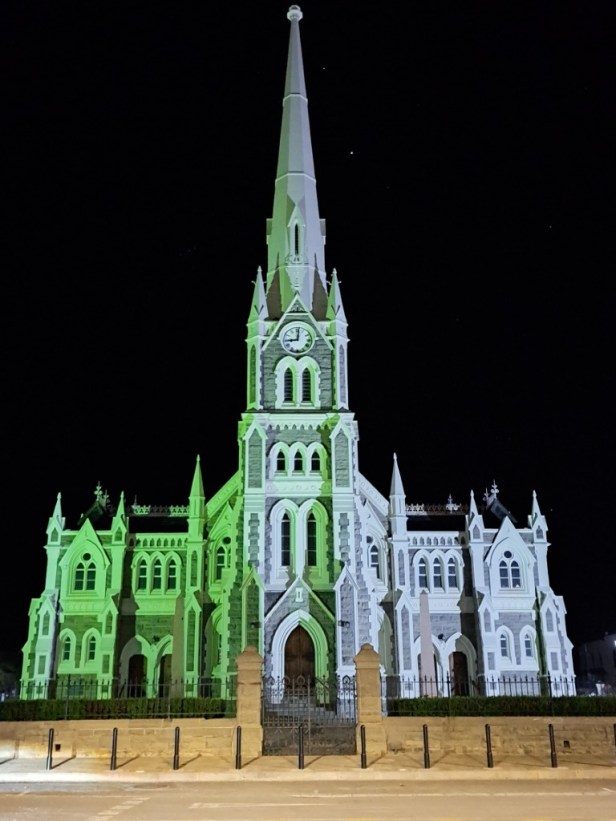
The church building is illuminated during the night
Bearing in mind that Graaff-Reinet boasts around 220 listed national monuments (more than any other town in South Africa), we didn’t see anywhere near what this town has to offer. But we were happy with what we could visit in our 24-hour stay in this lovely town.
We hope you enjoyed our overview of Graaff-Reinet and its magnificent surroundings. It is a town that is definitely worth a visit!
 Wet and Dusty Roads
Yes, I enjoyed this very much! I loved the Reinet house and those old trees. Cemeteries are always interesting and poignant, especially when there are so many children and war victims. Human history is peppered with war memorials. Will we ever learn to abandon fear and love instead? To embrace instead of fear our differences? One can only hope, I suppose. Your photos are wonderful and that church is stunning.
LikeLiked by 1 person
I know you love trees Carolyn, so I’m glad we were able to show you this old tree at Reinet House. It’s true, there are so many war monuments and war cemeteries all over the world – I like your thoughts on this (as you say, we can only hope). Thank you for exploring Graaff-Reinet with us.
LikeLike
The Banyan tree is amazing!! Yes, the Murray name drew me in, but all of the rest is fascinating too! I had no idea of this war or how many children died too! So sad.
I am also amazed at how many tombstones were so elegantly created and placed for these souls.
LikeLiked by 1 person
You’re right Sheila, that tree is a wonder to behold. Haha😉, when I typed the post and used the Murray surname so often, I thought of you (although there is a slight difference in spelling). The Anglo Boer War is probably more known in South Africa than in other countries and like any war, it’s a shame when innocent children are the victims because of adults’ differences with each other.
LikeLiked by 1 person
Yes, exactly. The children suffer the sins of the parents. War. Divorce. Ah!
And yes, I loved that the Murray you wrote of was a Rev. too.
When my husband’s dad passed, we found paperwork from Ellis Island where their last name was spelled Murray instead of Murrey. But all the kids agreed, no one wants to go to court to have their names corrected. So much for cursive handwriting! That’s for sure how it happened.
LikeLiked by 1 person
I really enjoyed your story about the Murray/Murrey surname😁. Thanks for sharing this.
LikeLiked by 1 person
What an interesting place and what a grand church! So elaborate. I have always liked the Cape Dutch style of houses and buildings and Reinet House is a fine example. Looks like some rather lovely yellowwood furniture inside too.
LikeLiked by 1 person
We were really surprised with Graaff-Reinet Jude. It’s heaped in history and of course we couldn’t stop talking about how beautiful and clean it was. You’re right, there is yellowwood furniture in almost all of the rooms in the Reinet House (a few pieces that I wouldn’t mind having in my house). I’m so glad we were finally able to see the church – I’ve seen many photos and was quite excited when I was finally able to stand in front of the church.
LikeLiked by 1 person
This is such an interesting post, Corna. Cemeteries are definitely poignant places to visit, particularly when seeing graves of children and young people. Reading about the history of the church was also interesting. The banyan tree though, that is impressive and beautiful. We don’t have them here, but there are some in Hawaii. Beautiful photos too!
LikeLiked by 1 person
Graaff-Reinet has such a rich history – it was great to learn more about this beautiful Karoo town. And you’re right, the banyan tree was amazing to see … I hope it will grow and provide shade there for many years to come (as it did for us on this hot day😉). Thanks for your comments Tricia, have a great week.
LikeLiked by 1 person
Interesting place! It’s always sad to see the graves of so many young people.
LikeLiked by 1 person
Graaff-Reinet is one of the most interesting towns we have encountered on our South African travels and is definitely worth a longer stay than what we spent there. You’re right, the cemetery was a sombre visit, but we were also happy to see that it was in such neat condition – in a way I think it shows that these people are not forgotten.
LikeLiked by 1 person
Fascinating. I remember learning about the Boer war when I was young and visiting SA. It stuck with me how violent and cruel it was; and it’s so sad seeing so many graves (though nice it’s well maintained). I find the period of colonialization of South Africa from Dutch to British such a fascinating time period to learn about (also horrifying). On a different note, the banyan tree and grape vines are beautiful!
LikeLiked by 1 person
I remember that you mentioned some time ago that you learned about the Boer Wars (I always thought it was only us here in SA who learned about it, but I reckon with the great British influence it is not strange that you would also know about it). It’s always nice to “discover” something – like the Banyan tree and grape vines – that you wouldn’t expect to find at a historic house like the Reinet House.
LikeLike
An interesting town with a lot of stories to tell. I like the way the old house has been preserved and the church is very impressive.
LikeLiked by 1 person
You’re right Sarah, the Reinet House is a very good example of what it was like to live in the 1800s. To be honest, not that much different than today (but I haven’t seen a dishwasher or washing machine😉). The church is truly special – more beautiful than what I have seen on photos.
LikeLiked by 1 person
Looks like an interesting cemetery and good to hear it’s well maintained. It’s always sad to see so many graveyards of children though. How heartbreaking. The church is very beautiful.
LikeLiked by 1 person
I’m always happy to see cemeteries with old graves which are cared for – for me it’s a sign of respect (the people of Graaff-Reinet are very considerate people). Yes, it’s always emotional to see so many children’s graves – war certainly has a devastating effect on families! And agree – the church is stunning!
LikeLiked by 1 person
I am also quite fascinated by old cemeteries. They really shine a light on the history of a place and just how hard our forebears struggled to survive. Thanks for the little historical wander. Mel
LikeLiked by 1 person
I found your comment in my spam box (?), so sorry I’m only replying now. Thank you for stopping by and walking with us through the history of Graaff-Reinet. Like you said, it was quite fascinating, and we are really happy that everything is so well preserved.
LikeLiked by 1 person
No worries. I think there is something weird happening with WordPress as my comments have ended up in spam quite a few times of late, and similarly, other comments land in my spam folder. Weird.
LikeLiked by 1 person