September 2023
The day the 8-year drought in the Eastern Cape region was broken
We woke up to rain falling over Uitspan Guest Farm. If we wanted to drive through the Baviaanskloof it would take us quite a few hours and we weren’t sure how full the rivers would be.
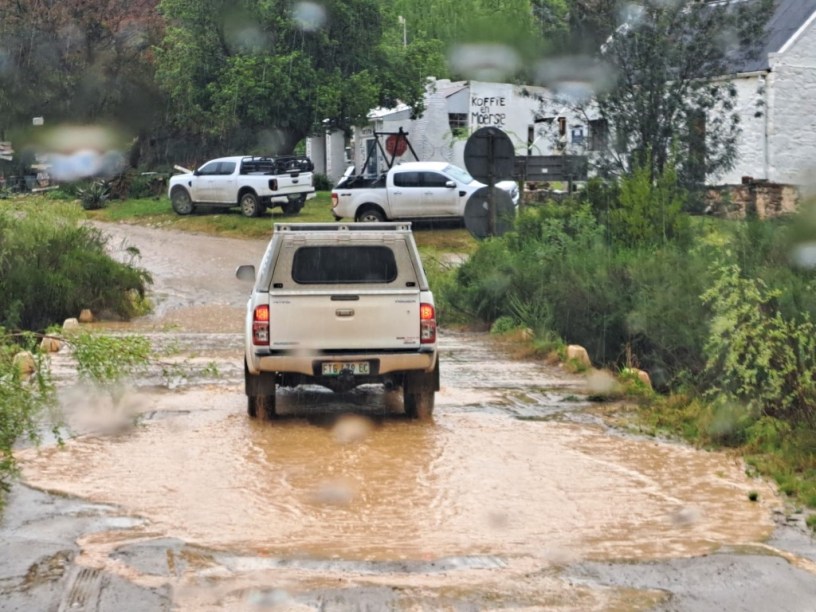
After careful consideration we decided not to take the chance and instead drove back to Willowmore. This meant that we still had to drive 40km (24 miles) on a dirt road – a very wet and slippery road.

Leaving Uitspan Guest Farm
Potholes have already formed in the road as well as small rivers along the road. It made us realise that we had made the right decision to turn back.

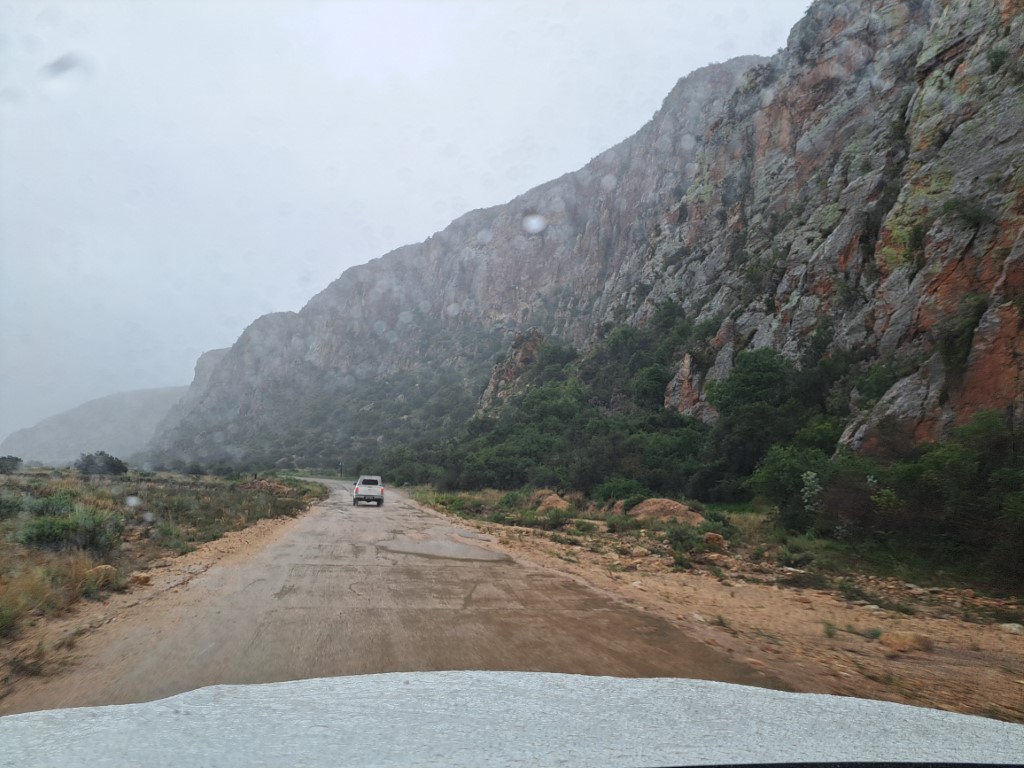
A wet dirt road
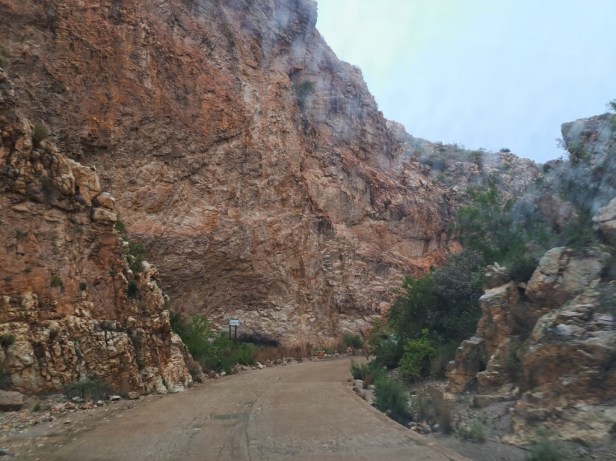
The rock formations were still beautiful in the rain
On our arrival at Willowmore, we went to a garage to re-inflate our ‘bakkies’ tyres. Berto took one look at his new bakkie and said he needed a proper breakfast to get over the shock of how it looked.
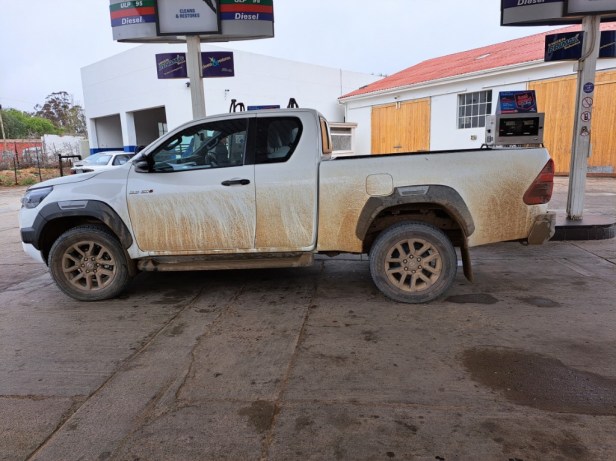
Evidence of a wet dirt road
Fortunately, Alta, the owner at Uitspan Guest Farm, recommended a lovely place in Willowmore where we could enjoy breakfast.
Kapoet Restaurant:
Kapoet is an absolute gem of a place in Willowmore. We walked in there cold and wet and received the warmest welcome one could only dream of. The fireplace was burning and the owner immediately took us to a table next to the fire. It wasn’t long before we were served hot drinks and big plates of breakfast.
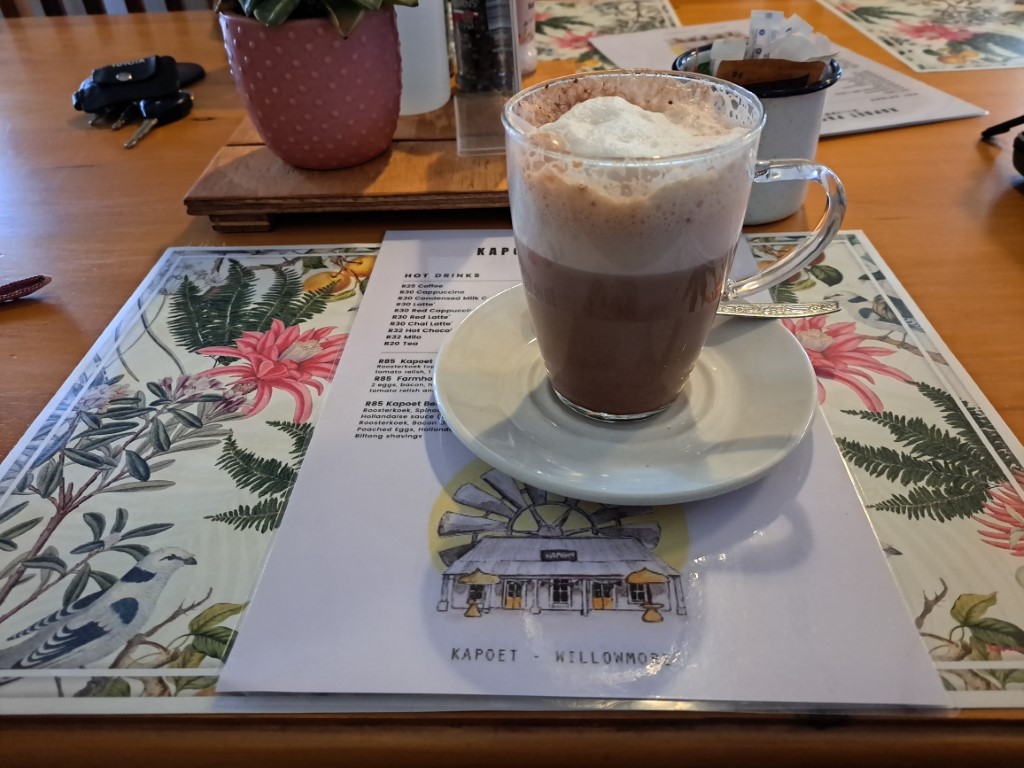

Hot drinks next to the fireplace

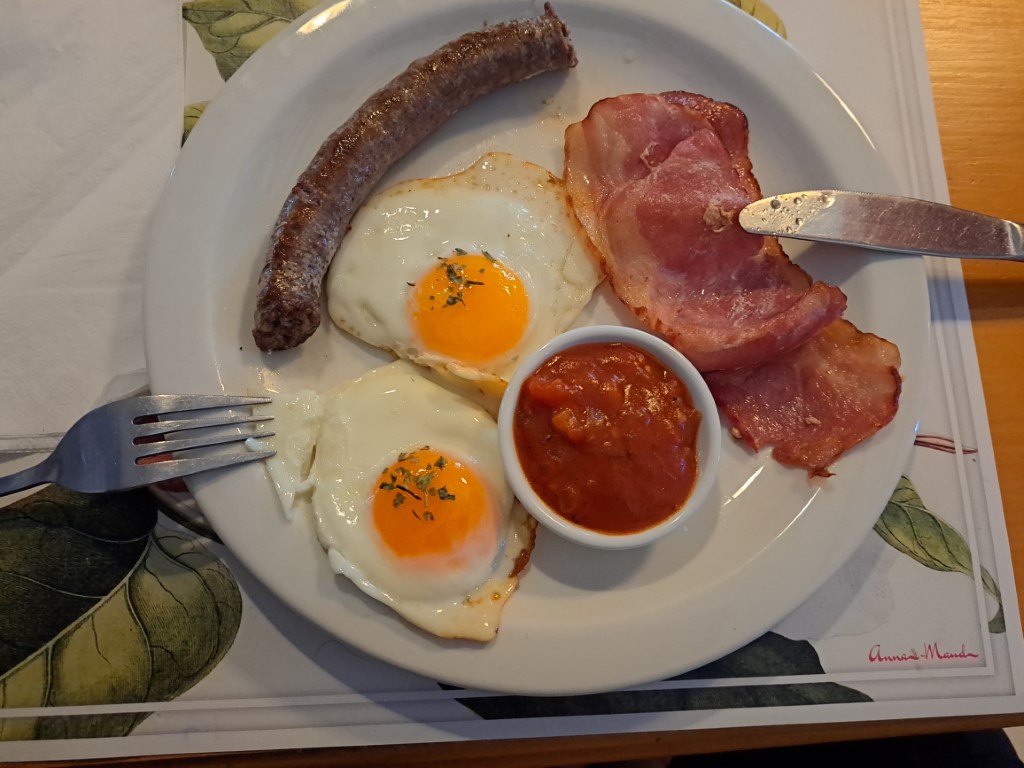
Omelet for me and a farm breakfast for Berto
Kapoet is not just a restaurant. It is a farm stall with shelves full of various delicacies. There were rusks, cookies, wine, tea, coffee and many homemade products such as jams, marinades and even soap.


So many goodies on the shelves and even a cake table

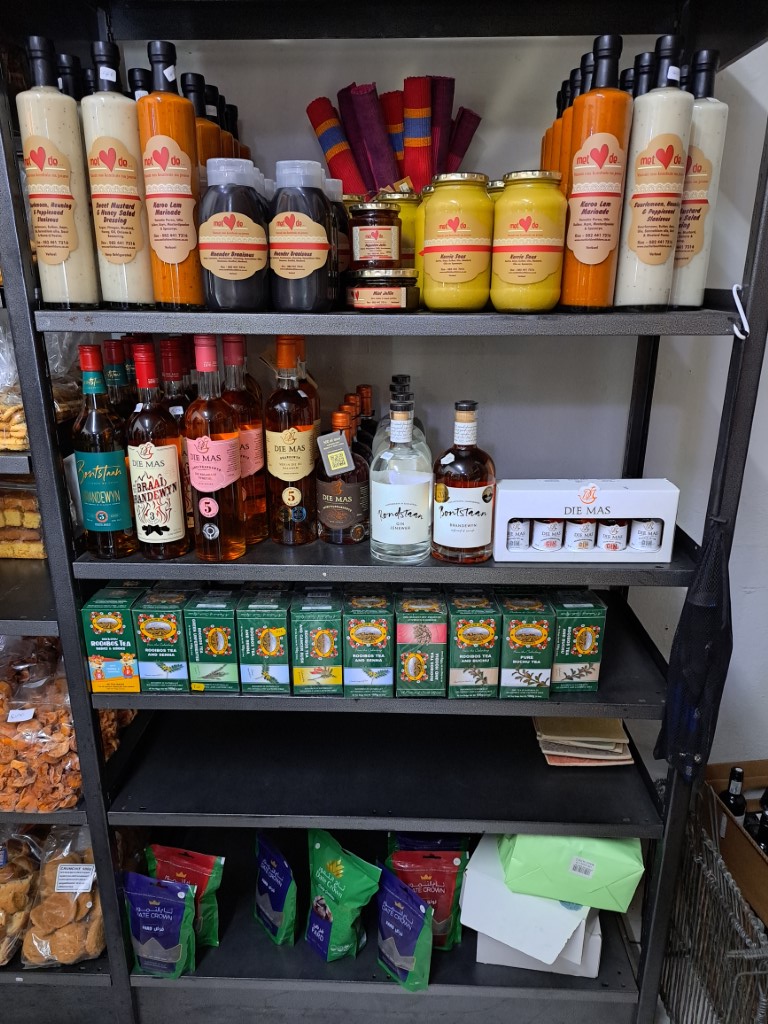
Kapoet’s shelves full of yumminess

Homemade soap
We were a little disappointed that we couldn’t drive through the lovely Baviaanskloof. It was then that Eugene suggested we drive the Prince Alfred’s Pass to Knysna where we would then join the N2 (main highway). After finishing our delicious breakfast, we drove to this pass, about 95km (59 miles) from Willowmore – and we hoped that we would stay in front of the cold front (and rain). Spoiler alert: We haven’t!
Prince Alfred’s Pass:
When you read what people say about Prince Alfred’s Pass on the internet, it goes something like this:
“The road is corrugated with pot holes. A high ground clearance 4×4 vehicle is recommended or at minimum a vehicle with high ground clearance. The pass is full of hairpin bends, and for hair raising moments, it narrows to a single lane in places.”
Sounds like fun … but not really when it rains so much! We started the pass in not too bad conditions, but the further we drove, the more it rained and the more challenging the ride became.

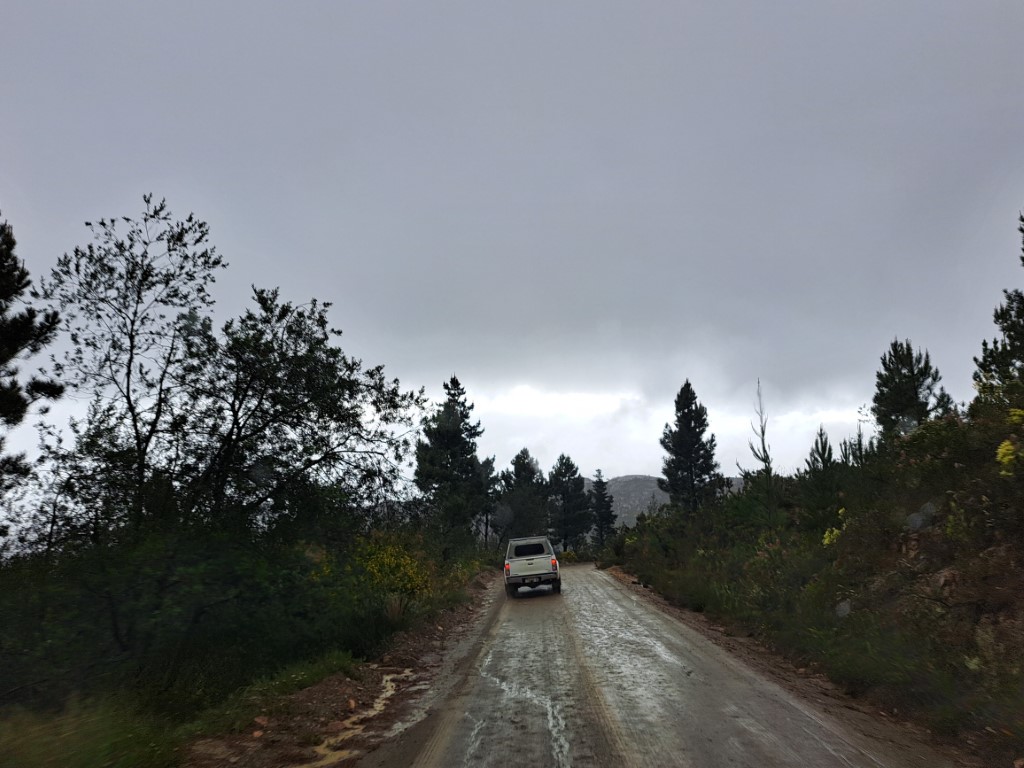
Start of Prince Alfred’s Pass

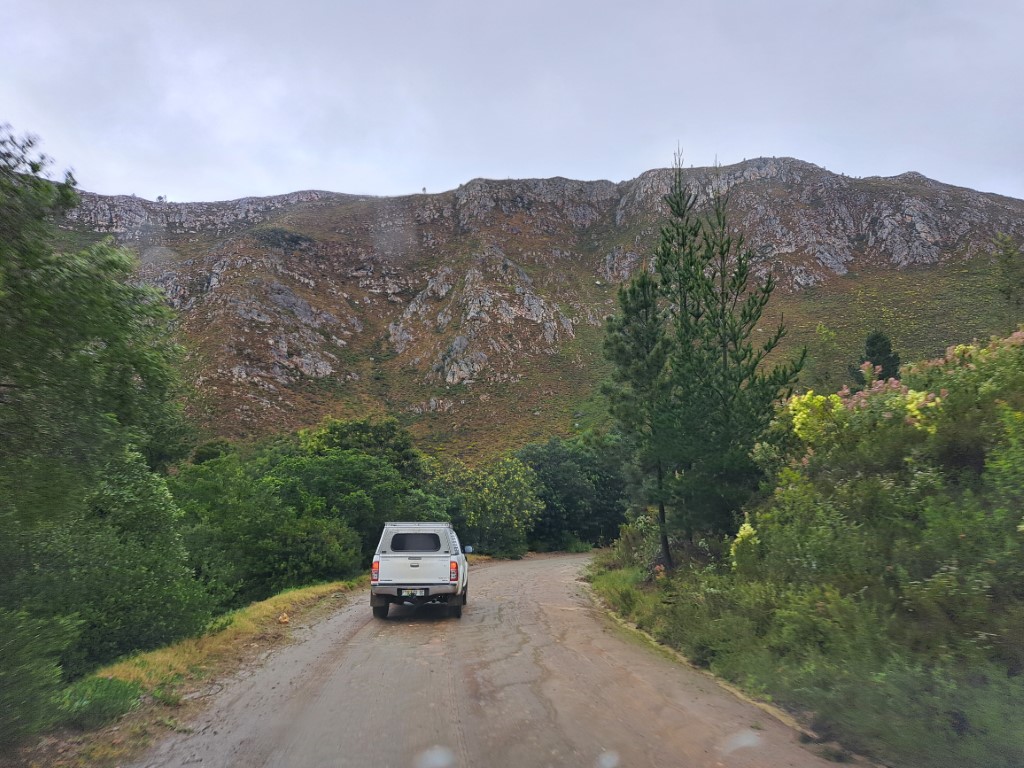
The road began to turn into small streams
The pass was named after Queen Victoria’s second son, Prince Alfred. At 68.5km (42.5 miles), this is the longest (publicly accessible) mountain pass in South Africa, as well as the second oldest unaltered pass. It is considered to be probably Thomas Bain’s greatest work.

Prince Alfred’s Pass

Treacherous road conditions
Many of the parts of this pass have been declared a national monument and on a clear and sunny day it must be amazing to drive through this beautiful scenery.


Stunning scenery with lush vegetation
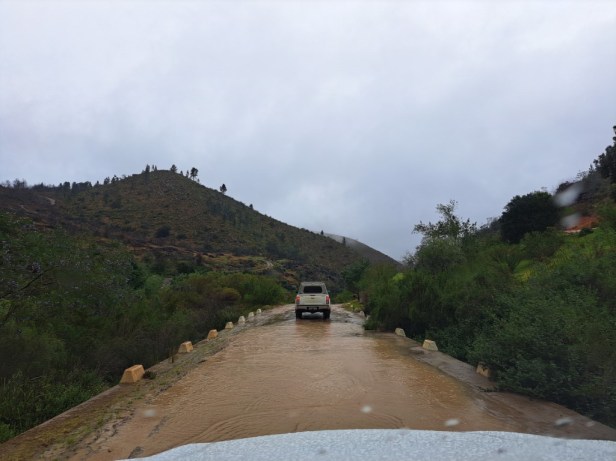
Is that a river in the road?
We came to some sharp corners and the road wound through rugged and spectacular scenery. Berto carefully drove through this section and said it must be great to walk here (well, just not today).
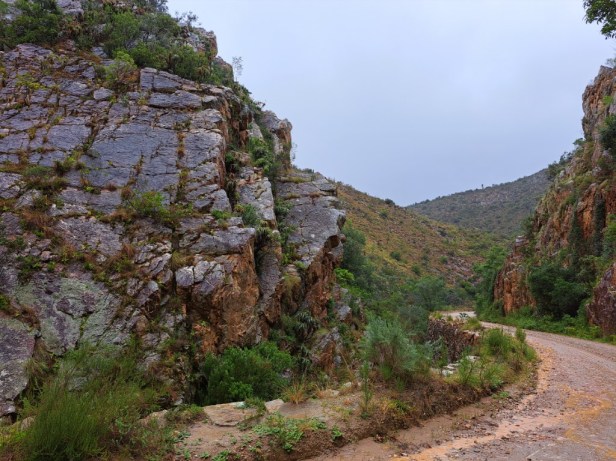
Beautiful rock formations
When we arrived in the small settlement of De Vlugt, we had to cross the Keurbooms River via a low-level concrete causeway. The river was already flowing over the road and we could only imagine how impassable this road would be in a few hours.

River flowing over the causeway at De Vlugt
It is here that Thomas Bain built a house for his family for the duration of the four years that the pass was built. The house is still intact, but it rained too much for us to go looking for it. What we did see was the sign to Angie’s G Spot, a laid-back country bar. Apparently, this bar is a favourite among the bikers.
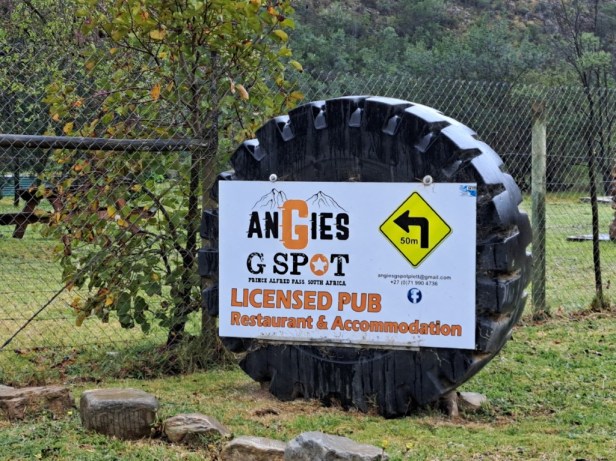
Anyone for a … drink?
The rain began to fall harder as the road became steep again. There are some drop offs that are unguarded. The road here is also very narrow, which made the last section of Prince Alfred Pass very difficult to drive in the pouring rain.

We are now inside the storm
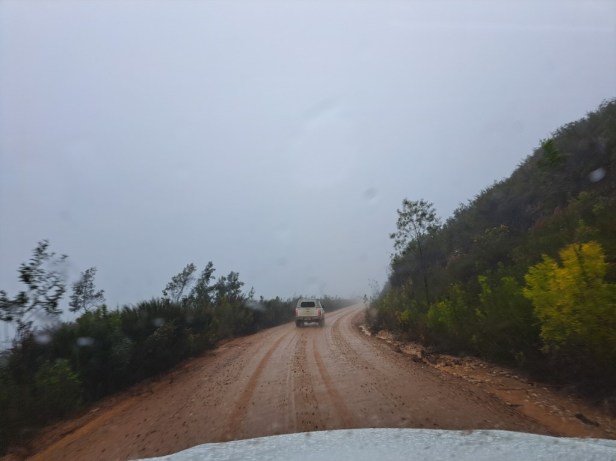
Almost at the second highest point of the northern half of the pass
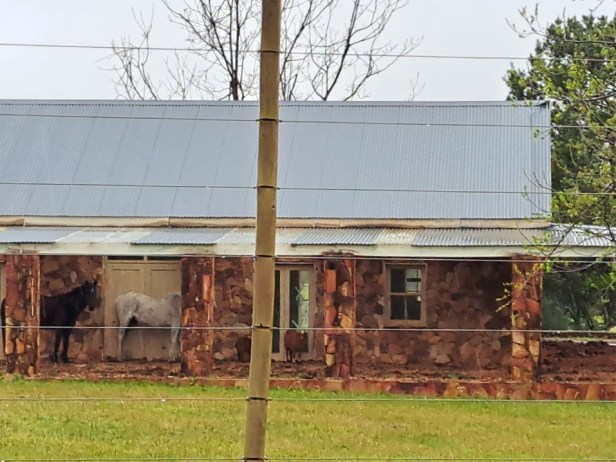
Even the animals sought shelter from the rain
This part of the road is used by heavy vehicles for logging and as a result we drove through one muddy pothole after another. In the rain it was hard to see the potholes and I put the camera away to help Berto look out for all the potholes.
The last part of the pass we drove through an indigenous forest called ‘The Valley of Ferns’. I so wished we could have stopped here to take photos of the amazing trees and ferns, but it was raining really hard now and we just wanted to get to Knysna (and on a tarred road).
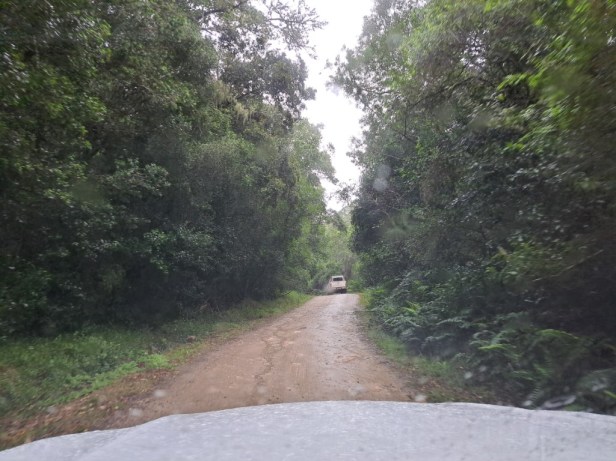
Muddy road through ‘The Valley of Ferns’
When we arrived in Knysna, we stopped at a cafe to have something to eat and drink. We were a bit shell shocked and speechless after this ride. And we had to drive another 190km (118 miles) to Jeffreys Bay where our friends’ house is.
There was one place where we still wanted to stop, namely The Big Tree Tsitsikamma. Fortunately, the hard rain changed to a light drizzle when we got there. We grabbed our rain jackets and camera and spent 20 minutes at the sight.
The Big Tree Tsitsikamma:
The Big Tree is in the heart of the forest and an 800-year old Yellowwood. It stands 36+m high, with a trunk circumference of 9m – they say it’s a giant among giants.

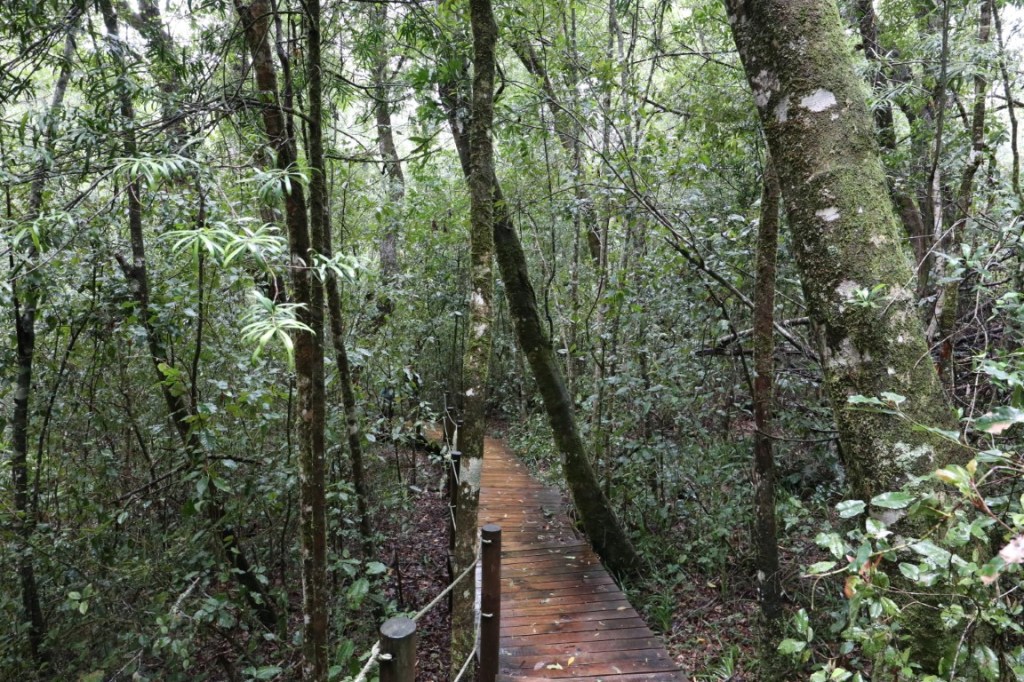
Slippery boardwalks lead to The Big Tree
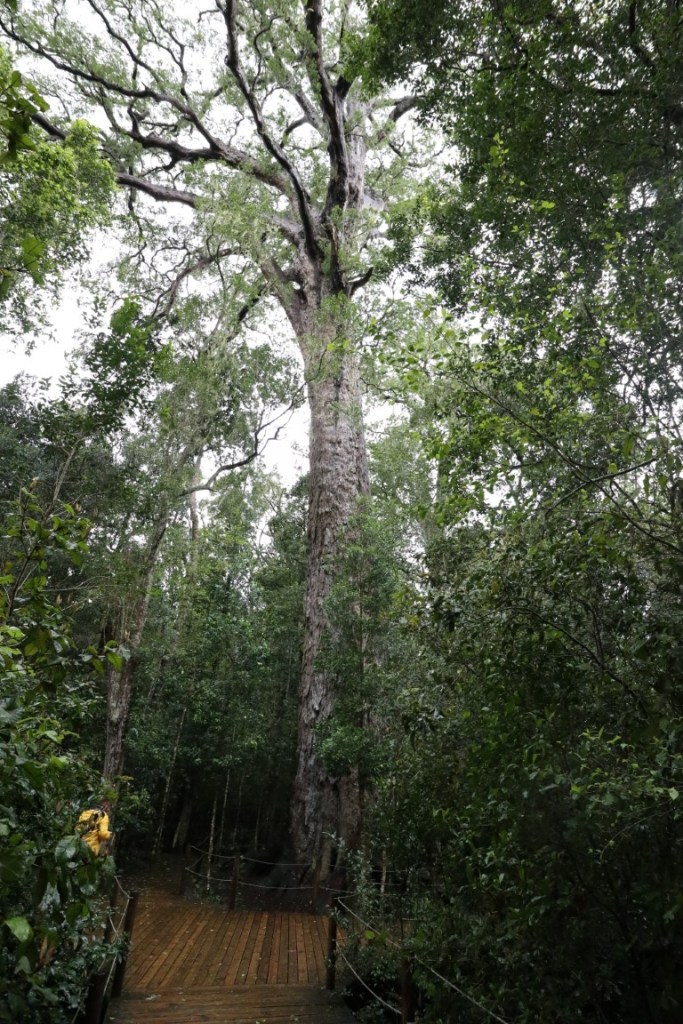
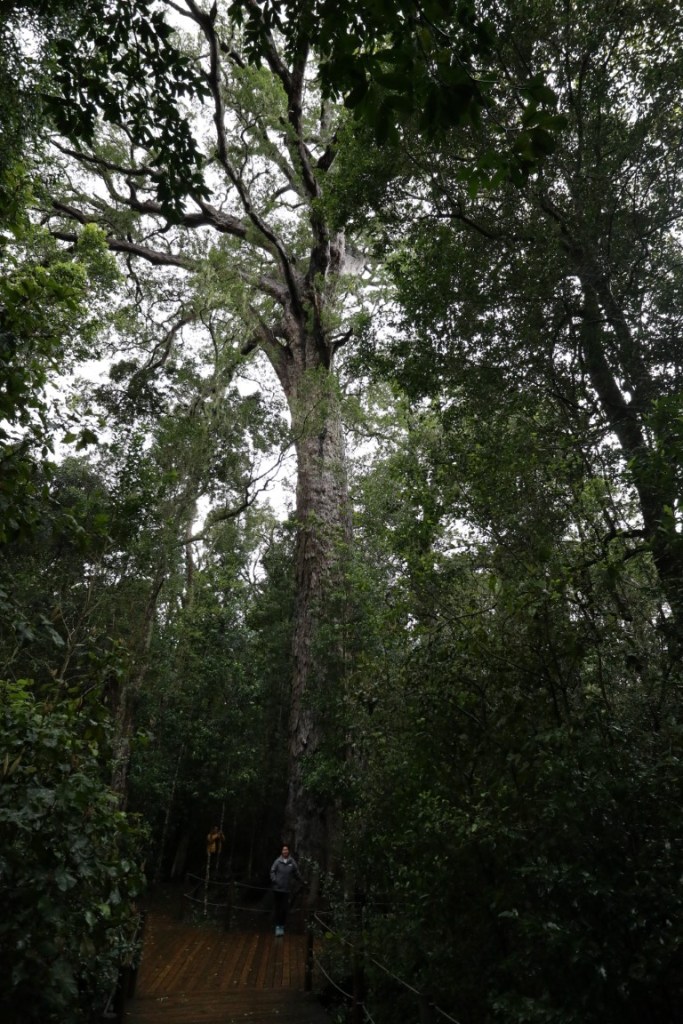
The Big Tree
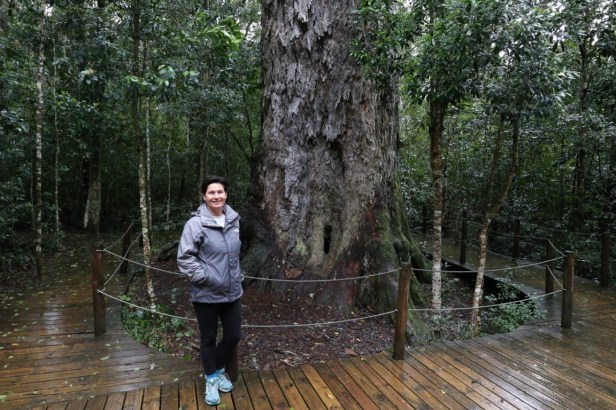
The Big Tree
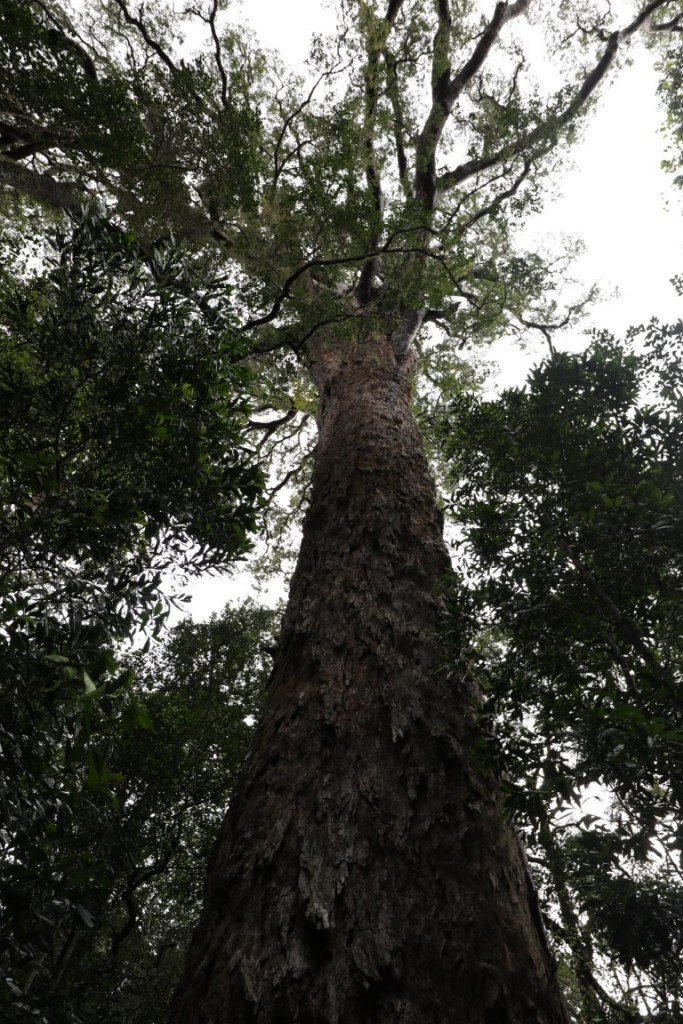
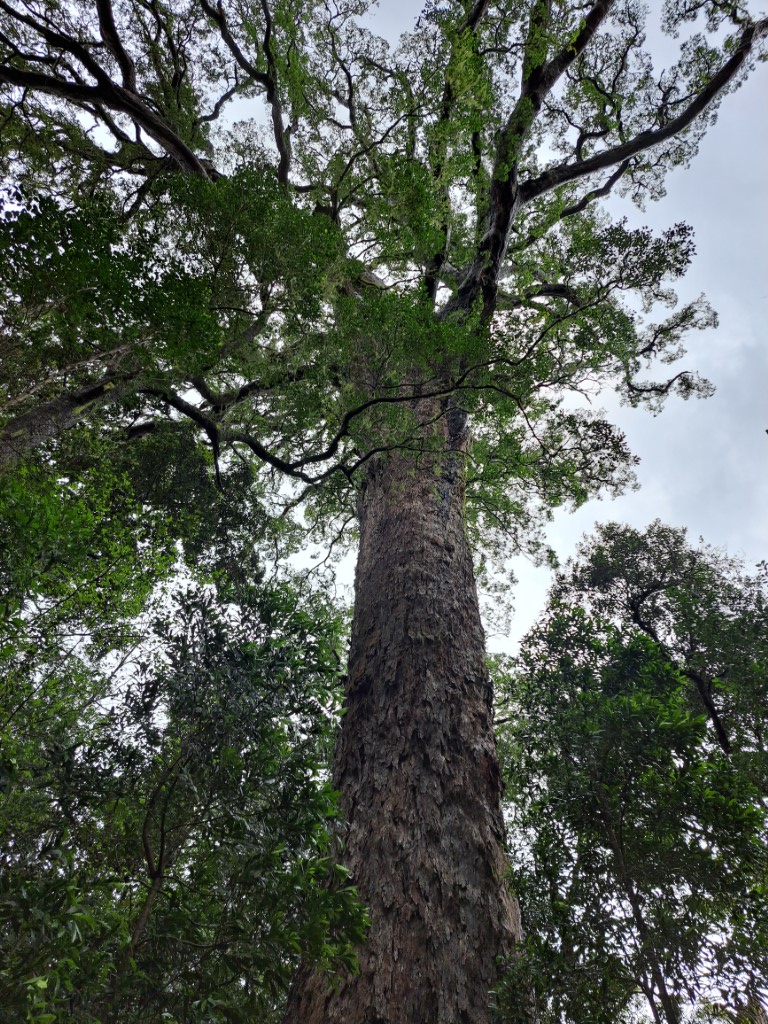
The Big Tree
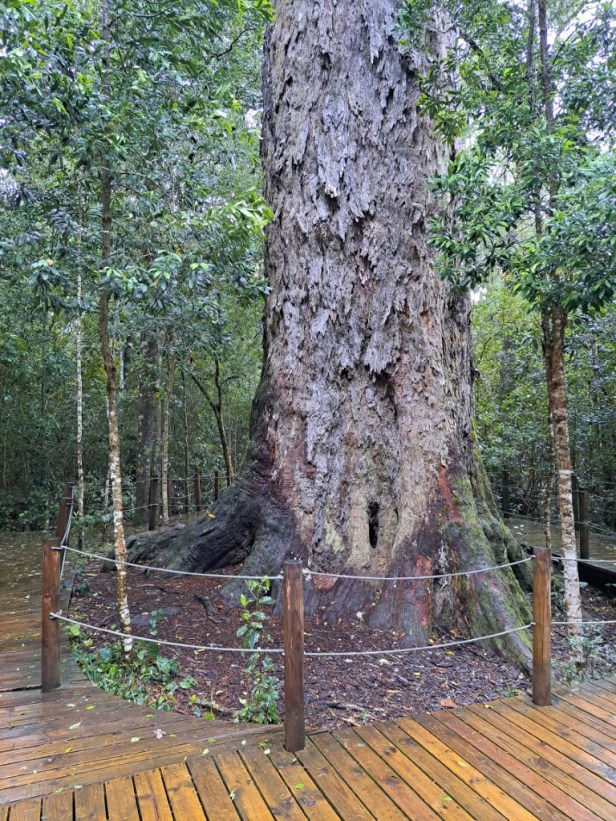
The Big Tree
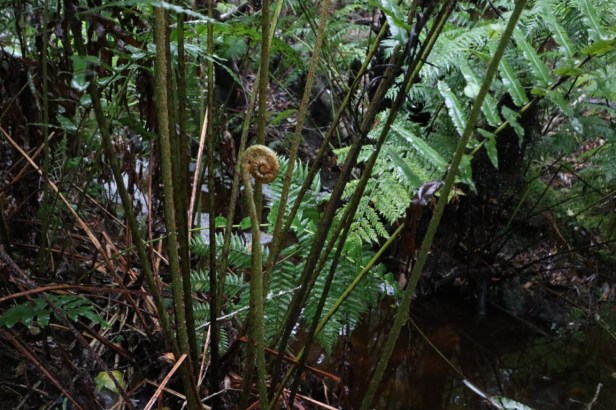
Budding fern
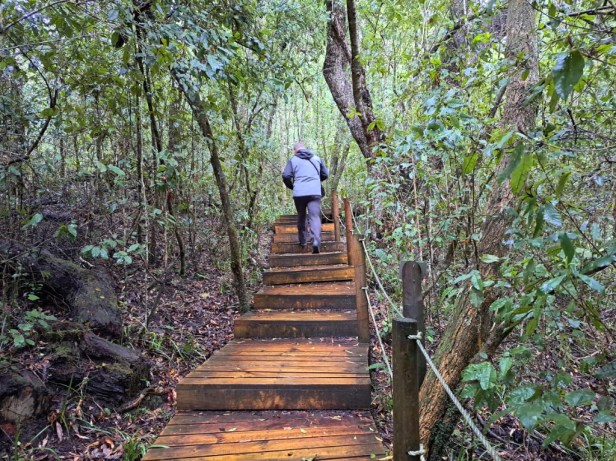
Boardwalk back to the parking area
I’m glad we made time to stop here because it’s such an amazing sight. The trees we have seen in the Eastern Cape over the last few months are truly spectacular – even on rainy days.
The last 100km on the tarred road was very stressful. Besides raining very hard, the wind was extremely strong. There were fallen trees across the road and we were stopped a few times by traffic officers who were regulating the traffic.

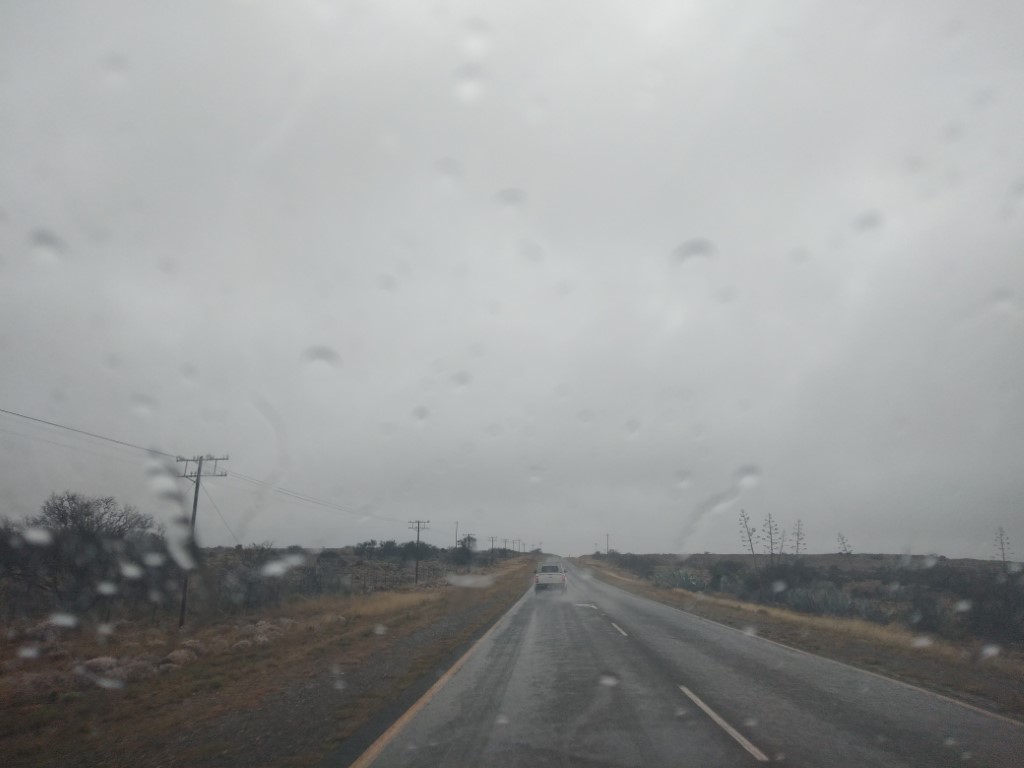
What a way to end our trip to the Baviaanskloof
A few days after we were back home, we heard on the news that the Kouga Dam in the Baviaanskloof area had overflowed for the first time since 2015. They had a heck of a lot of rain, that’s for sure!
Our weekend in the Baviaanskloof can definitely be categorised as adventurous. As for Berto’s new ‘bakkie’ … it has been thoroughly tested!
 Wet and Dusty Roads
What a shame the rain dampened your weekend. It can’t dampen your enthusiasm though or your love of the Great Outdoors! Happy (dry) trails to you. Mel
LikeLiked by 1 person
We would love to drive this road again on a sunny day – we have seen pictures of how amazing it really is. But you’re right Mel, rain or shine, nature remains beautiful (and is there to explore even during rain storms)!
LikeLiked by 1 person
It is a shame that the rain and treacherous road conditions turned what would have been a beautiful drive into an ordeal.
LikeLiked by 1 person
You’re right John, we’ve seen videos and photos of just how beautiful it is in the sunshine. But we couldn’t complain too much about the rain because that area really needed it … we’ll just have to go again 🙂.
LikeLiked by 1 person
Sjoe, ek voel sommer die lekker van reën. Daai plek het snaakse naam, ek vermoed ek sou nie vir ‘n drankie wou ingaan nie – dit is net te suggestief om nie te verwag dat daar meer op die spel is nie. Jy lyk lekker snoesig daar by die boom
LikeLiked by 1 person
Dit was baie goeie reënval (maar nie so lekker as mens op grondpaaie en passe rond ry nie). Ek dink daardie pub kompeteer dalk maar net met die naam van Ronnie’s Sex Shop naby Barrydale (waar ons al was en daar was darem niks sinister aan nie – het die lekkerste koffie by hulle gedrink). Snoesig was ek beslis, maar ook baie nat toe ons terug gekom het by die bakkie 😁 … dit was nie ‘n dag om buite te wees nie!
LikeLiked by 1 person
The rain definitely justifies another trip in the future! Amazing photos!
LikeLiked by 1 person
Thanks, I agree with you 100%! I can only imagine how beautiful this part of the country must look on a sunny day 🌞.
LikeLike
NICE POST 💙💚❤️
BLESSED and HAPPY Day 🌅
Greetings of Spain 🇪🇦
David López Moncada.
pkMUNDO /pkWORLD /pk 🌏
LikeLiked by 1 person
Thank you David. Hope you have a nice day too.
LikeLike
A scary ride in those conditions, Corna. What a shame!
LikeLiked by 1 person
That’s true Jo, the wet road was definitely not good for the nerves! But who knows … maybe we’ll go back one day (when the sun shines) 😉.
LikeLike
🤗🩵
LikeLiked by 1 person
You were very brave to do the Prince Alfred Pass in such weather! It’s hectic enough when the sun is shining. Lovely post – thanks for sharing.
LikeLiked by 1 person
I’m glad you enjoyed the post. Hindsight is a wonderful thing, isn’t it 🙃. We probably wouldn’t have driven there if we knew what the pass looked like in the rain, but now we really want to go back to see it in good weather.
LikeLiked by 1 person
Well you chose a fantastic weekend to take this route huh?! But these things give us memories and they give us stories to tell, don’t they. What’s that phrase….”no great story ever started with a salad”….you get my drift!
LikeLiked by 1 person
It was actually a weekend where everyone living in the Eastern Cape had to be in their homes for their own safety! But hey, we walk (drive) away from our Baviaanskloof weekend with bags full of memories … yup, no salad for us 😄.
LikeLiked by 1 person
Talk about a white knuckle experience; sounds quite frightening! I imagine the breaks were greatly welcomed. Looks like a beautiful area though, even in the rain.
LikeLiked by 1 person
It was definitely a nerve wracking ride! Especially since we had never ridden the pass before and didn’t really know what to expect. The breaks were definitely a saving grace (also the glass of wine – or was it a bottle – later that evening 😉). It’s indeed a beautiful area and we’d love to see it again … in sunny weather of course!
LikeLiked by 1 person
I imagine so. Oh, and the tree is amazing!
LikeLiked by 1 person
It’s beautiful, isn’t it! Sometimes I’m just in awe of nature (well, most of the time actually) 🙂.
LikeLiked by 1 person
Yikes yikes and yikes! I’m glad you got to see the big tree, but just reading about all that driving on those wet muddy roads made me stressed. I can only imagine how you two must have felt.
LikeLiked by 1 person
I can only echo your ‘yikes’ Diane! I was very happy when we were finally able to crawl safely into bed that night – it was a nerve-racking journey. We were in serious need of another long weekend to rest after this drive 😉.
LikeLiked by 1 person
Looks like an awful time on this drive, no views, a river for a road, and a dirty truck 😦 Maggie
LikeLiked by 1 person
It was definitely not one of the most relaxing drives we have ever had. But what do they say about ‘all’s well that ends well’ 😉.
LikeLiked by 1 person
As nervous as I was just reading about your trek through the rainy pass, I can’t imagine how you and Berto felt while navigating it yourselves. Ends to droughts are blessings though. (We’ve been in one for about 11 years and our agricultural industry has suffered severely.) The scenery along the pass does look spectacular, and I loved getting to see the beautiful big tree. I’m sure that was a welcome sight after the nerve-wracking drive. Have a wonderful week, Corna!
LikeLiked by 1 person
My muscles were almost in spasm when we finally got to our friends house that evening! And you’re right, we couldn’t really wish the rain away – the farmers and the community needed it so badly. The ‘Big Tree’ was kind of a reward for us after that hectic drive … it was beautiful to see. Thank you Kellye, a wonderful week to you too 💌.
LikeLiked by 1 person
Corna, julle twee as ñ span is die heel, heel beste “travel writers” ooit! Jy maak mens opgewonde oor Suid- Afrika.
LikeLiked by 1 person
Ag liewe Una, kyk nou hoe goed is jy vir my hart 💌. Ja, ons moet maar mooi tussen al die gesukkel van ons land deur swoeg – daar’s net te veel mooi plekke om (te) swartgallig te raak!
LikeLiked by 1 person
Your day started with 2 good decisions, first to turn back and second to have a good breakfast! I am glad you got to see the Big Tree. What you missed gives you a reason for going back…when dry weather is guaranteed. I think your trusty new vehicle did you proud, and your ace chauffeur, of course.
LikeLiked by 1 person
We later heard how people were trapped in their vehicles in the Baviaanskloof (and are glad we followed our intuition and turned around instead) … maybe we should have given the Prince Alfred’s Pass a skip too, but like I said to someone earlier: All’s well that ends well. Oh yes, Berto and his ‘bakkie’ make a good team – I would go on an adventure trip with the two of them any time 😉.
LikeLike
What an amazing road trip. The breakfast looks scrumptious and the fireplace looks so warm and inviting. Think I’d be sleeping next to that… 😉
LikeLiked by 1 person
More of an adventurous road trip if you ask me 😉. Kapoet restaurant was a wonderful surprise … people from the countryside are so kind and warm. Oh, and I certainly wouldn’t mind sitting there by the fireplace all day.
LikeLike
The food looks amazing!
LikeLiked by 1 person
Grote genade! Dit moes vreeslik senutergend gewees het om die pas in daardie swaar reen aan te durf!
LikeLiked by 1 person
Jy’s reg Dries, dit was nogal ‘n asem ophou rit deur die pas … asem ophou vir die nat pad toestande, maar ook hoe mooi dit daar is. Kan jy dink hoe mooi lyk dit op ‘n sonskyndag? Ons sal moet gaan uitvind 😉.
LikeLiked by 1 person
Good call on stopping for a hot breakfast on such a miserable rainy day. The road along Prince Alfred’s Pass sounds treacherous, but it looks scenic. Glad you were able to hike to the Big Tree when it wasn’t pouring. That is one impressive tree!
LikeLiked by 1 person
The breakfast was great … the Prince Alfred’s Pass too (but nerve wracking at the same time). Oh yes, I wanted to see the ‘Big Tree’ a few months back when we drove past it and I’m so glad we now had the chance to view it up close – impressive indeed!
LikeLiked by 1 person
Oof it’s wet! I love the Big Tree though, it looks amazing. I always have to remind myself of the saying ‘there’s no such thing as bad weather, just a bad choice of clothing’ – and it looks like you were well prepared for the rain 🙂
LikeLiked by 1 person
You see, it can also rain a lot here in South Africa 😉. Yes, we were prepared for the weather – with our clothes and the right vehicle! I loved the Big Tree in the middle of the forest (and it also provided shelter from the rain).
LikeLike
Thank goodness you were home when the dam broke. The wet hike was worth it to see that amazing tree. That muddy road would have freaked me out, glad you two made it ok!
LikeLiked by 1 person
The weather was really bad and maybe it was a risk to drive through the Prince Alfred’s Pass on such a stormy day. And you’re right, I’m glad we braved the rain to see that lovely big tree … and we were more than just relieved to be back home safely.
LikeLike