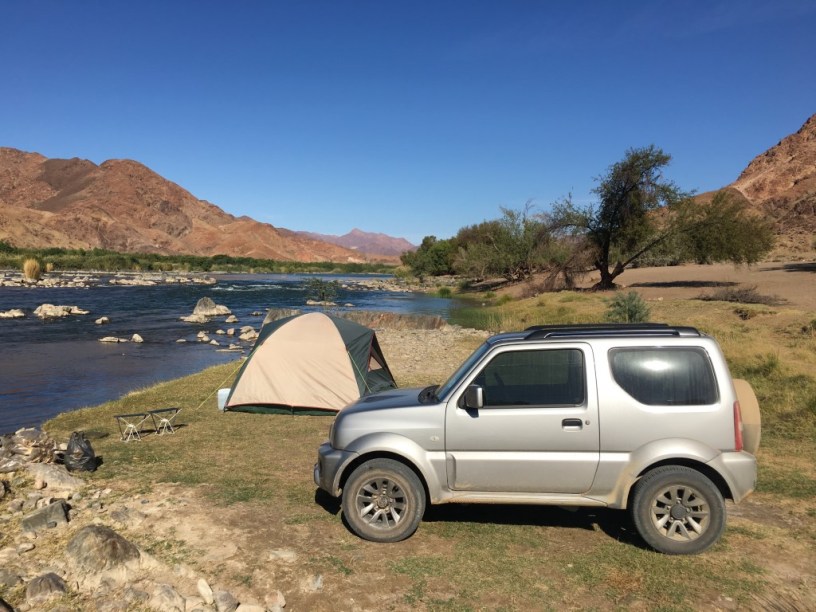
We all have these photos … throwback photos!
It’s described as ‘nostalgia-inducing pictures … from a different era of your life”.
Every Thursday we will throw a few photos of ‘way back when’ on our blog. Why on a Thursday? Because it’s just a day away from the weekend … and we love weekends!
You are welcome to join in or just enjoy the photos (#TB Thursday).
May/June 2016 – West Coast and Ai-Ais/Richtersveld Transfrontier Park, South Africa
This was our second day in the park. After our first night at Potjiespram, we were now on our way to De Hoop campsite, which is only 44km (27 miles) away. But before we packed up, we first headed down to the Orange River to watch the sunrise while enjoying a cup of coffee. Why does coffee taste so much better in nature?
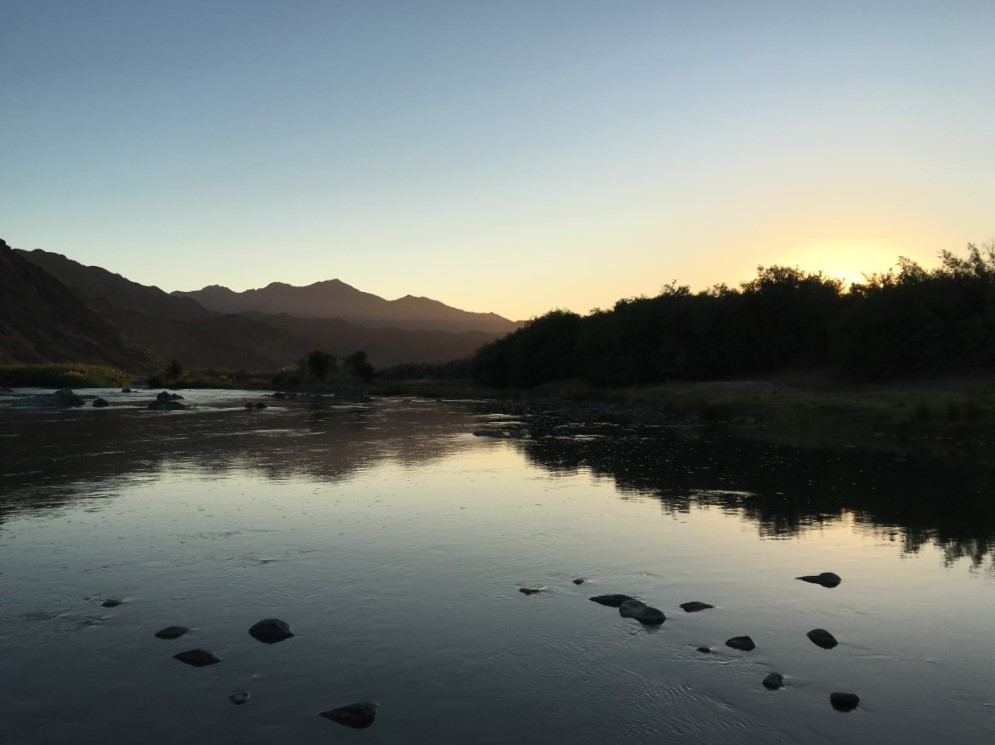
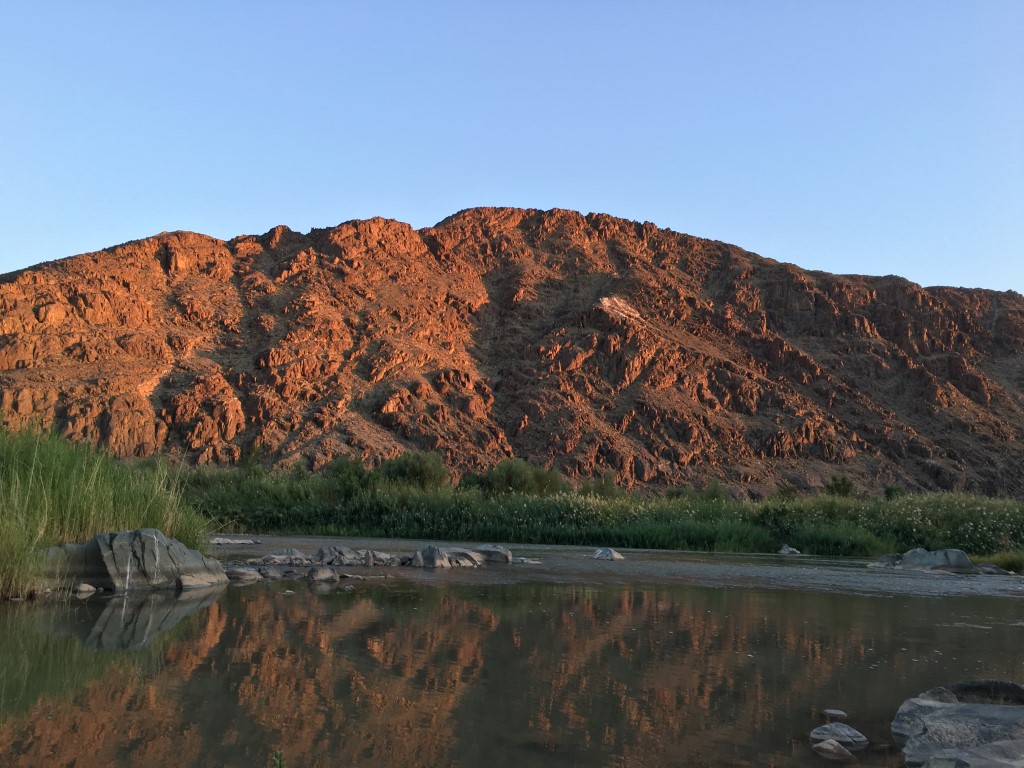
Sunrise at our campsite Potjiespram
The facilities in the park are very basic (but it was more than adequate for our needs). Some campsites have showers (cold water only) and then there are a few with self-catering units. We didn’t mind taking a cold shower (in the middle of the day) because the weather was nice and warm. The average daytime temperatures are relatively mild, but it can get extremely hot during the summer … then even the cold showers are too hot!
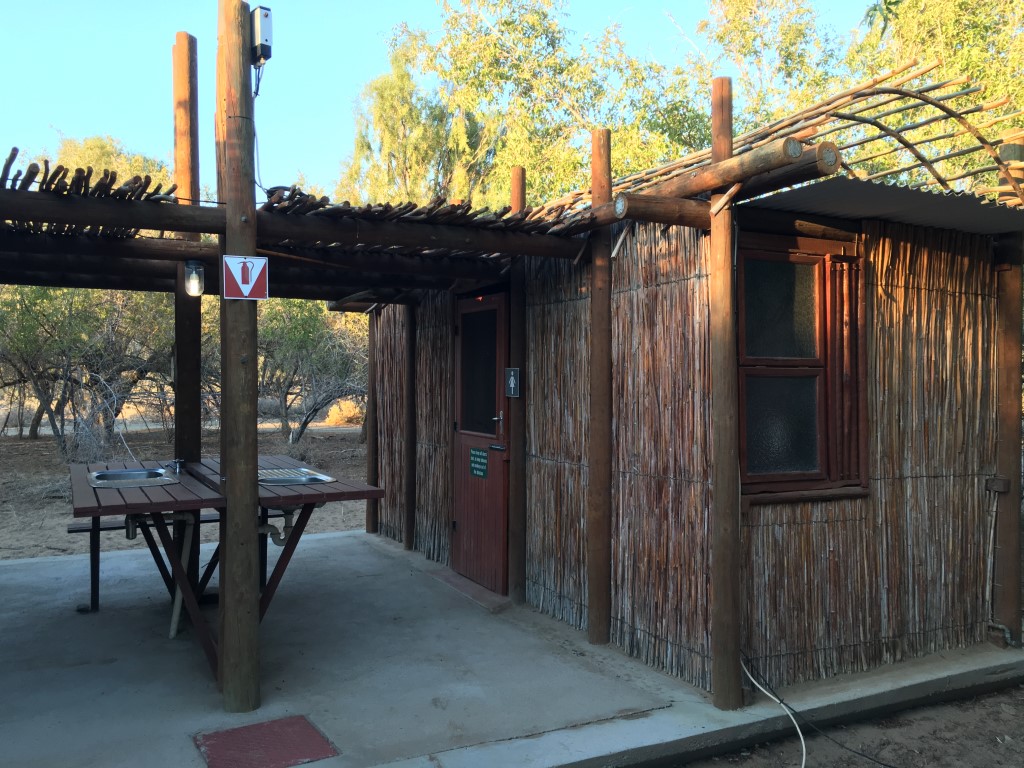
Ablution facility at Potjiespram
When we started packing up, we had quite a few spectators. Vervet monkeys occupied the tree branches and literally surrounded us (at a safe distance). We had to quickly make sure our food was loaded into the car first before we could pack the rest of our camping stuff away.
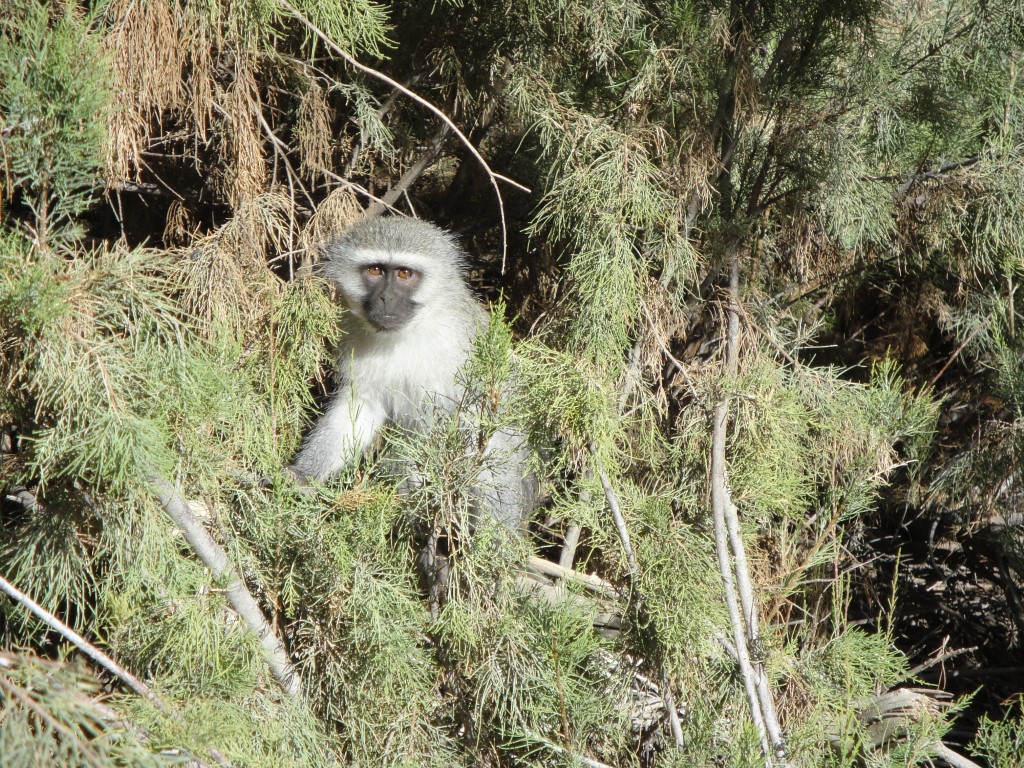
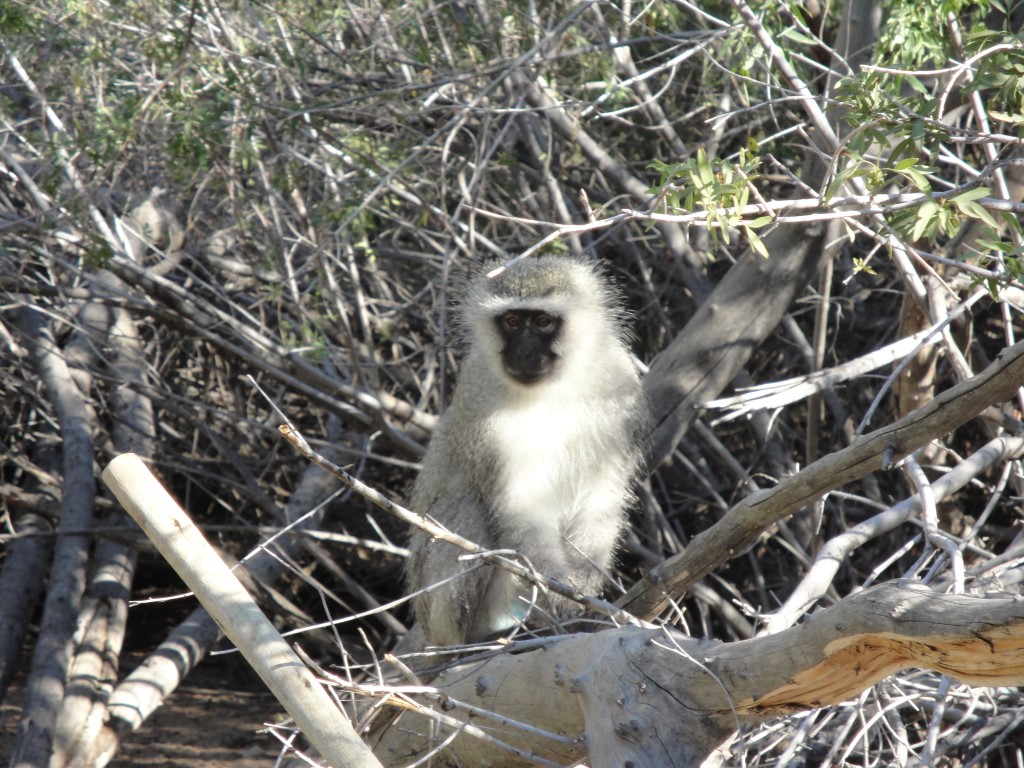
Vervet monkeys
On the way to De Hoop campsite we stopped several times to enjoy this rugged landscape. It is a desert area characterised by deep gorges and high mountains. In fact, it is full of changing scenery from flat and sandy to high mountains of volcanic rock and then the lushness of the Orange River.
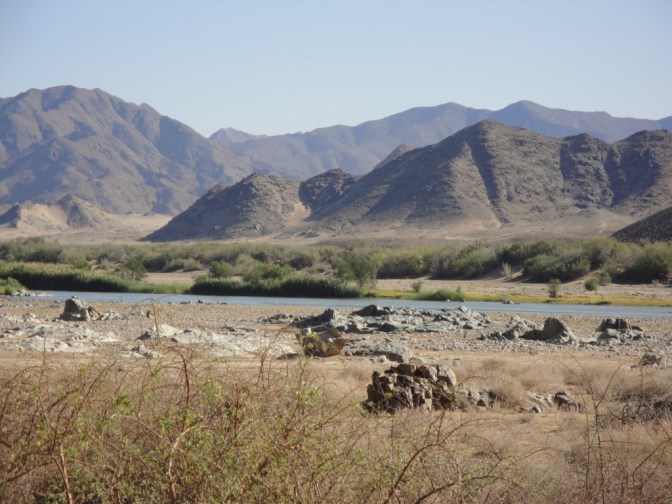
Orange River with high mountains in the background
As mentioned in a previous post, one of the trees that is very famous in this area is the Quiver tree. Another famous plant is the ‘Halfmens’ (loosely translated it would be Half Human). It is a type of succulent and native to the Richtersveld and southern Namibia. We were lucky to see both on our route between Potjiespram and De Hoop.

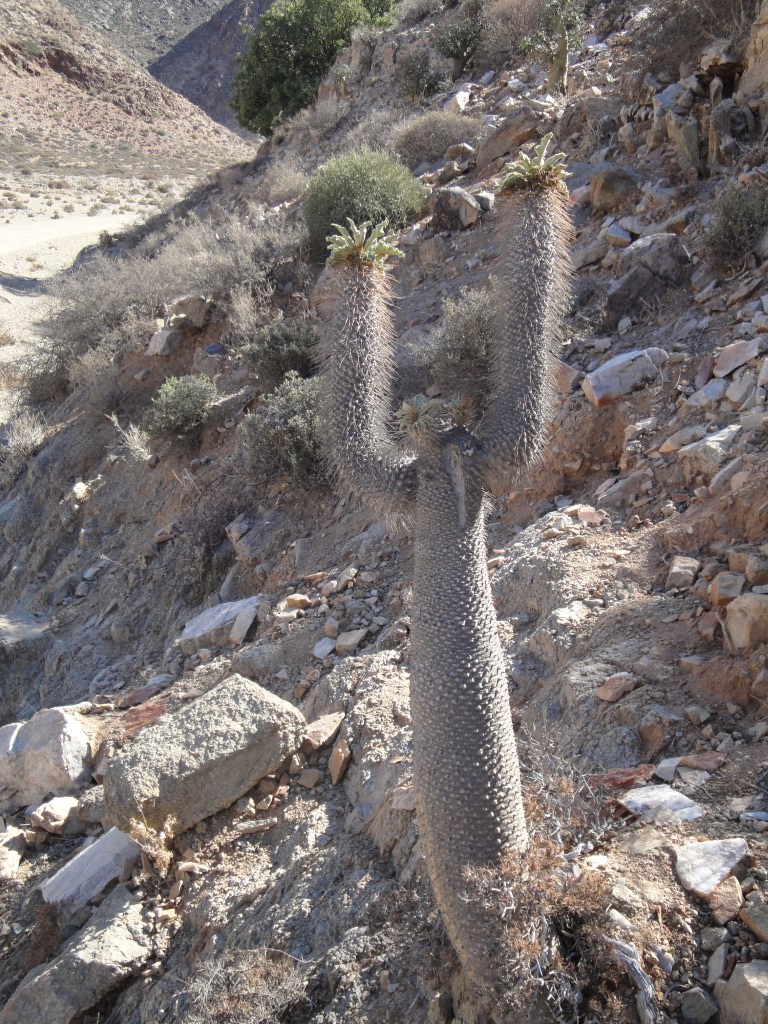
Quiver tree (left) and “Halfmens” (right)
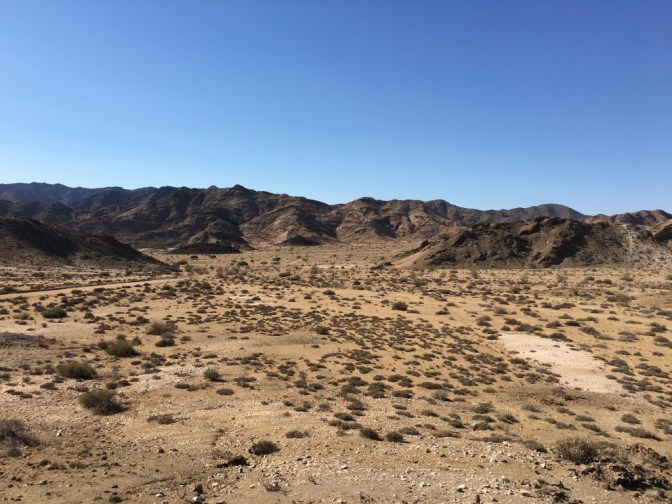
Flat area between high mountains
Although it is a dry and arid region, it is still possible to find many birds and other animals here. In our previous TB Thursday post we told you about the genet at our campfire. Besides the genet (and the vervet monkeys of earlier), there are also scorpions, bats, rabbits, porcupines, squirrels, hyenas, leopards, foxes, jackals, zebras and various antelopes. As we were driving we saw a few antelopes running away. It looked like kudus.
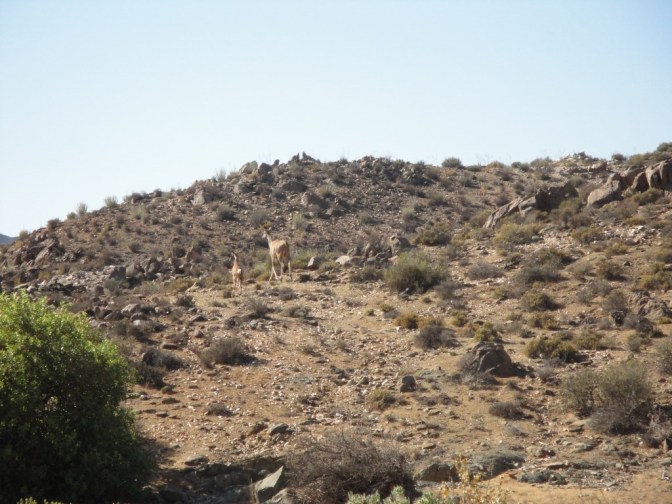
Kudu and her calf
We also stopped at The Hand of God, which is a boulder with the impression of a large hand. Locals believe that God pressed a hand on this rock face and left His handprint on the mountains.
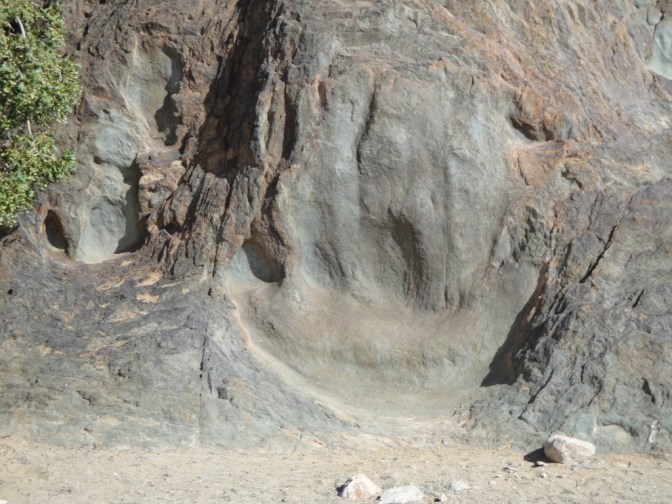
Hand of God
When we reached De Hoop campsite, we pitched our tent on the grass on the banks of the Orange River. Although another couple arrived later, it was quiet and peaceful.
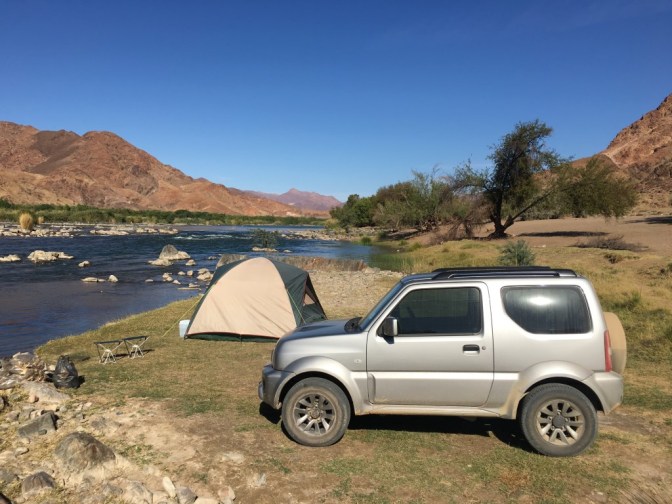
Our campsite at De Hoop
Since this was our first trip in our Jimny, we weren’t as geared up for wild camping as we are these days. This meant we had no portable shower (with hot water) or a camping fridge … but we made a plan!
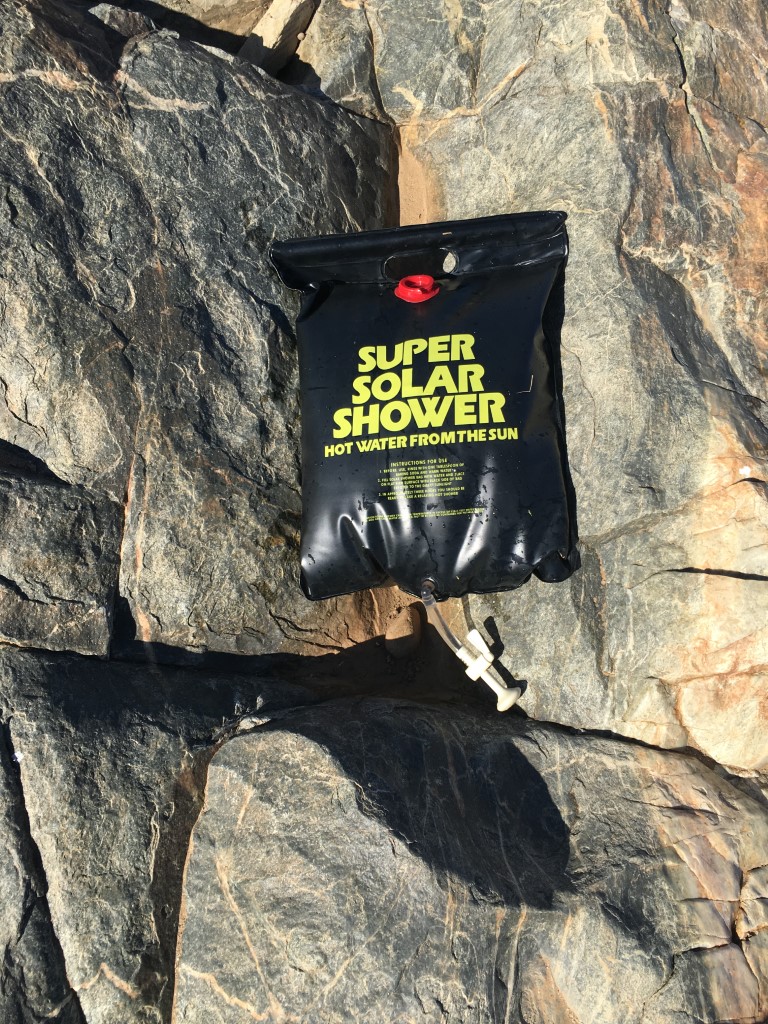
A black shower bag in the sun to heat our water
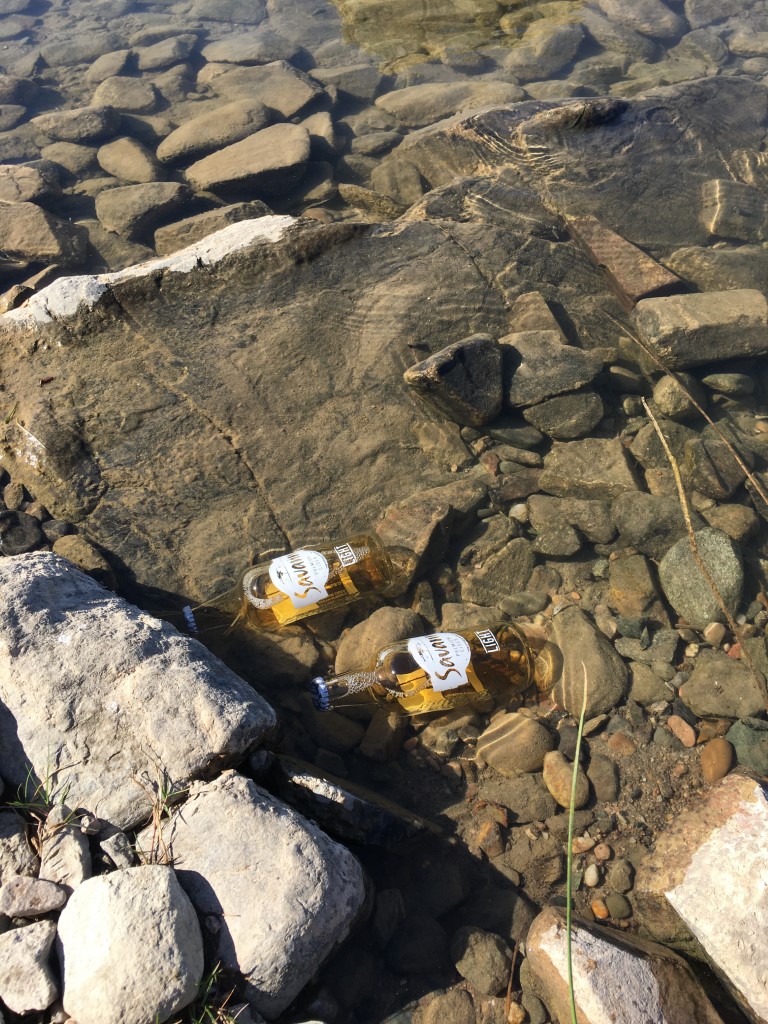
The Orange River was the perfect fridge for our beers
De Hoop campsite is one of the most popular spots in the park and we loved our two day stay here. As always, we ended our day with a big fire while enjoying the night sounds.
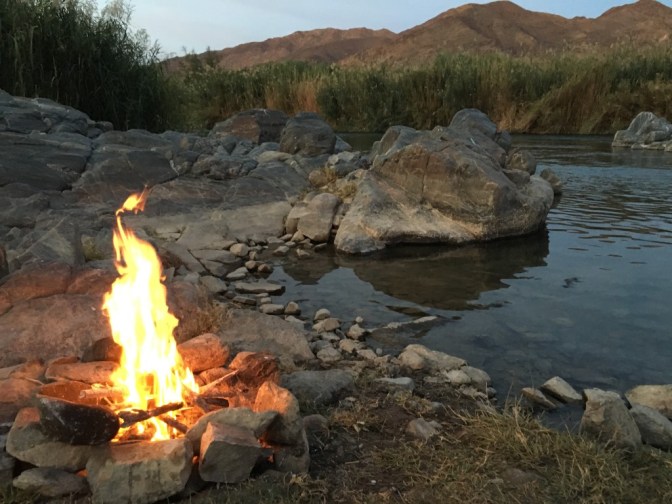
Evening fire at De Hoop campsite
In our next TB Thursday post, we’ll show you more of De Hoop campsite (and some animal visits).
 Wet and Dusty Roads
Wat n pragtige, ongerepte plek!
LikeLiked by 2 people
Dis nou net soos jy daar sê 🙂. Dis waarin die Richtersveld se skoonheid lê … die ongerepte en uitgestrekte vlaktes omring deur berge en die Oranje Rivier.
LikeLiked by 1 person
This is so interesting, reading this, Corna. You’re capturing the ways you first fell in love with the outdoors and with camping in particular. I can sense the newness and the excitement in almost every sentence. 😊
LikeLiked by 1 person
I’m glad you get that feeling in our post, because it was our first wild camping trip and we loved it! To experience the simplicity of camping and to be so close to nature was indeed the motivation for many camping trips that followed 🙂. Thanks for your lovely comment!
LikeLiked by 1 person
Wonderful post Corna.
LikeLiked by 1 person
Thank you very much Rupali 🌸.
LikeLiked by 1 person
Dis nes Dries se, so pragtig en ongerep! Laat my so aan ons kinder jare se kampery dink!
LikeLiked by 1 person
Jy’s reg Aletta, dit laat my ook aan ons kamp as kinders dink. Toe was daar niks “fancy” kamp goete nie … inteendeel, dit was soms so warm in die Richtersveld dat ons net op matrasse onder lakens geslaap het (sonder ‘n tent), maar met baie muskiet afweermiddel op ons gesmeer 😂. Ek’s nie so seker dat ek vandag nog so sal kan kamp nie!
LikeLike
Ek weet ook nie of ek vandag so sal kan kamp nie! Ons het meestal langs die see gekamp en sommer met swem klere en al gaan slaap😜
LikeLiked by 1 person
When you are out in the wild like that, I think everything tastes better. Maybe it’s because our senses come alive in natural surroundings. Those vervet monkeys can be wicked! I watched them in someone’s car once, decorating it with orange peel and bending the windshield wipers. A message perhaps “Go away!” That campsite is gorgeous!
LikeLiked by 1 person
It’s true … even a simple sandwich tastes like a 5-star meal in nature 😁. We often see these monkeys on our travels in SA and they are not at all shy to approach people – we are very cautious of them. De Hoop campsite is our favourite campsite in the whole Richtersveld … I wouldn’t mind being there at this moment!
LikeLike
When I did the camping trip through southern Africa we stayed in some remote sites with very basic amenities. They were very special, though I wasn’t keen on the scorpions!
LikeLiked by 1 person
Oh, I’m with you on the scorpions 😬. When we camp in the Richtersveld, we always look inside our shoes before we put them on. I suppose it comes with the remote campsites …
LikeLiked by 1 person
Love the hot water shower and the beer fridge!! Maggie
LikeLiked by 1 person
Haha 😁, thanks Maggie. Now that’s camping at its simplest, but also the most fun!
LikeLike
The monkeys look so innocent, but I hear they’re quite the opposite. You’re very clever with the shower bag and beer cooler; well done! It certainly is a beautiful area; thanks Corna, for sharing!
LikeLiked by 1 person
Haha, yes they put on a very innocent face 🙂. And you have to make a plan if you don’t have all the “camping gadgets” – I have to say, our simple solutions worked well! It’s a different kind of beauty in the Richtersveld … the absolute silence and peace that one experiences there makes it such a precious place.
LikeLiked by 1 person
Loved your introduction to wild camping
LikeLiked by 1 person
Thanks Marion. Yes, this was the beginning of many wild camping trips – a good foundation 😉.
LikeLiked by 1 person
What a resourceful pair you are! Love the shower and fridge.
LikeLiked by 1 person
Haha 😄, I’m sometimes amazed at how simple things can work so easily! And let me tell you, that black bag sometimes made the water so hot that we had to mix it with cold water to be able to take a shower!
LikeLike
🤣🩵
LikeLiked by 1 person
As the first of many wild camping trips to come, this adventure must hold a special place in your memories. I love the cute faces of vervet monkeys. I find that monkeys look so soulful, however, packing your food away first was a wise decision. I love the images of the quiver tree and the ‘halfmens’, two plants I’ve never seen before. The beer fridge, animal sightings and the campfire are elements of a great camping trip.
LikeLiked by 1 person
You’re right Leighton, this one is on top of the list of best wild camping experiences. We refer back to this trip a lot when we talk about wild camping. I’m glad we were able to introduce you to two trees you haven’t seen before. And, as for the beer fridge … I can tell you this, it wasn’t our last time keeping our beer (or wine) cold like that – it genuinely works (such a cheap fridge) 😄!
LikeLiked by 1 person
I love this and your connection to nature 🙂 I’ve never wild camped, and probably never will, but love being out in nature and hiking all day.
LikeLiked by 1 person
It’s great to spend time in nature (like when you’re out on a hike) … but I can also understand that wild camping is not for everyone. It’s nice to sometimes alternate the wild camping with more comfort (like a cottage with a nice bath 🙂).
LikeLiked by 1 person
So, here’s what would happen if I were camping and a couple of monkeys showed up: I would go about as fangirl as I would watching a Taylor Swift concert in person and scare them away! How exciting to see these wonderful animals! What beautiful places you’ve visited and I’m so glad you can share them with us.
LikeLiked by 1 person
Oh, I had a good laugh at your comment 😄. The vervet monkeys are so used to people just ignoring them … I can only imagine what their reaction will be with you around! Thanks Kelley, I’m glad you enjoy travelling with us to places you haven’t seen before.
LikeLiked by 1 person
I thoroughly enjoy tagging along on your travels!
LikeLiked by 1 person
Likewise 😄
LikeLike
Great captures of the vervet monkeys and good call on putting your food away. The rugged landscape looks so scenic. Looks like you found an awesome spot to camp for the night.
LikeLiked by 1 person
The vervet monkeys were not bothered by us at all (they – not so quietly – posed for our camera). I suspect they were much more interested in our food boxes 😉. That spot is our all-time favourite campsite in the Richtersveld, probably because it is so close to the river … sunset and sunrise are spectacular from there.
LikeLiked by 1 person
It’s crazy how you have to be careful with your food or the monkeys will take it! The hand of God is such a unique rock!!!!! I love the picture of the halfman’s tree, made me smile! What a perfect shower and refrigerator too. I just love your posts Corna!
LikeLiked by 1 person
When those monkeys are around, one must always be alert – they are very sneaky! I’m glad you like The Hand of God and our unusual plants – and how unique our shower and fridge are 😄. It’s nice when you come with us on our trips Diane – thanks for your company!
LikeLiked by 1 person
I enjoy coming along with you Corna, I wish I was there in person!
LikeLiked by 1 person
Thanks Diane, it’s so nice to have you on tour with us 🙂. You and Berto would make a great cooking team – I’m sure I’ll have a feast in the wild every evening!
LikeLike