Get to know East London better (2)
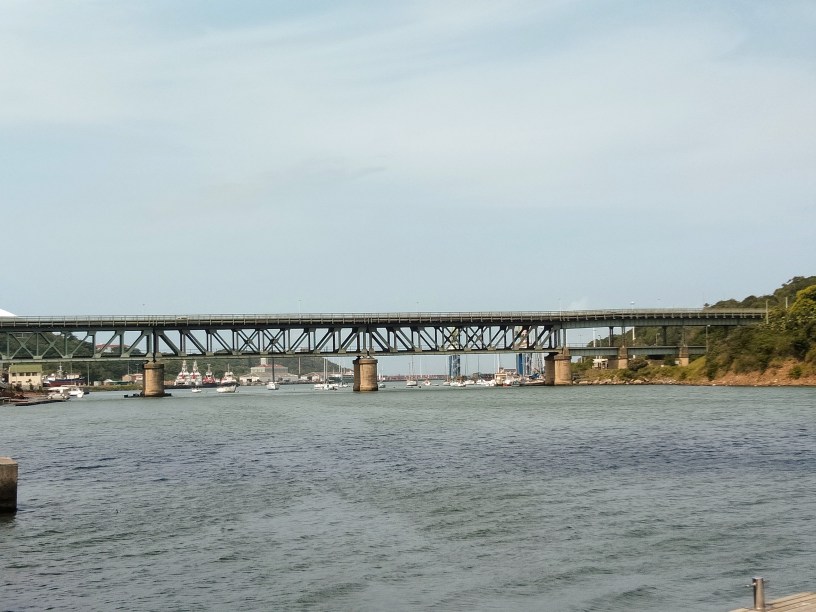
You may remember that in a previous post we mentioned the Double-Decker Bridge in East London. We came across photos of the unusual bridge in the museum (read about it here) and decided to go see for ourselves what this bridge looks like today.
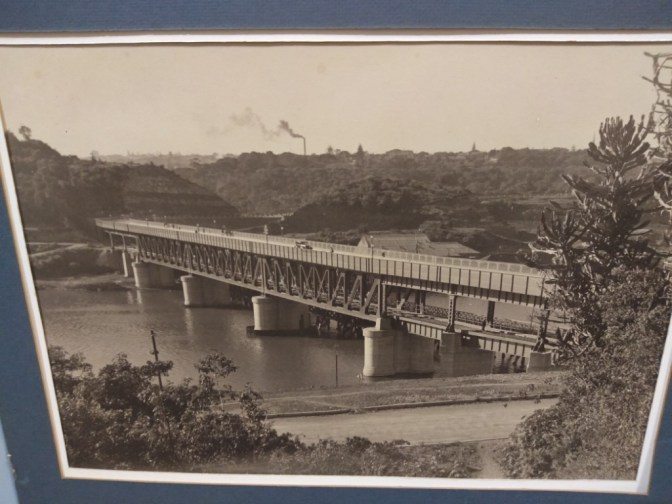
Photo of the bridge in the East London Museum (1935)
Double Decker Bridge (Bruce-Bayes Bridge):
The Double Decker Bridge was officially opened in February 1935 and replaced the old Buffalo Bridge that was completed in 1908 – this bridge was constructed out of timber. Apparently, you can still see fragments of the old bridge on the West Bank of the Buffalo Bridge.
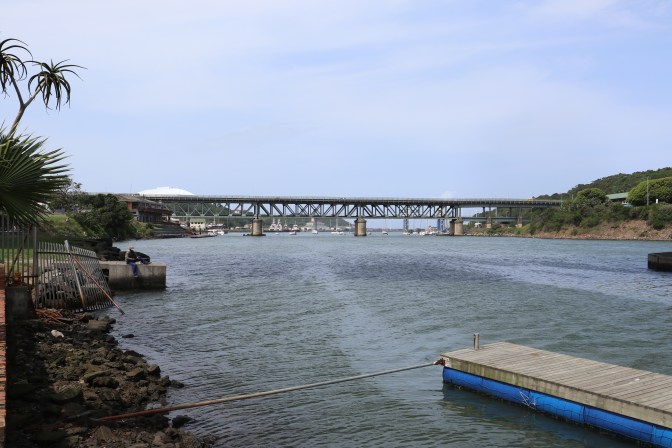
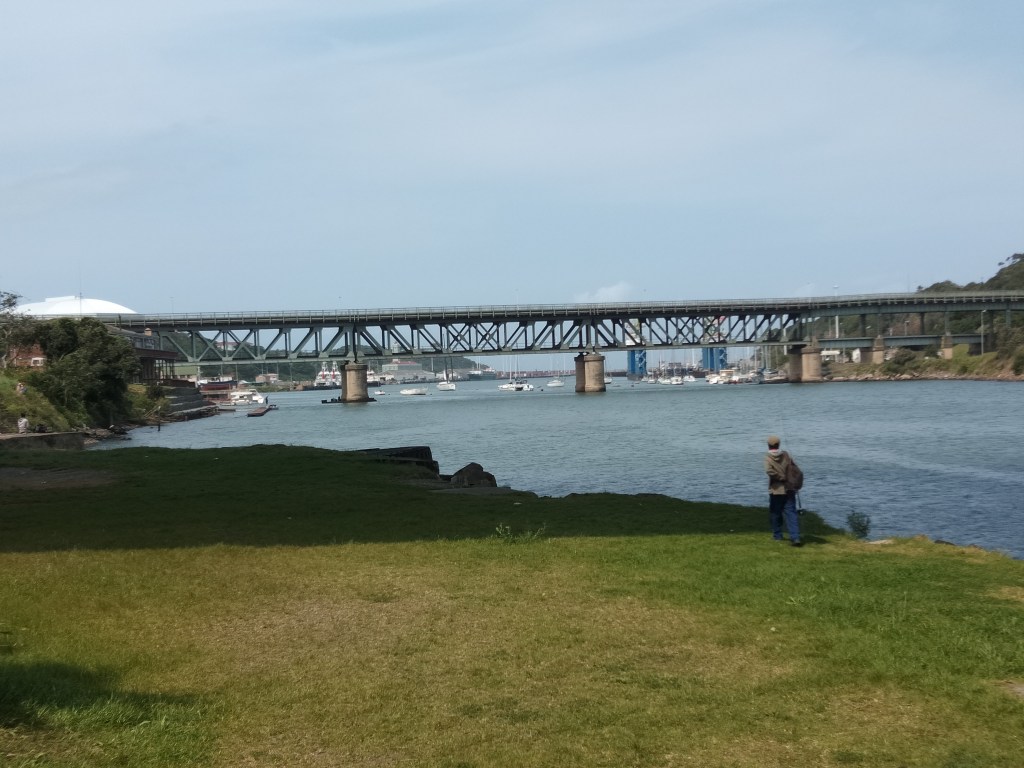
The same Double Decker Bridge – 88 years later
The official name of the bridge is Bruce-Bayes Bridge and to this day, is the only bridge of its kind in South Africa. When the bridge was built, the top half was for cars and the bottom half for trains. In 2013 a new walkway was also included.
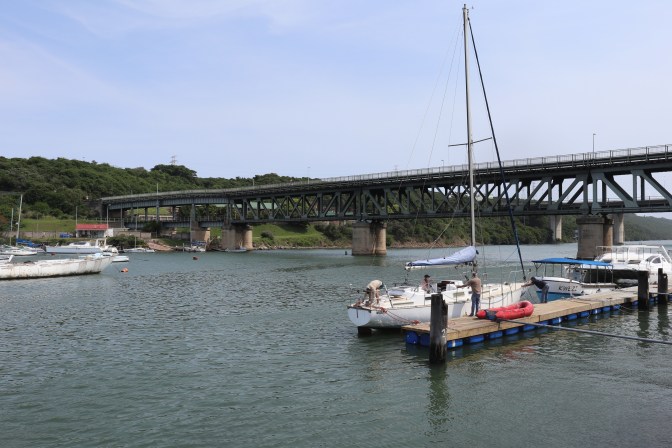
Double Decker Bridge
The port of East London is South Africa’s only remaining river port and is situated at the mouth of the Buffalo River. The Mercedes Benz assembly plant is situated here on the bank of the Buffalo River and manufactures cars for most countries. Big ships come and go daily to load brand new Mercedes Benz vehicles here.
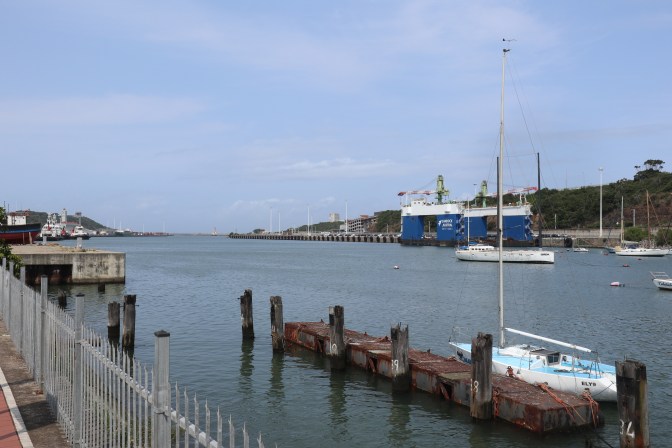
View towards the entrance of the port
We wanted to take a closer look at this bridge and followed a road that passed under the bridge.
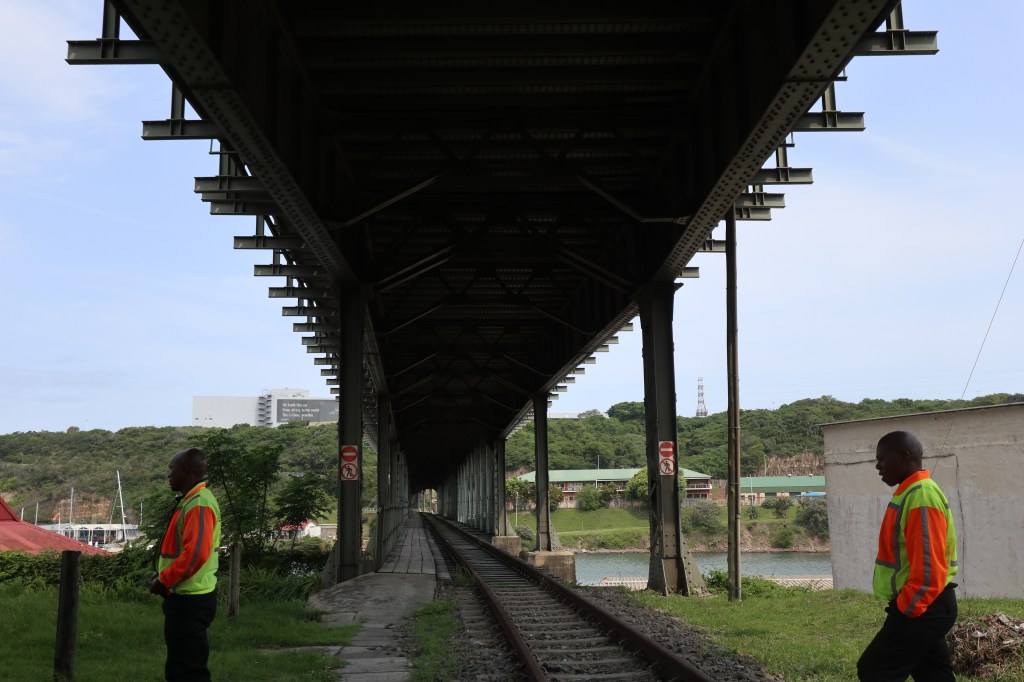
Bottom section of the Double Decker Bridge for trains (and two eager security guards)
While we were there, we saw quite a few cars passing us towards the end of the road. We also drove there, with the idea of taking more photos and to our surprise found a restaurant. Now that’s what you call good luck!
Steve Biko Bridge (former John Vorster Bridge):
But first we saw another (bigger) bridge. This bridge connects East London with the West Bank and airport and also crosses the Buffalo River. It was always known as the John Vorster Bridge (named after a former Prime Minister of South Africa), but in 1997 it was renamed the Steve Biko Bridge (Biko was one of South Africa’s leaders in the fight against “apartheid”).
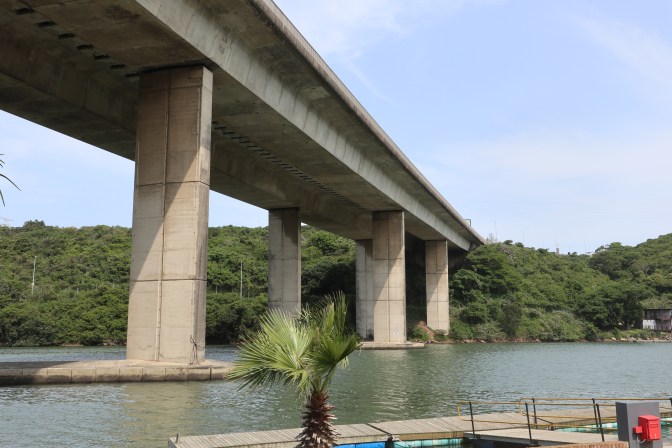
Steve Biko Bridge
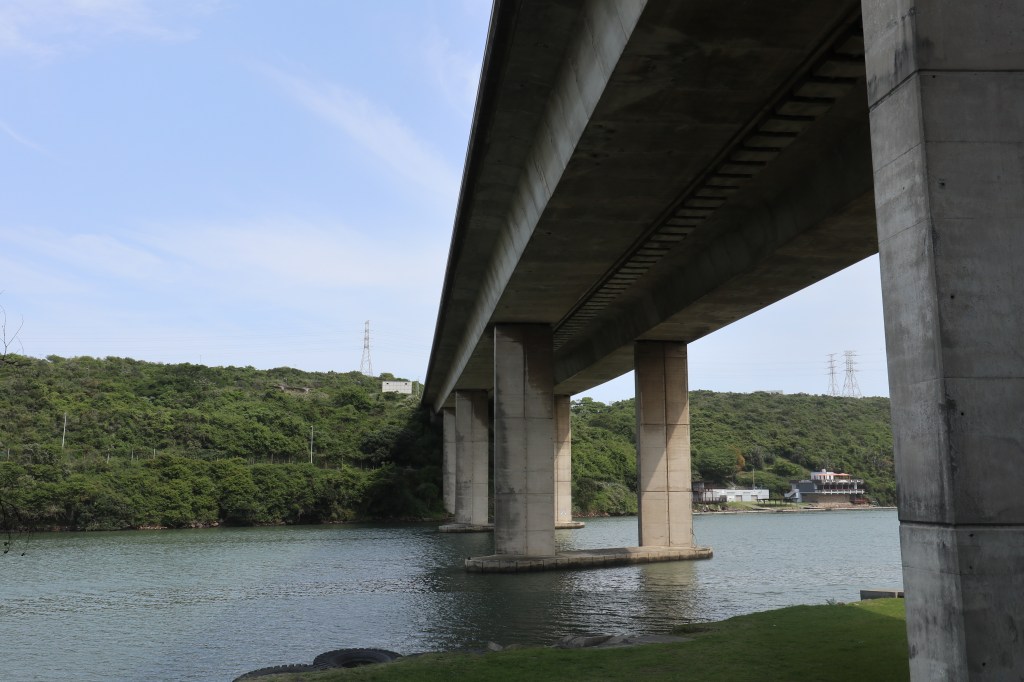

Steve Biko Bridge
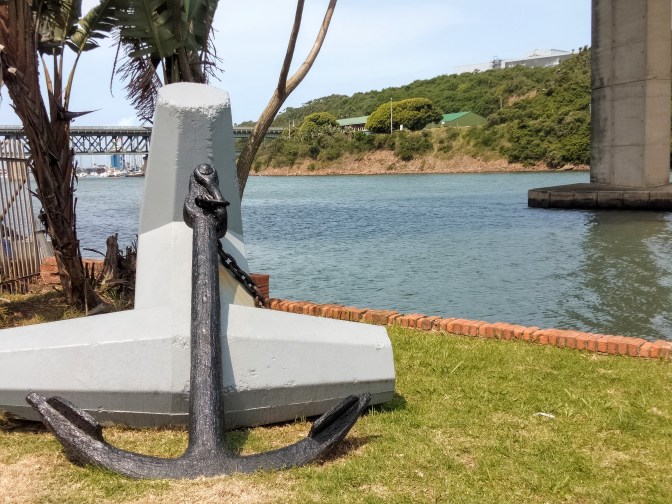
Anchor at the bridge on the bank of the Buffalo River
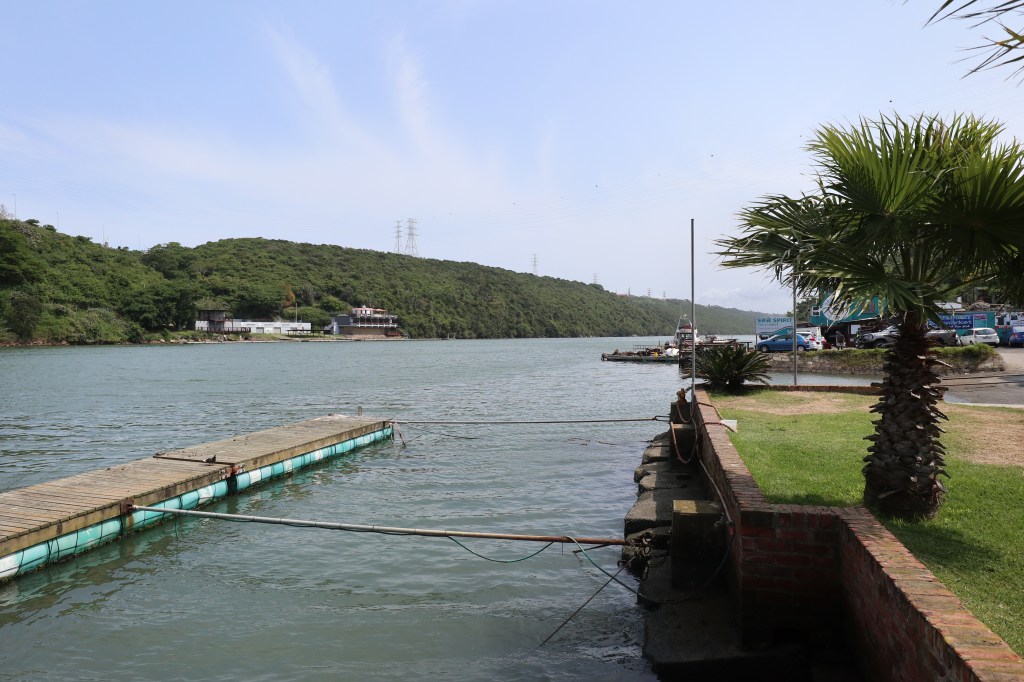
View up the Buffalo River
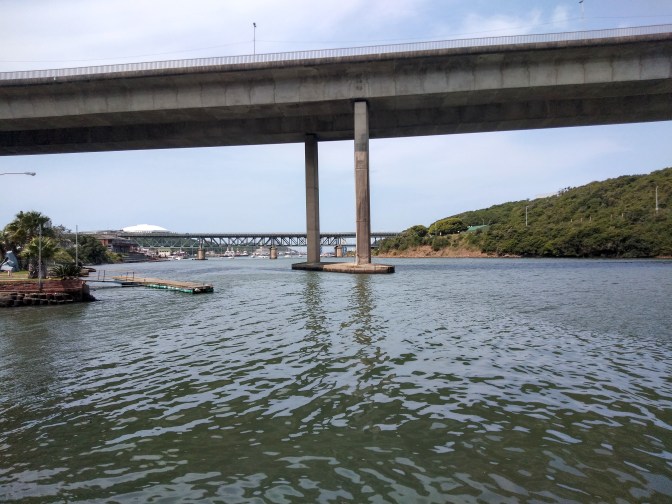
Both bridges in one shot
Sea Spirit Fish Market/Restaurant:
This restaurant has to be one of East London’s best kept secrets! It’s nothing fancy – basically a boat shed converted into a market/restaurant, selling fresh fish off the fishing boats. You can either take the fresh fish home or you can enjoy your order of fish and chips while gazing out over the lovely Buffalo River.
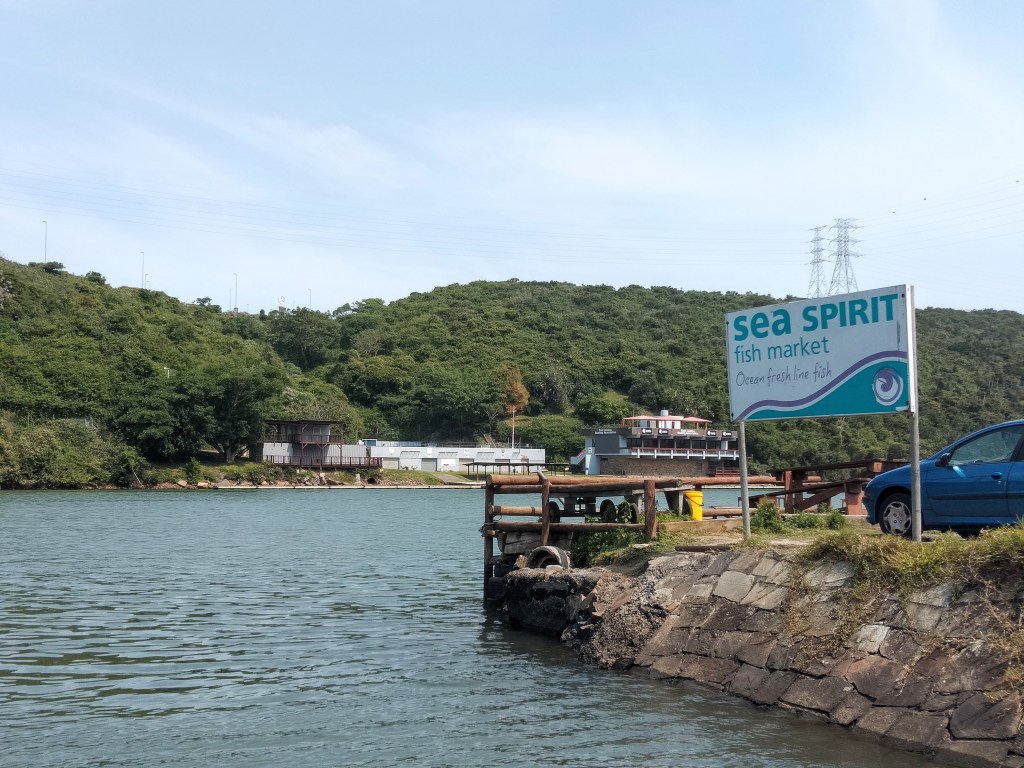
Sea Spirit – a gem of a place
Berto ordered a fish and calamari combo while I enjoyed a calamari burger. The generous portions were probably some of the best seafood we’ve had in a very long time!
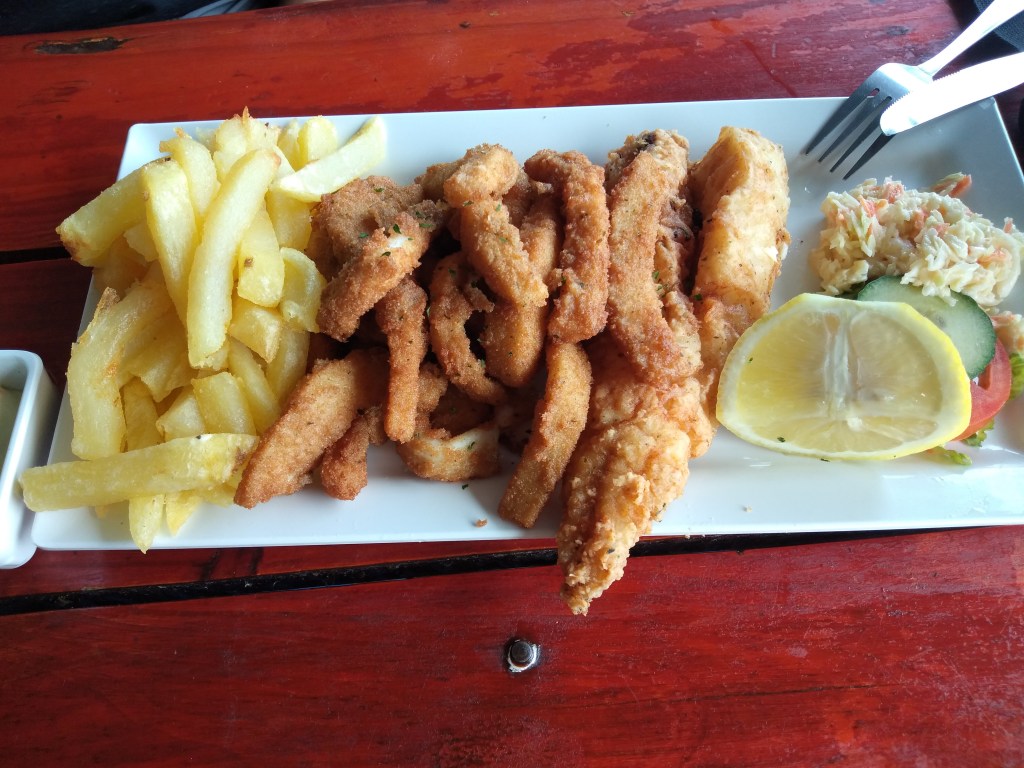
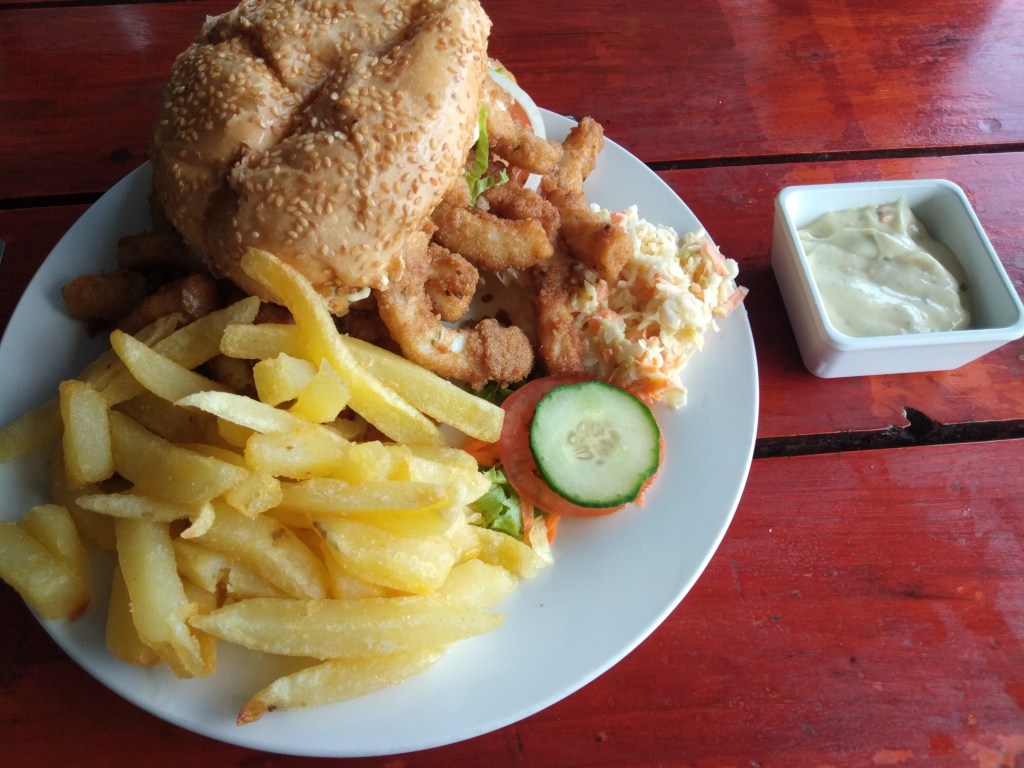
Fisherman style lunch
Road Bridge at Latimer’s Landing:
When we left the fish market we drove under (yet another) bridge marked with the date 1946. After we got home we read more about this area and realised it was very close to where the first coelacanth fish was brought ashore when it was caught in 1938 – this after people thought the fish was extinct. Perhaps you remember this remarkable story which we mentioned in our post when we visited the East London Museum (you can read about it here). The Road Bridge at Latimer’s Landing is named after Marjorie Courtenay-Latimer (the curator of the museum at the time the coelacanth was caught).
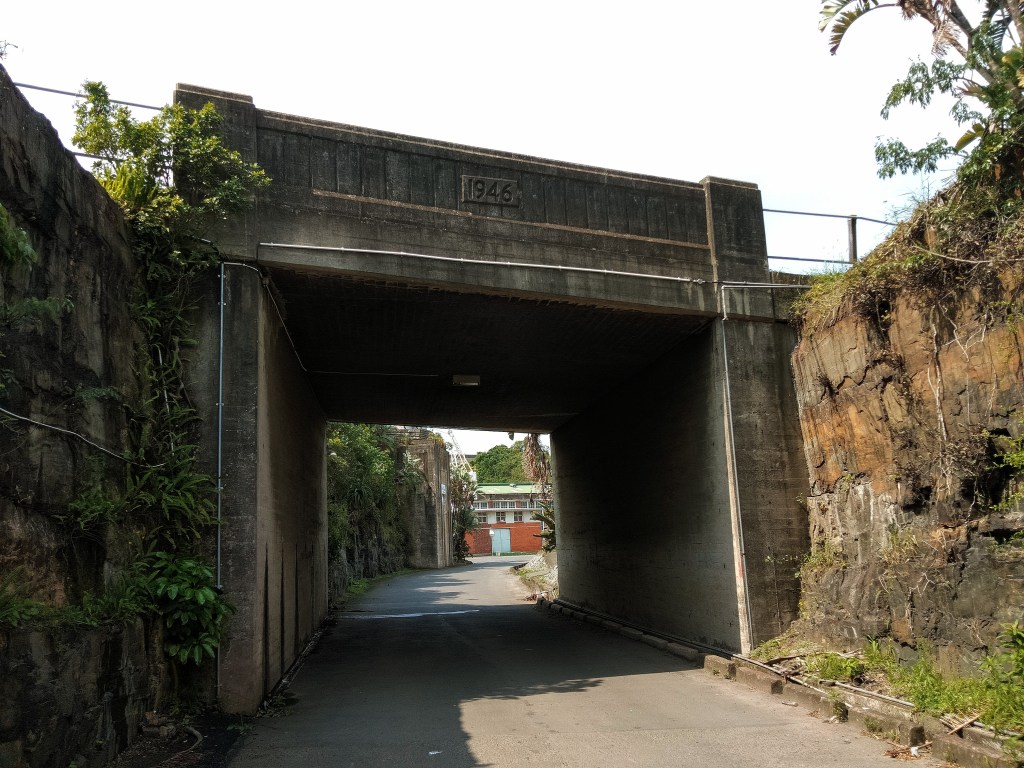
Road Bridge at Latimer’s Landing
When we left our house this morning, we were looking for the Double Decker Bridge. But in the end, we found so much more! It was definitely a successful trip to learn more about the history of East London.
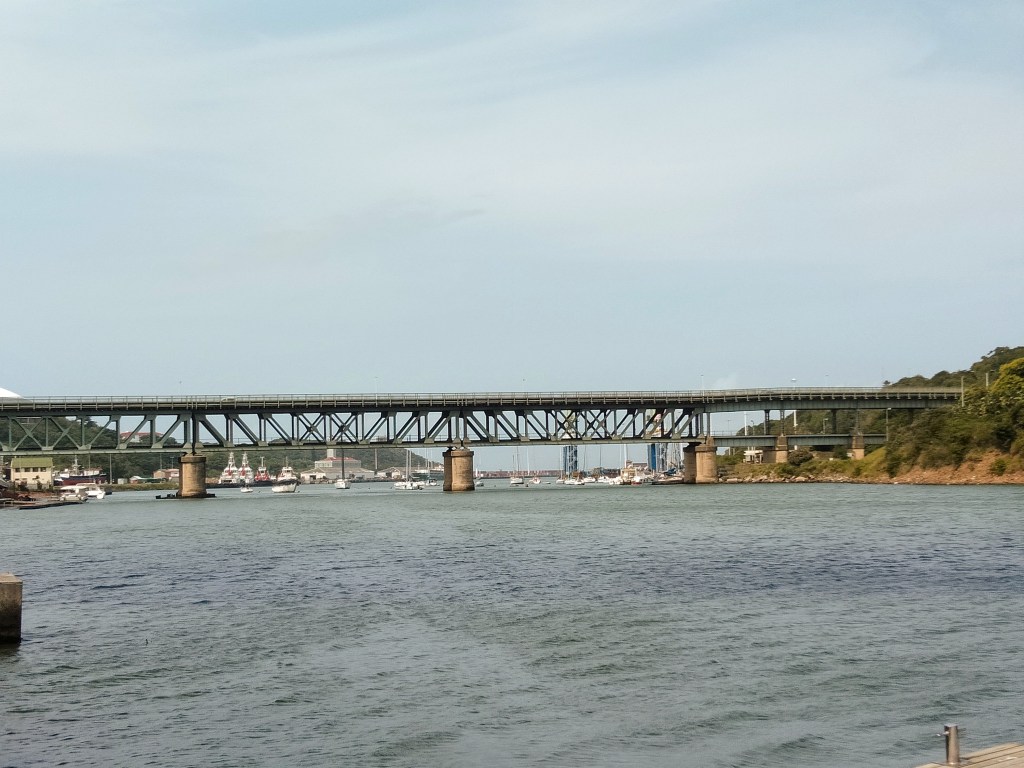
A last look at the Double Decker Bridge
 Wet and Dusty Roads
That’s a fantastic bridge, Corna. There is one such bridge in Derry, Northern Ireland, too, but I have yet to see it. It is one of only a few double-decker road bridges in Europe. It has a single carriageway road on each deck and a single footway on the lower deck and a footway on each side on the upper deck. All in all, a fantastic structure. Thanks for sharing and have a good day 🙂 Aiva xx
LikeLiked by 1 person
This is very interesting Aiva. I googled the bridge in Ireland now (I see it’s called the Craigavon Bridge) and it looks very similar to our Double Decker Bridge here in East London. Thank you so much for sharing!
LikeLiked by 1 person
You’ll have to go to the bloukrans bridge now. The world’s highest bridge bungy jump. It’s close to Nature’s Valley which is pretty stunning.
LikeLiked by 1 person
We drove over the Bloukrans Bridge about 15 years ago. Just driving over it made my hands sweat 😉 (let alone bungy jump). But you’re right, it’s time we go there again – it’s a beautiful part of the country!
LikeLiked by 1 person
Pragtige foto’s. Jy weet, omdat daar soveel korrupsie is, vergeet mens skoon om daarheen te wil,reis. Dankie vir die mooi foto-reis.
LikeLiked by 1 person
Dankie Christa 🌸. Hier in Oos-Londen moet mens so bietjie grawe vir die mooi, want jy’s reg, ons sien maklik die sleg/lelik/korrupsie raak. Maar soms is ek tog verbaas om by ‘n plek te kom wat so mooi is soos hierdie brue en dan is ek dankbaar dat ons die geleentheid gekry het om tydelik hierheen te verhuis.
LikeLiked by 1 person
Bly jy nou daar? Hoe is die seewater? Ons is so versigtig vir koop waar dienste nie bestaan nie.
LikeLiked by 1 person
My man is oorspronklik net vir ‘n jaar hierheen gestuur, maar dit blyk hulle het hom nog hier nodig, so ja … dis vir nou eers (tydelike) huis. Uiteindelik sal ons weer teruggaan Langebaan toe – waar ons permanente huis is. Die water is nie so koud soos aan die Weskus nie, ek kan darem met my voete daarin stap sonder om te voel ek vries 😄.
LikeLiked by 1 person
O ja! Ek onthou daardie voete wat afval en opvries as mens ingaan. Binne sekondes. Stilbaai is ook nie soooo koud nie.
LikeLiked by 1 person
Talk about efficiency; the double decker bridge with a pedestrian path seems to have it all! Very interesting. Great post and photos!
LikeLiked by 1 person
I’m actually quite surprised that there is only this one bridge in South Africa that offers transport for both vehicles and trains (oh, and pedestrians). People were very smart in the early years, weren’t they? Thanks for coming along on our “bridge hunting” in East London 😉.
LikeLiked by 1 person
Ha ha…you always seem to find good food! I didn’t know about the Mercedes Benz assembly plant. A very smart place for it, next to a major port. I often used to see cars being transported on those huge trucks when I lived in Seattle. A nightmare sort of object to distribute. How often do you set out to view a particular sight and end up seeing so much more? I think it’s called keeping your options open (as well as your eyes, of course)! You certainly live in an interesting part of the world.
LikeLiked by 1 person
Haha, we are always hungry after our outings 😉 … must be all that fresh air! The amazing story of the Mercedes Benz plant is that it’s one of only four plants in the world that produce the C-Class (the other three are Tuscaloosa in the US, Bremen and Beijing). You’re right, one never know what you’ll come across on your trips (and it’s a big surprise to find something you were not actually looking for). Interesting part of the world – YES, for sure!
LikeLike
So Interesting to read about the East London double decker bridge Corna and of the market/cafe you found there with the freshest seafood to feast upon. A couple of years ago when I was invited on an Irish press trip we drove over a similar construction in Derry, Northern Ireland close to the border.
LikeLiked by 1 person
That’s interesting Marion – you’re the second person today to mention the bridge in Derry. I googled it and was surprised to see how it looks almost the same as the one here in East London. The Double Decker Bridge was a nice outing … and the fish market/restaurant a wonderful discovery!
LikeLiked by 1 person
That’s a very unique bridge! We have some double decker ones here in the states, but just for cars. I’ve never seen one that’s trains and cars. It makes sense, though; might as well just build one bridge to get everyone across.
LikeLiked by 1 person
I also thought it was a really special bridge. The only other bridge that is similar that I have seen is the Luís I Bridge in Porto, Portugal. Smart people who built such bridges – the word multipurpose comes to mind!
LikeLiked by 1 person
That Double Decker bridge reminds me of the High Level Bridge in Newcastle upon Tyne which has road traffic on its lower deck and rail above. I’ve never come across a calamari burger but now I want one, it sounds a great idea!
LikeLiked by 1 person
Oh, it’s great to read about another bridge like this one! I just googled the High Level Bridge – and it’s beautiful. I love a calamari burger … there’s always enough for a takeaway 😉.
LikeLiked by 1 person
Hmm, most people think the Tyne Bridge is more attractive than the High Level, or the Millennium Bridge (my favourite!) If you’re interested I did a post about all the bridges over the Tyne in Newcastle a couple of years ago: https://www.toonsarah-travels.blog/newcastle-a-city-and-its-river/
LikeLiked by 1 person
Oh yes, I remember this post of yours about the lovely bridges. But it was nice to read it again. I still like the Millennium Bridge (the night photo is stunning). I read your High Level Bridge is almost a 100 years older than the one we have here in East London – amazing.
LikeLiked by 1 person
Love the idea of a double decker bridge. And those chips look like proper chips that’s for sure 🙂
LikeLiked by 1 person
I think a double decker bridge is a very clever idea … now I wonder why there aren’t more of these in the world! Ahh, the chips – yes, Sea Spirit knows all about making proper chips!
LikeLike
There’s nothing better than finding a surprise or two along the way. These are all wonderful bridges – especially the double decker. Loved your photos, and those fisherman style lunches look amazing!
LikeLiked by 1 person
Thanks Kellye, we were surprised to see that the bridge still looks exactly the same as it did in 1935. And yes, finding the Sea Spirit accidentally was a big surprise … and definitely satisfied our hunger 🙂.
LikeLiked by 1 person
Oe, hoe lus is ek nou vir daardie pragtige aartappelskyfies! Die Amerikaners noem dit “French fries” en hulle is nie baie goed daarmee nie…
LikeLiked by 1 person
Haha 😁. Ja Tannie Frannie, ek het ook al agter gekom dat daar ‘n beduidende verskil tussen ons “slap chips” en oorsese lande se “French fries” is. Dalk le die verskil juis in die naam … ek bedoel “slap chips” klink mos sommer net lekkerder as “French fries”!
LikeLiked by 1 person
Vir seker!
LikeLiked by 1 person
Is dit nie wonderlik wanneer n mens sulke skatte by jou agterdeur ontdek nie!
LikeLiked by 1 person
So waar! Soms moet mens net bietjie afdwaal van die normale roetes … dan loop jy sulke lekker verrassings raak!
LikeLiked by 1 person
Ons sal vir seker die brug (en restaurant) gaan soek as ons wiele weer daardie kant toe draai. So interessant.
LikeLiked by 1 person
Oos-Londen is ryk aan geskiedenis en het eintlik so baie om te bied vir toeriste … maar ai, as daar net na die klein stad en sy inwoners gekyk kan word. Daar’s plekke waar mens jou oe net wil toe druk as jy daar deur ry en dan ander plekke wat asemrowend mooi is.
LikeLiked by 1 person
Mens wil sommer in trane uitbars. Net ‘n goeie “bestuur” en alles kan handomkeer verander.
LikeLiked by 1 person
‘n Mens kan tog nie moed opgee met ‘n mooi land soos ons sin nie … ek wil glo dit gaan beter raak. Maar dan … my man se altyd vir my ek’s die alewige optimis 😉.
LikeLiked by 1 person
It’s pretty neat how they created a double decker bridge to accommodate multiple modes of transportation. It was interesting to learn about its history and see pictures of it.
LikeLiked by 1 person
I agree with you Linda, building the double decker bridge was a brilliant piece of engineering. Thanks for reading along about this remarkable bridge – you learn a lot about a place when you go back in history, right?
LikeLiked by 1 person
Die etes by daardie restourant lyk heerlik, Corna. Chips en vars vis bly een van my gunstelinge! Jou vertelling saam met die fotos oor die brûe was nou baie interessant om te lees.
LikeLiked by 1 person
En om vis en chips daar reg langs die water te eet, maak dit net nog lekkerder! Ek’s bly jy het die geskiedenis oor die brûe geniet … ek hou baie daarvan om iets nuut van ‘n plek te leer (al moet ons nou ook so bietjie gaan delf om meer uit te vind 😉).
LikeLiked by 1 person
Hier is soveel plekke in Biléne waaroor ek meer wil weet, soveel vernielde huise nog uit die oorlog jare, 1970-1992. Wie s’n is dit, waar is die mense nou, wat is hulle stories. Meeste eienaars het daardie tyd Portugal toe gevlug. Die mure het verhale om oor te vertel, maar hoe kan ek hoor.😉☺️
LikeLiked by 1 person
Maar my liewe Una … dan sal ons mos Portugal toe moet gaan om meer uit te vind 😄. Net ‘n grappie (of dalk ook nie). Maar ek stem, ons stap baie by sulke plekke verby en dan wonder ek altyd: “Wat as die mure kon praat” …
LikeLike
Só het ek nou nooit daaraan gedink nie, Corna!😂🌺
LikeLiked by 1 person
That’s crazy how the bridge still looks the same! What a nice place for a restaurant and if they give that much food for lunch I want to see the food for supper! Lol
LikeLiked by 1 person
Isn’t it amazing how almost nothing has changed in 88 years! That plate of food was obviously way too much (and it’s so cheap). Like I said, it’s nothing fancy, but they know how to make fish and chips taste like a royal meal!
LikeLiked by 1 person