Get to know East London better (1)
At the beginning of June, it was exactly one year ago that we arrived in East London. Time flies, right! With that in mind, we also realised that we don’t really know this small city. One of the best ways to find out more about a place’s history is to visit the local museum.
And even if you don’t like museums, stay tuned because there are two very interesting stories you don’t want to miss!
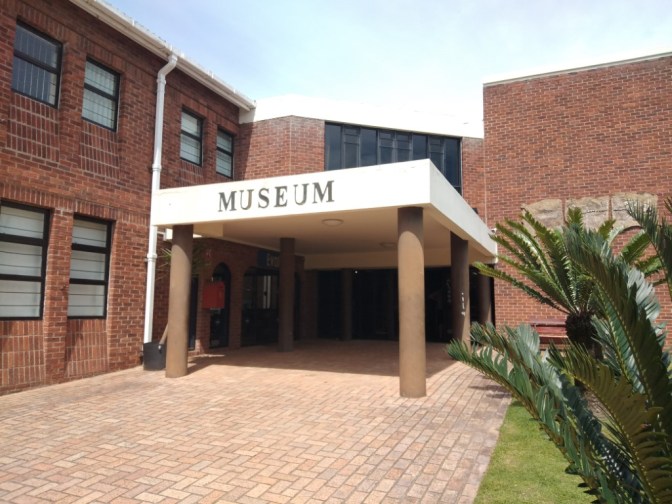
Entrance to East London Museum
Before we came to East London, we knew of two major events that this city is known for (the sea was involved in both of these stories):
- A Greek cruise liner (MTS Oceanos) sank in 1991 after leaving the port of East London. After a massive rescue operation, all 571 passengers and crew on board survived and none suffered serious injuries.
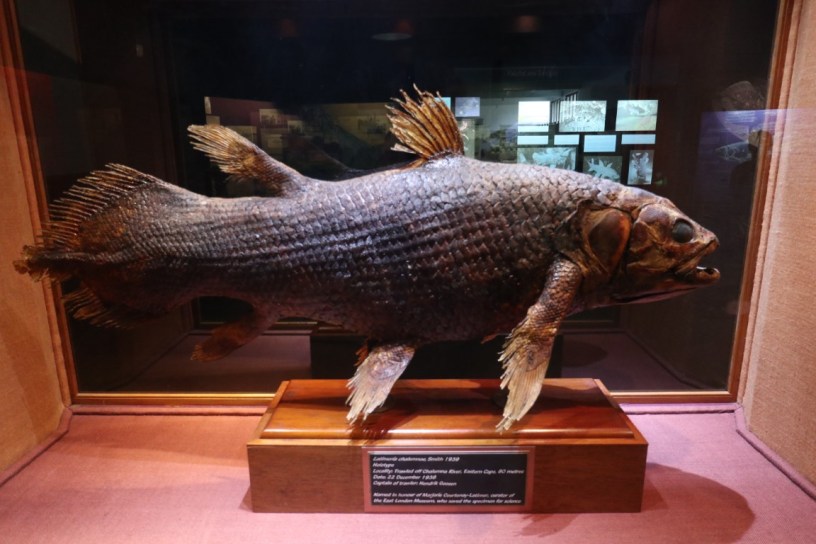
- The coelacanth, a fish previously believed to be long extinct, was discovered near East London a few days before Christmas in 1938.
We were looking forward to reading more about these, but also other interesting stories about East London that we didn’t know about.
MTS Oceanos:
Even before entering the museum, we were distracted by a lifeboat next to the museum.
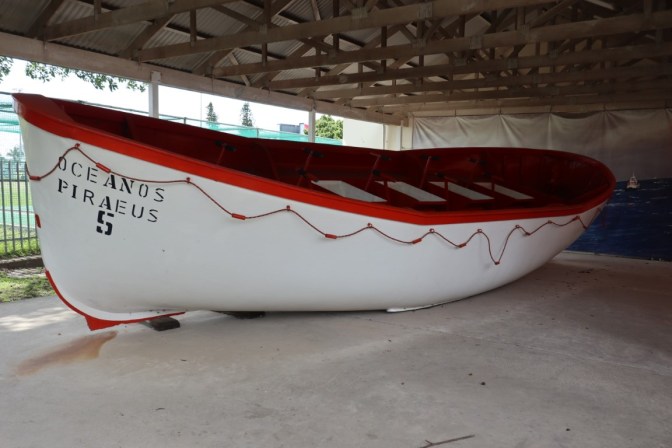
Lifeboat Number 5 from the ill-fated Oceanos
In gale-force winds and heavy seas all 571 aboard were saved before the Oceanos sank off the Transkei coast on 4 August 1991. 40 Survivors spent the night in this open lifeboat before being rescued by the ship MS Kaszuby II.
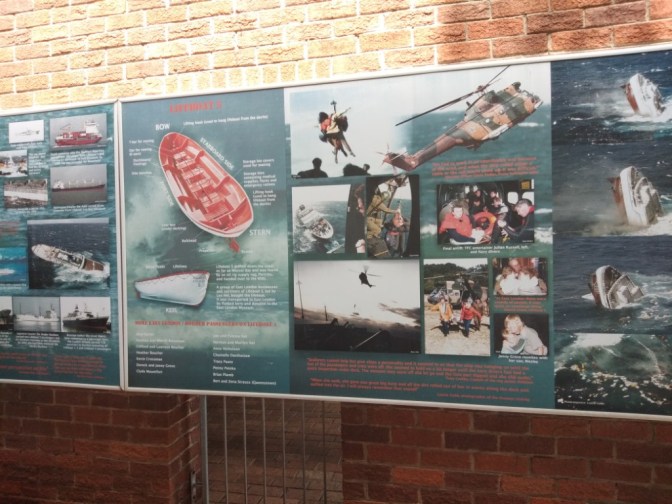
Photos depict the rescue operation, as well as the Oceanos finally disappearing under the water
There are so many wonderful stories told by the passengers. While some of the passengers were lowered into the sea in lifeboats, others had to jump off the sinking ship into the dark and stormy Indian Ocean. We also read about the brave South African Air Force personnel who lifted passengers from the deck, as well as other ships such as the MS Kaszuby II and the Dutch cargo ship Nedlloyd Mauritius who responded to the distress call.
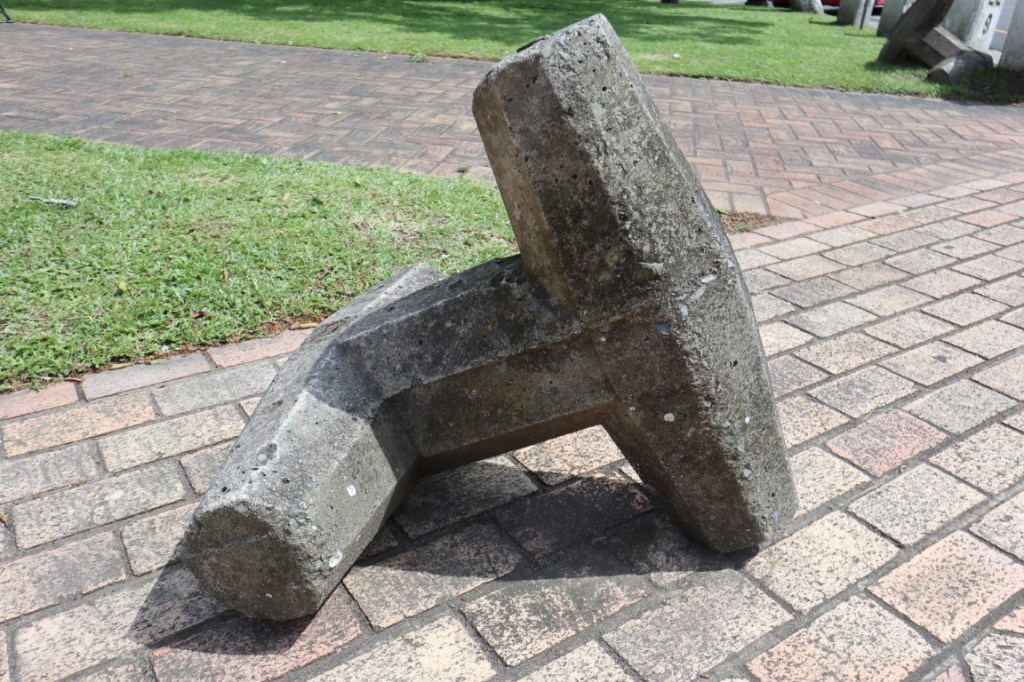
Rock anchor near the Oceanos’ lifeboat
Inside the museum is another exhibit of the rescue operation and I have to admit, we were quite overwhelmed after reading most of the stories. We can completely understand why this is seen as a triumph and the greatest maritime rescue ever.
Just before we walked into the museum, we also saw artwork on the wall of a coelacanth skeleton and we couldn’t wait to read this remarkable story!
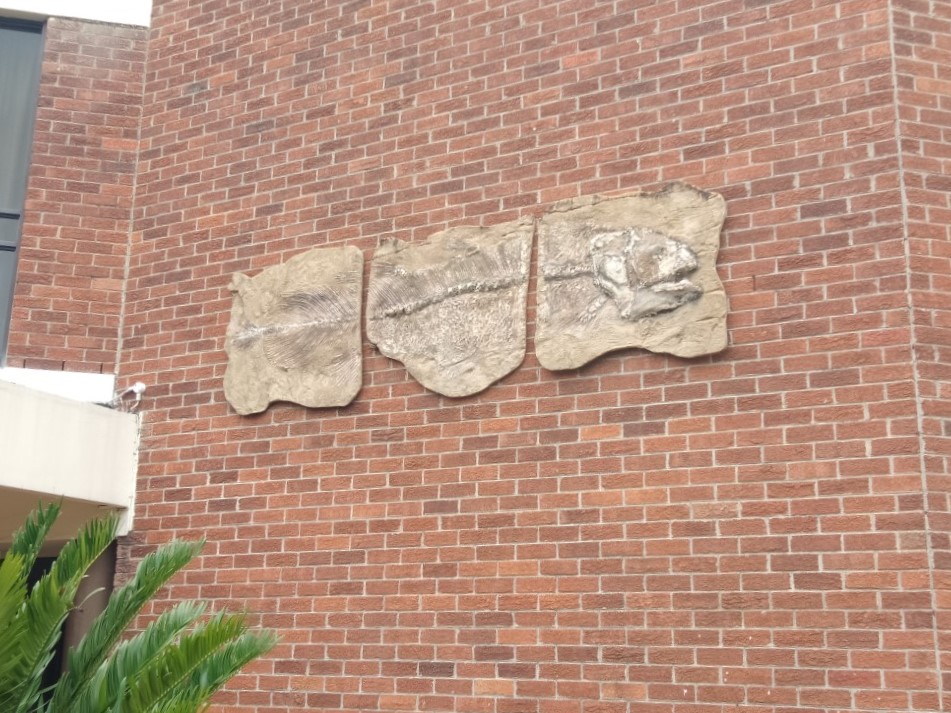
Artwork of coelacanth’s skeleton
East London being a coastal city, it’s understandable that we’ll see a lot of ships and ship-related stories. We first went to the lower ground where we did not see a ship, but some big guns that were on a ship.
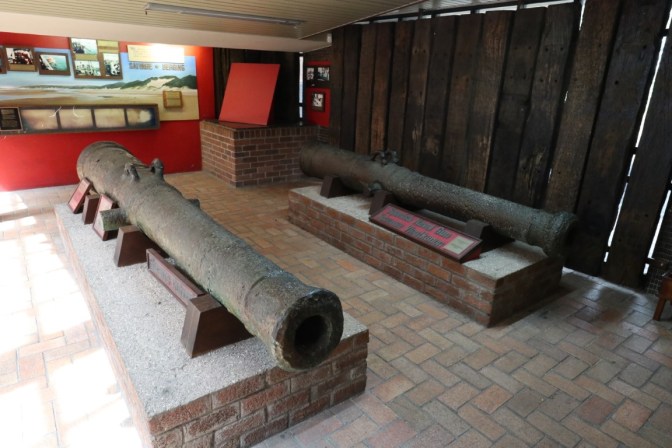
Cannons that were found on the wreck of the Atalaia
On 20 January 1647, the Nossa Senhora da Atalaia sailed from Goa in India with a cargo of silk, porcelain, spices and a consignment of about 20 bronze Bocarro cannons. On 4 July 1647 the Atalaia was wrecked between Cefane and Cintsa (near East London).
After browsing through the history of ships that have sunk near the East London coast, we walked up to the next floor to see what awaited us there. And I was happy that we now found ourselves in the world of animals.
We were very surprised that our first sighting of an animal was that of a dodo, an extinct bird that lived in Mauritius. Why would it be on display here in the museum in East London?
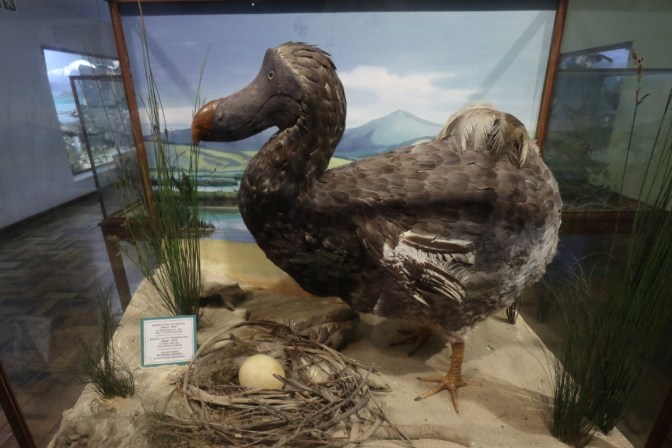
A model of the extinct dodo
The reason for this: Apparently, the dodo was first discovered by Jacob Cornelius van Neck in 1601 in Mauritius. By 1693 the dodo was extinct. The egg (above photo) is possibly the only one in existence and was brought from Mauritius by Captain van Syker on 15 January 1847 and presented to Miss Lavinia Bean. She was the great aunt of the first director of the East London Museum.
We then walked past wonderful displays of animals found in the East London area. Not only were the model animals good imitations of the real animals, but the entire picture in each window was extremely well done.
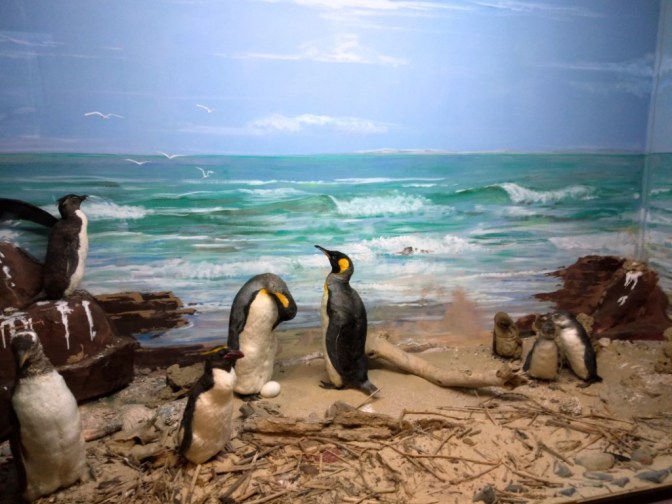
Different species of penguins and a Cape Cormorant
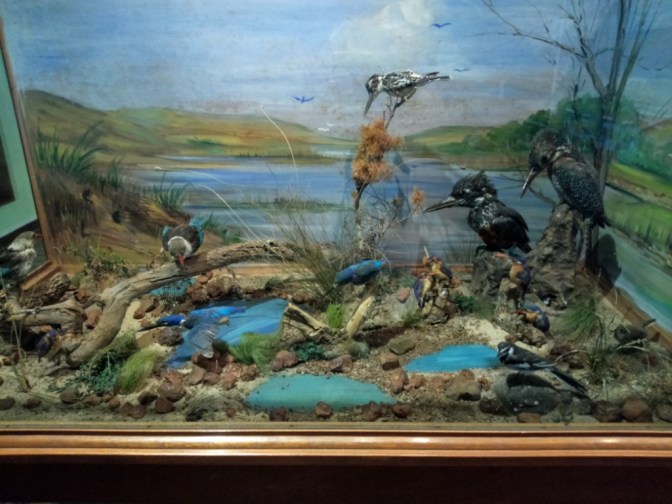
Kingfishers and the little Wagtail (bottom right)
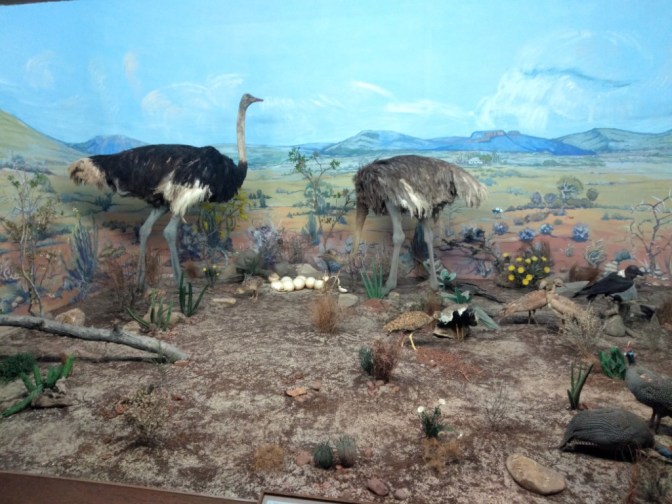
Male and female ostriches

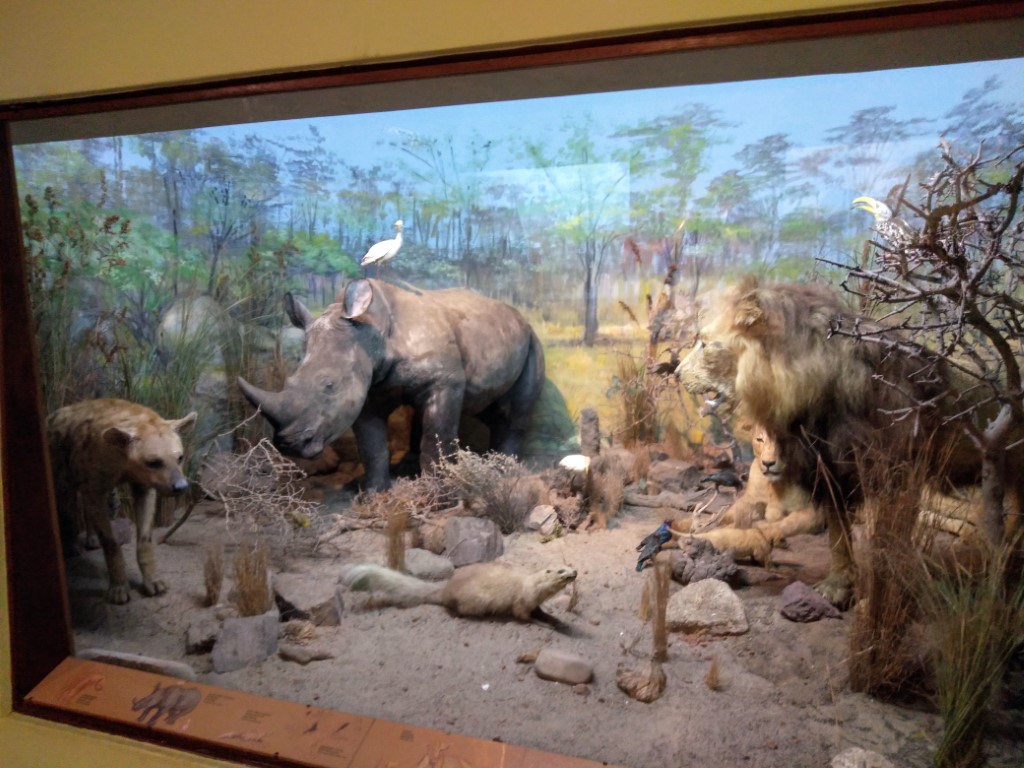
Different antelopes, baboons and the bigger animals like rhinos and lions
The Coelacanth:
And then it was time to read the fascinating story of the coelacanth! We won’t bore you with all the details regarding this fish (google coelacanth if you want to read more). What makes this such a brilliant story is that prior to 1938 the coelacanth was a peculiar fish consigned to the paleontological record, thought to have gone extinct 70 million years ago – wow!

The coelacanth. It was named Latimeria chalumnae (in honour of Marjorie Courtenay-Latimer who was the curator of the East London Museum and saved the specimen for science)
On 22 December 1938 the coelacanth landed in the nets of a fishing trawler of Hendrick Goosen and was brought to the dock of East London. The then curator of the museum Marjorie Courtenay-Latimer was called to see this strange looking fish. She described the fish as “beautiful” and said the fish’s natural colour of blue with white spots was rare to see.
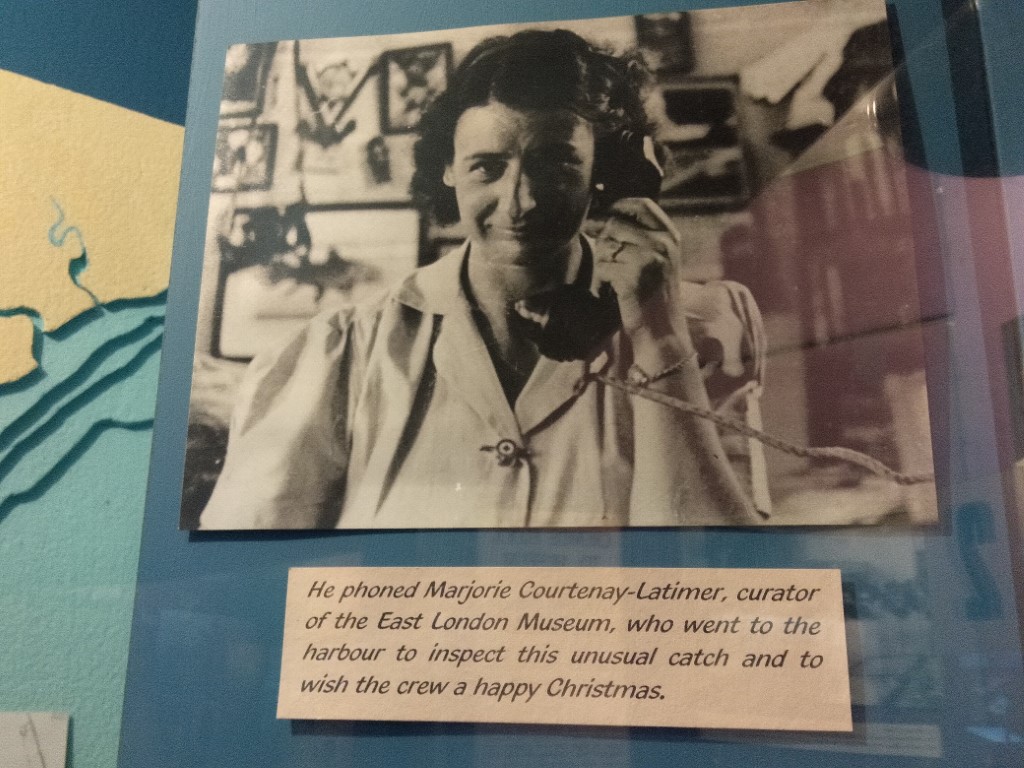
Marjorie Courtenay-Latimer receiving the news of the coelacanth
Marjorie then called Rhodes University ichthyologist, Professor JLB Smith about the fish. He quickly realised that the fish caught was a scientific miracle.
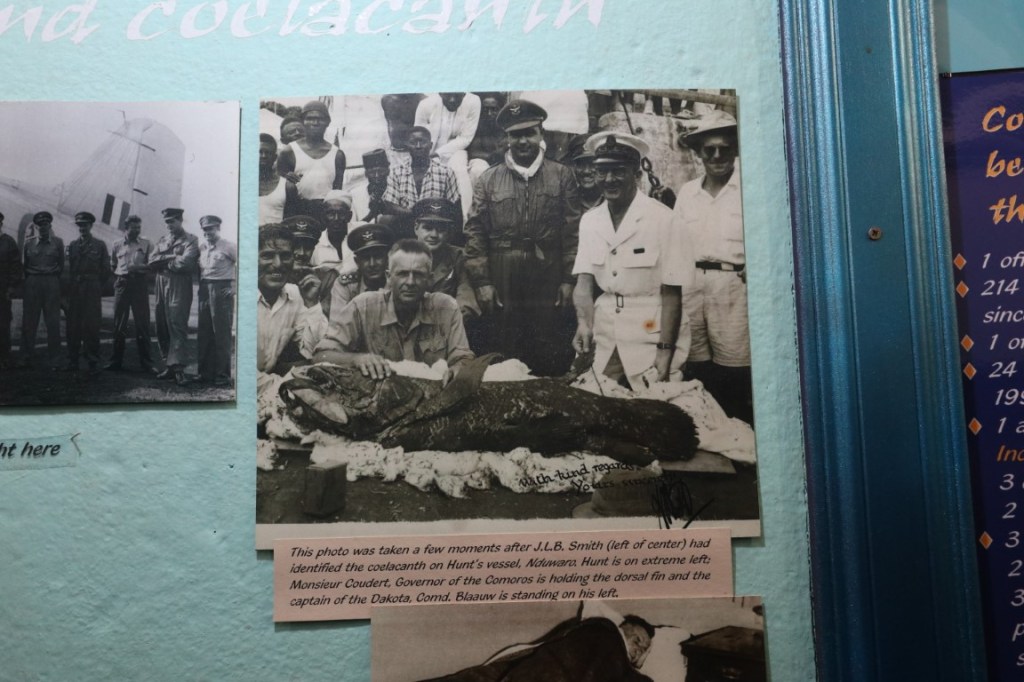
Professor Smith and other people pose with the coelacanth
The world was amazed with the news of the existence of this ancient fish. Newspapers in South Africa had this story all over their front pages for weeks and we enjoyed reading some of the articles.
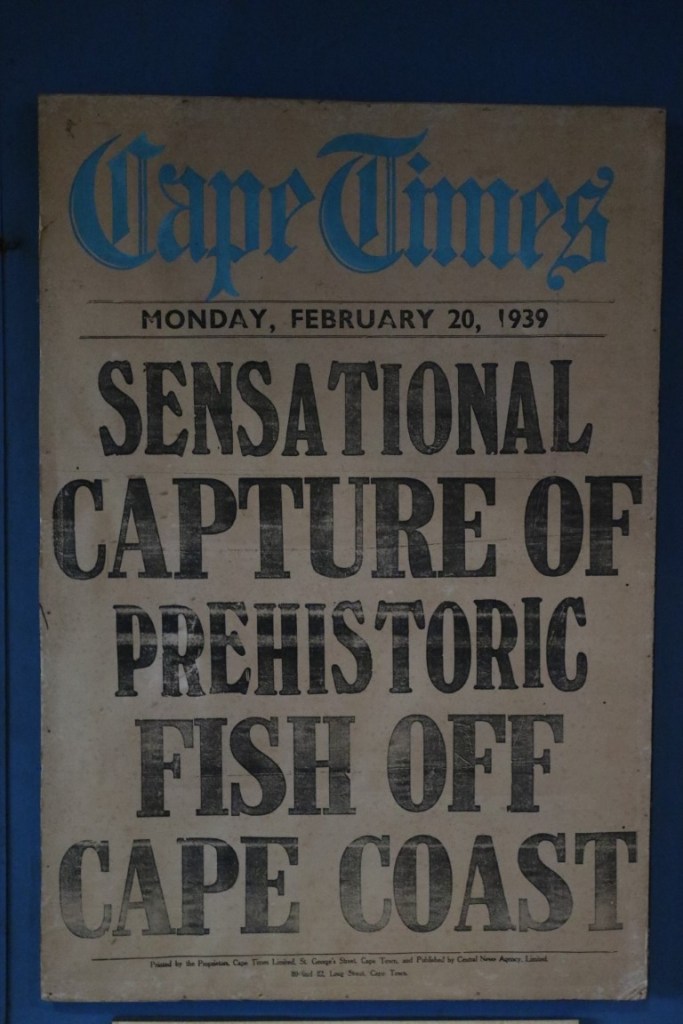
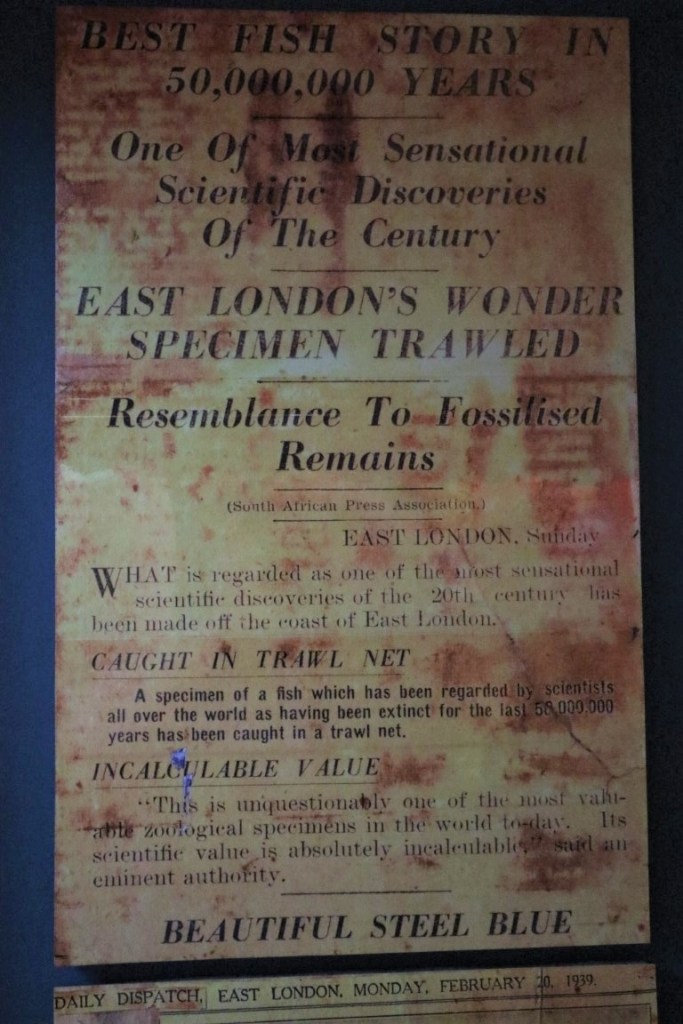
Newspapers from 1939 with the coelacanth story
It was only after 14 years that more coelacanths were recorded along the Grande Comore and Anjouan. Since then, this fish has made its appearance several more times, for example in 1991 along the Mozambique coast, in 1995 at South-West Madagascar and in 2000 at Sodwana Bay in South Africa.
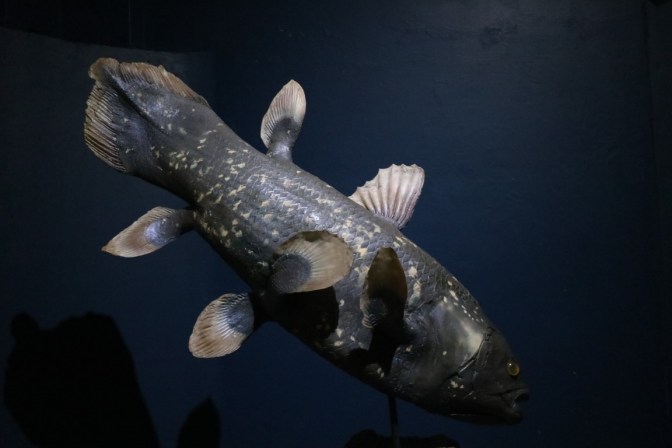
Another model of the coelacanth
It was such a great story to read and as we walked up the stairs to another hall I looked back at the fish display and thought: It’s possible there might be a lot more in the sea that we’re not aware of.
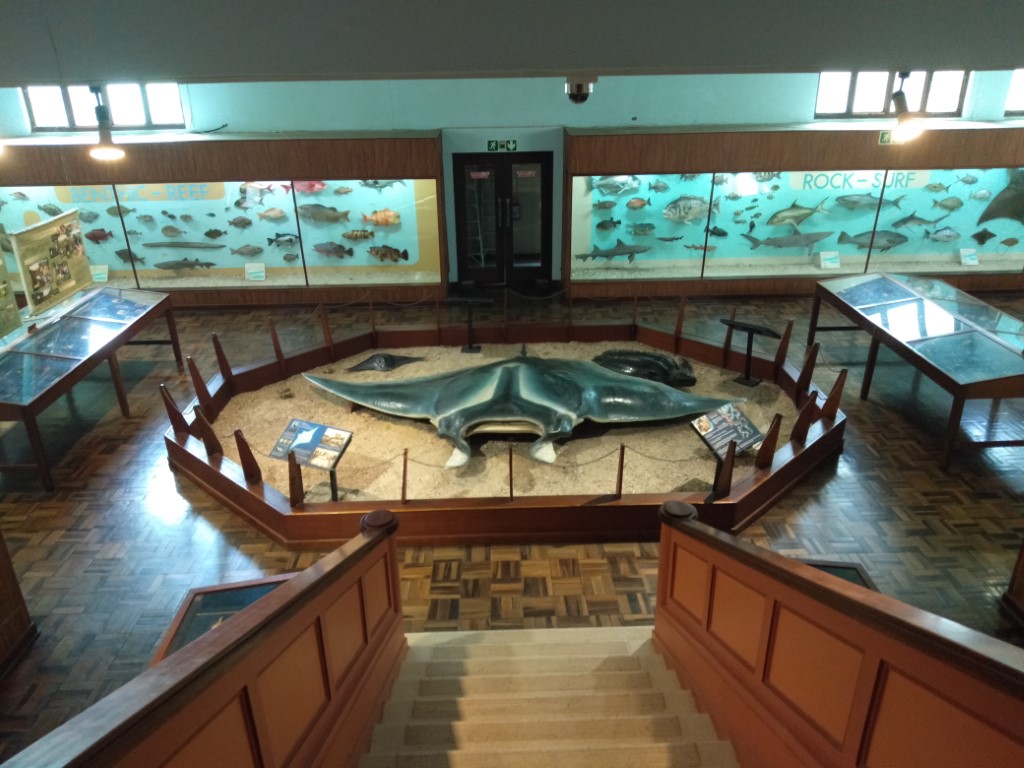
Leaving the fish exhibition
We were now at the human section of the museum. Here we learned about the different groups and cultures that made the Eastern Cape Province their home over the centuries. This province is dominated by Xhosa speaking South Africans and we saw an exhibition of the traditional Xhosa family. The date of the arrival of the Xhosa speaking people is unknown, but it has been proven that they were at the Buffalo River in 1686.
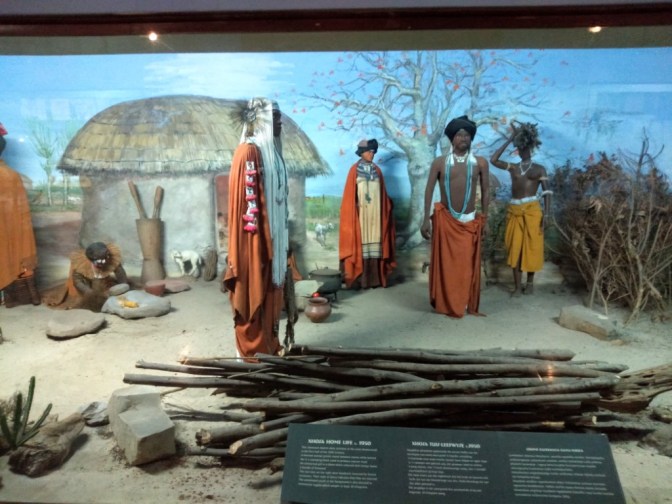
Traditional Xhosa family
We also saw the German influence in this province with the sight of a lovely Spring wagon (Spider). It was bought in Frankfort, Germany and shipped to South Africa in the 1850s for the German settlers to use as a means of transport.
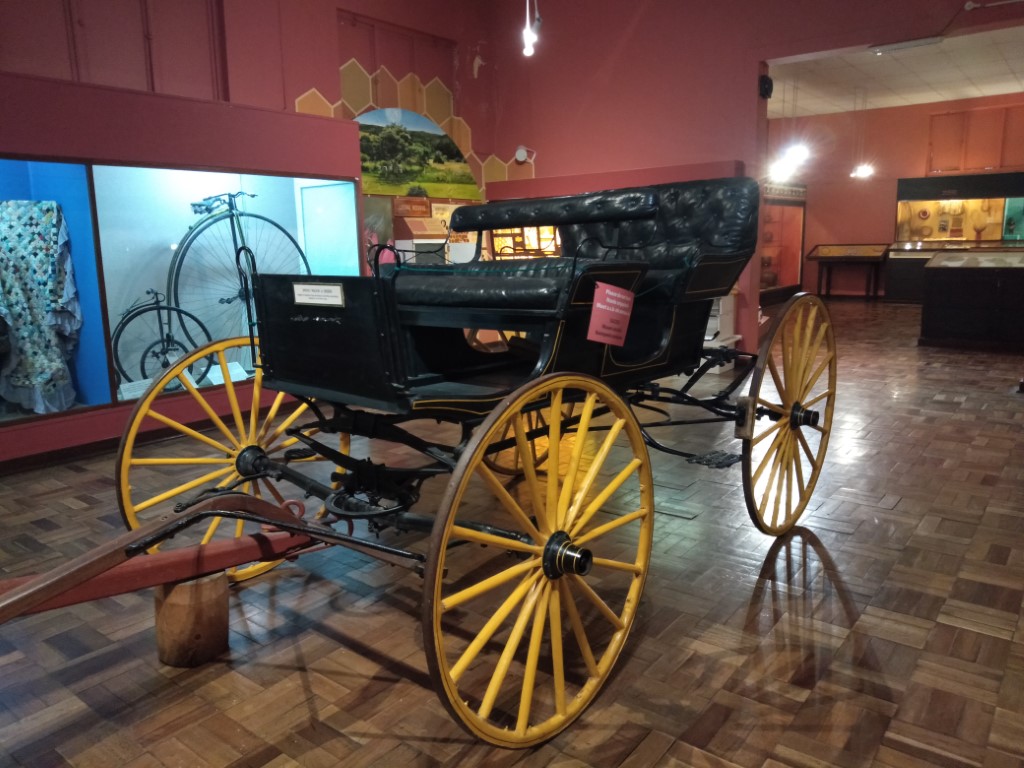
Spring Wagon (Spider)
When we got to the exhibit of how technology has evolved over the centuries, we had a good laugh at a laptop used in 1985. How things have changed over the years, right?
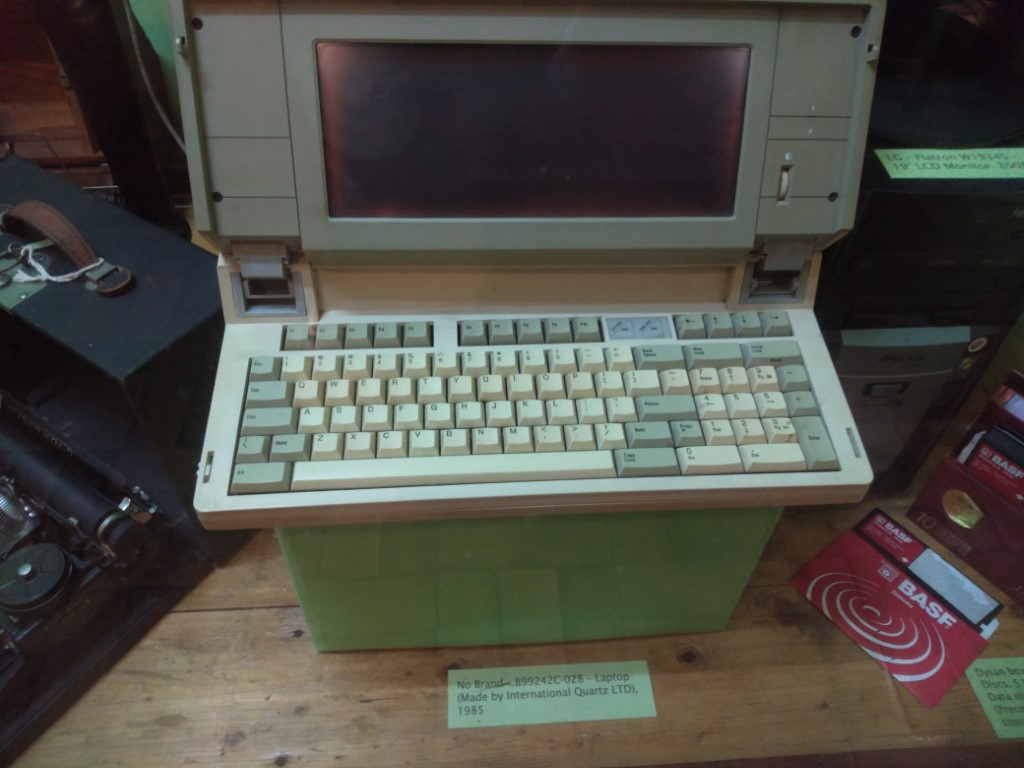
Laptop of 1985
We finished our tour of the museum (after almost two hours) with a visit to the room where the history of the port of East London is depicted. The Port of East London is South Africa’s only commercial river port and is located at the mouth of the Buffalo River.
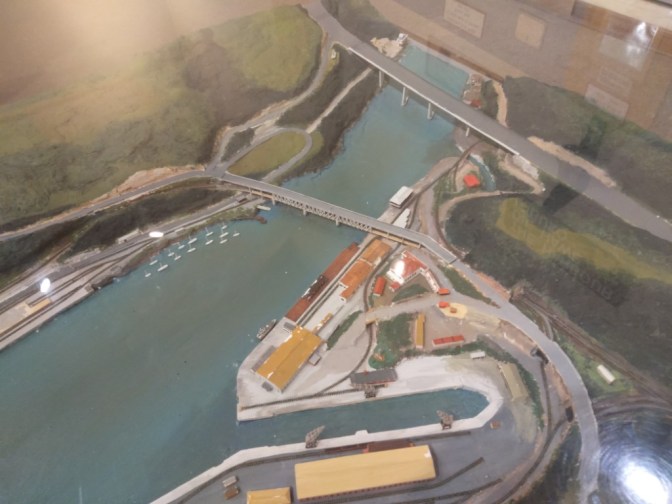
Model of port of East London in 1980
One last interesting story we read was that of the unusual double-decker bridge over the Buffalo River. Excavations began in 1931 and the bridge was officially opened in February 1935. The lower deck was for rail and the upper for road traffic and is to this day the only bridge of its kind in South Africa. It got us thinking that we would have to visit this bridge to see how it looks these days after more than 88 years since it opened. (You can read about our visit to this bridge, here).
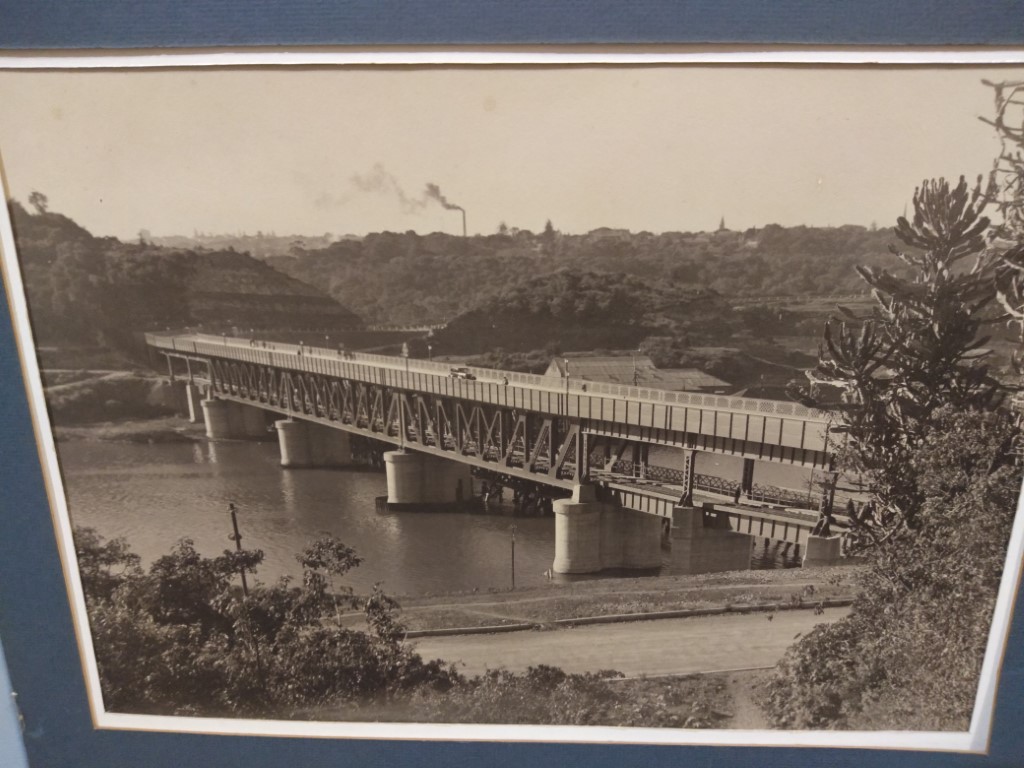
Double-decker bridge over the Buffalo River in 1935
We love museum visits because they give you a glimpse of bygone days. But I have to admit, we were blown away by the East London Museum. Walking out of the museum, we took one last look at a model of the famous coelacanth in the gardens.
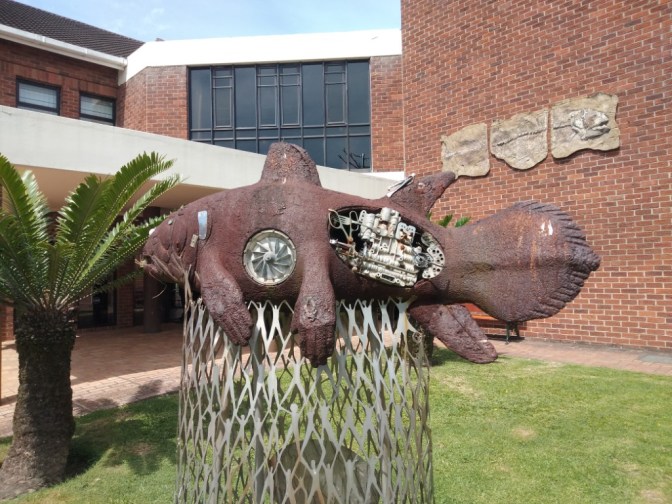
Model of coelacanth in front of the East London Museum
The only thing left for us to do was get something cold to drink after our morning in the museum. And since the milkshakes at Friesland Milk Bar are known as the best – not only in East London, but in South Africa – we drove to this corner café and bought two ice cold milkshakes: Chocolate for Berto and strawberry for me. The perfect end to a very enjoyable day in East London!
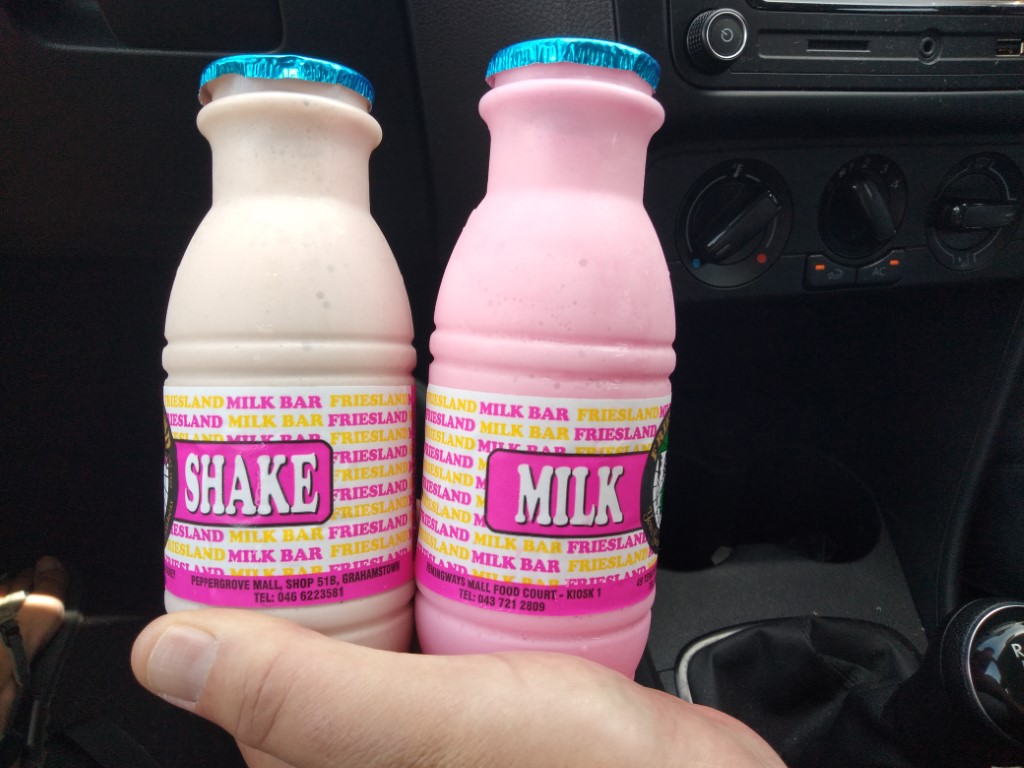
Friesland Milk Bar milkshakes – the BEST
 Wet and Dusty Roads
Amazing what you can find out in a good museum, Corna. Those people in the shipping disaster must have been the luckiest ever, though I’m sure it all felt like a nightmare at the time.
LikeLiked by 1 person
That’s true Jo. I can easily go back again and probably spend another 2 hours there 🙂. We have read many stories of the passengers who were saved from the sinking Oceanos and all considered themselves very lucky to have escaped death!
LikeLike
🤗🩵
LikeLiked by 1 person
I remember learning about the coelacanth at school many years ago and being fascinated by the story. “Fascinated” is what you clearly were whilst walking around this terrific museum. Great pieces of history captured in one place.
LikeLiked by 1 person
We also learned about the coelacanth at school! That’s probably why it was so special for me to read about it again in the museum. School groups seem to visit this museum regularly – I think it must be wonderful to be able to experience so much history under one roof. And hats off to the museum staff for keeping it in such good condition!
LikeLiked by 1 person
A museum lover here, Corna! I love visiting museums – they make you smarter as well as provide an effective way of learning. A single visit to a museum can expose visitors to in-depth information on a subject, and the nature of the museum environment is one in which you can spend as much or as little time as you like exploring exhibits. The environment allows you to form your own unique experiences and take away information that interests you. Thanks for sharing and have a good day 🙂 Aiva xx
LikeLiked by 1 person
Wonderful Aiva – so glad you like museums too! You are spot on with your comments about museums. Sometimes you read an interesting story you didn’t know about … and I love it! Hope you have a wonderful week ahead 🌸.
LikeLiked by 1 person
Dit was baie interessant om meer van Oos London te kon leer! Kan nie glo julle is al ‘n jaar daar nie! Kom julle binnekort terug na Langebaan?
LikeLiked by 1 person
Daar is so baie wat mens van ‘n plek kan leer wanneer jy hulle museum besoek … en ons was baie beindruk met die toestand van die museum! Ja, dit voel soms soos net die ander dag wat ons hier aangekom het. Ons hoop om darem een of ander tyd weer ‘n vinnige draai in Langebaan te kom maak, maar dit lyk nie of ons binnekort permanent gaan terugkeer nie. Gelukkig sien ek darem heelwat van Langebaan op jou blog – dankie daarvoor 💌.
LikeLike
Groot plesier. Hoop julle is darem nog gelukkig daar
LikeLiked by 1 person
Ja, ons is gelukkig dankie – ‘n plek is mos wat mens daarvan maak. Ons het heelwat vriende gemaak … en die winter is nie so koud soos daar aan die Weskus nie 😉.
LikeLike
Ek is bly julle is gelukkig daar en vriende daar gemaak.
LikeLiked by 1 person
What an interesting museum, I’d never heard of the coelacanth but what a fish!! Also that dodo egg is incredibly special. It’s so sad how many wonderful animals are/will soon be extinct.
LikeLiked by 1 person
We loved this visit – there was just so much to see (and read). And you’re right Hannah, the story of the coelacanth is actually so wonderful to read – the excitement of the “discovery” of this fish is almost palpable in the museum. And I certainly found the dodo egg very interesting. You’re right, it’s not fun to read how certain animals became extinct … but then, there’s the story of the coelacanth, and I (the eternal optimist) get new hope!
LikeLike
Sjoe, interessant. En né, my rekenaar het ook so gelyk …. ek hou van die ankers en kanonne
LikeLiked by 1 person
Dit was nou ‘n lekker besoek – totaal en al onverwags moet ek byvoeg. Haha 😄 … ek het glad nie die rekenaar so geken nie! Verbeel jou as jy erens heen wil gaan en jy moet gou-gou jou 1985 “laptop” gryp – dit kan ‘n penarie afgee!
LikeLiked by 1 person
Dit kan beslis
LikeLiked by 1 person
What a brilliant museum! Rescue workers are so brave and often risk their lives in those stormy seas. If you are interested, the story of Sir Ernest Shackleton’s journey after his ship Endurance became icebound is quite incredible. They got to Elephant Island and from there he took some of his men in an open boat to reach South Georgia and mount a rescue for the rest of his crew. He is my hero. Sorry, I couldn’t help but mention him. The coelacanth . I didn’t realise it was such a large fish. A strange-looking creature but goodness, how ancient is the species! Interestingly I read only yesterday that a scientist is attempting to revive the Dodo using dna and pigeon eggs. It won’t be quite the same, but it will be interesting to follow. I hope they will be better treated than their ancestors. That museum looks very well maintained. And you ended the day with milkshakes, onne of my favourite things when I was a kid.
LikeLiked by 1 person
Ernest Shackleton … yes, I’ve read about him. But to refresh my memory, I quickly googled a short version of his Endurance journey – what an incredible story of perseverance! Thanks for reminding me about him. The coelacanth is certainly not the most beautiful fish I have ever seen (even though the curator of the museum thought so when she saw it for the first time in 1938), but I’m sure it was a very big moment in history. And how ironic that both you and I are on the dodo’s trail 😉. It’s a lovely museum and I’m so glad we stopped by. The milkshakes were the best – on a hot day it’s one of my favourite drinks!
LikeLike
I’ve heard of the coelacanth of course but I wasn’t aware that the first one was found in S Africa!
LikeLiked by 1 person
Yes, the discovery of the coelacanth was (and still is) one of the biggest stories here in South Africa. But what a strange looking fish it is … maybe it even looks a bit ancient!
LikeLiked by 1 person
Oh yes, I think it definitely does!
LikeLiked by 1 person
What a great museum! I am going to Google more about the coelacanth. Like you, I have to wonder what other “extinct” animals are out there that we just don’t know about yet.
LikeLiked by 1 person
We loved this museum. There were just so many interesting bits to read … I could have easily spent another hour there (if it wasn’t for that milkshake waiting for me 😉). Yes, the coelacanth is such a great story – the ancient and elusive fish!
LikeLiked by 1 person
Wow, there’s so much interesting history packed into one small museum! I have never heard of the coelacanth, so I learned something today too! Although, we’re actually on a cruise at the moment, in Northern Norway. I’m sitting in my stateroom looking out at the incredible beauty here – and hoping that the ship doesn’t sink like the one mentioned in your post!
LikeLiked by 1 person
It was amazing how much information and history there was in this museum – we were surprised and happy at the same time! The coelacanth story was very interesting to read – the excitement of the people on that day was very well portrayed. Oh yes, I remember now you’re on a cruise. Hmm, then you certainly don’t want to read about a ship that has sunk (and I think where you are now, the water is much colder)! Enjoy your adventure Tricia 🌸.
LikeLiked by 1 person
It’s a bit scary that there is a dodo egg in existence. I can imaging someone will want to get the DNA. I wouldn’t want to see the coelacanth diving! It looks prehistoric. Maggie
LikeLiked by 1 person
I thought the same thing about the dodo’s egg 😳. And I think the chances are slim that a diver will see a coelacanth in the sea. I forgot to mention that they live in deep-water communities at depths of around 180-200 meters (600-650 feet). Prehistoric – absolutely, I agree 100%.
LikeLiked by 1 person
Oh thank goodness 😊
LikeLiked by 1 person
😁 … Berto’s thoughts exactly!
LikeLiked by 1 person
It’s pretty incredible how all the passengers and crew onboard the MTS Oceanos survived. It was neat to learn about the connection of the dodo with East London and about the one surviving egg. How special. The story of the coelacanth is also pretty amazing.
LikeLiked by 1 person
There were so many good stories in this museum! It almost felt like a feel-good outing 🙂 . And those three you mentioned definitely stood out as highlights of our visit!
LikeLiked by 1 person
Time does fly, I can’t believe it’s a year ago that you arrived in East London. Thanks Corna for sharing the rich history and remarkable stories that’s available in the East London museum. It makes me think of the phrase “Time and tide wait for no man”.
LikeLiked by 1 person
Yes, the year has gone by in the blink of an eye – it really does feel like we got off the plane just the other day (and knew nothing about East London)! I really like your phrase – it’s so true! Thank you Henrietta for stopping by, best of luck for the week ahead 🌸.
LikeLiked by 1 person
Thank you for sharing your pictures….awesome! I never knew there was a concrete anchor or the coelacanth fish. It is amazing all the facts that museum had to learn about.
LikeLiked by 1 person
Yes, the things you learn in a museum, right? It was good to hear that there are regular school groups visiting – it’s an easy way to teach children something about bygone years. The coelacanth is such a fascinating story.
LikeLike