
March 2023
After the doctor gave Berto the green light regarding his recent health scare, we decided in March that it was time to put on our hiking boots again and go for a stroll in nature.
We heard from several people that the Kologha Forest just outside Stutterheim is worth a visit. So, we drove the 80km (49 miles) to Stutterheim early one Saturday morning to see how it looks there. On the way there we were reminded that there is a big German influence in this part of South Africa, as we drove past towns with names like Hamburg, Berlin and Frankfort.
Stutterheim:
Missionaries came to this area from the Berlin Missionary Society in the 1830s and soon it was decided to call the place “Stutterheim“, named after the commander Baron von Stutterheim.
Kolgoha Forest:
The beautiful Kologha Forest is on the outskirts of Stutterheim. This pristine indigenous forest is the second largest natural forest in South Africa after the famous Knysna Forest.
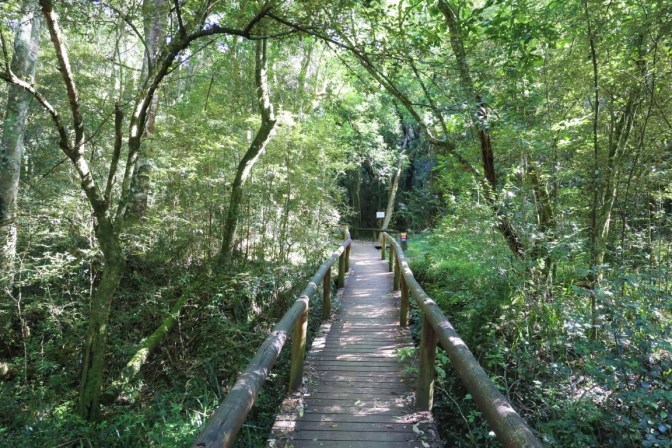
The starting point of hiking trails into the forest
There are 3 different day hiking routes (17km, 7km and 3km), as well as mountain bike and horse trails. I think you will be relieved to hear that we walked the shortest route, namely 3km. Since we haven’t hiked in a long time, we just wanted to enjoy being back in nature (and also want to make sure that Berto’s body is ready for hiking again).
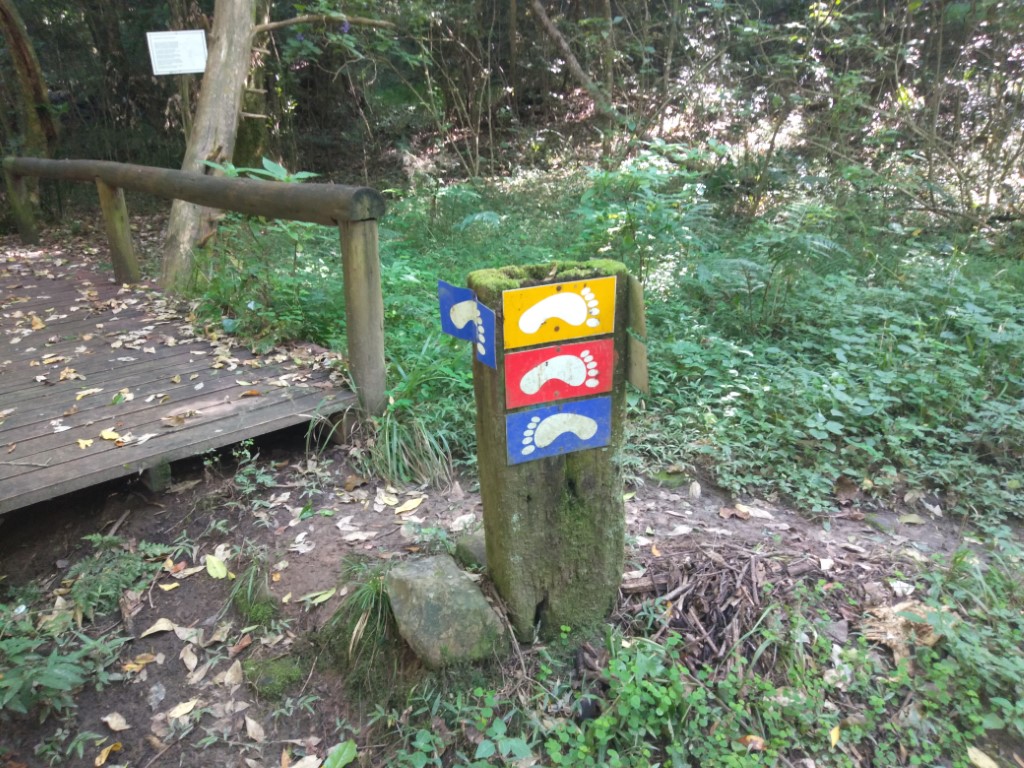
Colour-coded footprints indicating the different routes
The blue route (3km) took us past the constant sound of trickling water. We had to cross several streams, which was really beautiful.
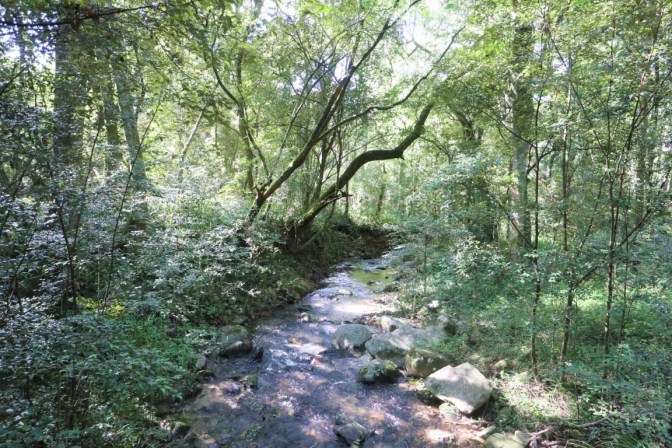
The first of many streams
The hike begins with an easy walk on a boardwalk along the river and under tall trees.
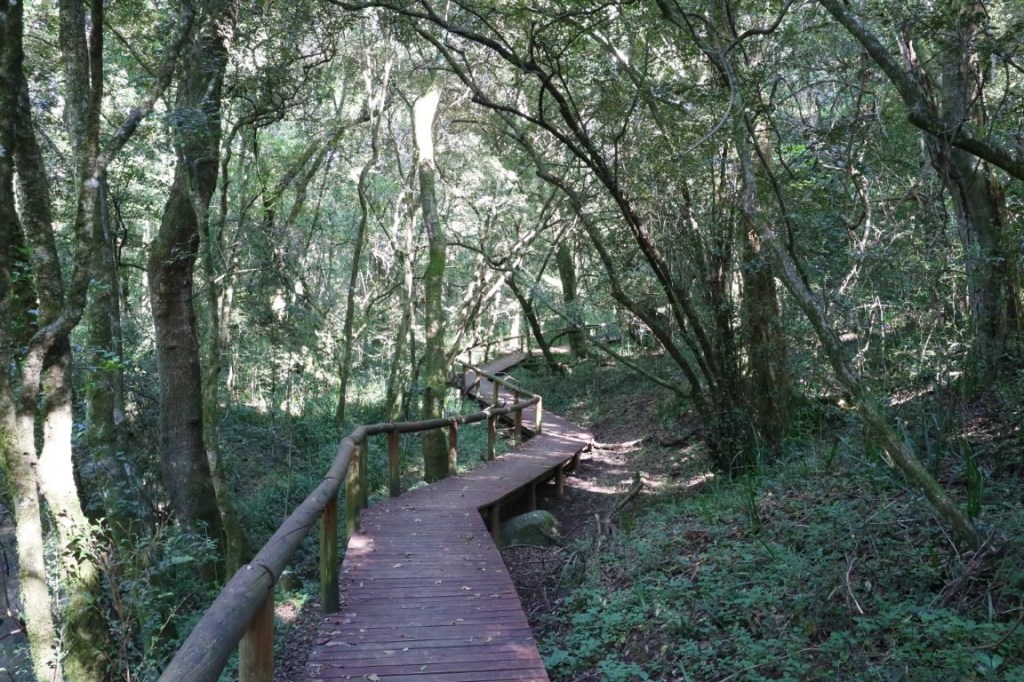
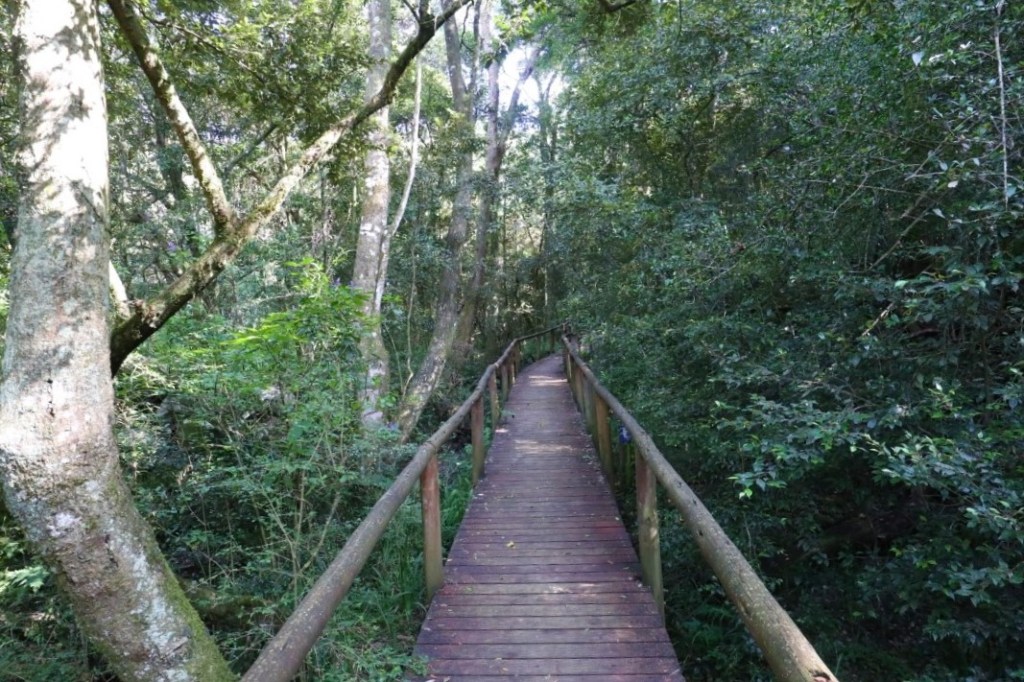
Boardwalk at the beginning of the trail
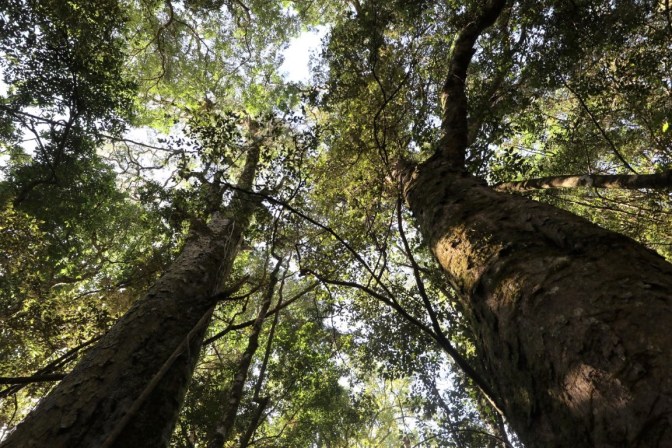
It was lovely to walk through these tall trees
We soon left the comfortable boardwalk and continued walking on a rough forest path that rose rather steeply in places. As this trail is covered by tall trees, the trail can be muddy (especially after rain) and the rocks and tree roots are covered with green moss. We had to be careful not to slip and fall. I would suggest bringing a hiking stick to help with balance – I picked up a “natural” one along the trail.
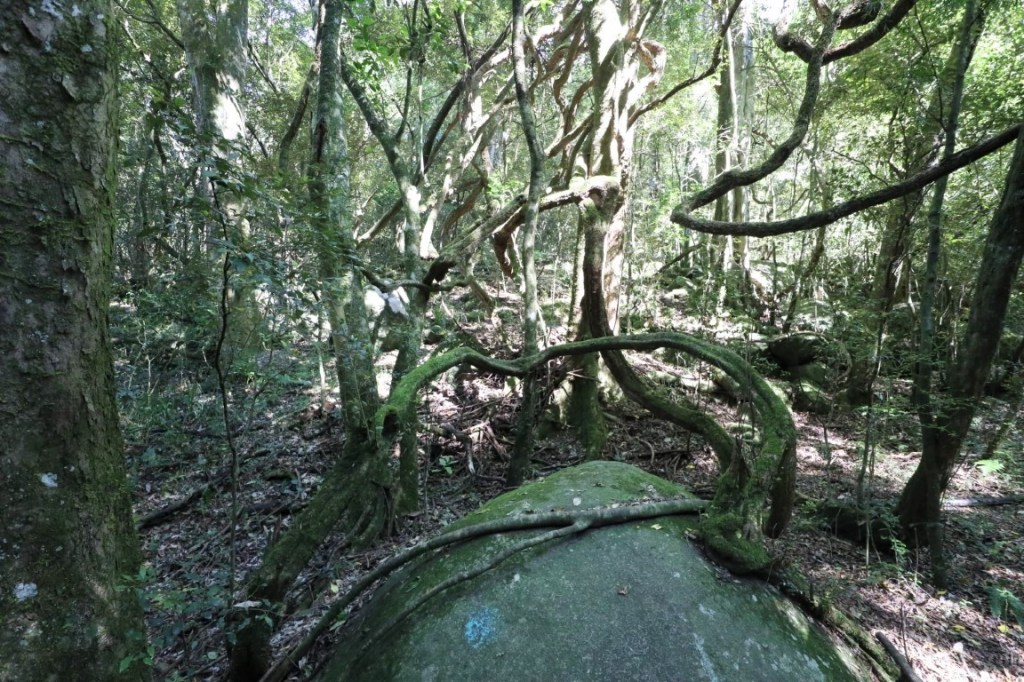
Green moss on a big rock and on tree roots
This trail meanders for 1.5km and leads to 3 waterfalls. The first two falls were very small, but the third one was lovely – we could hear it long before we could see it.
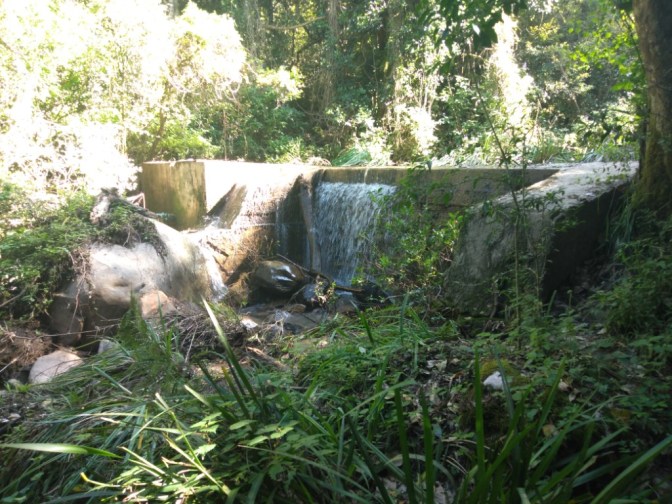
The first (very small) waterfall
After the first waterfall, the path became tricky where we had to walk over large slippery rocks and streams.

Slippery rocks in the pathway
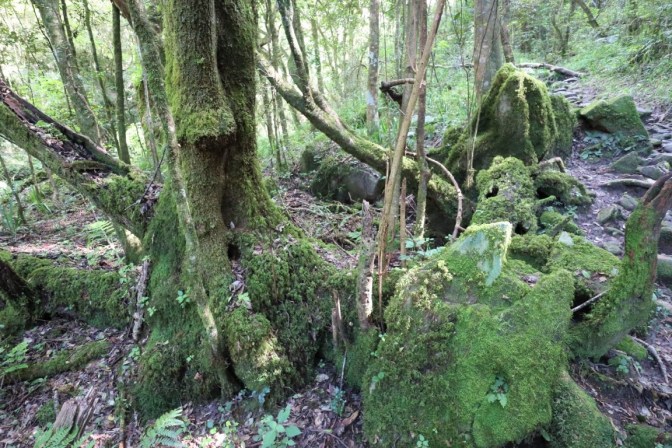
Soft green moss on the rocks and trees
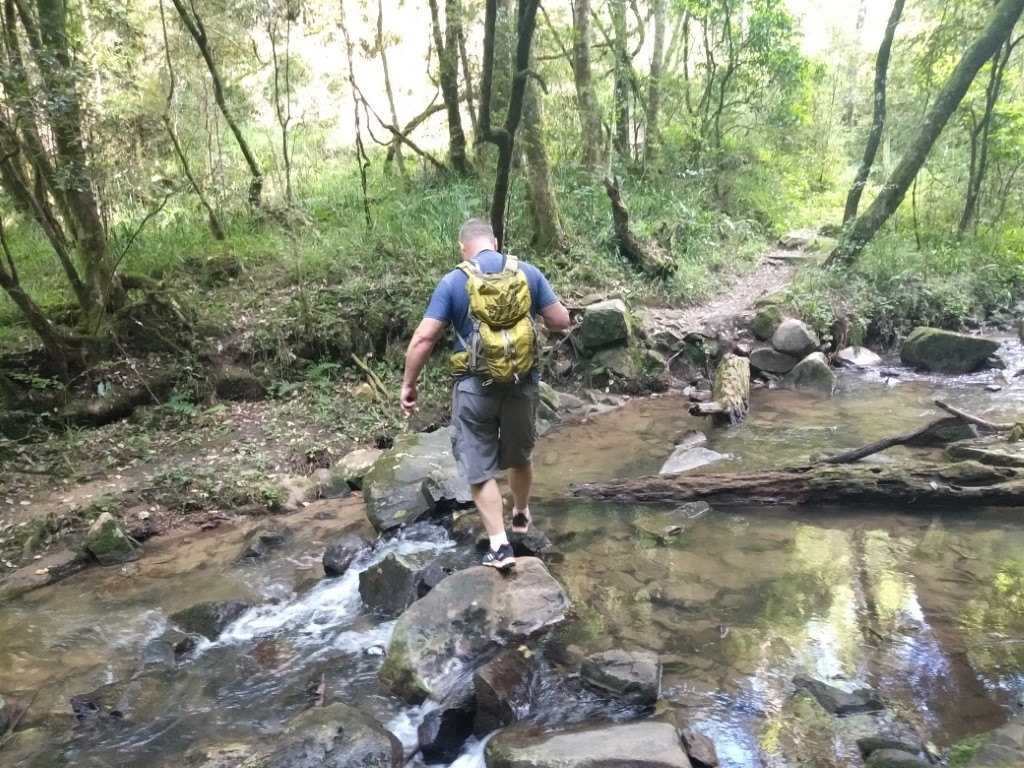
Walking on rocks over a stream
After the second (also very small) waterfall, it was only 10 minutes to the largest fall. On the way we once again looked up at the beautiful trees that reached high into the sky.
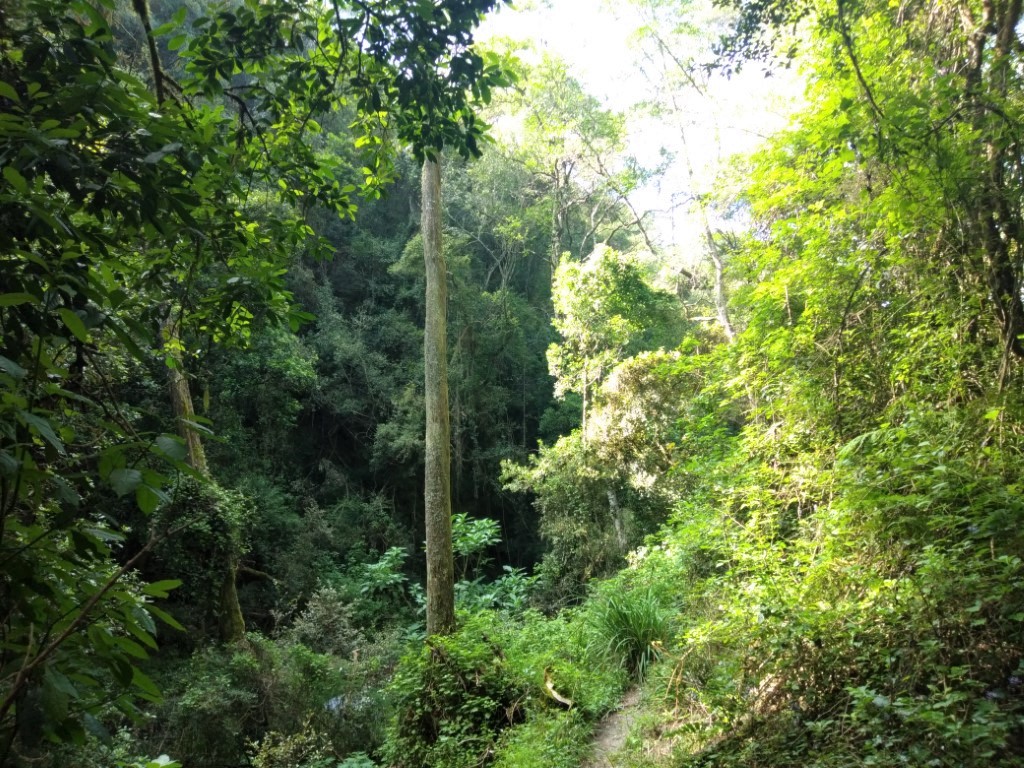
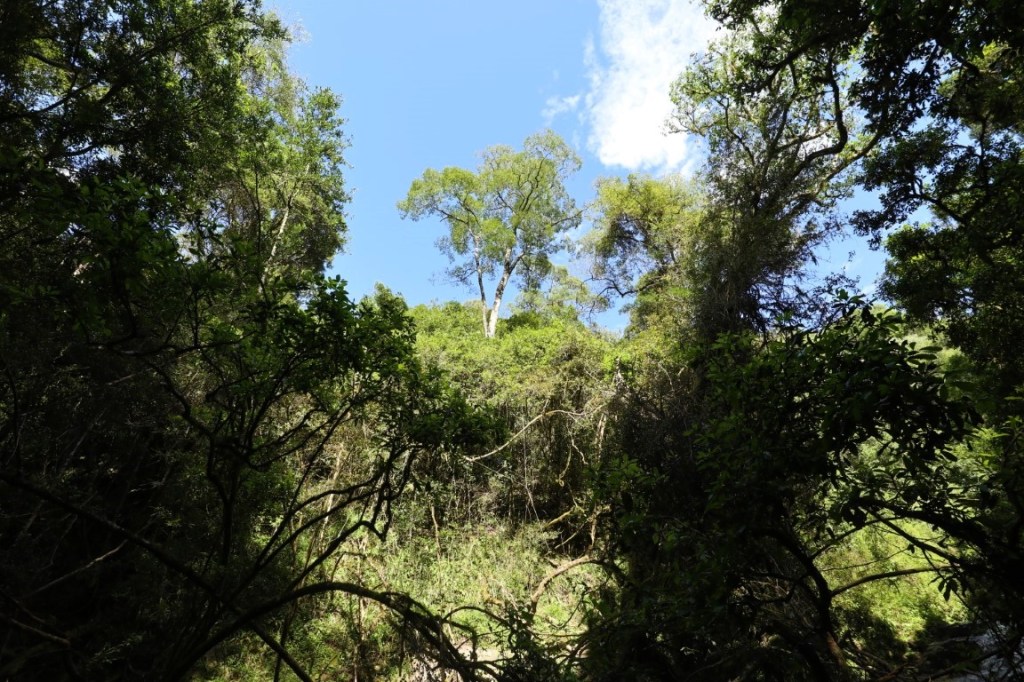
Surrounded by high trees
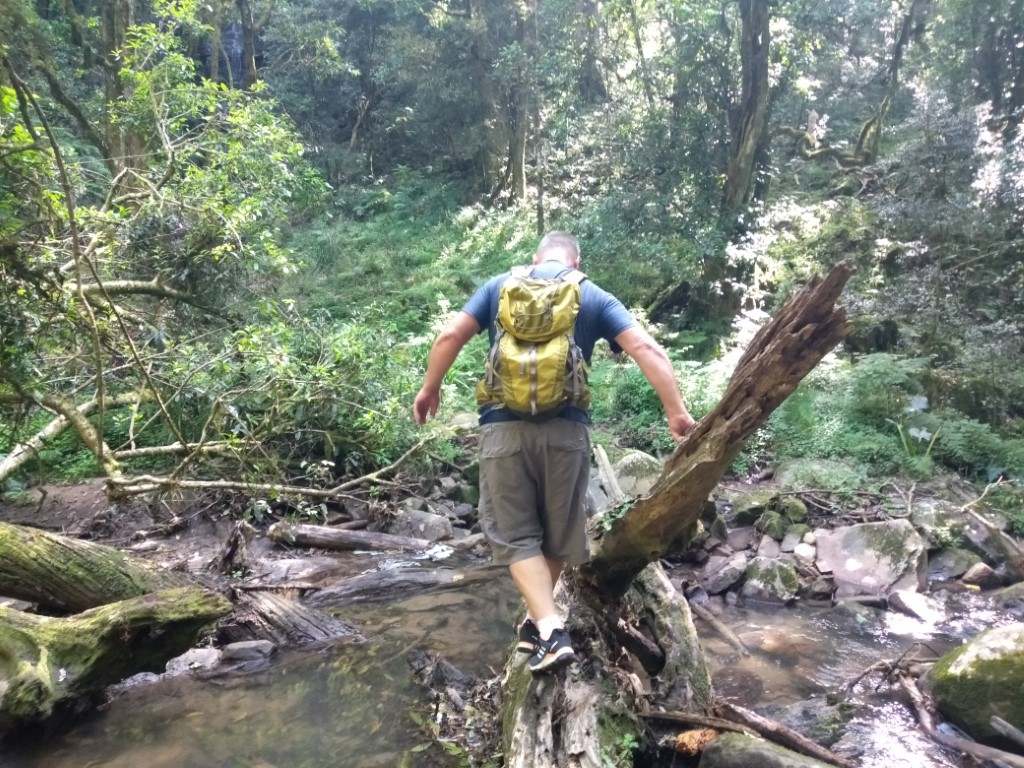
Getting over another stream
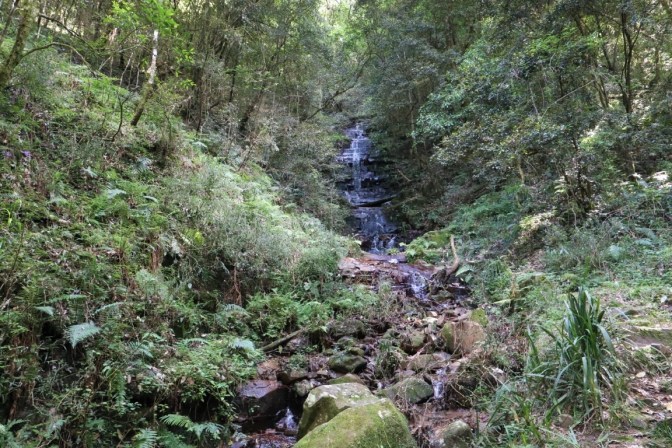
Water coming down to the third waterfall
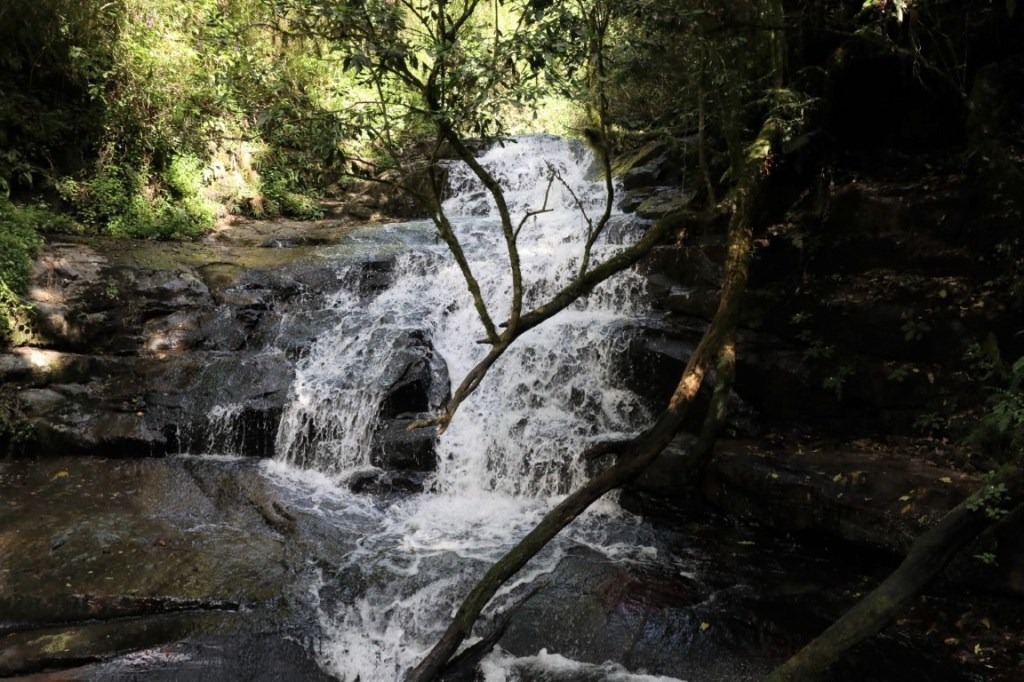
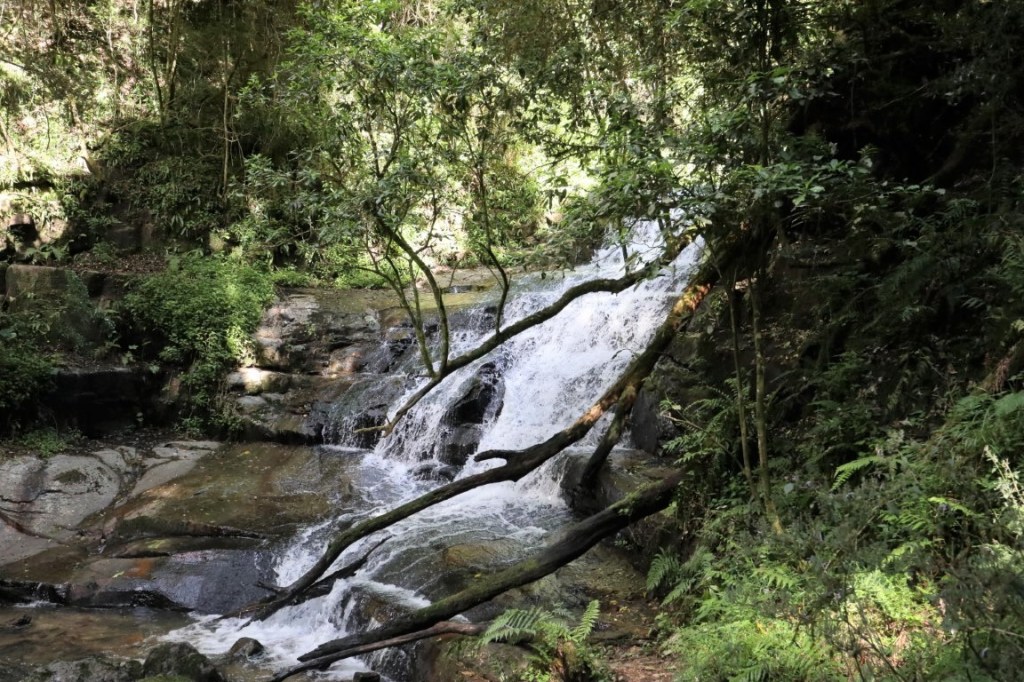
Third waterfall
We sat here for a while enjoying the tranquility and natural beauty of this indigenous forest. How wonderful it was to be back in nature again.
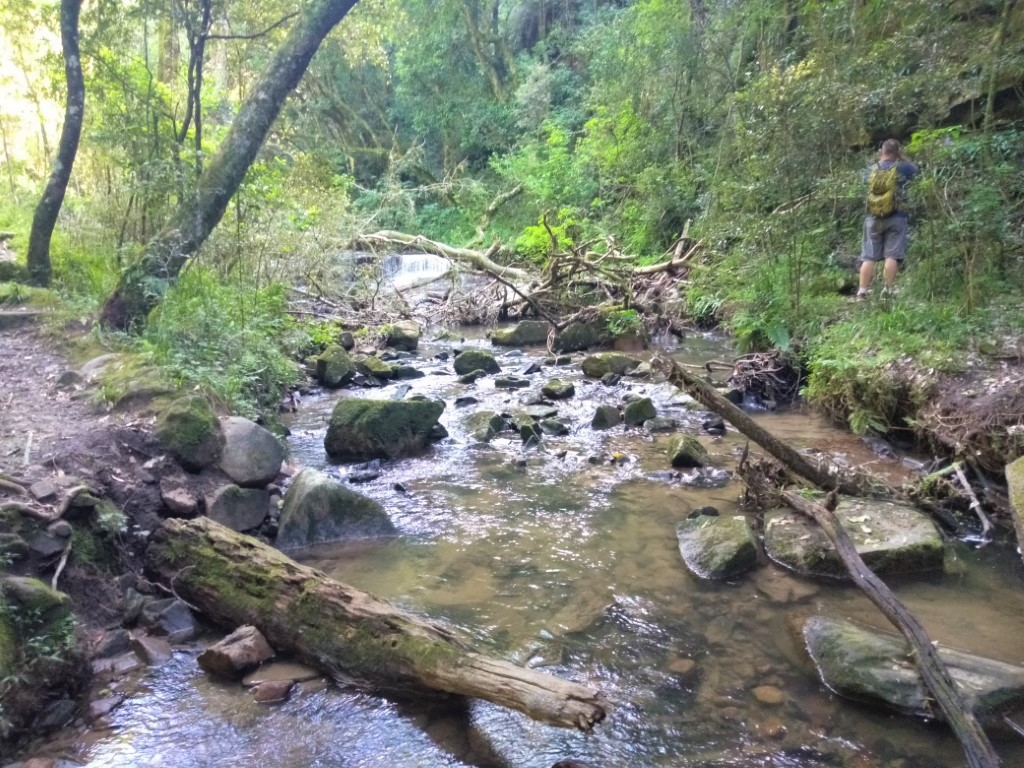
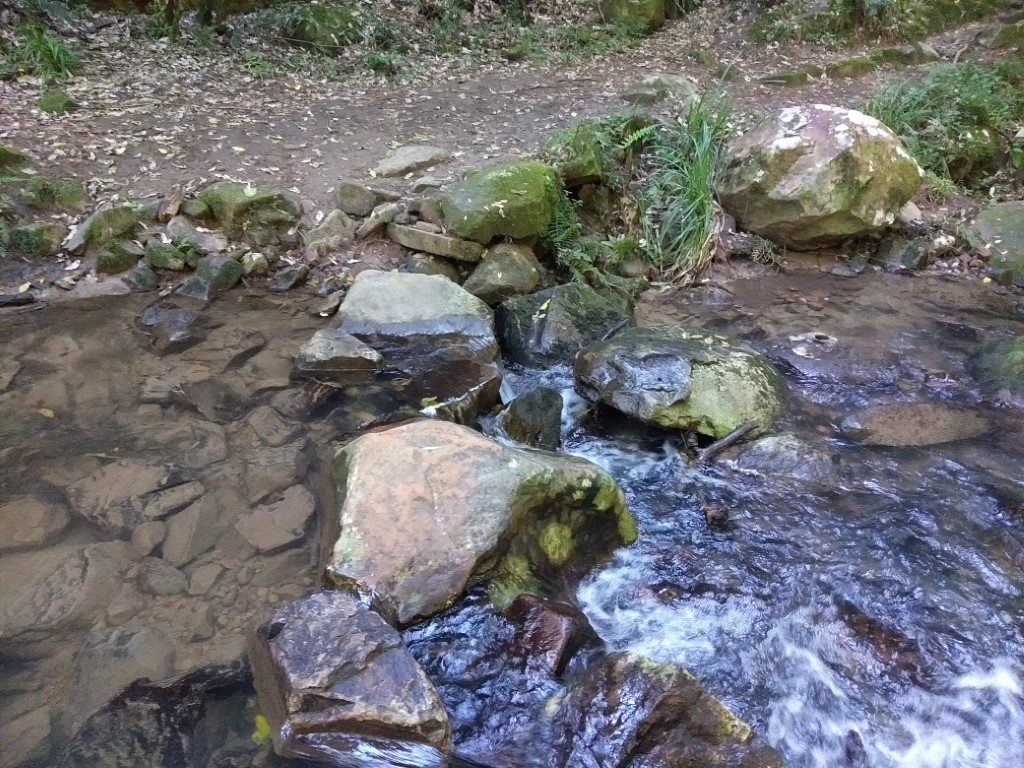
Walking back from the waterfall and crossing the stream again
We took a short detour to get a closer look at a rock covered in moss. To our dismay we ended up on a rather muddy path. I admit, there might have been a sharp squeal (or two) from my end, but luckily, I managed to stay upright!
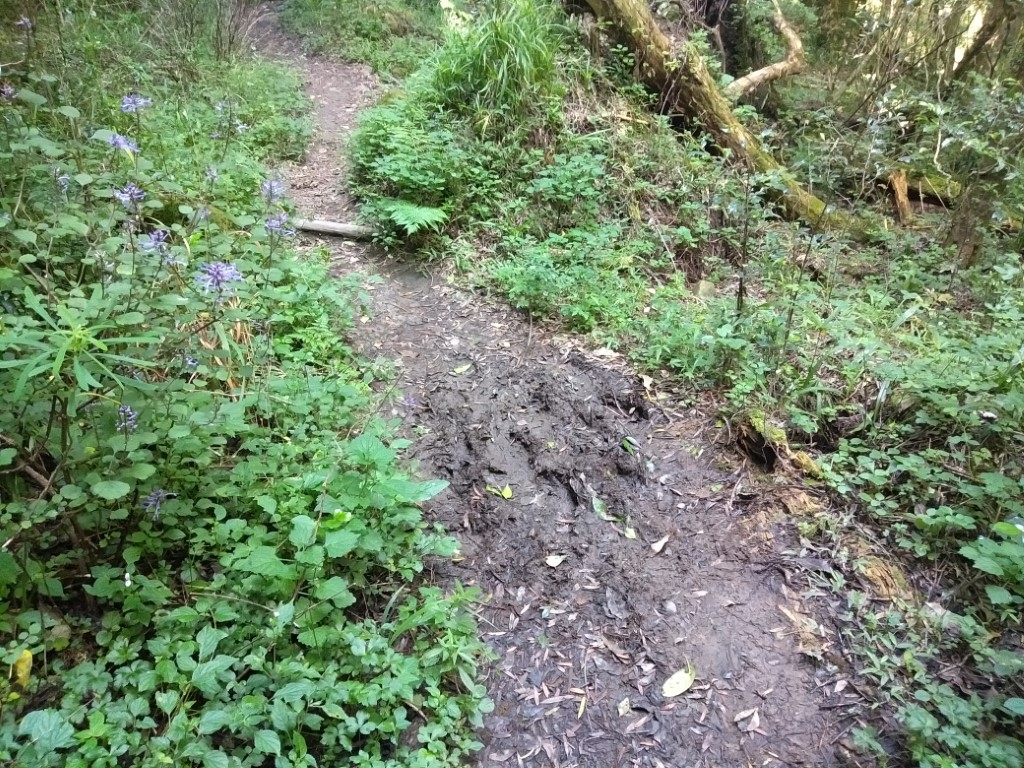
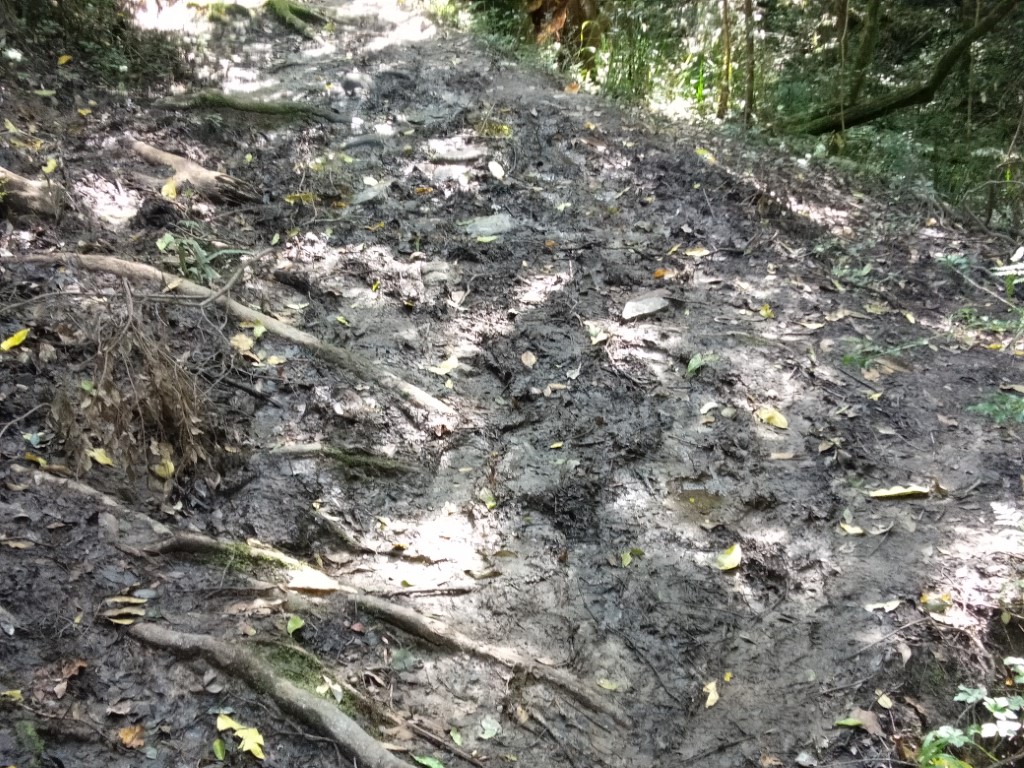
Muddy pathway
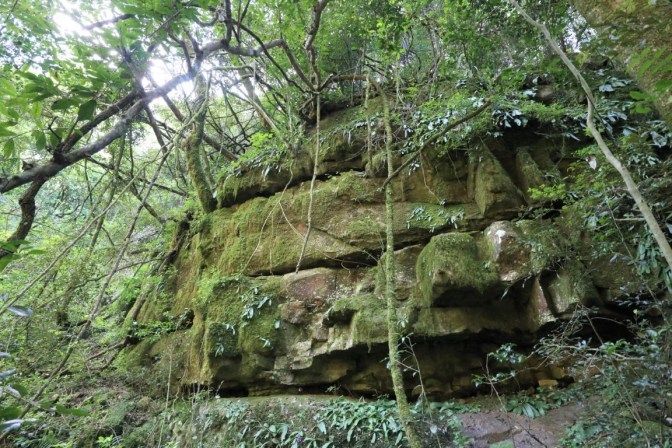
The rock we wanted to see from closer
On the way back, I saw a beautiful flower, a kind of wild iris and was surprised to see how delicate the little petals were. While I was looking at the flower, Berto called me over to see how fungi grow from a tree. Apparently, some of these are edible, but we preferred not to try, as our knowledge of wild mushrooms is very limited.
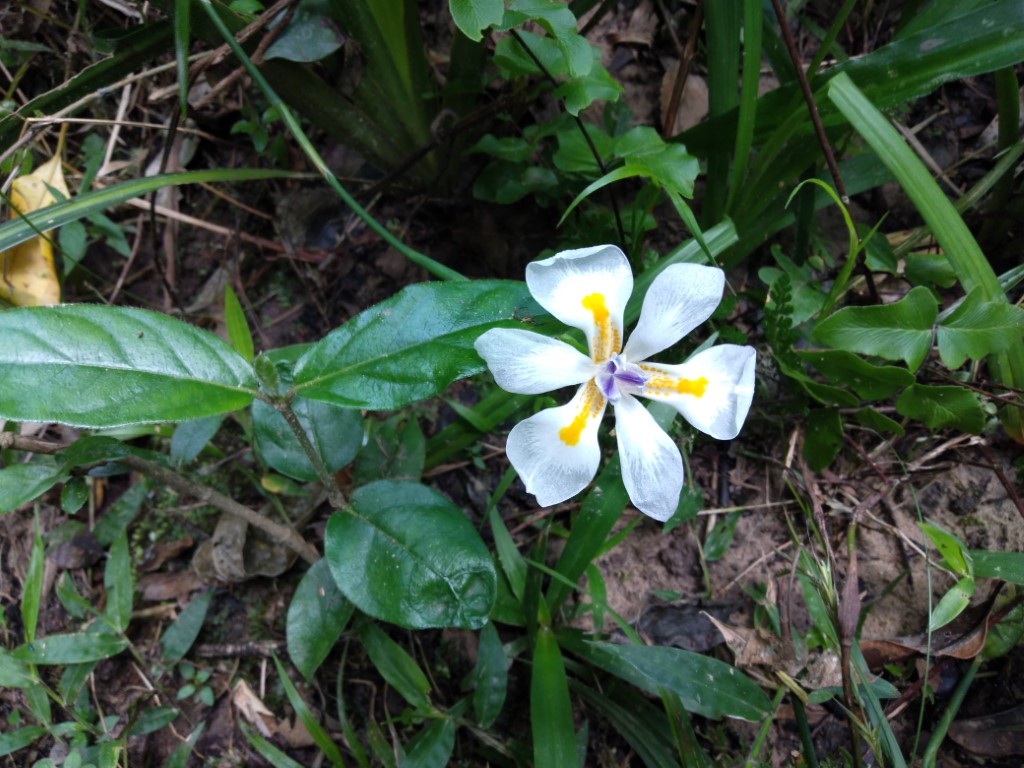
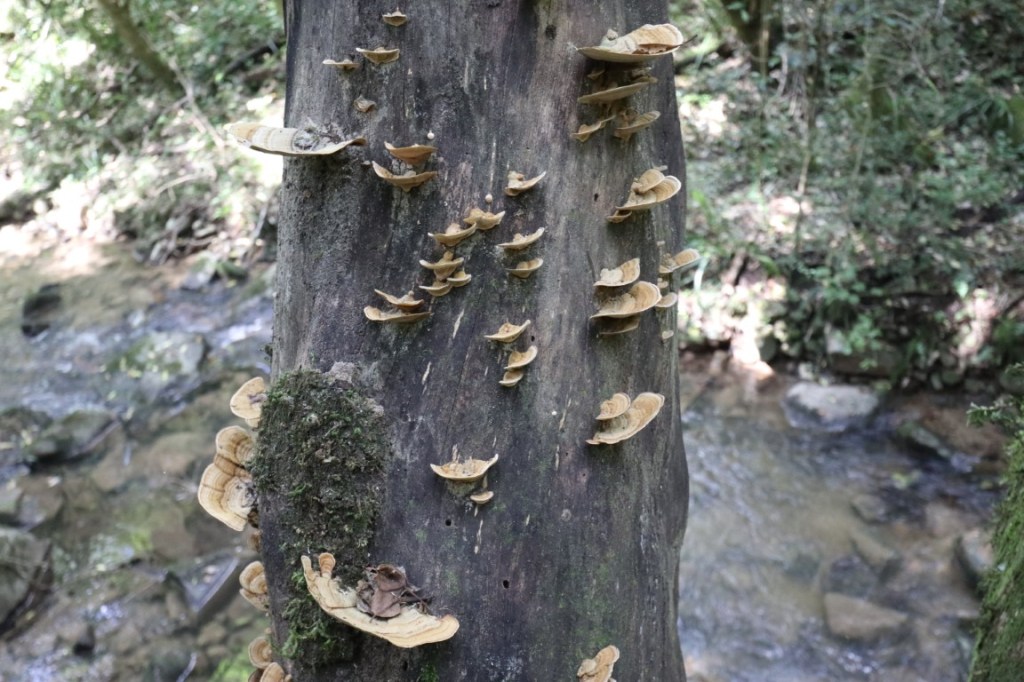
Flower and fungi
As we left the forest, I noticed a large tree and walked closer to read about it on the information stand. It is called a Kalander, also known as Outeniqua yellowwood. This species is the tallest and most spectacular tree of the forests.
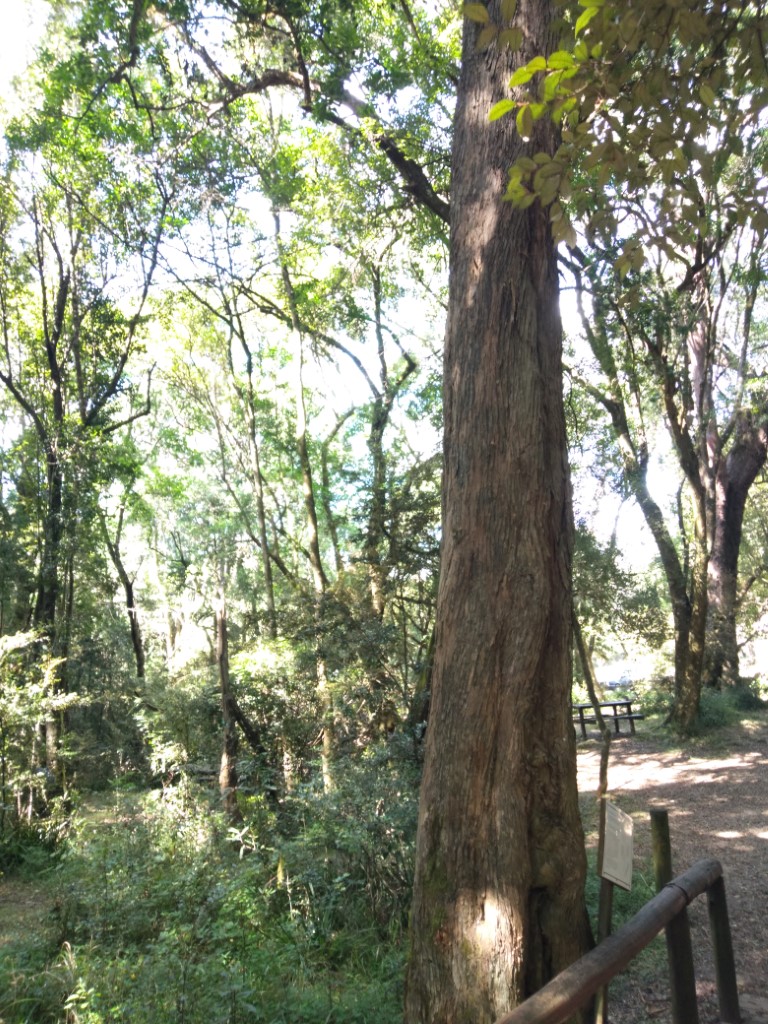
Kalander tree
At the parking area we also saw a small cycad. I love seeing this tree in the wild, their woody trunk and pinnate leaves are beautiful and the fact that they grow very slowly and live very long makes it a special tree.
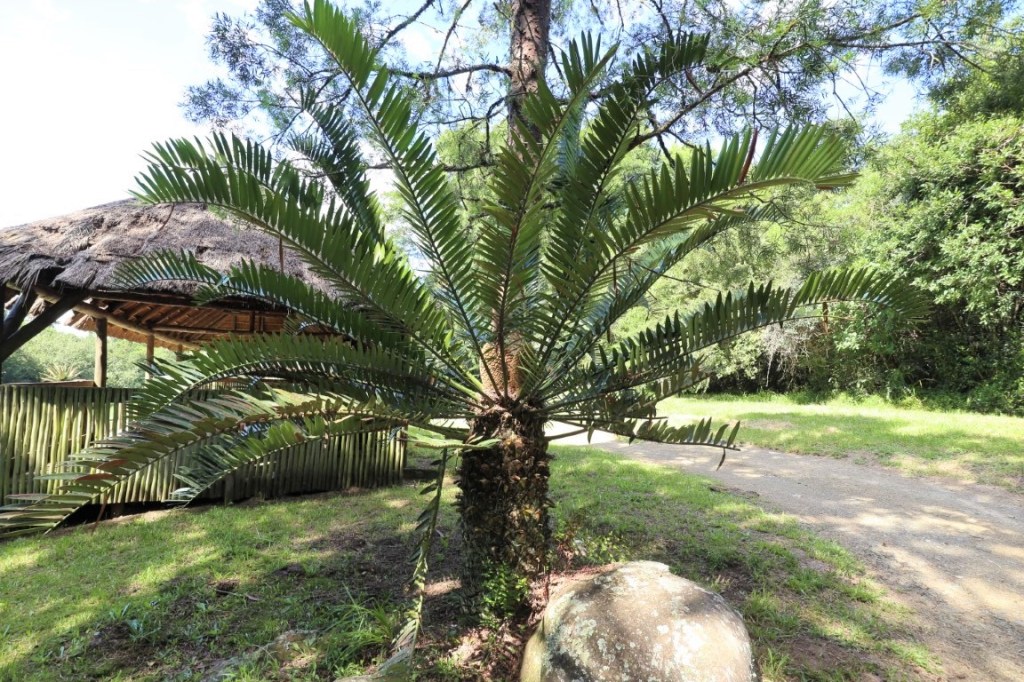
Cycad tree
Although we didn’t walk very far, it was quite challenging at times. But it was a lovely walk and we were delighted to be back in nature. We were also hungry after all the exercise and fresh air and drove back to Stutterheim where we found a lovely restaurant.
Vinkel & Koljander:
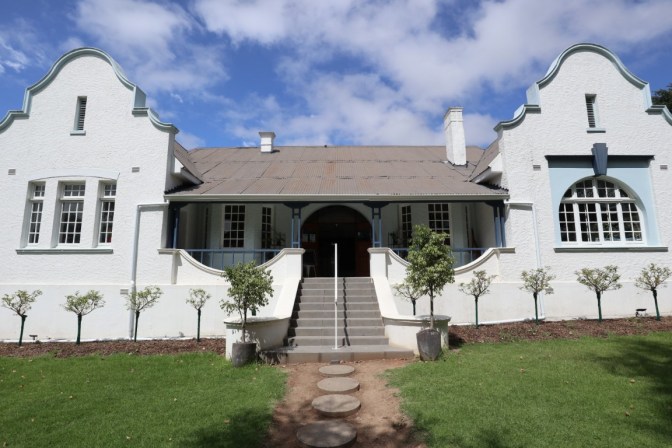
Vinkel & Koljander Restaurant
This place is actually a boutique restaurant and shop. In addition to a very extensive menu, there is a shop selling ladies boutique clothing, art, jams, rusks and much more. Outside is a lovely garden where you can sit in the shade of tall trees while enjoying your food. What a great place to end our hike.
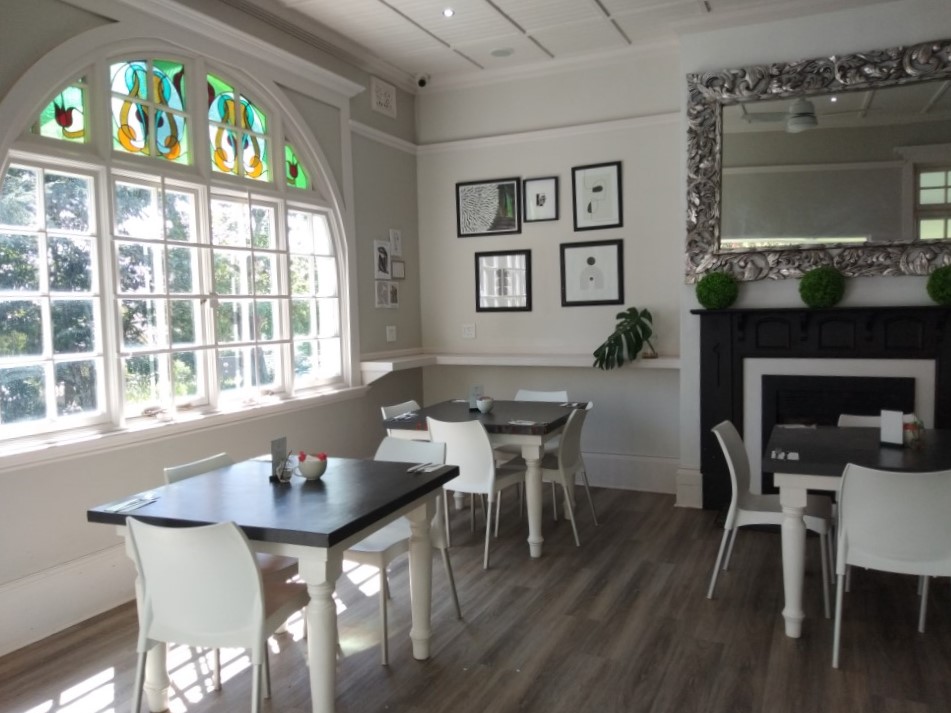

Inside the restaurant

What a lovely restroom

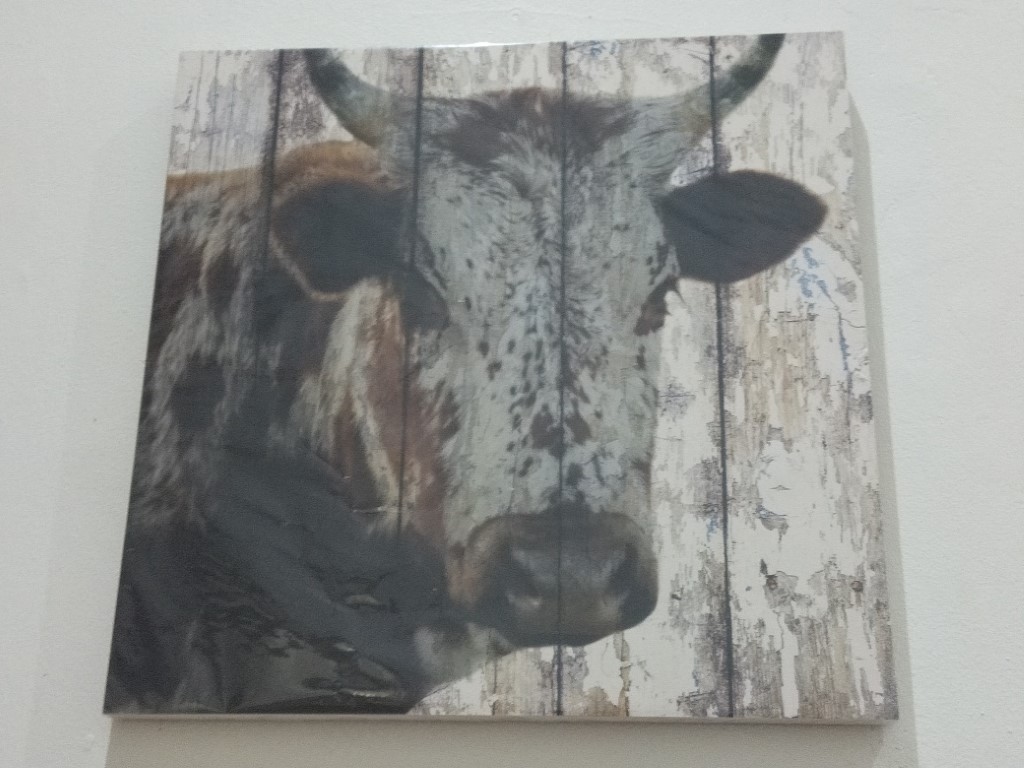
Artwork for sale
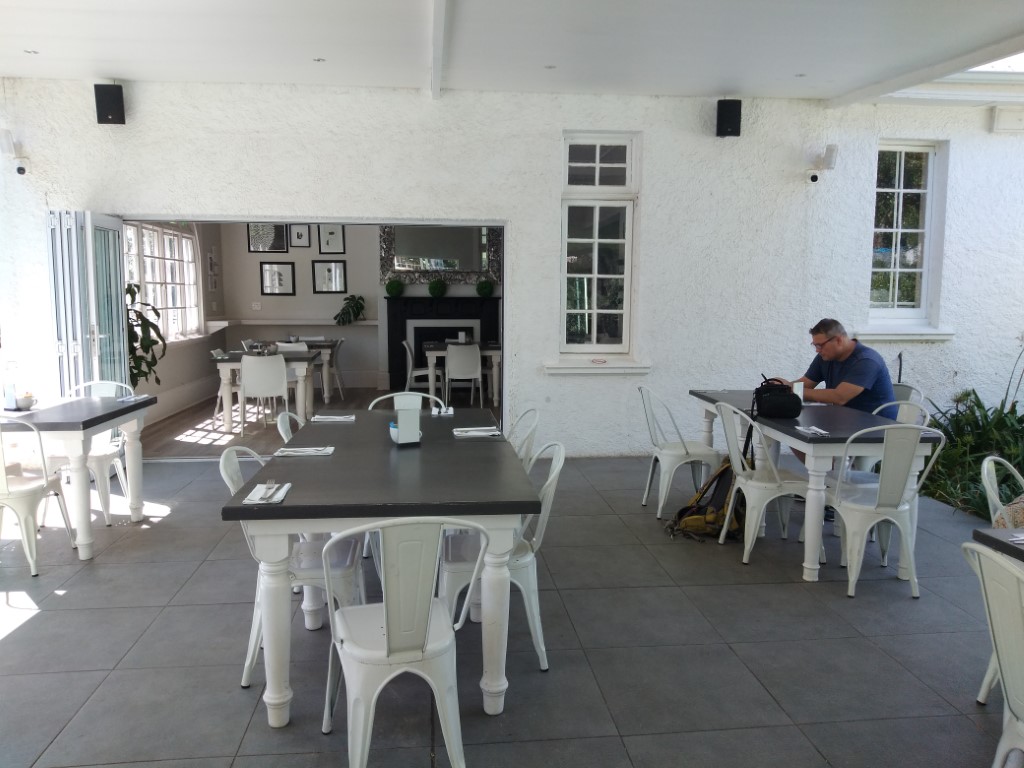
We sat outside on the terrace
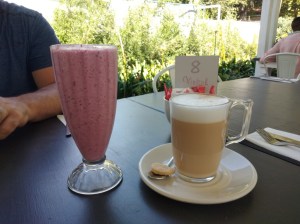
Berry Smoothie and Café Latte
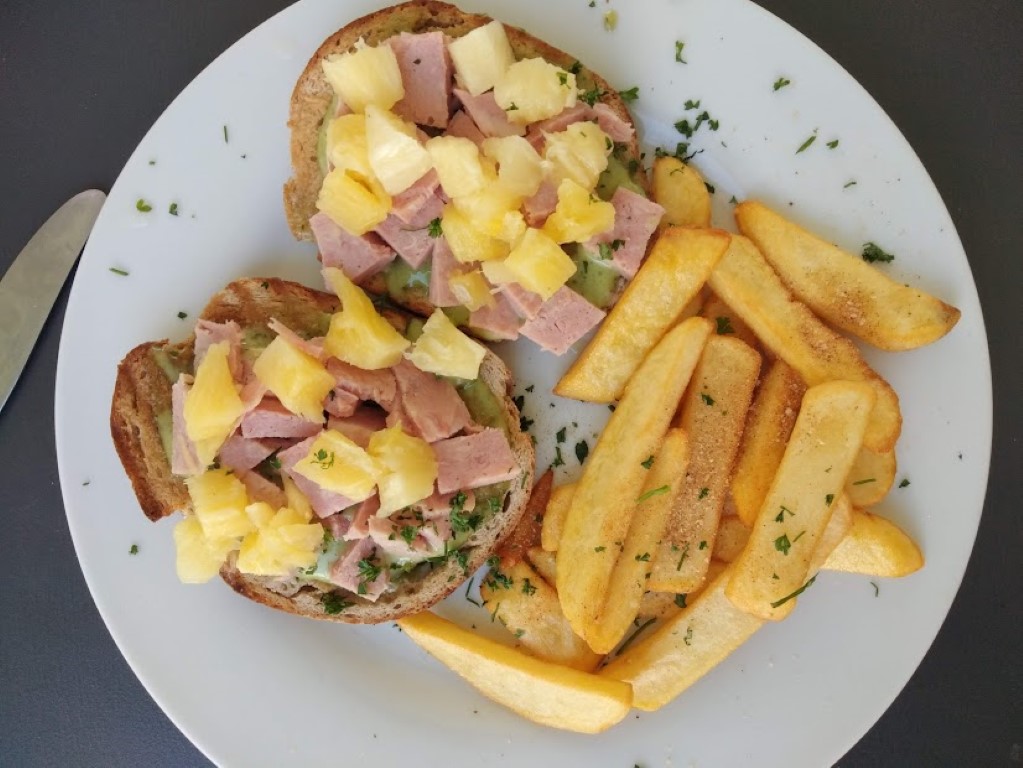
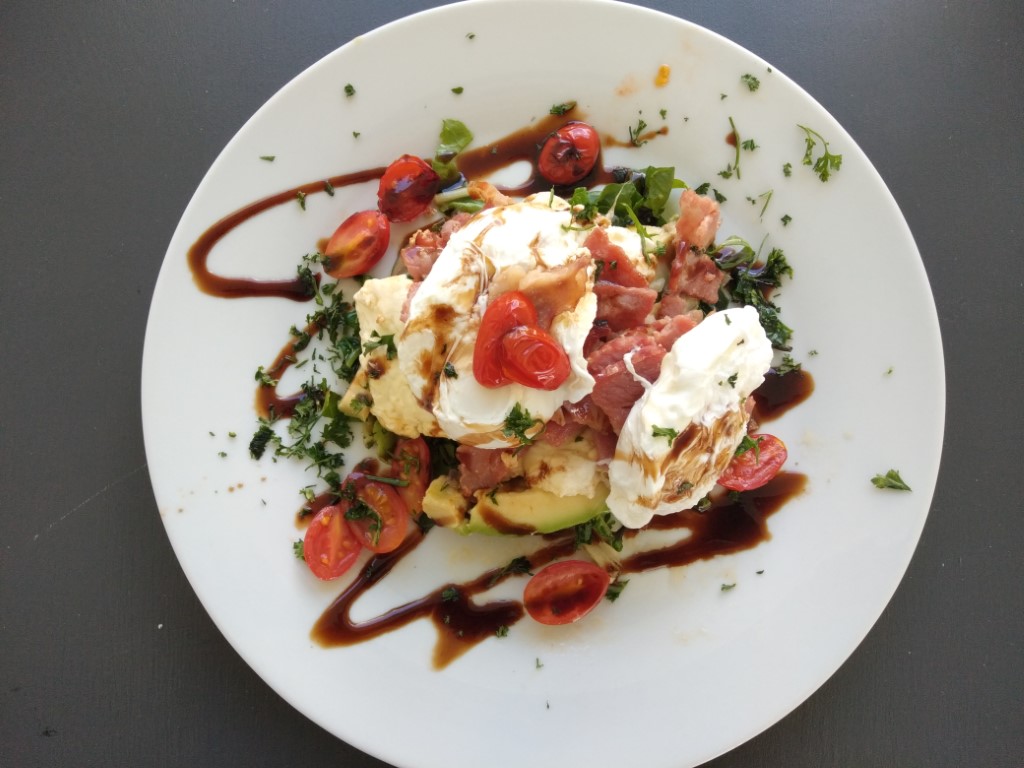
Delicious plates of breakfast
I can only echo John Muir’s quote:
“And into the forest I go, to lose my mind and find my soul”.
 Wet and Dusty Roads
A beautiful forest for your first outing 😊
LikeLiked by 1 person
It is indeed a beautiful forest – we would love to hike there again (and maybe then try the longer routes).
LikeLiked by 1 person
How beautiful. Thanks for bringing us along.
LikeLiked by 1 person
Thanks Carl. It’s always nice to walk in a forest and be surrounded by such beautiful trees and streams … doesn’t it remind you a bit of the Camino 😉. Thanks for coming along!
LikeLike
Great to be back out again, and even better that Berto is now a long way down the road to recovery. You must both be feeling relieved.
LikeLiked by 1 person
Yes, we are certainly relieved that he recovered so quickly – it’s quite a shock when something so unexpected pops up in your life! And the best way to celebrate is to be back in nature … at least for us 😀.
LikeLiked by 1 person
A wonderful walk. Good you are back in nature. I know exactly what you fehlt. Am
LikeLiked by 1 person
Yes, you will definitely know how it feels to be back in your hiking boots in nature 😀.
LikeLike
.. felt. Looking forward to my first little walk, in July perhaps…
LikeLiked by 1 person
What a wonderful prospect! And July is around the corner – happy walking!
LikeLike
Soveel mooi ingeprop on net 3km. Daar’s nie veel ander lande in die wereld wat dit kan bied nie. Ek glo hierdie stappie was vir julle albei salf vir die siel.
LikeLiked by 1 person
Kan jy glo? En daar is seker nog ten minste 30 foto’s wat ek nie geplaas het nie 😁! Jy’s reg … dit was goed vir ons albei. Toe ons daar by die derde waterval gesit het, het ons so ‘n warm gevoel gekry (terwyl die sproei oor ons gewaai het) en net geweet, ons het soveel om voor dankbaar te wees.
LikeLiked by 1 person
Stutterheim sounds familiar. I’m sure I must have driven through there. My ex in laws lived in Fort Beaufort and we walked in the Hogsback which is rather lovely. Your hike looked tricky to me, I would never cope with those stream crossings and slippery paths. It’s good to see Berto out and about again. Did they ever find out the reason for his problem?
LikeLiked by 1 person
Fort Beaufort is not far from Stutterheim (only about 140 km). Hogsback is firmly on our radar to visit this year … it would be nice to see this town when it snows, but we’d rather go there when the sun is shining to go on some of the hiking trails.
No, Berto’s sudden illness is still a mystery … we’re just thankful he’s doing much better now.
LikeLiked by 1 person
Forest and waterfalls and then a great lunch in such a beautiful restaurant. That’s what I call a good day. I hope Berto is doing well? He had a dreadful time there. Give him my best.
LikeLiked by 1 person
Absolutely … and there is more than enough forest where we currently live! Berto is doing very well, thanks Carolyn. He has to go back to the doctor again next month for his 3 month checkup, but he’s back to his old (stubborn) self, so I assume all is well then 😉. Thank you, he appreciates your good wishes.
LikeLike
It looks beautiful, I love the little glimpses of flowers and colours. So great Berto is able to get his walking shoes on again, it must have felt amazing 😍
LikeLiked by 1 person
This is a summer rainfall region (December to April) and everything was extremely green. And that’s why it was nice to see other colours every now and then (like that little flower). Berto was definitely happy to put on his hiking shoes again … but not so happy to have to wash off the mud afterwards 😄.
LikeLike
Corna, wat ñ pragtige bos! Ek het nooit eens geweet dit bestaan daar nie!
LikeLiked by 1 person
Ja, ek was self verbaas toe ons die eerste keer daarvan gehoor het! Almal ken die Knysna bos, maar min weet van Kologha – en soos jy self kan sien, dis ongelooflik mooi.
LikeLiked by 1 person
A nice little test run, Corna- or rather, walk! Love the waterfalls.
LikeLiked by 1 person
Yes, our intention was to “test the waters a bit” … and all looked good! A waterfall – even a small one like this – is always wonderful to see in nature.
LikeLiked by 1 person
A delightful forest walk Corna and the cycad tree looks so beautiful. I don’t have a clue about forest mushrooms either so wouldn’t dare to pick any just in case they were poisonous. The restaurant looks gorgeous as does your breakfast and smoothie.
LikeLiked by 1 person
I’m glad you like the cycad tree too. It was a really nice walk in the forest (although, we had to step carefully so as not to slip or fall). And the restaurant was a big surprise – it was almost like a hotel 🙂 … we would love to go there again.
LikeLiked by 1 person
This is such an amazing walk and such amazing area. Anita
LikeLiked by 1 person
Thank you Anita. Yes, the forest is truly beautiful (and so green)! It was a lovely day out in nature.
LikeLike
Glad to hear that you’re hitting the trails again after Berto’s health scare. The Kologha Forest looks so lush and nicely shaded from all those tall trees. I can almost smell the fresh air from your pictures. It looks so peaceful and pretty.
LikeLiked by 1 person
The Kologha forest was the perfect place to start walking again … even if it was a bit muddy at times, it was beautiful. It was just the two of us in the forest and we met a family when we walked out of the forest – definitely peaceful.
LikeLiked by 1 person
Great, Quality Content for The Ultimate Tour Guide, A lot of thanks for sharing, kindly keep with continue !!
LikeLiked by 1 person
Thank you, it’s much appreciated.
LikeLike
Wow, beautiful images. Love this place.
LikeLiked by 1 person
Thank you Rupali. This is the most beautiful forest – we really enjoyed the tranquility and beauty while walking here.
LikeLiked by 1 person
I’m so glad that Berto is back in action and that you’re on the trail once again. Loved seeing your gorgeous photos!
LikeLiked by 1 person
Thank you so much Kellye. I think Berto was just as happy 😉. We missed putting on our hiking boots and getting out into nature.
LikeLiked by 1 person
What fun to explore new places. Kolokha Forest looks amazing. I also love discovering interesting restaurants that offer more than just a menu of good food. So pleased to hear that Berto is back to good health.
LikeLiked by 1 person
This is such a beautiful forest – we would love to go back again to walk the longer trails. And yes, the restaurant was a big surprise … we could see that the owners put a lot of effort into the place. Thank you, I think of all of us here, Berto is the happiest he’s back on his feet again 😉.
LikeLiked by 1 person
Fantastic news that Berto’s given the clear to hike again. Looking forward to coming along on your hikes, and thank you for sharing the tranquility and beauty of the forest. Wishing you many more great adventures.
LikeLiked by 1 person
Oh, thank you so much Henrietta, that’s so sweet of you to say that 💌. We also can’t wait to go on long walks again – we had such a lovely hike last weekend (which I’ll share on Monday). The Kologha forest was almost like a fairy forest in places – the perfect first hike!
LikeLiked by 1 person
That was a beautiful trail but rough hike! I have never seen fries served for breakfast here, I wonder why? When I was a teenager, we had a type of fungus (mushroom looking ) growing on our huge tree’s bark. We were told by a tree specialist it was a sign of the tree dying! Sure enough, about a year later we had to have it cut down.
LikeLiked by 1 person
Yes, I have to admit the path was not always that easy, especially because the rocks were quite slippery! But it was still beautiful to walk among the trees. It’s interesting to read about the fungus on the tree that later died … we also wondered what it could mean. Ah, good old fries – somehow, South Africans love them at any time of the day (or night 😄).
LikeLike
My list is getting really long, but I cannot resist adding Kologha Forest to it. I know that I’ll be able to experience the beauty of a natural forest, right here in SA, plus, I can imagine I’m in Germany 😉 passing places with names like Hamburg, Berlin and Frankfort on my way to see it! I could for sure imagine the tranquility and natural beauty of this indigenous forest through your descriptive writing. Thank you for sharing so generously Corna 🌸💕
LikeLiked by 1 person
And to think a few weeks ago we had never heard of Kologha Forest! There are so many beautiful places in our country Henrietta – I doubt we will ever see them all. And you’re right, tranquility is the perfect description for this forest – I’m glad you enjoyed it with us 🌳.
LikeLiked by 1 person
I would like to ask if it’s safe to hike there? I mean, in terms of crime, if there is a possibility of being robbed or hurt by someone.
LikeLiked by 1 person
I suppose one can never say it’s 100% safe to go hiking in South Africa (unfortunately). We always make sure of our surroundings and are alert. And of course it’s always better to rather go for a hike in a group than alone. However, I must add that there were other hikers in Kologha Forest too and we never felt unsafe.
LikeLike