COIMBRA (Portugal)
In today’s post, we don’t walk very far. Two reasons: A swollen ankle and heavy persistent rain. Here is just a recap of the two big cities we have visited so far on our Portuguese Camino:
- Lisbon has an old-world charm that will win the heart of any tourist. This beautiful city was the starting point of our Portuguese Camino. You can read about our first big city on the Portuguese Camino here.
- Tomar may be much smaller than Lisbon, but this medieval city should be on everyone’s must-see list when they visit Portugal. You can read more about our second big city on the Portuguese Camino here.
The distance between Tomar and Coimbra is 93.5km (58 miles). A distance that we covered in three days, although we did it in different ways:
- Berto took the bus with me on the first day and the other two days he walked (in pouring rain).
- I didn’t walk at all. On two of the three days I travelled by bus and on the other day I got a ride with one of the locals.
Here are some of the highlights (and lows) of these three days:
Day 7: Alvaiazere (33.2km):
I thought my swollen ankle would be better after our rest day in Tomar, but it actually got worse. The day we left Tomar, there was a heavy rain shower, and we decided to take the bus to the next town, Alvaiazere.

Bus terminal in Tomar
This means that unfortunately we can’t show you the hiking route between Tomar and Alvaiazere. But we can show you what we bought in Alvaiazere.
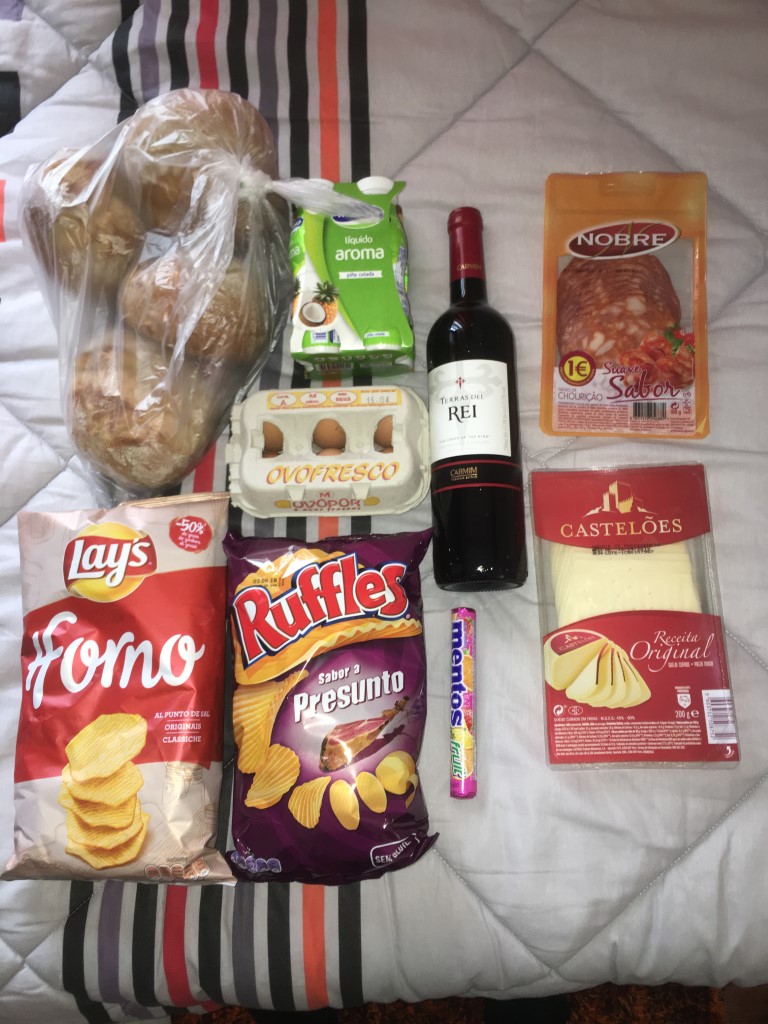
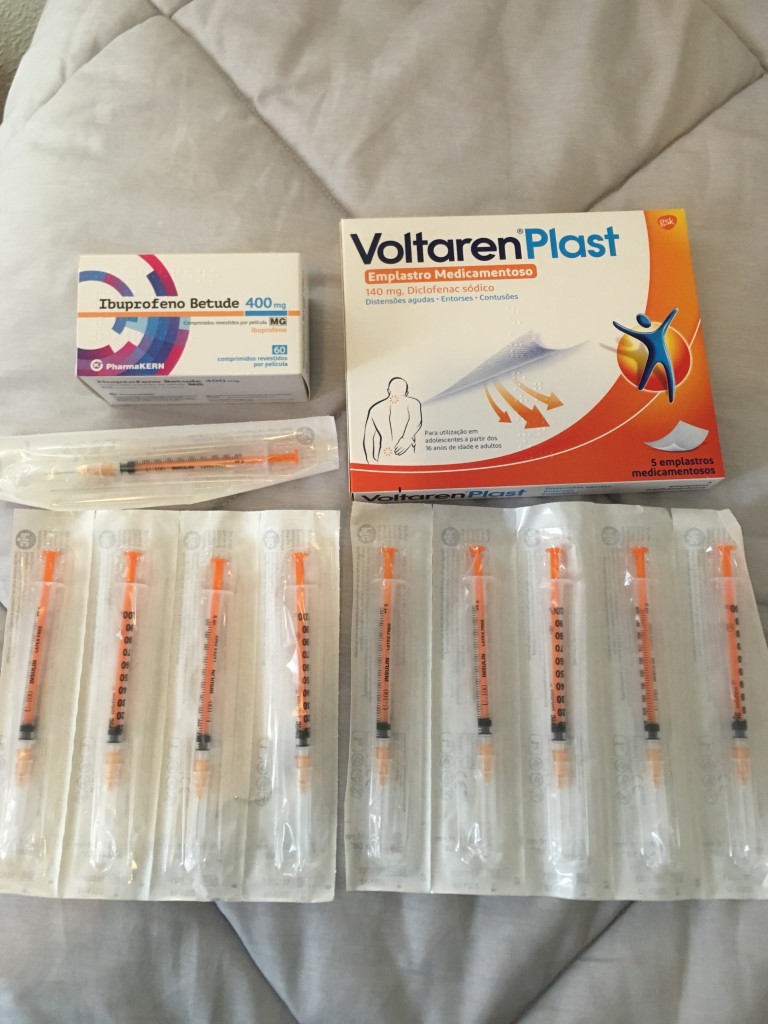
Dinner on the left and a pharmacy trip on the right
(You can read about the hiking of Day 7 here)
Day 8: Rabacal (31.1km)
Berto walked this section in heavy rain, which meant he couldn’t take any photos. The owner of the albergue where we stayed in Alvaiazere asked his son to take me to Rabacal. It is a very small town with only about 1,000 inhabitants.
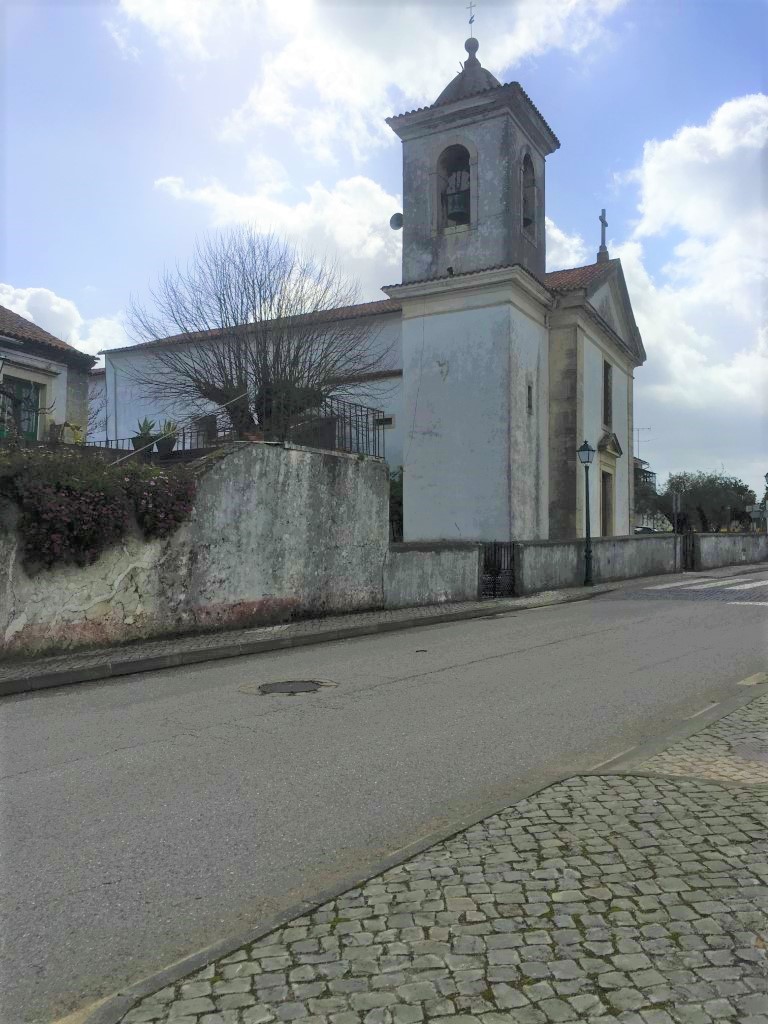
It may be a small town, but they have a lovely church
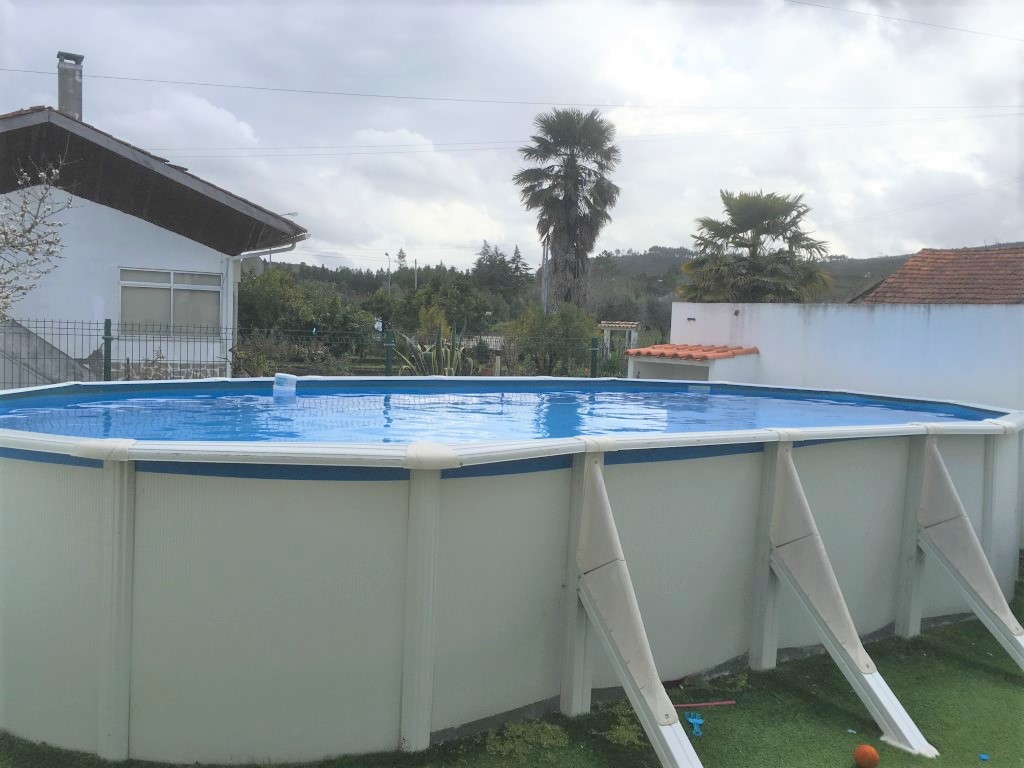
There is even a pool at the hostel

Hostel O Bonito (wet clothes hanging everywhere to dry)
It was in Rabacal that the owner of the hostel identified the potential problem for my ankle. She mentioned that it looked like an allergic reaction. According to her, in some pine forests, there are pine caterpillars that can be stepped on, and whose larvae can be irritating to human skin. Looking back, I remembered how many caterpillars we had encountered in the woodlands and suddenly everything made sense – the painful, but also itchy sensation.

My foot and lower leg were now completely swollen
(You can read about the hiking of Day 8 here)
Day 9: Coimbra (29.2km)
What can I say? It was another rainy day! Berto managed to take a few photos towards the end of the day’s walk.

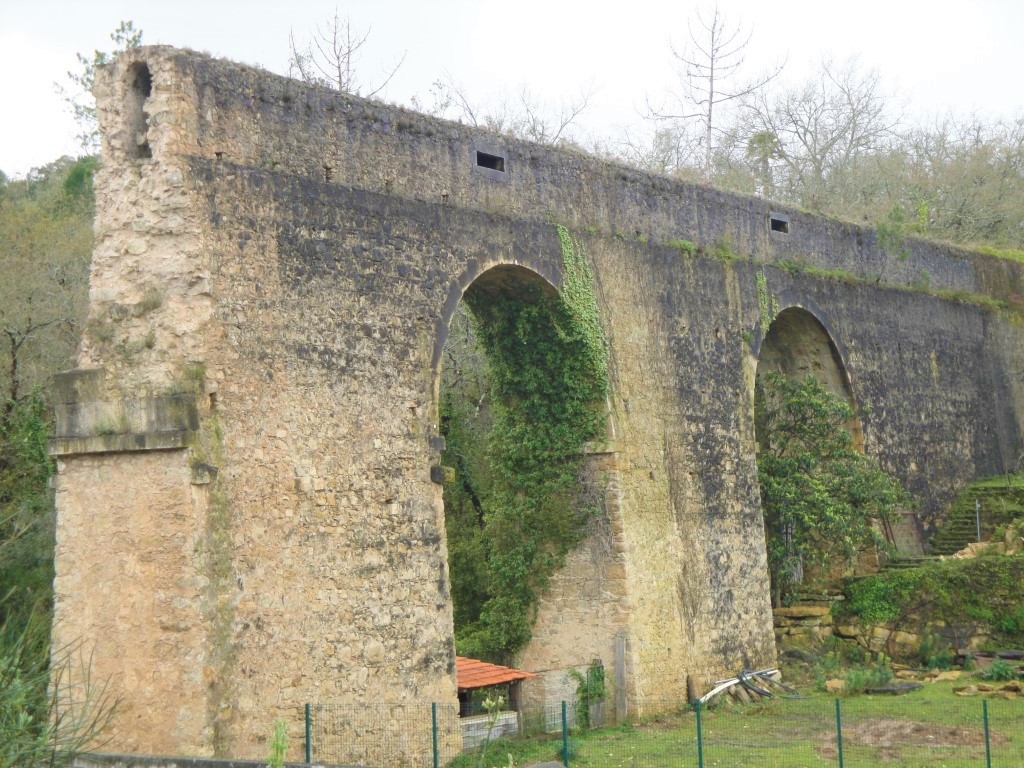
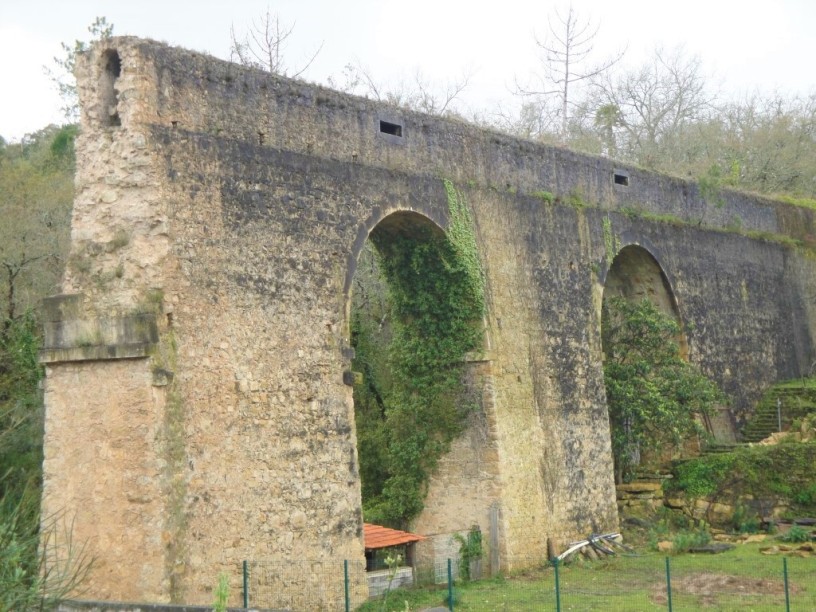
Historic aqueduct close to Coimbra
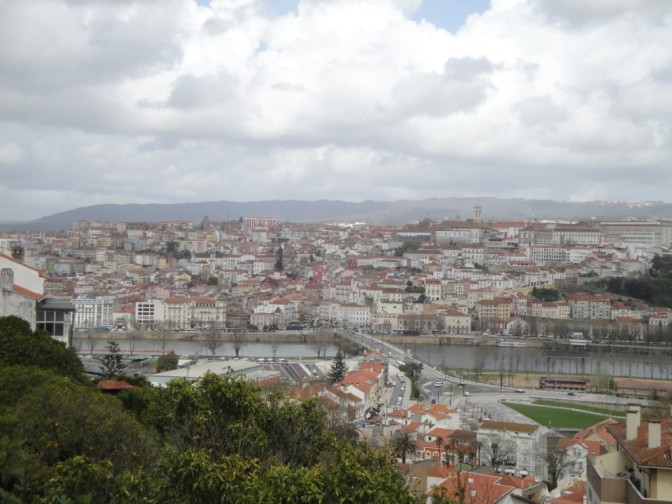
First view of Coimbra from Cruz dos Mourocos
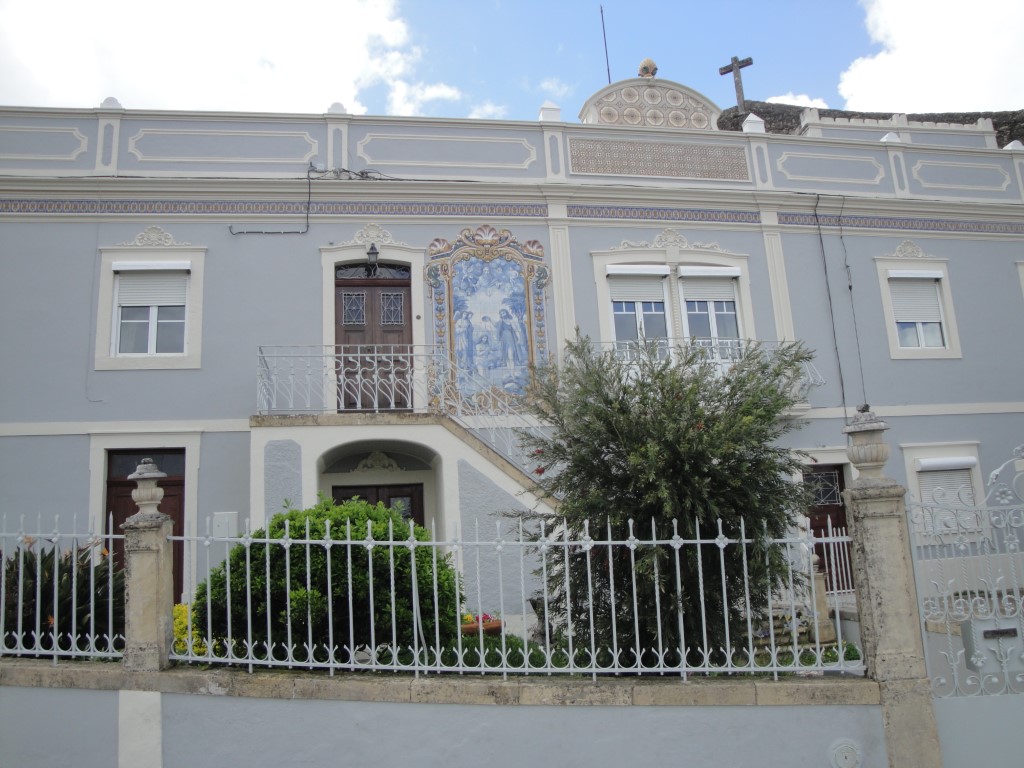
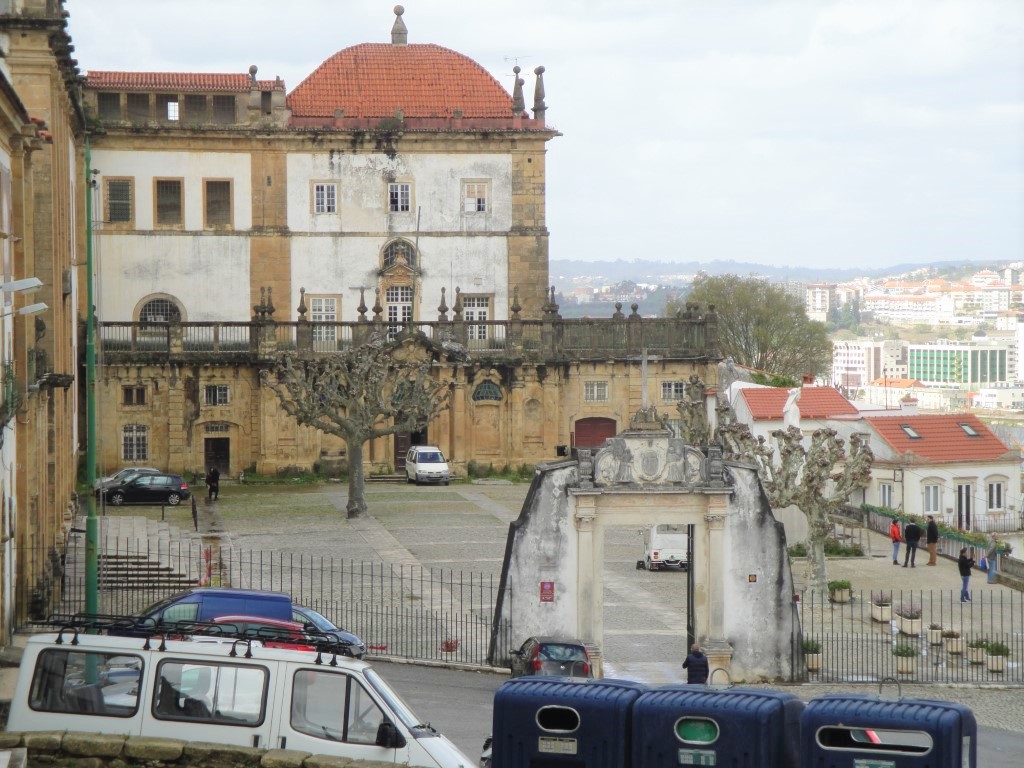
Beautiful buildings on the outskirts of Coimbra
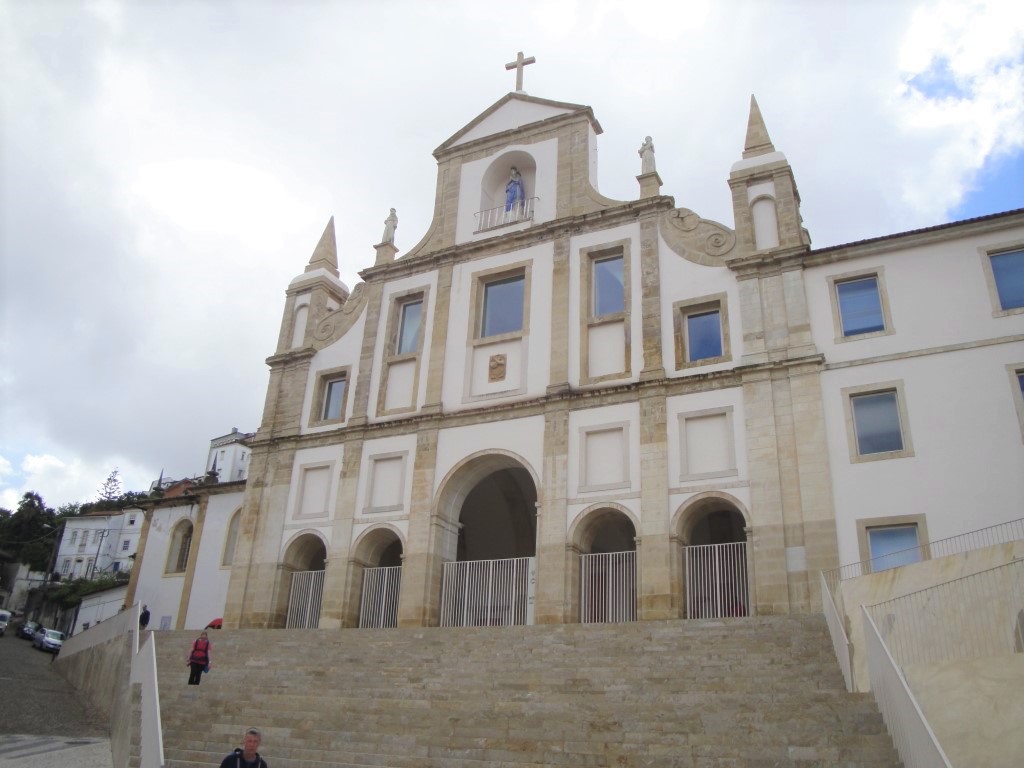
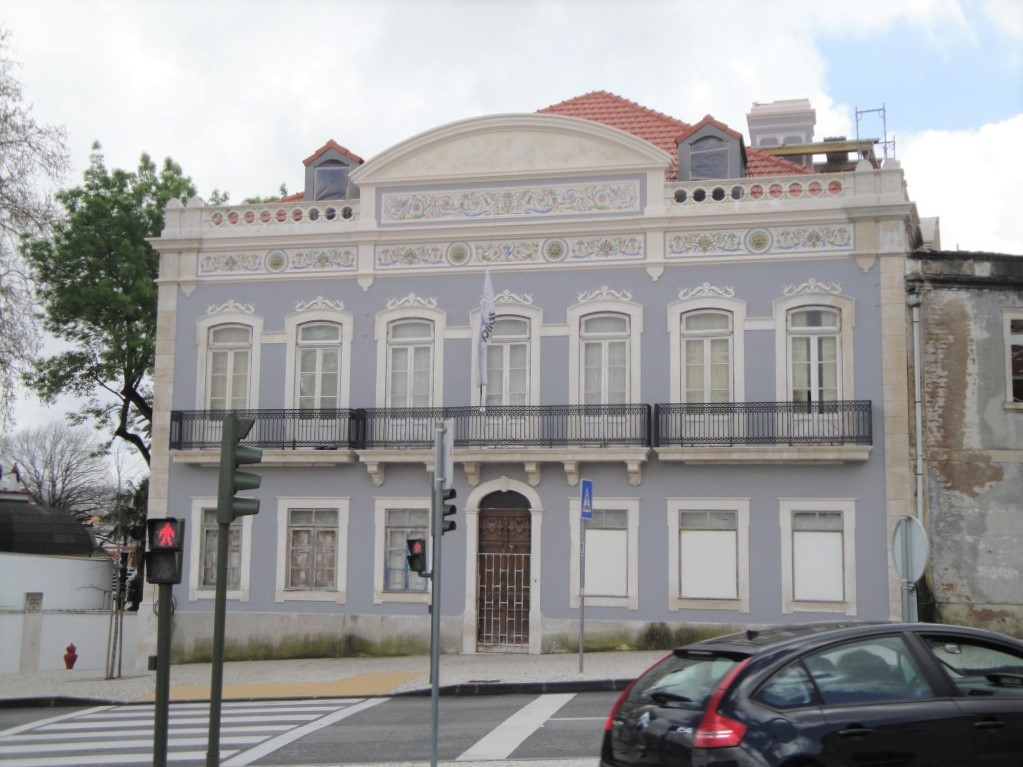
More lovely buildings (there’s always a church somewhere)

Narrow pathways


Berto crossed the Mondego River when he walked into Coimbra
(You can read about the hiking of Day 9 here)
In the meantime, I crossed the Mondego River by bus. It started raining when we stopped in the city center. I didn’t waste any time and went straight to a restaurant. On the menu: Pastel de nata and a very tasty bowl of soup.
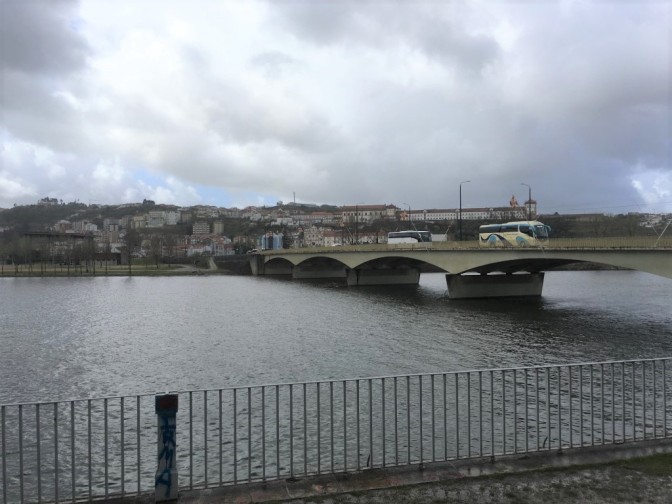
This was my view of Coimbra – buses across the Mondego River
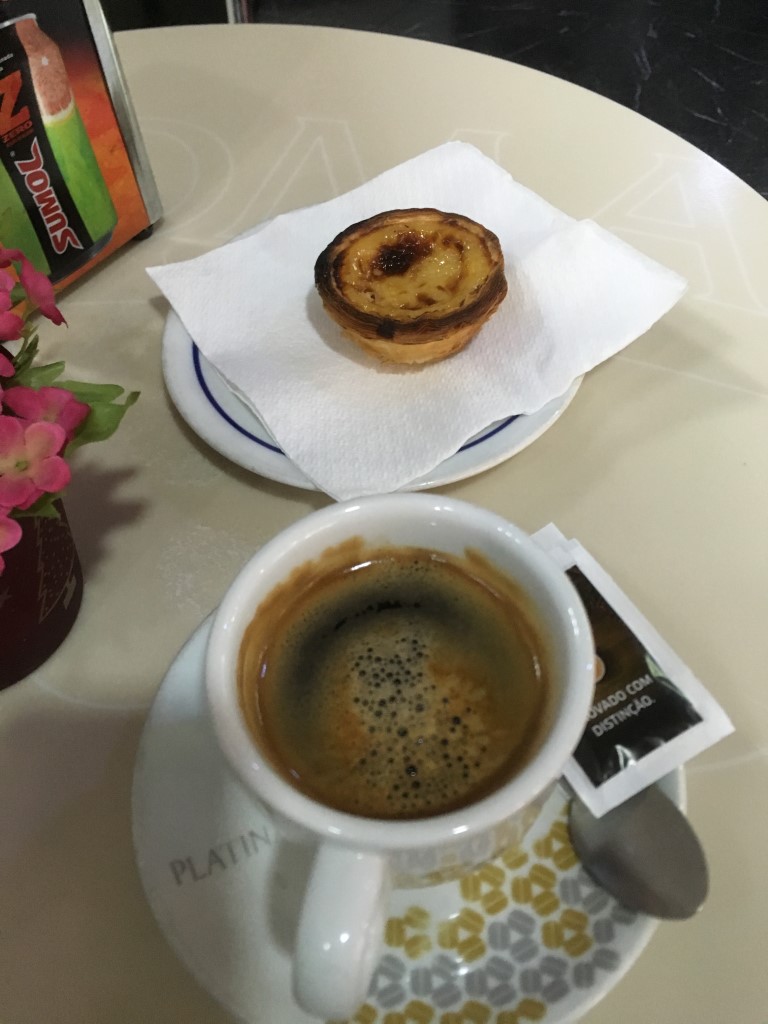

Delicious Pastel de nata and a hot bowl of soup
Coimbra:
Coimbra is considered the university city of Portugal, but for more than 100 years it was the medieval capital of the country. The University of Coimbra (UC) was founded in 1290 and is one of the oldest universities in the world, while being the oldest in all of Portugal.
While I was trying to find our overnight accommodation, I had a few photo opportunities in the older part of the city.

The Church of Sao Tiago, a Romansque building from the end of the 12th century
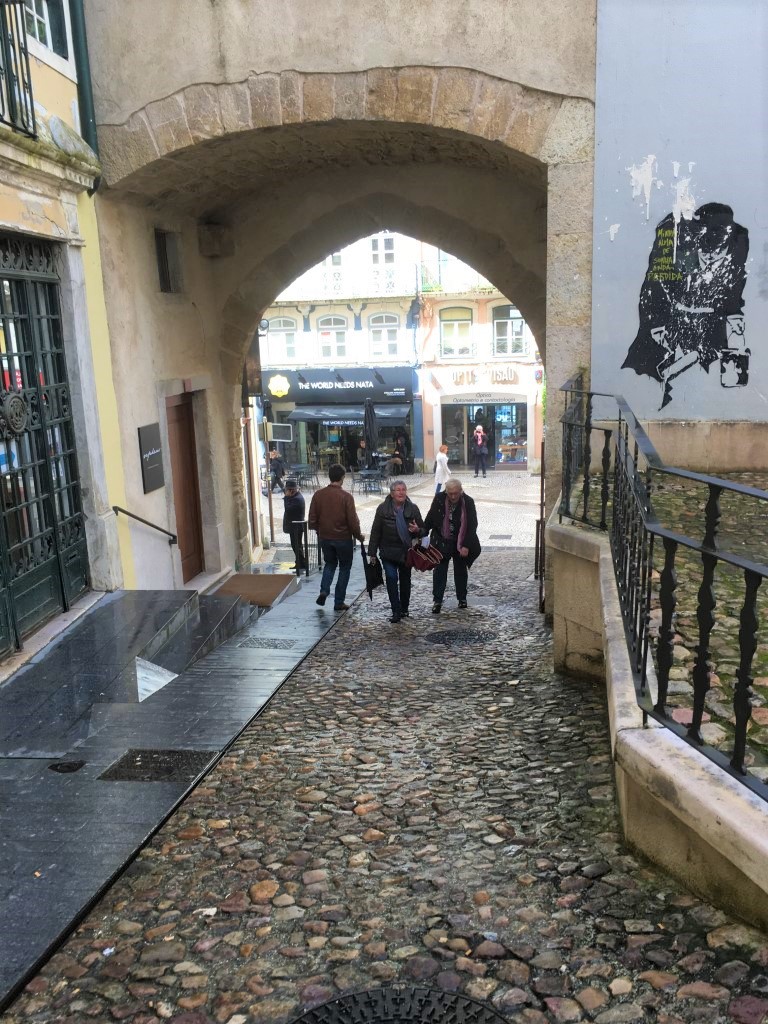
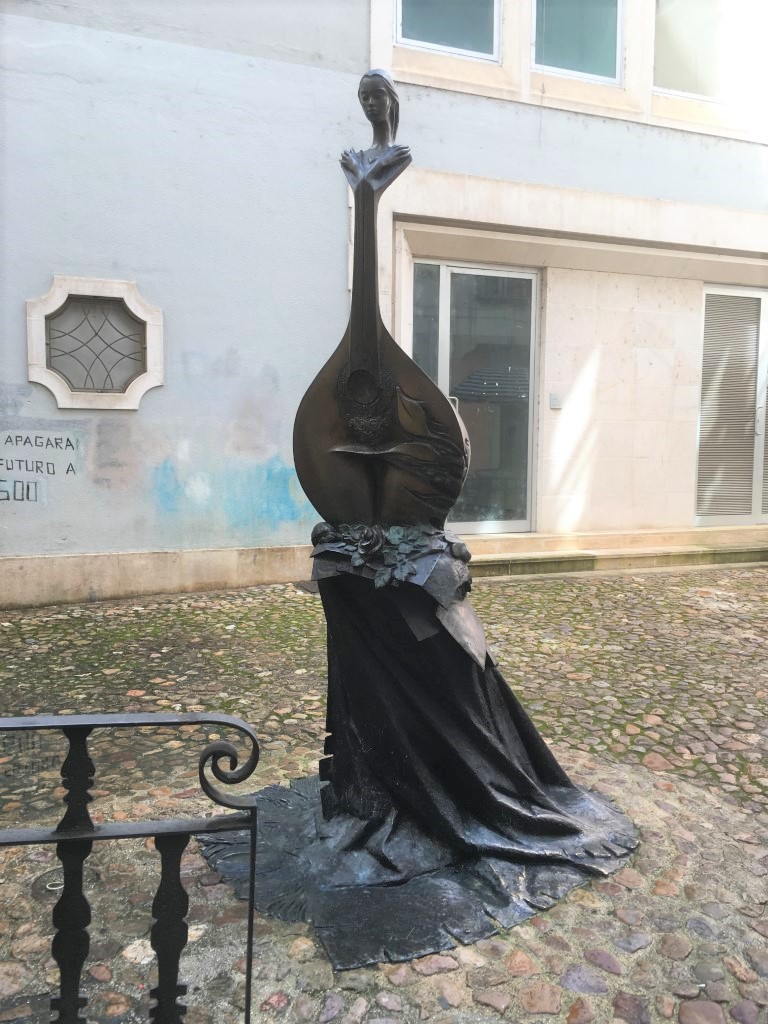
Walking in Almedina Square there is a pretty statue of half a guitar half a woman that is meant to be a tribute to Coimbra’s fado
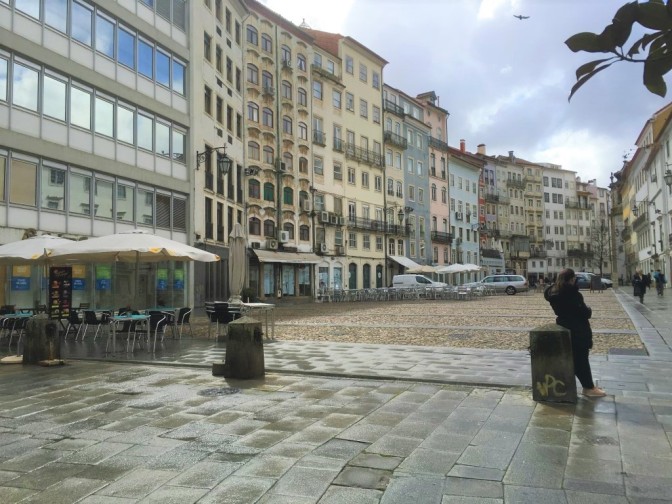
Almedina Square
After quite a search, I finally found our accommodation for the night. Olive Street House was located in a very narrow alley. We were lucky to get a double bedroom again. I was just happy to have a place where I could keep my swollen foot in the air until Berto arrived.

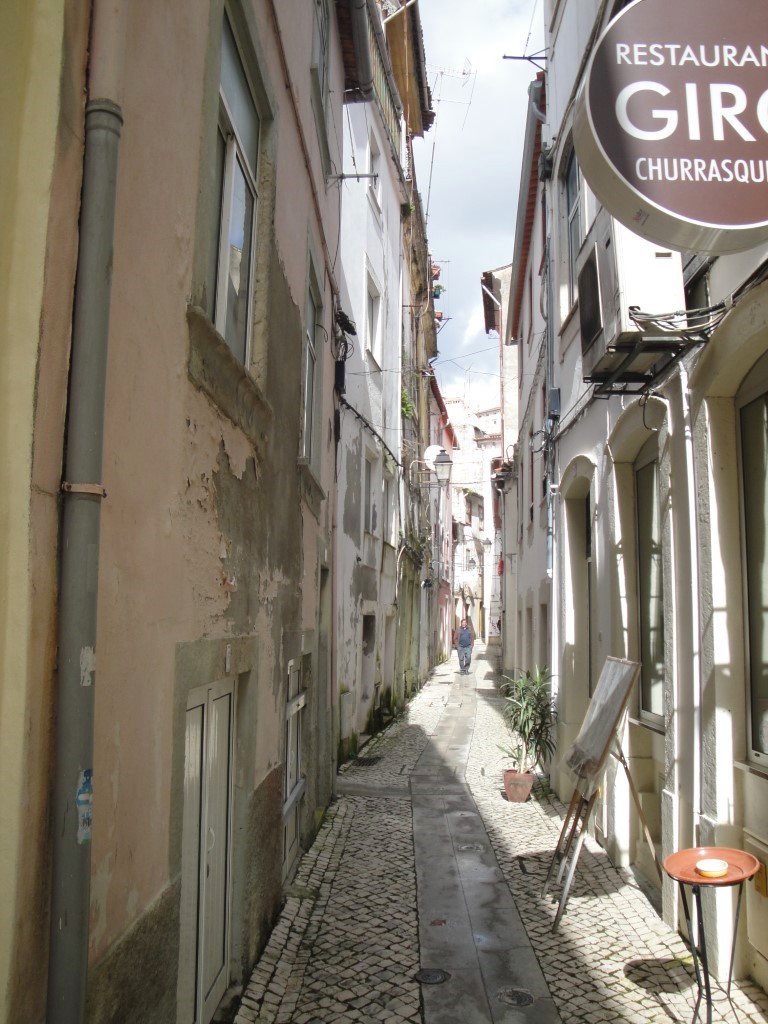
The very narrow street where I found our accommodation

Our wonderful room at Olive Street House
When Berto finally walked into our room (soaking wet and tired), I just gave him a chance to take a quick shower before we went on a search to buy hiking sandals for me. After about 5km of walking, we found an outdoor shop that, to my relief, sold hiking sandals. It might not have been exactly what I had in mind, but it would have to do because I wanted to start walking again!
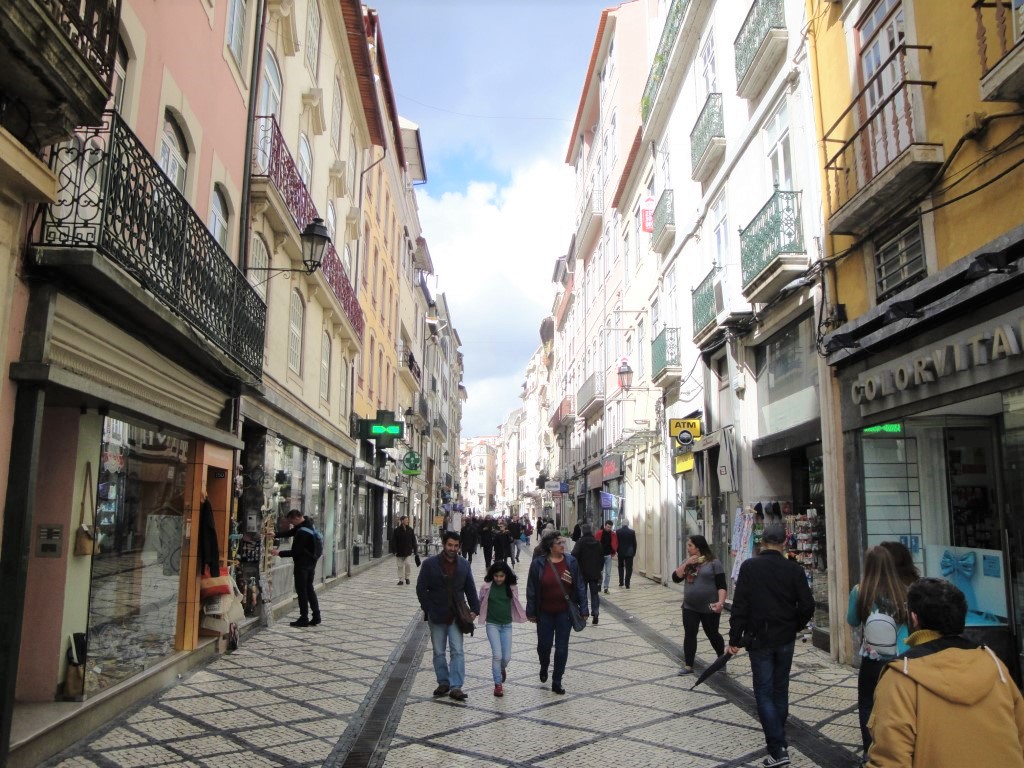
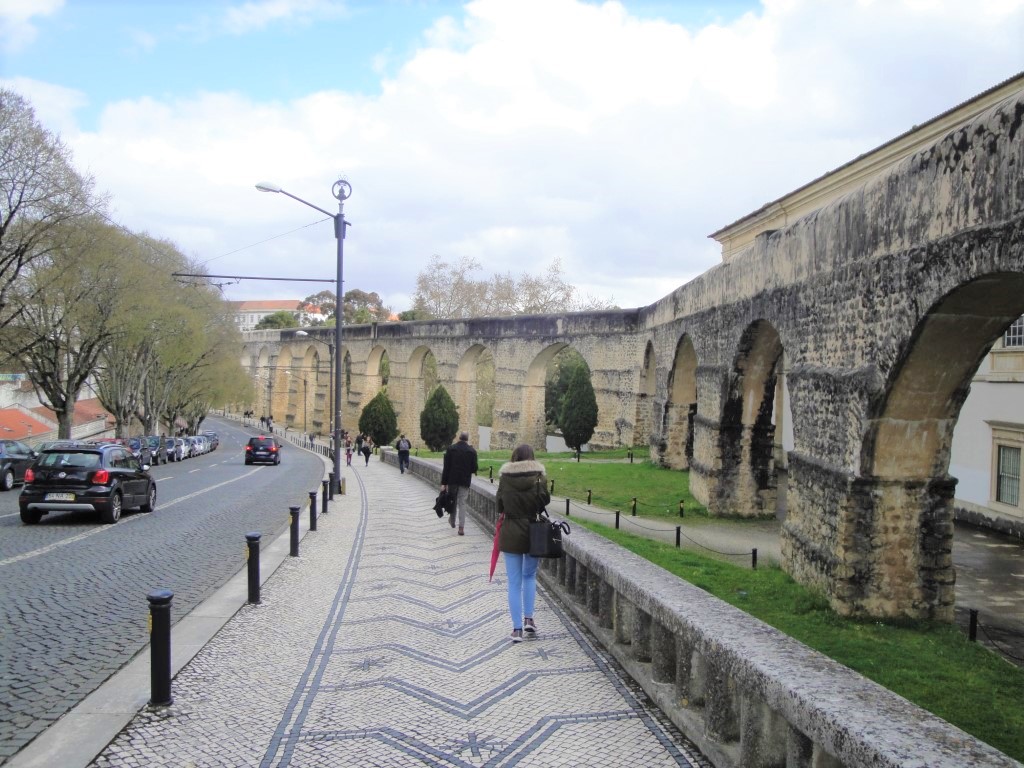
Seeing more of Coimbra on the hunt for hiking sandals
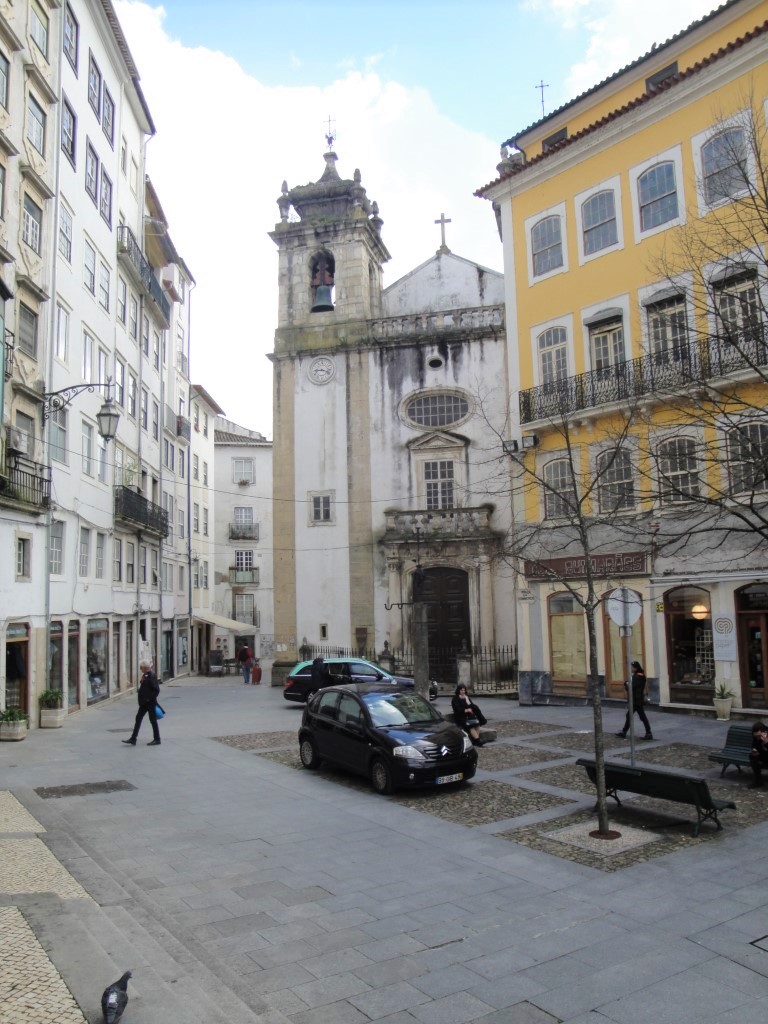
Church of St. Bartholomew, built in the 10th century

Monastery of the Holy Cross, founded in 1131
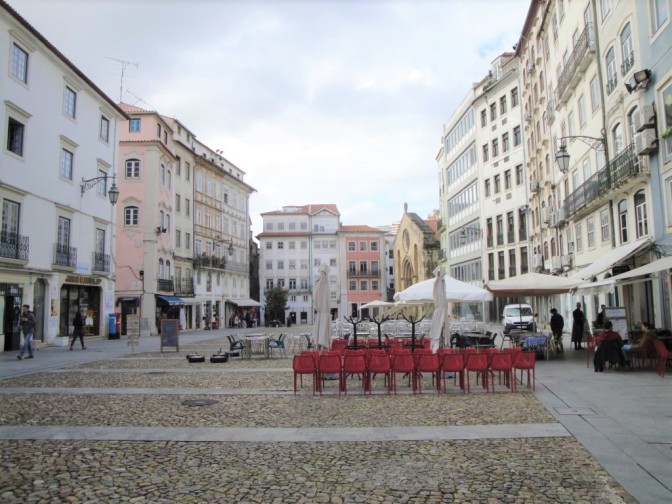
There are many squares with bars and restaurants for a weary pilgrim

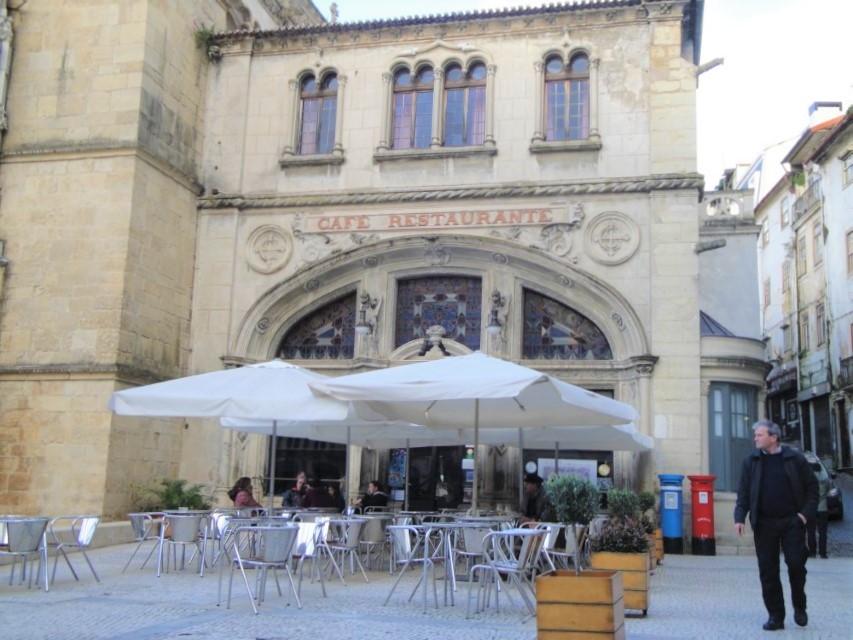
More amazing buildings
We wish we had more time and energy to visit the University of Coimbra, a place so famous in Coimbra. But at the end of a rainy day and after our search for hiking sandals, we walked into the first restaurant we could find – looking for a cold beer and a plate of food.

That all important beer at the end of a long day
I was looking forward to starting to walk again the next day. But would it be too soon? We’ll tell you more in our next post when we visit one of the most beautiful cities on the Portuguese Camino (and, according to me, probably in all of Portugal).
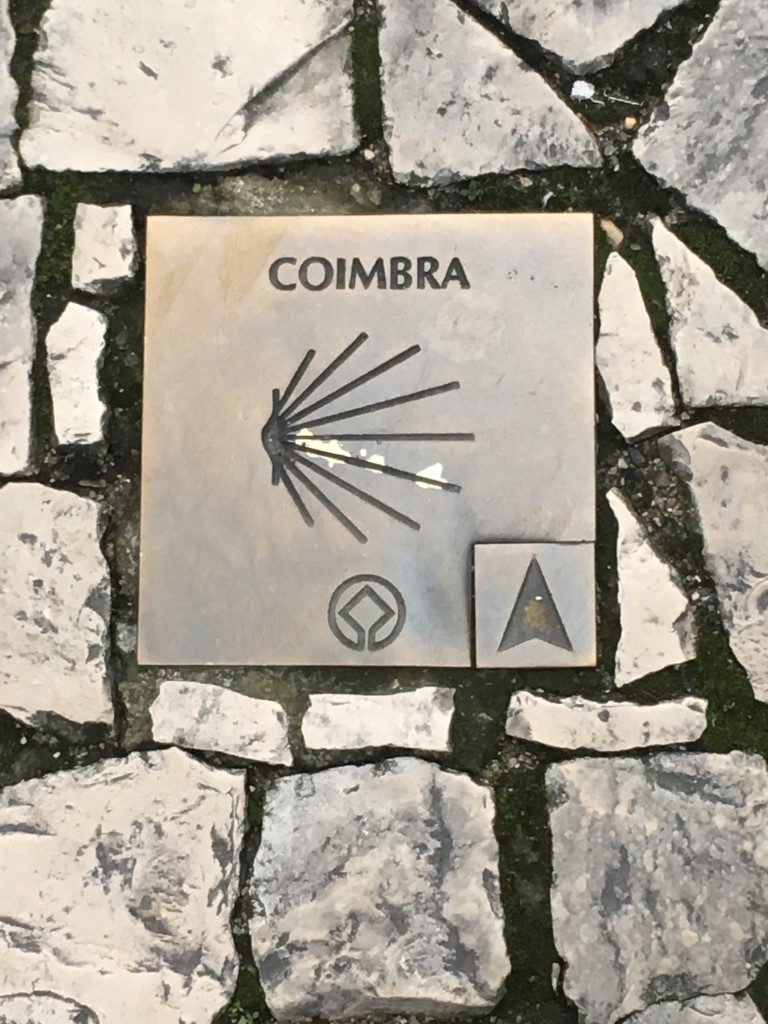
Camino sign on a sidewalk in Coimbra
 Wet and Dusty Roads
A caterpillar!? Who’d a thought it? I’ve heard so many good things about Coimbra …. and Portugal is on this year’s plan so we may well get to visit soon. Interested to see what happens next with your ankle issue, let alone what beautiful Portuguese towns are next on the agenda
LikeLiked by 1 person
I am quite susceptible to any mosquito/flea bites … and it seems to me to caterpillars as well. Coimbra is definitely worth visiting – and don’t miss the university. If you go there, please take pictures and put them on your blog! In our next post you will see the most beautiful small towns … oh and of course the most beautiful city in Portugal – we can’t wait to share photos from this stage.
LikeLiked by 1 person
OMG, Corna! Your ankle! You really like to walk 🙂
My feet are always swollen and painful after walking for hours. Walking is one of my favorite ways to explore cities. There is always so much to see, but later on I need vacation after vacation 😀
LikeLiked by 1 person
Haha Angela 😄, yes I definitely love walking … sometimes to my detriment too! Having to walk with such a swollen ankle was certainly a challenge. But you’re right, after this Camino I definitely needed a long holiday – and preferably one where I didn’t have to walk anywhere!
LikeLiked by 1 person
😀😀
Take a care of yourself and get ready for your next trip✈️🙋
LikeLiked by 1 person
Pragtige foto’s en mooi vertel. Sjoe, ek is nou skoon bang vir goggas wat mens nie kan sien nie. Arme jy, dit lyk verskriklik seer. My man is net so, ‘n bier aan die einde van die dag en hy is gelukkig. Jy maak my weer lus om oorsee te gaan, maar ek dink die pandemie skrik lê nog te vlak in my. Ons kon vir sewe maande nie huis toe kom nie, maar ons het darem werk gehad. En blyplek. Toeriste die wêreld oor moes selfs in lughawens slaap in die hoop om ooit weer huis toe te kom. Dit het ‘n emosionele blok gevorm wat ek moet afbreek.
LikeLiked by 1 person
Dankie Christa 🙂. Ja, daai voet was maar baie ongemaklik om mee te stap (daar was so baie van daardie ruspes in die woud dat ons nie om hulle kon stap nie, maar letterlik op hulle moes trap). Ek hou van ‘n bier (of eintlik ‘n cider) nou en dan, maar ek moet se, op die Camino na elke dag se stap was dit een van die lekkerste drankies om te geniet! Ek onthou jy het vertel van hoe julle nie kon huis toe kom tydens die pandemie nie. Ons was ook (amper) vasgekeer in Egipte, maar het dit net betyds gemaak tot in SA voor alles gesluit was. En daarna was ons ook nog nooit weer oorsee nie … maar intussen het ons al soveel mooi plekke in SA gesien. Wie weet, dalk breek daar weer ‘n tyd aan wat ons ‘n bietjie in die buiteland kan gaan kuier – maar dis altyd lekker om terug te kom huis toe 😄.
LikeLiked by 1 person
Ek stem so saam met jou. ons ontdek nou Suid-Afrika.
LikeLiked by 1 person
You were always so brave to stay by yourself and find your way by bus, or other conveyance, to catch up with Berto.
And I bet those hiking sandals in Portugal worked much better than the ones you purchased in Spain, because you didn’t have me there to kick little stones between your feet and the sandals.
LikeLiked by 1 person
Ha, thanks Carl. It was precisely on the Camino that I learned to be brave! This time it was me who kicked the little stones in my sandals – they weren’t the ideal hiking sandals … but hey, it helped me to complete the Portuguese Camino, so I’m not complaining too much 😉.
LikeLike
Oh, you poor thing. That looks so uncomfortable. I hope you healed quickly and now you have the perfect excuse to return to Coimbra…to revisit that university! It was a highlight for me. Buen camino to you, Mel
LikeLiked by 1 person
Hmm, walking with that “balloon foot” was quite uncomfortable to tell the truth 🙂. It never really fully recovered during the Camino, but one learns to walk through the aches and pains, right? Oh, I was really sorry we missed the university … but you’re right, quite enough reason to go back to Coimbra! It’s another week closer to your Camino … Buen Camino 👣.
LikeLiked by 1 person
Are you planning any big walking adventures in the future? Back to Spain perhaps?
LikeLiked by 1 person
No, unfortunately not at the moment – currently work commitments are a bit extreme 🤪. But we wouldn’t mind going back to Spain again any day. We have this idea that we would like to walk a Camino again, but then with unlimited time. That would be awesome.
LikeLiked by 1 person
One day your dreams come true…if you plan for them. 🙂
LikeLiked by 1 person
That’s the secret Mel … to plan and then stick to it! 😀
LikeLike
That works for me!
LikeLiked by 1 person
Gosh, I’ve never heard of pine caterpillars causing swellings and foot/ankle problems but as I’m susceptible to about every passing mosquito I expect it might have happened to me as well . We also visited Coimbra and toured the university buildings, a definite highlight of our stay too. An enjoyable read Corna as usual!
LikeLiked by 1 person
I don’t think it’s just the caterpillars that caused the swelling … I reckon the long walk contributed to it. The caterpillars were new to me too – but when I think that we literally walked over a carpet of them, it’s probably possible. Oh yes, I remember you visited Coimbra University, I’m so sorry we missed it … but one day is one day, then we’ll go back and do it 🙂. Have a great week Marion.
LikeLiked by 1 person
I feel so bad for you, and for Berto who had to walk alone. And all from a catapillar! You’ll have to carry antihistamines on the next trip! Maggie
LikeLiked by 1 person
Maggie, you won’t believe what I’m about to tell you … I had antihistamines in my backpack the whole time (I get hay fever sometimes). But the thought never occurred to me to drink one. The moment I started drinking it, the swelling immediately went down. I could kick myself for not thinking of that!
LikeLike
Walking so far and in such bad weather is unimaginable to me, and with that ankle and blisters? OMG. You must have a lot of good karma points! Those ancient churches are amazing. I always try to imagine the people who built them so very long ago. I wonder if they imagined that their work would survive for centuries! Did you ever find out what caused your ankle to blow up?
LikeLiked by 1 person
I don’t like walking in the rain at all … and of course walking in wet weather with blisters on your feet is never a good idea! The reason for my swollen foot was probably those caterpillars we encountered in the woods a few days after we started walking the Camino – I’m very allergic to mosquitoes/fleas so it’s no wonder the caterpillars provoked such an allergic reaction. And of course it only got worse because I kept walking after spotting it. I agree with you about the ancient churches – I never tire of looking at them.
LikeLike
I hope you ankle is better now! What a gorgeous place to spend a couple of nights.
LikeLiked by 1 person
My ankle never really fully recovered. After 5 years, my left ankle is still slightly thicker than the right one and if we sometimes walk far, it will still bother me a bit … but one doesn’t always think about the long-term damage you can cause – on that moment I just wanted to finish walking the Portuguese Camino 🙂. The small towns and villages on the way were definitely our favourite stopovers … and luckily Portugal has an abundance of these!
LikeLiked by 1 person
I’m sorry to hear that you still have trouble with your ankle. I have trouble with my knees and so it’s now harder to hike. However, like you, I’m not giving up.
LikeLiked by 1 person
When we go for a walk now, I always make sure I have my trusty ankle guard with me – it helps a bit. But as one gets older, the ailments appear faster 😉. Never giving up – that’s a good feature!
LikeLiked by 1 person
I admire your determination, Corna. Those processionary caterpillars are best given a wide berth. We always look out for them in Spring. Hope you recovered quickly. We were slightly more lucky with the weather in Coimbra- mizzly rain- but it’s a beautiful city.
LikeLiked by 1 person
Thank you Jo 💌. I wanted to walk the Portuguese Camino so badly, that I would do anything to continue. I never knew those caterpillars could be so sneaky. Next time I’ll take a detour around them (and maybe not in Spring)! Coimbra is stunning – even in the rainy weather we could see that it is a beautiful city.
LikeLike
🤗💗
LikeLiked by 1 person
Oh my Corna, your poor ankle; and from a caterpillar; I had no idea they could cause so much damage. I’m anxiously awaiting your next installment to find out more.
LikeLiked by 1 person
I have to admit physically it was quite a challenge to walk with that foot. But where there’s a will, there’s a way! Yes, can you believe … the work of a simple caterpillar (well, this was probably due to a few hundred caterpillars … but still) 😉.
LikeLiked by 1 person
Brings a whole new meaning to the children’s book, ‘The Very Hungry Caterpillar’! I hope you made a full recovery.
LikeLiked by 1 person
Now I had a good laugh at the ‘Hungry Caterpillar’ 😁. I had to google it first because I didn’t know it. Next time, I’ll take bags full of fruit and all kinds of sweets with me to feed the ‘hungry caterpillars’!! Thanks for making me laugh Tricia!
LikeLiked by 1 person
I’m glad you were amused by the reference!!
LikeLiked by 1 person
At least you were able to identify what may have caused your foot swelling! Good for you to keep going, even if you needed to take a bus or more. I was in Coimbra years ago around the end of year holidays and it was aglow with colored lights hanging everywhere! Did you go to a fado concert somewhere in Portugal? (I can’t remember if you mentioned in Lisbon.)
LikeLiked by 1 person
There was just no way I wanted to stop being on the Camino … whether it was by bus or by foot! Oh, I would have loved to see Coimbra with all those lights you’re talking about – I can only imagine how beautiful it must have been. We missed a fado concert by one day in Porto … reason enough to go back!
LikeLiked by 1 person
Oh, Corna, your ankle was so swollen. I’ve never even heard of pine caterpillars, did you ever get en antihistaminic? I am really ‘itching’ to know more. Coimbra looks lovely and it was our top choice when we briefly considered settling down in Portugal. The room at Olive Street House looks lovely, a perfect place to rest. Well done to Berto for walking alone in the downpour and to you for being determined to go back to walking so quickly.
LikeLiked by 1 person
We’ve never heard of those caterpillars either, but we read up a lot about them afterwards – those little buggers are pretty vicious! When the owner of the hostel told me about the allergic reaction, I immediately started taking antihistamines – it helped the swelling go down (but I think by then I had already done long-term damage by continue walking for a few days afterwards). Coimbra is beautiful – it’s hard to choose which city was the most beautiful for us … Coimbra or Porto? Yes, on the Camino there is only one way … and that’s forward (whether by bus, alone or with a painful foot) 😉.
LikeLiked by 1 person
Oh Corna, your ankle looks soooo sore. I loved Coimbra on our visit – actually much more than Porto or Lisbon. I’m glad Berto still got to walk, but the rain looks heavy; the beer was definitely well earned!
LikeLiked by 1 person
It was the strangest feeling – painful, but also itchy. If I had thought clearly, I would have been able to immediately identify that it was actually an allergic reaction. But then, hindsight is a wonderful thing 😉. It’s a difficult choice between Coimbra and Porto. We saw both cities in rainy conditions – I can only imagine how beautiful it must be in sunny weather! Indeed … a beer helps a lot (even for a swollen foot)!
LikeLike
It is so beautiful, but I’m sure with a swollen foot plus the rain and all, it must’ve added to your discomfort, and yet you persevered and continued your walk, that’s amazing! Thank you for sharing this amazing adventure with us ❤ It seems like you had a lot of rain during your time there, and was it during Spring time? From your experience, would you suggest to do the walk rather during September, during their autumn season?
LikeLiked by 1 person
I have to admit, the Portuguese Camino from Lisbon to Porto is quite a challenge (with or without sore feet). The distances are far between the towns and accommodation is not so readily available. The reason why we do the Camino in Spring time is because it is a bit quieter then – it can get quite busy in the Summer months. Even in September and October it’s still busy … and then it just gets too cold after that. The weather is also very unpredictable in Portugal – I think a good time is probably May and June (note to myself 🙂).
LikeLiked by 1 person
Thank you Corna for the informative feedback. This is one of the trips on our very long long long bucket list ☺️ and the question did come up if we ever get to do the journey, when would be the best time to do so. Thank you so much for allowing me to come “along”. I’m so appreciative of all your amazing experiences that you so willingly share and I do enjoy reading about it, thank you 🌸💕🤗
LikeLiked by 1 person
Oh, I’m so glad you’re “walking” the Camino with us Henrietta. Yes, those long bucket lists – we all have them, right 😁. If you ever get the opportunity to walk the Camino … it’s life changing. You don’t necessarily have to walk the whole distance, even if you only do it for a week – it’s something you can’t describe to anyone and it’s invaluable to yourself.
LikeLiked by 1 person
Goeiste – n ruspe!
LikeLiked by 1 person
Ja, kan jy glo! Ons het heelwat gaan oplees oor die ruspes na die Portuguese Camino en hulle is nogal gevaarlike goedjies. Blykbaar gooi hulle haartjies af wat irriterend vir die menslike vel kan wees en dit kan dan lei tot ‘n allergiese reaksie wat inflamasie kan veroorsaak … en dit kan gebeur selfs al trap jy (per ongeluk) met ‘n tekkie op hullle. En hulle kom uit laat winter en vroeg lente – net mooi die tyd wat ons gaan stap het. Ek sal volgende keer bietjie versigtig wees vir die mooi denne woude!
LikeLiked by 1 person
Sal maak dat mens met gumboots gaan stap, maar dan val een dalk bo in!
LikeLiked by 1 person
Haha 😄, kan jy jou daardie ongemaklikheid voorstel! Ons het sommige pelgrims met kamaste gesien (is dit die woord?) … dan beskerm jy jou voete, skoene en laer gedeelte van jou been. Dis waarskynlik die beste opsie … of jy kan natuurlik om die woud stap, maar waar’s die pret in dit?
LikeLiked by 1 person
Die wurms klink gevaarliker as leeus!
LikeLiked by 1 person
😁 … sien jy nou! Partykeer is dit die klein outjies wat mens in die noute het! Alhoewel, as ek stap, sal ek eerder ‘n wurm wil raakloop as ‘n leeu!
LikeLiked by 1 person
walking on that ankle is a pain I would imagine… good sport you are to go on Corna! Nice introduction to this place
LikeLiked by 1 person
Thank you Ritva 🙂 I wanted to keep walking so badly, that I just gritted my teeth and pushed through! Coimbra is a beautiful city – we would definitely like to go there again.
LikeLiked by 1 person
Ai, dit was nou jammer dat jy meestal nie kon stap nie! Die foto’s is so pragtig van waar julle was! Portugal is ‘n pragtige plek!
LikeLiked by 1 person
Ja, dit was sleg. Gelukkig was dit net vir daardie 3 dae (en dan nog later een dag toe dit vreeslik gereen het). Goeie verskoning dat ons altyd weer kan terug gaan 🙂. En jy’s reg, Portugal het ‘n ou-wereld sjarme waarvan ons baie gehou het … om nie eens te praat van hoe vriendelik hulle mense is nie!
LikeLike
Klink ongelooflik mooi daar. My sussie het Portugal ook baie geniet.
LikeLiked by 1 person
Oh you poor woman! Your foot and ankle look so painful!
LikeLiked by 1 person
It was pretty uncomfortable dealing with that swollen ankle. But after resting for 3 days, I was able to continue walking to our end destination, Santiago de Compostela.
LikeLike
Sorry to hear that your ankle was still swollen and that it actually got worse! But hey, if you had to sit out from hiking for a couple of days, you might as well do it when it’s raining outside. Hiking in the rain is never fun. And it’s worse when it’s raining for multiple days in a row. And it sounds like your rest days were quite productive!
LikeLiked by 1 person
That’s so true Linda … there’s no better time to take a break from hiking than when it’s raining! It was a good time to chat a bit with the locals, so at least it wasn’t all that bad. And yes, one or two days of rain is still manageable, but when it rains for days on end (and nothing wants to dry anymore), then it becomes a challenge! But hey, we survived to tell the story 😉.
LikeLiked by 1 person