
LISBON (Portugal)
We are not done yet with our overview of big cities on our long distance hiking adventures. After our Camino Frances through beautiful parts of Spain, it won’t be fair towards Portugal if we don’t also write about their big cities on the Portuguese Camino!
- We have done the Portuguese Camino during March/April 2018. Our journey started in Lisbon and we covered 620km (385 miles) in 26 days.
- Thinking back, we have not encountered many big cities on the Portuguese Camino. Lisbon was definitely one and don’t forget about beautiful Porto. But we will cover a few smaller cities in between and also share some photos of the walk itself.
Day 1 (in Lisbon):
We arrived on a Sunday in Lisbon and had to take a train from the airport to Rossio Station, which is situated in the very center of Lisbon. From there we had to walk approximately 2km (1.2 miles) to our accommodation.
This meant that we had to familiarise ourselves very quickly with the Portuguese metro ticketing system … I’m always a bit apprehensive when it comes to this, but Berto likes a challenge and bought tickets not only for us, but also for a couple from the UK who couldn’t master the machines!
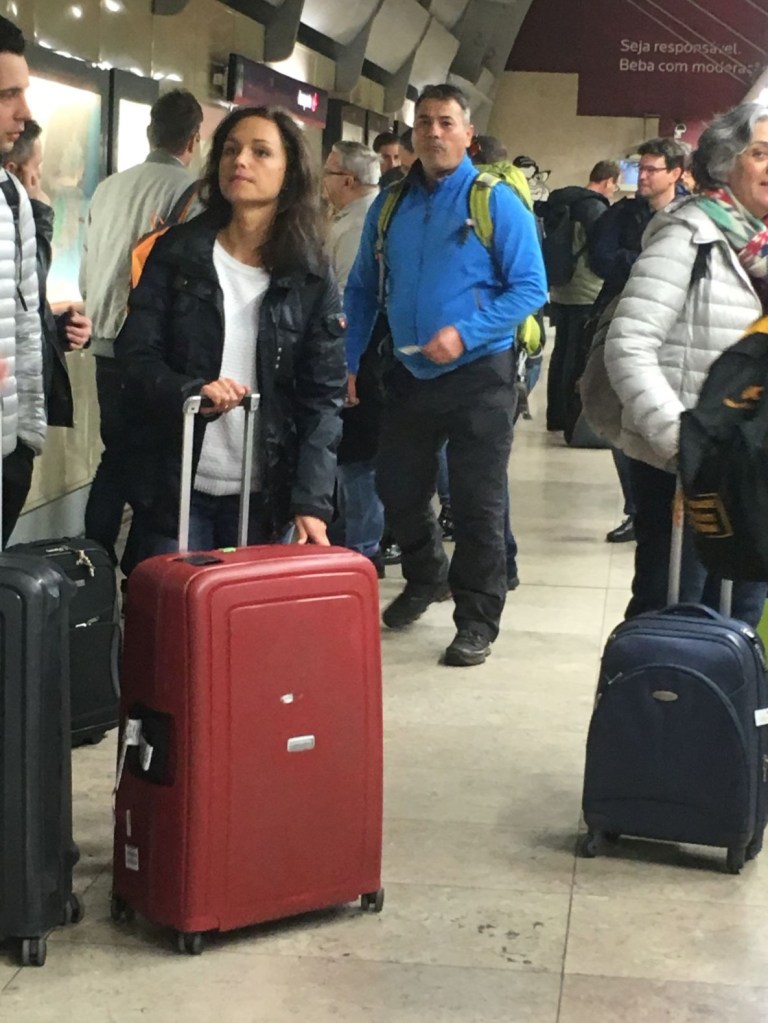
Berto with our train tickets
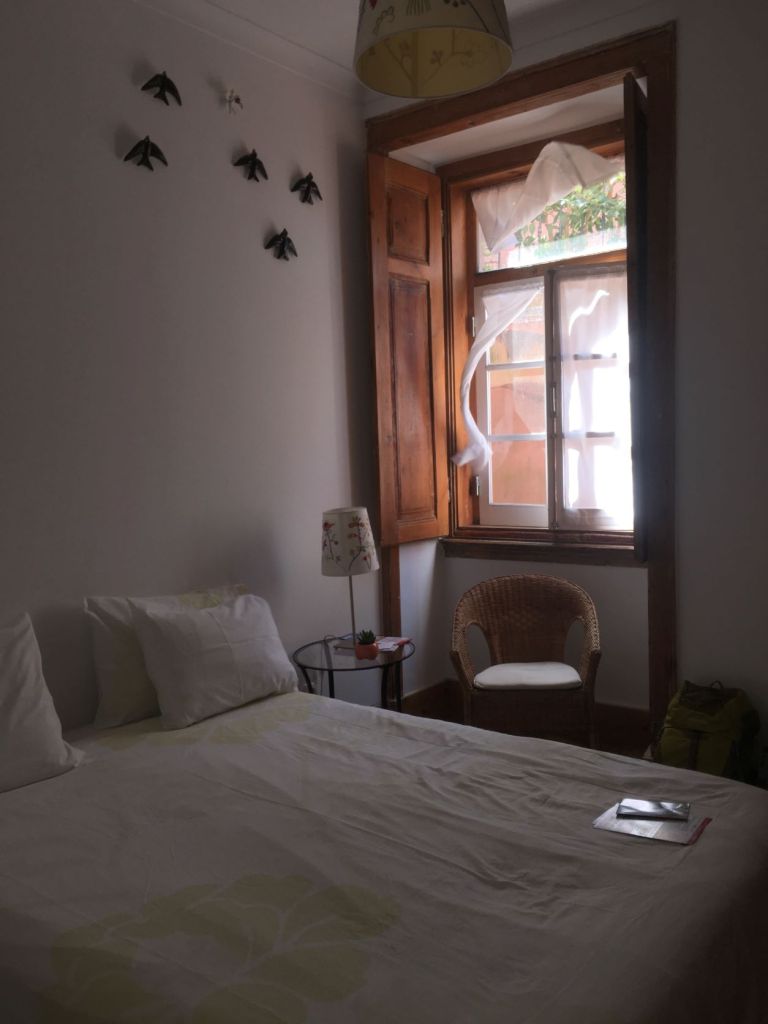
To get to our accommodation, we had to climb a few stairs and take a lift/elevator (from the one street to an upper street) … I quickly realised that Lisbon is a very hilly city! Our hostel, ‘This is Lisbon’ was on a high hilltop with a beautiful view over Lisbon.

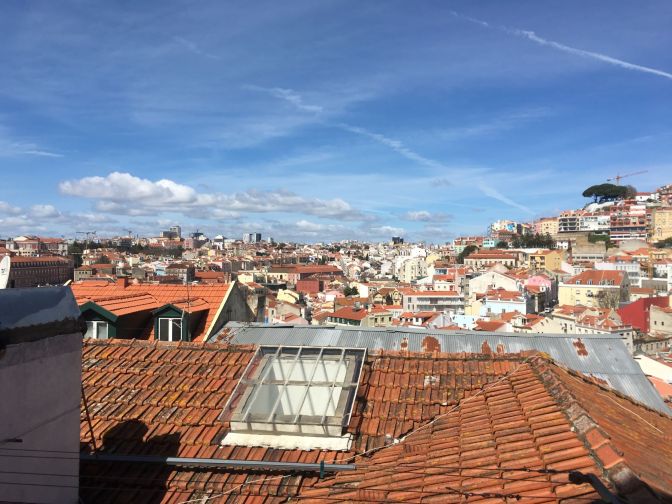
The view from the hostel’s terrace
After a refreshing shower (we just spent 13 hours on planes and airports), we decided to take a stroll to find something to eat, while seeing more of this beautiful city. We only had 2 days for a bit of sightseeing before our walk would start on the Tuesday. Though, once again, we kept in mind that we shouldn’t walk too much … we will do enough of that for the next 26 days!
Our first stop was at a lovely castle, Saint George’s Castle (Castelo de São Jorge), situated on a hill – of course. This historic castle dates to at least the 8th century BC while the first fortifications built date from the 1st century BC.


But typical pilgrims, we were more interested in the views from the castle than the castle itself – we tried to track down the road we would walk in a few days.
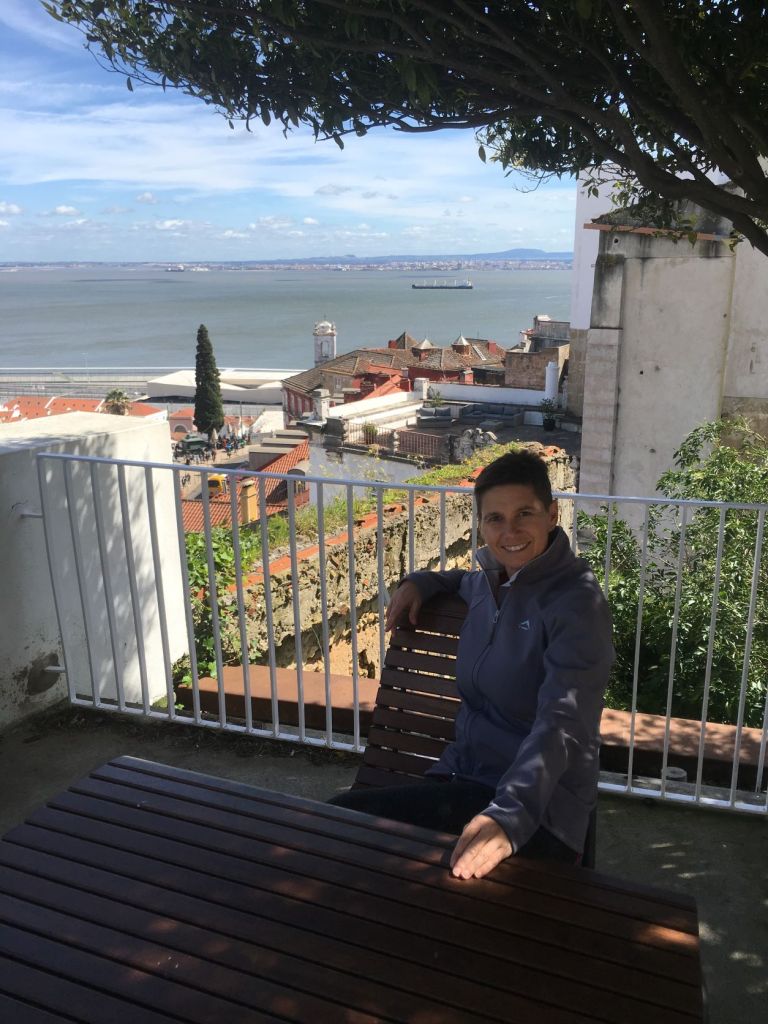
Enjoying the views from the castle
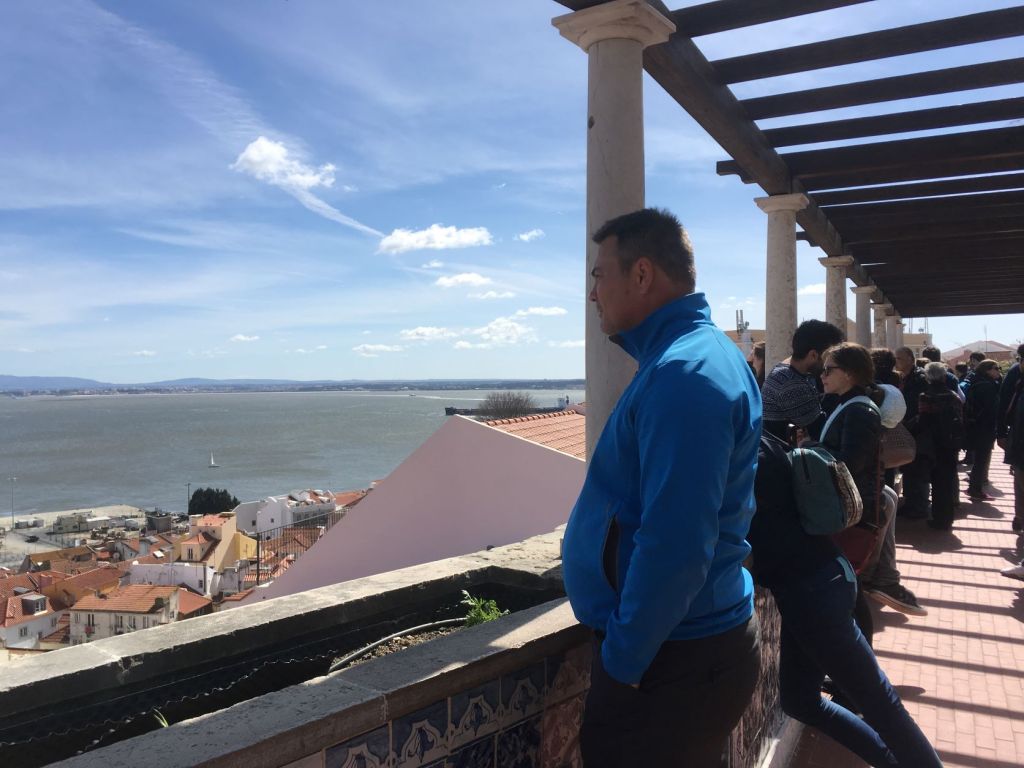
Views over the Atlantic Ocean
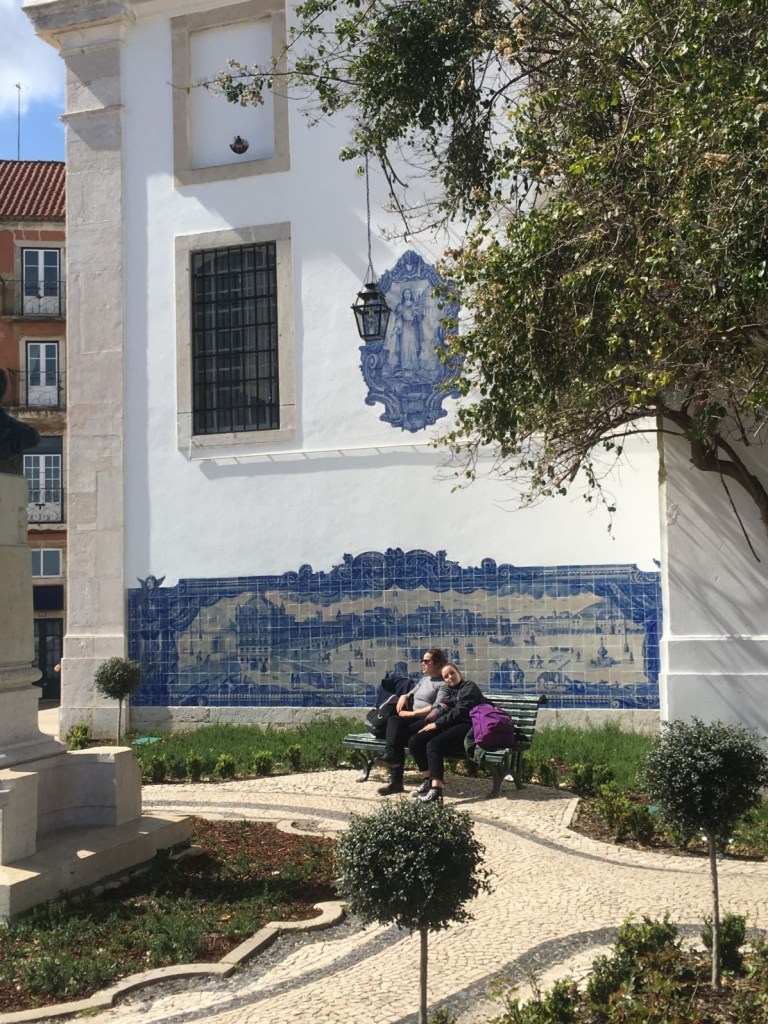
And we quickly fell in love with the tiled buildings
We didn’t hang around too long at the castle, because we were actually quite hungry. And as luck would have it, we found a Sunday market close to Rossio Station. This was the perfect introduction to real Portuguese food … and we were not disappointed!
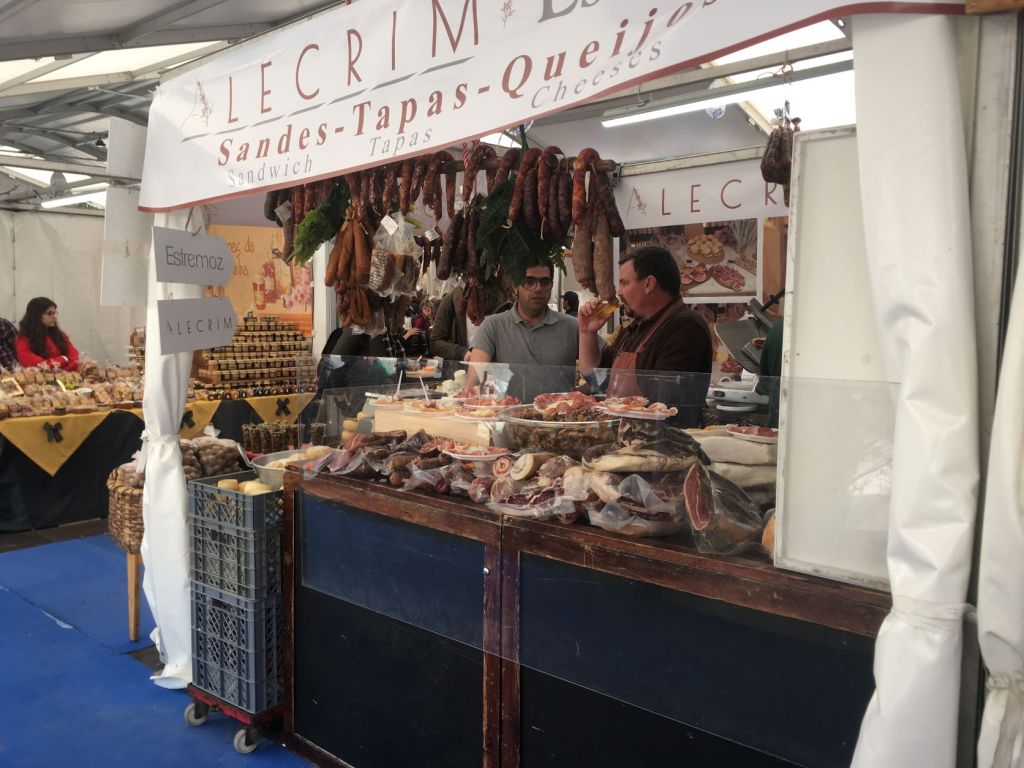
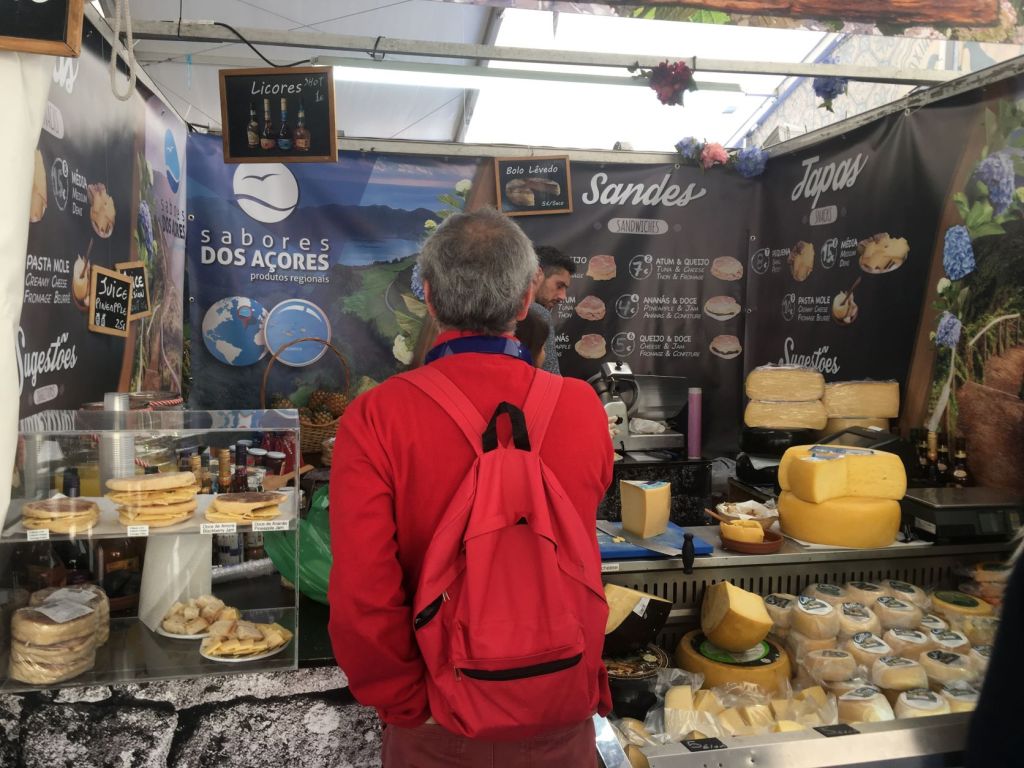

As meat eaters, we will surely not go hungry in Portugal
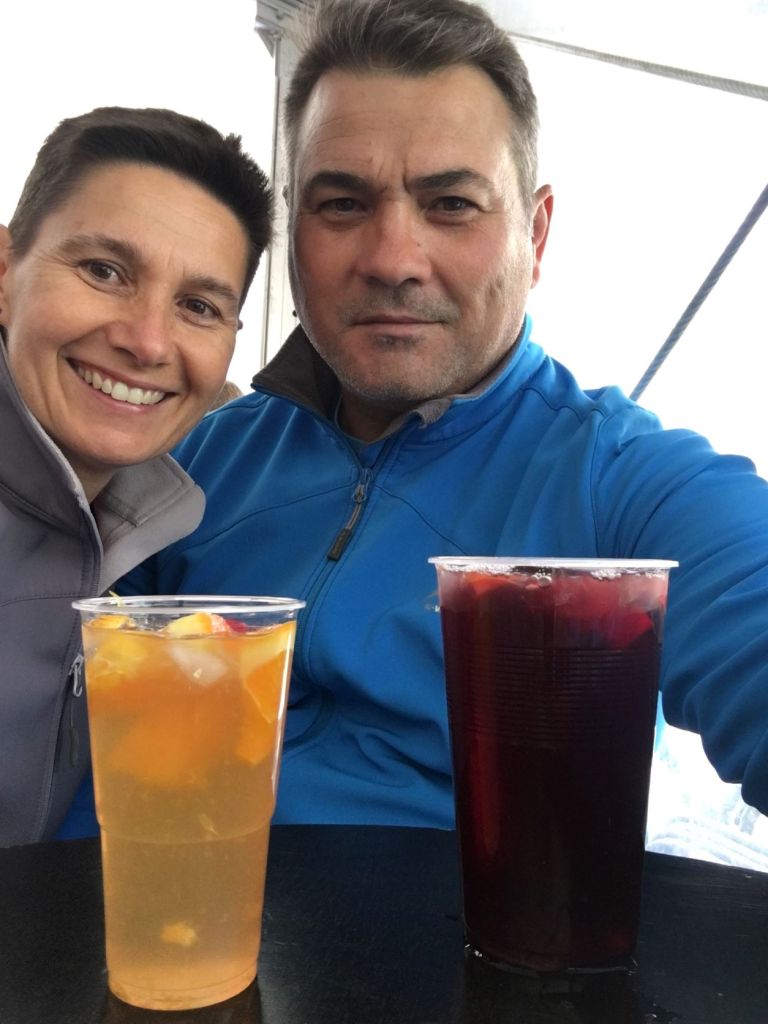
We also found (and enjoyed) Portuguese Sangria
It turned out to be a very enjoyable Sunday afternoon at the market. We were quite jet lagged and decided to just hang around at the market, sampling smoked pork loin, various sausages and cheeses … while drinking a few more glasses of sangria, of course.
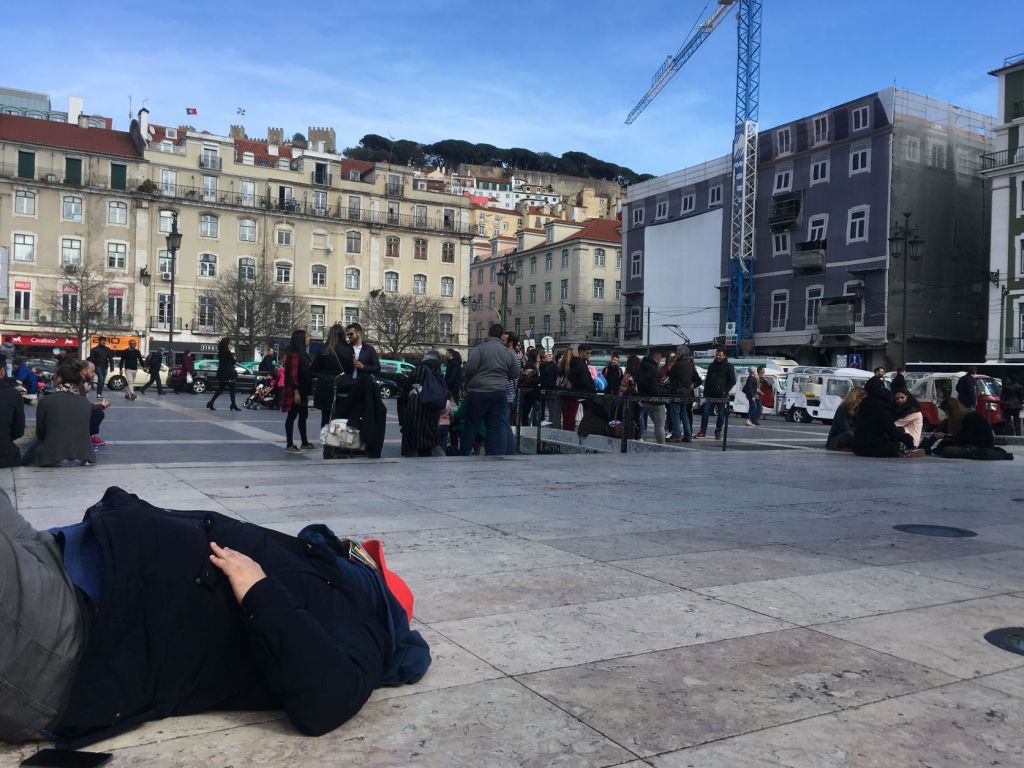
People were sitting (and lying) around on Rossio Square at the Sunday market

We could see the top of Castelo de São Jorge from the market
On our way back, we bought a bottle of wine which we enjoyed on the terrace of the hostel.
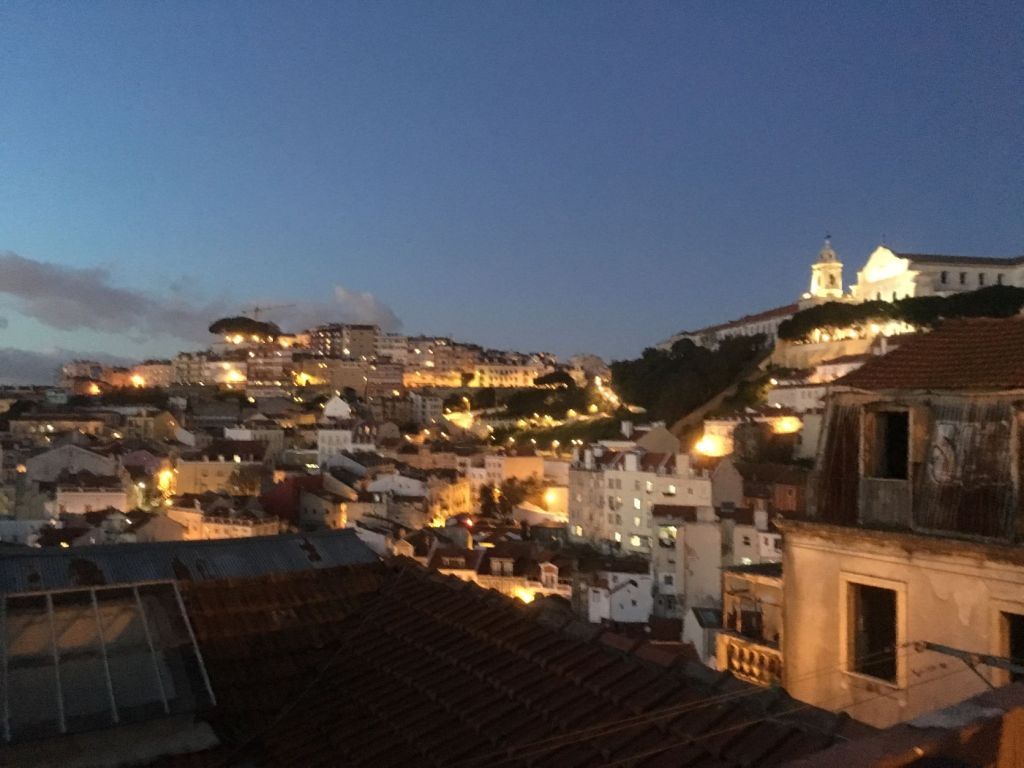
Evening view from our hostel’s terrace
Day 2 (in Lisbon):
Since we didn’t want to walk too much before starting our Camino, we decided to buy tickets for a sightseeing tour on the Hop-On Hop-Off bus (except, we won’t be doing any ‘hop off’ and just enjoy the ride).
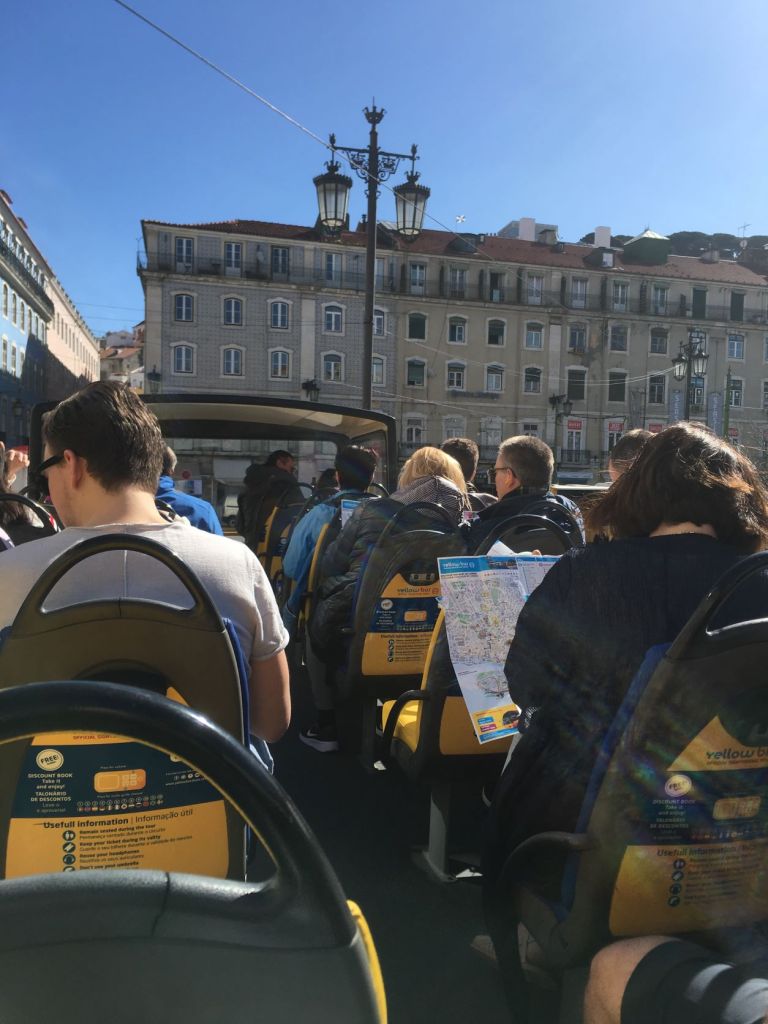
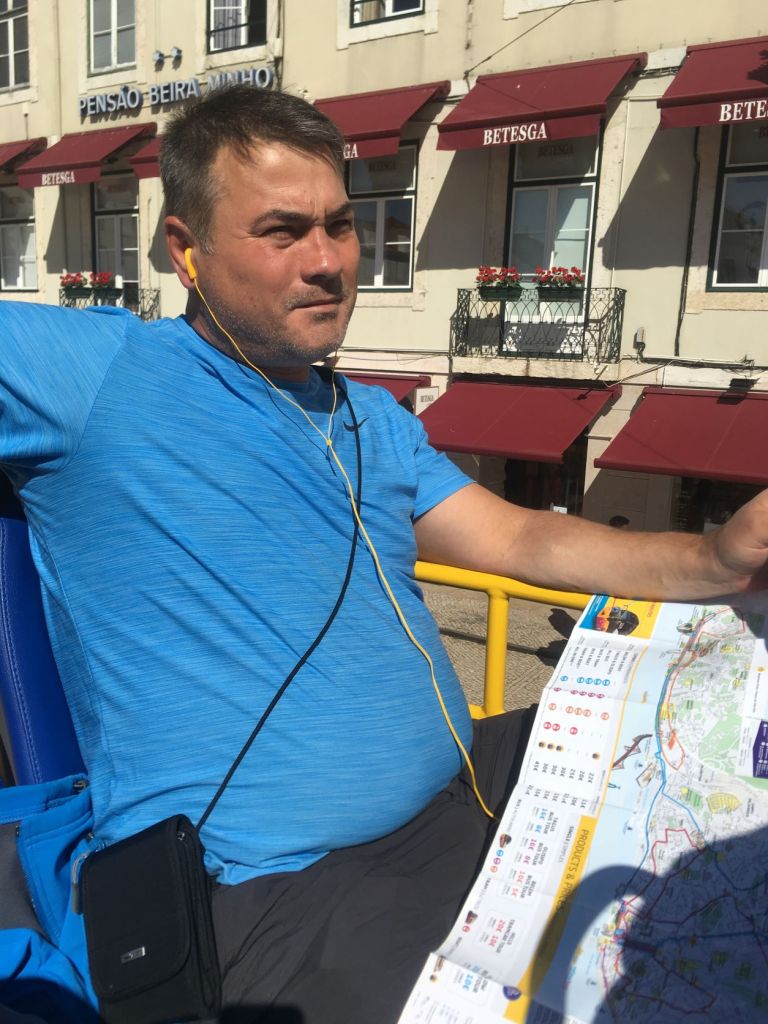
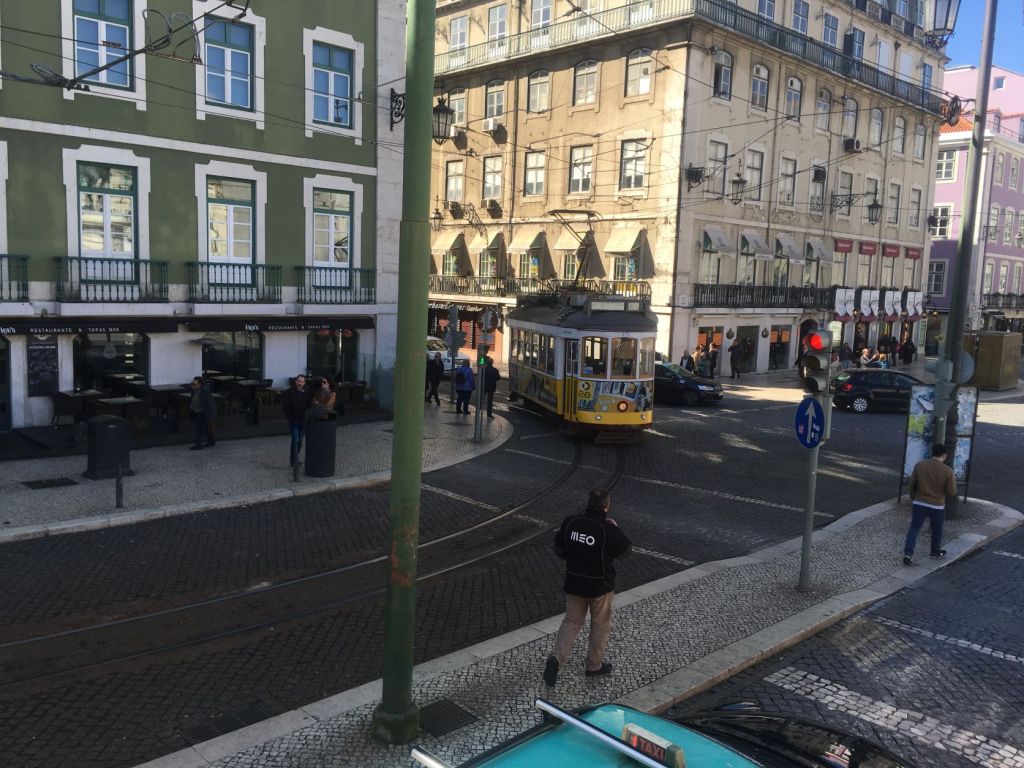
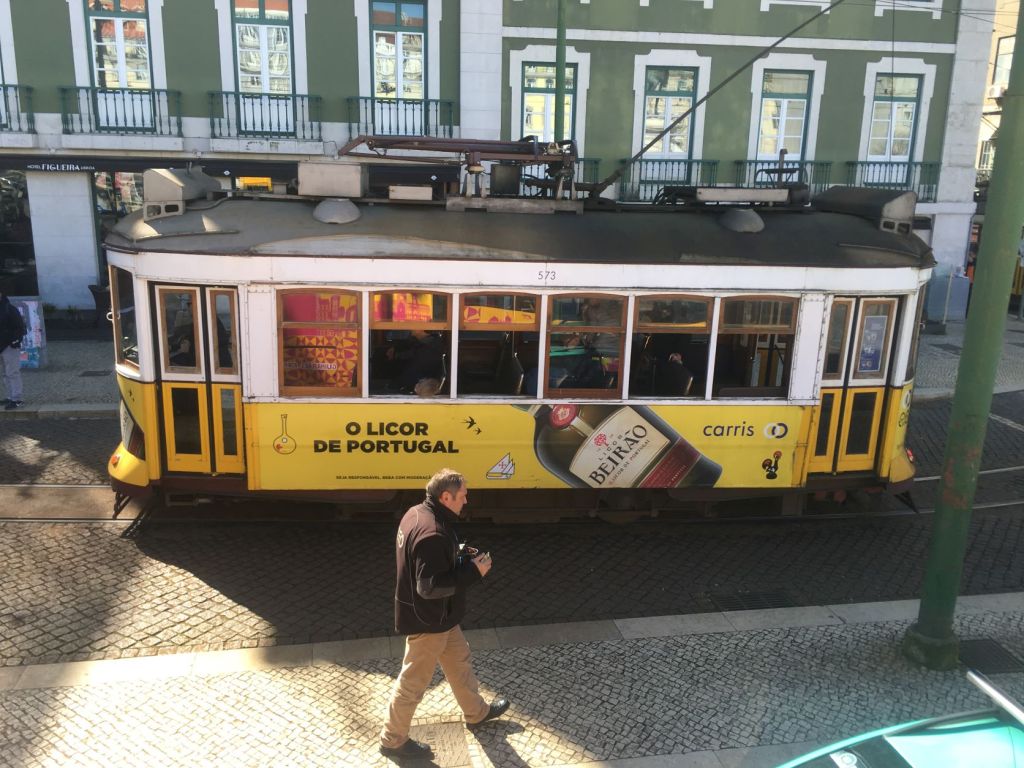
Here is a gallery of a few statues and buildings we saw on our ride:

Dom João (ruled Portugal up until his death in 1433) at the Praça da Figueira in the downtown area

Rossio Railway Station
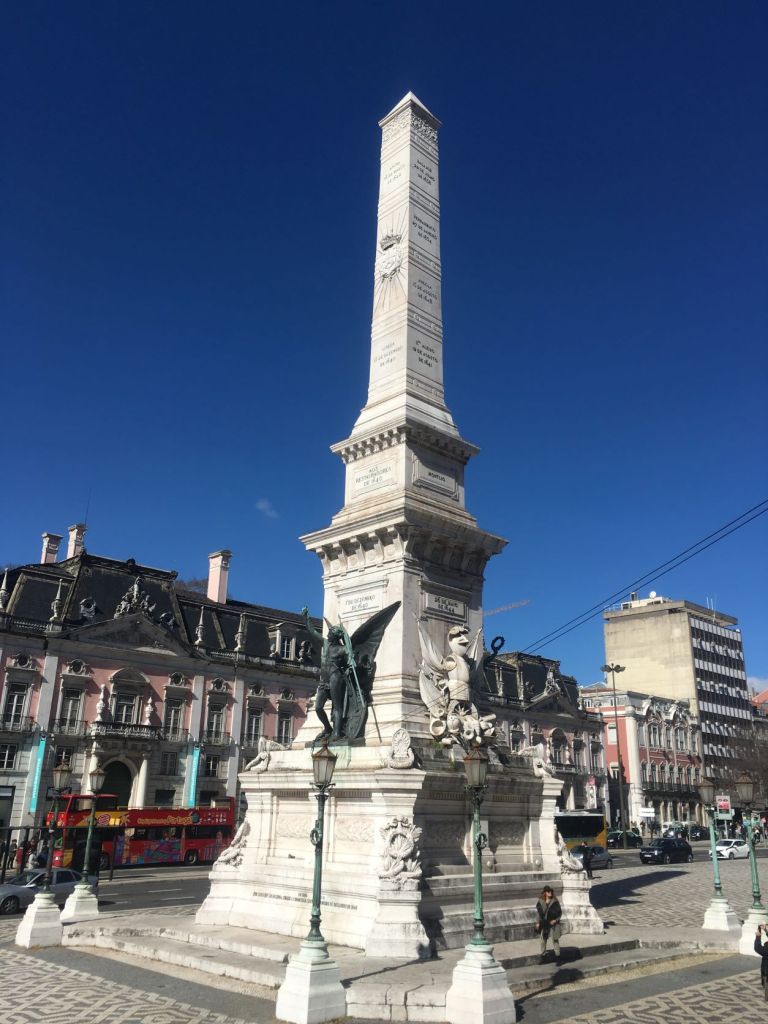
Monument to the Restorers

Driving past Eduardo VII Park with a view over Lisbon
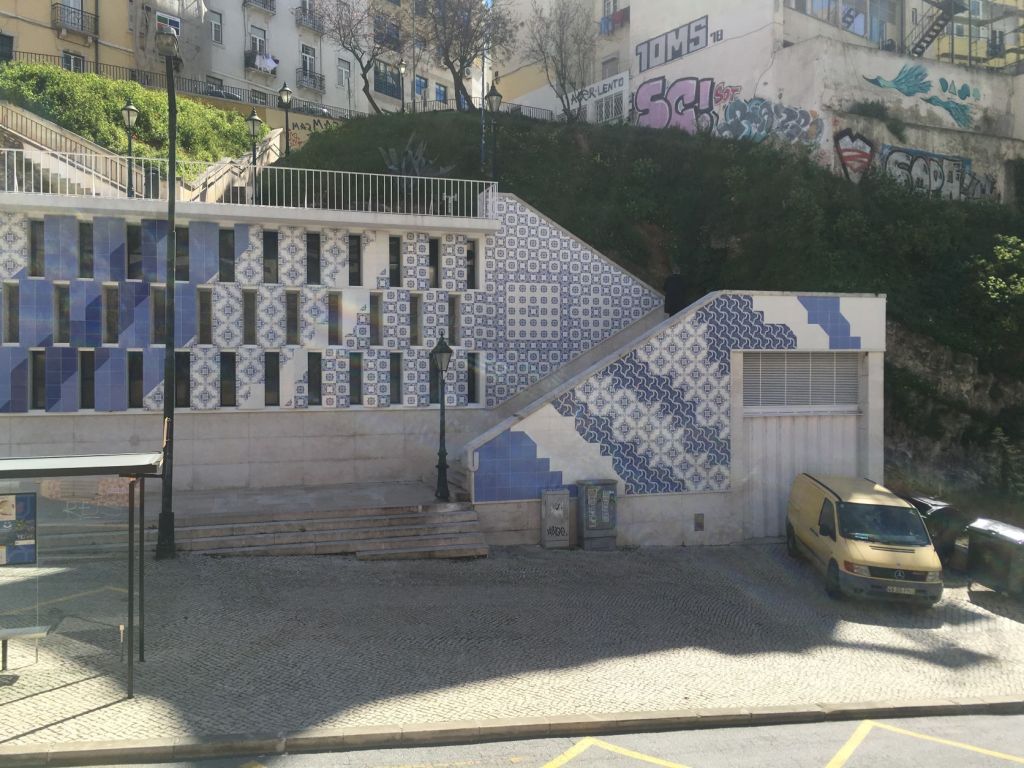
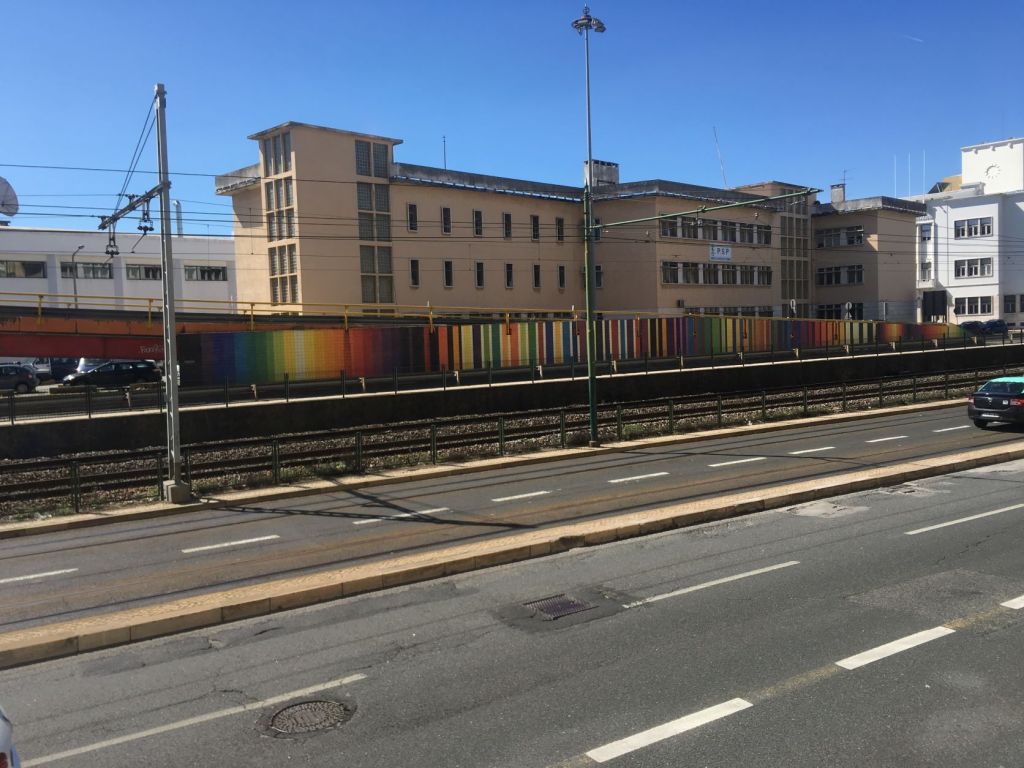
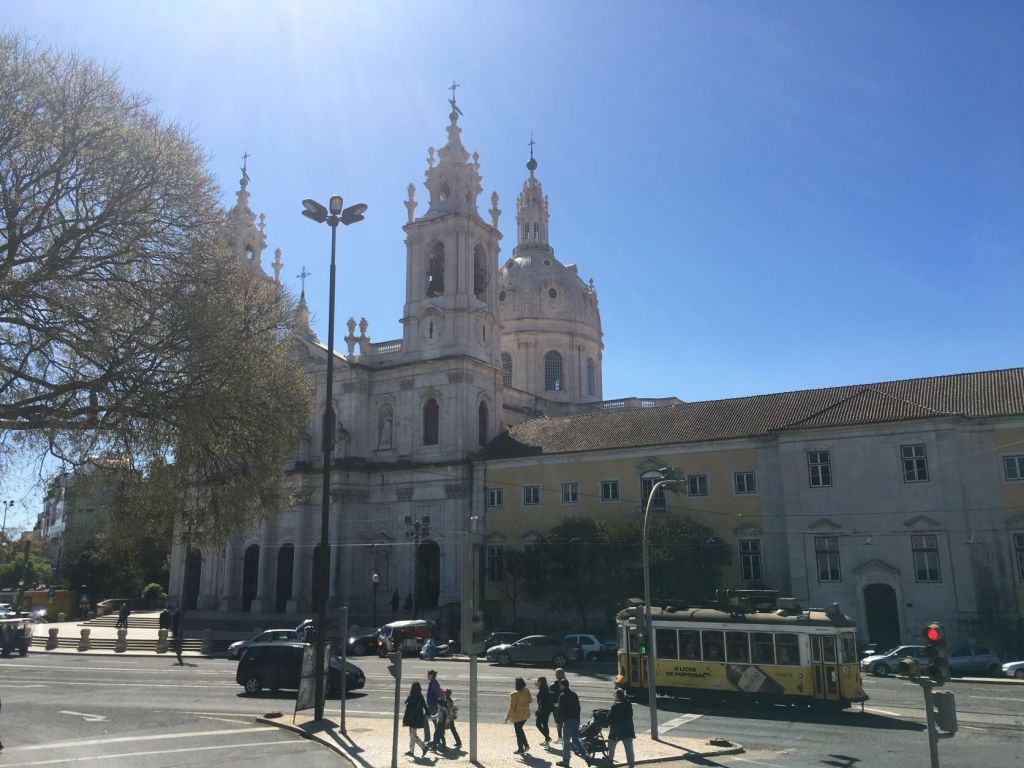
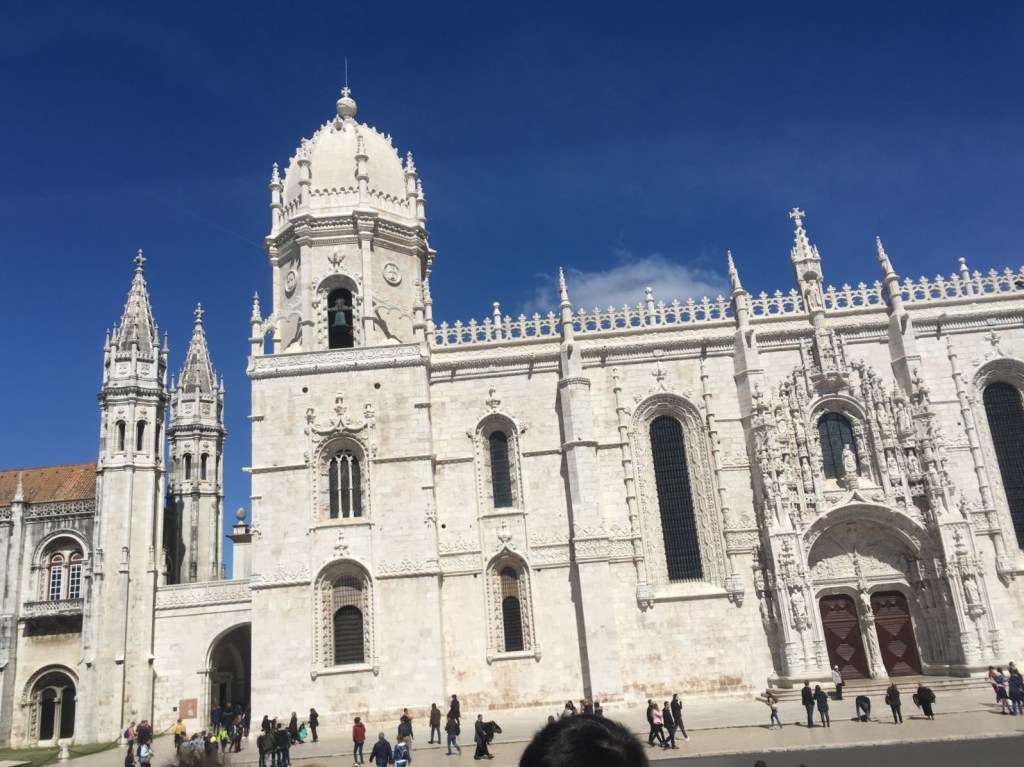
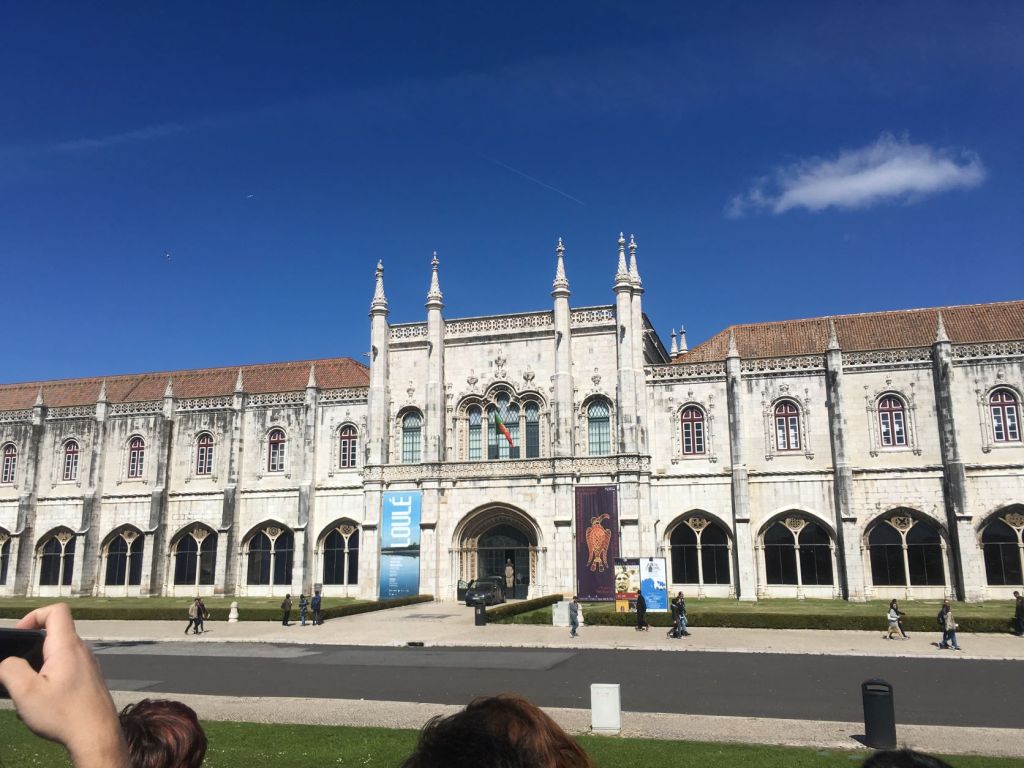
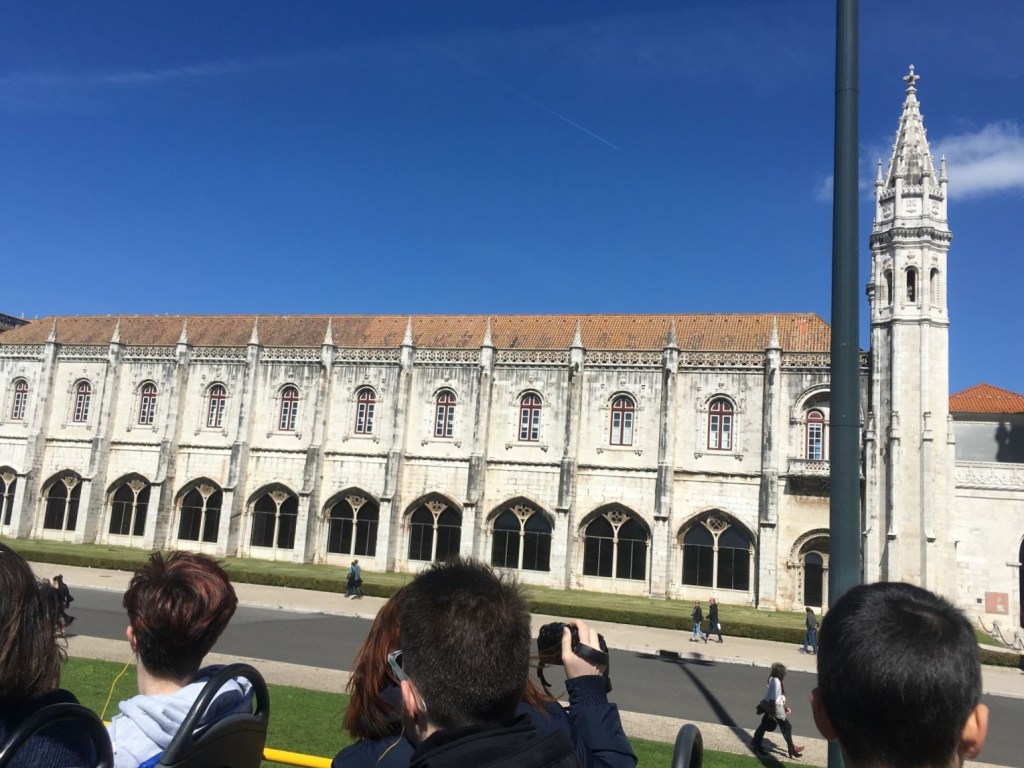
Construction on the Jerónimos Monastery and church began in 1501 and was completed 100 years later. It is near the launch point of Vasco de Gama’s first journey.
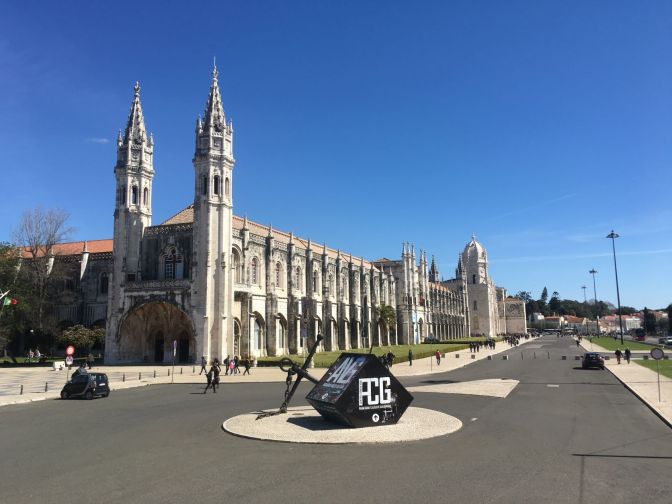
View of the Jerónimos Monastery
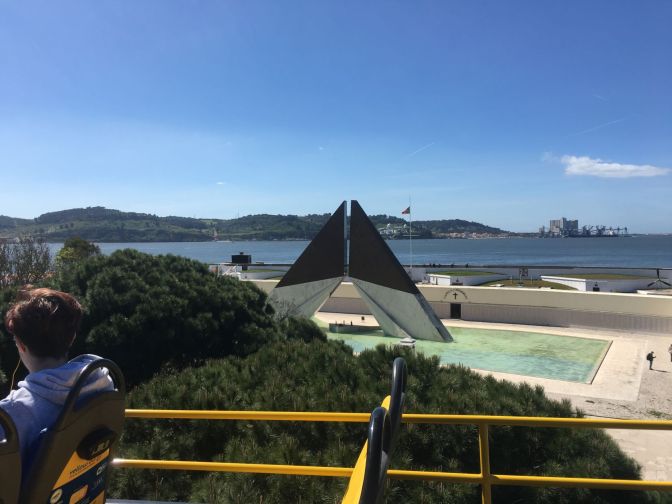
Capela Memorial – this monument pays tribute to over 9,000 Portuguese soldiers that lost their lives while fighting in several colonial conflicts/wars
We also drove past one of Lisbon’s most well-known monuments, the Padrão dos Descobrimentos (Monument of the Discoveries). It’s situated on the northern bank of the Tagus River and celebrates the Portuguese Age of Discovery during the 15th and 16th centuries.
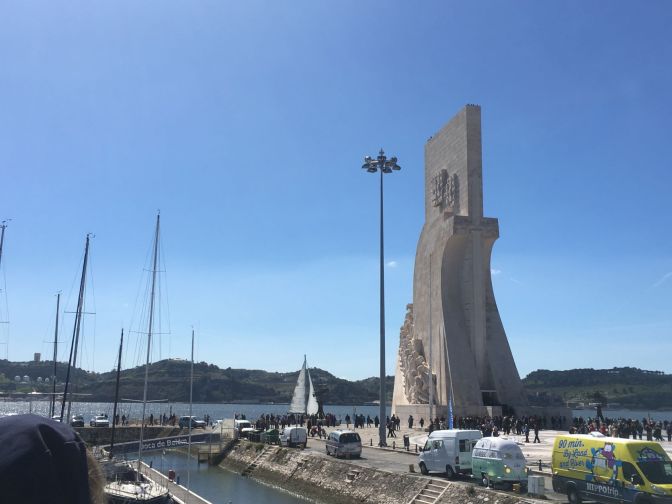
Monument of the Discoveries
After 2 hours of driving on the Hop-On Hop-Off bus, we arrived back at Downtown Lisbon, known as Baixa Pombalina. This part of the city was almost totally destroyed in the 1755 earthquake. It was rebuilt and today it is an early example of a ‘planned’ city with a series of straight and perpendicular streets running both sides of Rua Augusta.
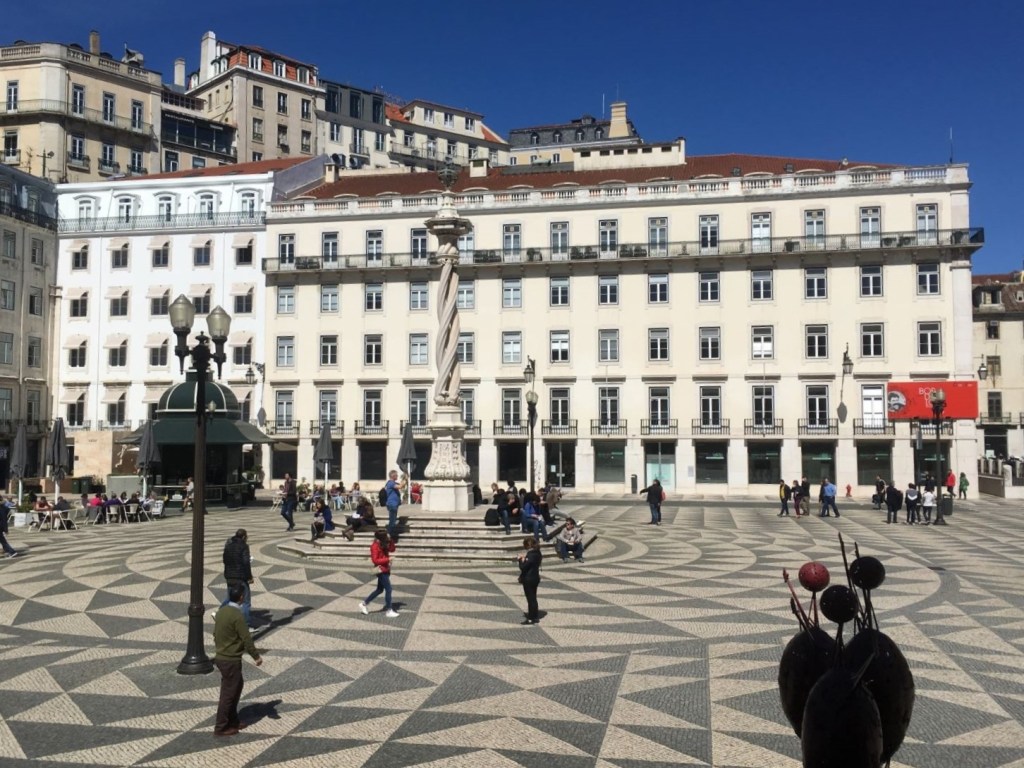
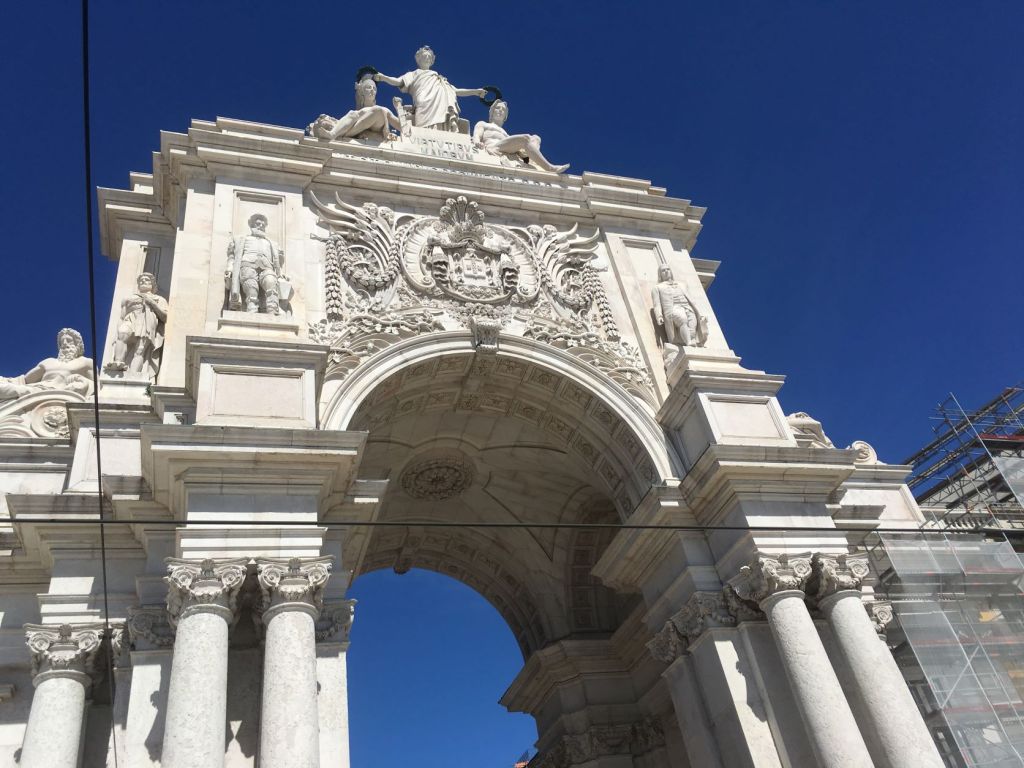
Baixa Pombalina

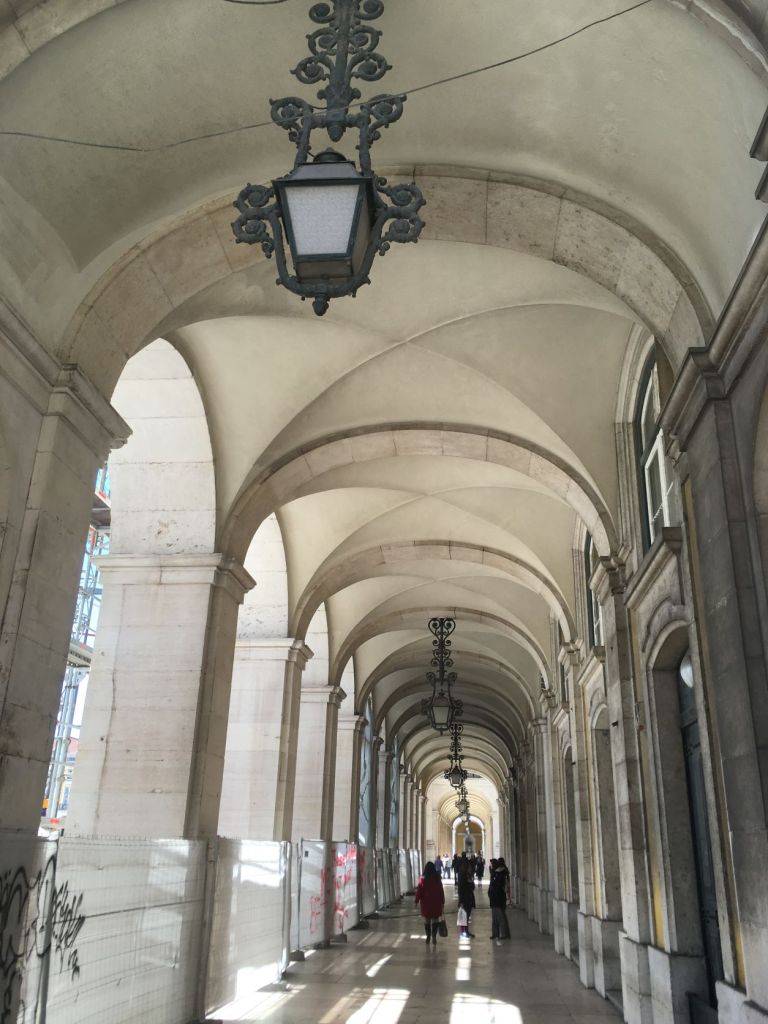
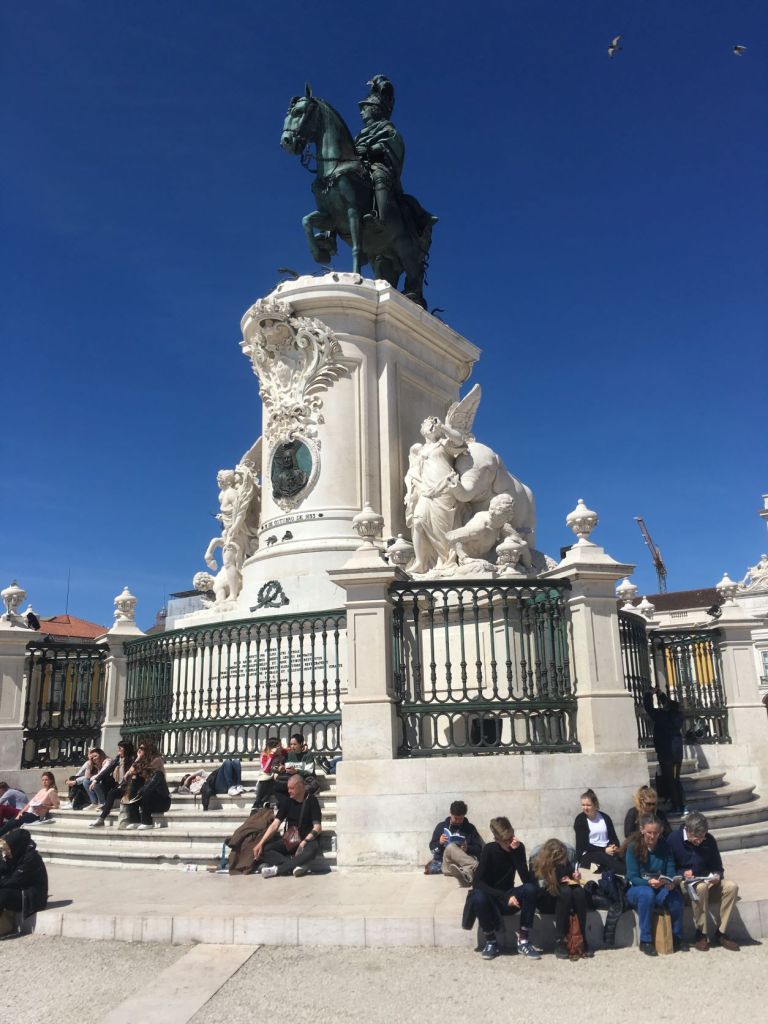
Statue of King Joseph I, the Portuguese king at the time of the 1755 earthquake
The Cais das Colunas quay was used to welcome some prestigious figures that have visited Portugal. That was the case of late Queen Elizabeth II, who in 1957 arrived here and made her way into Lisbon through these two columns.
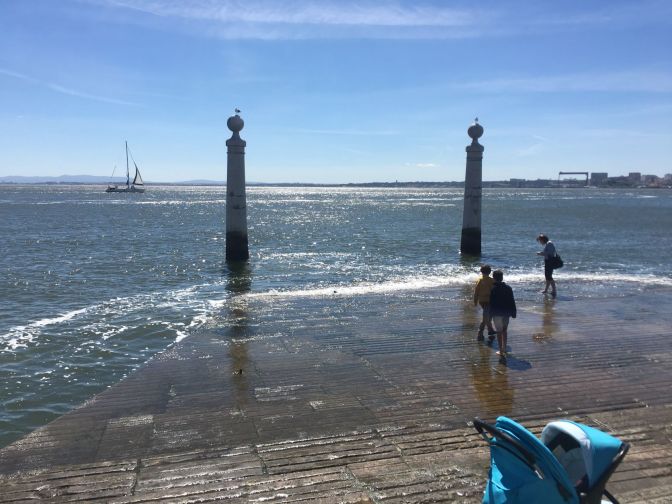
Cais das Colunas
We also walked past the well-known Santa Justa Lift. This lift (or elevator) in the historic center of Lisbon connects the lower streets of the Baixa with the higher Carmo Square. The top floor is a lookout with panoramic views of the city. The queue was just too long, so we opted not to make use of the lift … and rather went on a hunt for something sweet …
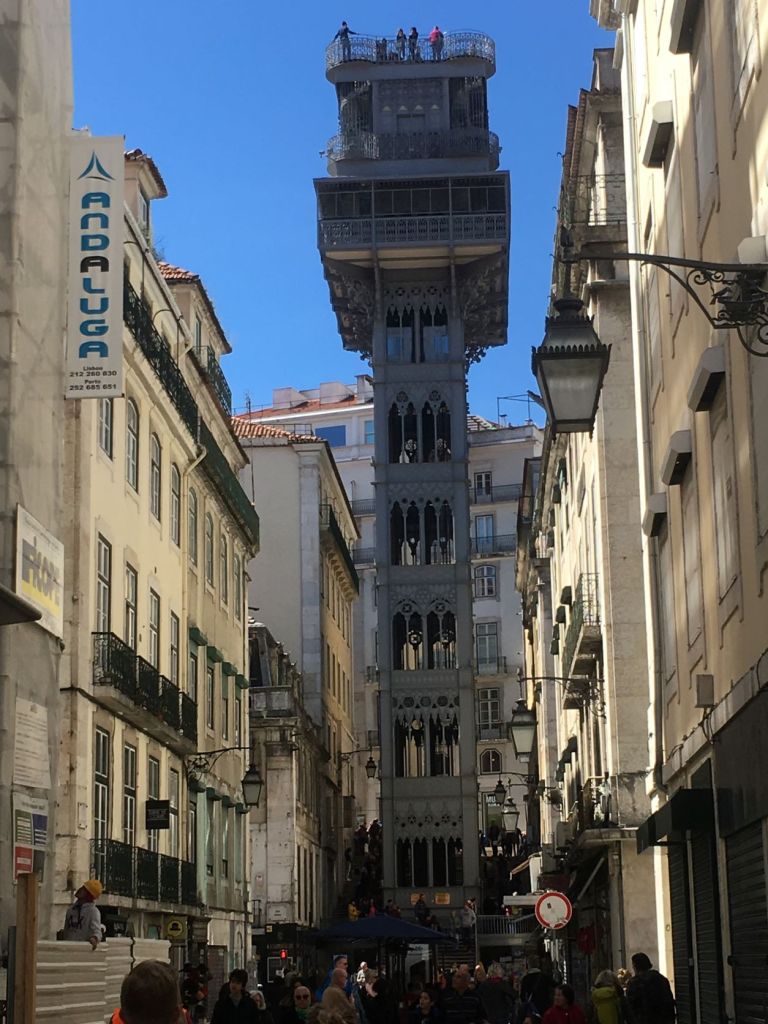
The Santa Justa lift as seen from Rua de Santa Justa
What were we looking for? The delicacy that Portugal is so known for … Pastel de nata! It’s a Portuguese egg custard tart pastry (sometimes dusted with cinnamon) and something I enjoyed almost every day while walking the Portuguese Camino!
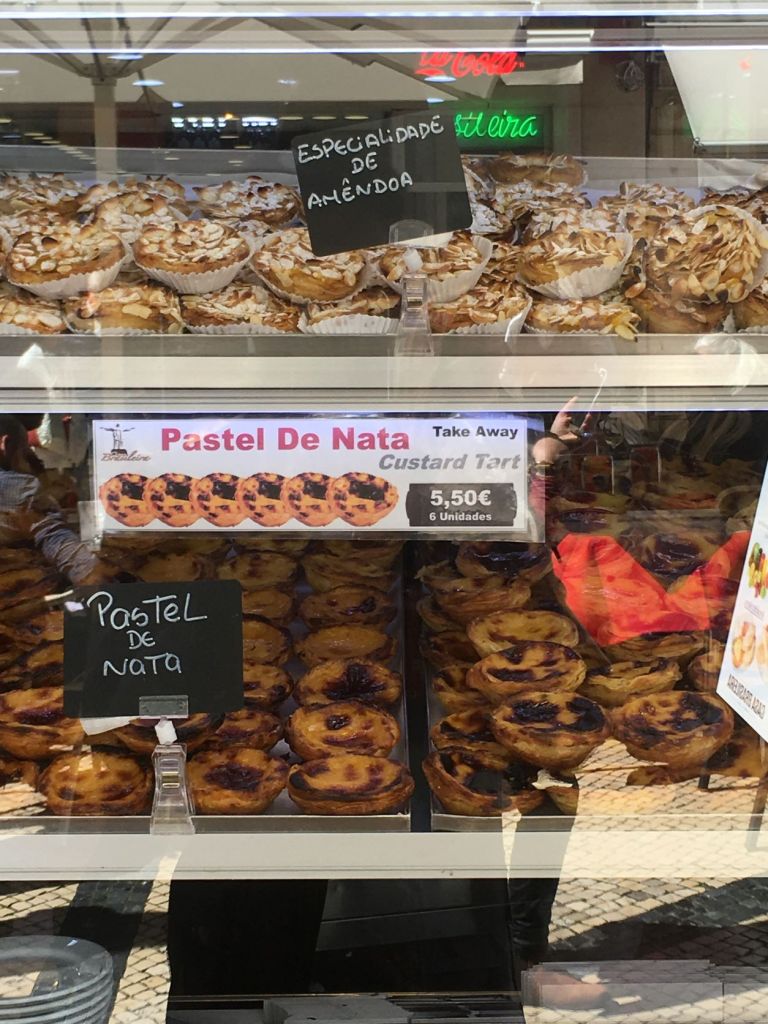
Pastel de nata
Day 3 (in Lisbon – just for a few hours):
We started our Portuguese Camino on day 3 in Lisbon. Which mean we still had to walk through parts of Lisbon – let’s show you more of this beautiful city.
The first few kilometers took us all along the Tagus River, the longest river in the Iberian Peninsula. We then reached quite a modern part of Lisbon – Parque das Nações. This is a redeveloped area on the Tagus River with green spaces, striking buildings and the Telecabine Lisboa cable car.

In Parque das Nações with a view of the cable cars
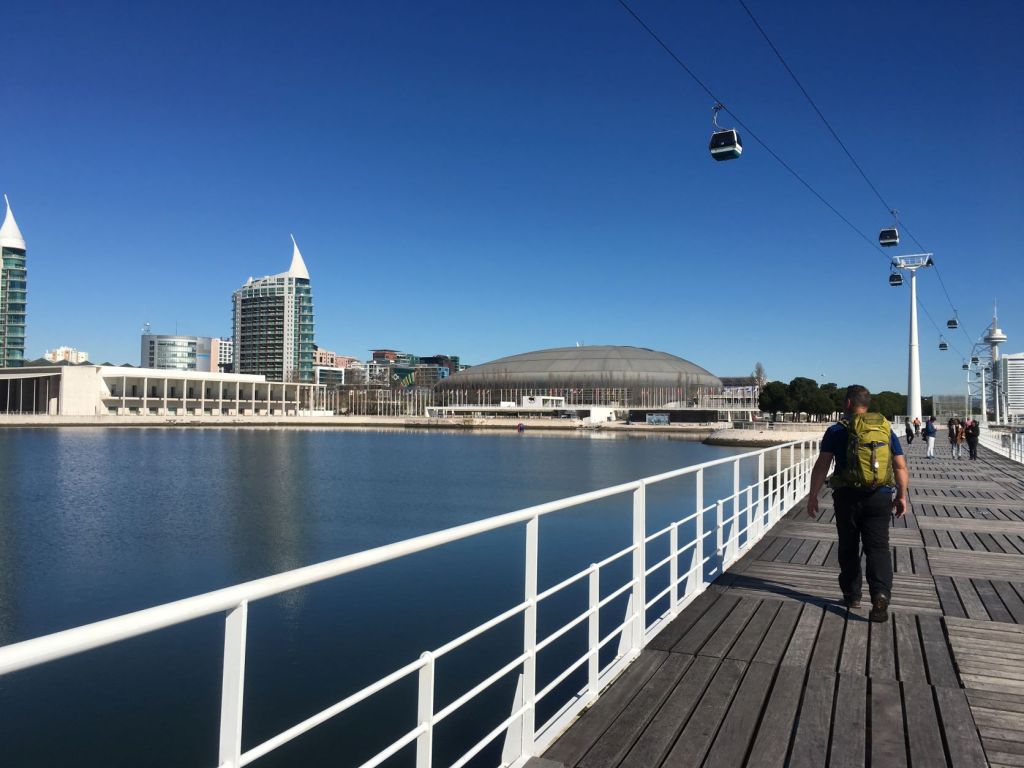
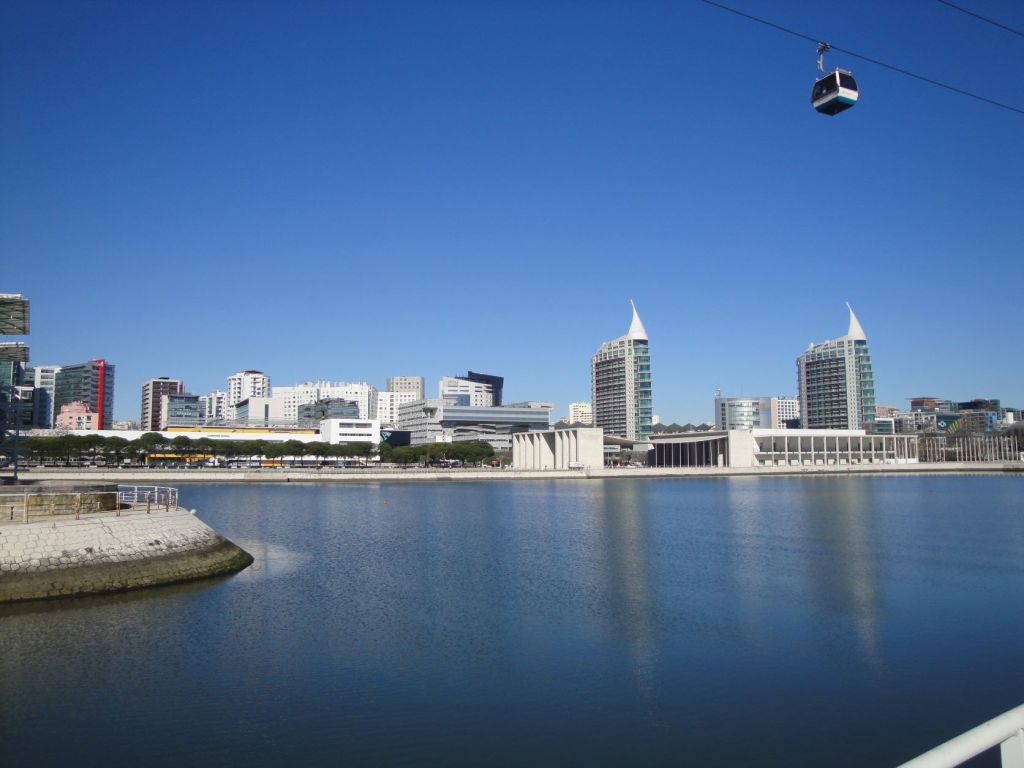
We also walked past the Vasco da Gama Bridge. This is the second longest bridge in Europe (after the Crimean Bridge – however, the Crimean Bridge was recently damaged with the ongoing war between Russia and Ukraine when an explosion caused midway sections of one of the two carriageways of the bridge to collapse into the sea – Wikipedia).
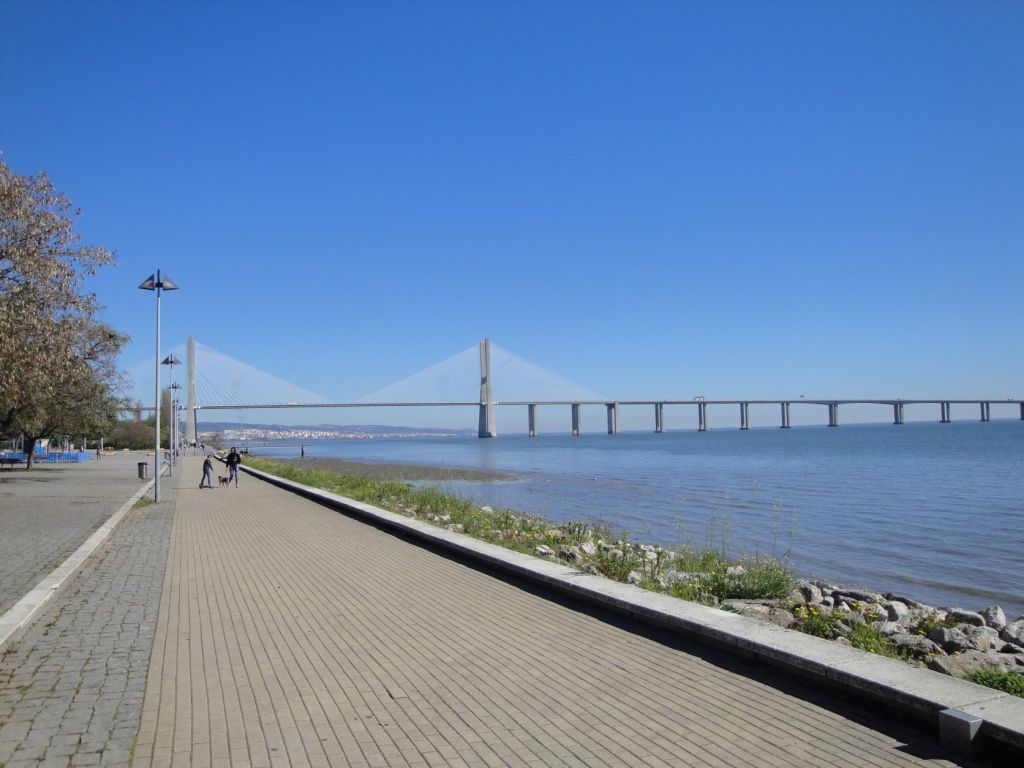

Construction of the Vasco da Gama Bridge began in 1995 and was officially opened in March 1998, just in time for the Expo 98, the World’s Fair that celebrated the 500th anniversary of the discovery by Vasco da Gama of the sea route from Europe to India.
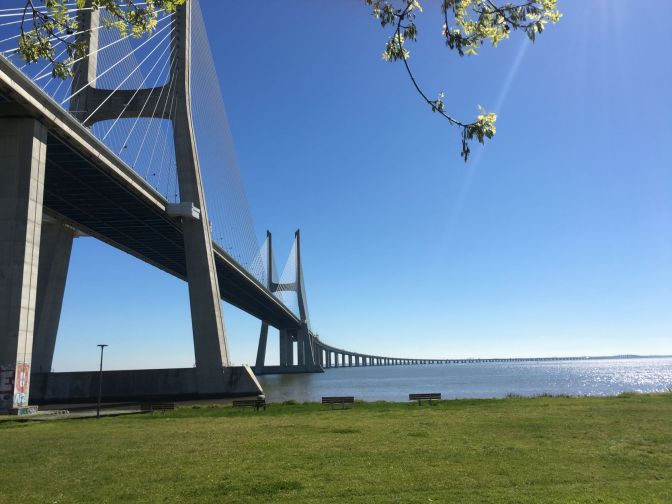
The bridge is more than 12km (7.5 miles) long
We ended our walk through the Parque das Nações with a view of a bronze statue of Catharina de Braganza. She was the daughter of King John IV of Portugal and left Lisbon in 1662 to marry Charles II, after which she became Queen of England, Scotland and Ireland.
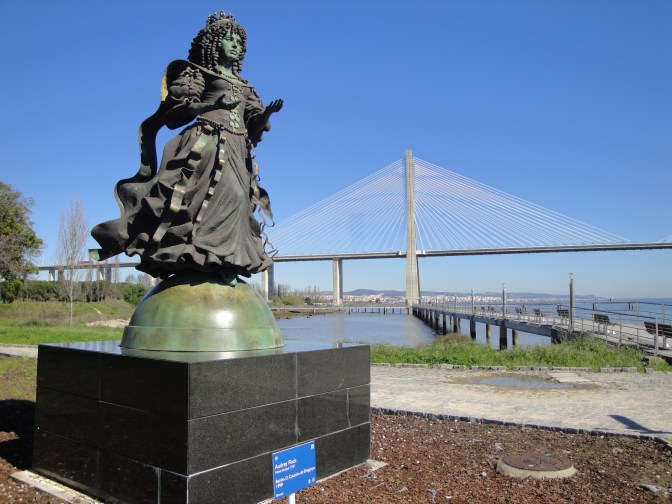
Statue of Catharina de Braganza with the Vasco da Gama Bridge in the background
There is so much more of Lisbon that we wanted to see, but this time it was not meant to be. We loved the introduction to our first Portuguese city and couldn’t wait to see more of this amazing country!
Stay tuned, because we will soon introduce you to another city on the Portuguese Camino.
You can read about our stay in Lisbon, while we were getting ready for the Portuguese Camino, here
 Wet and Dusty Roads
It’s easy for me to forget what a lovely city Lisbon is. We’ve been a few times and I would like to go back and see the Christmas lights, but the weather is miserable at the minute so I’m biding my time.
LikeLiked by 1 person
That’s true, isn’t it Jo? I am sometimes surprised to see one of SA’s own cities through a tourist’s eyes … you forget about the beauty when you stay there! Lisbon is a beautiful city (of which we have not nearly seen enough) and I can only imagine how beautiful it must look decked out in Christmas lights! Hopefully the weather will change soon (even if it’s only for a few days)!
LikeLike
Just an overnight stay would be sufficient because we’re going back to the UK at Christmas 🎄 🌟💗
LikeLiked by 1 person
That’s great – to spend time with family and friends over Christmas 🎄. Are the temperatures in the UK the same than in Portugal? We are flying back home (Langebaan) tomorrow to spent Christmas with my mom … exciting!
LikeLike
It was 18C here yesterday with torrential downpours and -2C in the UK, crisp and bright 🤫☃️❄️🎄. Have a fabulous time!
LikeLiked by 1 person
Ouch … I don’t know which one I would prefer! You too 🌸
LikeLiked by 1 person
Looks like you had a great time exploring Lisbon, Corna. One of the best parts of strolling through the historic heart of Portugal’s cities — like Lisbon, Porto, and Lagos — is encountering the stunning decorative tiles that can be found covering the facades of both medieval and more modern homes, restaurants, cafes, churches, shops, and train stations. Thanks for sharing and have a good day 🙂 Aiva xx
LikeLiked by 1 person
Those decorative tiles were amazing … we looked for them in almost every city (and small town). Portugal held an incredible charm for us and we really enjoyed our walk through this beautiful country. Thanks for your appreciated comments as always Aiva. Have a nice weekend 🌸.
LikeLiked by 1 person
Lisbon certainly does look a very handsome and charming city. Rossio station is a very beautiful building, and I love all the squares, the wide river with its bridges and the hilly configuration of the city. The views were certainly amazing from the fortress. The time you had in the city was short, but you made the most of it. Lisbon might be one of our travel destinations in 2023. I’ve never been and Sladja loves the city. Enjoy the holidays.
LikeLiked by 1 person
That’s the word Leighton … a charming city! And hilly, very hilly! Oh, I’m with Sladja here … Lisbon is beautiful and worth a (long) visit! I’m sure you (who like your history), will enjoy this city a lot! Thanks for reading (as always), you know we appreciate it. I’m not sure whether you are going anywhere this holiday (and if you have holiday 😀), but if you do, take care and enjoy. We’re flying to Cape Town tomorrow and then it’s off to Langebaan (and some camping)!!
LikeLiked by 1 person
Have a great time! We will stay in Tbilisi and take a few days off to visit some restaurants and cross off a few more sights.
LikeLiked by 1 person
Lisbon is lovely, a nice compact city to walk around, despite the hills.
LikeLiked by 1 person
That’s true Jude, we were surprised how much we could see by just walking (or taking the lifts from the one street to the next)!
LikeLiked by 1 person
Yep, Lisbon is hilly all right. Not surprised you tried to conserve energy before the pilgrimage – it would be easy to wear yourself out too soon in Lisbon.
LikeLiked by 1 person
I think Lisbon is a good training ground for the Camino .. all those hills! But we loved our short stay and know this is definitely a city we would like to come back to and explore more (while sipping on more of those fruity sangrias 😉).
LikeLiked by 1 person
Thanks for doing the Portuguese cities, I love Portugal. It is such a unique place. You would think that it would be almost the same as Spain, but it isn’t.
LikeLiked by 1 person
You’re right Carl, we were almost expecting to see the same landscapes and food in Portugal than what we experienced in Spain … but like you said, not at all. Well, the one thing that there is more than enough of in Portugal is their cobbled walkways … how I hated them with my blistered feet! I hope you’re going to enjoy this series as much as our Spain one!
LikeLike
Thursday night we were watching a movie set in Lisbon (Night Train to Lisbon) and I was enjoying seeing scenes from Lisbon, then I pointed out to Dian those &%$#*@ cobbled walkways.
LikeLiked by 1 person
Oh, I will have to search for this movie … it’s always nice to recognise scenes in a movie which you have visited! Yes, those cobbled walkway – it’s beautiful, but not my favourite walkway 😁.
LikeLike
For a large city Lisbon looks very charming. I fell in live with the Portuguese tiles on many of the colonial buildings in Brazil. And you certainly had good weather, the colour of the sky is lovely. Maggie
LikeLiked by 1 person
When Leighton just mentioned now that Lisbon is charming, I thought that’s a good word to describe the city! Like you, we also loved the tiles … I might have a 100 (or more) photos of these 😄. It was quite chilly, but at least the sun was shining … the rain only came a few days later (while walking of course). Thanks for reading Maggie, have a great weekend.
LikeLiked by 1 person
Ah, one of my favourite European cities! I’ve been many times but it’s lovely to see it again through your eyes. I too love the tiles and the pasteis del nata 🙂
LikeLiked by 1 person
We didn’t really know what to expect when we arrived in Lisbon, but were amazed by the Portuguese history and beautiful views from the lookouts. The tiles were one of the beauties of Portugal that we just couldn’t get enough of (like their Pastel de nata’s). I’m glad I could share our impressions of Lisbon with you – who already know this city so well!
LikeLiked by 1 person
This is quite amazing. Yours are actually the first photographs I have ever seen of Portugal. The more amazing because one of my favourite travel buddies is Portugese and when working at JFK I could have flown there easily on free tickets. How did I not find time in 38 years. Unbelievable. I think we all chose the more distant places, thinking we could do Europe any time. Ester used to feed us good Portugese food. I remember her fresh sardines (maybe what you had there? They were quite large) She also made those custard tarts. She did the Camino Santiago a few years ago. Her husband is a wonderful man who fled from behind the iron curtain and arrived with not a word of English so he accepted a job loading bags for BA . Very soon he joined us in passenger service. We had a lot of laughs together. Your photos are great and so, apparently was the weather!
LikeLiked by 1 person
It’s so true what you say there Carolyn … that we would rather visit the far places and leave the closer destinations for later in life. We did the same – Namibia is just around the corner from us and we have never paid a proper visit to this beautiful country! Yes, I think someone else also mentioned that it might be sardines – later in our walk we saw how sardines were being prepared on open fires along the coast and I realised that must be what I enjoyed early on in our Camino. Thank you for sharing the wonderful story about Ester and her husband, you seem to have fond memories of them. Oh, and as for the weather … the first few days were great, but then we had more than our fair share of rain! But nevertheless, we even enjoyed that 😄.
LikeLike
Lisbon looks fabulous! We’ll be there in January, so the timing of you post is perfect for me. You have some great suggestions, and I’m looking forward to seeing some of the same sites you saw. Thanks Corna!
LikeLiked by 1 person
I’m pretty sure you will enjoy Lisbon … not sure how the weather will be in January (it’s winter then and I suppose it might be cold). But definitely a city with so much history and worth a visit. Don’t forget to enjoy a ride on the tram (then you can tell me all about it 😀). And there will be many opportunities for sketching …
LikeLiked by 1 person
I’ve visited Lisbon twice and enjoyed the city both times. Your post brought back fond memories.
LikeLiked by 1 person
I’m so happy our post brought back good memories. Lisbon is a lovely city – full of charm and history … no wonder you went back twice!
LikeLiked by 1 person
A fabulous city for sure. Thanks for the tour.
LikeLiked by 1 person
I’m glad you enjoyed the tour (I enjoyed your posts about Lisbon just as much).
LikeLiked by 1 person
Lissabon is n pragtige plek met so n ryk geskiedenis!
LikeLiked by 1 person
Jy’s reg, Lissabon het ‘n lang en interessante geskiedenis. ‘n Pragtige stad met soveel mooi strate (en heuwels) – ons het dit vreeslik geniet om bietjie te verken!
LikeLiked by 1 person
Lisbon is absolutely beautiful, thank you Corna for allowing me to come along 🌸💕 I absolutely loved the natas too 😊
LikeLiked by 1 person
Lisbon is indeed one of the most beautiful old cities we have seen on our Camino … well, until we got to Porto a few weeks later 😉. Those Portuguese custard tarts are heavenly delicious – I sometimes had one for breakfast while we were walking!
LikeLiked by 1 person
Glad to follow along on another one of your Camino recaps and see some of the cities along the way. Lisbon looks lovely. The views from the terrace of your hostel are beautiful, especially at night with all those twinkling lights. Nice shots of the Vasco da Gama Bridge. It looks like it extends on forever.
LikeLiked by 1 person
Thank you for joining us (again) on another Camino. The cities on this one are not that big, but still beautiful! The Vasco da Gama Bridge reminded me a bit of one of your last posts (I had to go look it up) … the Confederation Bridge you featured in your Prince Edward Island post (they are very similar – well, almost).
LikeLiked by 1 person
I remember being charmed by Lisbon, the tiles, the picturesque streets, the sangria. Enjoyed your tour.
LikeLiked by 1 person
Lisbon was definitely the perfect place to start our Portuguese Camino! It was such a charming city (oh, and hilly of course 😄).
LikeLiked by 1 person
Lovely captures of a lovely city.
LikeLiked by 1 person
Thank you so much! Lisbon is such a beautiful (and picturesque) city! We loved our short visit there!
LikeLiked by 1 person