February 2022
Exploring the Stadsaal Caves/Grotte (“City Hall Caves”) & Rock Art Paintings
We have driven past the entrance to the Stadsaal Caves many times before – always on our way to a camping weekend or back home. But now, we decided to make time and pay a visit to this unique place, and it was breathtaking beautiful!
Permit:
Keep in mind that you will need a permit to visit the caves and rock art paintings. It can be obtained from the nearby farms (Kromrivier and Dwarsrivier) or Cape Nature’s Office at Algeria (40km from the Stadsaal Caves). There is a locked gate at the site, and you will receive the code for the padlock on your permit to get access to the area.
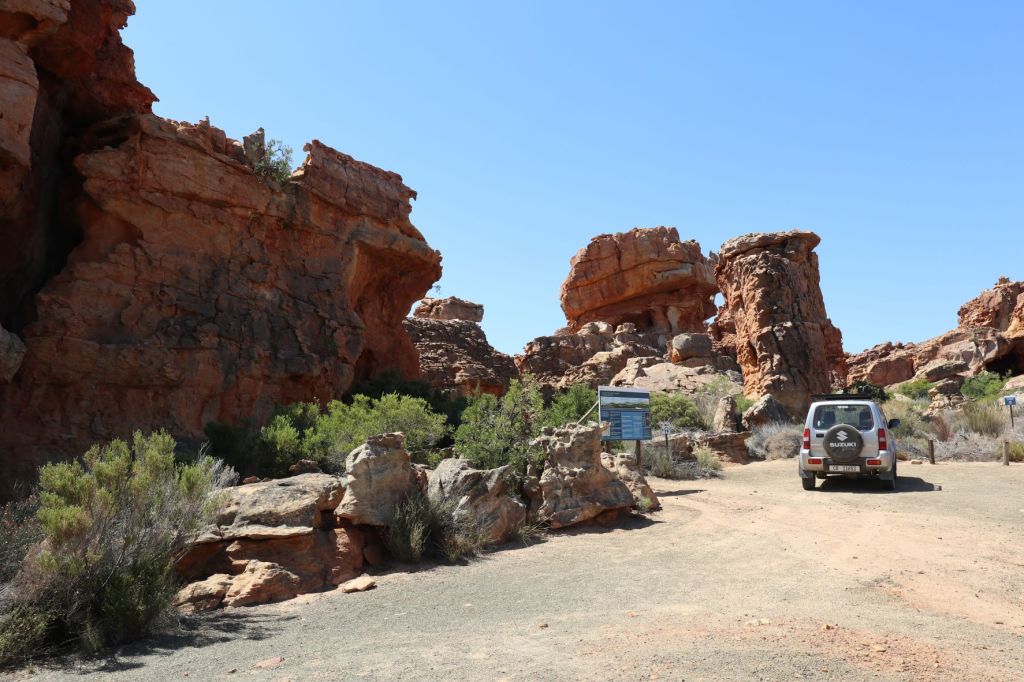
Where did the name originated from?
The name “Stadsaal” was officially given to the cave after the National Party held a planning meeting there just before coming to power in 1948. However, it was used as a community meeting place well before that. (Source: Cape Nature)
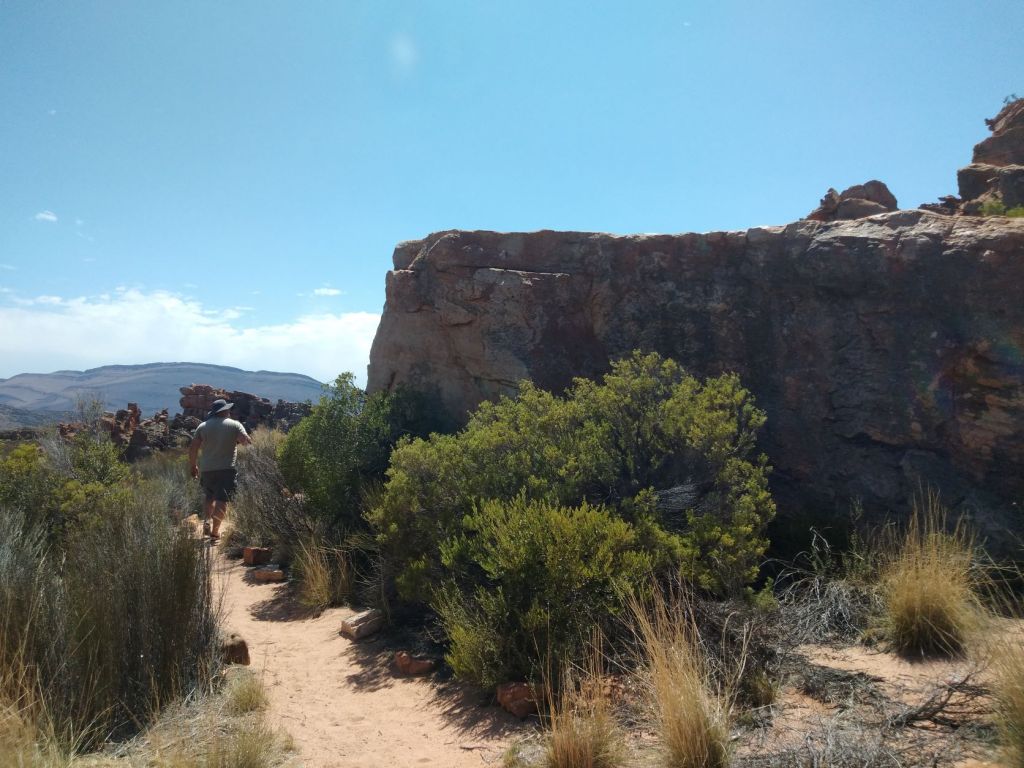
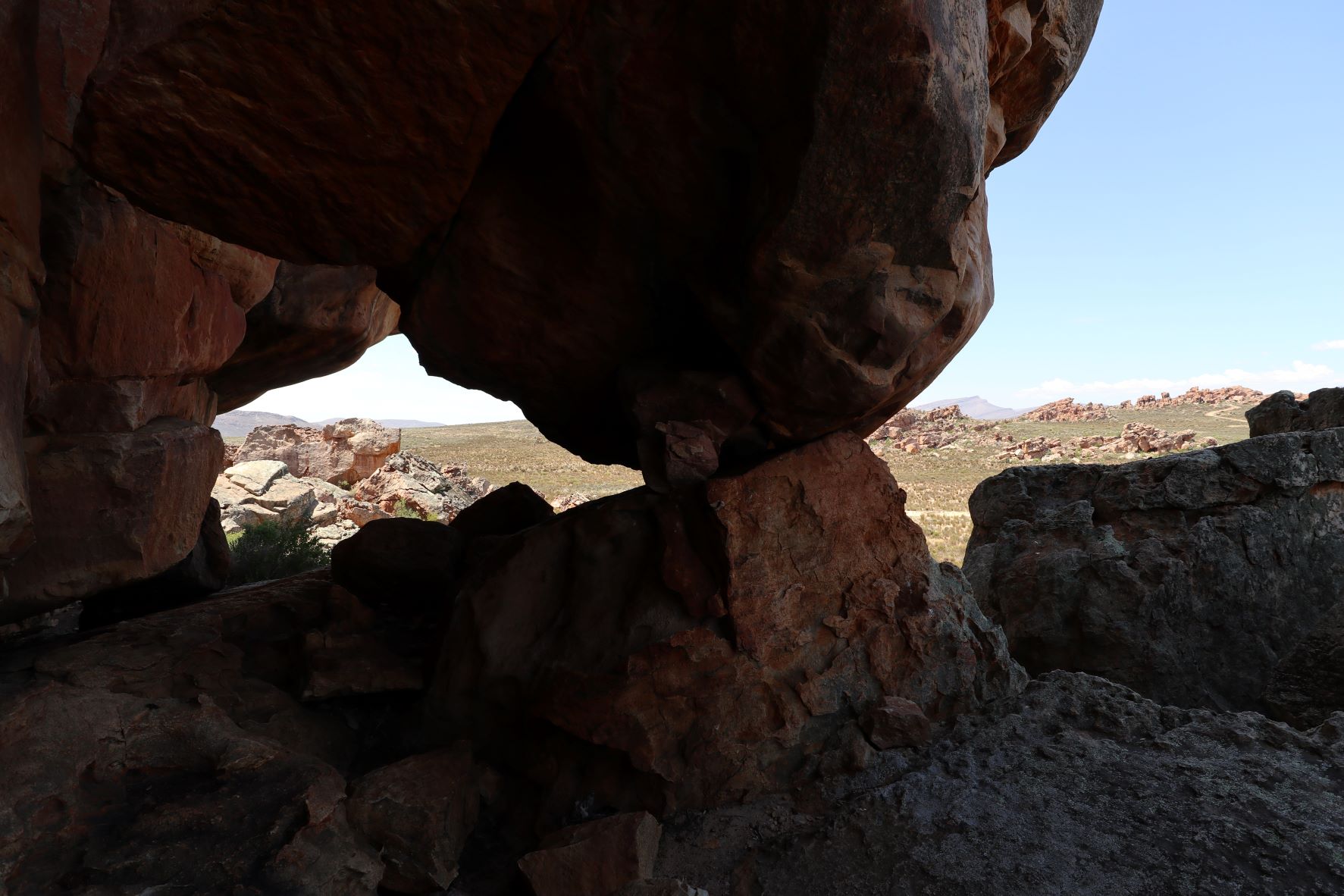
Besides the main cavern area, there are many smaller openings and unique formations to be seen – all of which are accessible thanks to a trail that goes around the entire rock formation (starting and ending at the parking area).
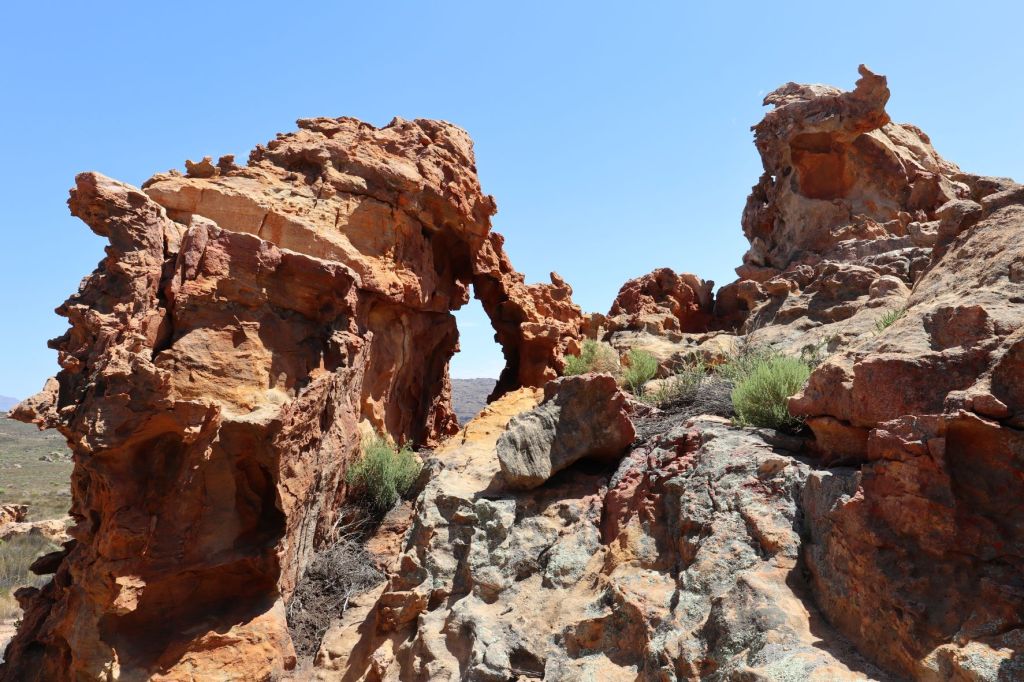
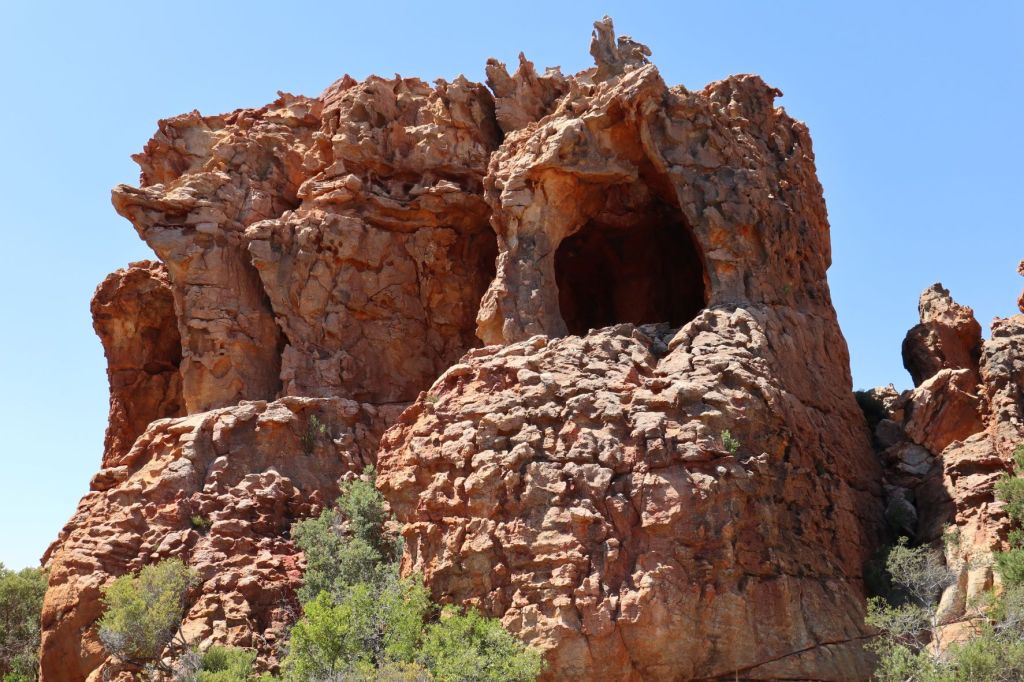
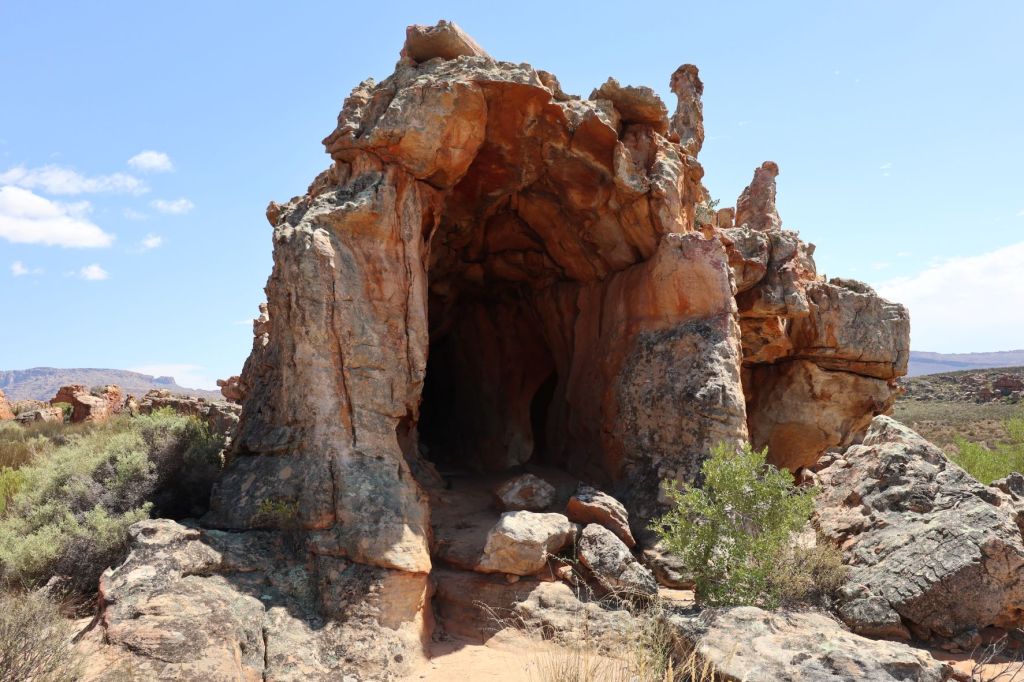
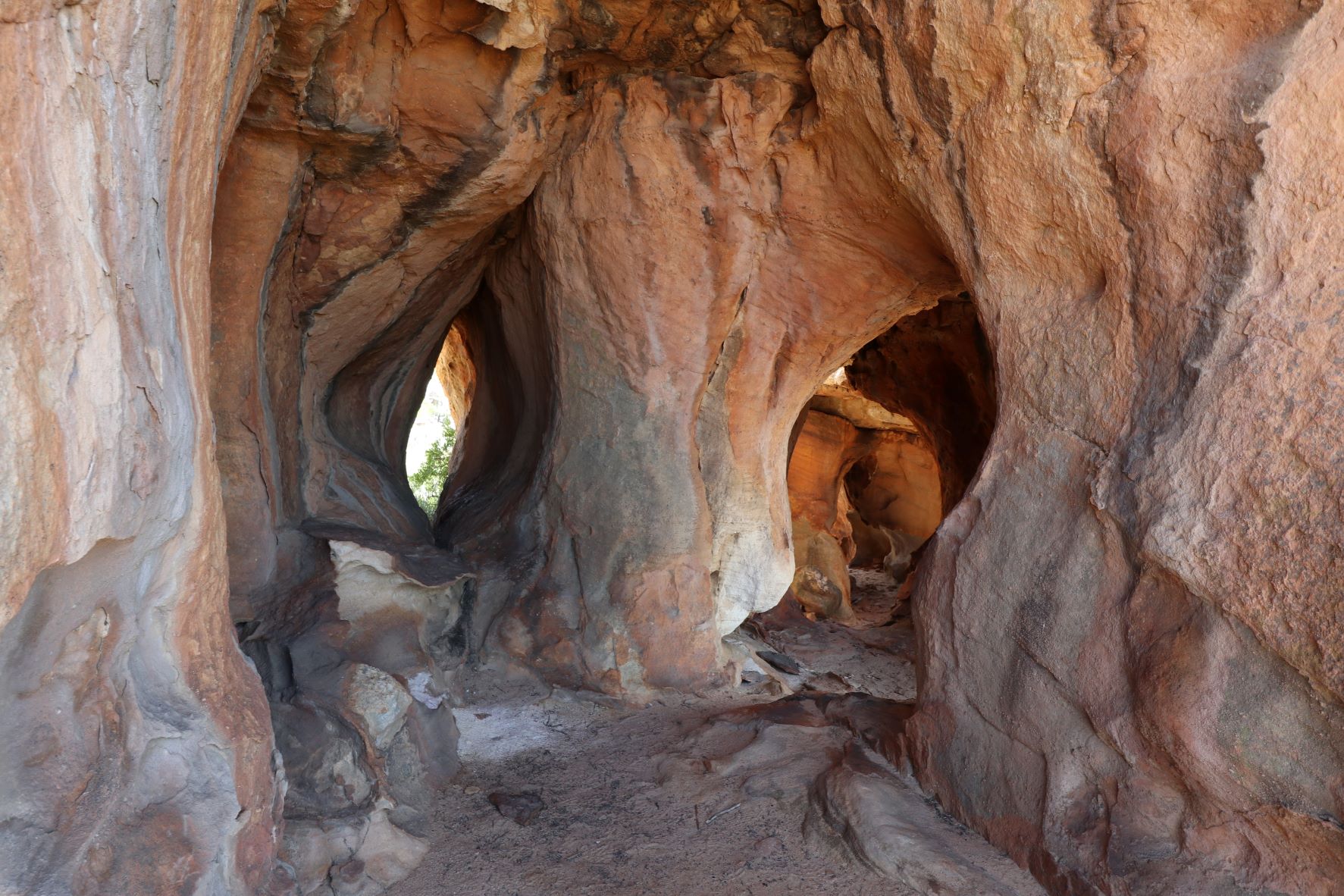

It will take you about 30 minutes to walk around at a leisurely pace … but it might take you much longer when you start to take photos of the unique rock formations (something we did, only to leave the Stadsaal Caves after about 2 hours).
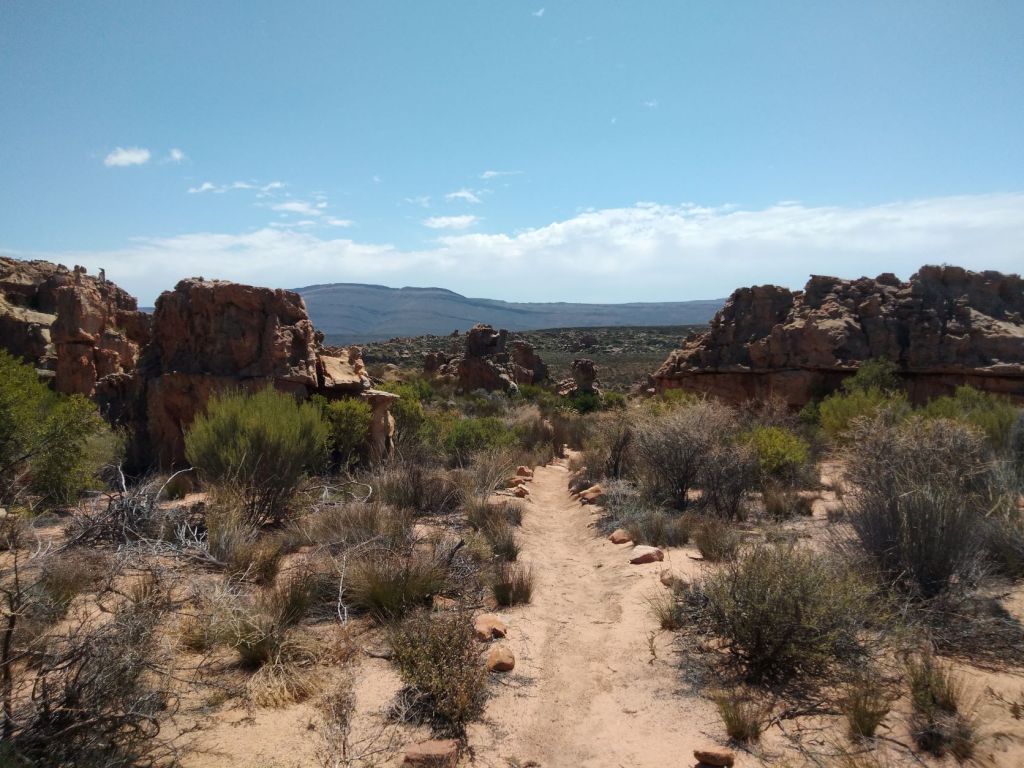
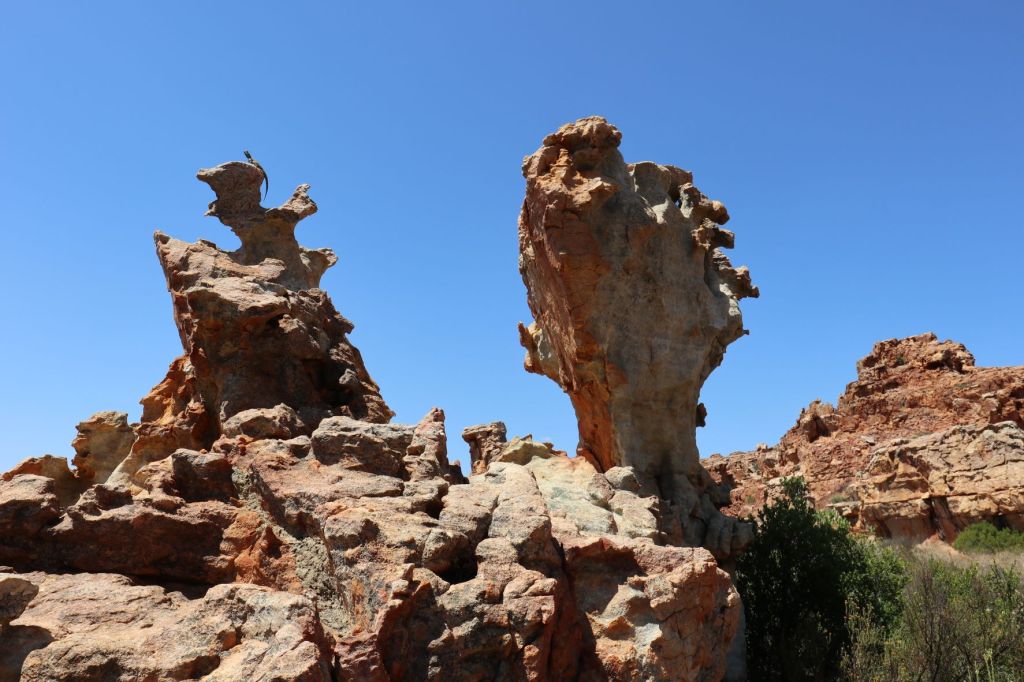
As always, we were trying to figure out what figures/animals we see in the rock formations … and had much fun in choosing names for all the rocks!
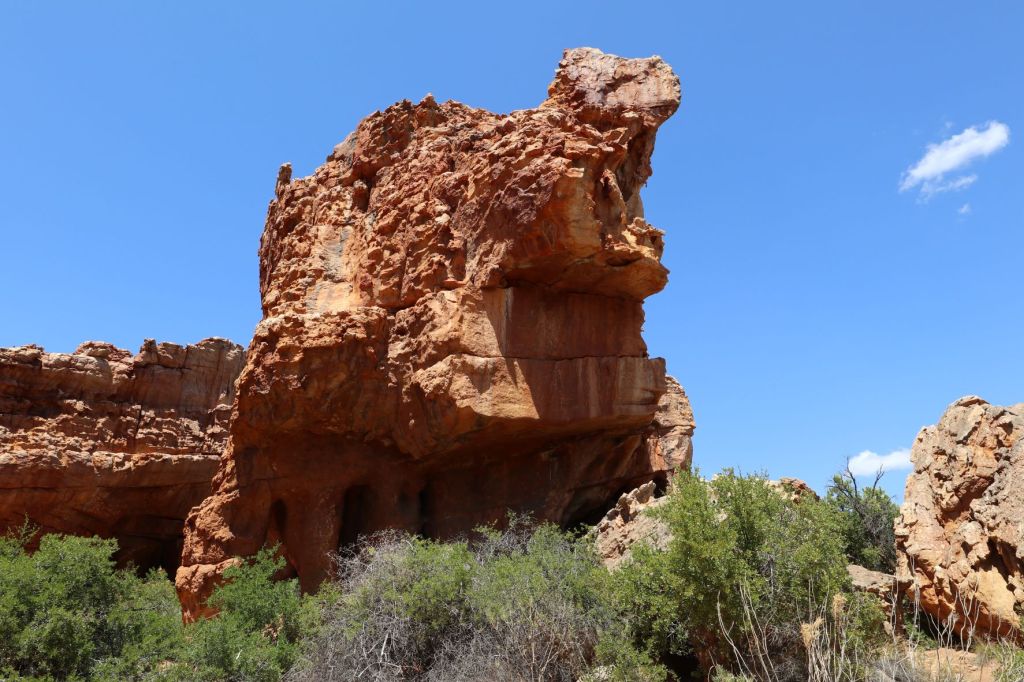
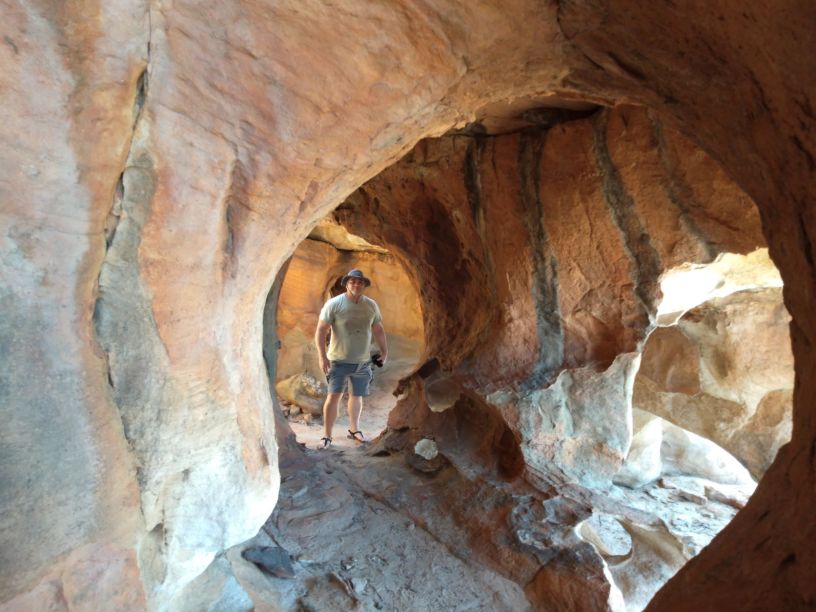
Main cave:
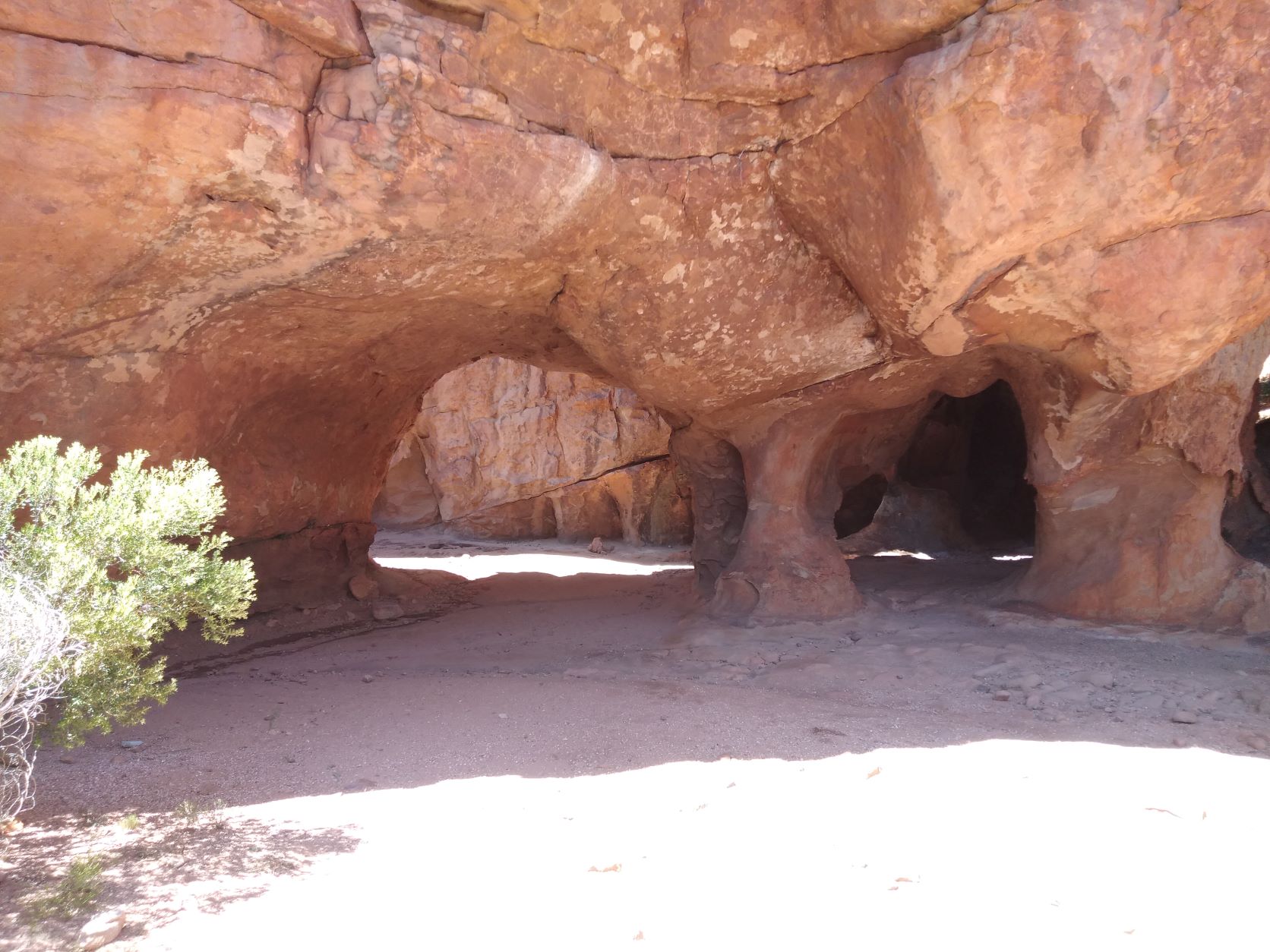
This cavernous dome has been carved out of the rock by thousands of years of wind erosion and other weather factors.

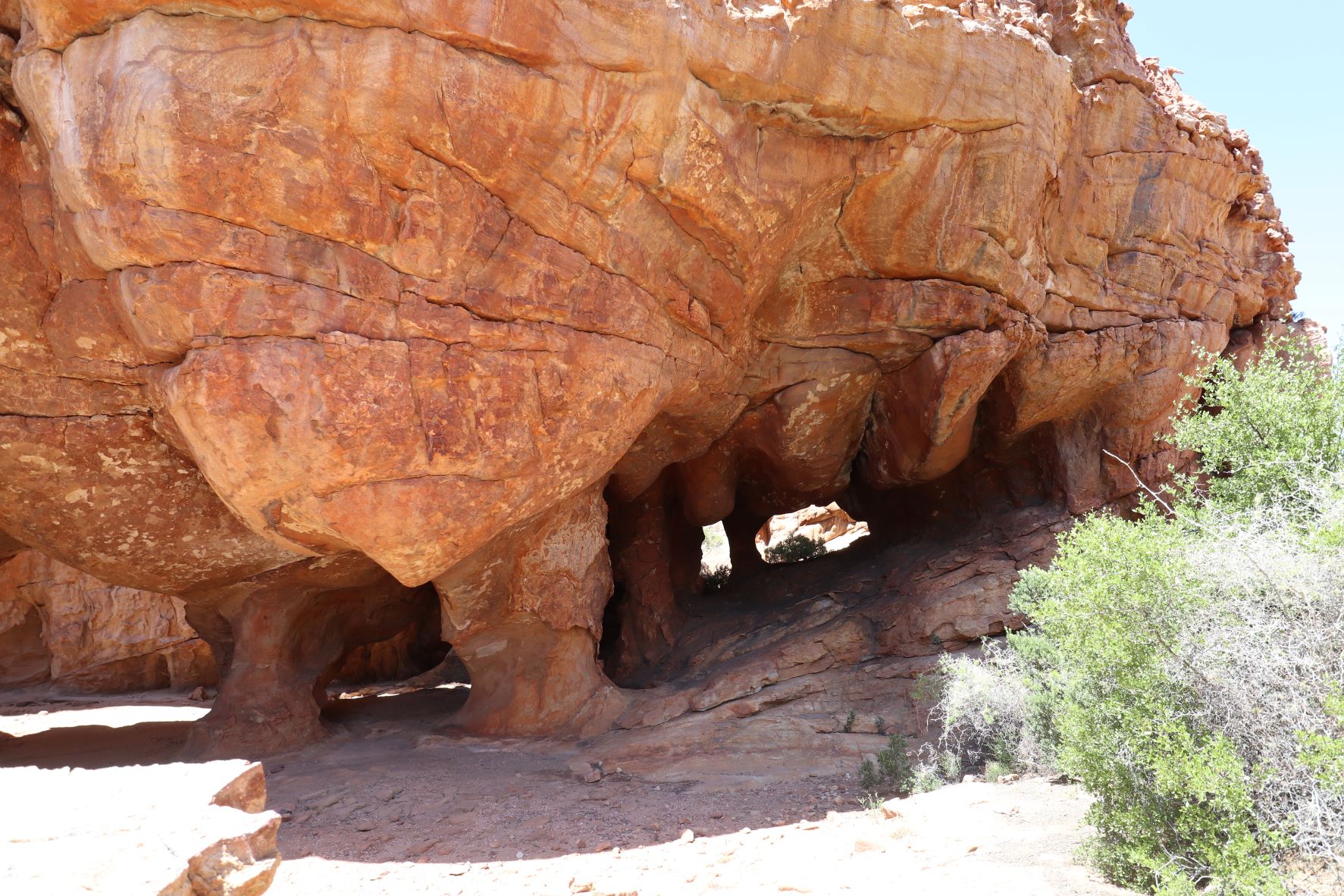
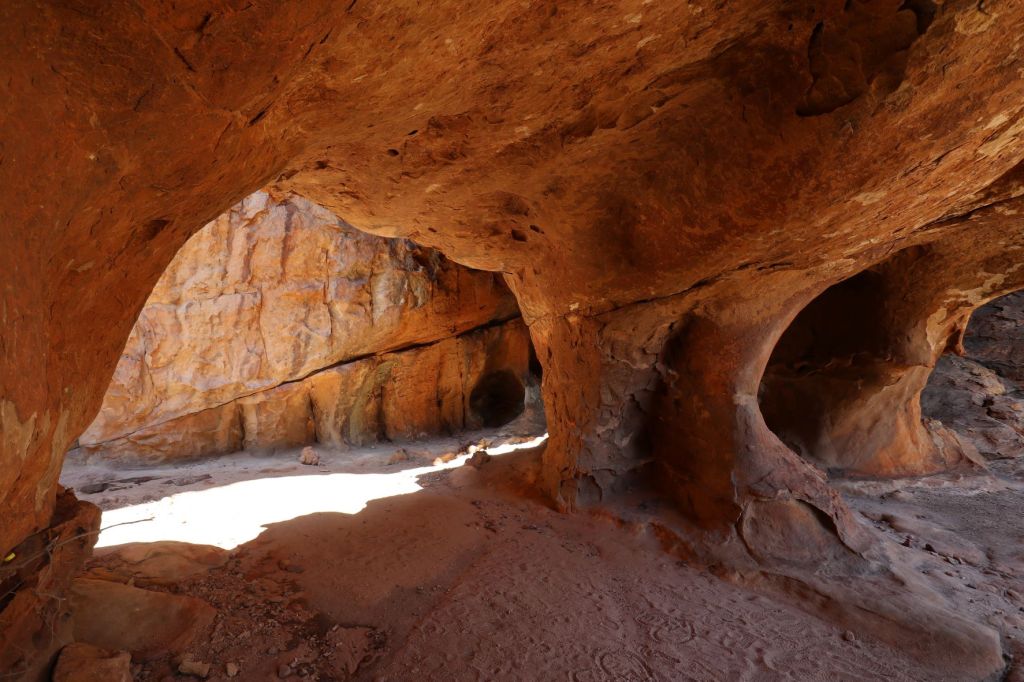
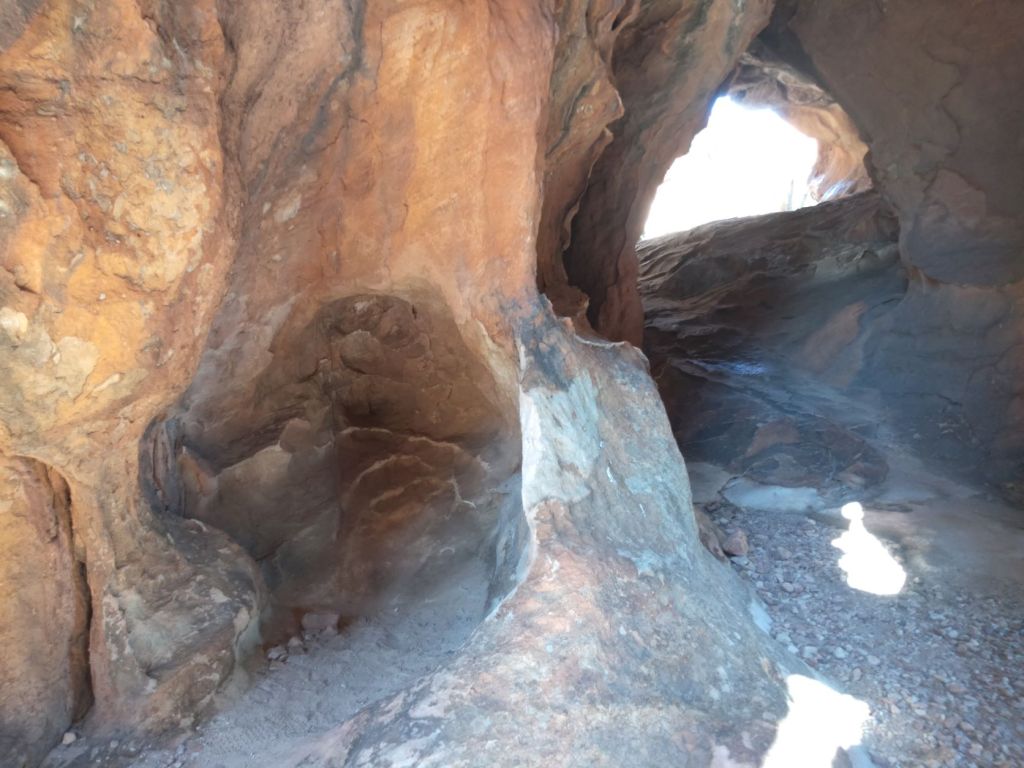
Memories of a visit back in 1986:
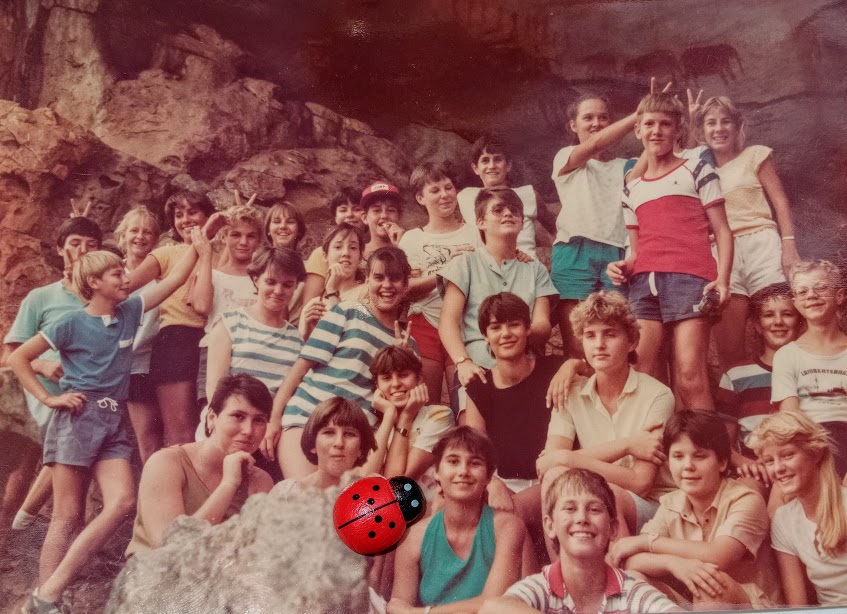
I must confess, this was not my first time visiting the Stadsaal Caves. When I was in secondary school in Clanwilliam, our class visited a classmate’s farm for a weekend in 1986 (a mere 8km from the Stadsaal Caves) … for the sole purpose to witness Halley’s Comet, arguably the most famous comet in history.
To see stars (and comets) clearly, you obviously need little or no cloud cover and very little light pollution – which makes the Cederberg star-gazing heaven! So, back in 1986, I saw Halley’s comet and the Stadsaal Caves for the first time … now, 36 years later, the Stadsaal Caves are even more beautiful than back then (and if I’m lucky, I may see Halley’s Comet again in 2061 on its regular 76-year journey around the sun).
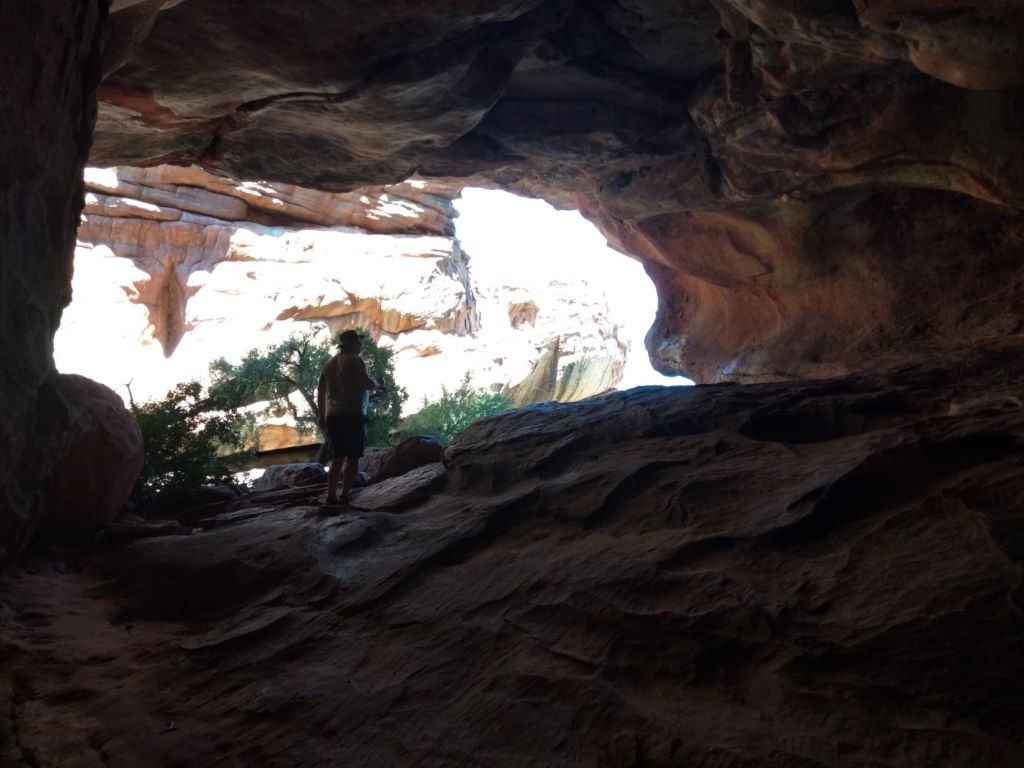
As the previous day, today was another hot day. Which made this visit perfect, because we could find shelter in the cool caves.
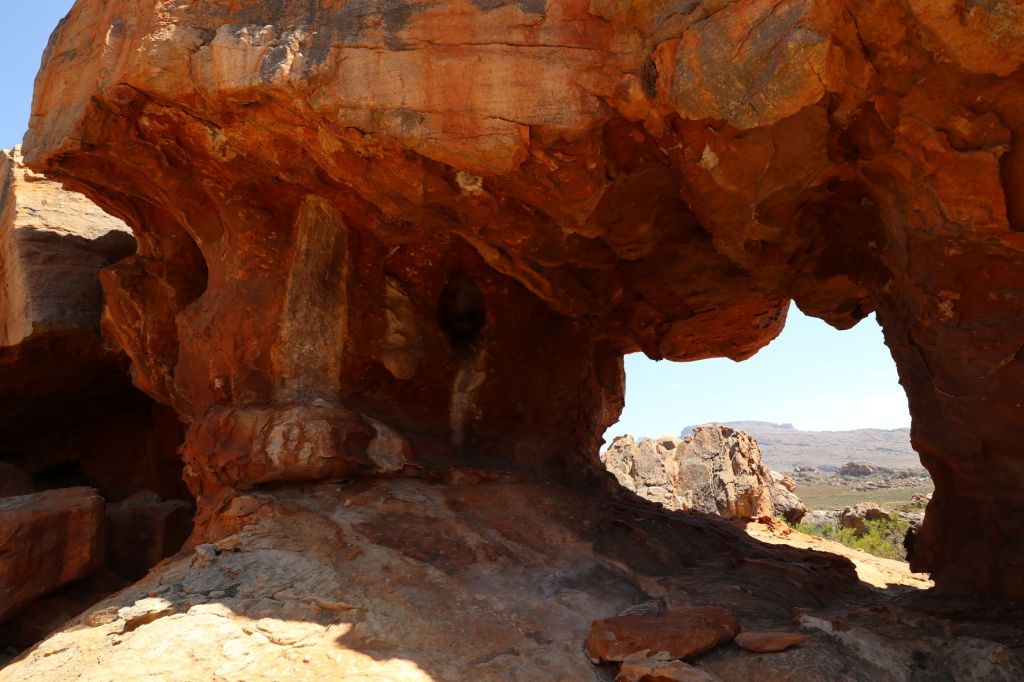
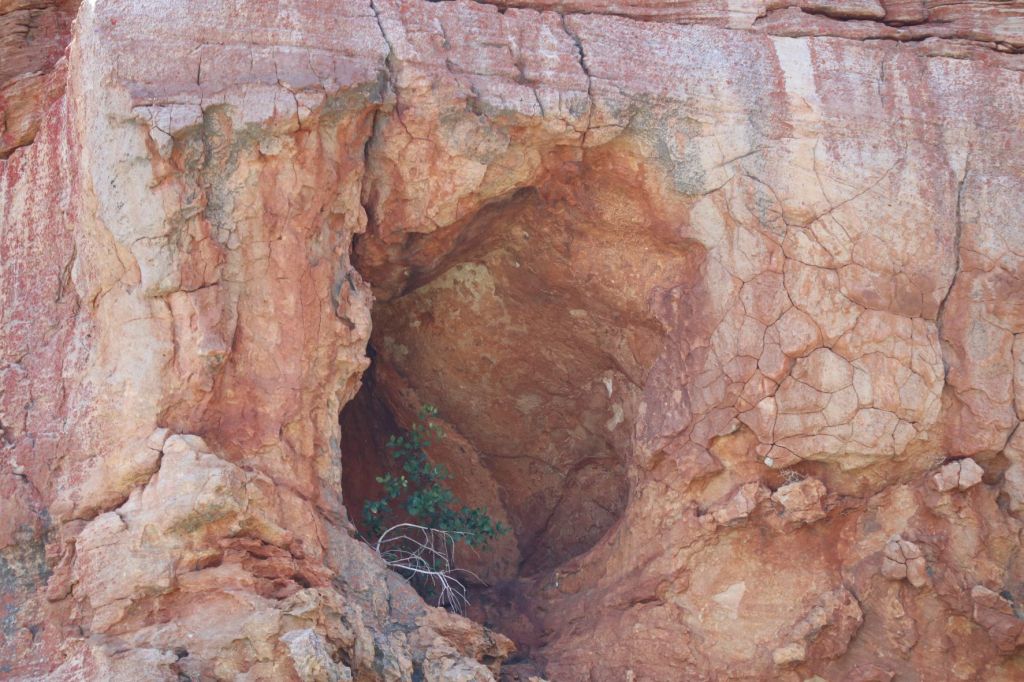
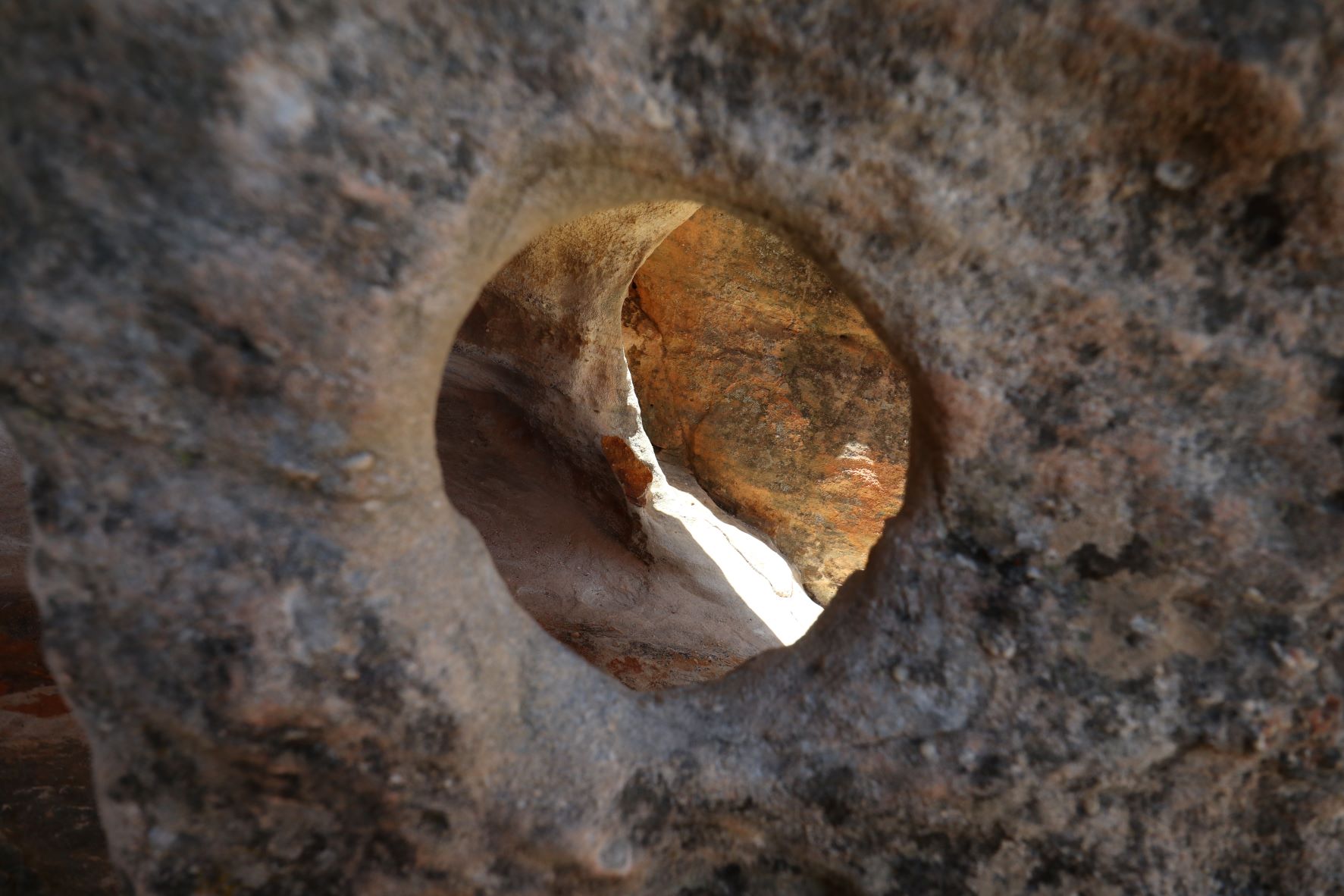
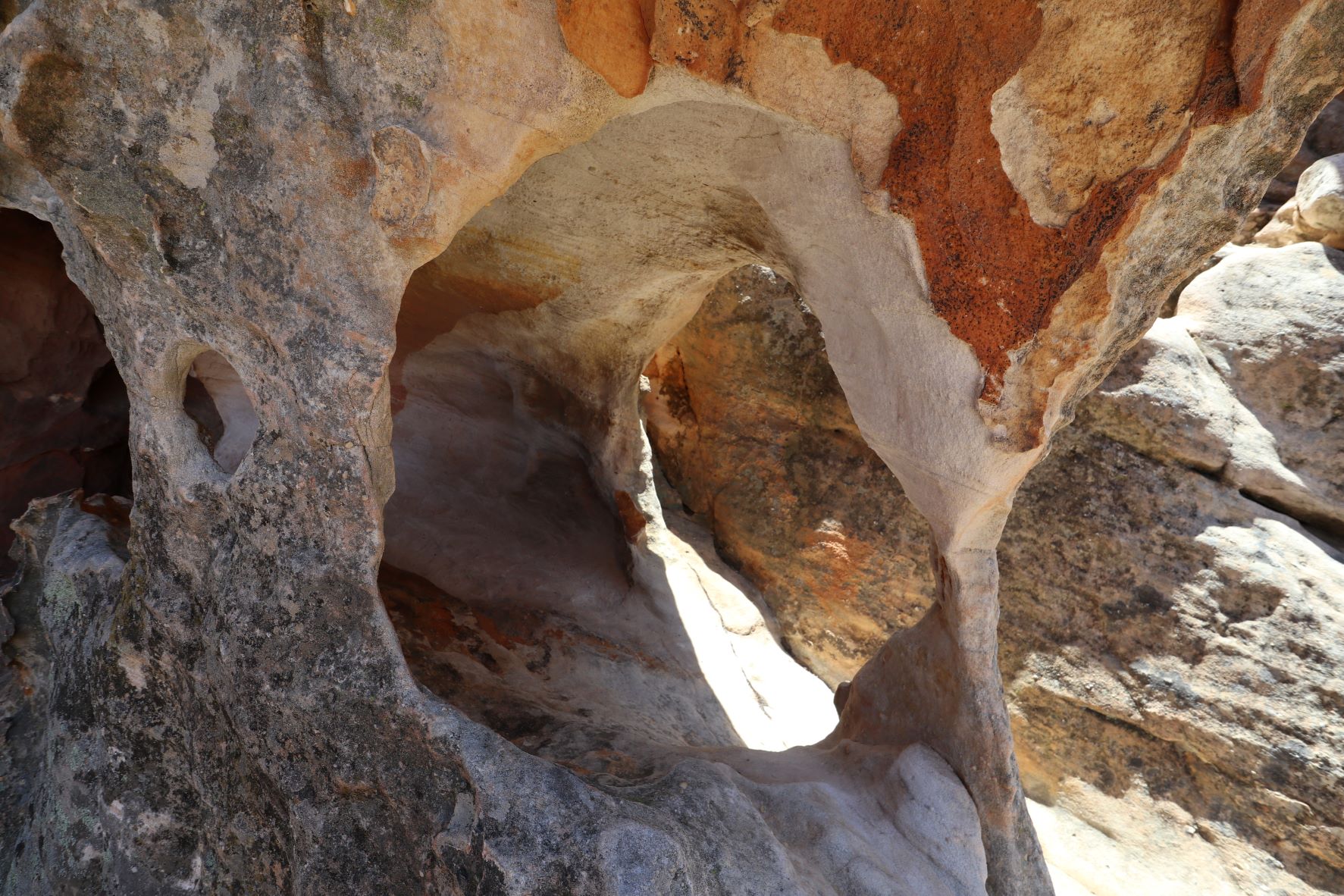
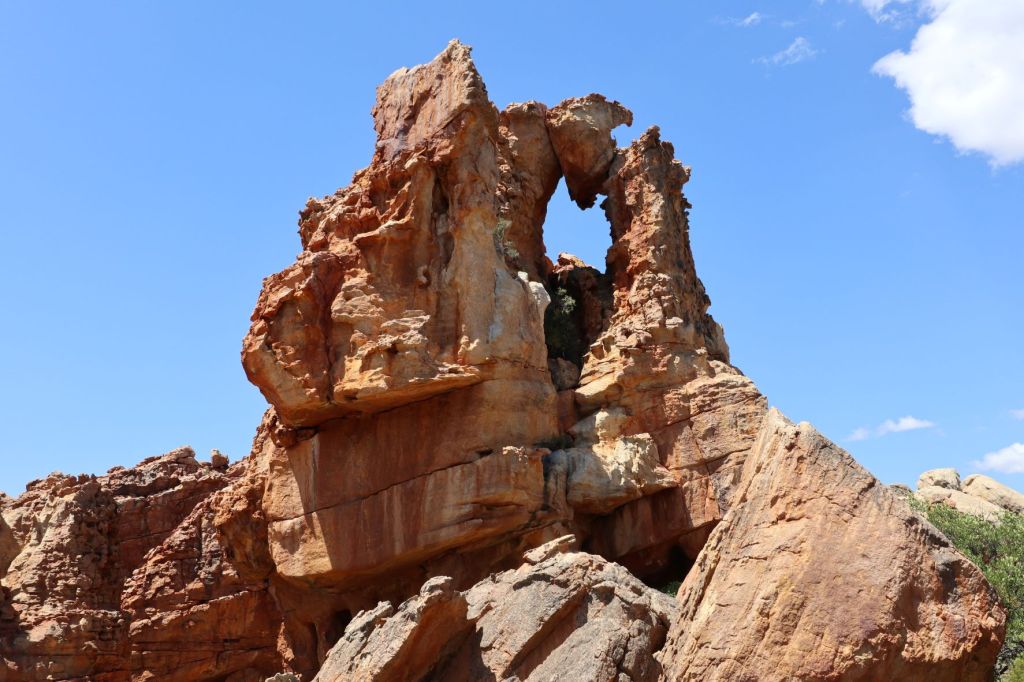
After our walk through the main cave, we walked onto a big flat rock to look back at the caves and rock formations – it is indeed a beautiful sight.
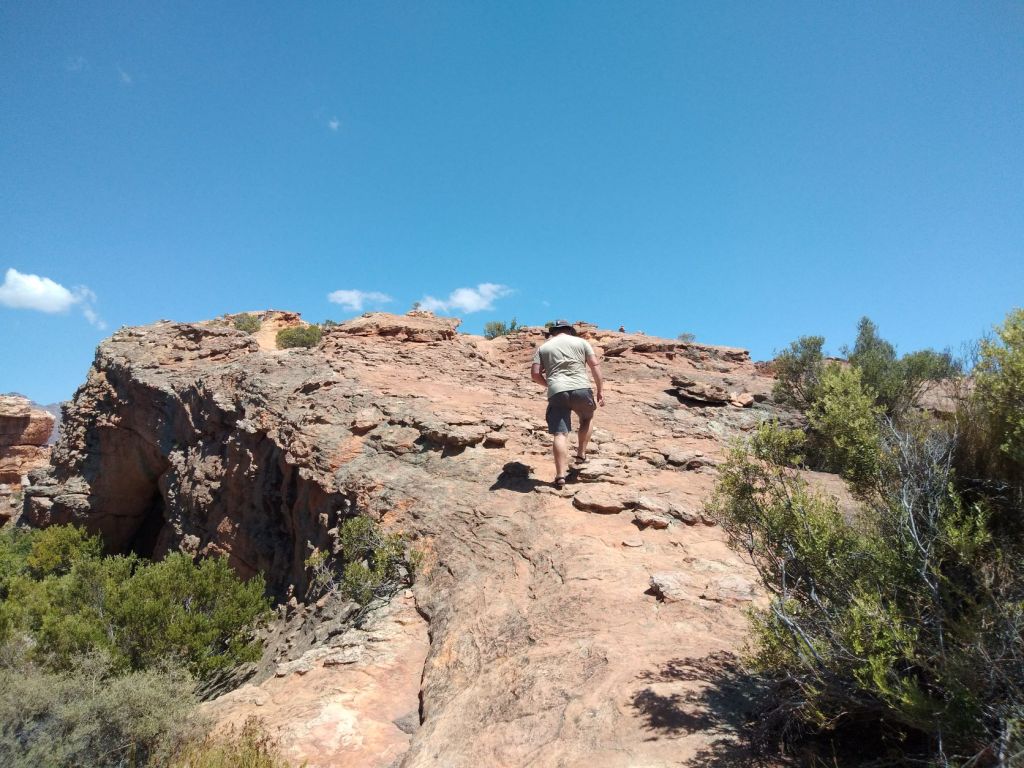
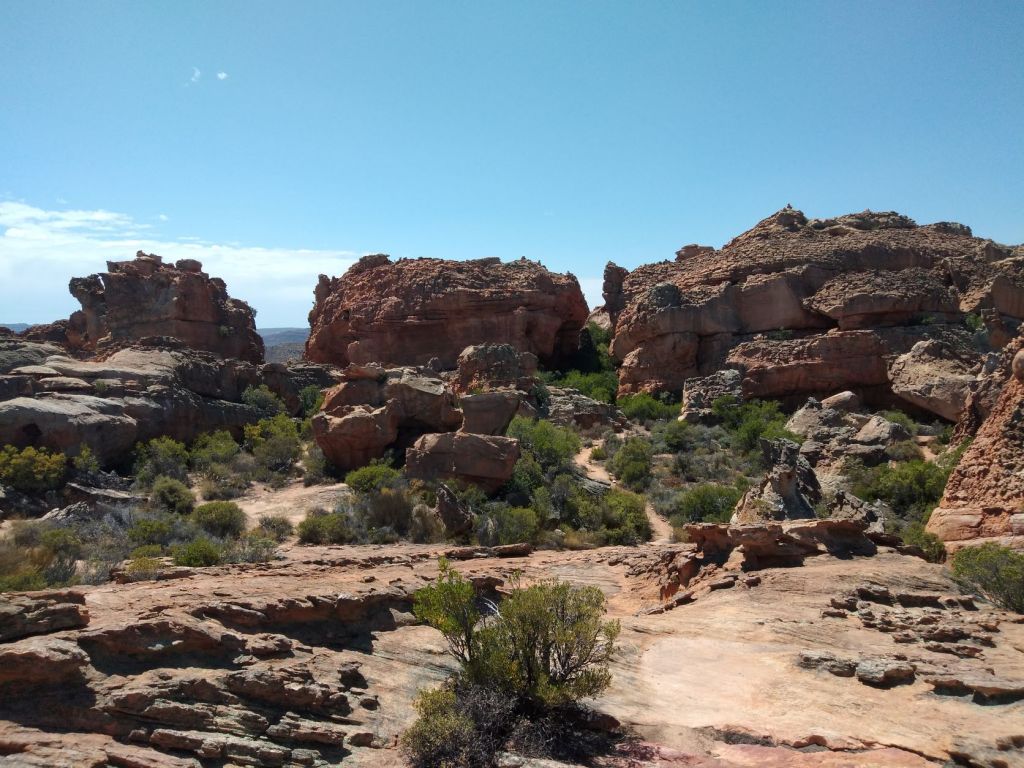
On our way back to the parking area, we found another partial cave. We walked through the narrow openings and once again marvelled at the formations inside the cave.
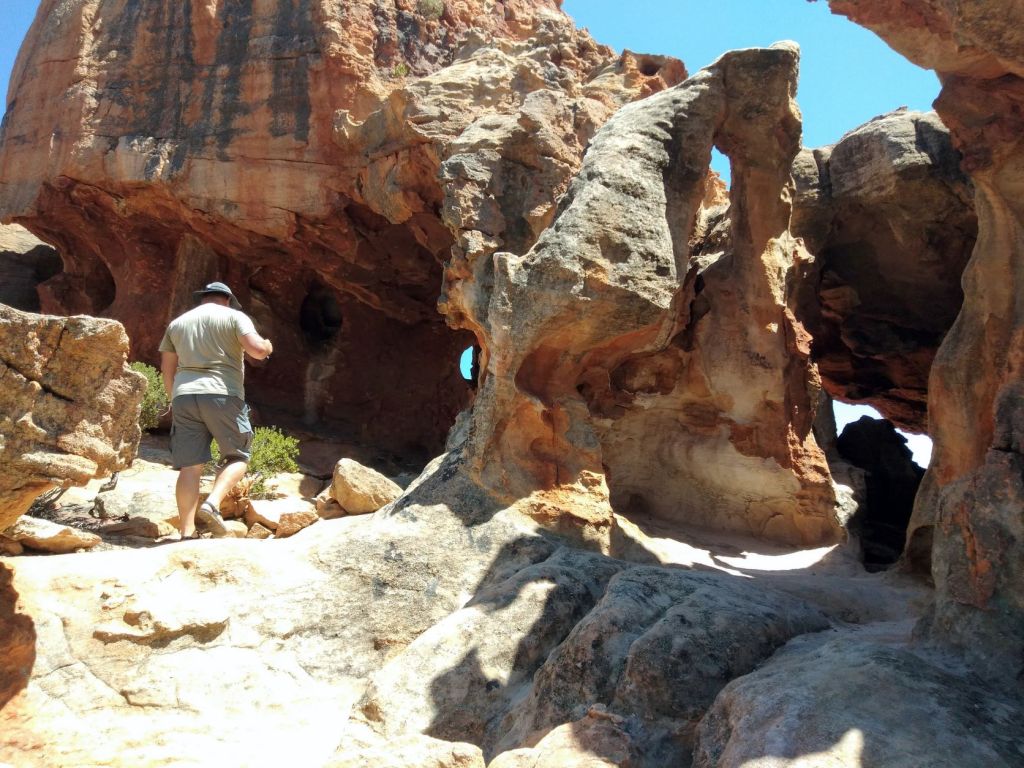
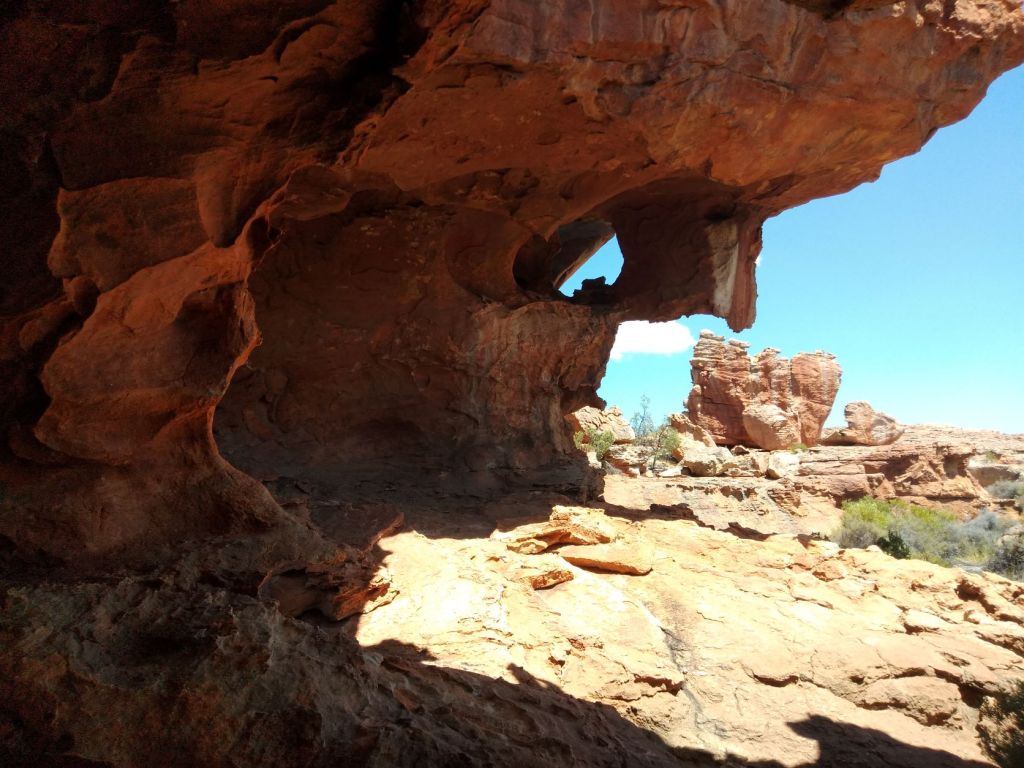
We were truly blown away by the beauty of this place … and bonus, we were lucky enough to have the caves to ourselves to explore! The colour of the rocks (against the blue sky) was really unbelievable beautiful. Don’t miss this when you’re in the area!
Rock Art Site:
When we left the Stadsaal Caves, the road went pass a Rock Art Site and we made our final stop of the day here. The rock paintings were made by the San people (Bushmen) and is very well preserved.
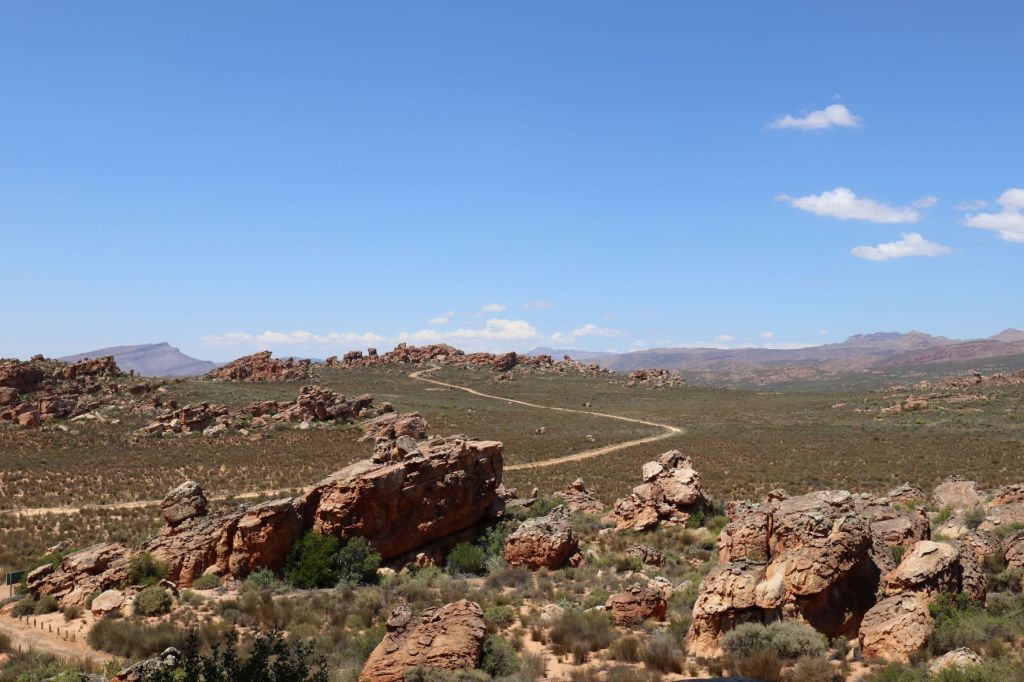
It is a bit of climb to get to the paintings, but nothing too serious. We could actually see the paintings from the parking area but scrambled over the rocks to the top to see them from closer.


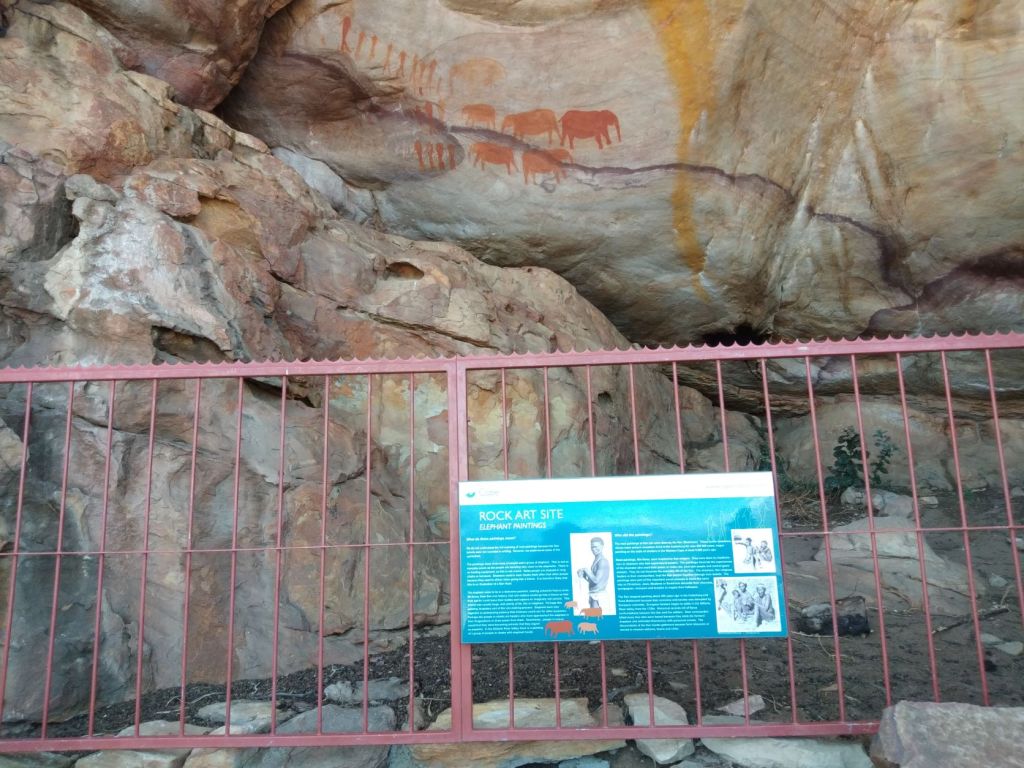
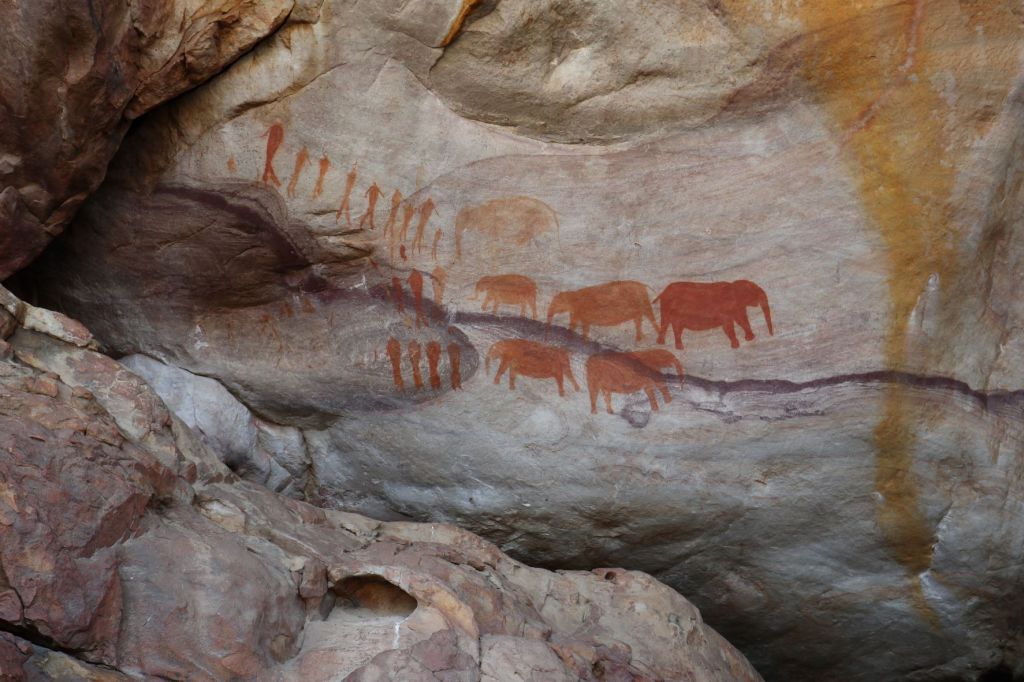
The San’s more ancient ancestors lived in the Cederberg Mountains for over 500,000 years. They began painting on the walls of the shelters in the Western Cape at least 5,000 years ago.
It is believed that rock paintings like these were inspired by San religion. This painting shows three rows of people and a group of elephants and it is likely that this is an illustration of a San ritual.
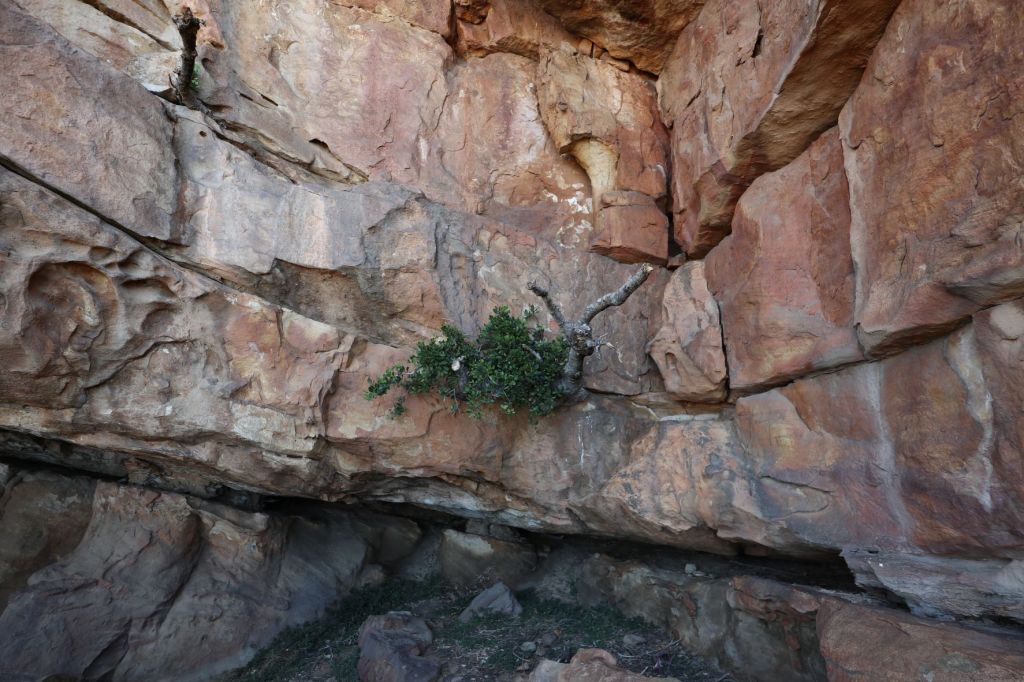
We walked around the area and noticed another tree growing between the rocks – that is quite astonishing! We also had some lovely views from the top of the rocks.

Now, you will remember that I mentioned earlier that I last visited this area in 1986 as part of a school trip. I remembered, while putting this post together, that a group photo was then taken and I had to search for quite some time to find it, but I did! This photo was taken right here at the Rock Art Site that Berto and I visited today, 36 years later.
We had a great day of exploring caves and seeing some amazing rock formations, as well as rock art paintings. Our last excursion will be the highlight of our trip … a hiking trip to the Maltese Cross (you can read about that when you click here).
 Wet and Dusty Roads
Oh how awesome. I wish I was there. I love having fun looking at all the shapes in the rocks.. Seeing different pictures. I think that my mother took me there when I was 8 years old because I remember being fascinated by the rock paintings. 🙋♀️🙋♀️🌹💐
LikeLiked by 1 person
That’s great … I’m sure you saw some great pictures here (other than “just” rocks 😊). There are so many rock paintings in the Cederberg Mountains, but every time I see these, I’m in awe! You should really visit this area (not sure you’ll managed before you leave, but it would be a great “goodbye” gift). 💌
LikeLike
Yes you are right, I would like to try to do that, also in memory of my mother who hiked in the Cedarburg so much.
LikeLiked by 1 person
What a wonderful place. Yes, I could see animals in those formations. As others have said, there are great similarities to places in Utah. There is something so special, so moving about viewing art from so very long ago. I remember Halley’s Comet. I never managed to catch sight of it, wrong place, wrong time. That was special too. I gives perspective, I think. How very small and insignificant we are. Great pictures.
LikeLiked by 1 person
It is a great place Carolyn … besides the stunning rock formations and rock art, it’s quiet and peaceful with just the sound of nature – my kind of place! You’re right, we’re just a tiny dot in this universe (but in my opinion, still important enough, because we breathe and we life) 🌼.
LikeLike
You just have 39 more years to go to wait on that comet! Mark Twain was born in the year Halley’s comet came around and died in the year it came back. I agree great pictures, sort of eerie looking creatures I think when I see those rock formations.
LikeLiked by 1 person
Wow, I didn’t know that about Mark Twain – how interesting! Yes, I think you can probably see many different creatures in just one rock – depending from which side you’re looking.
LikeLike
This looks amazing!! I bet it was unbelievable to see in person! I love the photos! Would be so fun to get to explore here some day!
LikeLiked by 1 person
Thank you Melanie! It was really great to explore all the caves and to just enjoy nature … I wouldn’t mind going back and spent more time here (I bet this place must be awesome during sunset) 😊.
LikeLiked by 1 person
Dit is darem maar die pragtigste natuurlike monumente! Joubert veral sal die rotstekeninge baie waardeer, hul het daarvan geleer op skool en dit is iets wat vir hom nogal fassineer.
LikeLiked by 1 person
Dit is nou nes jy daar se … natuurlike monumente! Daar is so baie rotstekeninge in die Sederberge en ‘n mens wil dit amper as vanselfsprekend aanvaar, maar ek is altyd so bietjie in “awe” wanneer ek dit sien – Joubert sal waarskynlik heelwat meer weet van die agtergrond van hierdie tekeninge en dan is dit net nog meer spesiaal om dit in persoon te sien.
LikeLike
What a unique place! I find it so fascinating that similar types of rock art are found all over the world.
LikeLiked by 1 person
Yes Diana, it’s really fascinating to know that what I see here in South Africa looks very much the same as in places in the USA. This was a great place to wander around – literally something different around every corner!
LikeLiked by 1 person
Those caves are a photographer’s dream. From the colours and angles, to the open windows into the landscape beyond with that ever-blue sky. Aaaargh, can’t we borrow a bit of that sky for our English winter? Oh lord, I just realised it’s approaching spring already, though you’d hardly know it. I LOVE the photo at the end, are you in touch with any of the old gang?
LikeLiked by 2 people
That’s so true Leighton … if we were more into photography, we would have stayed there all day! My brother’s wife (living in the UK now for 15 years, but originally from South Africa) always say that the one thing she misses the most from her home country, is the blue sky 😉. I wish I could sent a patch of that (and some sunshine) over to you … but, like you said, spring is around the corner for you guys … hang in there! And yes, can you believe, I still have contact with almost half of our class – some of us actually living very close to each other ☺️ (small class, small world).
LikeLiked by 1 person
I love all the interesting rock formations and various caves and caverns. Even the colour of the rocks looks beautiful. It is pretty incredible to see a few trees growing between the rocks. P.S. Love the old picture from your class field trip!
LikeLiked by 2 people
This is a pretty amazing place … although the colours of the rocks are truly beautiful, we were thinking afterwards that it must be a stunning sight with sunset! Yes, it was quite strange (and wonderful) to see these trees growing between the rocks – nature is a special place!
Ah, that picture of 1986 – when life was uncomplicated and all you needed to be worried about, was to make sure you pass your exams 😁.
LikeLiked by 1 person
These caves and rock formations look amazing, a photographer’s dream! And for once, I think, a hike even I could manage 😉 The rock art is so well-preserved too, I’m always blown away by such records left by ancient peoples! Your school photo is fun to see, you look cute (and posing nicely, unlike some of your class-mates!)
LikeLiked by 2 people
Absolutely, this is a hike that you would certainly enjoy (and definitely a photographer’s dream). We have visited quite a lot of places where rock art is present and every time I’m blown away (exactly what you said) – there is always a respectful silence between onlookers when witnessing these sites. Ah yes, the school photo … I thought, while sitting at the front, I must be on my best behaviour (but of course, my classmates had other ideas 😉)!
LikeLiked by 1 person
A whole host of incredible and intriguing rock formations, seriously spectacular. Unfortunately I may not make the next Halley’s Comet sighting – I would be 104 by then and I dare say my travelling days will be over! That lizard position is a good shot – did you know he was there or did you just spot him on the photo later? I keep scrolling back and looking at those “half caves”; so unusual!
LikeLiked by 2 people
Indeed, this is a place I can easily go back to again and again! I’m also not so sure about seeing Halley’s Comet again (but my 89 sounds a bit better than your 104 😉). The lizard is quite a funny story … I saw it while Berto was busy taking the picture (thinking he was taking a close-up of the lizard). It was only later, when we drove back to the camp site that I said to him I’m so glad he got the lizard … and he said “What lizard?”. To his surprise, when he looked at his photo’s on the camera later, he saw the lizard on the rock 😁 – so, I think you can call it a “lucky shot”!
LikeLiked by 1 person
Ha! Very much so!
LikeLiked by 1 person
What stunning rock formations and I just love those ancient rock paintings in the Cederberg Mountains Corna.
LikeLiked by 2 people
Thanks for reading about another one of our hiking trips in the mountains Marion … we have (only) one more to go before we go to a more civilised environment 😉. Yes, I find the rock art also incredible fascinating – the Cederberg Mountains have many examples of these art works. Enjoy the rest of your week, Corna 🌸.
LikeLiked by 1 person
What interesting formations, they look other worldly. The photo at the end is priceless; how fun!
LikeLiked by 2 people
Thanks for reading Tricia. Yes, it’s an amazing place to visit – I have not seen anything like this before on our hiking trips in the mountains. It was quite fun to dig up that old photo … we were so young and happy (now, I’m only happy 😉).
LikeLiked by 1 person
Those formations are absolutely incredible, and remind me of the landscapes we see photos of from the US – I had no idea SA had such magical landscapes too! Incredible 🙂
LikeLiked by 2 people
Yes totally … the Stadsaal Caves were just spectacular to visit. The fact that we were on our own there, were even more magical – just us and nature’s sounds. Like I’ve said in previous comments … Utah in the USA and the Cederberg Mountains here in SA must be “mountain family” 😉.
LikeLike
Wow, Corna! Dis ‘n ongelooflike plek wat julle besoek het! Die rotsformasies en -tekeninge is verstommend mooi! Kan verstaan hoekom dit mens lank kan vat om daar ronde te loop en jouself aan alles te verkyk. Ons is darem maar bevoorreg om naby al die natuurwonders te kan bly! Dankie dat jy dit met ons kon deel!
LikeLiked by 1 person
Oe Aletta, dit is die mooiste-mooiste plek! Ons kon die hele dag daar ronddwaal (as dit nie so warm was nie) … ja, die natuur gee vir ons soveel prag om na te kyk (klein en groot). Ek’s bly jy het dit geniet – miskien kan julle eendag self daar gaan inloer 😉.
LikeLike
Ek hoop regtig ons sal daar kan uitkom. 😊
LikeLiked by 1 person
What a great park! So many colours and fascinating rock features. The rock art looks like it’s in very good condition. So interesting that in all parts of the world the ancient rock art looks so similar. Maggie
LikeLiked by 2 people
I have seen many rock formations during our different hikes in the mountains, but nothing like these caves ever before – it was really mind blowing! Yes, my first reaction was also that the rock art is in such a good condition … the secrets of the ancient world (and how privileged are we to still see this today).
LikeLike
Another great post 😍😍 the caves look so interesting. Thank you for sharing your hikes from across the world. I get to learn so many new things through your posts and discover places I might never have the chance to see in person.
LikeLiked by 2 people
Thank you so much – I’m really glad you enjoy our hiking posts! Those caves were pretty incredible … the colour and formations just blown us away! There is another post coming soon showing more of the beauty of the Cederberg Mountains. Have a wonderful weekend.
LikeLiked by 1 person
Looking forward to it!
LikeLiked by 1 person
Hi, Corna, I love rock art, and these are amazing! The images always cause me to consider deeply what the civilization may have been conveying. Oh, I love the pic of 14 year old you, too! 🌞
LikeLiked by 1 person
Yes, the rock art is quite amazing … how and why it is done – that’s always my first questions. Wouldn’t you love to be 14 again 😉. Thanks for reading and your comments. Enjoy the rest of your weekend, hugs & sunshine from across the ocean 🌸.
LikeLiked by 1 person
When I served in the military, a staff sergeant from 31 Battallion insisted he was a Bushman, or then from the Khomani clan. He explained that the name “San” (pron sun) was given by the Batswana to them as a derogatory name meaning scoundrel or thief. Now, someone explain that to Xhoisan X! 😀
LikeLiked by 1 person
Oops, and here I thought I’m being polite while referring to them as “San” 👀.
LikeLiked by 1 person
You are being politically correct, for sure. But those guys in the Kgalagadi or east of Tsumeb may agree to disagree with the zeitgeist.
LikeLiked by 1 person
Stunning rock formation, thank you for sharing Corna and such great memories too, you still look very much like your 14 year old self ☺️
LikeLiked by 1 person
The Stadsaal Caves are so beautiful … just to see so much beauty in nature is such a privilege! Ha, thank you for the compliment ☺️ … I wouldn’t mind to be 14 again (it’s such a carefree time in one’s life).
LikeLiked by 1 person
What amazing rock formations!!!!
LikeLiked by 1 person
Absolutely, the caves were such a great place to visit … and the bonus: lots of shady places to get out of the hot sun 😁.
LikeLike
Wow, I’ve never seen caves like that with connecting arches, how fascinating! The historic paintings make one think about people who lived there long ago.
LikeLiked by 1 person
The Stadsaal Caves are a fantastic place to explore … to walk around definitely makes one wonders how it all happened. I love to see the rock paintings (and yes, there’s certainly a degree of mystery about it). Thanks for reading about our Cederberg Mountains hiking trips – much appreciated.
LikeLiked by 1 person
Impressive formations of the rocks!! Must have been an absolutely amazing experience to be there and see it all in real life!!! Wish I would have the opportunity to visit this wonderful place sometime in the future, there are so many places around the world that I would love to visit before it’s too late, meaning, before I get too old 😇
I love the old paintings, the exciting caves and your images are just great!! I’m glad you found the group photo, when you were a very young lady, without knowing what to expect in the future 💗🌍
LikeLiked by 1 person
I thought about your last sentence now … that when we look at a photo of years ago, not knowing then what the future holds. One think about the choices you made over the years – I’ve learned so much from myself and it’s great to look back and think “I would not change a thing if I had the opportunity” 😊.
This was a really great place to visit – almost magical. You’re right, there’s so much more I would also like to see and experience … in the meantime, I ‘travel’ with you and our other blogging friends!
LikeLiked by 1 person
🧡
LikeLiked by 1 person
The power of nature is quite incredible, isn’t it? The caves are amazing. Thanks so much for taking me there.
LikeLiked by 1 person
You’re absolutely right … it’s hard to imagine how these caves were formed and after how many years it’s still here for us to explore! I’m glad you enjoyed the hike and the beauty of the Cederberg Mountains with us.
LikeLiked by 1 person