
October 2021
We have done a couple of long-distance hikes (like the Caminos in Spain and Portugal) and one/two-day hiking trails locally. But we wondered: What about a 5-day hiking trail “somewhere in the mountains” not too far from home?
Before we get to the Oorlogskloof Hiking Trail, if you are considering walking the Caminos in Spain and Portugal, you can click on the following links to read more about our very long walks:
*Spain: Camino De Santiago – April 2017 – Introduction
*Portugal: What about the Portuguese Camino
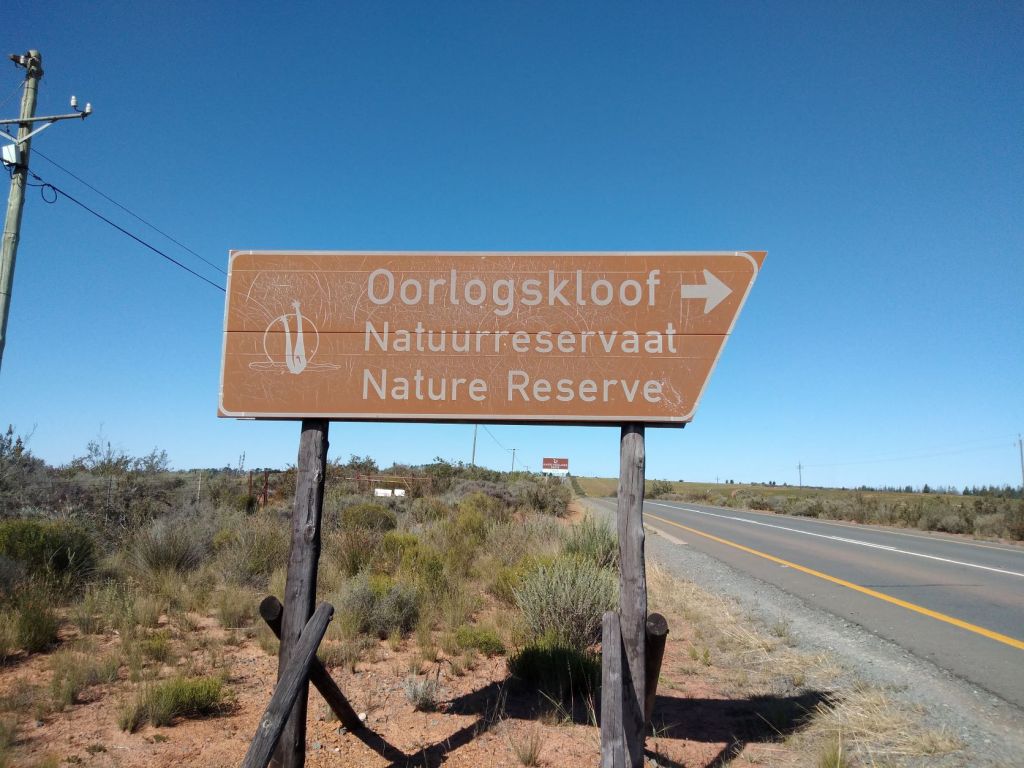
Now, let’s get back to the Oorlogskloof Hiking Trail (loosely translated, Oorlogskloof would mean “Gorge of War”). Maybe that name should have been an early sign of what was laying ahead.
Where is Oorlogskloof?
This Nature Reserve is about 350km from Cape Town with the closest town being Nieuwoudtville. This area is a flower paradise during spring, but it’s also a place that can get extremely hot during summer.
History on Oorlogskloof?
This area was the first region in South Africa to be colonised by the whites (1644). The San-bushmen lived in the area until just before 1740. At the same time, the Khoi-hottentots also inhabited the area. With so many different cultures living in such close proximity, it was unavoidable that theft of each others’ stock would soon be at the order of the day.
During 1739 the theft of stock by the colonists and the Khoi reached a climax and a trek-farmer commando attacked Khoisan-kraals near the current reserve.
It was described as follows: “This time 13 Khoi-San were killed, a number wounded and the rest surrendered. About 162 cattle, 209 sheep, 3 iron pots, a copper kettle, 3 horses and a saddle were captured. Before leaving the kraal, the commando returned 48 cattle and 40 sheep to the survivors and ‘made peace’ with them. The place was named Oorlogskloof”.

Before we get to the actual hike, here’s more information on the Oorlogskloof Hiking Trail(s).
Information on the trail:
- One Day Circular Route: Leopard Trap Day Hike – 15.5km/9.6 miles.
- One Day Circular Route: Rietvlei Day Hike – 17.9km/11 miles.
- Rock Pigeon Route (4-5 Days) – 52.2km/32.4 miles … this was our trail.
- Rameron Pigeon Route (4-7 Days) – 52.4km/32.5 miles.
- You need to obtain a permit from the Oorlogskloof Office in Nieuwoudtville.
- Huts are available to overnight. Only beds with mattresses are provided, you must carry all your other equipment (sleeping bags, clothes, food, etc.) with you in your backpack.
- Water is available at some huts, otherwise if not, you need to get water from close-by fountains or rivers. Although the brochure indicates that water is safe to drink, we would recommend that you bring your own water filtering system or water purifying tablets.
- Carry at least 2 liters water per person per day in summer (or even more by filling up at rock pools/rivers/fountains).
- Everything you carry in, must be carry out (don’t leave your garbage at the huts).
- The terrain is extremely rugged and inhospitable – hikers must be experienced and fit (and not walking fit, but rock-climbing fit … something we already realised on the 1st day)! This trail is not for the faint-hearted or inexperienced.
What to pack?
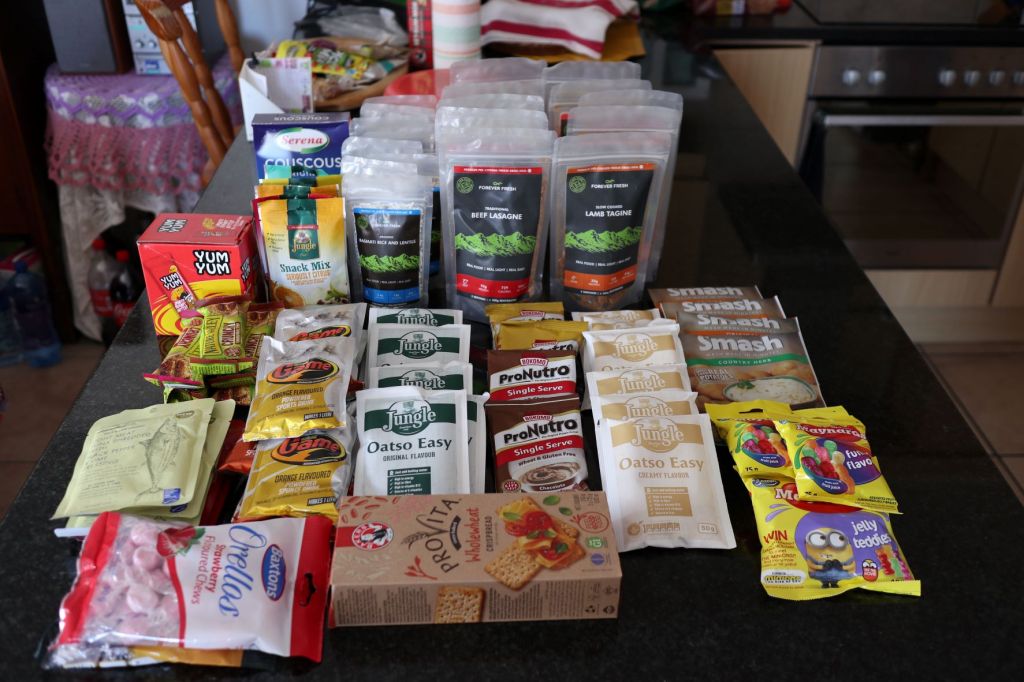
Since we would be walking (no, climbing rocks) in a rugged area, our backpacks were not to be too heavy. We had to carry 5 days’ food. Our mission was that it should be as light as possible. Berto sourced a South African company (Forever Fresh) that produce world-class freeze-dried food. We ordered a variety of dishes (even couscous and basmati rice) and were surprised how tasty the food was. It was a highlight after every long and strenuous day on the trail.
Update (August 2023): You can now buy Forever Fresh products at Outdoor Warehouse stores
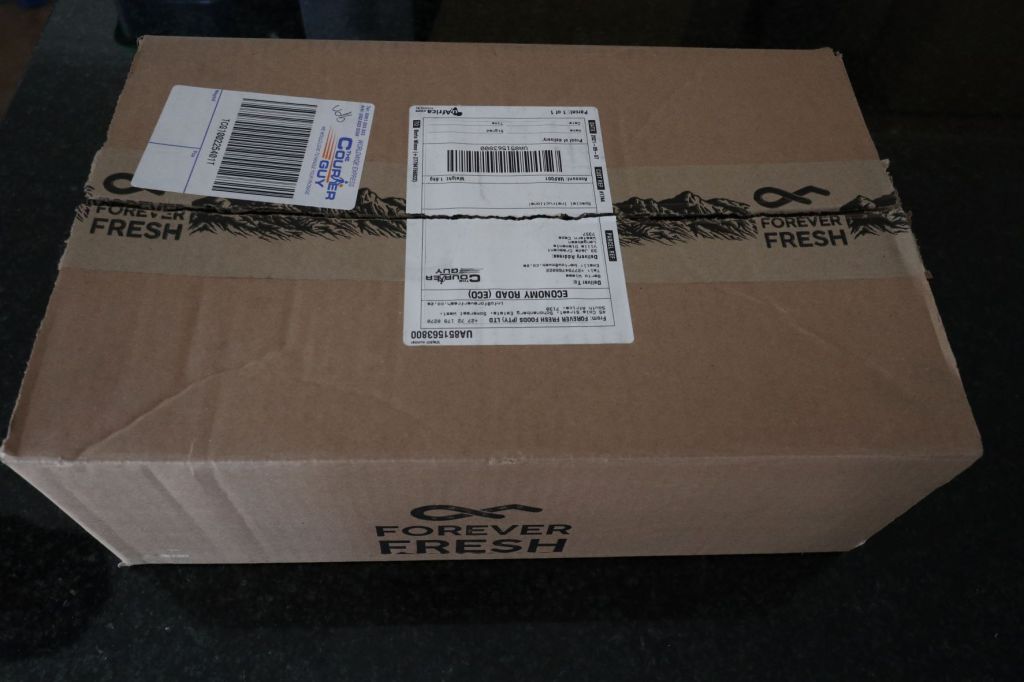
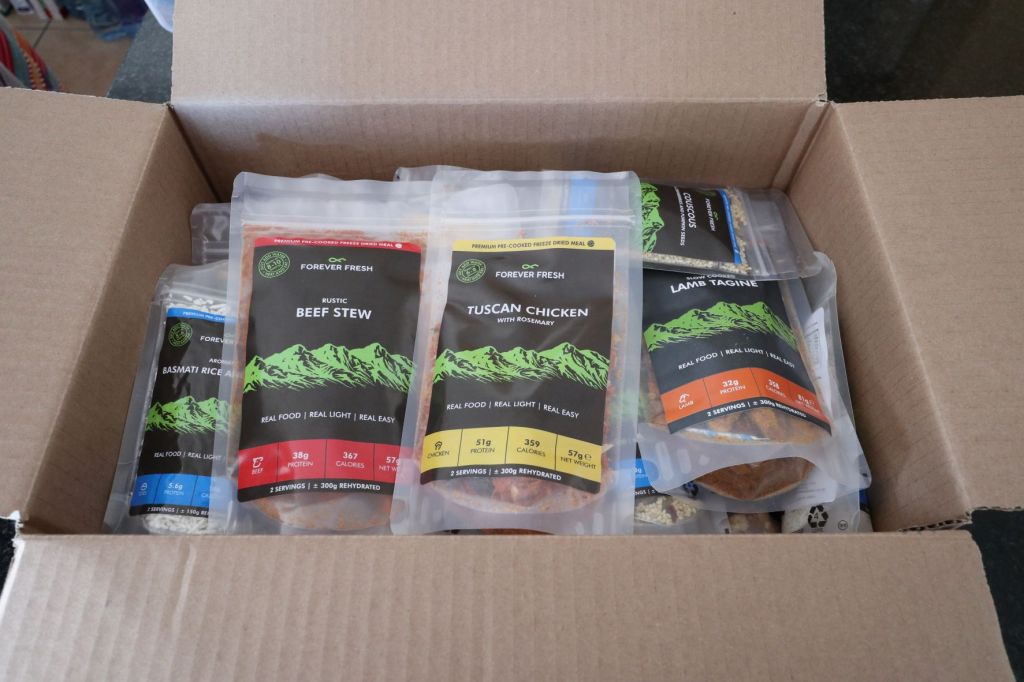
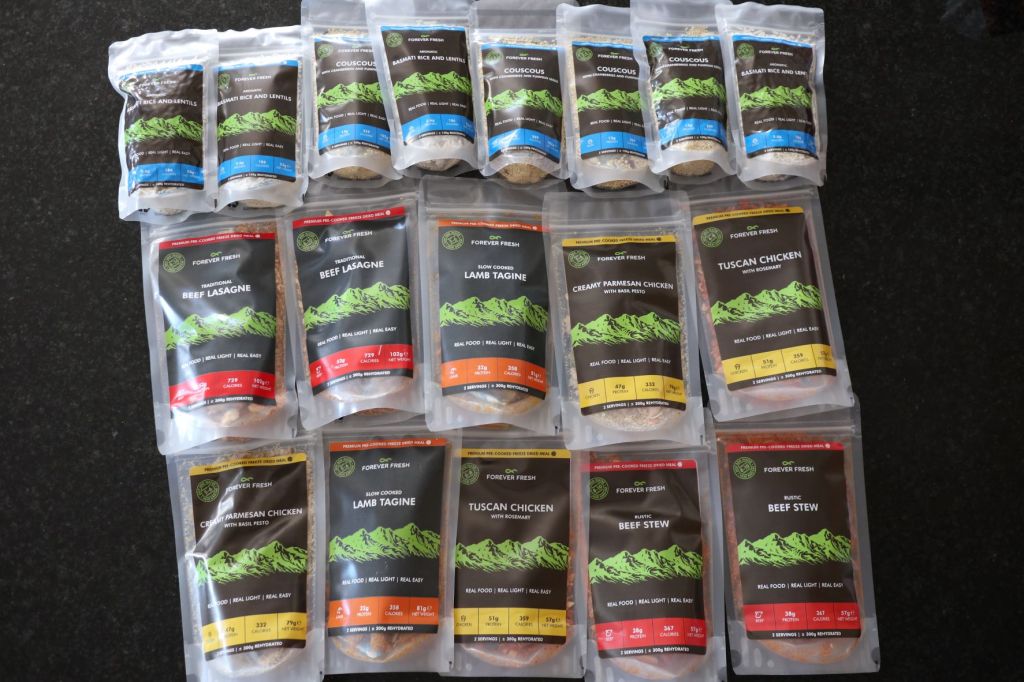
We shared the food between our two backpacks. So, what did our menu look like – well, more or less like this:
- Breakfast: Oatso Easy or Pronutro (made with boiling water) – and for good measure, throw in some nuts.
- Lunch: Tuna packs, biscuits (Provita) and mini cheese cubes. When it’s not too hot, these cheese cubes last for days outside a fridge – we finished the last of our cheese cubes on Day 4.
- Dinner: Forever Fresh meals (with either basmati rice, couscous or mash).
- Snacks: We’ve packed Yum-Yum peanut butter sticks and a few packs of jelly sweets – easy snacks that one can eat while hiking. Breakfast/Energy bars were also a big treat during mid-mornings.
- Extra: Two packs of candy as dessert (fruit would obviously have been a better choice, but who is going to carry that for five days?).
- Drinks: Sachets of Game Powdered Sports Drink (mixed with water) – a great thirst quencher and it will give you that extra kick you’ll need when climbing over all those big rocks.
Of course, we needed some hot drinks as well for early mornings and to enjoy somewhere on the trail during the day (*). Berto loves coffee and I’m fond of tea (and the luxury of a cup of cappuccino at least once a day). There were other drinks as well for the evening, but we’ll get to that later.
*We used our small hiking stove to boil water.

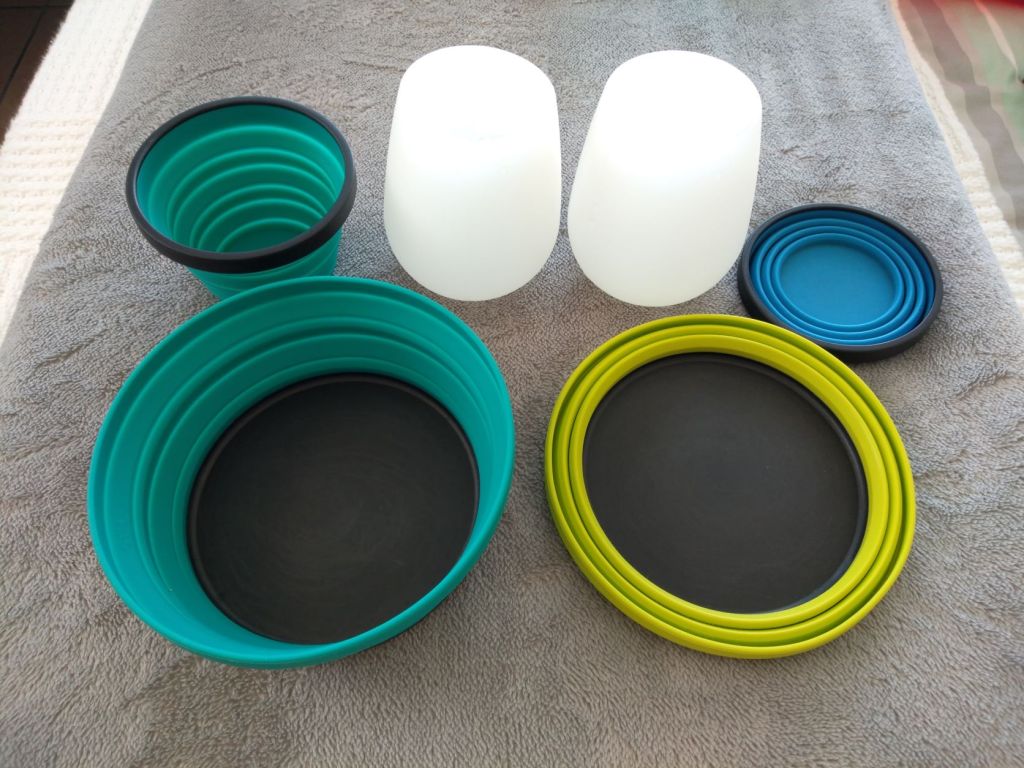
To keep our packs as light as possible, we invested in collapsible cups and bowls, as well as silicone glasses (wine just taste better in these).
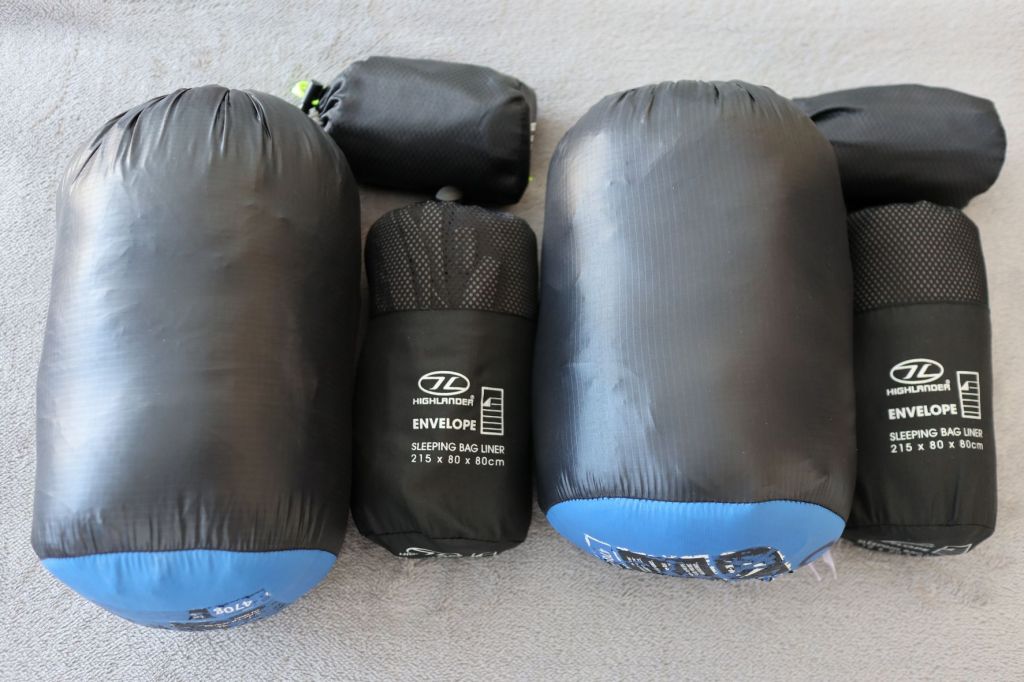
Once again, we packed our light weight sleeping bags (470g), sleeping bag liners and our small hiking pillows. We’ve used these so many times before, and although it wasn’t cheap, it certainly is worth the money.
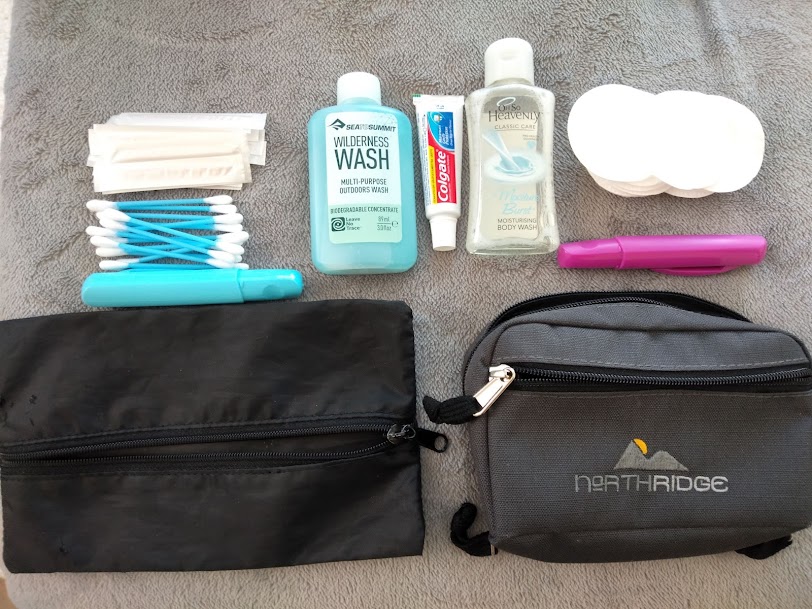
Toiletry bags are always a big discussion point (especially between women). You know, a bit of this and a bit of that and suddenly your toiletry bag is bigger than your backpack. But I’ve learned over time, the bare minimum is enough on a hiking trip – especially when you need to carry all of these yourself over boulders and through deep gorges.
The one department where we didn’t hold back, was with our medical kit. Since we’re hiking in an area where you’ll barely see other people (and where it will probably take 2 days for someone to reach you in case of an emergency), you need to come prepared with this.
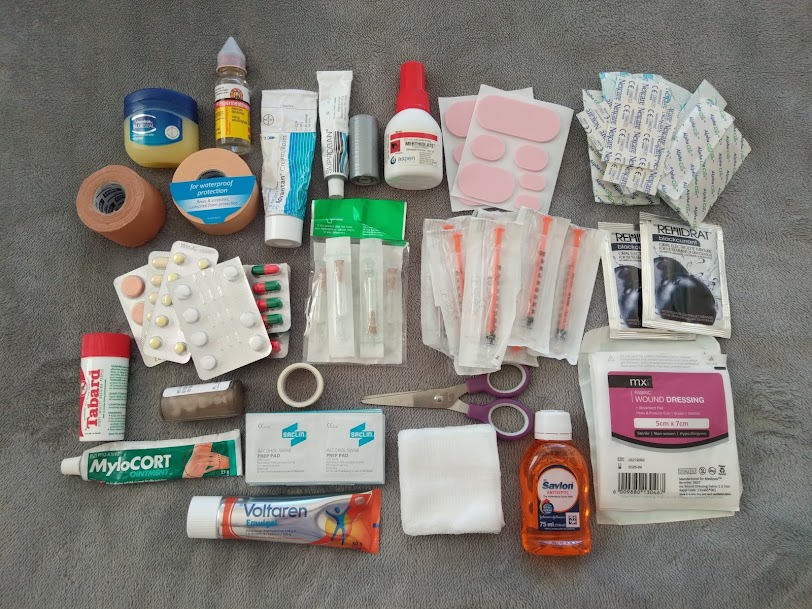
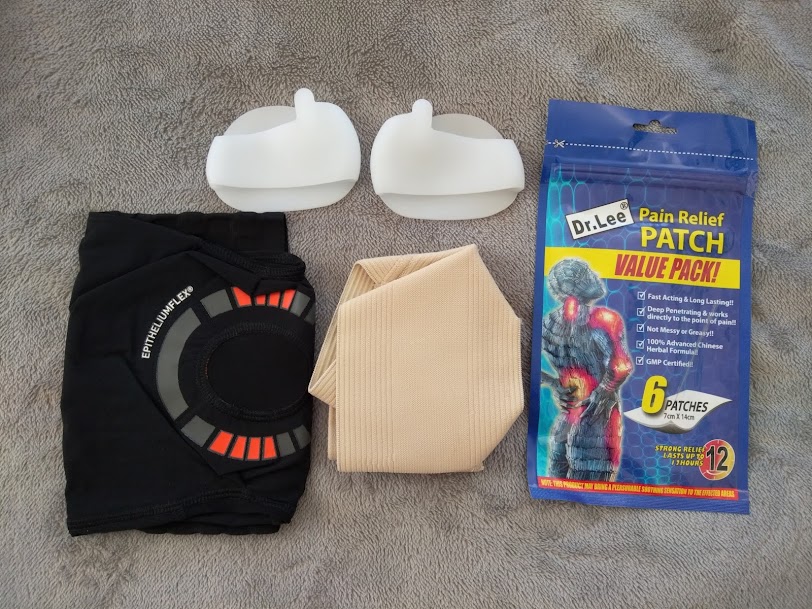
Towards the end, we added a few odds and ends (that’s normally where the problem comes – extra weight). After putting everything in our backpacks, it was quite a shock to see my backpack’s weight at 13kg and Berto’s one at 15kg. And we still had to add 2 liters of water – pretty heavy for the terrain we will have to cover over 5 days.
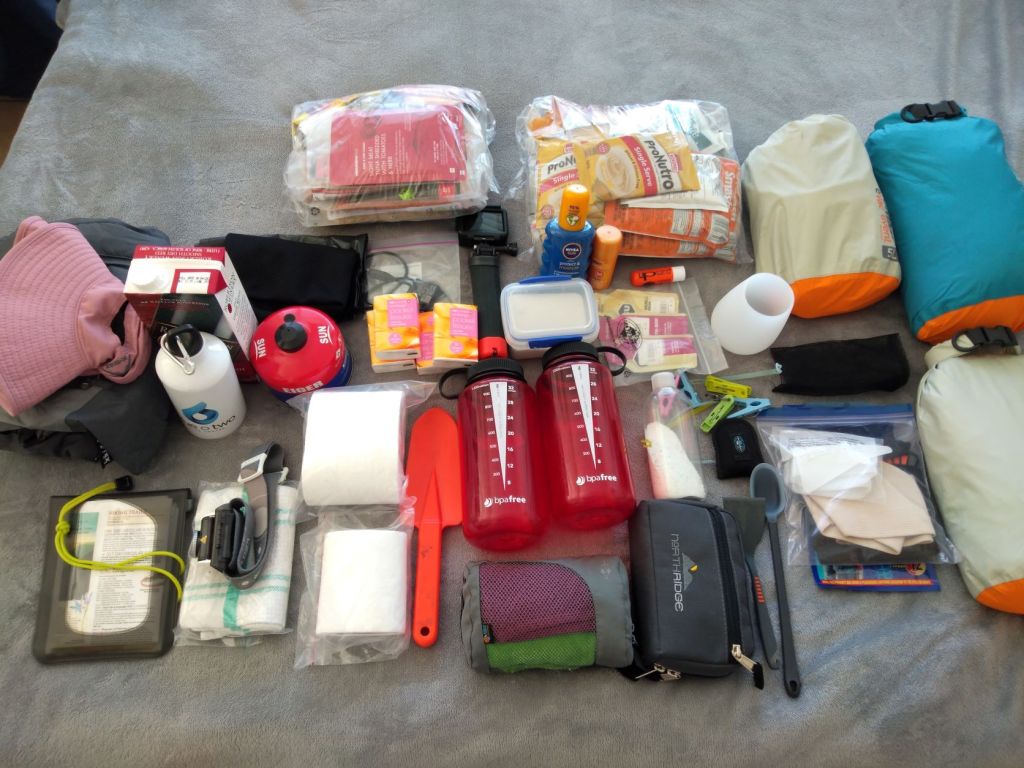
Here we go:
With our backpacks packed and a last hot shower, we left our house on a lovely spring morning to drive 3 hours to our destination. We will sleep the first evening at the starting point of the Oorlogskloof Nature Reserve.
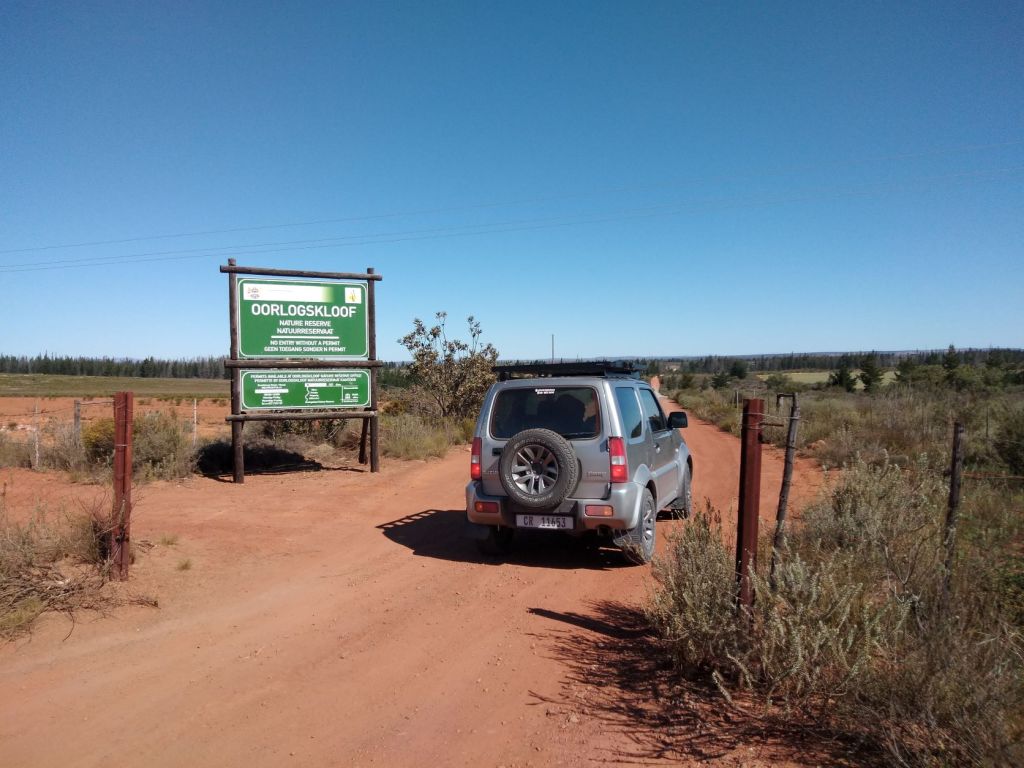

Groot Tuin (loosely translated, it would mean “Big Garden”) was the starting point and where we found our first accommodation. There is one big house with 3 compartments filled with beds and then two smaller ones for hikers to overnight. We had the smaller house, stacked with 6 beds and only mattresses are provided. Yes, it’s very basic, but at least we’re not sleeping on the ground, and we have a roof over our heads.
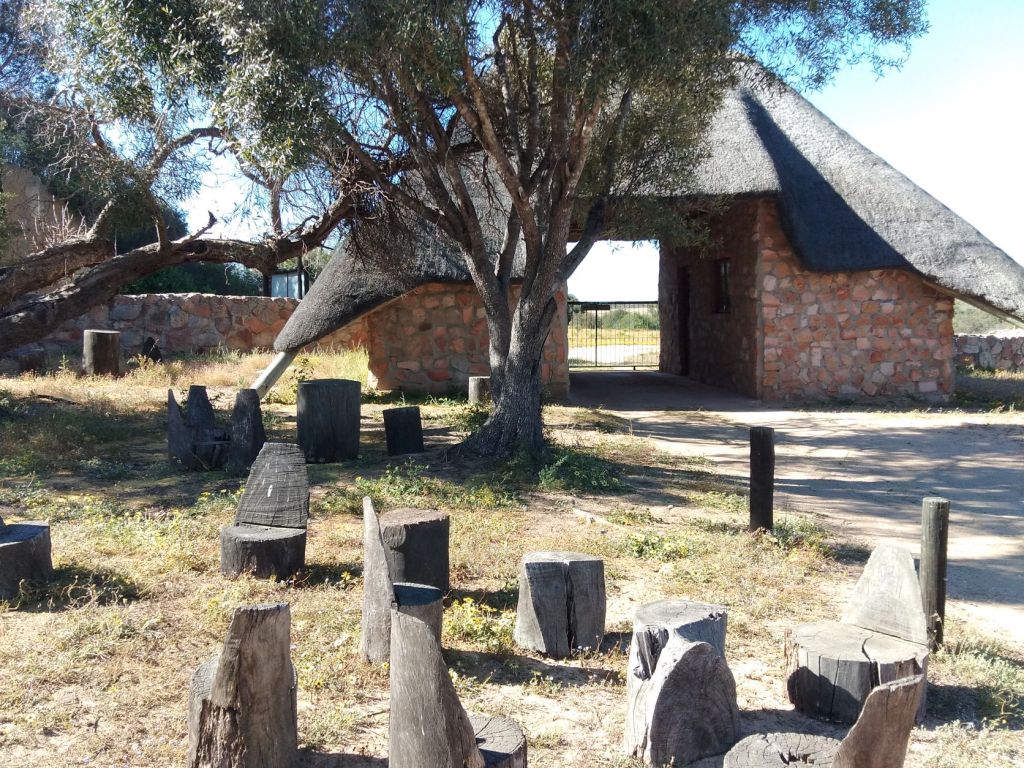


We were the only hikers at Groot Tuin. There were a couple of cars parked under the pine trees from where the trail starts, but we knew those hikers were already on the different trails and that we would probably not see any of them on our 5-day hike.
Can you guess what the next thing was we’ve done before going to bed? Yes, we made a big fire to enjoy a ‘braai’ (barbecue).
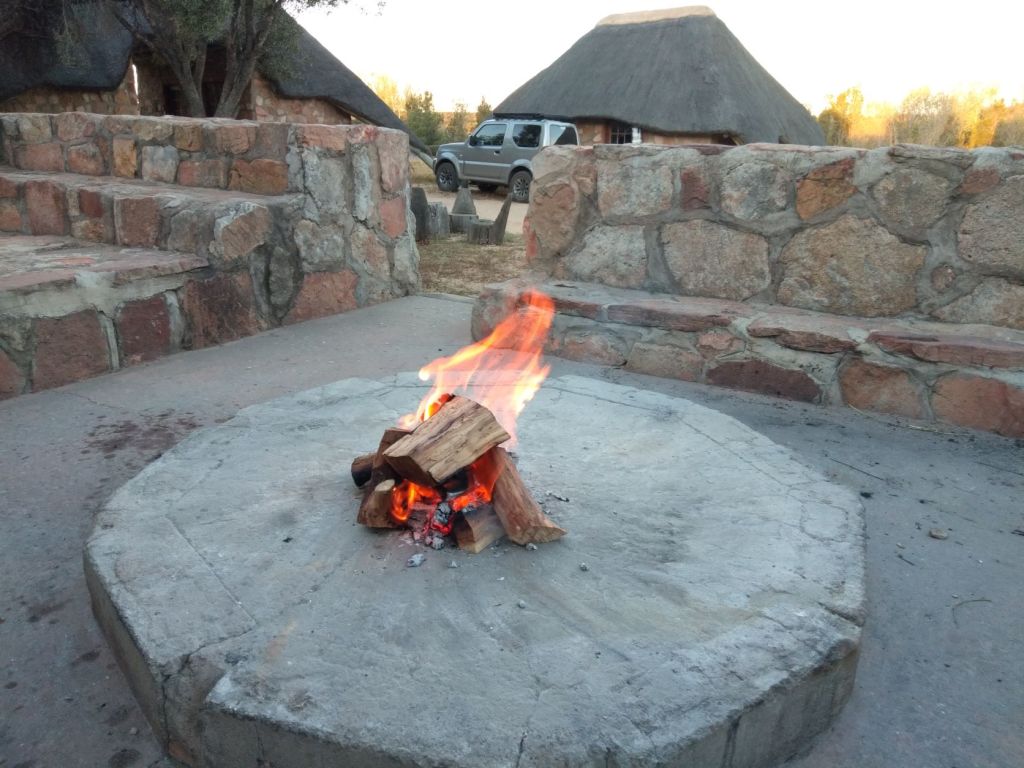
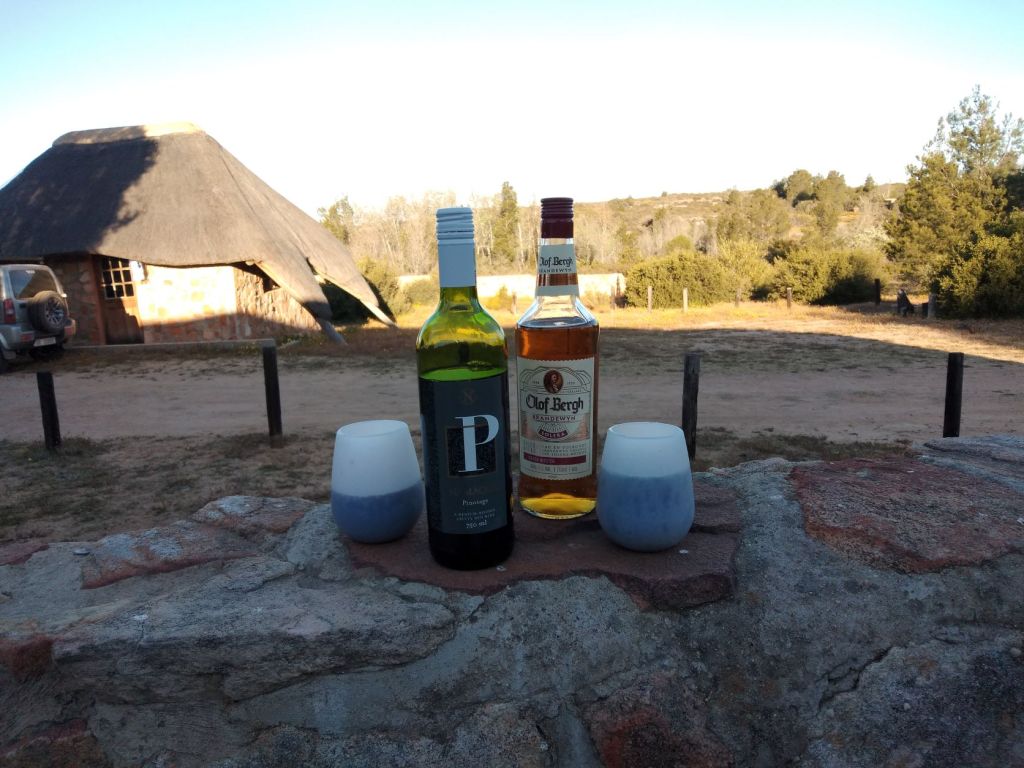


We sat next to the fire for some time while discussing the route. We couldn’t find much information about the trail online beforehand and felt just a tiny bit unprepared for what lay ahead.
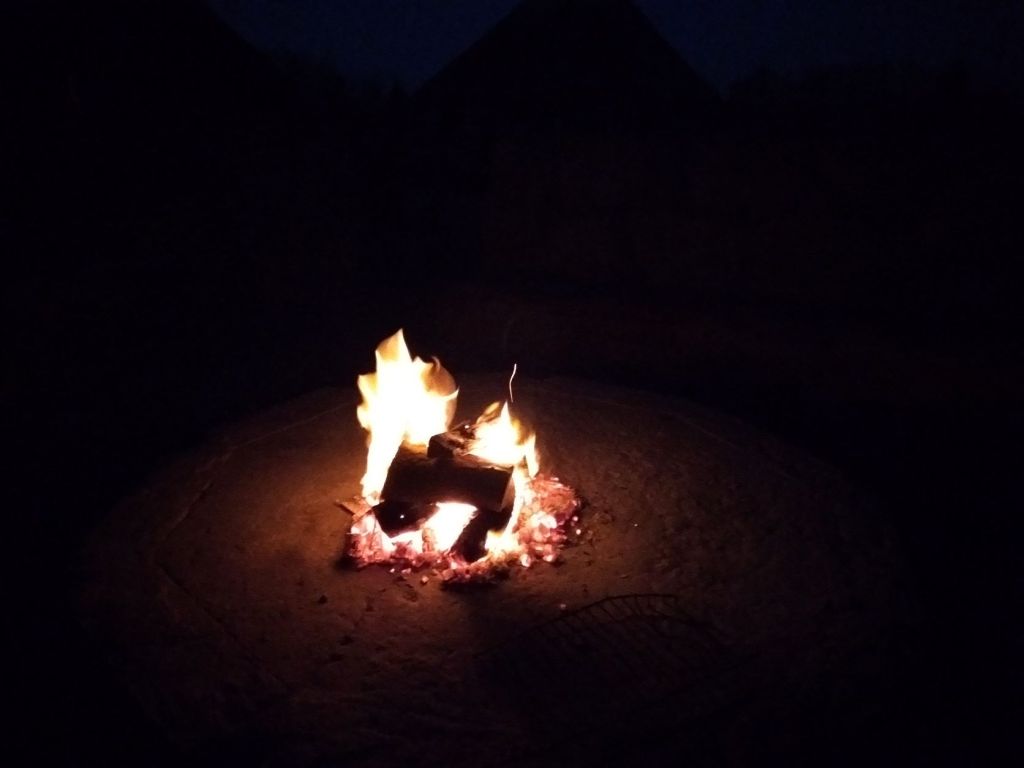
Tomorrow, our first day on the trail, we will only have to cover 4km/2.4 miles. How hard can it be?
You can read about Day 1 here
 Wet and Dusty Roads
This looks like a fabulous adventure. I can’t wait to see where you take us this time. Mel
LikeLiked by 1 person
This is definitely your kind of hiking trail Mel (because you are the daredevil)! I must admit, my abilities were tested to the extreme …
LikeLiked by 1 person
A bed with mattress and a roof over your head can seem almost like 5-star accommodations at times. Looks like you smartly covered all of the bases without loading yourselves down too much. Easy for me to say.
LikeLiked by 1 person
You’re absolutely right John … sometimes you don’t need more than just a mattress and a roof over your head! And when you’re tired after a long and strenuous day, you actually don’t care for anything more 😉. Thanks for popping in – we’ll see you again somewhere on the trail in the coming days!
LikeLike
Sommer net met die lees hiervan is my maag reeds op ‘n knop en ek dog ek is ‘n stapper! Ek kyk met afwagting uit na die res van julle stap. Dink dis ‘n bietjie bo my vuurmaakplek. Well done!
LikeLiked by 1 person
Toortsie, my maag was vir 5 dae op ‘n knop! En ek het ook gedog ek’s ‘n stapper – maar toegegee, hierdie is darem nie jou normale staproete nie (ons was selde in ‘n pad 😄).
LikeLiked by 1 person
Genade! Ek pleit ouderdom!
LikeLiked by 1 person
😅
LikeLike
I am in awe at how well you both prepared. It just amazes me you can do this with all that weight on your back. I couldn’t do it with nothing on my back! 😂
LikeLiked by 2 people
Haha, you’re funny Diane 😅. I must admit, it was extremely difficult with the heavy backpacks to get myself over those big boulders … but that’s why you should have your husband with you 😉 (to help carry your backpack and giving a helping hand to you)!
LikeLike
Oh my goodness, I love the way you packed and shared it with us in detail. I will use it as a reference if we ever go on a walking trip but your comment to Mel gives me hint that I don’t think I would try this walk. I am looking forward to reading about your adventure though. 💖🌺🙋♀️
LikeLiked by 1 person
I always look back at our adventures and thought “Oh, some day I would love to do that again” … but Oorlogskloof will be the one “I’ve done it, no need to go back there again”! It tested me on so many levels (it even include a cry session of 5 minutes on Berto’s lap), but I’m glad that once again I can truly say you can do anything if you believe in it!
LikeLiked by 1 person
Well done 👍💖😊
LikeLiked by 1 person
😍
LikeLiked by 1 person
This looks like quite the adventure that you’re about to embark on and how fitting to have a braai for your last meal. I must say, I am very impressed with your ability to pack!!
LikeLiked by 1 person
Yes, this was certainly an adventure (maybe it could also be called an endurance trail 😉). Thank you for the compliment on our packing … we have packed so many backpacks in our life and every time it seems we’re finding new (smaller & lighter) stuff to pack! Thinking back now, I would ditch half of the stuff just to get a much lighter backpack for this trip!!
LikeLiked by 1 person
You are both so intrepid, good for you! I can’t imagine what it would be like to be carrying backpacks weighing so much, I think I would have turned back or burst into tears at the first steep section despite being reasonably fit! You have both got the packing down to a fine art too with everything carefully thought through covering every eventuality. I’m so captivated with your trip that I can hardly wait to read the next instalment. What a great post, take care. Marion.
LikeLiked by 1 person
Ah, thanks for your kind comments Marion! I must admit, my backpack was definitely way too heavy for this terrain – there were many times that I took it off and Berto had to carry it to higher grounds (rocks). And make no mistake, there were some crying involved in this trail … but yet, here I am a couple of days later and though my body is still aching, I feel quite satisfied that we’ve conquered this trail!
See you again on the next stage. Have a great week further. Corna
LikeLiked by 1 person
This isn’t something I could ever consider taking on, so I’m looking forward to following your adventures all the more! I’m so impressed at how lightly you can pack, but at the same time that backpack sounds very heavy to have to carry over difficult terrain 😲
LikeLiked by 1 person
Yes, it’s amazing how one can think your backpack is light … until you climb that first big boulder 😬. And to be honest Sarah – I don’t think you’ll catch me again in the Oorlogskloof!
LikeLiked by 1 person
Maybe not, but I’m sure you’ll still be hiking longer and tougher trails than I would dream of attempting!
LikeLiked by 1 person
My goodness, you have a lot of stamina! Even at my fittest I could not have done what you describe. Camping and “basics, no problem…I did that in Sudan for 3 weeks, but the land was flat and we had a Bedford truck! BIG difference. Can’t wait for the rest…
LikeLiked by 1 person
I think I’ve used my stamina for the next 10 years!! It would have been great to have that Bedford truck with me on the trail 😅 … for both my backpack and myself!
LikeLiked by 1 person
Wonderful packing photos!
LikeLiked by 1 person
Ah, I’m glad you like it … it’s a reminder to us of what to leave at home next time 😄.
LikeLike
Hey, great start to the story guys, already looking forward to seeing what comes next
LikeLiked by 2 people
Well, I can give you a hint … big boulders, deep gorges, more big boulders … 😬.
LikeLiked by 1 person
So well organized, great way to start your hike! But yeah 13 kg is quite a bit for a tough route. Looking forward to see what you have thrown away on your way hahahah
LikeLiked by 2 people
Thanks for your comments Christie. With a hike out in the Wilderness, I suppose you need to be selective of what you pack in your backpack … it was really difficult to decide what to take and what to leave behind. You will be surprised to hear what happend on the first evening (and made my backpack lighter) 😉 …
LikeLiked by 1 person
hehe, I’m all so curious! looking forward to hear about your adventures😊
LikeLiked by 1 person
Ah fantastic, the amazing sense of freedom you must have when you set off on a five day hikev.Especially when it becomes clear that you’ll have Groot Tuin all to yourselves. I love the sound and indeed the look of those freeze-dried meals. And what about that cliffhanger? You have definitely piqued my curiosity about what problems lie ahead…
LikeLiked by 2 people
Leighton, freedom comes at a prize … like for example, come face to face with your fear of heights 😬! But you’re right, for 5 days we’ve seen nobody (except for baboons, birds, gecko’s and a small snake – yikes)! We have a couple of pictures of the freeze-dried meals after adding hot water and will show these in future posts – I was amazed at how delicious it was! Cliffhanger … I was thinking a lot about this movie while doing this hike …
LikeLiked by 1 person
Ha ha I hope your husband was the Sylvestor Stallone character and saved the day!
LikeLiked by 1 person
You know us too well … he did indeed!
LikeLiked by 1 person
Ek haal my hoed af vir julle twee, Corna! Ek sou dit beslis nie gemaak het met so ‘n vrag op my rug nie 😀 Sien daarna uit om die res van die klimmery/staptog te lees!
LikeLiked by 1 person
Dankie Aletta (vir daai hoed in die hand 😉). Ek is seker jy sal nog hoede gaan soek om af te haal as jy sien waar oor en waar deur ons die volgende vier dae gegaan het!
LikeLike
Ek sal nog hoede gaan soek! 😀😊💕
LikeLiked by 1 person
😍
LikeLike
You are more resilient than me ..What an amazing adventure but does seem like a great place to see.
LikeLiked by 2 people
Thanks Anita. It was quite the adventure, that’s for sure! We hope to show the beauty (and wildness) of this place soon in more posts.
LikeLike
You are a well-prepared hiker!
LikeLiked by 2 people
Thank you! Although we had packed for several hiking trails before, we had never packed so long to hike in the wilderness … so this was a first for us! And we learned a lot … 😉.
LikeLike
Ooo I can’t wait to see each day on the trail. What an amazing adventure and that food looks incredible for freeze dried. Can’t wait to see more of your trip 🙂
LikeLiked by 2 people
It was quite THE adventure Hannah 😬 … I was tested on so many levels (and I’m still recovering)! I was so impressed with the freeze-dried food – just what we needed after each LONG day on the trail! See you again somewhere on the Oorlogskloof trail … and thanks for popping in!
LikeLike
Sounds like a great adventure! Can’t wait to read the next post. Maggie
LikeLiked by 2 people
An adventure? Yes Maggie, definitely! I hope to have the first day up on our blog within the next day or two … I’m still recovering 😉. Thanks for reading, see you on the trail!
LikeLike
Wow, what an amazing adventure! There’s nothing quite like a long stroll to put things into perspective. I am a keen hiker but haven’t been on a multi-day hike yet despite having many incredible long-distnace walking trails right here in Ireland. Maybe one day 🙂 Thanks for sharing and inspiring 🙂 Aiva xx
LikeLiked by 2 people
Hi Aiva 😊. Yes, that’s so true – to be out in nature is earth’s medicine to our bodies and minds … though, I must say, after we’ve done this hiking trail, I need some serious rest! It’s now a couple of days after we’ve finished the hike and my body is still aching 😉 … but it was still great to spent time in nature! I really hope you get the opportunity one day to do some of those beautiful long-distance trails! Enjoy your weekend. Corna
LikeLiked by 2 people
Fantastic post, filled with such rich history and such good teaching on hiking! Thank you for a great post, I have taken away so much.
LikeLiked by 2 people
Thanks Henrietta! Yes, there are so much history all over our country that we are not aware of. I’m glad you liked this post, thanks for reading and your comments 💌.
LikeLiked by 1 person
Wow, if I ever need info on how to pack lite, I’m asking you guys! You’re so smart! Looking forward to reading all about the trek! 🌞
LikeLiked by 1 person
Hi Lisa 🌸. Well, I thought our packs were lite … but after carrying it for 5 long days, I will certainly reconsider on what to pack on a next similar trip!
LikeLiked by 1 person
Wow, you guys are so organised! Looks like a fabulous hike, I never made it to Oorlogskloof.
It’s always important not to overload your packs. I always have a tendency to bring too much and end up with 30kgs spread between my day pack and backpack.
Thanks for the great share and photos!
LikeLiked by 1 person
It was quite an adventure! Yes, that’s true about not overloading your pack, but since we were hiking in the wilderness (which mean we would not have encountered any shops … or anyone for that matter), it was difficult to decide what needed to stay at home.
LikeLiked by 1 person
Know exactly what you mean! 😉
LikeLiked by 1 person
Famous last words…how hard can it be? 😁😁
LikeLiked by 1 person
Exactly!! I must remember not to use these words so nonchalant 😁.
LikeLiked by 1 person
Sadly because covid I cant do my hobby 😦
LikeLiked by 1 person
Yes, unfortunately Covid stopped many of us right in our tracks. At least, we can travel and explore local in South Africa … so, that’s what we do to keep sane 😉.
LikeLiked by 1 person
It quiet challenging hiking trail, but beautiful. And of course my favorite braai. Always looks delicious 😋
Good luck and happy adventure to you! Will wait for your next post 🙂🙋
LikeLiked by 1 person
Oh Angela, this was probably our most challenging hike yet! Luckily that was 2 years ago … I don’t think I’ll be able to do it again now! The next 5 days follow on this post (in case you want to read how adventurous we were).
LikeLiked by 1 person
I probably missed the date.
I’m not be able to do any of your hiking trails 🙂 I would be weakest person in your team and you would leave me somewhere there 😂😂
Of course I want to read about your adventures and will stay tuned
LikeLiked by 1 person
Haha 😄, don’t worry … we will never leave you! Sometimes it sounds worse than it really is … when you look at the beauty around you, you soon forget how hard it is.
LikeLiked by 1 person
That’s true! And I wouldn’t fail you 😀😀
Have a beautiful day!
LikeLiked by 1 person
Hi All. I am a reasonably experienced hiker, bit every hike have its own difficulties and challenges. I wants to ensure all doubters that 80% of the effort is mental. You need to get your mind fit, although mental fitness and physical fitness supplements one another. I twice took blind people on hikes, physically leading them. It shows you, if they can do it, you can also do it. Do not underestimate yourself !
Good luck, Johan Kruger!
LikeLiked by 1 person
Thank you so much for your valuable thoughts Johan. That’s very true. When we walked the Caminos in Spain and Portugal, I also realised very soon that when one is mentally strong, you can accomplish a lot! My husband will tell you that he thinks even 85% mentally fit is a good aim for a successful hike. And well done to you for taking blind people on a hike – what a wonderful experience it must have been for them.
LikeLike